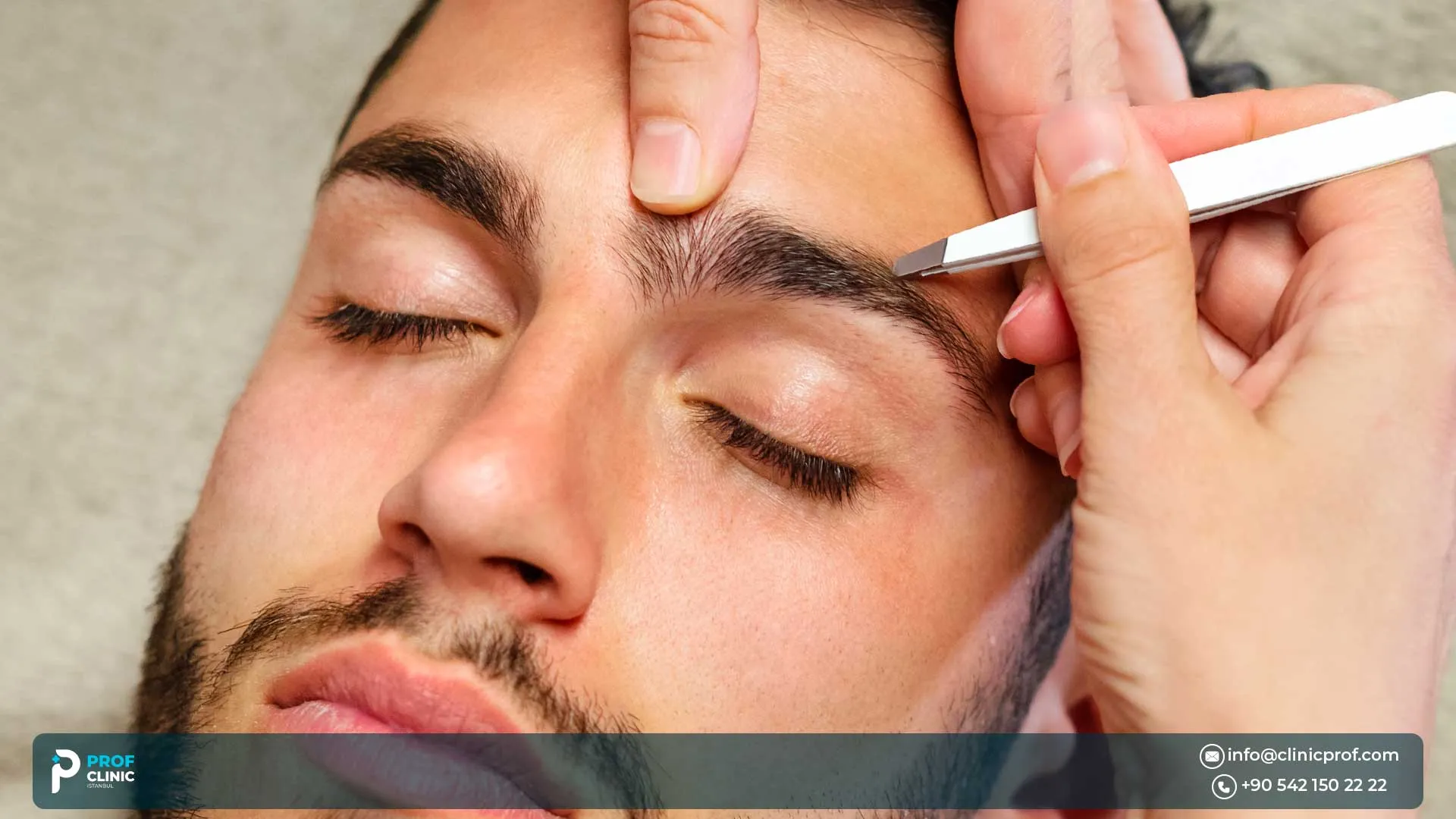
Most men researching male eyebrow hair transplant are trying to avoid two things: over-styled shape and unnatural hair direction.
Here’s what you need to know—who qualifies, how masculine brows are designed, what recovery looks like, and what maintenance is required before you request a Prof Clinic assessment.
What is a male eyebrow hair transplant?
A male eyebrow hair transplant is a restorative procedure that relocates your own hair follicles—most commonly from the scalp donor area—to sparse, patchy, or missing sections of the eyebrows.
The goal is men’s eyebrow restoration that looks natural and masculine because the result is real growing hair, placed one follicle at a time to match the brow’s direction, density, and shape.
Why men choose eyebrow hair transplant
Most men consider an eyebrow hair transplant for one of four practical reasons:
- Genetics or aging: gradual thinning, often most noticeable in the outer third (“tail”) of the brow. (PMC)
- Patchiness or asymmetry: one brow grows thinner, or both brows grow unevenly over time.
- Scars or trauma: burns, injuries, or surgical scars can disrupt hair growth and create permanent gaps. (PMC)
- Medical hair-loss conditions: in selected cases. Only when the condition is stable/inactive and medically cleared.
The decision is usually not about makeup-like perfection; it’s about restoring a clean, balanced frame to the face while keeping a naturally masculine brow look.
Eyebrow transplant vs. temporary brow fixes for men
An eyebrow hair transplant for men works differently from camouflage options:
- Transplant (long-term): places living follicles that can continue producing hair over the long term.
- Camouflage (temporary): pencils, fibers, microblading/tattoo-based methods can improve appearance, but they do not create real hair texture or natural hair movement.
If your goal is the most hair-like result, with the ability to shape, trim, and groom your brows like normal hair. Transplantation is often the most direct route.
However, it is not automatically the right option for every cause of eyebrow loss, especially when an active medical condition is involved.
Not sure whether a transplant is right for you? Ask for a personalized recommendation. Share photos and any history of scars or medical hair loss, and we’ll advise whether transplantation or a non-surgical option makes more sense for your case.
Also read: Eyebrow Hair Transplant in Turkey: Guide 2026
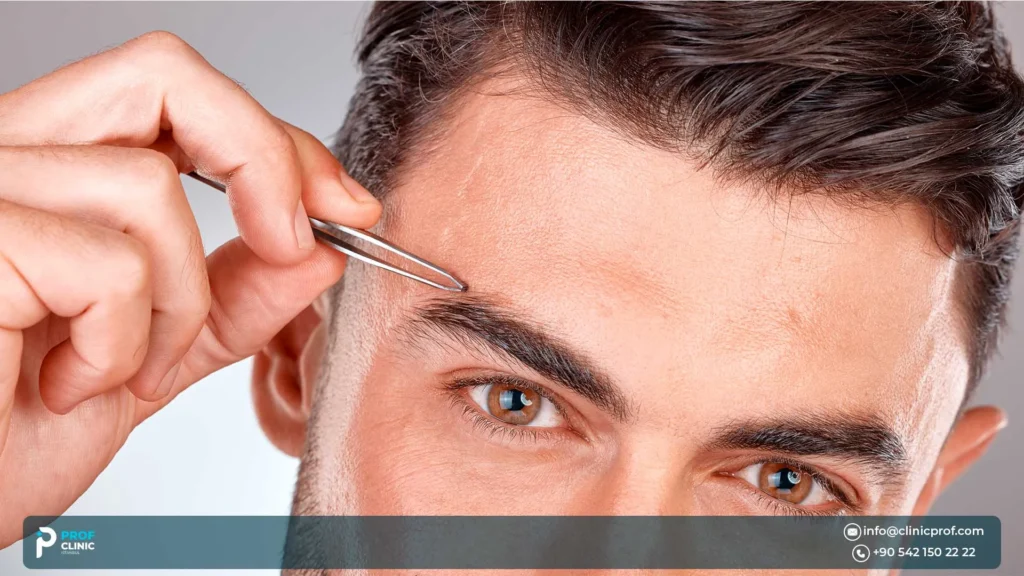
Are you a good candidate for ِa male eyebrow hair transplant?
A good candidate for a male eyebrow hair transplant is typically someone with a clear, stable reason for thinning—and a scalp donor area that can provide hairs capable of blending naturally into the brow.
What makes a strong candidate?
A good candidate for male eyebrow restoration usually has:
- A stable cause of eyebrow loss: The best outcomes happen when thinning is not driven by an active inflammatory or scarring disease process.
- Adequate donor hair that matches the brow: Texture, thickness (caliber), and curl pattern matter. A good match helps the transplanted hairs look natural over time.
- Healthy brow skin and blood supply: Especially important in scar cases—follicles need sufficient perfusion to survive.
- Realistic expectations: A natural male brow is not “ultra-dense and perfectly sharp.” It’s controlled density, correct direction, and a believable shape. (PMC)
Age and Male Eyebrow Transplant Candidacy
There isn’t one “right age” for an eyebrow hair transplant for men. Candidacy depends more on your diagnosis, overall health, donor supply, and expectations than the number on your ID.
The purpose of the consultation is to clarify your personal risk/benefit profile and what natural-looking can realistically mean for your
Also read: Eyebrow Hair Transplant Procedure: How it Works & Donor Hair Options
Eyebrow Restoration Options for Men (Transplant vs. Camouflage)
If you’re a man aiming for fuller brows, the fastest way to reduce indecision is to separate hair-creating options from appearance-only options. A transplant can create real, growing hair (when you’re a suitable candidate), while camouflage methods improve the look of density without adding real hair.
Below is a neutral comparison to help you choose based on your goal, lifestyle, and tolerance for maintenance and downtime.
| Option | Best for | Natural look | Maintenance | visibility | Key limitations |
| Eyebrow hair transplant (follicles) | Sparse brows, asymmetry, scars, stable hair loss | Most hair-like because it’s real hair; heavily depends on direction/angle planning | Ongoing: trimming + training/grooming may be needed | Early redness/crusting is common; results mature over months | Results vary; medical causes must be stable/inactive |
| Microblading | Adding the look of shape and fullness | Can look good at conversational distance | Touch-ups over time | Usually minimal downtime | Not real hair; pigment can shift/fade over time |
| SMP / cosmetic tattoo | Stronger “filled-in” effect (shaded look) | Looks more like shading than hair | Occasional maintenance | Minimal | Not real hair; can look flat up close or in certain lighting |
| Makeup / fibers / serums | Temporary improvement or “trial run” | Varies by skill/product | Daily/weekly routine | None | Washes off; limited effect in true gaps/scars |
If transplantation is on your shortlist, the next two questions most men ask are: “Will it look masculine?” and “What’s the recovery and maintenance like?’ The answer depends on design and a realistic grooming plan.
Masculine Brow Design for Male Eyebrow Restoration
Men’s outcomes succeed or fail on one thing more than anything else: planning a masculine brow that fits your face and grows in the right direction.
What masculine typically means
Clinical descriptions commonly note that male eyebrows tend to be heavier/thicker with little or no arch, with a more uniform density compared to many feminine designs.
That doesn’t mean “one shape fits all.” It means the design should avoid:
- an exaggerated peak
- a thin, high arch that reads as cosmetic shaping
- a hard, blocky front edge
Hair direction
Eyebrow hair grows at very sharp angles and follows distinct directional zones (head/body/tail). Surgical literature emphasizes controlling angle, direction, and alignment for natural outcomes.
A practical “direction map” concept (how surgeons think about it):
- Head (inner brow): hairs tend to point more upward/vertical at first.
- Body (middle): direction gradually transitions into outward/downward patterns, often with a “herringbone/crisscross” effect.
- Tail (outer third): hairs tend to angle more laterally and downward.
Concerned about a “too arched” or obvious result? Book a design-focused consultation. We’ll plan a masculine brow shape (straighter profile, natural front, correct direction zones) tailored to your face before any procedure is scheduled.
Density planning
Responsible planning usually builds density gradually, placing the finest single hairs at the edges and using slightly coarser hairs more centrally when appropriate.
Check our Before & After gallery to review varied outcomes and brow styles
Also read: Eyebrow Hair Transplant Before and After: Time & Reviews
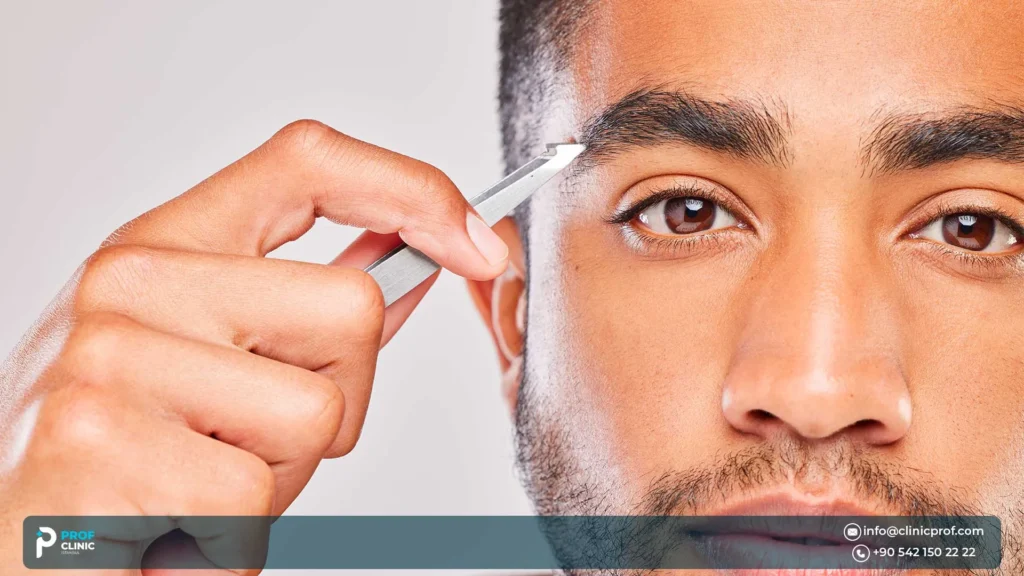
How FUE Eyebrow Transplant Works for Men
Most eyebrow hair transplants for men use FUE (Follicular Unit Extraction), where follicles are harvested one by one and implanted with high precision to match brow direction and density.
Here are the steps in details
- Consultation & diagnosis: confirm the cause is stable and set your goal (masculine shape, density, scar coverage).
- Brow mapping: a plan guides placement, direction zones, and density.
- Donor selection: hairs are chosen for the best texture/caliber match (often from the scalp).
- FUE extraction: follicles are removed individually under local anesthesia.
- Recipient sites: tiny incisions are created flush to the skin to control angle and direction—key for natural-looking brows.
- Implantation: single-hair grafts are placed with attention to curl, direction, and soft edges.
How Many Grafts Do Men Usually Need?
It depends on your starting density and target look. A clinical review on eyebrow restoration often plans around ~70–120 grafts, but the right number is individualized.
Also read: Everything to Know About a FUE Hair Transplant
Recovery After a Male Eyebrow Hair Transplant
After a male eyebrow hair transplant, the first 10 days are all about protecting your grafts, so they heal and anchor properly. Then comes the “waiting phase”—temporary shedding is common, and real regrowth takes a few months.
First 10 Days: Aftercare for Eyebrow Hair Transplant Men
- Days 0–2: Keep the brow area untouched. Avoid pressure, rubbing, or accidental friction. Many protocols also recommend light moisture support (often saline sprays) to protect delicate grafts.
- Day 3: Gentle washing may begin, depending on your clinic’s protocol, still with zero rubbing over the grafts.
- Days 4–10: Expect mild crusting. Let it loosen naturally and follow your clinic’s cleansing instructions closely.
- After ~10 days: Some patients are cleared to remove remaining crusts gently. It’s also normal to see a few hair shafts shed with crusts.
At Prof Clinic in Turkey, we guide you step-by-step through this phase so you know exactly what to do—and what to avoid—to protect your investment.
Men’s Eyebrow Restoration Growth Timeline
- Weeks 2–8: shedding can happen—this is often part of the normal cycle.
- Months 3–4: early regrowth typically starts to appear.
- Months 6–8: density becomes more noticeable for many patients (timelines vary).
- Months 9–12: texture and direction continue refining as results mature.
Do/Don’t For Male Eyebrow Restoration
Do: follow cleansing/moisture guidance exactly; use cold compresses around the area if advised (not directly on grafts).
Don’t: pick crusts, rub early, or start grooming/plucking until you’re cleared.
Most men return to desk work quickly, but expect a short “visible recovery” window (redness/crusting). If you have important meetings or photos, we’ll help you plan timing realistically.
Need to plan around work, travel, or important events? Ask for a recovery planning timeline. We’ll help you estimate the visible recovery window and set realistic milestones for regrowth and grooming.
Also read: Eyebrow Hair Transplant Recovery: Timeline, Aftercare & Hair Growth Explained
Male Eyebrow Hair Transplant Results & Maintenance
This is the section that prevents regret. A great male eyebrow hair transplant is not just about graft survival. It’s about how natural the brows look and how easy they are to maintain long-term.
Why Maintenance Is Different After an Eyebrow Hair Transplant for Men
Transplanted eyebrow hairs often behave more like the donor hair, which can mean:
- Regular trimming: Some clinical guidance describes trimming every 2–3 weeks for certain patients.
- Direction “training”: gentle styling may help hairs lay flatter over time (e.g., ointment/petroleum jelly guidance in one review; hair-gel training from ~3 weeks onward described in another).
What Good Looks Like in Men’s Eyebrow Restoration
A natural eyebrow restoration for men results typically have:
- Soft, blended edges (especially at the inner brow)
- Believable direction with hair lying flat to the skin
- Density that fits your face—improved and balanced, not stamped-on
Realistic Outcomes
- Expect noticeable improvement in fullness and shape, not a guaranteed density number.
- Some eyebrow hair transplant men cases benefit from a second session to build density; responsible planning usually waits many months before deciding.
- If the original cause can reactivate (medical hair-loss conditions), it may affect long-term retention—this should be addressed during consultation.
Also check our Testimonials, including patient experience and recovery stories.
Male Eyebrow Hair Transplant Risks & Safety
Responsible clinics earn trust by being transparent about what can happen and what is preventable. Commonly discussed issues in eyebrow transplant literature include:
- Swelling or bruising (typically short-term).
- Folliculitis (inflammation around follicles) or infection (often reported as rare in experienced settings).
- Uneven density or poor growth.
- Misdirection, curling, or “canopy” growth (hair lifting away from the skin), which is often technique-dependent.
Also read: Eyebrow Hair Transplant Side Effects: What Could Go Wrong?
Risk vs Prevention in Eyebrow Hair Transplant for Men
| Potential issue | Why it happens | What a responsible clinic does |
| Infection / folliculitis | Skin bacteria + irritation | Uses sterile protocols and provides a clear aftercare plan. |
| Misdirection / unnatural angle | Poor site creation or placement | Creates sites flush to the skin and maps direction by brow zones. |
| Curling / texture mismatch | Donor hair characteristics | Selects donor hair carefully and places grafts strategically for a natural blend. |
| Poor growth / thin areas | Graft handling trauma; perfusion issues (especially with scars) | Minimizes out-of-body time and evaluates scar perfusion before planning density. |
How to Choose a Clinic for a Male Eyebrow Hair Transplant in Turkey
Choosing the right clinic is just as important as the procedure. Eyebrow work is highly visible, and natural results depend on design, direction, and graft quality—not marketing promises.
Ask these before you book:
- Who will design my brow with me?
- How do you control hair direction and angle?
- Do you use single-hair grafts for the eyebrows?
- What is your first 10-day aftercare plan?
- If growth is uneven, what is the plan?
Choose a clinic that offers:
- Medical evaluation first—especially if the cause of brow loss is unclear.
- A strong portfolio of men’s eyebrow restoration with natural direction
- Clear explanation of maintenance
- Honest discussion of risks and realistic outcomes
How ClinicProf Supports Men in Istanbul, Turkey
If you’re considering treatment in Istanbul, Turkey, ClinicProf follows a clear, safety-first process:
- Photo pre-assessment: We review your brows, gaps/scars, and donor suitability before you travel.
- Masculine design planning: We plan shape, density, and direction so the result looks natural on a male face.
- Clear aftercare guidance: You’ll receive step-by-step instructions for the first 10 days, plus the long-term trimming/training routine.
If you want natural, masculine brows—not over-styled ones—request your free consultation. We’ll give you a clearer plan than guessing from online photos
FAQs about male eyebrow hair transplant
Can you transplant hair to an eyebrow?
Yes. A male eyebrow hair transplant relocates your own hair follicles (usually from the scalp donor area) into sparse or missing brow sections. Natural-looking eyebrow restoration for men depends heavily on using the right graft type and controlling hair angle and direction during placement.
What’s the best age for hair transplants?
There isn’t one “best age.” For eyebrow hair transplant men candidates, suitability depends more on a correct diagnosis, stability of the cause, donor supply, overall health, and realistic expectations—confirmed in a medical consultation.
Is 45 too old for a hair transplant?
Usually, 45 isn’t automatically “too old.” Many men can still be good candidates for men’s eyebrow restoration if donor quality is adequate and there is no active inflammatory or scarring hair-loss disease.
Who is a poor candidate for hair transplant?
You may be a poor candidate for an eyebrow hair transplant for men if the cause of brow loss is unclear or actively changing, if expectations are unrealistic (e.g., “perfect drawn-on density”), or if there is an active inflammatory/scarring process—often a contraindication until inactive.
How long does it take to see eyebrow transplant results?
With male eyebrow restoration, healing is mainly days to a couple of weeks, but visible regrowth commonly starts around 3–4 months, with density improving over the following months. Individual timelines vary.
Will transplanted eyebrow hair keep growing?
Yes, it can. Because transplanted follicles often retain donor characteristics, eyebrow restoration for men may require ongoing grooming. Clinical reviews describe long-term maintenance such as periodic trimming and “training” the direction so hairs lay flatter