
- Services
- Hair Transplant
- Female Hair Transplant
Female Hair Transplant in Istanbul
Achieve thicker, natural-looking hair with a hair transplant for women in Turkey. At Prof Clinic Istanbul, we help women restore volume and confidence using FUE and DHI techniques tailored to their needs.
Your Hair Transplant for Women, Step by Step
Health Inquiries?
Reach out for expert care
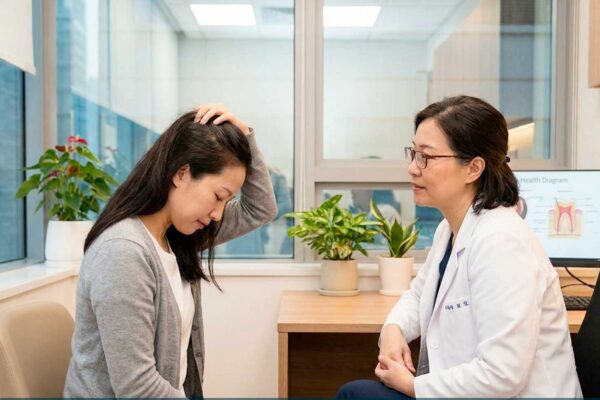
The doctor examines your scalp and the pattern of hair loss and may request blood tests for iron, thyroid or hormonal causes. A transplant is recommended only if the hair loss is stable and the donor area is suitable.
FUE, Sapphire FUE or DHI is chosen according to your hair, donor area and the area to be treated. Many women can have the procedure with only a small section of the donor area trimmed.
After pre-operative tests, the procedure is performed under local anesthesia. Grafts are extracted from the donor area and placed between existing hairs at the right angle and density.
Mild swelling and small crusts are common in the first days and usually settle within one to two weeks. You receive instructions on washing, sleeping and returning to daily activities.
Transplanted hairs often shed in the first weeks, and new growth usually begins at around 3–4 months. The final result is typically visible at 12–18 months, and results vary from person to person.

How Does a Female Hair Transplant Procedure Work?
- A female hair transplant follows a process similar to a male transplant, with a few differences tailored to women. Diffuse thinning in women first needs a medical assessment of possible causes, such as iron deficiency, thyroid problems or hormonal changes, and not every woman is a suitable candidate for a transplant.
- During the consultation, our specialists select a donor area with healthy hair follicles, usually at the back or sides of the head. Unlike with men, women often do not need to shave the entire scalp; only a small section is trimmed and easily covered by surrounding hair, so patients can usually continue their daily routine.
- Depending on the type of hair loss, the procedure can focus on the crown, the parting line or the front of the scalp. For women with a naturally high or wide forehead, a forehead hair transplant may be performed to lower the hairline and create softer, more feminine proportions.
Hair Transplant Procedure & Pre-Surgery Testing
- A female hair transplant in Turkey is performed under local anesthesia with mild sedation, so patients should feel comfortable throughout the procedure.
- With the FUE and DHI techniques, sessions can last 7–8 hours and may extend over more than one day. Sapphire FUE sessions take a similar time, depending on the number of grafts, and your doctor confirms the expected duration after the examination.
- Before the procedure, patients undergo essential pre-operative tests, including blood work and an electrocardiogram (ECG), to confirm overall health and rule out contraindications.
- Typical tests include ECG, blood count, kidney and liver function, electrolytes (Na, K, Cl), blood sugar, and screenings for hepatitis and HIV. These checks help make your female hair transplant in Istanbul safer and tailored to your individual needs.
How to Prepare for Your Female Hair Transplant in Turkey
- Stop smoking at least one week before your hair transplant to support healing and blood circulation.
- Avoid alcohol for 3 days before surgery, as it can increase the risk of bleeding.
- Do not cut or trim your hair before the procedure — the donor area must remain intact.
- Massage your scalp for 1–2 weeks before surgery to soften the skin and stimulate blood flow.
- If you take aspirin or anti-inflammatory painkillers, ask your doctor whether to pause them before surgery; this is usually about two weeks in advance.
- Ask your doctor about antidepressants, beta-blockers, and blood-thinning drugs before surgery, and never stop prescribed medication on your own.
- Pause multivitamins or herbal supplements such as Ginkgo Biloba two weeks before your procedure.
Your doctor will provide you with a list of what medications you can and cannot take.
Health Inquiries?
Reach out for expert care
Hair Transplant Techniques for Women
We offer FUE, DHI and Sapphire FUE, and each technique is planned with precision to help restore your natural look and your confidence.
- FUE is one of the most common techniques for women. Individual hair follicles are extracted from the donor area, usually at the back of the scalp, and implanted into thinning or balding areas. The method leaves no linear scar, usually allows a quick recovery and aims for natural-looking, long-lasting results, which is why many women looking for a minimally invasive option choose it.
- Sapphire FUE for women is a refinement of the FUE technique in which the recipient channels are opened with fine sapphire blades. The smaller, smoother incisions allow close control over the angle and direction of each graft, so new hairs can be placed between existing ones in thinning areas and, where the donor area allows, at a higher density. It is often considered by women who want to strengthen density while keeping their natural hair.
- The DHI technique uses a special implanter pen to place follicles directly into the recipient area. It allows the specialist to control the angle, depth, and direction of each graft, supporting a natural-looking hairline. DHI is popular among women who want quick healing, minimal downtime, and well-defined density.
- At Prof Clinic, the right technique is chosen after an examination, not in advance. Our doctor looks at the cause and pattern of your hair loss, the quality and density of your donor area, the density you hope to achieve, whether you prefer an unshaven procedure, and your hair type. DHI is often preferred for unshaven work within existing hair, FUE suits larger areas, and Sapphire FUE allows fine, closely placed channels. Your plan is confirmed only after this assessment.
Results and Expectations for Women
- When it comes to a female hair transplant in Turkey, it is important to understand that the procedure does not create new hair; it redistributes existing follicles. The final outcome depends mainly on the size of the thinning area and the quality of the donor hair. The skill of the medical team also matters, to help the transplanted grafts take root and grow naturally.
- While many women are pleased with their results, every patient is unique. Results vary with hair type, density and personal expectations, so comparing your journey with others can create unrealistic expectations.
- Transplanted hairs usually shed temporarily in the first weeks, new growth starts at around 3–4 months, and the final result is typically visible at 12–18 months. Transplanted hair is generally long-lasting and continues to grow for many years. However, untreated areas may still thin over time, which is why long-term planning and proper aftercare are essential.
- The donor area plays a key role: fine hair provides less coverage than thick or curly hair, and the contrast between hair and skin color matters. Dark hair on light skin lets more of the scalp show and can look less dense, while hair close to the skin tone, such as light or grey hair on fair skin or dark hair on darker skin, usually looks fuller with the same number of grafts. Our specialists carefully assess all these factors to plan the most natural-looking outcome possible.
- At Prof Clinic Istanbul, we help set realistic expectations by evaluating age, donor hair quality and the extent of hair loss before treatment, so that your procedure is planned around your individual case.
Common Causes of Poor Graft Growth
With careful handling, most transplanted grafts survive and grow. When growth is lower than expected, it is usually linked to one of these risk factors:

Dehydration of grafts – when follicles dry out before implantation.
Extended time outside the body – grafts should be implanted as soon as possible, because their survival falls the longer they stay out of the scalp.
Trauma to the follicle bulb – any damage to the bulb prevents healthy growth.
How Long Do the Results of a Female Hair Transplant Last?
Transplanted hair taken from the donor area is generally more resistant to hair loss, so results are usually long-lasting. Once implanted, it can grow naturally for many years. Non-transplanted hair may still thin over time; if this happens, medical treatment or a further procedure can help maintain density. Results vary from person to person.

Graft Survival and the Final Outcome
Because a hair transplant moves your own follicles rather than creating new ones, how well those grafts survive shapes the final outcome. At Prof Clinic, our specialists handle grafts carefully and keep their time outside the body short, so that transplanted follicles can take root and grow like natural hair.
Why Choose Prof Clinic for Your Female Hair Transplant in Istanbul?
Experienced Medical Team
Personalized Approach
Advanced Techniques
All-Inclusive Packages
Istanbul: A Popular Destination
Real Patients. Real Results.
Browse before & after results for women’s hair transplants, from hairlines to fuller density, treated in Istanbul. Results vary from person to person.


What our patients say
100K+ Happy Clients and Counting, from 80+ Countries


Frequently Asked Questions About Female Hair Transplants

Health Inquiries?
Reach out for expert care
Curious About Patient Experiences?
100K+ Happy Clients and Counting, from 80+ Countries
Just contact us, then experience the benefits of Prof Clinic.
We will arrange everything for you.
CONSULTATION !