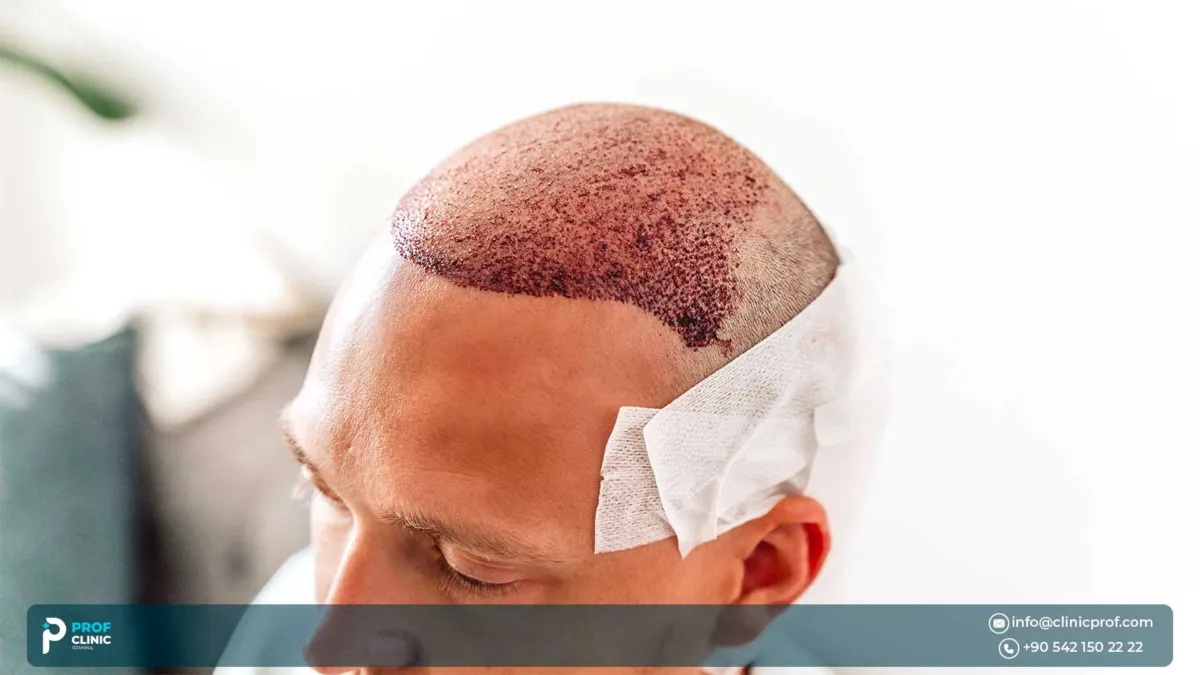
Is an eyebrow hair transplant in Turkey a sensible way to get fuller brows, or just another trend? For many people with thin, over-plucked or scarred brows it’s a reasonable long-term option: your own hair follicles are moved into the brow, one hair at a time, and they keep growing like natural hair. Whether it works well for you depends far less on the city you choose than on your candidacy, the design and the angle of every graft.
In this guide by Prof Clinic, you’ll learn who is a good candidate, how the main techniques differ, how many grafts brows usually need, what the trip to Istanbul and the first year of growth look like, and what an eyebrow transplant costs. By the end, you’ll know which questions to ask before you book anything.
What Is an Eyebrow Hair Transplant?
An eyebrow hair transplant moves healthy hair follicles, usually from the back or sides of the scalp, into areas of the brow where hair is thin or missing. The ISHRS describes it as a single outpatient procedure that uses tiny single- or double-hair units taken from a donor area whose hair is similar in texture to eyebrow hair. Surgical reviews add that the best results come from single-hair grafts harvested by FUE and placed one by one.
Because the transplanted follicles are living tissue, the result is not a drawing on the skin. The hairs shed, regrow and then behave much like the scalp hair they came from, which is why they need occasional trimming. Cleveland Clinic notes that results can last a lifetime, while also warning that you may need to trim the new brows regularly to keep them at the length you want.
Why People Choose Eyebrow Restoration
Most people who look into eyebrow restoration want to fix one of a handful of problems:
- Over-plucking: years of plucking or waxing can leave gaps where hair no longer grows back well.
- Naturally sparse brows: some people have always had thin, light or uneven brows.
- Scars: injuries, burns or earlier surgery can leave patches where no hair grows.
- Medical hair loss: conditions such as alopecia areata or trichotillomania (hair pulling) can thin the brows. These need to be stable before surgery.
- A faded tattoo or microblading: some people want real hair instead of pigment that needs touching up.
Interest is not small. According to an ISHRS survey, eyebrow transplantation made up 11 percent of surgical procedures in women in 2021.
An eyebrow transplant isn’t only for women. Men have one for the same reasons, but male brows are usually thicker and straighter and often need more grafts (see below). Our guide to Male Eyebrow Transplant: Masculine Design, Grafts & Recovery covers that design and recovery in detail.
What an Eyebrow Transplant Is Not
An eyebrow transplant is not a tint, a tattoo or microblading. Those treatments add colour to the skin and fade over time; a transplant adds hair that grows. The trade-off is time: microblading looks finished within weeks, while a transplant takes many months to show its result. If you’re still weighing your options, our guide to eyebrow transplant alternatives, from microblading to PRP compares them side by side.
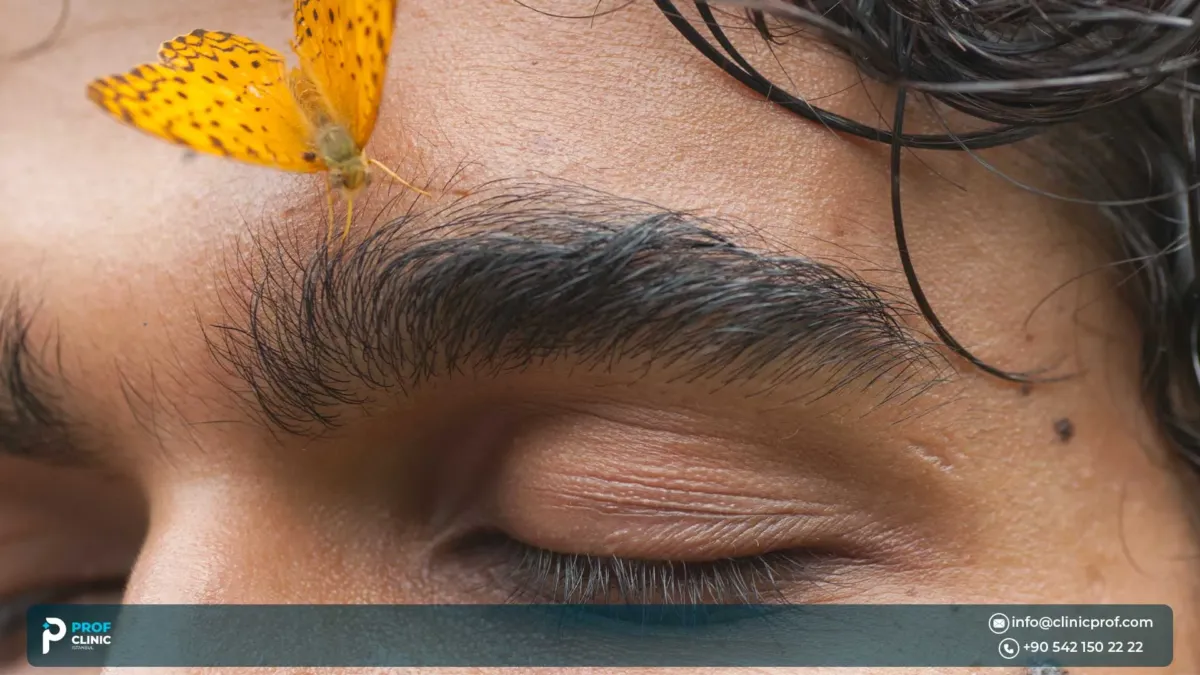
Who Is a Good Candidate for an Eyebrow Transplant?
You’re usually a good candidate if your brow loss is stable, you have enough suitable donor hair and your expectations are realistic. A review by Gupta and colleagues in the Journal of Cutaneous and Aesthetic Surgery describes the right candidate as someone who understands the limits of the density one session can achieve and whose underlying condition, if any, is stable or treated.
Signs You May Be a Good Fit
- Stable brow loss: the thinning has stopped getting worse, or its cause is known and controlled.
- Good donor hair: there is enough fine hair on the scalp to match the softness of brow hair.
- Healthy skin in the brow: no active rash, infection or inflammation.
- Realistic goals: you want a natural, balanced brow rather than the sharp outline of make-up.
- Time for upkeep: you’re ready to follow the aftercare and trim the new hairs as they grow.
When It’s Better to Wait
Some people should treat the cause first or wait until the brow is settled. A 2021 review by Rajput in the Indian Journal of Plastic Surgery advises confirming that alopecia areata, frontal fibrosing alopecia, scarring alopecia and trichotillomania show no active signs before planning surgery, sometimes with a biopsy or a specialist opinion. Thick scar tissue can also slow growth, because it carries less blood to the grafts, so scarred brows are often treated in two sessions.
Not every thin brow needs surgery, either. The same review notes that thinning brows can often respond to medical treatment, such as low-dose oral minoxidil prescribed by a doctor. If you’re not sure why your brows are thinning, start with Eyebrow Hair Loss Causes, Warning Signs and Treatment Options.
Is There an Age Limit?
There’s no fixed age limit. What matters is your general health, the stability of your brow loss and the quality of your donor hair. A systematic review of 354 eyebrow and eyelash transplant patients in the Journal of Clinical and Aesthetic Dermatology found that most were women, with an average age of 29.
Wondering whether your brows qualify? Send your brow photos to the Prof Clinic team and say whether you’d like a soft, straight or arched shape. You’ll get an honest view of whether a transplant or another option suits you better.
Eyebrow Transplant Techniques Used in Turkey
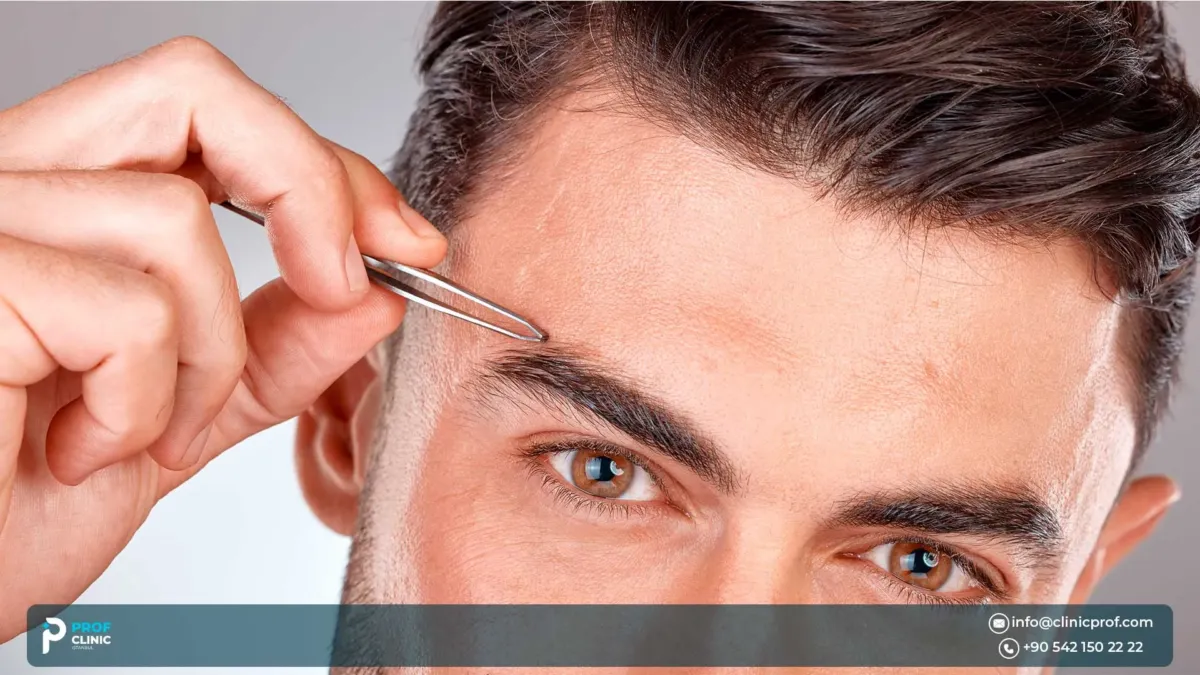
Most eyebrow transplants in Turkey use FUE (follicular unit extraction) to collect single hairs, then place them with fine blades, needles or a DHI implanter pen. The label on the technique matters less than how it’s used. Eyebrow surgery reviews put the weight on three things: single-hair grafts, a very flat exit angle and the direction of each hair.
Why Brows Need a Different Approach From the Scalp
Restoring a brow is closer to detailed drawing than to filling a bald patch. Here’s why:
- Single hairs only: scalp grafts often hold two or three hairs, which would look tufted in a brow.
- Changing direction: hairs at the head of the brow, near the nose, point upwards, while those in the body and tail lie almost flat and sweep outwards.
- A flat angle: Gupta and colleagues advise that brow hairs should exit the skin at a very acute angle, almost flat, at a density of no more than 30–35 follicular units per square centimetre.
- Finer donor hair: the softest hairs, from the back of the head, the nape or around the ears, are chosen to match brow texture. The finest are kept for the edges and the tail.
Rajput’s review puts it bluntly: grafts placed at even a slightly raised angle grow out “like canopies”. Angle is the single biggest difference between a brow that looks natural and one that looks done.
Micro FUE vs Sapphire FUE vs DHI for Eyebrows
The table compares the methods you’ll see in Istanbul clinic descriptions, in plain terms:
| Technique | How it works | Possible advantages for brows | What to keep in mind |
|---|---|---|---|
| Micro FUE | Single follicles are removed with a very fine punch and placed into tiny slits | Suits the delicate single-hair grafts brows need | The result depends on how carefully grafts are handled and angled |
| Sapphire FUE | The recipient slits are opened with a sapphire blade instead of a steel one | Very fine, clean slits that help control angle and direction | A good tool, but it doesn’t replace careful design |
| DHI | Each graft is loaded into a pen-like implanter (Choi pen) and placed directly | Close control over depth and angle in experienced hands | Slower, and it still needs precise planning and graft selection |
No method is the right one for everyone. Ask which one is planned for you and why, and how the team will keep the hairs flat in each part of the brow.
What Makes an Eyebrow Transplant Look Natural?
A natural result comes from planning, not from the brand of the tool. These four steps matter most:
- Design: a shape and thickness that fit your face and bone structure, drawn and agreed with you before surgery.
- Angle and flow: each hair placed flush with the skin, following the direction of that part of the brow.
- Hair selection: the finest hairs at the upper border and tail, slightly coarser ones in the centre.
- Graft care: follicles kept moist, chilled and handled gently so they survive the move.
How Many Grafts Does an Eyebrow Transplant Need?
Most eyebrow transplants need somewhere between about 70 and 200 single-hair grafts per brow, depending on how much hair is missing and the look you want. Rajput’s review gives these typical figures:
- Most reconstructions: about 70–120 grafts.
- A slim, curved brow, more common in women: 2–3 rows and about 70–90 grafts.
- A thick, full male brow: about 150–200 grafts.
Gupta and colleagues describe an average of about 200 single follicular units per side for a full brow. These are typical numbers, not targets. Partial gaps need far fewer grafts, and scarred skin may be treated in stages with wider spacing.
Why Travel to Turkey for an Eyebrow Transplant? Pros and Trade-Offs
People usually travel to Turkey for an eyebrow transplant because Istanbul offers plenty of choice, packages that bundle the procedure, hotel and transfers, and prices that many patients find lower than at home. The trade-offs are real too, and they are worth weighing before you book flights.
- Choice: Istanbul has many teams that focus on hair restoration, which helps you compare, but quality varies from one clinic to another.
- Cost and packages: an eyebrow transplant in Istanbul costs about €1,200–€2,000, and packages usually bundle the procedure, hotel and transfers into one written quote.
- A short stay: the procedure takes about 2–3 hours and you go home the same day, so most plans need only a few days away.
- Distance after surgery: follow-up happens by photo and message, and a touch-up, if you need one, means another trip months later.
- Licensing: ask to see the facility’s Ministry of Health licence and check it, rather than relying on adverts or agents.
Your Eyebrow Transplant Trip to Istanbul: Before, During and After
For most international patients, an eyebrow transplant in Istanbul fits into a short trip: an online assessment at home, one procedure day, a check-up and then follow-up from home. Here’s what each stage usually involves.
Before You Travel
- Photo assessment: you send clear photos of your brows and donor area, along with your medical history.
- Shape discussion: you and the team agree on a soft, straight or arched brow that fits your features.
- Pre-op advice: you’re told what to change before surgery, such as smoking or alcohol. Never stop a prescribed medicine on your own; ask the doctor first.
- Tests on arrival: blood tests and other checks are done before the procedure.
Procedure Day
An eyebrow transplant is done under local anaesthetic, so you stay awake. Rajput’s review notes that injecting local anaesthetic around the region is the most effective approach, and the NHS says hair transplants usually take place under local anaesthetic and sedation, so you should not feel pain. Most people notice the anaesthetic injections more than anything else.
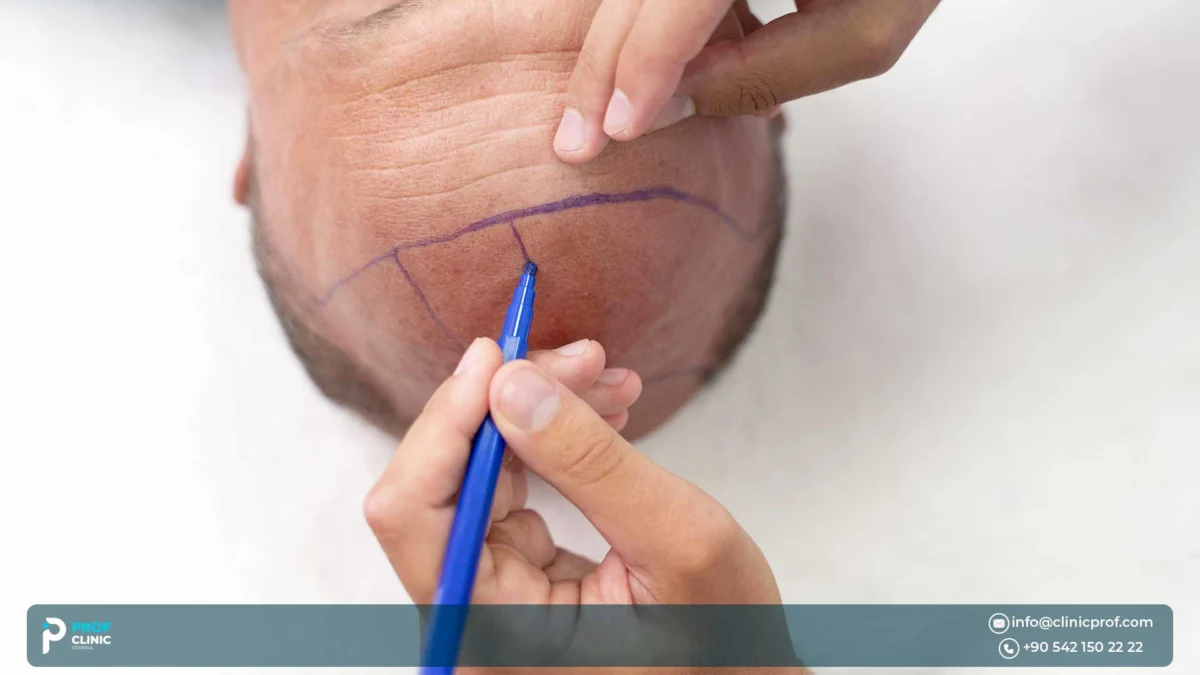
The team draws the agreed shape, harvests single hairs from the donor area, sorts them by thickness and places them one by one. Because only a small number of grafts is needed, Prof Clinic’s eyebrow transplant page puts the procedure at usually 2–3 hours. Patients go home the same day.
Also read: Eyebrow Hair Transplant Procedure: Steps, Donor Hair & Results
How Many Days Should You Stay in Istanbul?
Plan on about 2–4 days in Istanbul for an eyebrow transplant on its own. Prof Clinic’s eyebrow page describes same-day discharge and a follow-up check on the second day, so an arrival day, a procedure day and a check-up day cover most plans. Ask for your exact schedule in writing before you book flights, especially if you’re combining it with scalp work.
The First Two Weeks at Home: The Short Version
The first two weeks are when the grafts settle, and the NHS advises being very careful with transplanted hair for that long. In short, general aftercare advice from medical sources is: don’t touch or rub the brows, keep them moist exactly as instructed, and keep make-up, tight caps and sunglasses off the brow line until the doctor confirms the skin has healed. Mild redness, slight swelling and tiny crusts are normal. Pain that keeps increasing, spreading redness, pus or a fever are not, and need a prompt medical check. For the full routine, day by day, read Eyebrow Transplant Recovery: Day-by-Day Timeline & Aftercare.
Back home and unsure about what you’re seeing? Rather than guessing, share a photo of your brows with our team on WhatsApp.
When Do Transplanted Eyebrows Grow? A Short Timeline
Expect to wait about 8 months, and often closer to a year, before judging your eyebrow transplant. The brows look full on day one, thin out again when the transplanted hairs shed, and then fill in gradually as the follicles start a new growth cycle.
| Time after surgery | What usually happens |
|---|---|
| Days 1–10 | Small crusts, some redness and possible swelling that settles |
| Weeks 2–4 | Most transplanted hairs shed; the follicles stay in the skin and rest |
| Months 3–6 | Fine new hairs appear in waves, with about 50–60% of the grafts starting by months 3–4 |
| Months 7–12 | The last grafts start growing and the hairs thicken and settle; the right time to judge the result |
These figures come from Rajput’s review, which reports that a complete result is usually visible by about 8 months. Cleveland Clinic notes that new growth may take from six weeks to several months to appear. They are typical ranges, not fixed rules: scarred skin often grows later. For photos at each stage, see Eyebrow Transplant Before and After: Results, Timeline & Reviews, and for how long the result lasts, read Is Eyebrow Hair Transplant Permanent? Longevity & Success Rate.
Living With Transplanted Brows: Trimming and Grooming
Transplanted brow hairs keep some of the habits of scalp hair, so they grow longer than natural brow hair. Rajput’s review mentions trimming every 2–3 weeks at first and less often as the grafts adapt, and a clear brow gel helps the hairs lie in the right direction.
Want to see how brows change over the months? Browse our before-and-after gallery and look for starting points similar to yours.
Risks and Realistic Expectations
An eyebrow transplant is generally a low-risk procedure, but no surgery is risk-free and the result has limits. Cleveland Clinic lists scarring, pain, swelling, infection, bruising and loss of feeling or of some follicles among the possible risks. In practice, the problems patients mention most are cosmetic: hairs that grow in the wrong direction, curl, or don’t match the density they hoped for.
Surgeons usually counsel patients to expect some graft loss (Rajput’s review mentions 5–10%) and some misdirected hairs (Gupta and colleagues mention 10–15% of follicles), which trimming often improves. Density from one session has limits, so a touch-up is planned only once the brow has matured, at 9 months or later.
For a full guide to normal healing, warning signs and how problems are fixed, read Eyebrow Transplant Side Effects & Risks: What Can Go Wrong?.
Eyebrow Transplant Prices in Turkey at a Glance
As a rough 2026 guide, eyebrow transplants in Istanbul come to about €1,200–€2,000, and that range is approximate rather than a final price. Your price depends on your case after assessment, mainly the number of grafts and whether scars or earlier treatments make the work more complex.
Packages for international patients usually include the procedure, pre-op blood tests, medication and an aftercare kit, a hotel stay and VIP airport and hotel transfers. When you compare quotes, check what each one includes rather than the total alone, and ask whether follow-up after you fly home is part of the package.
Also read: Eyebrow Transplant Cost in Turkey 2026: Prices, Packages & Value
How to Choose an Eyebrow Transplant Clinic in Istanbul
There’s no official ranking of the best eyebrow transplant clinic in Istanbul. The right one is the clinic that can show you, in detail, how it will design and place your brows and who will look after you once you’re home. Eyebrow restoration is a permanent change to your face, so judge clinics by clear standards rather than by adverts. The NHS advice on hair transplants is a good starting point: find out who will carry out the procedure, their qualifications and experience, and their complication rates.
Use these questions with any clinic you’re considering:
Design and Technique Questions
- Who draws the brow shape, and who creates the recipient slits and places the grafts?
- Will you use single-hair grafts only, and how will you keep them flat in each part of the brow?
- Where will the donor hair come from, and how will you match its texture to my brows?
- Can I see consented results from patients with a starting point like mine, at 8 months or later?
Safety and Follow-Up Questions
- Which medical checks and blood tests are done before surgery?
- What written aftercare plan will I take home, and how do I reach the team after I fly back?
- What happens if I develop an infection or need a second session?
- Is the growth timeline explained honestly, or are “instant” results being promised?
A clinic that answers these clearly, and in writing, is usually a safer choice than one that leads with discounts.
Who Should Perform Your Eyebrow Transplant?
There’s no official list of recommended surgeons, but you can check who does what. Ask to see the facility’s Ministry of Health licence and verify it, ask which doctor carries out your medical assessment and plans the design, and ask who actually harvests and places the grafts. The name of the technique, whether FUE with a blade or a DHI pen, matters less than who places each hair and how flat it sits, so ask the same question about any method you are offered. A medical assessment before surgery that covers the history of any hair-loss condition is a good sign.
Prof Clinic for Eyebrow Transplants in Istanbul: What You Can Check
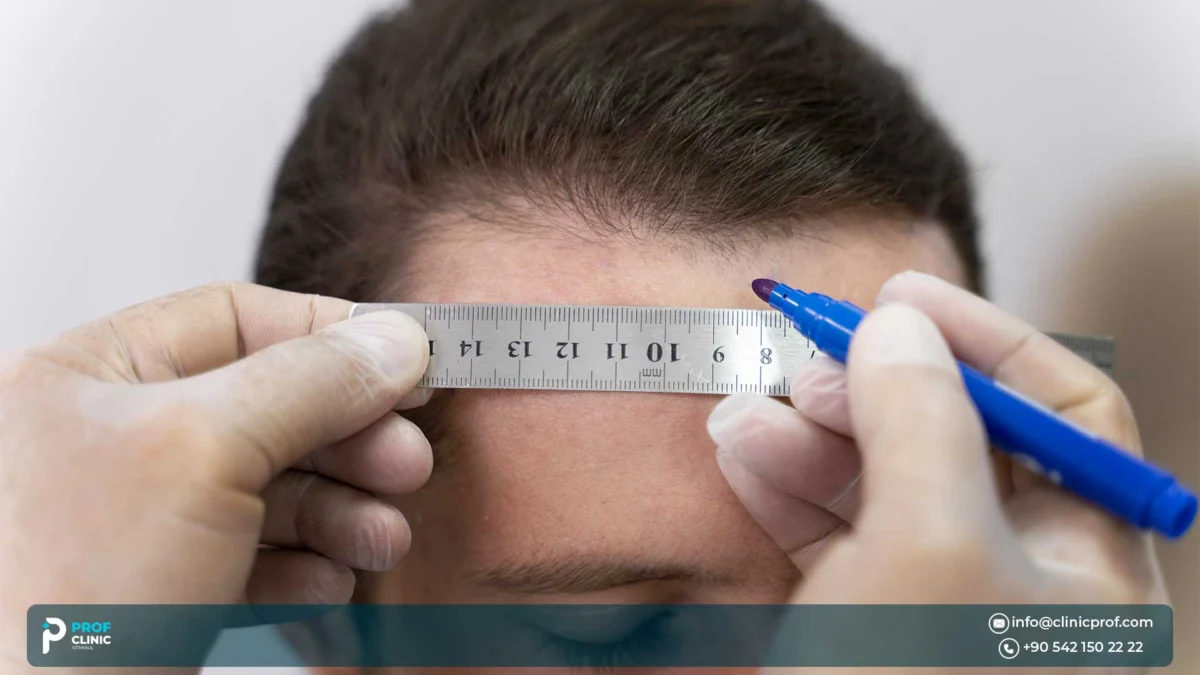
At Prof Clinic in Istanbul, an eyebrow transplant in Turkey starts with a medical assessment, not a booking. Spc. Dr. Lütfi Öztürk, the internal-medicine specialist in charge of hair restoration, handles the medical assessment of your brow loss, plans the treatment and coordinates follow-up.
Here’s what you can confirm before you travel:
- Techniques: eyebrow work is part of the clinic’s wider hair transplant in Turkey service, which names FUE, DHI, Sapphire FUE and Micro FUE.
- Pre-op tests: ahead of the brow procedure, your blood count, ECG, kidney and liver function, electrolytes and blood sugar are checked, and you are screened for hepatitis and HIV.
- Honest expectations: how full your brows can look is discussed for your case alone, with no particular density promised beforehand.
- A written quote: the team prices your brow work in writing after reviewing your photos, and the package covers the procedure, accommodation, airport and hotel transfers, and post-op care.
- Follow-up from home: once your brows are done, the coordination team keeps in touch and sends advice over WhatsApp.
Ready to see what’s realistic for your brows? Book a free online consultation, share your photos and the shape you have in mind, and ask for a written plan covering technique, timeline and aftercare.
FAQs About Eyebrow Hair Transplant in Turkey
How long does an eyebrow hair transplant last?
The transplanted follicles are your own living hair, so the results are meant to be long-lasting, and Cleveland Clinic says they can last a lifetime. The hairs keep some scalp-hair behaviour and usually need trimming. Final density depends on how many grafts survive, which is why surgeons tell patients to expect a small loss.
How long does an eyebrow transplant take?
Usually 2–3 hours, according to Prof Clinic’s eyebrow transplant page, because brows need far fewer grafts than the scalp. Time can be longer for a full male brow or for scarred skin that needs careful spacing. You go home the same day, and a check-up is usually planned for the second day.
Is an eyebrow transplant painful?
Most patients describe it as uncomfortable rather than painful. The brows and donor area are numbed with local anaesthetic, so you usually feel pressure rather than pain during the procedure. The injections themselves sting for a few seconds. Afterwards, mild soreness or tightness for a few days is common and usually eases with the pain relief your doctor approves.
Which country is best for an eyebrow transplant?
There is no single best country. Turkey, and Istanbul in particular, is a popular choice because of the number of teams that focus on hair restoration and the travel packages on offer. What decides your result is the individual clinic: who designs and places the grafts, how patients are screened and how follow-up works after you fly home.
Is an eyebrow transplant safe in Turkey?
It’s generally a low-risk procedure, but safety depends on the team and the facility rather than the country. Cleveland Clinic lists infection, scarring, bruising and loss of some follicles among the possible risks. In Turkey, check the facility’s Ministry of Health licence, who the doctor is and which pre-op tests are done.
Can an eyebrow transplant fix over-plucked brows?
Usually, yes. When years of plucking have stopped hair from growing back in some areas, transplanted follicles can fill those gaps and rebuild the shape. It works best once the brow loss is stable. If the brows are still thinning for an unknown reason, a medical check comes first, because some causes respond to treatment without surgery.
Final Thoughts
An eyebrow hair transplant in Turkey can give thin or scarred brows real, growing hair, but the result is decided by candidacy, design and graft angle rather than by the destination. Check that your brow loss is stable, ask who designs and places your grafts, plan for about 8–12 months of growth, and expect some trimming along the way.
Before anything is booked, get an honest assessment. Contact Prof Clinic with your brow photos and ask whether an eyebrow transplant in Istanbul is the right option for you.
Sources
- ISHRS — Body Hair Transplantation: Permanent Solution for Fuller Hair & Enhanced Aesthetics
- Cleveland Clinic — Eyebrow Transplant: What It Is, Surgery, Recovery & Results
- NHS — Hair transplant
- Indian Journal of Plastic Surgery — Hair Transplant for Eyebrow Restoration (Rajput, 2021)
- Journal of Cutaneous and Aesthetic Surgery — The Science and Art of Eyebrow Transplantation by Follicular Unit Extraction (Gupta et al., 2017)
- Journal of Clinical and Aesthetic Dermatology — Eyebrow and Eyelash Hair Transplantation: A Systematic Review (Klingbeil & Fertig, 2018)