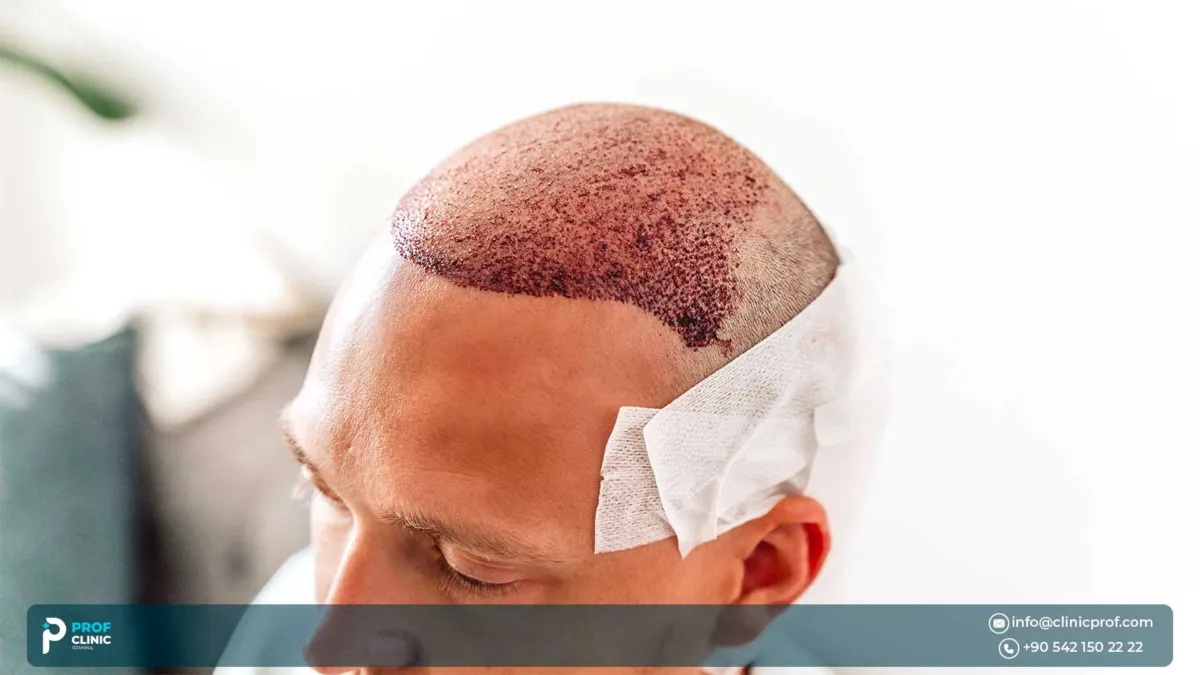
What does an eyebrow transplant before and after really look like, and will your result look natural? In most well-planned cases, the healed brow is made of fine single hairs that lie close to the skin and follow its natural direction. You only see that result after months of healing, shedding and regrowth, so the photo taken on the day of surgery is the starting point, not the outcome.
In this guide by Prof Clinic, you’ll learn what good eyebrow hair transplant results look like up close, how to judge before-and-after photos without being misled, what changes month by month, and what patient reviews and regrets usually come down to. By the end, you’ll know which photos to trust and which questions to ask before surgery in Turkey.
What Good Eyebrow Transplant Results Look Like
A good eyebrow transplant result is defined by direction and softness, not by density alone. Gupta and colleagues, in the Journal of Cutaneous and Aesthetic Surgery, describe a natural brow in three parts: a head where the hairs point upwards, a dense body where upper and lower hairs meet in a herringbone pattern, and a tail that runs outwards and thins. A brow can look full and still look wrong if those directions are missing.
Here’s what to look for in any healed result:
- Flat, directional growth: the hairs lie close to the skin and follow the brow line, rather than standing up or pointing straight out.
- Single hairs, no clusters: eyebrows are rebuilt with one-hair grafts, so a healed brow shouldn’t show tufts or “plugs”.
- Gradual density: the head is softer and lighter, the body is the densest part, and the tail tapers.
- Natural symmetry: the two brows suit the face and each other, but like natural brows they are sisters, not identical twins.
- A shape that suits the face: Gupta and colleagues note that an inner brow placed too high can look surprised, while a low inner end with a high tail can look angry.
In short, the best results don’t look “done”. People notice that the face looks more balanced, not that the brows were transplanted.
What a Natural Eyebrow Transplant Looks Like Up Close
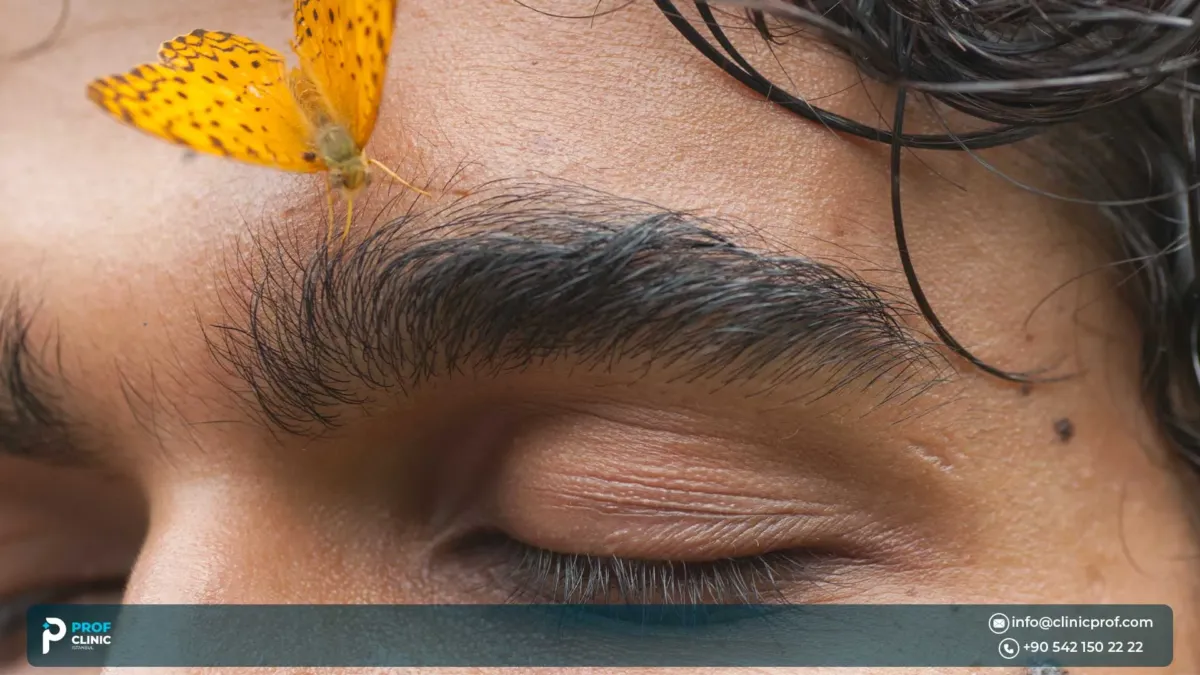
Close-up photos are where a natural result proves itself. On a healed brow, you should see individual hairs crossing each other slightly, the way native brow hairs do, with finer hairs along the upper edge and tail and slightly stronger ones in the body. Rajput’s review in the Indian Journal of Plastic Surgery describes reserving the finest grafts for the upper border and the tail to create exactly this soft edge. At close range, a less refined result shows hairs at one uniform angle, small bumps at the base of the hairs, or tight rows that look drawn rather than grown.
Eyebrow Implants or Eyebrow Transplant?
When people search for “eyebrow implants before and after”, they usually mean a hair transplant, but the word covers two very different procedures. A modern eyebrow transplant moves your own hair follicles, taken as tiny one- or two-hair units from areas such as the back or side of the head, according to the ISHRS. Synthetic hair implants are something else: Rajput’s 2021 review advises against them and reports repeated infection, pustules, granulomas and scarring. If a gallery says “implants”, check what was actually implanted.
How to Judge Eyebrow Transplant Before and After Photos
A trustworthy before-and-after comparison keeps everything the same except the brows. In a proposal for photographic standards in aesthetic medicine, Prantl and colleagues list the conditions that should stay constant across a photo timeline: the camera, distance, angle, background and lighting. They add that makeup must be removed for both the before and the after pictures, and that filters, retouching and morphing tools should be strictly avoided.
Use this checklist when you look at any gallery, including ours:
- Same conditions: the same light, angle, distance and background in both photos. A brighter “after” shot can make thin brows look fuller.
- Bare brows: no pencil, powder, tint, coloured gel, microblading or tattoo in the after photo.
- Both brows in frame: a front view of the whole face shows symmetry; a single close-up of the better side does not.
- More than one stage: a credible case shows the brows before surgery, soon after and once mature, not just a polished final shot.
- A stated time point: “8 months after surgery” tells you far more than “after”.
- A similar starting point: compare cases with your hair colour, skin tone and type of brow loss.
Be more cautious with a gallery if you notice any of these:
- Blurred or unnaturally smooth skin: heavy smoothing around the brows usually points to a filter.
- Hairs standing up: hairs that point straight out in an “after” photo show poor angle control, even if the brow looks dense.
- Very early “after” photos: pictures taken a few days or weeks after surgery show the hairs just before they shed, not the final result.
It’s also fair to ask where the donor hair came from. Gupta and colleagues note that hair from the nape of the neck and in front of the ears is usually softer, finer and shorter than hair from the back of the scalp, so the donor site shapes the texture you see in the after photo.
Want to see cases judged by these standards? Browse our before-and-after gallery and check the time point under each result.
The same checks apply to scalp results: our guide to how to judge hair transplant before-and-after results shows how to read those galleries.
Eyebrow Transplant Results Timeline: What Changes Month by Month
Eyebrow transplant results arrive in stages, and the brows usually look worse before they look better. Almost all transplanted hairs shed in the first weeks, regrowth typically starts at around 3–4 months, and density keeps building until somewhere between 8 and 14 months, according to the surgical reviews by Gupta, Rajput, and Klingbeil and Fertig. Here’s what a photo taken at each point usually shows:
| Time after surgery | What you usually see | What it tells you |
|---|---|---|
| Day 1 | Full-looking brows with tiny crusts around each graft, sometimes swelling | The design and shape, not the final density |
| Days 7–14 | Crusts falling away, pink skin, mild redness | The skin is healing; the follicles are settling in |
| Weeks 2–6 | Most transplanted hairs shed | Expected; the follicle stays under the skin |
| Months 2–3 | Brows look close to how they did before surgery | The quiet phase: the follicles are resting |
| Months 3–6 | Fine new hairs appear, often unevenly | Growth has started; density is still building |
| Months 6–8 | Most grafts have grown, and the hairs thicken | A fair mid-point to review direction and shape |
| Months 8–14 | Density and direction settle | The time to judge the final result |
These are typical ranges, not fixed rules, and sources differ slightly. Cleveland Clinic says it can take anywhere from six weeks to several months to notice new growth, Klingbeil and Fertig describe growth starting 4–5 months after the hairs shed, and for scalp transplants the NHS expects full results after 10–18 months. Your skin, the number of grafts and any scarring can all shift the timing.
The Quiet Phase: Why Month 2 Can Look Like Before
The hardest photo to look at is usually the one taken in the second or third month. The hairs placed on surgery day have shed and new ones haven’t surfaced yet, so the brows can look almost as sparse as before. This is the normal resting stage of the hair cycle, not a failed procedure. The same pattern applies with follicular unit extraction (FUE), the one-by-one harvesting method now commonly used for eyebrows and described by Gupta and colleagues. Rajput explains that grafts don’t all wake up at once: about 50–60% start growing at 3–4 months, another 20–25% by 5–6 months, and the last 10–15% at 7–8 months.
When Can You Judge the Final Result?
Judge your eyebrow transplant results only once the brows have matured, which usually means from around 8 months and often closer to a year. Klingbeil and Fertig’s systematic review in the Journal of Clinical and Aesthetic Dermatology places maximum density at 8–14 months, and the surgical reviews advise waiting at least 8–10 months before any second session. Before that, a gap may simply be grafts that haven’t started growing.
The practical takeaway: keep a photo diary. Every 30 days, take a front photo and a photo of each brow in the same spot, light and distance, without makeup. Daily changes are hard to see, but month 1 next to month 10 shows the real difference.
Also read: Eyebrow Transplant Recovery: Day-by-Day Timeline & Aftercare
Who Sees the Biggest Before-and-After Change?
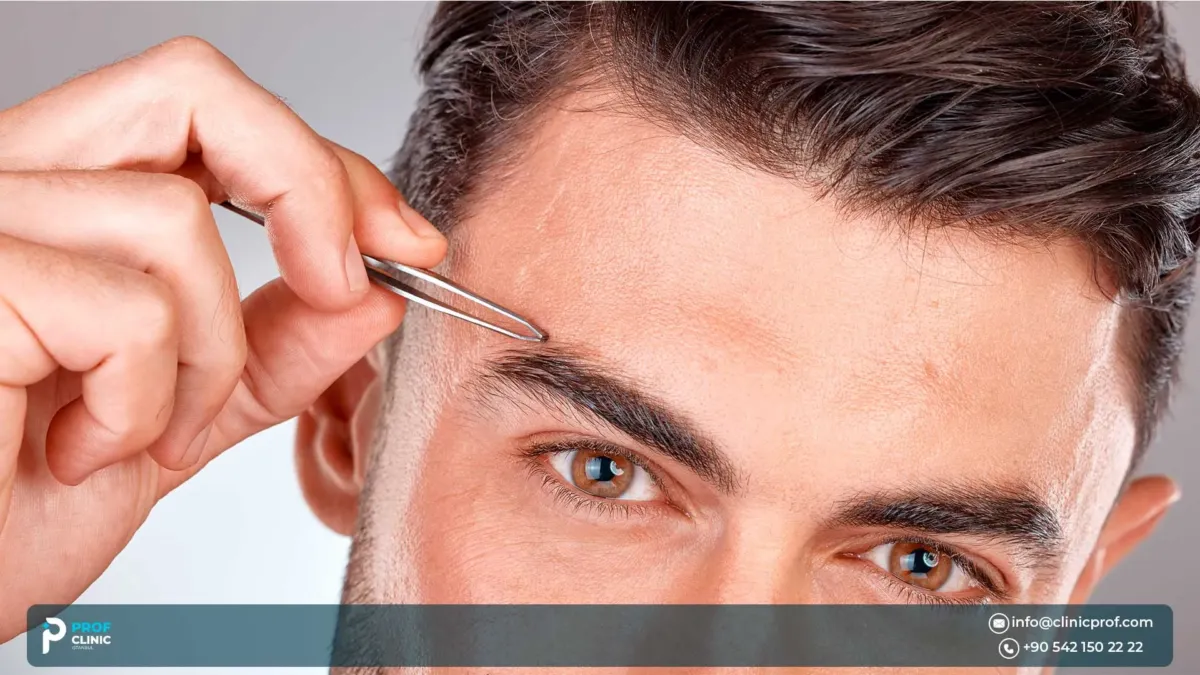
The most dramatic eyebrow transplant before and after photos usually come from people who start with clear gaps, because real hair on bare skin creates the strongest contrast. Cleveland Clinic lists people who have lost brow hair, have a faded brow tattoo or want fuller brows as typical candidates. In practice, the most striking changes tend to belong to:
- Over-plucked brows: years of plucking or threading can leave empty arches or a missing tail that never grows back.
- Brows thinned with age: restoring the outer third often makes the whole face look more open.
- Scars in the brow: a well-planned transplant can fill the gap, although scarred skin often needs more than one session.
- Daily brow drawers: people who have filled in their brows every morning for years often notice the biggest change in their routine.
- Faded tattoos or microblading: real hair can replace pigment that has blurred or changed colour.
Female and Male Eyebrow Transplant Before and After
Female and male brows are designed differently, so their before-and-after photos look different too. According to Rajput, a female brow is slimmer and more curved, usually with 2–3 rows and about 70–90 grafts, while a full male brow can need around 150–200 single-hair grafts and sits lower and flatter along the brow bone. Women should also know that transplanted hairs are thicker than native brow hairs and harder to reshape by threading or plucking, so the shape needs to be agreed carefully before surgery.
When May Eyebrow Transplant Results Be More Subtle?
Results can be more modest when the starting conditions are less stable. The usual reasons are:
- Active hair loss: with alopecia areata, frontal fibrosing alopecia or trichotillomania, specialists advise confirming that the condition is not active first, because it can return and affect the transplanted hairs. Our guide to hair transplant and alopecia areata explains who is not a good candidate.
- Scarred skin: grafts placed into scars often grow later and less densely, and usually need a second session.
- Texture mismatch: donor hair that is much coarser or curlier than native brow hair needs more grooming to blend in.
- Very high density goals: one session has limits, and Gupta and colleagues advise telling patients beforehand that a repeat session may be needed.
If your brows are thinning for no obvious reason, find the cause before planning surgery. Our guide to eyebrow hair loss causes, warning signs and treatment options explains what to rule out, and if scars or alopecia are involved, our article on eyebrow transplants for scars and alopecia covers the extra checks.
Not sure where your brows fit? Send a photo of your brows to our team on WhatsApp and ask what change is realistic in your case.
What Affects Eyebrow Hair Transplant Results Most?
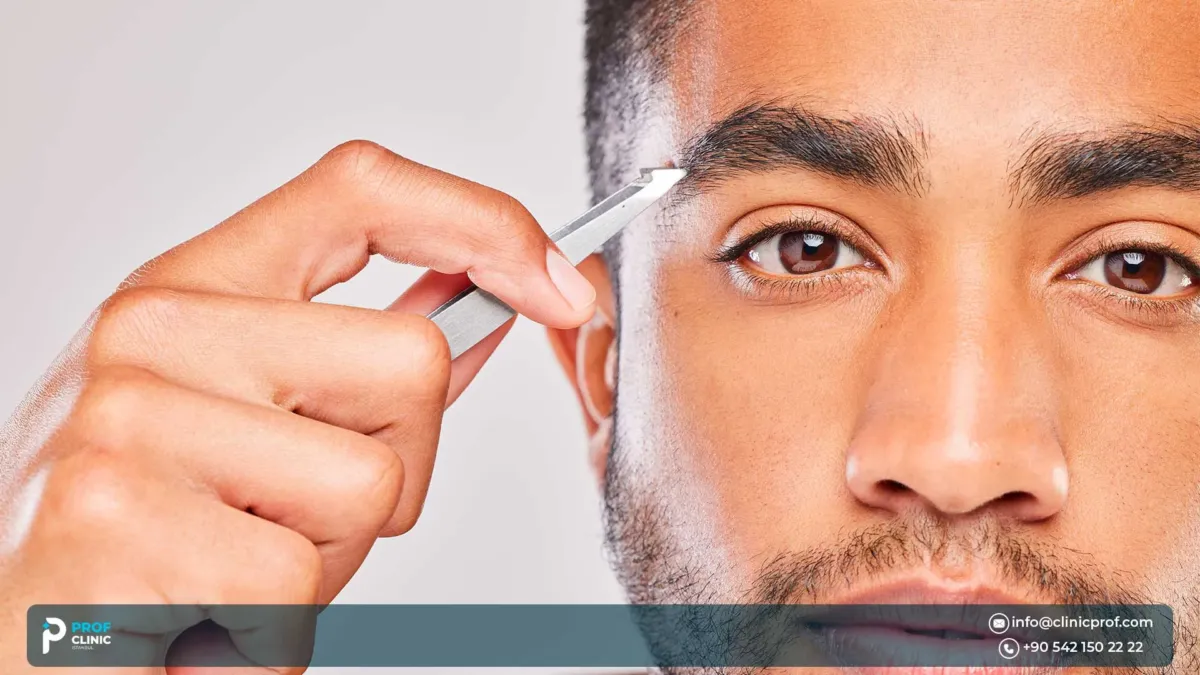
Three things decide most eyebrow hair transplant results: the design and angle, the donor hair, and how the hairs are groomed during the first year. Gupta and colleagues note that the most common complications, such as poor direction and curl, texture mismatch and weak regrowth, depend on the operator and become less frequent with experience and the right technique.
Design and Graft Angle
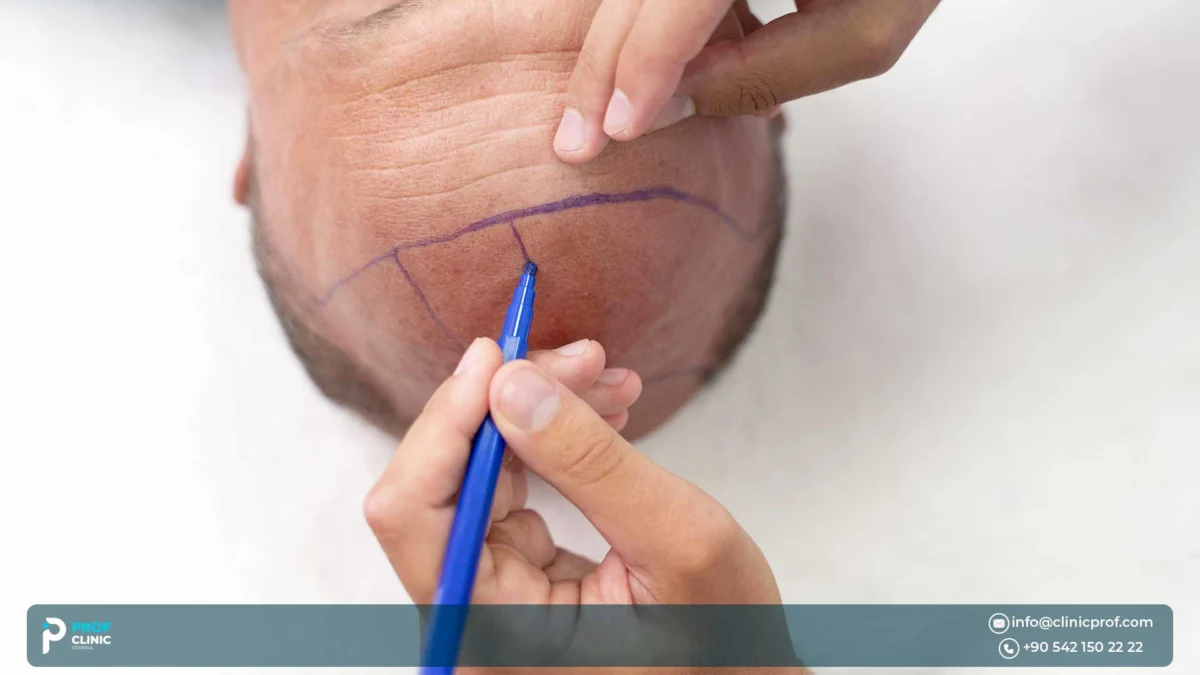
The angle is the single detail that separates a natural brow from a spiky one. Gupta and colleagues advise that the hairs should exit at a very acute angle, as flat as possible, at a density of no more than 30–35 follicular units per square centimetre, and Rajput warns that grafts placed at even a slightly raised angle grow out “like canopies”. Direction also changes along the brow: upwards at the head, then sideways and slightly down through the body and tail. One easily missed detail is that the brow muscles can shift after the anaesthetic is injected, so the shape should be marked and agreed with you before the anaesthetic is given.
Donor Hair and Graft Numbers
Eyebrows are rebuilt with single-hair grafts, and the number you need depends on the size of the gap and the brow you want. Rajput’s review puts most reconstructions at 70–120 grafts, with a slim female brow needing around 70–90 and a thick male brow up to 150–200, while Gupta and colleagues describe an average of about 200 per side. So an eyebrow transplant usually involves a few hundred grafts in total, not thousands.
The donor hair also keeps some of its scalp behaviour. Klingbeil and Fertig explain that scalp hair grows much faster than brow hair because of its longer growth phase, so it needs more frequent grooming. Over time, the hairs tend to adapt to their new site and need trimming less often.
Grooming in the First Year
How you groom the new hairs shapes the final look almost as much as the surgery itself. Once your clinic confirms the skin has healed, these habits usually help:
- Trim regularly: Rajput’s review mentions trimming every 2–3 weeks at first, then less often as the grafts adapt.
- Train the direction: Gupta and colleagues ask patients to use hair gel from about week 3 to guide misdirected hairs, and Rajput suggests a little petroleum jelly to push hairs along the brow line.
- Be patient with stray hairs: around 10–15% of follicles may grow in an off direction, according to Gupta and colleagues, and many improve as they lengthen and are trained.
Want a brow designed around your face and donor hair? Book a consultation and ask how the angle, graft count and donor area would be chosen for you.
Eyebrow Hair Transplant Reviews: What Patients Report
Eyebrow transplant reviews tend to follow the same arc: worry in the first months, then satisfaction once the hairs have grown in. Reviews are individual experiences, not medical evidence, but they show which parts of the process surprise people. Klingbeil and Fertig note that most hair transplant studies measure their outcomes by patient satisfaction, so it’s worth knowing what patients actually focus on.
What Patients Like Most
- No more drawing: waking up with defined brows and skipping the daily pencil routine is the most common positive.
- A refreshed look: friends often say the face looks more rested without guessing why.
- Real hair: unlike a tattoo or microblading, the result is hair that can be brushed and shaped.
Common Surprises During Recovery
- The shedding phase: almost every patient has a moment of worry when the new hairs fall out in the first weeks.
- Uneven growth: one brow may fill in faster than the other for a while, so symmetry is best judged once both have matured.
- The upkeep: many patients don’t expect how quickly the transplanted hair grows or how often it needs trimming.
Negative Reviews and Eyebrow Transplant Regret
Most negative reviews, and most cases of eyebrow transplant regret, come down to a handful of issues that can often be avoided:
- Hairs that stick out: usually a graft angle that was too steep, or no training of the hairs during the first year.
- Density gaps: one session may not reach the density some patients want, so a second session should be discussed before the first.
- A shape that doesn’t suit the face: hard to undo, because transplanted hairs are long-lasting and thicker hairs are difficult to pluck into a new shape.
- Judging too early: some reviews are written at month 3, before most grafts have even started growing.
When you read reviews, give more weight to ones written many months after surgery with unfiltered photos, and look at how the clinic responded when something went wrong. You can read what our own patients say on our patient reviews page.
For a wider look at reading patient stories and spotting fake ones, see our guide to hair transplant reviews.
Also read: Is Eyebrow Hair Transplant Permanent? Longevity & Success Rate
Prof Clinic for Natural Eyebrow Results in Istanbul
At Prof Clinic in Istanbul, an eyebrow transplant in Turkey starts with your photos and a medical assessment, and the brow shape is designed around your facial proportions before surgery. Your brow plan is overseen by Spc. Dr. Lütfi Öztürk, the clinic’s medical lead for hair restoration and an internal-medicine specialist, who does the medical assessment and treatment planning and coordinates follow-up.
Before booking flights for your brows, you can check the following:
- Techniques: eyebrow work is part of the clinic’s hair transplant in Turkey service, using FUE-based methods such as Micro FUE and Sapphire FUE, with a no-shave option offered especially for women.
- Pre-op tests: before any brow surgery you have a blood count, an ECG, kidney and liver function tests, electrolytes and blood sugar, plus hepatitis and HIV screening.
- Honest expectations: how full your new brows may look is discussed for your own case, and no density is promised beforehand.
- A written quote: once the team has looked at photos of your brows, you receive a written quote for a package that bundles the procedure, accommodation, transfers between the airport and your hotel, and post-op care.
- Follow-up after you fly home: the coordination team keeps in contact and advises you on WhatsApp while your brows heal and grow.
As a general guide, an eyebrow transplant in Istanbul costs about €1,200–€2,000. Read it as a rough 2026 range rather than a final price, since what you pay depends on your brows and your case after assessment. Ask for a written quote based on photos of your brows.
FAQs About Eyebrow Transplant Before and After
Do eyebrow transplants look natural?
In most well-planned cases, yes, once the hairs have grown in. A natural result uses single-hair grafts placed almost flat against the skin, following the brow’s changing direction from head to tail. Results that look unnatural usually have hairs placed too upright or a shape that doesn’t suit the face, which is why design and angle matter more than the number of grafts.
Do eyebrow transplants look bad at first?
They can look untidy for a while, and that’s normal. For the first week or two you’ll have tiny crusts and some redness, then most of the transplanted hairs shed within the first weeks. Around months 2–3 the brows may look close to how they did before surgery. New growth usually starts at about 3–4 months and builds from there.
Will I regret an eyebrow transplant?
Regret is uncommon when expectations are realistic, but it does happen. The usual causes are a shape that doesn’t suit the face, hairs that stick out, or not realising that the transplanted hair needs regular trimming. Agree the design before surgery, ask whether a second session might be needed, and judge the result only once the brows have matured.
How many grafts does an eyebrow transplant need?
Usually a few hundred in total, not thousands. Surgical reviews describe about 70–90 grafts for a slim female brow and around 150–200 for a full male brow, per side. The exact number depends on how much of the brow is missing, the shape you want and whether scars need filling, and it should be confirmed after an assessment.
How can I tell if eyebrow transplant before-and-after photos are real?
Check that both photos share the same light, angle and distance, that the brows in the “after” photo are bare of makeup and tint, and that a time point such as “month 10” is stated. Be wary of heavy skin smoothing, very early “after” shots and a single flattering side. Ask the clinic for unedited photos of the same patient at several stages.
How long do eyebrow transplant results last?
The transplanted hairs are usually long-lasting. Cleveland Clinic describes an eyebrow transplant as a long-term solution whose results can last a lifetime. Because the hairs keep some of their scalp behaviour, they need ongoing trimming, and conditions such as alopecia areata can still affect them if they become active again.
Final Thoughts
A good eyebrow transplant before and after is judged in months, not days: shedding in the first weeks, new growth from around the third or fourth month, and a mature result between about 8 and 14 months. What makes it look natural is a flat graft angle, single-hair grafts, a design that suits your face and patient grooming in the first year. When you compare photos, look for the same light, bare brows and a clear time point.
The safest first step is an honest assessment of what your brows can achieve. Talk to Prof Clinic and ask for a written plan for your eyebrow transplant in Istanbul.
Sources
- Cleveland Clinic — Eyebrow Transplant: What It Is, Surgery, Recovery & Results
- NHS — Hair transplant
- ISHRS — Body Hair Transplantation: Permanent Solution for Fuller Hair & Enhanced Aesthetics
- Journal of Clinical and Aesthetic Dermatology — Eyebrow and Eyelash Hair Transplantation: A Systematic Review (Klingbeil & Fertig, 2018)
- Journal of Cutaneous and Aesthetic Surgery — The Science and Art of Eyebrow Transplantation by Follicular Unit Extraction (Gupta et al., 2017)
- Indian Journal of Plastic Surgery — Hair Transplant for Eyebrow Restoration (Rajput, 2021)
- Plastic and Reconstructive Surgery Global Open — A Proposal for Updated Standards of Photographic Documentation in Aesthetic Medicine (Prantl et al., 2017)