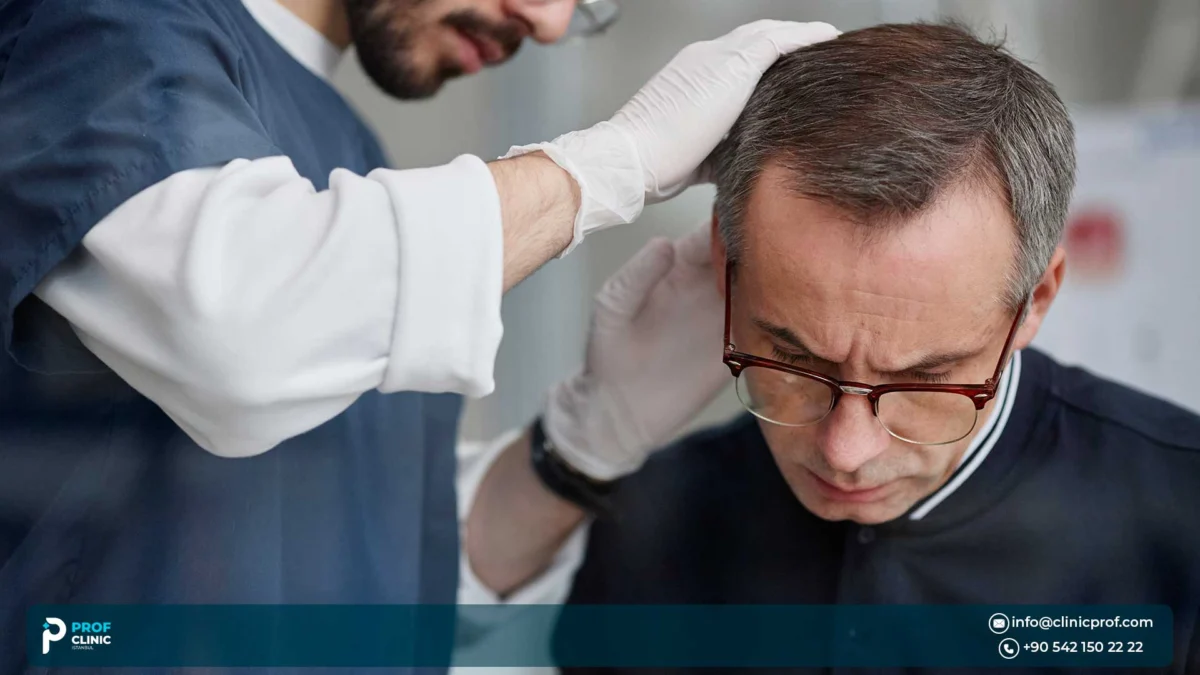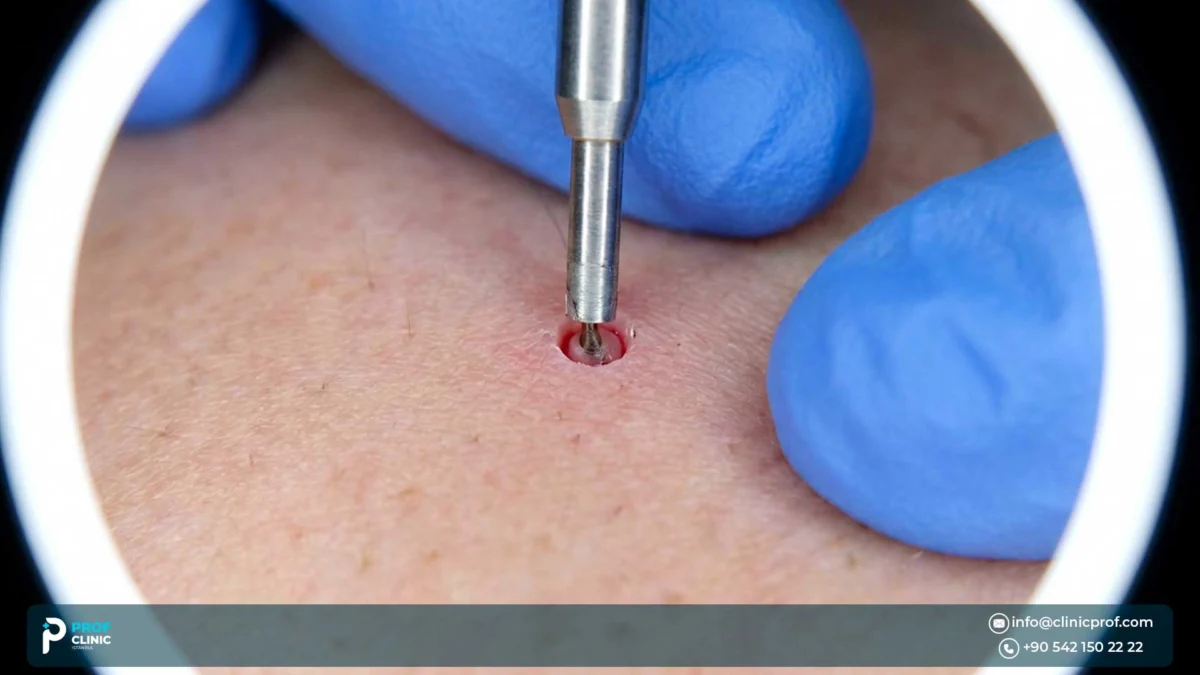
What is an FUE hair transplant, and is it the right method for your hair loss? FUE (follicular unit extraction) moves small groups of one to four hairs, one at a time, from the back and sides of your scalp to the areas that are thinning, and it leaves tiny dot scars instead of one long scar. It usually suits people with stable, inherited hair loss and a good donor area, but it has real limits that are worth knowing before you book.
In this guide by Prof Clinic, you’ll learn how FUE works step by step, how it compares with FUT and DHI, its honest benefits and drawbacks, what recovery looks like month by month, and what FUE usually costs in Turkey. By the end, you’ll know which questions to ask before you choose a clinic in Istanbul.
What Is an FUE Hair Transplant?
An FUE hair transplant is a surgical procedure in which the doctor removes individual follicular units from a donor area and implants them where hair is thinning. A follicular unit is the natural group in which hair grows. According to a review by Dua and Dua in the Journal of Cutaneous and Aesthetic Surgery, each extracted graft usually holds 1 to 4 hairs, and occasionally 5 or 6.
The grafts come from a “safe” donor zone at the back and sides of the head, where hair usually holds up against pattern hair loss. The same review warns that grafts taken from outside this zone, the so-called temporary zone, may be lost later. That is why the donor area, not the technique, sets the limit on what any FUE plan can achieve.
You may also see FUE written as follicular unit excision. The ISHRS (International Society of Hair Restoration Surgery) uses this name because it describes the cut more accurately, but the method and the acronym are the same.
How FUE Works: Extraction, Then Implantation
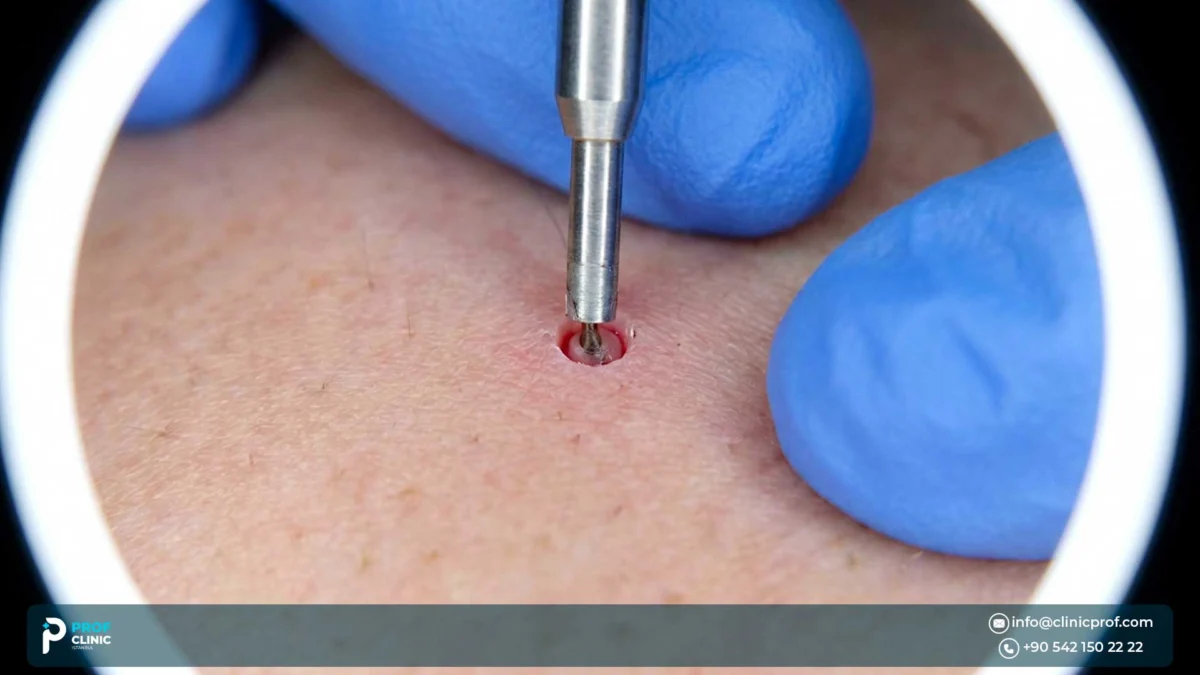
FUE has two halves. First, the donor area is numbed and a tiny circular punch, typically 0.6–1.0 mm across, scores the skin around each follicular unit so that it can be lifted out. Then the grafts are placed into small openings in the thinning area. Dua and Dua point out that only the extraction is different in FUE; the implantation is the same as in the older strip method.
What it means in real life: FUE, Sapphire FUE and DHI all start with the same extraction. They differ in how the grafts go in, which is why those three are compared further down.
What Does Micro FUE Mean?
Micro FUE is not a separate operation. The “micro” refers to the very fine punch used for extraction: Dua and Dua describe micropunches of about 0.6–1.0 mm, small enough to keep each wound, and each scar, tiny. Because the term is not a formally defined technique name, clinics may use it in different ways, so if a quote says “Micro FUE”, ask which punch size will be used and who will do the extraction.
Is FUE Hair Surgery?
Yes. FUE involves no stitches and no strip of skin, but every graft is cut out of the scalp, so it is still surgery. The ISHRS states plainly that hair transplant surgery is real surgery and that doctors should be primarily responsible for its surgical steps. It also warns about clinics where unlicensed technicians perform some or all of the procedure, so it’s fair to ask any clinic who will make the incisions in your case.
FUE vs FUT: The Key Differences
The main difference is how the grafts are harvested. FUE removes follicular units one by one, while FUT (follicular unit transplantation, or the strip method) removes a thin strip of scalp and divides it into grafts under a microscope. Both can give natural results: a 2024 review by Konior in Facial Plastic Surgery says each method can produce outstanding results, but each has its own advantages and drawbacks that should shape the plan.
Here’s how they usually compare:
| Criterion | FUE | FUT (strip) |
|---|---|---|
| How grafts are taken | Individual units, removed with a 0.6–1.0 mm punch | A thin strip of scalp, cut into grafts under magnification |
| Donor scar | Many tiny dot scars, usually hard to notice | One linear scar, hidden unless the hair is cut very short |
| Shaving | The back of the head is usually shaved | Only the strip area is trimmed |
| Stitches | None | Yes, the strip wound is closed |
| Donor healing | About a week | About 2–3 weeks |
| Usually suits | Short hairstyles, small to medium areas, scar repair, beard or body donor hair | Longer hairstyles and large areas taken from the scalp in one session |
Treat the table as a general comparison, since individual cases differ. The scar and shaving rows follow the NHS; the healing times come from the comparison table in the Dua and Dua review. Older reviews counted large sessions as a weak point of FUE, and that review rated large areas “difficult” with FUE and “possible” with the strip method. Large FUE sessions are widely offered today, and the NHS notes that a big area may need two or more sessions on different days. Whatever the method, your donor supply sets the ceiling. For the strip method on its own, including its scar, recovery and cost, see our FUT hair transplant guide.
FUE, Sapphire FUE and DHI: Same Extraction, Different Implantation
FUE, Sapphire FUE and DHI all harvest grafts the same way; they differ only in the implantation step. In standard FUE, the doctor opens tiny channels with a steel blade or needle, and the grafts are placed with fine forceps. Sapphire FUE opens those channels with sapphire-tipped blades. DHI uses an implanter pen, often called a Choi pen, that opens the site and places the graft in one movement.
The ISHRS goes a step further: it describes DHI as another name for implanting with sharp implanters, not a separate hair transplant method. It also notes that implanters avoid gripping the bulb of the follicle, which may mean less trauma than forceps.
In practice, the differences look like this:
- Standard FUE: the channels are prepared before placement, which usually makes it efficient for large areas.
- Sapphire FUE: the same workflow, with sapphire blades for the channels. The choice of blade usually reflects the team’s preference.
- DHI: angle and depth are set graft by graft, which some doctors prefer along the hairline. It needs more trained hands and more time per graft.
So which is the best FUE technique for hairline restoration? No single instrument wins every case. A natural hairline depends far more on the design, the direction and spacing of each graft, and gentle graft handling than on the technique’s name. Ask who will design your hairline and who will place the grafts. To compare the three side by side, including price tendency and who each one suits, read FUE vs DHI vs Sapphire FUE: Which Technique Fits You?
Also read: DHI Hair Transplant in Turkey: Choi Pen Method, Cost & Results
Wondering whether FUE is the right method for you? Send photos of your scalp to our team on WhatsApp and ask which method the doctor would suggest, and why.
Benefits and Drawbacks of FUE
FUE’s main advantages are the absence of a linear scar and a quicker donor recovery. Its main drawbacks are time, shaving and the risk of overharvesting the donor area when sessions get too large. Looking at both sides tells you more than a list of benefits alone.
Benefits of an FUE Hair Transplant
- No linear scar: the AAD (American Academy of Dermatology) notes that removing individual hairs avoids a long, narrow scar on the scalp, which can suit people who like very short haircuts.
- No stitches and faster donor healing: the donor area usually heals in about a week, compared with 2–3 weeks after strip surgery, according to the Dua and Dua review.
- Natural-looking results: when grafts follow the angle and direction of your own hair, they blend in with it. That depends on the planning, not on FUE alone.
- Versatile: the same review lists eyebrows, moustaches, small crown areas and scars among the uses of FUE, and it is the technique used when beard or body hair serves as the donor.
- An option after strip surgery: FUE can harvest grafts when earlier strip scars make another strip impossible, and it can be used to camouflage a widened strip scar.
Drawbacks and Risks of FUE
- Long sessions: taking units out one at a time is slow. The AAD says a hair transplant can take between four and eight hours, and lying face down during the donor work adds to the discomfort.
- Shaving: the back of the head is usually shaved for FUE, which is hard to hide until the hair grows back.
- Dot scars are still scars: a complications review by Kerure and Patwardhan calls it a misconception that FUE is scar-proof. Small white dots may show on close inspection with very short hair, especially on darker skin, and after aggressive large sessions they can become obvious when the head is shaved.
- Overharvesting: aggressive or uneven harvesting can leave the donor area patchy, sometimes described as “moth-eaten”. The same review advises marking a safe donor zone and not extracting more than about 1 in 4 follicular units.
- Graft damage during extraction: the follicle’s path under the skin can’t be seen from outside, so some grafts are cut through (transection). Skill and experience reduce the rate.
- Temporary donor shedding: diffuse shedding around the donor area can appear days to weeks after surgery. It is usually temporary and, in most cases, settles within 3–4 months.
- Higher cost than FUT: where clinics offer both, FUE usually costs more, because it takes longer.
Beyond these technique-specific points, the NHS describes a hair transplant as generally safe, with a small risk of bleeding, infection or an allergic reaction to the anaesthetic. It adds that there is a small risk that the transplant will not take, and that your own hair may keep thinning around it.
Who Is a Good Candidate for FUE?
You’re usually a good candidate for FUE if your hair loss is the inherited, patterned type, your donor area is dense enough to spare grafts, and your expectations fit what that donor supply can cover. The NHS says hair transplants suit permanent baldness that runs in families and are not usually suitable for other types, such as alopecia areata. The AAD adds that men and women of all races can be good candidates, as long as they have enough healthy hair to move and the thinning area can still grow hair.
FUE tends to suit people who:
- Want to wear their hair very short at the back and sides.
- Have limited or moderate loss, such as receding temples or a small crown area.
- Have a widened strip scar, tight scalp skin, or a scar from injury or surgery.
- Need very small grafts for the eyebrows, beard or moustache.
It may not be the right first step if:
- Your donor area is thin or small for the area you want covered.
- Your hair loss comes from alopecia areata or another condition that is still active.
- You expect full, dense coverage that your donor supply can’t provide.
- You can’t accept a shaved donor area or a long session.
For men with a receding hairline or crown thinning, our page on male hair transplant in Turkey explains the techniques and pre-surgery tests in more detail.
Not sure your donor area is strong enough? Book a consultation and send clear photos of your front, top, crown and donor area for an initial assessment.
The FUE Procedure Step by Step
An FUE hair transplant usually takes one long day under local anaesthetic, sometimes with sedation, so you stay awake throughout. The NHS says hair transplants usually take a day and that you should not need to stay overnight. If a large area is treated, the work may be spread over two days.
Here’s how the day usually runs:
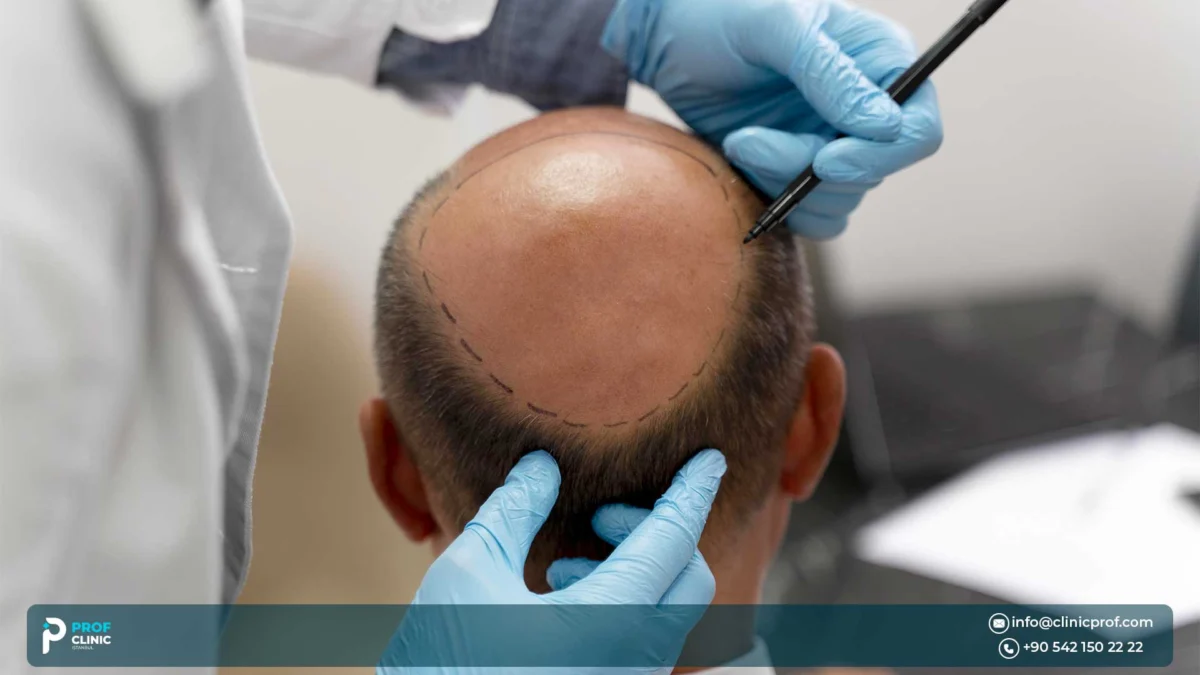
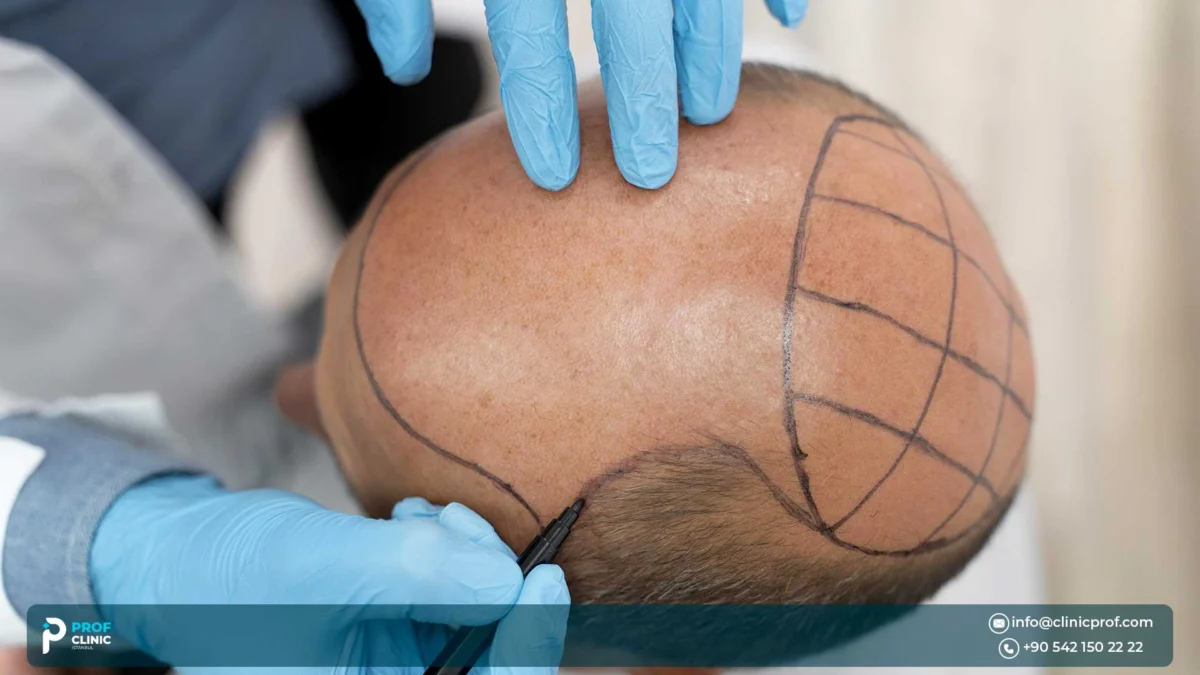
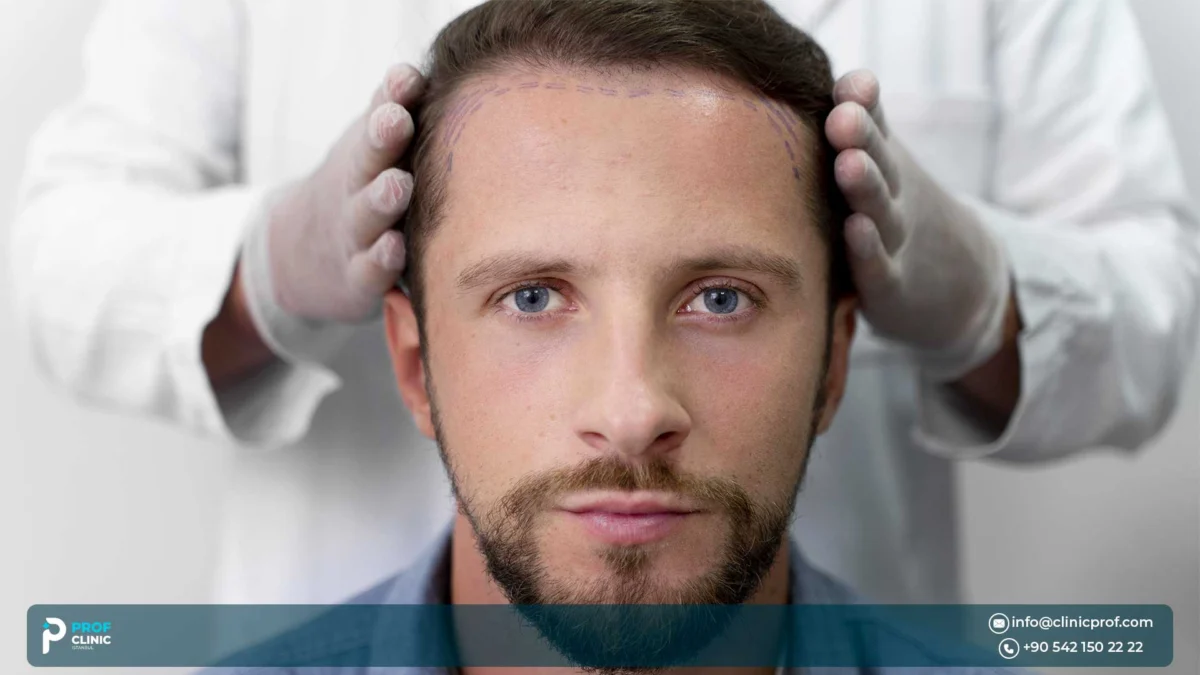
- Assessment and hairline design: the doctor reviews the cause and pattern of your hair loss, checks the density of your donor area, estimates the number of grafts and draws a hairline that suits your face and allows for future hair loss.
- Pre-op checks: blood tests and a health check confirm that surgery is safe for you.
- Trimming and anaesthetic: the donor area is trimmed very short and numbed with local anaesthetic.
- Extraction: the doctor frees each follicular unit with the micropunch, under magnification, and the grafts are kept in a cool solution until they are placed.
- Opening the recipient sites: tiny channels are made in the thinning area, following the angle and direction of your natural hair, with steel or sapphire blades. With DHI, this step and the next happen together.
- Implantation: the grafts are placed one by one, with the spacing and direction planned to look natural.
- Dressing and discharge: the scalp is cleaned or bandaged, you receive written aftercare instructions, and you usually go back to your hotel the same day.
Also read: Sapphire FUE Hair Transplant in Turkey: Benefits, Evidence and Cost
Does an FUE Hair Transplant Hurt?
Most people feel the anaesthetic injections more than the surgery itself. Once the scalp is numb, you usually feel pressure and movement rather than pain. The NHS notes that you stay awake but should not feel pain, and that the scalp often feels tight, achy and swollen for a few days afterwards.
FUE Recovery and Results Timeline
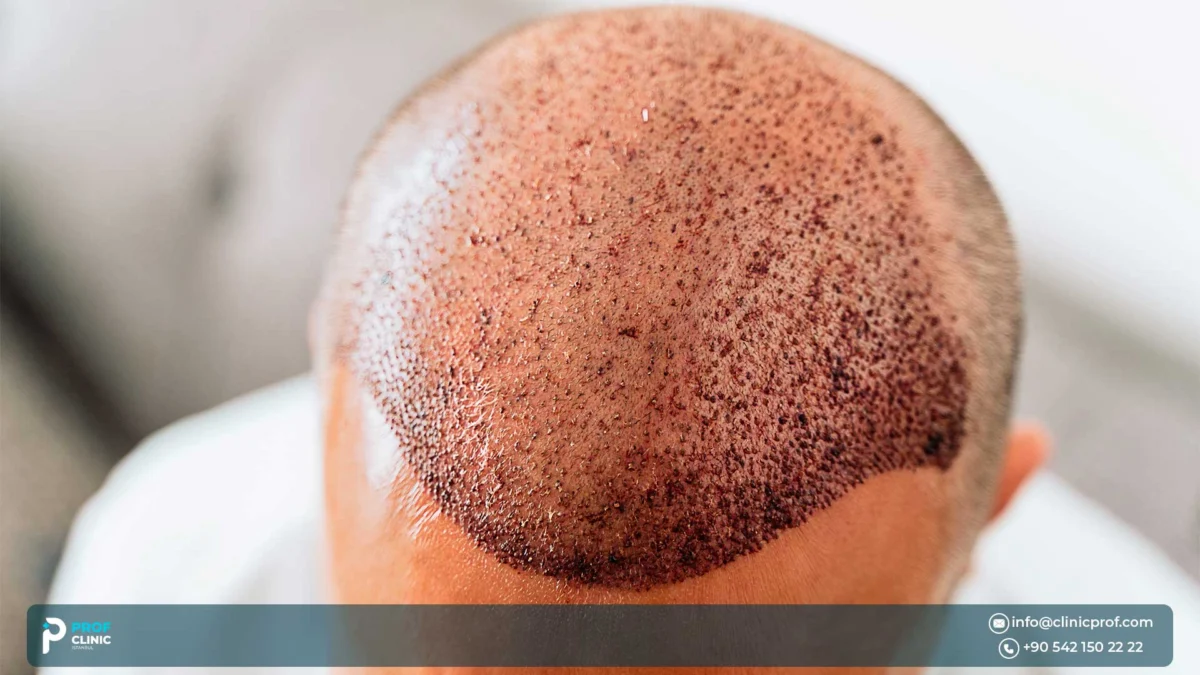
Recovery after FUE runs on two clocks. The skin clock is fast: the small wounds close and the scabs fall off within about two weeks. The hair clock is slow: the transplanted follicles rest, shed their hairs and only start to grow new ones after a few months. The NHS says new hair usually starts to appear after about 4 months, and that the full result should be visible after 10 to 18 months.
The table shows what most people notice at each stage:
| Time after surgery | What usually happens | What it means for you |
|---|---|---|
| Days 1–3 | A tight, achy, swollen scalp and small scabs around the grafts | Follow your written aftercare and don’t touch or scratch the grafts |
| Days 4–14 | Scabs fall off; the donor dots usually heal in about a week | Wash only in the way you’ve been shown |
| Weeks 2–8 | Most transplanted hairs shed; some donor shedding is possible | This is expected and doesn’t mean the grafts have failed |
| Months 3–4 | The area may look thinner than before surgery; new hairs start to appear | Don’t judge the result yet |
| Months 6–9 | The AAD says most patients see results in this window | Compare photos taken in the same light |
| Months 10–18 | Hair thickens and matures into the final result | Judge density and decide on any next step |
Your own recovery may run a little faster or slower than this. The AAD places the shedding of transplanted hair between two and eight weeks after surgery and calls a thinner look around the third month normal. For time off, the NHS says you may need 1 to 2 weeks away from work. Shedding is covered in detail in Shock Loss After Hair Transplant: What Is Normal and When It Returns, and growth month by month in Hair Transplant Timeline Month by Month: Growth and Shock Loss.
When to Contact Your Clinic
Normal healing gets a little better each day; warning signs get worse or spread. Contact your clinic promptly if you notice any of these:
- Redness that spreads, feels hot or oozes pus.
- A fever or chills.
- Pain or swelling that increases after the first few days instead of easing.
- Persistent red bumps or pustules around the grafts, which can be a sign of folliculitis.
These are general signs that need a medical review, not a diagnosis. Infection is one of the risks the NHS lists, and the Kerure and Patwardhan review notes that folliculitis can follow poor hygiene or a skin condition that was already present.
FUE Hair Transplant Cost in Turkey
As part of a package for a hair transplant in Turkey, FUE in Istanbul usually costs about €1,800–€3,500. Read that as an approximate 2026 band, not a final price; what you pay for FUE is set after your case is assessed and confirmed in a written quote. Packages usually include the procedure, pre-op blood tests, medication and an aftercare kit, a hotel stay, and VIP airport and hotel transfers.
In the UK, by contrast, the NHS gives a cost range of £1,000 to £30,000 for a hair transplant. A range that wide shows why a quote only makes sense once your graft estimate is known. For a full breakdown of packages, currencies and graft numbers, see our guide to hair transplant cost in Turkey.
What Changes the Price of FUE?
The main factors are:
- The number of grafts: more grafts mean a longer session and sometimes a second day.
- The implantation method: Sapphire FUE or DHI can be priced differently from standard FUE at some clinics.
- A no-shave or partial-shave plan: working between existing hairs takes longer.
- Hair type: Afro and very curly hair is slower to extract, so it usually costs more, about €2,500–€4,500.
- What the package includes: nights in the hotel, transfers, medication and follow-up.
How Many Grafts Can FUE Transplant?
There is no fixed maximum per session; your donor area sets the limit. In a survey of 34 experienced surgeons published in Dermatologic Surgery, Unger and colleagues estimated that a 30-year-old man heading for advanced baldness has roughly 4,200–7,900 follicular units of permanent hair for his whole lifetime, depending on hair density. The Kerure and Patwardhan review also advises taking no more than about 1 in 4 follicular units from the donor zone.
That’s why an offer of 10,000 grafts in one session deserves questions. Ask whether the number counts grafts or individual hairs (one graft holds one to four hairs), whether beard or body hair is included, and how much donor hair will be left for the future. Our guide How Many Grafts Do I Need? Graft Count by Norwood Stage explains typical numbers for each stage of hair loss. What can still be done when a donor area has already been over-harvested is covered in Depleted Donor Area After Hair Transplant: What Options Are Left?
Choosing an FUE Clinic in Turkey
Many people choose Istanbul for FUE because of the price and the wide experience of its hair clinics, but the country doesn’t decide your result; the team and the plan do. “The best FUE hair transplant” should mean the plan that fits your donor area, not the biggest graft number. Three questions are specific to FUE:
- Who does what: who makes the extraction punches and recipient incisions, and who places the grafts?
- The graft plan: how many grafts are planned, and how much donor reserve will remain?
- The quote: is it written, and does it list what is and isn’t included?
For licensing, follow-up, real cases and other red flags, use the full checklist in How to Choose a Hair Transplant Clinic in Turkey: What to Check.
Comparing FUE quotes? Ask our team for a written quote that shows the estimated graft range and exactly what the package includes.
FUE at Prof Clinic in Istanbul: How Your Plan Is Made
At Prof Clinic in Istanbul, FUE is one of the techniques offered within our hair transplant in Istanbul service, alongside Sapphire FUE, DHI and Micro FUE. Your FUE plan is drawn up by Spc. Dr. Lütfi Öztürk, the internal-medicine specialist who leads hair restoration: he does the medical assessment and treatment planning and coordinates follow-up.
Here is what you can expect before and after the procedure:
- Photos first: you send clear photos of the front, sides, crown and donor area with a short medical and hair-loss history, and the plan comes after that review.
- Pre-op tests: before any grafts are extracted, you are checked with a blood count, ECG, kidney and liver function tests, electrolytes, blood sugar, and hepatitis and HIV screening.
- Session length: the clinic’s male hair transplant page states that FUE sessions usually last 7–8 hours and may be spread over more than one day.
- Honest expectations: how dense your FUE result may look is talked through for your case, with no density promised beforehand.
- A written quote: the team looks at your photos first and then sends the quote; the all-inclusive package covers the procedure, accommodation, airport and hotel transfers, and post-op care.
- Follow-up from home: once you are back, the coordination team keeps in contact and gives advice on WhatsApp as the grafts settle.
Want to see how FUE results develop? Browse our before-and-after gallery and look for cases with hair loss similar to your own.
FAQs About FUE Hair Transplants
How long does an FUE hair transplant last?
The transplanted hair is usually permanent, and the AAD describes hair transplant results as permanent and natural-looking. Your own untreated hair can keep thinning, though, so the overall look can change over the years. Some people use medical treatment to protect their remaining hair, and some later choose a second session.
Does FUE leave scars?
Yes, but small ones. FUE leaves many tiny dot scars in the donor area instead of one linear scar. With normal hair length they are usually hard to see. With a very close shave, especially on darker skin or after a very large session, the white dots can become noticeable, which is why the number of grafts matters.
Does FUE require shaving?
Usually, yes. The NHS notes that the back of the head is shaved for FUE so each unit can be extracted precisely. Partial-shave or no-shave options exist for selected smaller cases and are often used for women, but they take longer, may cost more and don’t suit every plan.
How much does a 2,000-graft FUE transplant cost in Turkey?
A 2,000-graft FUE transplant usually sits towards the lower end of the Istanbul package range of about €1,800–€3,500 (2026 range). Many clinics in Turkey price by package rather than per graft, so ask what happens if the doctor recommends more grafts. Your final price comes in a written quote after photo assessment.
When can I go back to work after FUE?
The NHS says you may need 1 to 2 weeks off work after a hair transplant. An older review by Dua and Dua lists a return as early as the next day after FUE, but scabs and swelling stay visible for the first days. If your job involves heavy lifting, heat or a helmet, ask your doctor when it is safe to return.
Is FUE the same as DHI?
Not quite. DHI starts with the same FUE extraction and changes only how the grafts go in: an implanter pen opens the site and places each graft in one movement. Some doctors like that control at the hairline, while standard FUE is often efficient for large areas. The skill of the team usually matters more than the instrument.
The Bottom Line on FUE
An FUE hair transplant is a well-established way to move your own permanent hair without a linear scar, but it can only work within the limits of your donor area. Judge any plan on three things: whether your hair loss suits surgery, how many grafts your donor area can safely give, and who will actually perform the extraction and implantation. Then give the result 10 to 18 months before you judge it.
Before you book anything, get your FUE case assessed. Talk to Prof Clinic about your photos and ask for a written plan for an FUE hair transplant in Turkey.
Sources
- NHS — Hair transplant
- AAD — A hair transplant can give you permanent, natural-looking results
- ISHRS — Why FUE Is So Confusing
- Journal of Cutaneous and Aesthetic Surgery — Follicular Unit Extraction Hair Transplant (Dua & Dua, 2010)
- Journal of Cutaneous and Aesthetic Surgery — Complications in Hair Transplantation (Kerure & Patwardhan, 2018)
- Facial Plastic Surgery — Patient Selection for Follicular Unit Extraction versus Linear Strip Donor Harvesting (Konior, 2024)
- Dermatologic Surgery — Estimating the Number of Lifetime Follicular Units: A Survey and Comments of Experienced Hair Transplant Surgeons (Unger et al., 2013)