Whether you are dealing with thinning due to aging, scarring, or years of over-plucking, an eyebrow restoration procedure offers a level of realism that makeup simply cannot match. But how does eyebrow hair transplant surgery actually work, and where do you get the hair for an eyebrow transplant?
In this guide, we dive deep into the best eyebrow restoration technique, explore the precision of FUE hair transplant eyebrow methods, and explain exactly what hair is used for an eyebrow transplant to ensure your results are natural-looking.
What is the eyebrow hair transplant procedure?
The eyebrow hair transplant procedure is a specialized form of surgical eyebrow hair restoration that relocates living hair follicles from a donor area directly to your brow line.
Unlike microblading or tattoos, which create a flat cosmetic illusion, this eyebrow restoration procedure aims to restore real, 3D growing hair that can integrate seamlessly with your facial structure.
This procedure is the gold standard for individuals who have experienced:
- Over-plucking: Recovery from long-term follicular damage.
- Aging & Thinning: Restoring the density lost over time.
- Scarring or Trauma: Filling in gaps caused by physical injury.
- Genetics: Enhancing naturally sparse or light-colored brows.
Natural-looking results depend far more on hair selection, growth-pattern mapping, and the implantation angle than on new tools or marketing labels.
At Prof Clinic, we treat this as a microsurgical art form where every graft counts.
Is your hair suitable for a transplant? The first step is a donor-hair suitability check. Get a free assessment from the Prof Clinic medical team before making your decision.
ِAlso read: Eyebrow Hair Transplant in Turkey: Guide 2026
Is FUE the Best Eyebrow Restoration Technique?
Patients often search for the best eyebrow restoration technique, expecting a single magic name.
In reality, the best method is the one that prioritizes precision, graft survival, and a natural exit angle. While the technology is important, it is the surgeon’s execution that defines the final look.
Common Techniques Explained
- FUE Eyebrow Hair Transplant: Individual follicles are extracted one by one. This is a common standard for eyebrow restoration surgery because it leaves no linear scars and allows for the selection of the finest hairs.
- Implanter-Based Methods (DHI Style): Many clinics use specialized “pens” to control depth and direction. While helpful, the outcome still depends largely on the surgeon’s skill in matching the natural flow of your brow.
- FUT (The Strip Method): Rarely used in modern eyebrow restoration procedures as it is far less precise and more invasive than FUE.
For eyebrows, single-hair graft selection and angle control matter far more than the technique’s marketing label.
While non-surgical alternatives like microblading provide a temporary inked look, they cannot mimic the 3D texture of a FUE hair transplant eyebrow.
If you want living, permanent hair, the focus must be on the artistry of the placement.
Also read: Sapphire FUE Hair Transplant: Everything you want to know
FUE Eyebrow Hair Transplant Surgery
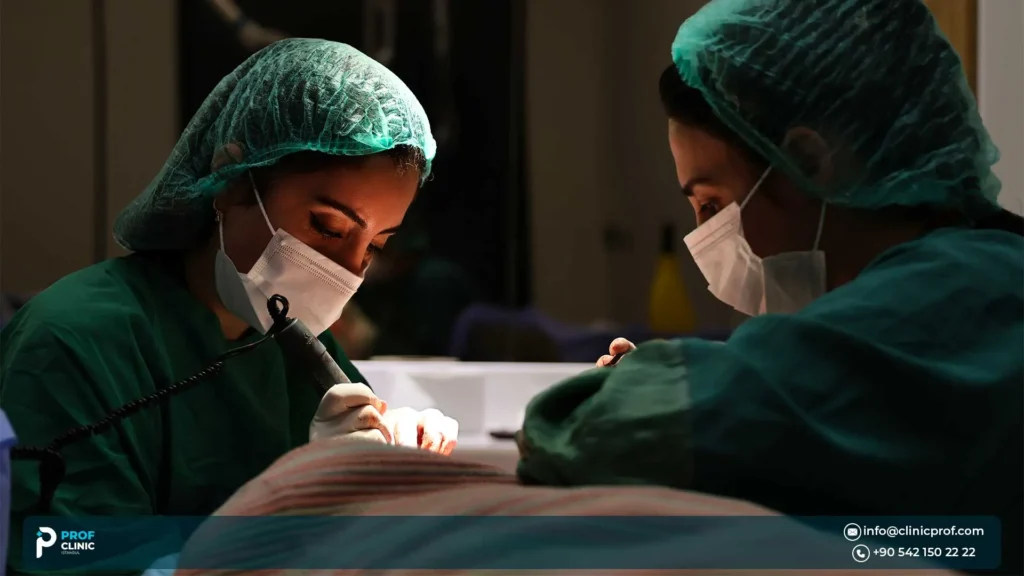
Understanding what happens inside the clinical suite can turn anxiety into confidence. A typical FUE eyebrow hair transplant surgery is a meticulous process that often takes 3–6 hours, performed under local anesthesia to help ensure total comfort.
Here is the step-by-step journey of an eyebrow restoration procedure:
1. Consultation & Biological Mapping
We begin with a deep facial analysis. At Prof Clinic, we don’t just draw lines; we map your “brow architecture” to ensure the new shape complements your bone structure and eye shape.
2. Donor Area Selection
Once we identify where the hair for the eyebrow transplant comes from (usually a small, concealed patch at the back of the scalp), that area is prepared. We only need a tiny amount of hair, so the “shave” is minimal and easily hidden.
3. Precision FUE Extraction
Using the FUE hair transplant eyebrow technique, individual follicles are extracted. We focus on “fine-gauge” follicles to reduce the risk of overly coarse brow hair.
4. Graft Sorting & Quality Control
This is a critical step. Our team inspects every graft under a microscope, selecting only single-hair units. Natural eyebrows never grow in clusters (like scalp hair), so this sorting is vital for a realistic look.
5. Recipient Site Creation & Angle Control
The surgeon creates recipient sites in the brow area. This is where the best eyebrow restoration technique proves its worth: the angle must be extremely shallow (very shallow, close to the skin) to prevent the hair from growing straight out.
6. Artisanal Implantation
The grafts are placed one by one, following the mapped direction. We ensure the mimics a natural brow—pointing upward at the head, horizontal in the body, and downward at the tail.
Most patients describe the eyebrow hair transplant procedure as manageable. You may experience mild swelling for 3–4 days, but you can usually return to light activities within a short time.
Ready to see your new shape? A successful transplant starts with a perfect plan. Send a photo to Prof Clinic for a personalized eyebrow design and donor-hair recommendation.
Also read: Everything to Know About a FUE Hair Transplant
Eyebrow Transplant Process
Eyebrow Transplant Planning
The most successful eyebrow restoration procedure starts on paper, not in the operating room.
While the surgery relocates the hair, the design creates beauty. At Prof Clinic, we believe that a “one-size-fits-all” brow template is a common mistake a clinic can make.
During the planning phase of your eyebrow hair restoration procedure, our surgeons analyze four critical factors:
- Facial Architecture: We align the brow start, arch, and tail with your unique bone structure and eye proportions.
- Natural Directional Flow: Eyebrows don’t grow in one direction. We map the transitions, where the hair shifts from growing upward to sweeping laterally.
- Density vs. Reality: While many request thick brows, the goal is often a density that matches your existing hair texture to avoid a pluggy or artificial look.
- Organic Symmetry: Perfect mirrors don’t exist in nature. We aim for balanced symmetry that looks organic and effortless.
Before a single follicle is moved in an eyebrow hair transplant surgery, a physical template is drawn on your skin. This allows you to visualize the final shape and density. We don’t proceed until you are 100% confident in the blueprint.
Managing expectations is part of the medical process. A reputable surgeon will tell you if a certain shape isn’t achievable or sustainable based on your donor hair quality.
Do you have a specific brow shape in mind? Whether it’s restoring what you once had or creating a new arch, the right plan is vital. Upload your reference photos and let Prof Clinic’s design team provide a professional assessment.
Day-Of Eyebrow Hair Restoration Procedure
The day of your eyebrow hair transplant surgery is a journey of precision that ends with the foundation of your new look.
While the clinical work is intense, the patient experience is designed to be comfortable and stress-free.
What to expect during the surgery
- Local Anesthesia: Most patients are surprised at how manageable the eyebrow hair restoration procedure is. We use localized numbing so you can remain awake and relaxed—many patients even listen to music or podcasts during the session.
- The “Micro-Scab” Phase: Immediately after the eyebrow restoration procedure, tiny, pin-sized scabs will form around each new graft. This is a natural part of the healing process andpart of the healing process as grafts settle into their new home.
Critical Rules for the First 48 Hours
The success of your FUE eyebrow hair transplant depends heavily on protecting the grafts while they are most vulnerable:
- Hands-Off Policy: Avoid rubbing, scratching, or touching the brow area. Friction can dislodge a newly placed follicle.
- Managing the “Pinkness”: Mild redness and swelling are expected. This is your body’s natural response to the microsurgery and often fades within a few days.
- Sleeping Position: We recommend sleeping with your head slightly elevated to minimize swelling and prevent accidental contact with your pillows.
Post-Op Discharge
Before you leave Prof Clinic, you will receive a specialized aftercare kit. This isn’t just a “bonus”; it contains the specific saline sprays and medications prescribed/recommended to keep the recipient area sterile and hydrated.
Strictly following your clinic’s instructions during these first few days is what separates a world-class result from a mediocre one.
Also read: Eyebrow Hair Transplant Before and After: Time & Reviews
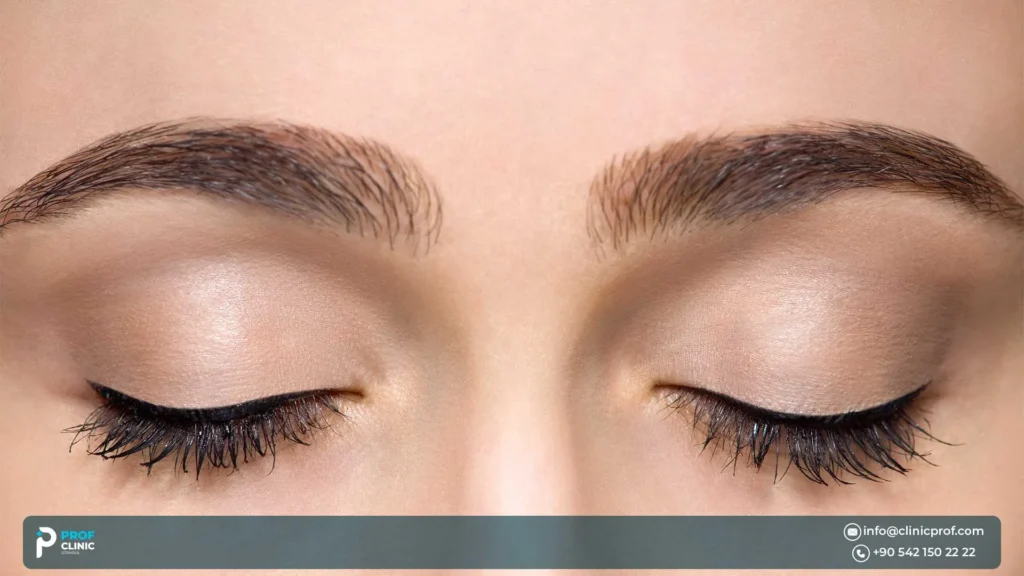
Where Does Eyebrow Transplant Hair Come From?
The most critical factor in achieving a natural look isn’t just the tool used, but the answer to one fundamental question: “Where do they get the hair for an eyebrow transplant?” Selecting the right raw material is what allows the new brows to blend perfectly with your facial features.
Scalp Hair
In the vast majority of cases, the answer to what hair is used for an eyebrow transplant is the scalp, specifically the back or sides of the head
- Reliable Growth: Scalp follicles are exceptionally resilient and have the often higher take rates during an eyebrow restoration procedure.
- Availability: These areas provide an abundant supply of healthy, permanent follicles.
- The Head Hair Factor: Because the hair comes from the scalp, it retains its original genetic programming. This means it will continue to grow at the same rate as your head hair. Regular trimming (usually every 10–14 days) becomes a necessary part of your grooming routine.
Why Is Scalp Hair the Primary Choice?
Surgeons at top eyebrow hair transplant clinics prefer scalp hair for three strategic reasons:
- Predictable Survival: These follicles are often more resistant to thinning.
- Follicular Strength: They are easier to extract and implant without damage.
- Texture Matching: We can precisely select the finest hairs from the “nape” (lower neck area) to match your natural brow diameter.
While patients often ask about eyebrow transplant with leg hair or body hair, these are considered last resort options.
Body hair has a different growth cycle and lower survival rate, making it less predictable than the reliable scalp source. Similarly, while you may see queries about pubic hair for eyebrow transplant, it is almost never used in professional clinical practice due to its dramatically different texture and curl.
At Prof Clinic, we focus on the fine hair zones behind the ears (scalp). This ensures your results look like eyebrows, not head hair on a face.
Do you have enough donor hair? Most people do, even with thinning hair. Contact Prof Clinic for a quick donor-area check and find out exactly where your eyebrow transplant hair will come from.
Also read:
Donor Matching Criteria for eyebrow hair transplant
A successful eyebrow hair restoration procedure is not just about moving hair; it is about matching hair.
To achieve results that look indistinguishable from natural brows, our surgeons evaluate five critical biological matches before the first graft is ever extracted.
1. Hair Thickness & Texture
The hair on your scalp is generally thicker than your brow hair. A top eyebrow hair transplant clinic will meticulously search your donor area for the finest, thinnest follicles—usually located at the very nape of the neck—to ensure the texture blends seamlessly.
2. Curl and Straightness
The “exit angle” and natural curve of the hair shaft must be considered. If you have curly hair, the surgeon must place the graft so that the natural curl follows the arch of the brow, not against it.
3. Color Synchronization
While it sounds simple, the color match must be perfect under different lighting. We analyze the donor hair to ensure it matches the natural “tone” of your existing brows, ensuring a uniform appearance as the new hair grows in.
4. Single-Hair Graft Availability
This is the most important technical factor. Natural eyebrows consist almost entirely of single hairs. Scalp hair often grows in groups of 2, 3, or 4. At Prof Clinic, we only select and isolate single-hair grafts for the eyebrow restoration procedure to avoid a lumpy or artificial look.
5. Growth Cycle Behavior
Surgeons look for follicles that are in a healthy growth phase (Anagen) to support graft survival once they are relocated to the brow.
The closer the biological match, the more natural the final appearance. If a clinic doesn’t discuss hair caliber with you, they are likely rushing the most important part of the design.
Not sure if your donor hair is a good match? You don’t need to guess. Get a professional donor-matching evaluation from Prof Clinic by sharing a high-resolution photo of the back of your head.
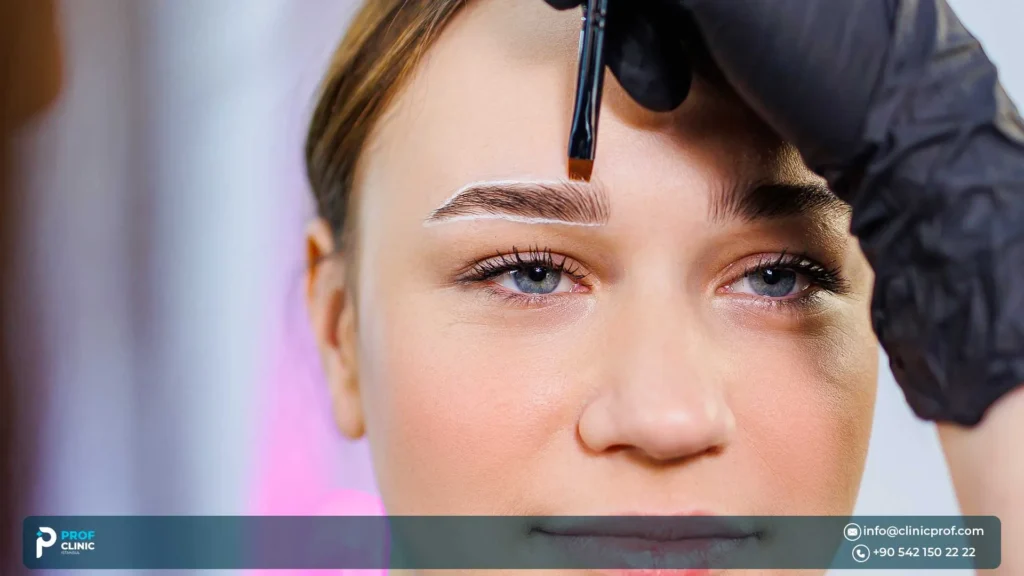
When is Pubic hair or leg hair for eyebrow transplant considered?
It is common to see search terms like pubic hair for eyebrow transplant or eyebrow transplant with leg hair appearing in forums. While using body hair as a donor source is technically possible, it requires a very careful medical explanation to manage expectations.
Leg Hair for Eyebrows
Some patients inquire about an eyebrow transplant with leg hair because it is naturally finer and slower-growing than scalp hair.
While the texture is a closer match, the take rate (survival) of leg hair is often lower. Furthermore, the growth cycle is unpredictable; the hair may stay dormant for long periods, leading to patchy results. It may be considered in extreme cases where scalp hair is unavailable.
The Pubic Hair for eyebrow
The idea of an eyebrow transplant with pubic hair is often discussed due to its limited growth length.
Most top eyebrow hair transplant clinics avoid this. Pubic hair has a distinct curl and coarse texture that rarely matches the flat, sleek aesthetic of a natural eyebrow. Unless there is a profound medical reason or total scalp hair loss, this is not a standard clinical practice.
Body hair for eyebrow
It is important to understand that body hair transplants (BHT) are specialized, non-standard procedures. At Prof Clinic, we prioritize the Nape of the Neck (scalp) because it offers the perfect balance: the fine texture of body hair with the high survival rate of scalp hair.
3 Questions to ask your surgeon about donor sources
- How will you ensure this donor hair doesn’t look too coarse on my face?
- If we use body hair, how will you control its natural curl pattern during implantation?
- How will the growth rate of this specific hair affect my weekly maintenance routine?
Stick to the scalp whenever possible. The reliability of the eyebrow hair transplant procedure depends on the health and predictability of the follicle.
Unsure about your donor options? Don’t rely on forum myths. Book a digital consultation with Prof Clinic to get a professional evaluation of your best donor sources.
Eyebrow Transplant Healing-and-Aftercare Phase
The success of an eyebrow hair transplant procedure doesn’t end when you leave the clinic; it begins during the healing phase. Understanding the timeline of your eyebrow restoration surgery results will help you navigate the recovery journey with confidence.
The Immediate Recovery (Days 1–14)
In the first few days, small, pin-sized scabs will form around each graft. This is a normal part of healing.
- The Rule: Do not pick them! They will fall off naturally within 7–10 days.
- The Look: You will see the initial shape of your new brows, but expect some mild redness and swelling, which typically resolves within a week.
The “Shedding” Phase (Weeks 2–8)
Don’t panic if your new eyebrow hairs fall out. This is a normal biological process called shock loss. The follicle remains alive beneath the skin and is simply entering a resting phase before starting a new growth cycle.
Long-Term Growth & Maintenance
By months 4 to 6, you will see the true results of your eyebrow hair restoration procedure beginning to emerge. However, because where eyebrow transplant hair comes from is usually the scalp, you must remember:
- Regular Trimming: Since this hair retains scalp growth characteristics, it will grow longer than natural brow hair. You will likely need to trim them every week or two.
- Styling & grooming: You can guide the direction of the new hairs using a gentle brow gel or brush to ensure they lay perfectly flat against the bone.
When to contact your clinic
While the eyebrow restoration procedure is generally safe when performed by qualified clinicians, you should always reach out to your medical team if you experience:
- Severe or worsening swelling after day 5.
- Any unusual discharge or signs of infection.
- Persistent pain that isn’t managed by standard aftercare.
At Prof Clinic, we provide a 12-month digital bridge follow-up. Our team will check in with you periodically to monitor your growth and ensure your results are maturing as expected.
Want to see what’s possible? The best way to visualize your future look is through real evidence. Explore our Before & After Gallery to see 12-month transformations from patients just like you.
Also read: Eyebrow Transplant vs Alternatives: Microblading, PRP, Tattooing & Celebrity Choices
Who’s a Good Candidate & Who Should Wait
While the eyebrow hair transplant procedure is a high-impact option for many, it is not a magic fix for everyone.
Identifying whether you are a prime candidate or if you should delay eyebrow restoration surgery is a critical part of the medical ethics at Prof Clinic.
The Ideal Candidate Profile
You are likely a great candidate for an eyebrow restoration procedure if you have:
- Stable Hair Loss: Your eyebrow thinning has stabilized, often due to years of over-plucking or natural aging.
- Physical Trauma or Scarring: You have gaps caused by old injuries or scars, provided the skin in that area is healthy and has sufficient blood supply.
- Realistic Expectations: You understand that while we can achieve incredible density, you will need to commit to minor grooming (trimming) due to where eyebrow transplant hair comes from.
- Healthy Donor Hair: You have a small but healthy “reservoir” of fine hair at the back of your scalp.
When you should pause and consult carefully
An eyebrow hair restoration procedure might not be the right step right now if you have:
- Active Skin Conditions: Eczema, psoriasis, or active dermatitis in the brow area must be treated and cleared before surgery.
- Autoimmune Disorders: Conditions like Alopecia Areata require a specialized dermatological clearance, as the hair loss may recur if the condition is active if the condition is active.
- Uncontrolled Medical Issues: Chronic conditions like uncontrolled diabetes can affect healing and graft survival.
- Trichotillomania: If eyebrow loss is due to active hair-pulling, psychological support is recommended before surgical restoration to ensure long-term success.
Professional Integrity Note: A medical consultation is not just a formality—it is a safety check. A reputable clinic will never rush you into an eyebrow transplant surgery if the biological conditions aren’t optimal for success.
Not sure if you’re ready? Don’t leave it to guesswork. Schedule a free medical consultation with Prof Clinic to discuss your history and determine the safest path forward for your brow transformation.
Also read: Eyebrow Hair Transplant Recovery: Timeline, Aftercare & Hair Growth Explained
Top Eyebrow Hair Transplant Clinics 2026
When searching for the top eyebrow hair transplant clinics and looking ahead to 2026, the question shouldn’t be “who is the cheapest? but “who is the most precise?”.
Choosing a clinic for an eyebrow restoration surgery requires a different set of criteria than a standard hair transplant.
Your eyebrow hair transplant clinical evaluation checklist
To ensure you receive a natural, safe, and permanent result, evaluate your potential clinic against these five pillars:
- Eyebrow-Specific Expertise: Does the clinic have a dedicated team for brows? Designing a brow requires an “artistic eye” for facial symmetry that is very different from scalp work.
- Transparent Donor Strategy: Do they clearly explain where the hair for the eyebrow transplant comes from? Beware of clinics that don’t discuss hair caliber and texture matching.
- Documented Results: Look for a robust gallery of eyebrow hair restoration procedure before-and-after photos. Pay close attention to the hair direction in the “after” shots.
- Medical Safety Protocols: Ensure the procedure is performed in a sterile, sterile clinical environment using the latest FUE eyebrow hair transplant technology.
- The Aftercare Bridge: Does the clinic provide a structured, long-term follow-up plan? Your journey doesn’t end on the day of surgery; it ends when your brows are fully grown.
At Prof Clinic, we pride ourselves on meeting every one of these criteria. We combine medical precision with bespoke aesthetic design to ensure your transformation is life-changing and natural.
Your transformation starts with the right team. Review our real eyebrow transplant results, meet our medical team, and book your consultation to discuss your unique case today.
FAQs about Eyebrow Hair Transplant Procedure
What is the most natural-looking eyebrow procedure?
The FUE eyebrow hair transplant is widely considered the most natural-looking procedure because it uses your own living hair. Unlike microblading or tattoos, which create a flat “inked” look, a transplant provides 3D texture, natural growth, and a permanent result that blends perfectly with your existing brow hairs.
What is the newest technique for eyebrows?
The most advanced approach in 2026 is the DHI (Direct Hair Implantation) variation of the FUE technique. It uses a specialized “implanter pen” that allows the surgeon to have 360-degree control over the depth, angle, and direction of each hair, which is crucial for the delicate, flat-lying hairs of the eyebrow.
Where do they get the hair for eyebrow transplant?
The most common donor source is the scalp, specifically the nape of the neck or the area behind the ears. These areas provide the fine, single-hair follicles necessary for a realistic look. While body hair (like leg hair) is a common search term, it is rarely used by top clinics due to its unpredictable growth and lower survival rate.
What is the most natural-looking permanent eyebrow?
A professionally designed hair transplant is the only truly permanent and natural-looking solution. Because it uses single-hair grafts placed at extremely shallow angles (to mimic natural brow flow), the result is a biological restoration rather than a cosmetic cover-up.
Can you transplant hair to an eyebrow?
Yes. An eyebrow hair restoration procedure involves extracting healthy follicles from a donor site and transplanting them into the brow area. It is a highly successful microsurgical procedure used to correct thinning, scarring, or total hair loss caused by genetics or over-plucking.