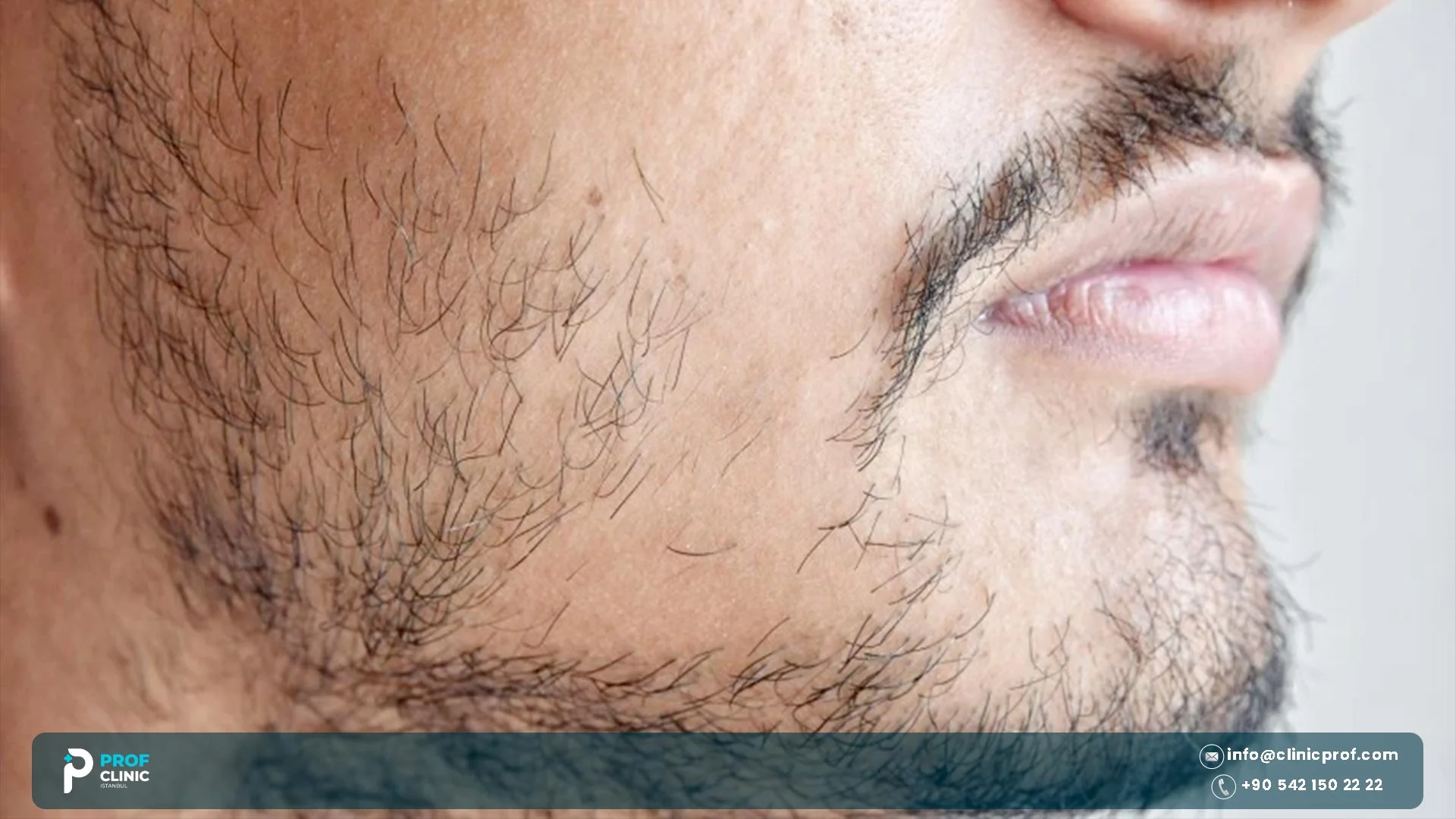
Why do my chin and moustache grow thick while my cheeks stay almost bare, and can those gaps ever be filled? In most cases a patchy beard is genetic: some gaps fill in by around 30, some come from a skin condition or scar that needs its own treatment, and gaps that stay stable after that are the ones a transplant is designed to fill.
In this article from Prof Clinic, we explain when a beard counts as patchy, what causes it, what minoxidil and grooming can realistically do, and when a transplant is the sensible patchy beard solution.
Medical note: This information is educational. Minoxidil is not licensed for beard growth; see a doctor before starting it or any other treatment.
What Is a Patchy Beard and Why Does It Happen?
A patchy beard has areas on the cheeks, chin or around the moustache that grow much less hair than the rest of the face, or none. The International Society of Hair Restoration Surgery (ISHRS) says low density and gaps are the main reason men seek a beard transplant.
When Is a Beard Considered Thin or Patchy?
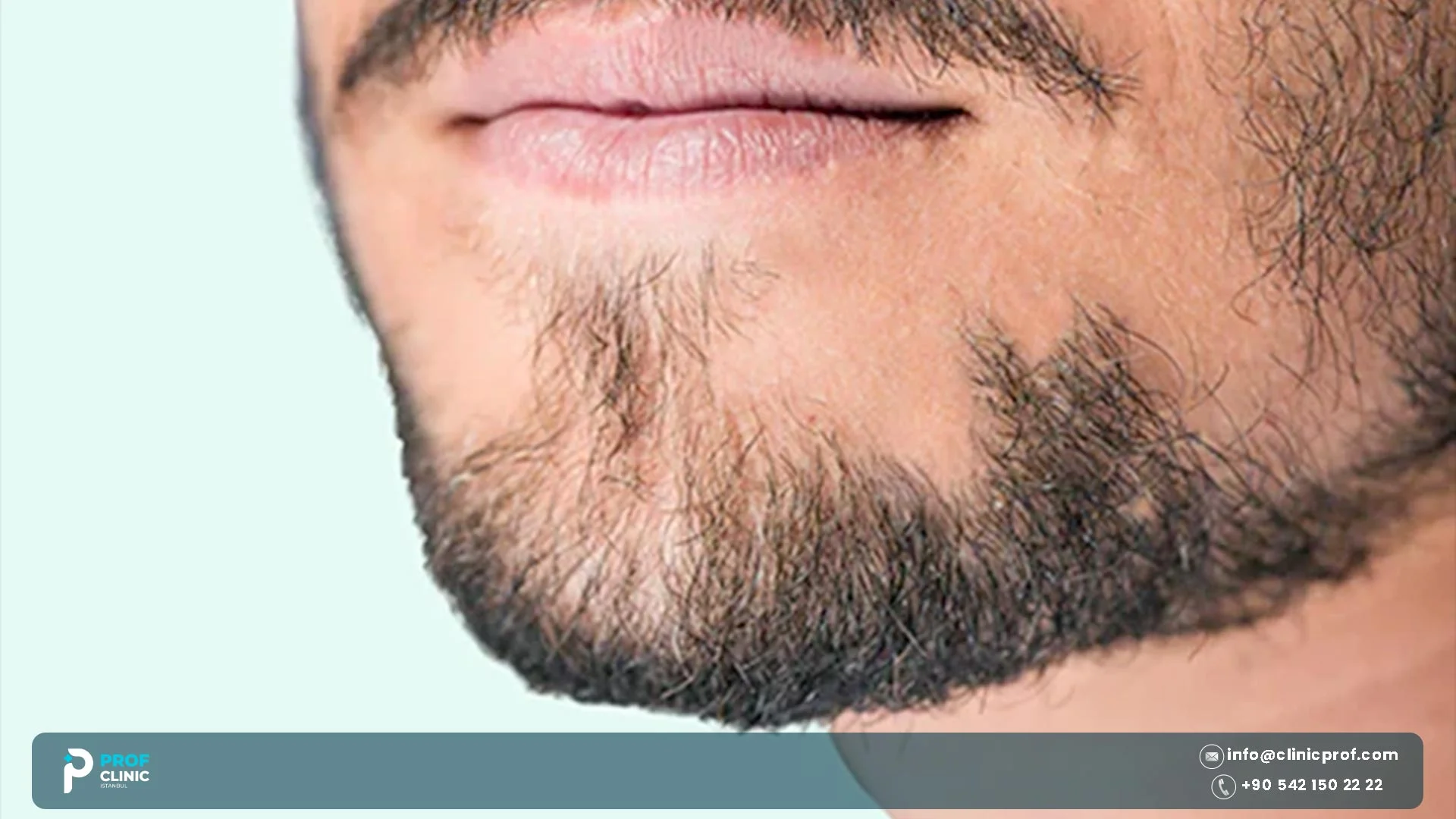
A beard is patchy when clear bare areas remain after several weeks without shaving. There is no medical cut-off, but the pattern helps:
- Thin beard: hair grows everywhere but far apart, so skin shows through.
- Patchy beard: dense areas separated by stable gaps, usually on the upper cheeks and between the moustache and chin.
- New smooth patch: a round or oval bald spot that appeared suddenly where hair used to grow; this needs a dermatologist.
Why Is My Beard Patchy? The Main Causes
Genetics is the most common cause: a Cleveland Clinic dermatologist explains that genes largely decide how thick your facial hair is, where it grows and when your beard reaches its full potential. Other patchy beard causes include:
- Hormone sensitivity: facial follicles respond to testosterone from puberty, but how strongly is genetic, so low testosterone rarely explains a thin beard if puberty was normal.
- Age: most beards keep getting thicker and coarser between the ages of 18 and 30.
- Ethnic background: Mediterranean men tend to grow thicker beards, while Chinese men typically grow less facial hair than men of European descent.
- Alopecia areata: smooth round or oval patches that, according to the American Academy of Dermatology (AAD), may begin in the beard rather than the scalp; hair may regrow on its own or the patches may spread.
- Scars: burns, accidents and acne destroy follicles; among 20 men in a beard reconstruction study, causes were burns (15), acne scars (3) and a congenitally absent beard (2).
- Skin inflammation: ingrown hairs after shaving (pseudofolliculitis barbae) and fungal infection can leave scars and permanent hair loss, according to a 2023 review.
- Diet, stress and sleep: deficiencies and severe stress affect hair growth, and in a small study of ten young men, short-term sleep loss slowed beard growth.
So, is a patchy beard a health problem? Usually not; it is inherited. A sudden patch, or a gap with redness and bumps, needs a dermatologist before any cosmetic fix.
Not sure whether your gaps are genetic or a new patch? Send a clear photo of your beard to the Prof Clinic team on WhatsApp to learn whether you need a dermatologist first or a transplant assessment.
Also read: Beard Alopecia: Causes, Treatment and When a Transplant Helps
How to Fix a Patchy Beard
There are three ways to fix a patchy beard: give age time, stimulate existing follicles with a topical treatment such as minoxidil under medical supervision, or move new follicles into the gaps with a transplant. Oils and grooming hide gaps; they do not fill them.
First, treat any disease behind the gaps. According to the 2023 review, beard alopecia areata is treated with topical or injected corticosteroids, or JAK inhibitors when severe; fungal infection needs antifungals; ingrown-hair inflammation starts with corticosteroid and retinoid creams.
Does Minoxidil Work for a Patchy Beard?
Minoxidil may increase beard density in some men, but the evidence is limited and using it on the beard is off-label. The clearest evidence is a 2016 randomised, double-blind trial: 48 men aged 20 to 60 applied 3% minoxidil lotion or a placebo twice daily for 16 weeks, and the minoxidil group did better on hair count, photo assessment and self-rating, with only mild side effects.
That result has limits. A 2025 systematic review of 19 trials on minoxidil and facial hair found only one on the beard. The commonest side effect is itchy, scaly irritation, and a 2024 case report notes it is not known whether beard gains are lost after stopping, as scalp gains are. Minoxidil for patchy beard gaps only stimulates existing follicles, so it cannot help where a scar has destroyed them. See a doctor before starting, and if a transplant may follow, the ISHRS advises stopping minoxidil in the recipient area beforehand.
And vitamins or hormones? Cleveland Clinic does not recommend supplements for beard growth, advising a balanced diet instead. Testosterone gel helped men with proven hypogonadism: a treatment for a deficiency, not for a healthy beard.

Beard Oil and Grooming: Short-Term Ways to Hide Gaps
Beard oil and grooming will not grow hair, but they make gaps less obvious from day one. The Cleveland Clinic dermatologist warns that popular beard growth products are not FDA-approved for this and can irritate skin. What helps:
- Strategic length: slightly longer hair covers a gap better than short stubble.
- A shape that suits your growth: if your chin and moustache are dense but your cheeks sparse, a beard built around them looks fuller than a full but patchy one.
- Beard oil for a patchy beard: it softens hair and skin so the beard looks neat, without adding follicles.
- Hair fibres and micropigmentation: the 2023 review notes both may disguise beard gaps.
- Gentle shaving: with ingrown hairs, harsh shaving adds scarring inflammation.
Beard Transplant for a Patchy Beard: When It Is the Lasting Fix
A transplant is the lasting fix when gaps are stable, genetic after your beard has matured or caused by a scar, on skin with no active disease. A beard hair transplant moves follicles from a donor area into the gaps, or across the whole beard, so the cheeks, chin or moustache area can each be treated on its own.
The ISHRS lists as candidates men with gaps since puberty and men who lost beard hair to burns, accidents or acne. The main donor area is the back and sides of the scalp, the zone a future hair transplant would rely on, and these follicles do not renew. Alopecia areata is different: that study of 20 men excluded it, and it needs a dermatologist first. The ISHRS also advises treating infection, inflammation or active acne before surgery.
A transplant needs patience: grafted hair usually falls out between weeks two and eight, then regrows, and the full result shows at 10 to 14 months. In a Turkish study following ten patients for at least a year, gaps closed by 53% on average, with better results in brown or red and medium or fine hair; a second or third session is sometimes needed.
Also read: Everything to Know About a FUE Hair Transplant
How to Choose the Right Patchy Beard Solution
Choose by cause and age. Under 30 with genetic gaps, time and grooming come first, then minoxidil if your doctor agrees. A sudden patch starts with a dermatologist. Stable or scar gaps need a transplant, the only option that adds follicles.
Patchy Beard Growth vs Transplant: Comparing the Options
Treatments for patchy beard growth work on existing follicles; a transplant adds new ones:
| Option | What it does | When you see it | Does it last? |
|---|---|---|---|
| Waiting | Lets age complete your beard’s density | Gradually, up to about age 30 | What fills in stays |
| Grooming, oils and fibres | Hides gaps without adding hair | Immediately | Daily; gone after washing or shaving |
| Minoxidil (off-label) | Stimulates existing follicles | Measured at 16 weeks in the trial | Unknown after stopping, for facial hair |
| Treating a skin cause | Calms inflammation or immune activity | Depends on the condition | Needs dermatologist follow-up |
| Beard transplant | Moves new follicles into the gaps | Growth from month 3–4, full result at 10–14 months | Permanent in most cases |
15 Things to Know Before Treating a Patchy Beard
Check these points before you buy a product or book an appointment:
- Age first: your beard may keep filling in until around 30.
- Gap pattern: a gap since puberty differs from a sudden patch.
- Smooth patches: a round smooth patch may be alopecia areata.
- Shaving bumps: repeated bumps signal inflammation that can scar if ignored.
- Testosterone: low levels rarely explain a thin beard if puberty was normal.
- Supplements: Cleveland Clinic does not recommend them; a balanced diet comes first.
- Minoxidil status: beard use is off-label, so do not start without a doctor.
- Trial length: the beard trial measured results at 16 weeks.
- Skin irritation: itching and scaling are the commonest side effects.
- Stopping before surgery: minoxidil is stopped in the recipient area beforehand.
- Donor supply: scalp donor follicles do not renew, so use them carefully.
- Scars: burn and scar gaps may need more than one session.
- Temporary shedding: grafted hair falls out in weeks two to eight, then regrows.
- Design: the cheek line and chin shape should be agreed with you first.
- Expectations: the full result takes 10 to 14 months; a second session is decided after.
If your gaps are stable, book a consultation and ask for a preliminary design of the gaps worth filling.
Also read: Beard to Scalp Hair Transplant: When the Beard Works as a Donor
Patchy Beard Repair at Prof Clinic, Istanbul
At Prof Clinic we start from your own gaps: where they are, how long you have had them, how much donor hair you have and whether the cause is genetic or a scar. Our beard transplant in Turkey is performed with Micro FUE, and we also offer Sapphire FUE, in which sapphire blades open the channels. It is done under local anaesthetic, usually takes six to eight hours, and grafts usually come from the back of the scalp or the dense areas around the neck and jawline, depending on the case.
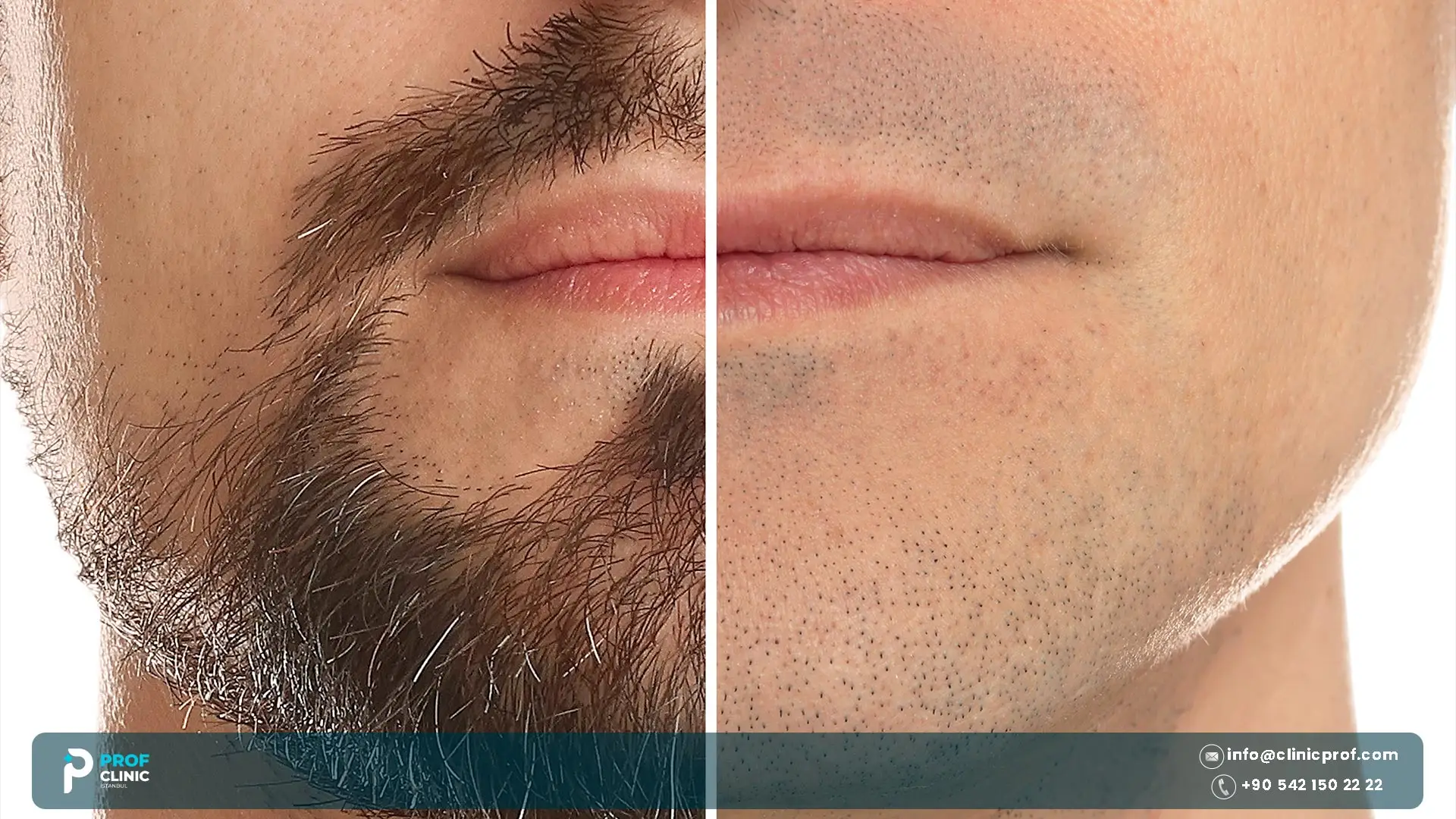
As a clinic for beard and moustache transplant in Istanbul, Prof Clinic supports patients from abroad before and after travel. The team sends you a written quote after reviewing your photos, so you have a clear plan before booking flights; after the operation, it follows your case and gives you advice, with photos and questions welcome on WhatsApp. Swelling may last two or three days and most patients are back at work within a week, so set aside at least a week.
Prof Clinic vs Other Solutions: Comparison Table
When treating a patchy beard, compare what you actually get, not the price alone:
| Criterion | At Prof Clinic | What to ask any other offer |
|---|---|---|
| Gap design | Tailored to your face, setting what is filled on cheeks, chin or moustache | Only the gaps or the whole beard? Who draws the design? |
| Technique | Micro FUE, with a Sapphire FUE option for opening the channels | Which technique is used, and why does it suit your case? |
| Donor area | Back of the scalp or dense neck and jawline areas, chosen per case | How many grafts, from where, and will enough remain for your scalp? |
| Aftercare instructions | Detailed instructions, including sleeping position | Will you get clear instructions before you leave? |
| Follow-up at home | The team follows your case after surgery and gives you advice; send photos and questions on WhatsApp | Who follows you up after you fly home, and how do you reach them? |
How Prof Clinic Plans Natural-Looking Beard Gap Filling
Each gap should be planned around its surrounding hair. Grafts set at the wrong angle or direction look like a patch, a problem the ISHRS lists for beard transplants, so they need to follow the slope of each zone, with density tapering at the edges until new and old hair blend.
Once grown, the beard can be shaved and styled like natural hair. Most patients get a full beard after one session; some need another for density, decided once the first result is complete. At home, the photos you send on WhatsApp are checked against each expected stage.
To see cases that began with gaps like yours, browse our before and after gallery and patient testimonials, or send photos of your beard through our contact page for an opinion from the Prof Clinic beard and moustache transplant team in Turkey.
Patchy Beard: FAQs
Will a patchy beard fill in with age?
Sometimes, up to about 30, because most beards keep thickening between 18 and 30. What you see near 30 is usually your final beard, so stable gaps after that will not fill in by waiting.
What is the fastest way to fix a patchy beard?
There is no fast way to grow new hair; the quickest fix is hiding gaps with length and grooming, which works at once but temporarily. Minoxidil was assessed at 16 weeks and needs a doctor’s approval; a transplant starts growing around month three or four and is complete at 10 to 14 months.
Is a patchy beard transplant permanent?
In most cases, yes, because grafts are usually taken from the back and sides of the scalp, an area whose hair resists balding. The exception is a gap caused by active alopecia areata, which needs a dermatologist’s assessment before a transplant is considered.
Can you transplant only the cheeks?
Yes, a transplant can be limited to the cheeks or any specific gap, leaving dense areas untouched. Grafts follow the angle and direction of neighbouring hair, so the cheeks blend with the rest of the beard.
References / Sources
- ISHRS — Beard and Mustache Transplant
- Cleveland Clinic — 5 Reasons Why You Can’t Grow a Beard
- American Academy of Dermatology — Hair loss types: Alopecia areata signs and symptoms
- American Academy of Dermatology — Hair transplants
- Ingprasert S, Tanglertsampan C, Tangphianphan N, Reanmanee C — Efficacy and safety of minoxidil 3% lotion for beard enhancement: A randomized, double-masked, placebo-controlled study, Journal of Dermatology, 2016
- Suchonwanit P, Thammarucha S, Leerunyakul K — Minoxidil and its use in hair disorders: a review, Drug Design, Development and Therapy, 2019
- Almutairi AG, Shadid A, AlAkrash L — Topical minoxidil effectiveness in enhancing facial aesthetics: A systematic review and meta-analysis, Journal of Family Medicine and Primary Care, 2025
- Shokravi A, Zargham H — Facial hair enhancement with minoxidil: an off-label use, SAGE Open Medical Case Reports, 2024
- Kaiser M et al. — Beard Alopecia: An Updated and Comprehensive Review of Etiologies, Presentation and Treatment, Journal of Clinical Medicine, 2023
- Yaseen U, Ahmed S, Ahmed M — Beard Reconstruction, International Journal of Trichology, 2021
- Civaş E, Aksoy B, Aksoy HM, Çalıkoğlu E — Follicular unit extraction as a valuable method for the restoration of beard, Journal of Cosmetic Dermatology, 2020