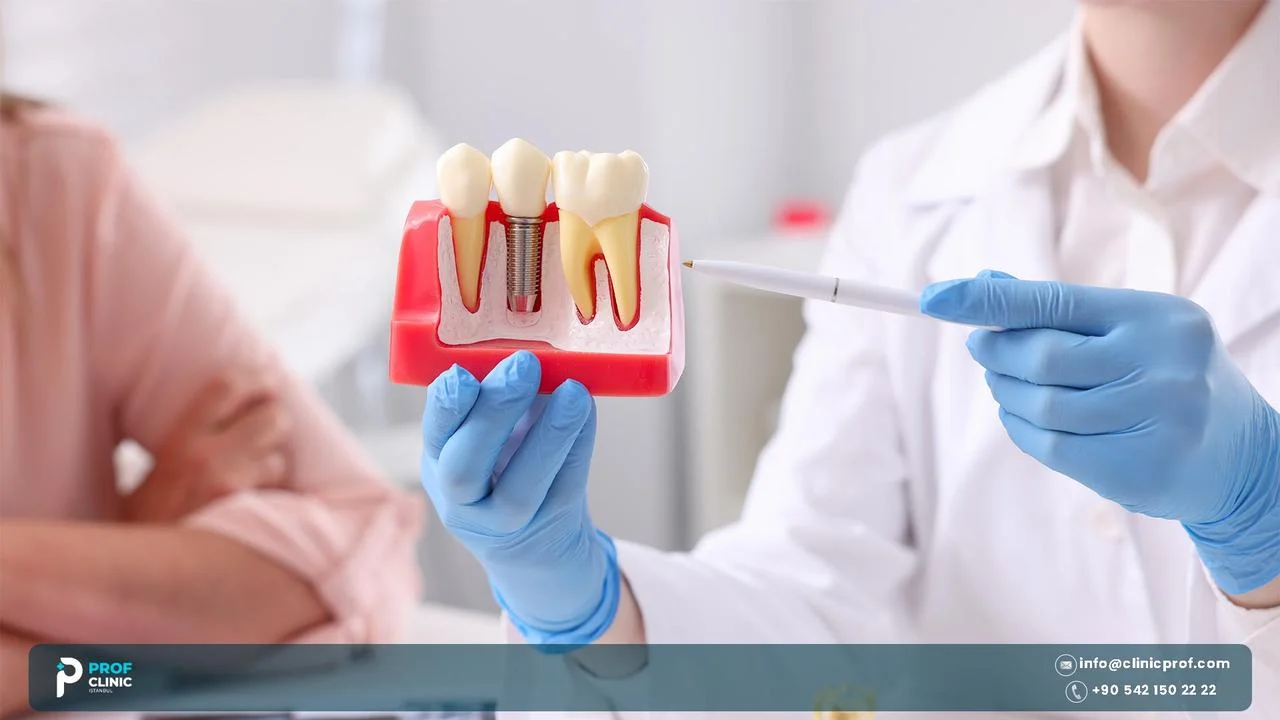
Most dental implant plans in Turkey need two trips: a first for surgery, usually 5 to 9 days, and a second to fit your final teeth at least two months later, often after 3 to 6 months.
That can sound like a lot of annual leave, but the full schedule is less daunting than it looks. Most patients ask us the same questions before they book: how much leave do I need, how many hotel nights, and when can I fly home?
We’re Prof Clinic in Istanbul, and this guide explains how long each treatment takes, what happens on each trip, when you can fly home and what can stretch your plan. By the end, you’ll know what to ask any clinic, including us.
How Many Days Do Dental Implants, Veneers and Crowns Take in Turkey?
The short version: whitening and cosmetic fillings fit into one short trip, veneers and crowns depend on how fast the lab works, and implants usually need two trips. This table turns published medical guidance into days you actually spend in Turkey:
| Treatment | Trips | Days on the first trip | What comes after |
|---|---|---|---|
| In-clinic teeth whitening | 1 | 2 | Usually nothing |
| Composite (cosmetic) bonding | 1 | 3–4 | Usually nothing |
| Veneers | 1–2 | Lab days + about 4, or 2–3 days if you choose two trips | A fitting trip of 2–3 days |
| Crowns and bridges | 1–2 | Lab days + about 4, or 3 days with a crown made in the clinic | A fitting trip of 2–3 days |
| Single implant, conventional loading | 2 | 5–9 | After 2+ months (often 3–6): lab days + 3–9 days |
| All-on-4 or all-on-6 with a fixed temporary bridge | 2, sometimes more | 5–9 | About 3–6 months later for the final bridge |
| Implants with a bone graft or sinus lift | 3 | 16–44 with a sinus lift, 5–9 with a further graft | After 4–6 months or more, then 2+ months before final teeth |
Days run from the day you land to the day you fly home. Lab days are the time a dental technician needs to make your teeth between the preparation visit and the fitting visit. They vary from clinic to clinic, so ask before you book. These are planning figures, and your dentist sets your own schedule after examining you.
If you remember only four numbers, make them these:
- More than two months: the healing time the International Team for Implantology (ITI) uses to define conventional loading.
- 72 hours: the shortest published wait between placing an implant and flying. A week is recommended.
- Two weeks: the shortest published wait after a sinus lift before flying. Six weeks is preferred.
- 4–6 months: what a two-stage bone graft can add to your treatment. It’s a general estimate, and your surgeon confirms it for your case.
Can You Finish Dental Implants in One Trip to Turkey?
Usually not, if you want final teeth. One trip works for whitening and bonding, and for veneers or crowns if the lab finishes within your stay. Implants need healing time, which is why most of our patients come twice.
You may also hear “teeth in a day”. That’s true, with a catch. You leave with a temporary fixed tooth or bridge, and your new smile starts within 24–48 hours depending on your case. The final restoration follows once the bone has bonded to the implant. A study of 126 All-on-4 patients shows the same: the temporary bridge was swapped for the final one after 3 months.
The rule that matters here: when someone says implants take a week, ask whether they mean the final teeth or the temporary ones, and when the second trip is.
What Happens on the First Trip and the Second?
For a single implant placed the conventional way, the plan has three stops:
- First trip (5 to 9 days): you arrive, the dentist examines you and takes scans, and surgery follows. That’s a day to arrive, a day for surgery and 3 to 7 days before you fly, so the surgeon can check the site and clear you.
- Back home (more than two months, often 3 to 6): your bone bonds with the implant while you carry on with normal life. You look after your mouth as your surgeon advised.
- Second trip (lab days + 3 to 9 days): the dentist fits the abutment, a small connector between the implant and the crown, and then your final crown.
From start to finish, the plan runs from about two and a half months to 7 months, with 8 to 18 days in Turkey plus lab days. A bone graft or sinus lift makes it longer, and we come to that below.
Practical tip: book your leave and hotel for the longest expected stay. If you finish early, the difference is yours.
Also read: Bone Grafting and Sinus Lift Before Dental Implants in Turkey
Why Do Dental Implants Need Months of Waiting Between Trips?
Because your bone is doing the work. An implant is an artificial root, and it can’t take chewing forces until bone has bonded to it. That process, called osseointegration, can’t be rushed.
Think of two clocks running in your plan. The bone clock is biological and takes weeks to months. You can’t shorten it safely. The lab clock is logistical and depends on how a clinic schedules its work. A trip that looks short on a quote has usually had only the lab clock shortened.
The exception is immediate loading: fitting a tooth or fixed bridge within a week of placing the implant. It’s well documented, but the ITI sets strict conditions for it. The implant must feel stable on the day of surgery, and the gum and bone around it must be healthy. So a “teeth on the day” plan can change during surgery, and that decision belongs to the surgeon. That’s why a full assessment, including 3D imaging, should come before you buy flights.
Not sure which protocol suits your case? Message us with photos of your teeth or your X-rays, and we’ll tell you how many trips your plan is likely to need.
When Can You Fly After Dental Implants?
In most cases you can fly home, but only after a minimum wait that depends on the procedure. These waits come from a 2023 paper in the British Dental Journal on flying after treatment abroad:
- After fillings, crowns and veneers: at least 24 hours.
- After a simple extraction: 24 to 48 hours.
- After root canal treatment, surgical extraction or implant placement: at least 72 hours. A week is recommended.
- After a sinus lift: at least two weeks. Six weeks is recommended.
The reason is cabin pressure, which can cause tooth pain or sinus pressure after recent surgery. Most of the research comes from military aircrew, so treat these waits as minimums, and don’t build your whole schedule on the shortest one.
Long flights add one more consideration. The World Health Organization found that flights of four hours or more roughly double the risk of blood clots in the veins. The absolute risk stays small, about 1 in 6,000. Nobody has measured it after dental surgery specifically. If you have had a clot, are pregnant or take hormonal medication, ask your doctor before you fly.
If you notice bleeding, swelling that grows or pain that gets worse before your flight, postpone and contact the clinic that treated you. That’s why we suggest a return ticket you can change at a reasonable cost.
How Long Do Veneers and Crowns Take in Turkey?
Here the answer depends on the lab more than on surgery. Some clinics need a few days to make veneers or crowns and others need weeks. Some make a crown in a single visit with CAD/CAM, which doesn’t suit every case.
So there is no single right number. If you’re comparing veneer treatments, ask each clinic for its lab days. That figure decides whether you need one week away or two short trips. For what else to check before crowns or veneers abroad, read our evidence on “Turkey teeth”.
What Can Make Dental Treatment in Turkey Take Longer?
The table above suits someone in good health with no complications. A few factors can change the protocol and add a trip or several months. None of them rules out treatment, most show up at the assessment before surgery, and only your dentist can say whether they apply to you.
- Bone grafting and sinus lifts: these often add a third trip and a wait of 4–6 months or more before the implant goes in. Sometimes the implant is placed with the graft in a single operation, and the surgeon decides based on the height of your remaining bone.
- Extraction before the implant: if the implant isn’t placed at the time, you wait 4 to 8 weeks, or sometimes 12 to 16, according to the ITI consensus.
- Smoking: implant failure was 6.35% in smokers against 3.18% in non-smokers in an analysis that pooled the results of 107 earlier studies. Your surgeon may choose a more cautious plan.
- Teeth grinding (bruxism): A review of the research links grinding to a clearly higher rate of implant failure. So immediate loading is recommended less often, and a night guard is usually advised.
- Osteoporosis drugs and some cancer drugs: these may change the plan, and your surgeon and prescribing doctor decide together. Never stop or change a medicine to fit a travel plan.
If you have a long-term condition or take regular medication, say so in your first message to any clinic. It’s the first thing a dentist asks before planning.
How Do You Plan a Dental Trip to Turkey Without Surprises?
Count the trips before you count the days, then ask every clinic to put each number in writing. Six steps before you book:
- Count the trips. Implants usually mean at least two, and grafting or an extraction with a wait can mean three. Flights, hotel nights and leave repeat with each one, and our pros and cons of dental treatment in Turkey, compared with the UK shows how those costs weigh against treatment at home.
- Ask for the protocol in writing. Is it immediate, early or conventional loading? What happens if the implant isn’t stable enough on the day?
- Ask about lab days. For veneers, crowns and final implant teeth: how many days, and are try-ins included?
- Tell your dentist at home before you travel. The UK’s General Dental Council recommends telling your own dentist, because they’ll need to know your plan if complications appear later.
- Get your records. Ask for X-rays and the CBCT scan, plus the implant brand, size and batch number.
- Know who to call between trips. You’ll spend the waiting months at home, so get a contact you can reach from there, and arrange local support before you leave.
Also read: What to Eat After Dental Implants in Turkey
How Does Prof Clinic Plan Your Stay?
We’re based in the Bahçelievler district of Istanbul and offer dental implants, E-max and zirconia veneers and the Hollywood smile, plus the rest of our dental treatments. Planning starts before you travel. You send us photos or X-rays for a free online consultation, and we suggest a plan and the number of trips. Our dentist makes the final decision after examining you in the clinic.
Before you decide with us or with anyone else, ask about five things: the number of trips, the days on each trip, the gap between them, lab days and the earliest flight after each treatment. Then compare the answers with this guide.
Medical note. This article summarises published evidence and patient information for planning only. It isn’t medical advice and doesn’t replace an examination by a qualified dentist. Timelines vary with your health, your bone, your medicines and the protocol your dentist chooses.
In short, how many days dental implants in Turkey take depends on the protocol that suits your bone, not on how many implants you need. Most plans mean two trips, more if you need grafting or a wait after extraction, and at least 72 hours between surgery and flying. The safest next step isn’t booking flights; it’s an assessment that settles the protocol and the lab days first.
Ready to find out how long your plan would take? Ask us on WhatsApp or book an assessment. We’ll tell you how many trips your case needs and how many days each takes.
Frequently Asked Questions About Dental Implants in Turkey
How many days do I need in Turkey for dental implants?
About 5 to 9 days for the surgical trip: a day to arrive and be assessed, a day for surgery, then 3 to 7 days of waiting before you fly. Final teeth take lab days plus a few more days. If you need a sinus lift, the first trip can run to 16–44 days.
Can I have dental implants in a single trip?
Usually not, if you want final teeth. With immediate loading you may leave with a temporary fixed tooth, but the final restoration waits for the bone to heal. One trip is more realistic for whitening and bonding.
When can I fly after dental implants?
The shortest published wait is 72 hours after placing an implant, with a week recommended. After a sinus lift it’s at least two weeks, with six preferred. Your surgeon sets your date after checking the site. If bleeding or swelling grows, postpone.
How many days does All-on-4 take in Turkey?
Usually 5 to 9 days for extractions, implant placement and a fixed temporary bridge. You return after about 3 to 6 months for the final bridge. Grafting or a sinus lift can rule out immediate loading and add time.
How long do veneers or zirconia crowns take?
It depends on the lab days a clinic plans. A single stay takes about lab days plus 4 days; otherwise you make two short trips. Some clinics make a crown in one visit with CAD/CAM, which doesn’t suit every case.
How long do I wait for an implant after a tooth is pulled?
If the implant isn’t placed at the time of extraction, expect 4 to 8 weeks, and sometimes 12 to 16 weeks, according to the ITI consensus. Your surgeon sets the protocol after an examination and scans.
Does smoking change how long implants take?
It can change the plan more than the number of days. Implant failure was 6.35% in smokers against 3.18% in non-smokers in an analysis of many studies, so a surgeon may choose a more cautious protocol. Stopping before and after surgery helps.
Sources
- International Team for Implantology (2018), Implant Placement and Loading Protocols – Consensus Statements
- Felkai et al. (2023), Dental tourism and the risk of barotrauma and barodontalgia, British Dental Journal
- Korsch et al. (2021), All-on-4 restorations: provisional vs. definitive immediate restorations, International Journal of Implant Dentistry
- World Health Organization (2007), Study results released on travel and blood clots
- Chrcanovic et al. (2015), Smoking and dental implants: a systematic review and meta-analysis, Journal of Dentistry
- Ionfrida et al. (2025), Dental implant failure risk in patients with bruxism, Dentistry Journal
- American Association of Oral and Maxillofacial Surgeons (2022), Position paper on medication-related osteonecrosis of the jaws
- General Dental Council (UK), Going abroad for your dental care