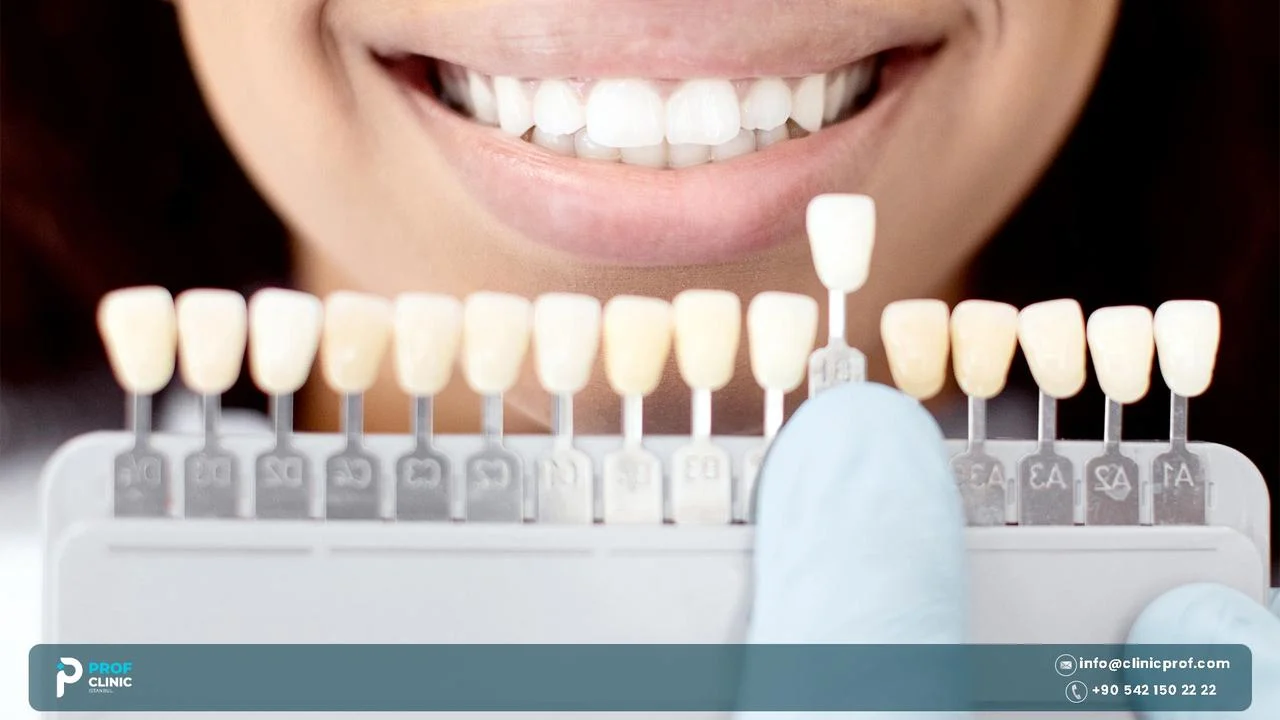
If the phrase “Turkey teeth” makes you nervous, you’re in good company. One difference you can measure is whether a smile makeover uses veneers or full crowns. In a laboratory study, crown preparations removed about 63–72% of a front tooth, against about 3–30% for veneers.
Both can last for years when they suit the tooth, and neither is “wrong” in itself. What matters is that each tooth gets the treatment it needs and no more, wherever you have it done.
In this guide from Prof Clinic in Istanbul, we explain where the term came from and how much tooth each option removes. We also cover nerves, gums and lifespan, and the questions to ask before you agree to a plan.
What Are “Turkey Teeth” and Where Did the Term Come From?
It’s a media label, not a clinical diagnosis. It usually describes a very white, even smile made of veneers or crowns, often on many teeth at once and often bought abroad.
The clearest look at how the phrase spread is a 2025 study in the British Dental Journal. Its authors searched UK newspapers from 1 January 2018 to 31 May 2023 and found 201 articles, 131 of them relevant. Coverage per year ran 0, 1, 12, 0, 59 and 59, and the last figure covers only the first five months of 2023.
Of the 131 articles, 121 (92.4%) ran in tabloids, and one newspaper published 83 of them (63.4%). Some 118 (90.1%) appeared in 2022 or early 2023. The authors concluded that viral trends spread misinformation, that the press amplified it, and that dentists should respond with compassion.
So the study shows where the label came from. It can’t tell you how often treatment goes wrong, because it counts newspaper articles, not patients.
Are Turkey Teeth Veneers or Crowns?
They can be either, because the label is used for both. A UK dentist quoted in the same study said that treatments sold as veneers were in reality crowns, which means far more of the tooth is cut away.
That’s the point that matters most, because tooth structure doesn’t grow back. A veneer sits on the front of a tooth. A crown covers it all the way round, so the tooth is reduced on every side.
What it means in real life: if you’re quoted for “veneers”, ask in writing whether each tooth will be prepared for a veneer or a full crown. The two words aren’t interchangeable, and the quote should say which one you’re paying for.
How Much Tooth Do Crowns and Veneers Remove?
In a laboratory comparison on front teeth, full crowns removed about 63–72% of the visible tooth, while veneers and resin-bonded designs removed about 3–30%. The researchers prepared resin model teeth to standard designs, 10 per group, and weighed what was removed. A companion study on back teeth shows the same pattern.
| Type of preparation | Front or back teeth | Share of the visible tooth removed | What it means for you |
|---|---|---|---|
| Veneers (partial to complete) and resin-bonded retainers | Front | About 3–30% | Most of your own tooth stays |
| Full crowns (three designs) | Front | About 63–72% | Roughly two-thirds is removed |
| Metal-ceramic crown compared with a facial-only veneer | Front | 4.3 times as much | A big gap for the same tooth |
| Metal-ceramic crown compared with a more extensive veneer | Front | 2.4 times as much | The gap narrows but remains |
| Adhesive (box) preparation | Back | 5.5% | Very conservative |
| Mesio-occluso-distal inlay | Back | 27.2% | A middle option |
| Complete crowns | Back | 67.5–75.6% | Most of the tooth is reshaped |
The authors found that veneers needed about a quarter to a half as much reduction as conventional crowns. These were idealised preparations on model teeth. In a real mouth, the amount depends on tooth position, old fillings and colour change.
Here are the options in order of tooth removal, least first. It’s a clinical ordering, not a quality ranking, and only your dentist can say which suits your mouth:
- Professional whitening: removes no tooth. In the UK, products with 0.1–6% hydrogen peroxide may be supplied only through dental practitioners.
- Composite bonding: removes none to very little, and can be redone.
- Veneers: 3–30% in the study above.
- Full crowns: usually reserved for heavily restored, broken or root-filled teeth.
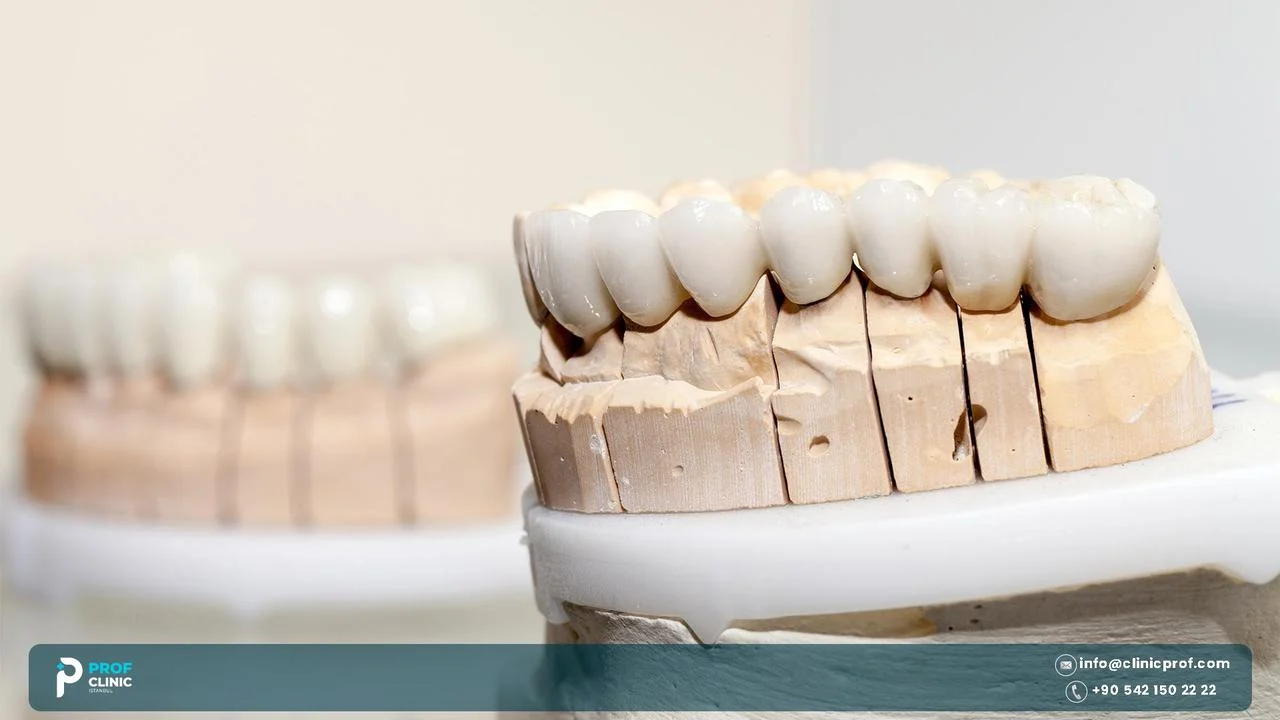
How Likely Is Nerve Damage After Crowns and Veneers?
For most teeth the nerve stays alive, but the risk is real and it grows with time. A 2023 review combined 37 studies covering 11,615 teeth that had crowns or served as bridge supports. It found pulp necrosis in 5.02% of teeth. That’s the nerve inside the tooth dying, which usually means root canal treatment.
The rate was 3.53% in studies that followed patients for 5 years or less, and 6.74% beyond 10 years. It was lower when the temporary crown was worn for 2 weeks or less (1.47%, against 4.25%) and when specialist prosthodontists did the work (1.87%, against 4.44% for general dentists). The reviewers rated the evidence as low quality, so use these figures as questions to ask, not hard rules.
For veneers, a review of laminate-veneer studies found nerve problems in about 2%. The study designs differ, so don’t compare it directly with the crown figures.
Gums matter too. A 2018 review of expert opinion found that crown or veneer edges placed where the gum attaches to the tooth can be linked to inflammation and possibly gum recession. Edges in the shallow groove around the tooth did not cause inflammation while the area was kept clean.
The practical takeaway: nerve risk builds over decades, so it counts most for a young patient with many healthy teeth. That’s why “does this tooth need a crown?” is worth asking.
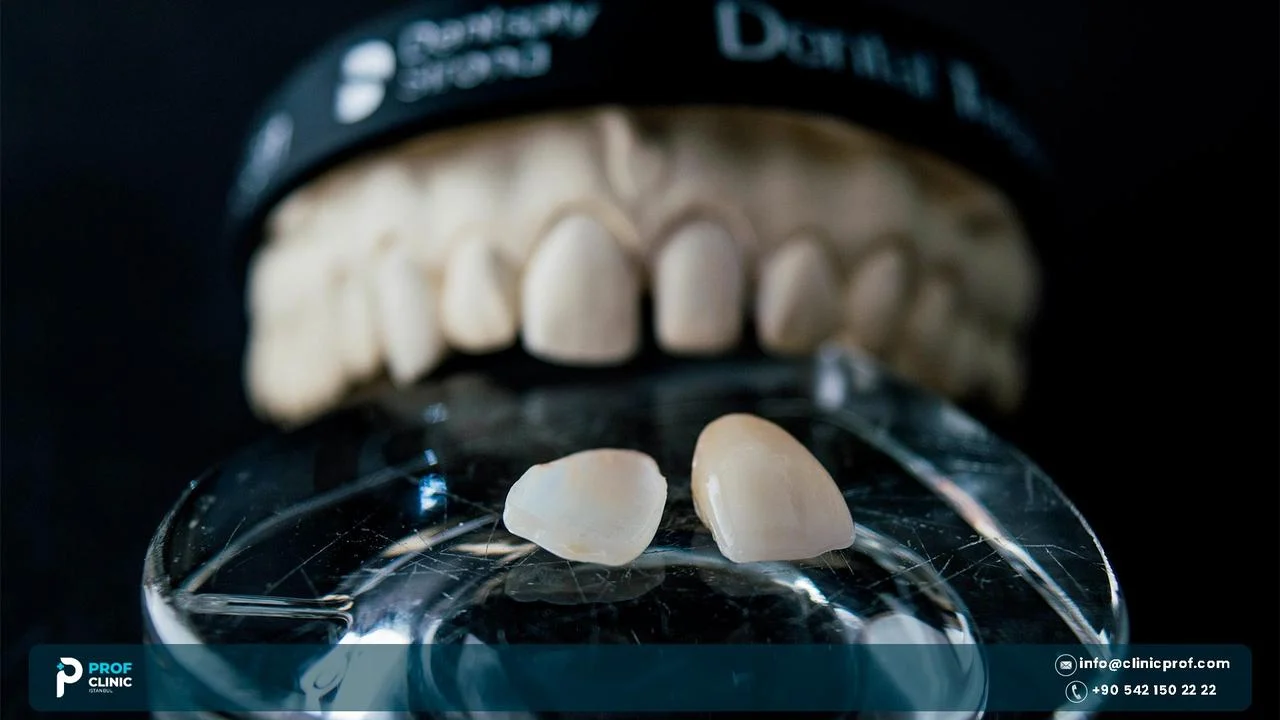
How Long Do Veneers and Crowns Last?
Both can last for years. The veneer figures below come from a review of 13 studies and the crown figures from a review of 67 studies. Most were done in university or specialist clinics, so they show what careful case selection can achieve.
| Restoration | Estimated share still in place | Most common problem | What it means for you |
|---|---|---|---|
| All laminate veneers (13 studies) | 89% after about 9 years | Chipping 4%, debonding 2%, edge staining 2% | Roughly nine in ten are still in place |
| Glass-ceramic veneers | 94% | Fracture or chipping | The higher of the two veneer materials |
| Feldspathic porcelain veneers | 87% | Fracture or chipping | A little lower in the same review |
| Metal-ceramic single crowns (67 studies) | 94.7% at 5 years | Chipping, secondary decay | A long track record |
| Leucite or lithium-disilicate crowns | 96.6% at 5 years | Framework fracture, chipping | The highest 5-year figure |
| Zirconia single crowns | 92.1% at 5 years | Loss of retention, chipping | A little lower at 5 years |
In the crown review, zirconia and feldspathic crowns did less well in back teeth. Treat the crown figures as close estimates rather than exact values.
In short, a well-made ceramic restoration usually lasts. The real question is whether a full crown was needed at all.
Are Turkey Teeth Safe? What the Dentist Surveys Show
Here’s the honest answer: nobody has published a failure rate for treatment in Turkey, so “they always fail” and “complications are rare” both go beyond the data. What is documented is that crowns and veneers carry known risks wherever the work is done.
The numbers you see in headlines usually come from surveys of dentists:
- BDA survey of 1,000 UK dentists: 94% had examined patients who travelled abroad for treatment, and 86% of those had treated problems afterwards. Dentists named crowns (87%) and implants (85%) most often as needing follow-up work. Some 65% said putting problems right cost patients at least £500, 51% said more than £1,000, and one in five said more than £5,000.
- Irish Dental Association survey (2009), 440 dentists: 76% had seen patients in the previous 12 months with problems linked to cheaper treatment abroad.
These figures help you plan aftercare, but neither survey separates Turkey from other countries. A failure rate needs two numbers, which we call the two-number test: patients with a problem, and all patients treated. The data for Turkey fail it for four reasons:
- No total: official statistics count 1,506,442 people visiting Turkey for healthcare in 2024, but not dental patients or teeth treated.
- Filtered sample: happy patients rarely see a dentist about that work, but patients with problems do, so the sample leans towards problems.
- Dentists, not cases: “86% of dentists treated a problem” is equally true if each saw one case or fifty.
- No follow-up study: no published study follows a defined group of patients treated in Turkey and reports how their crowns or veneers fared.
The same test applies to every country. Our fact-check of 20 widely quoted dental-tourism statistics shows how other headline numbers hold up. The practical message: problems can happen anywhere, and a written plan before you start is a real safeguard.
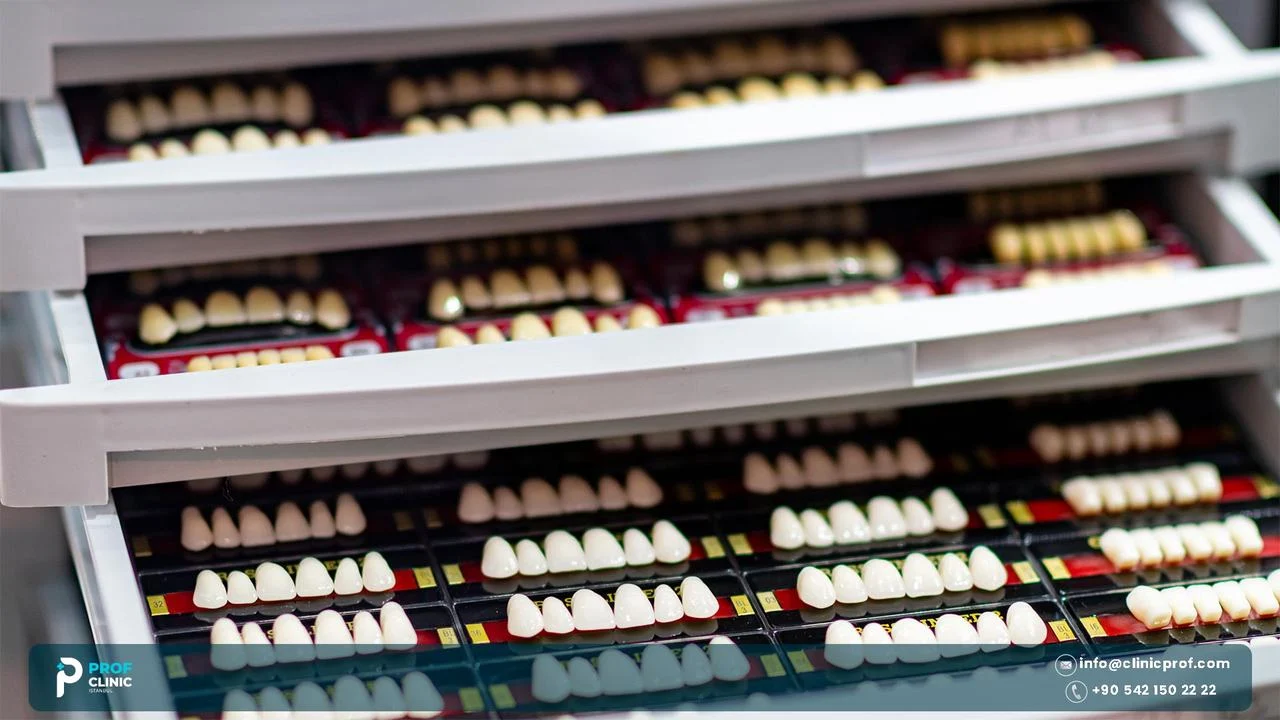
What Should You Ask Before Agreeing to a Smile Makeover?
Ask for the plan tooth by tooth, and ask why. These six questions work in any country:
- Which teeth, and which preparation? Ask for a written plan saying whether each tooth gets a veneer, a crown, bonding or nothing.
- Why crowns rather than veneers, or nothing? For every crowned tooth, ask what clinical reason makes full coverage necessary.
- How much tooth will be removed? Ask whether the preparation will stay mainly in enamel.
- What’s the nerve risk, and who treats it back home? Ask about the chance of needing root canal treatment and how it would be handled after you return.
- Which material, and why? Zirconia, lithium disilicate and feldspathic ceramics behave differently in different parts of the mouth.
- Which records will I receive? Ask for X-rays, photographs, the plan, the materials used and a summary for your own dentist.
A seventh question is worth adding: does the plan include bone grafting, and how long does it add? Our guide to bone grafting and sinus lift before dental implants explains why it can lengthen treatment.
Want these answers in writing before you travel? Contact the Prof Clinic team and ask for each one on paper. The final clinical decision belongs to the treating dentist after an examination.
What Do Dental Bodies Advise, and What If Something Goes Wrong?
The UK General Dental Council doesn’t discourage travel, but it asks you to make a few checks. Find out whether the country has a dental regulator. Choose a dentist who takes a full medical history before giving you a plan or price. Tell your own dentist, and ask about guarantees, aftercare and complaints.
The British Dental Association warns against a hard sell and advises budgeting for follow-up costs. The Irish Dental Association suggests asking “whether that work is really necessary”.
In Turkey, the Ministry of Health publishes lists of authorised healthcare providers and authorised facilitators. A listing shows a provider is authorised, not what’s planned for your teeth. Our guide to the safety risks of bad clinics walks through what else to check.
After you fly home, some tenderness is a normal part of healing. This is general guidance; your own dentist’s instructions come first:
- Usually expected in the first days: mild tenderness when chewing, some sensitivity to hot or cold, slightly sore gums, and a bite that feels unfamiliar.
- Reasons to contact a dentist promptly: growing pain, swelling of the gum or face, a bad taste or discharge, fever, a loose or cracked restoration, or a bite that stays uncomfortable.
If something worries you, contact the treating clinic and a dentist near you, and send both your records and photographs. Never change a prescribed medicine without asking whoever prescribed it.
How Does Prof Clinic Help You Plan?
We’re based in the Bahçelievler district of Istanbul and offer veneers in E-max and zirconia, the Hollywood smile, and the rest of our dental treatments. You can share photos or X-rays for a free online consultation, and we offer 12 months of structured follow-up. Our medical team makes the clinical decision after examining you.
Medical note. This article summarises published research for general information. It isn’t medical advice, a diagnosis or a treatment recommendation. Suitability for veneers, crowns or any other treatment can only be decided by a qualified dentist after an examination.
The deciding question for any turkey teeth plan is whether each tooth really needs the preparation proposed for it. A sensible next step is a tooth-by-tooth written plan that your own dentist also sees before you travel.
Ready to compare a plan with the evidence? Ask us on WhatsApp or book a consultation, and bring your questions, X-rays and any quotes you already hold.
Frequently Asked Questions About Turkey Teeth
Are Turkey teeth veneers or crowns?
They can be either, because the label covers both. The difference matters: in laboratory work a crown preparation removed several times more tooth than a veneer. If a quote says “veneers”, ask for written confirmation of what will be done to each tooth and whether any tooth is planned for a full crown.
Is there a failure rate for treatment in Turkey?
Not in the published research. The surveys most often quoted count dentists who have seen a problem, not the share of treated patients who had one, so they can’t produce a rate. Crowns and veneers carry known risks in every country, and those risks depend on planning and case selection.
Can crowns be reversed?
No. Tooth structure removed for a crown doesn’t grow back, so the decision can’t be undone. In most cases a prepared tooth then needs some form of protective restoration from that point on, though that is clinical judgement, not a measured figure.
How likely is root canal treatment after a crown?
Most studied teeth kept a living nerve. A 2023 review found the nerve died in about 5% of teeth after crowns or bridges, and in about 6.7% in studies with more than 10 years of follow-up. Your own risk depends on how healthy the tooth was before, and the evidence is low quality.
How much tooth does a veneer remove?
In a laboratory study, veneers removed about 3–30% of the visible front tooth, against about 63–72% for full crowns. Real cases vary, so ask your dentist to explain the plan for each tooth.
What should I do if I have problems after treatment abroad?
Contact the treating clinic and a dentist near you at the same time, and send both your records and X-rays. Photograph any swelling or loose restoration. Note the clinic’s complaints route before you travel, as UK guidance advises.
Sources
- Doughty J et al. (2025), Contemporary dental tourism: reporting in the UK news media, British Dental Journal
- Edelhoff D, Sorensen JA (2002), Tooth structure removal with various preparation designs for anterior teeth, Journal of Prosthetic Dentistry
- Edelhoff D, Sorensen JA (2002), Tooth structure removal with various preparation designs for posterior teeth, Int J Periodontics Restorative Dent
- Al-Manei KK et al. (2023), Pulp necrosis and periapical pathosis following indirect restorations, BMC Oral Health
- Morimoto S et al. (2016), Outcomes of feldspathic porcelain and glass-ceramic laminate veneers, Int J Prosthodont
- Sailer I et al. (2015), All-ceramic or metal-ceramic fixed dental prostheses? Part I: Single crowns, Dental Materials
- Ercoli C, Caton JG (2018), Dental prostheses and tooth-related factors, Journal of Clinical Periodontology
- British Dental Association, UK dentists picking up the pieces from dental tourism boom
- Irish Dental Association, IDA position on dental tourism
- General Dental Council, Going abroad for dental treatment
- General Dental Council (2016), Tooth whitening position statement
- USHAŞ / TurkStat, Health Tourism Data
- Republic of Türkiye Ministry of Health, Healthcare providers authorized by the Ministry
- Republic of Türkiye Ministry of Health, Facilitators authorized by the Ministry