If you want to prevent dental implant failure, the most important shift is this: success does not begin on surgery day. It begins earlier, with the right candidacy review, healthy gums, honest medical disclosure, imaging, bite planning, and realistic aftercare. For patients considering treatment in Turkey, that early phase often makes the difference between a confident decision and a rushed one.
Many people search this topic because they are close to treatment, not because they want theory alone. They want to know what can go wrong, what they can control, and how to choose a safer path.
In this article by Prof Clinic Istanbul, we explain how to avoid dental implant failure before surgery, during healing, and long term, while showing how we at Prof Clinic in Istanbul use planning, screening, and follow-up to reduce avoidable risk from the start.
Prevent dental implant failure before you book treatment in Turkey
Most avoidable implant problems begin before the implant is ever placed. Bone quality, gum stability, smoking, grinding, medical conditions, and the quality of the treatment plan all affect healing and long-term function. That is why prevention is not only a hygiene issue. It is also a screening and planning issue.
For international patients, this stage matters even more. Before you compare prices, you should know whether the proposed plan fits your anatomy, whether treatment should be staged, and how follow-up will work after you return home. A clinic that explains risk clearly is usually safer than a clinic that sells speed first.
What can dental implant failure mean
Dental implant failure does not always mean the same thing. In some cases, the implant fails early because it does not integrate properly with bone. In other cases, a once-stable implant later becomes compromised by inflammation, bone loss, overload, or prosthetic problems.
That distinction matters because not every sore area means total failure, and not every stable implant will stay healthy forever without maintenance. Patients do not need to self-diagnose, but they do need to understand that early failure and late failure have different warning signs and different prevention strategies.
The most common reasons implants fail
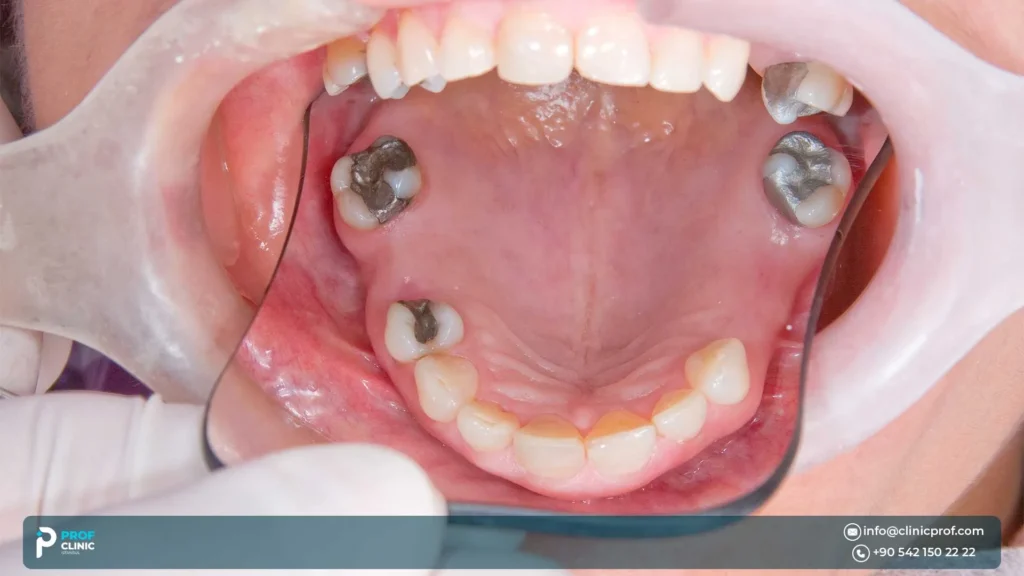
Most preventable implant problems fall into a few repeated themes: plaque-related inflammation, smoking, weak candidacy, rushed timing, overload from clenching or grinding, poor planning, and missed follow-up.
The practical goal is not to eliminate every risk in life. It is to identify the risks that apply to your case and reduce them before they become expensive or painful problems.
| Risk factor | Why it matters | How to reduce it | Stage of care |
| Plaque buildup and poor cleaning | Bacteria can inflame the tissues around the implant and affect bone support over time. | Use daily brushing, interdental cleaning, and professional maintenance; report bleeding or swelling early. | Long-term |
| Smoking or vaping | Smoking is linked with poorer healing and more complications. | Stop before surgery if possible, avoid during healing, and reduce long term. | Before & healing |
| Weak candidacy or rushed timing | Bone, gums, or general health may not support the original plan yet. | Use full history, imaging, gum stabilization, and delay treatment when that is safer. | Before surgery |
| Bruxism or heavy bite forces | Excess load can stress the implant or restoration. | Ask for bite assessment, restorative planning, and protection such as a night guard when advised. | After restoration |
| Poor planning or positioning | Angle, depth, and restorative position affect safety and function. | Choose scan-based planning and guided workflows when indicated. | Planning & surgery |
| Missed follow-up | Small inflammatory or mechanical problems can be missed until they become harder to manage. | Ask how follow-up works after you return home and report worsening symptoms early. | Healing & long-term |
Factors of Dental Implant Failure in details
Plaque, inflammation, and peri-implant disease
One of the most important preventable pathways is plaque-related inflammation. Patients should not ignore bleeding, swelling, bad taste, or gum changes around an implant. Early plaque-related irritation may still be reversible if caught quickly; advanced peri-implant disease is harder to manage and more costly to treat.
That is why daily cleaning and professional maintenance are not optional extras. They are part of the prevention plan from the beginning. For the recovery phase and home instructions, readers can move naturally to our Dental Implant Aftercare in Turkey guide, which explains what to do, what to avoid, and when to contact us during healing.
Smoking, bruxism, and avoidable overload
Smoking deserves direct discussion because it affects healing conditions before and after surgery. If you smoke or vape, that fact should shape your timing, your expectations, and your aftercare discipline. Hiding it does not protect your result; it only makes planning weaker.
Bruxism is different, but just as important in the right patient. If you clench or grind, the issue is not fear – it is force. Excess bite stress can challenge the implant or the restoration, especially when bite design and long-term protection are ignored. A strong consultation should include discussion of your bite, your restorative plan, and whether protective measures are sensible in your case.

How to reduce risk before choosing a clinic in Turkey
A decision-stage patient should not choose a clinic on speed or price alone. To help prevent dental implant failure, look for a process that includes imaging, written planning, candidacy review, medical screening, discussion of alternatives, and a clear explanation of follow-up after you return home.
A strong clinic should be willing to explain what increases risk in your case and when delay, staged treatment, or grafting may be safer than rushing ahead. If that conversation never happens, you are probably being sold convenience instead of being given a safer clinical direction.
What to confirm before you book implant treatment in Turkey
- Do I have enough bone and healthy enough gums for the proposed plan right now?
- What imaging supports this plan – panoramic X-ray only, or CBCT as well?
- What are the main risk factors in my case?
- Should treatment be staged, delayed, or combined with grafting?
- How will the final bite and restoration be planned?
- What happens if healing is slower than expected?
- How are aftercare and follow-up handled once I go home?
- Will I receive a written plan instead of only a headline promise or price?
If you are comparing more than one clinic in Turkey, ask each one for a case-based treatment direction built on your scans, medical history, smoking or grinding habits, and healing risks – not just a fast quote. If you want to compare your options more critically, review our Questions to Ask Implant Dentist guide and our How to Choose Dental Implant Brand in Turkey article before you commit.

What can patients do to avoid implant failure before and after surgery
Patients cannot control everything, but they can control many of the decisions that influence healing. If your goal is to avoid implant failure, think in a timeline: before surgery, the first 24 hours, days two to seven, and the deeper healing period that continues after you start feeling better. Feeling improved is not the same as complete biological healing.
Before surgery
Be completely honest about your medical history, medicines, smoking status, grinding habits, and previous dental problems. This is also the stage to stabilize gum health, ask whether grafting is needed, and reduce avoidable risks such as smoking before surgery.
In some cases, delaying treatment is not a setback. It is the safer decision. If your case may be affected by diabetes, osteoporosis medication, bleeding issues, smoking, or healing concerns, see our Medical Conditions & Dental Implants in Turkey guide before you book.
The first week after surgery
The first day is about protection. Rest, keep your head slightly elevated, take prescribed medication as directed, eat cool or lukewarm soft foods, and avoid smoking, vaping, alcohol, straws, forceful rinsing, hard spitting, intense exercise, and direct chewing on the treated area.
From days two to seven, the goal is still calm healing, not ‘testing’ the area because it feels better. Keep the rest of your mouth clean, protect the site, and follow written instructions rather than improvising.
A practical rule for this week is to watch the trend. Mild swelling, soreness, or light oozing can happen early, but symptoms that worsen instead of settling deserve contact with the clinic.
Long-term implant success tips after healing
Good long-term outcomes depend on habits that are simple, but not optional: daily plaque control, regular professional maintenance, early review of change, and respect for bite forces. These are the real implant success tips patients often underestimate when they focus only on surgery day.
Long-term maintenance also means asking who will service the implant, restoration, or night guard after treatment. If you grind, chew very hard objects, or ignore a restoration that feels off, you may create problems even when the implant itself is stable.
If you notice that pain, swelling, bad taste, bleeding, or looseness is getting worse rather than better, contact us straight away and attach a photo, your implant date, and any X-ray or post-op note you have. Fast review is often what prevents a small healing problem from becoming a bigger one.
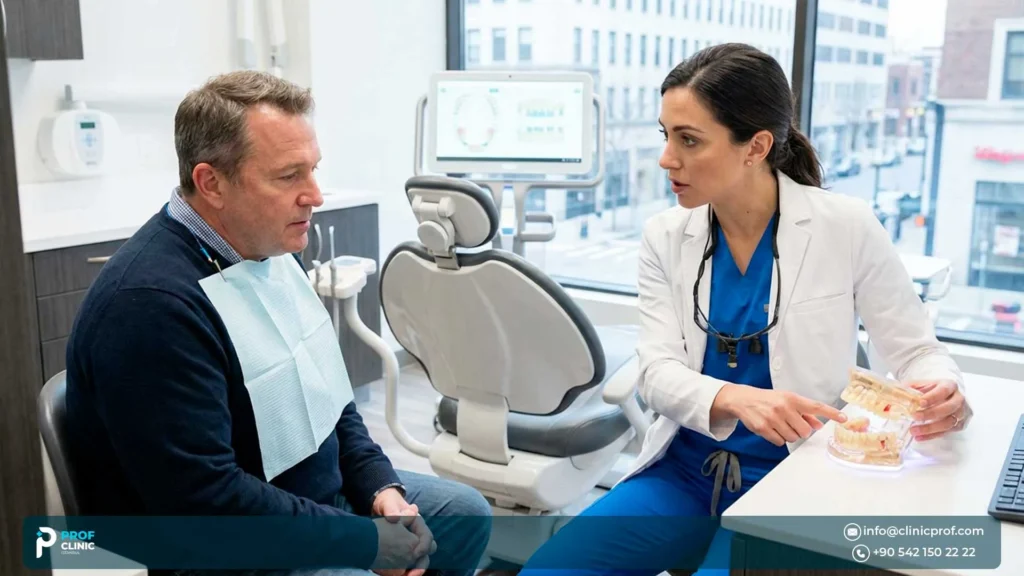
Warning Signs never ignore to prevent dental implant failure
Do not wait too long if you notice any of the following:
- pain that increases instead of improving
- swelling that keeps rising
- pus, fever, or a persistent bad taste
- bleeding that does not settle
- gum changes around the implant
- a loose-feeling implant or restoration
- bite changes that suddenly feel wrong
These signs do not always mean total failure, but they should not be brushed aside. Early review can sometimes stop a small problem becoming a bigger one.
How does Prof Clinic help reduce avoidable implant failure
The most useful difference we can offer on this topic is not a promise of certainty. It is a process designed to reduce avoidable risk. At Prof Clinic in Istanbul, we focus on radiographic assessment, candidacy review, CT/CBCT when extra detail is needed, individualized planning, and guided digital workflows where appropriate.
A practical way to understand our prevention logic is in four parts: screening, planning, surgery, and follow-up.
1. Screening
We review your gums, bone support, medical history, smoking status, grinding habits, and the wider factors that influence healing. Before we tell you to move forward, we want to know whether you are actually a good candidate right now.
2. Planning
We use panoramic imaging and, when needed, CBCT-based digital planning to visualize anatomy, bone volume, implant angulation, depth, and restorative direction before surgery. This is where our 3D Dental Implant Planning and Guided Implant Surgery workflows fit naturally.
3. Surgery
We match the surgical approach to the plan instead of forcing one template on every case. Cases that benefit from guided transfer can be planned through our Guided Implant Surgery pathway rather than left to in-the-moment estimation.
4. Follow-up
We give realistic aftercare, explain warning signs, and keep contact pathways visible for patients who need review after travel. If you want to understand what to expect after the procedure itself, our Dental Implant Aftercare in Turkey page is the natural next read.
Before making a booking decision, readers may also want to review our Dental Implants in Turkey, Dental Implants Istanbul, Medical Team, and Contact pages to see how the treatment pathway and communication channels are presented.

Book a risk-focused case review before you commit
The best way to prevent dental implant failure is not to chase the fastest promise. It is to confirm candidacy, understand your risk factors, plan the case properly, protect early healing, and commit to long-term maintenance. That is the calm, evidence-based path most decision-stage patients are really looking for.
If you are considering treatment in Istanbul, we invite you to request a case review with Prof Clinic and share your panoramic X-ray, CBCT, medical history, smoking or grinding notes, and the main concerns you want answered before you book. A written, case-based direction helps you avoid rushed decisions and move forward with more clarity and less risk.
If you want to avoid implant failure – not just react to it later – send us your scan, your medical details, and the treatment quote you are comparing. We will tell you whether the plan looks straightforward, whether it may need grafting or staging, and what questions you should settle before you say yes. Start here through our Contact page or review our Dental Implants in Turkey page if you want the broader treatment pathway first.
FAQs about preventing dental implant failure
Can dental implant failure always be prevented?
No. Risk can often be reduced, but not removed completely. The honest goal is to lower avoidable risk through proper screening, individualized planning, smoking control, plaque management, and regular follow-up.
What is the most important preventable cause of implant trouble?
Plaque-related inflammation is one of the most important preventable pathways. That is why daily cleaning, professional maintenance, and early review of bleeding or swelling matter so much.
Does smoking really increase implant failure risk?
Yes. Smoking can interfere with healing and increase complications, which is why it should be discussed honestly before treatment and avoided during healing whenever possible.
What symptoms mean I should contact the clinic quickly?
Worsening pain, increasing swelling, persistent bleeding, pus, fever, bad taste, or any sense of looseness should be reviewed promptly rather than watched for too long.