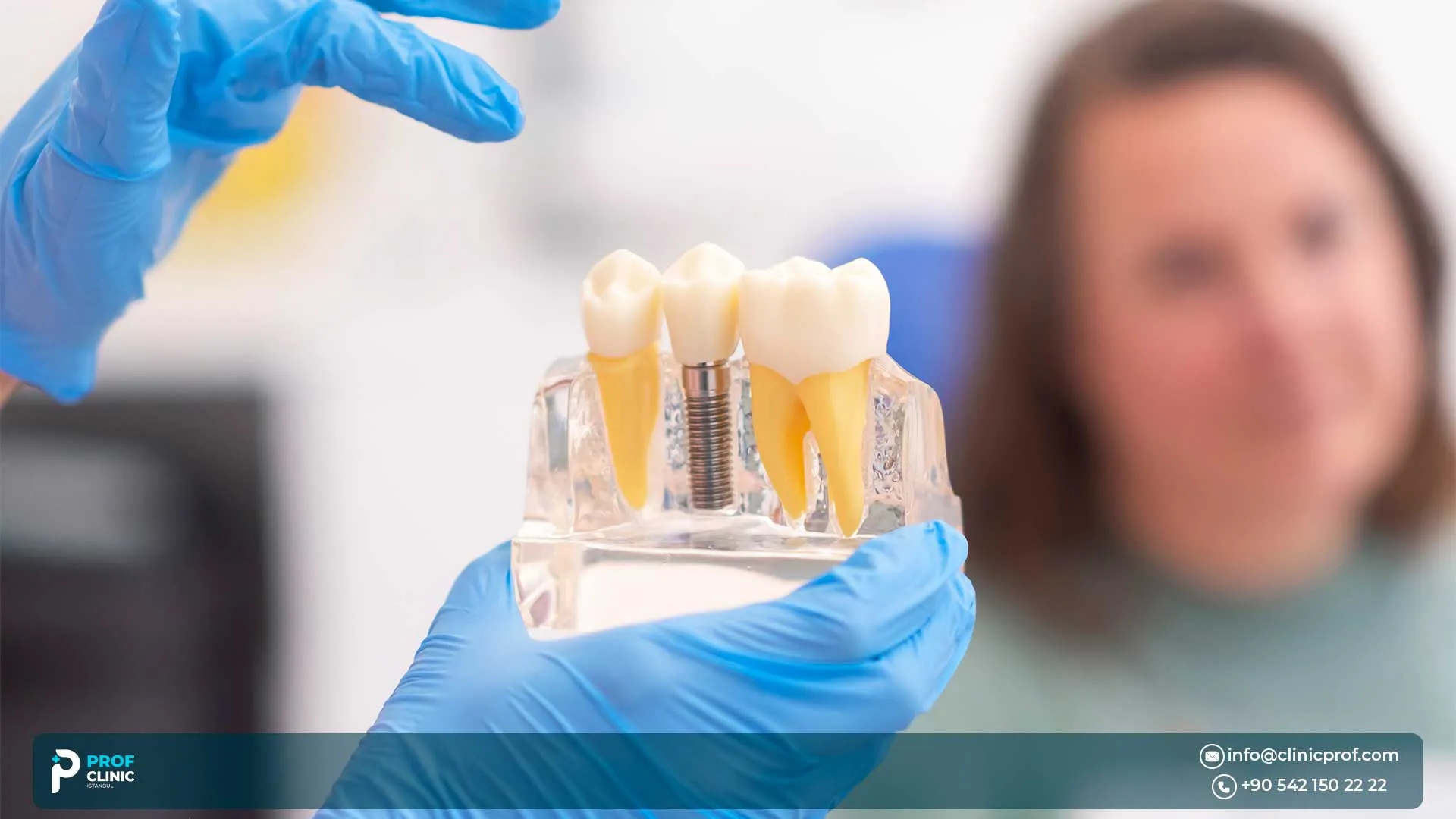
Choosing between the types of dental implant crown can feel confusing when every option sounds strong, natural, and long-lasting. You may already know that the implant replaces the missing tooth root, but the crown is the visible tooth you smile with and chew with every day. That is why the material choice matters: the wrong crown for your bite, gumline, or smile zone can affect comfort, appearance, maintenance, and future repairs.
This guide explains the main dental implant crown types by material, including zirconia, E.max, porcelain-fused-to-metal, all-ceramic, metal, and selected temporary or hybrid options. It also compares screw-retained and cement-retained crowns, explains how dentists choose the best crown for implant cases, and shows what questions to ask before your consultation in Istanbul.
What is a dental implant crown?
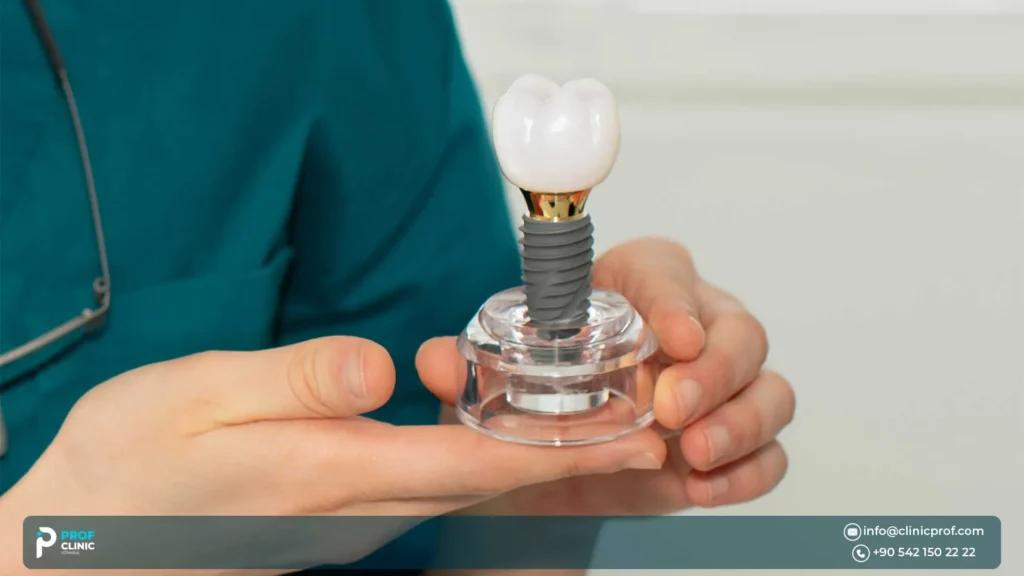
A dental crown is the visible artificial tooth attached to a dental implant through a connector called an abutment. In simple terms, the implant fixture acts like the artificial root, the abutment connects the parts, and the crown restores the visible tooth shape, chewing surface, and smile appearance.
We explain dental implants in Istanbul as a treatment that can support prosthetic parts such as abutments and crowns after implant placement and healing. You can review our Dental Implants in Turkey service for the wider implant pathway.
The crown can influence:
- How the crown meets the gumline.
- How the shade matches nearby teeth.
- How comfortably you chew on that side.
- How natural the tooth looks in the smile zone.
- How easy the restoration is to clean and monitor.
- Whether future maintenance or replacement is straightforward.
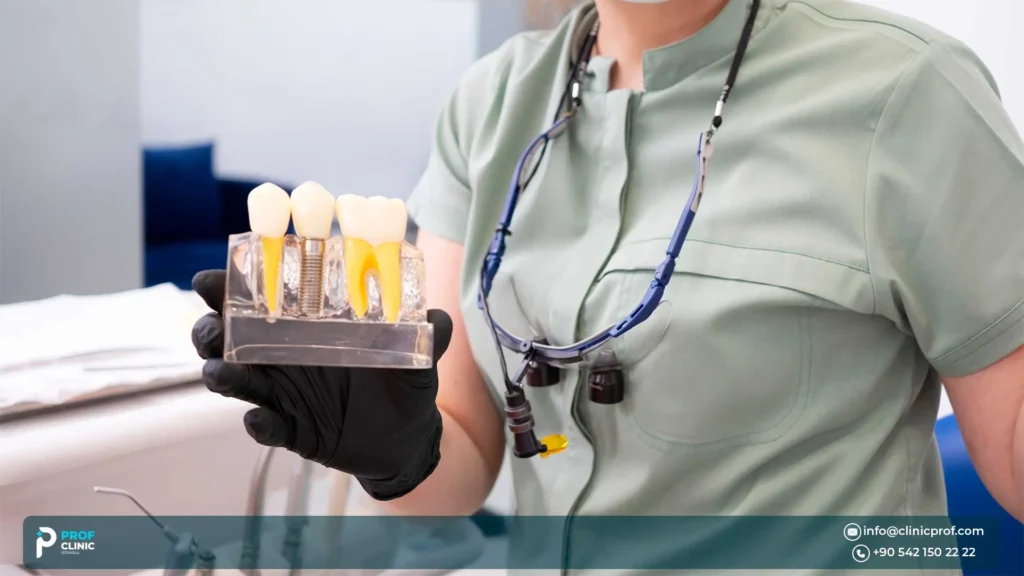
Main types of dental implant crown by material
The main types of dental implant crown are usually compared by material. The right choice depends on tooth position, smile visibility, bite force, grinding habits, gum thickness, implant angle, and your budget. A crown material should never be chosen from marketing language alone.
Zirconia implant crowns
Zirconia is a strong, tooth-colored ceramic option commonly discussed for implant crowns. It is often considered for molars, premolars, and patients who want a metal-free appearance with high resistance to chewing forces. Modern zirconia can look more natural than older opaque designs, especially when high-translucency or layered options are used.
Zirconia still needs case planning. A visible front tooth may require careful shade matching, gumline planning, and abutment selection. A back tooth may prioritize strength and bite balance.
Read our blog on Zirconia Crowns Guide to learn more about this type.
E.max implant crowns
E.max is a lithium disilicate ceramic known for natural translucency and lifelike shade blending. It may be considered for front teeth, premolars, or smile-zone cases when aesthetics are the main concern and the bite conditions are suitable.
E.max is not automatically the best choice for every molar or heavy-bite case. Your dentist should check crown thickness, implant position, opposing teeth, and biting forces before recommending it.
For more context, see our E.max Crowns article.
Porcelain-fused-to-metal crown
A porcelain-fused-to-metal crown, or PFM, combines a metal substructure with an outer porcelain layer. It may be discussed when the plan needs strength, a tooth-colored surface, and cost control.
The main limitation is aesthetic. If the gum recedes, a darker line or shadow may appear near the margin. The porcelain layer can also chip in some cases, especially when bite forces are high.
All-ceramic or all-porcelain implant crowns
All-ceramic and all-porcelain crowns are often discussed for visible teeth because they can provide high aesthetics and a metal-free appearance. However, different ceramic materials behave differently, so the dentist must match the material to the tooth location and bite demand.
Metal or gold implant crowns
Metal or gold alloy crowns are rarely chosen for visible front teeth because they are not tooth-colored. Their main advantage is durability in selected back-to-tooth cases where appearance is less important and the bite demand is high.
Composite or hybrid crowns
Composite or hybrid materials may be used in selected temporary or transitional situations, depending on the treatment plan. They are not usually the first long-term choice for every implant crown, but they may have a role while the final restoration is being planned.
Here is a summary of implant crown materials
| Crown material | appearance | Strength focus | Often considered for | Main limitation |
| Zirconia | Tooth-colored; modern options can look natural | High | Molars, premolars, heavy bite, metal-free preference | Needs careful shade planning in visible teeth |
| E.max / lithium disilicate | Highly translucent and natural-looking | Moderate to strong by case | Front teeth, premolars, smile-zone cases | Not ideal for every heavy-bite molar |
| PFM | Tooth-colored porcelain over metal | Strong support | Mixed strength/aesthetic/cost cases | Possible gumline shadow or porcelain chipping |
| All-ceramic / all-porcelain | High aesthetics and metal-free | Varies by ceramic type | Visible teeth and aesthetic cases | Material must match bite demand |
| Metal / gold | Metallic, not tooth-colored | High | Back teeth with low visibility | Limited aesthetics |
| Composite / hybrid | Tooth-colored | Lower to moderate | Temporary or selected cases | May wear faster than ceramic options |
Send your X-ray or dental photos to our team via WhatsApp so they can compare implant crown materials for your tooth position, bite, and smile goals.
What is the best crown for implant treatment?
The best crown for implant treatment is not one material for every patient. It is the crown that fits your tooth position, bite force, gumline, implant angle, smile goals, and long-term maintenance needs. A crown that works beautifully for a front tooth may not be the strongest choice for a molar. A crown that is strong for chewing may still need extra aesthetic planning in the smile zone.
A good recommendation should answer four practical questions:
- Will this crown look natural in this tooth position?
- Can it handle this patient’s bite force?
- Can it be cleaned, monitored, or repaired when needed?
- Does it fit the abutment, gumline, implant angle, and budget?
Best crown for front tooth implants
For front tooth implants, aesthetics usually lead the decision. The dentist must consider shade, translucency, gum contour, smile line, and how the crown looks beside neighboring natural teeth. E.max, layered zirconia, high-translucency zirconia, or other aesthetic ceramics may be considered depending on the case.
A front tooth implant crown is not only about material. Gum shaping, implant position, abutment color, temporary crown design, and shade selection all affect the final result.
Best crown for molar implants
For molar implants, strength and bite resistance usually matter most. Molars handle strong chewing forces, so the crown must be designed to resist overload, chipping, and wear. Zirconia or metal/gold options may be discussed in selected molar cases, while the dentist still checks crown thickness, bite alignment, opposing teeth, and grinding habits.
Screw-retained vs cement-retained implant crowns
The types of dental implant crown are not only different by material. They can also differ by how the crown is attached to the implant system. The two common approaches are screw-retained and cement-retained crowns.
| Retention type | How It works | Possible advantages | Important limitations |
| Screw-retained crown | The crown is fixed with a screw through an access channel. | Often easier to retrieve for maintenance, repair, or screw adjustment. | The access hole must be planned and restored carefully, especially in visible areas. |
| Cement-retained crown | The crown is cemented onto an abutment. | Can help aesthetics in selected angled or visible cases. | Excess cement must be controlled carefully to protect gum health. |
If you want to understand the connector stage before the crown, read our Dental Implant Abutment Guide.
How Prof Clinic chooses implant crown materials in Istanbul
At Prof Clinic in Istanbul, we do not treat crown material as a simple menu choice. The dentist should first understand the implant position, gum condition, bite force, smile visibility, medical history, and whether the patient needs one crown, a bridge, or a wider implant plan.
A practical assessment may include:
- Reviewing dental photos, X-rays, or 3D imaging when available.
- Checking whether the implant is in the front, premolar, or molar region.
- Assessing gum thickness, smile line, and shade expectations.
- Reviewing bite force, clenching, grinding, and opposing teeth.
- Comparing zirconia, E.max, PFM, ceramic, and other options.
- Explaining whether screw-retained or cement-retained design is more suitable.
- Planning follow-up and maintenance for international patients after they return home.
You can also review our doctors before requesting a personalized crown-material discussion.
If your implant is in the smile zone or you have a heavy bite, contact us before choosing the final crown material.
Cost factors for implant crown types in Turkey
The cost of implant crowns in Turkey depends on the full case, not only the crown material. Exact pricing should come after examination and imaging because two patients may need very different treatment stages.
Common cost factors include:
- Number of implant crowns needed.
- Implant system and abutment type.
- Front tooth versus molar complexity.
- Digital scan, shade matching, and lab customization.
- Number of visits and travel planning for international patients.
- Need for temporary crowns, gum shaping, bone grafting, or sinus lift.
- Material choice: zirconia, E.max, PFM, ceramic, metal, or temporary options.
A low quote may not include the same implant brand, abutment, temporary restoration, final crown, imaging, or follow-up support. For commercial comparison, patients should compare full treatment plans, not only the crown name.
Care, maintenance, and replacement of implant crowns
Dental implant crowns can look and feel stable, but they still need daily care and professional monitoring. The implant itself does not decay like a natural tooth, but plaque can collect around the gumline, under bridges, or around prosthetic components.
For long-term guidance, read our Dental Implant Maintenance article.
To protect an implant crown:
- Avoid chewing ice, hard objects, or non-food items.
- Brush twice daily with a dentist-recommended technique.
- Attend professional checkups and cleaning appointments.
- Use a night guard if your dentist recommends one for grinding or clenching.
- Clean around the implant crown with floss, interdental brushes, or tools recommended for your case.
- Contact a dentist if the crown feels loose, painful, high in the bite, or associated with swelling, bleeding, or bad taste.
In many cases, a crown can be repaired or replaced without replacing the implant fixture, but only a dentist can confirm this after checking the abutment, screw, gum tissue, bite, and bone support.
Risks, limitations, and questions to ask before choosing a crown
A trustworthy implant crown plan should explain limitations. Even a high-quality crown can develop problems if the bite is overloaded, hygiene is poor, the crown fit is not ideal, or the material is not suitable for the case.
Possible issues include:
- Chipping or fracture.
- Screw loosening.
- Shade mismatch.
- Food trapping.
- Wear on opposing teeth.
- Gumline shadow in some crown types.
- Gum inflammation around the implant.
- Difficulty cleaning around the crown or under connected restorations.
Before choosing a crown, ask your dentist:
- How will the shade be matched?
- Do I need a night guard?
- What abutment material will be used?
- How should I clean around this crown?
- Which crown material fits my tooth location and bite?
- Is my crown screw-retained or cement-retained, and why?
- What happens if the crown chips, loosens, or needs replacement?
- What follow-up schedule do you recommend after I return home?
Why consider Prof Clinic for implant crown planning in Istanbul?
Prof Clinic can be considered by international patients who want to compare implant crown materials within a full dental treatment plan in Istanbul. The value is not choosing the most expensive or most popular crown material. The value is matching the crown to the implant position, gumline, bite force, smile goals, and maintenance expectations.
For implant crown planning, our team may help you discuss:
- Front-tooth versus molar crown decisions.
- X-ray or imaging review before treatment.
- Crown shade, gumline, and smile-zone planning.
- Follow-up communication after treatment in Istanbul.
- Zirconia, E.max, PFM, ceramic, metal, and temporary crown options.
- Whether your case needs a single crown, implant bridge, or wider dental implant plan.
- Travel timing for patients from the Gulf, Europe, the UK, the US, and other regions.
Start with our Dental Implants in Turkey service page or request a consultation if you already have X-rays or photos.
FAQs about types of dental implant crown
What are the main types of dental implant crown?
The main types include zirconia, E.max or lithium disilicate, porcelain-fused-to-metal, all-ceramic or all-porcelain, metal or gold, and selected temporary or hybrid options. The right choice depends on tooth location, bite force, gumline, aesthetics, and dentist evaluation.
What is the best crown for implant treatment?
There is no single best crown for every implant. Zirconia may suit strength-focused cases, while E.max or other aesthetic ceramics may be considered for front teeth. Your dentist should assess bite, smile line, implant position, gum health, and oral hygiene before recommending a material.
Which implant crown material looks most natural?
E.max and high-quality all-ceramic crowns are often chosen for natural translucency in visible areas. Modern zirconia can also look natural when carefully planned, especially with layered or high-translucency designs.
Is zirconia better than E.max for implant crowns?
Zirconia is often selected when strength is a major priority, especially for molars or heavier bite forces. E.max is often selected when translucency and natural appearance are the main priorities, especially in the smile zone. The better option depends on the case.
Are screw-retained or cement-retained crowns better?
Both can work when planned correctly. Screw-retained crowns may be easier to retrieve for maintenance, while cement-retained crowns may help in selected aesthetic or angled cases. The choice depends on implant position, gum tissue, crown location, and dentist judgment.
Can a dental implant crown be replaced?
In many cases, yes. A dental implant crown may be replaced without replacing the implant fixture if the implant, abutment, gum tissue, screw, and bone support are healthy. A dentist must examine the cause before deciding.
Can Prof Clinic help me choose an implant crown material before I travel?
Yes. Prof Clinic in Istanbul can review your photos, X-rays if available, dental goals, and travel timing to discuss suitable implant crown materials before you commit to treatment.