If you have lost most teeth in one jaw, or your denture no longer feels secure, your dentist may suggest All-on-6 dental implants. In short, six implants are placed in the jawbone and one fixed bridge of new teeth is screwed onto them.
All-on-6 is a well-established way to replace a full arch, though it is not right for every jaw. It needs enough bone along the arch for six implants, and only a 3D scan can confirm that.
This guide explains what All-on-6 is, how the six implants are laid out and how it differs from All-on-4. It also covers who is a good candidate and each step of the procedure. It ends with the honest benefits and limits, so you can weigh them before any consultation.
What Are All-on-6 Dental Implants?
All-on-6 dental implants are a full-arch treatment in which six titanium implants in one jaw hold a fixed bridge that replaces every tooth in that arch. The bridge stays in your mouth day and night, and only a dentist removes it for maintenance.
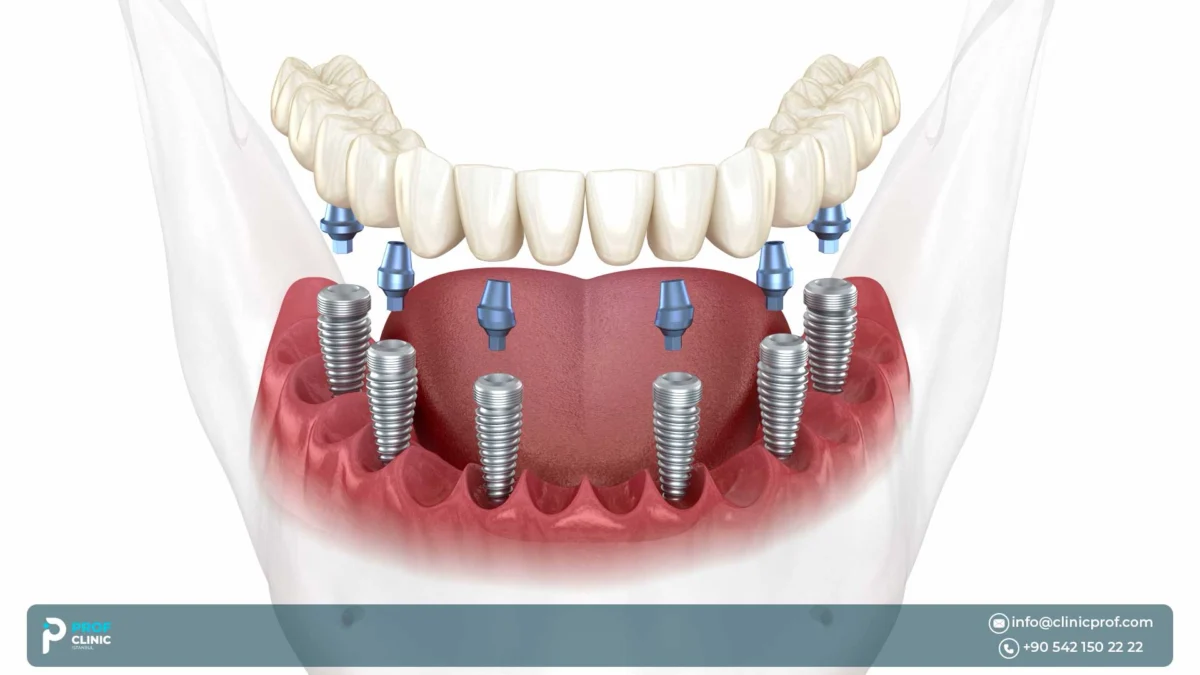
The idea grew out of the same thinking as All-on-4: replace a whole arch with a single bridge rather than one implant per tooth. With six implants, the biting load is shared by more anchors. That is why All-on-6 is one of the main full-arch options within dental treatment in Istanbul.
Each jaw is planned on its own. One person may need All-on-6 in the upper jaw only, while another needs it in both jaws, or six implants above and four below. The decision follows the bone, the bite and the teeth that can still be kept.
How Are the Six Implants Placed in the Jaw?
In All-on-6, the six implants are spread along the curve of the jaw, usually from the front teeth back towards the premolar or first molar area. This wide spread creates a broad base for the bridge, a little like the legs of a table.
Most of the implants are placed fairly upright. The back pair may be angled slightly when the bone or a nearby structure leaves less room. Because the support reaches further back, the bridge needs a shorter unsupported end behind the last implant, which dentists call a cantilever.
The exact positions are planned on a CBCT scan. It shows bone height, width and density, along with the nerve in the lower jaw and the sinuses above the upper jaw. When there is plenty of bone but it is soft and more support is needed, some plans use eight; our guide to when eight implants make sense covers that option.
Upper Jaw or Lower Jaw: Does It Make a Difference?
Yes, the jaw matters. Bone in the upper jaw is often softer, and the sinuses sit just above the back teeth, so extra implants can add welcome support there. In the lower jaw, the bone is usually denser, and four implants are sometimes enough. Your dentist weighs this on the scan for each arch separately.
All-on-6 vs All-on-4: What Do Two Extra Implants Change?
The main difference is the number of implants and how they are angled. All-on-4 uses four implants, with the back two tilted to make use of the bone further forward. All-on-6 adds two more implants and usually needs more bone along the back of the jaw.
| Feature | All-on-4 | All-on-6 |
|---|---|---|
| Implants per jaw | Four | Six |
| Back implants | Tilted, often at a marked angle | Mostly upright, sometimes slightly angled |
| Bone needed | Mainly at the front of the jaw | Along more of the arch, including further back |
| Bone grafting | Often avoided by the tilted implants | Sometimes needed where the back bone is thin |
| Load sharing | Four anchors share the bite | Six anchors share the bite |
| Often chosen when | Bone at the back is limited | Bone allows it, often in the upper jaw |
Research does not crown a winner. A systematic review in Heliyon on upper-jaw bridges found similar implant and bridge survival with four or six implants. Bone loss around the implants, however, was higher in the four-implant group. For a deeper look at the choice, read our comparison of All-on-4 and All-on-6 for a full arch.
What Is an All-on-6 Bridge Made Of?
An All-on-6 restoration has four main parts, and each one is chosen for your bite and the space available:
- Titanium implants: six screw-shaped posts that fuse with the jawbone and act as artificial roots.
- Abutments: small connectors, often multi-unit abutments, that bring the screw access to the right height and angle.
- Framework: the rigid inner structure that joins all six implants, often milled in titanium or zirconia.
- Teeth and gum layer: acrylic or composite for the temporary bridge, and zirconia, ceramic or high-strength acrylic for the final one.
The temporary bridge is lighter and easier to adjust during healing. The final bridge is made on new scans once the implants have fused, so its shape, colour and bite can differ from the temporary one.
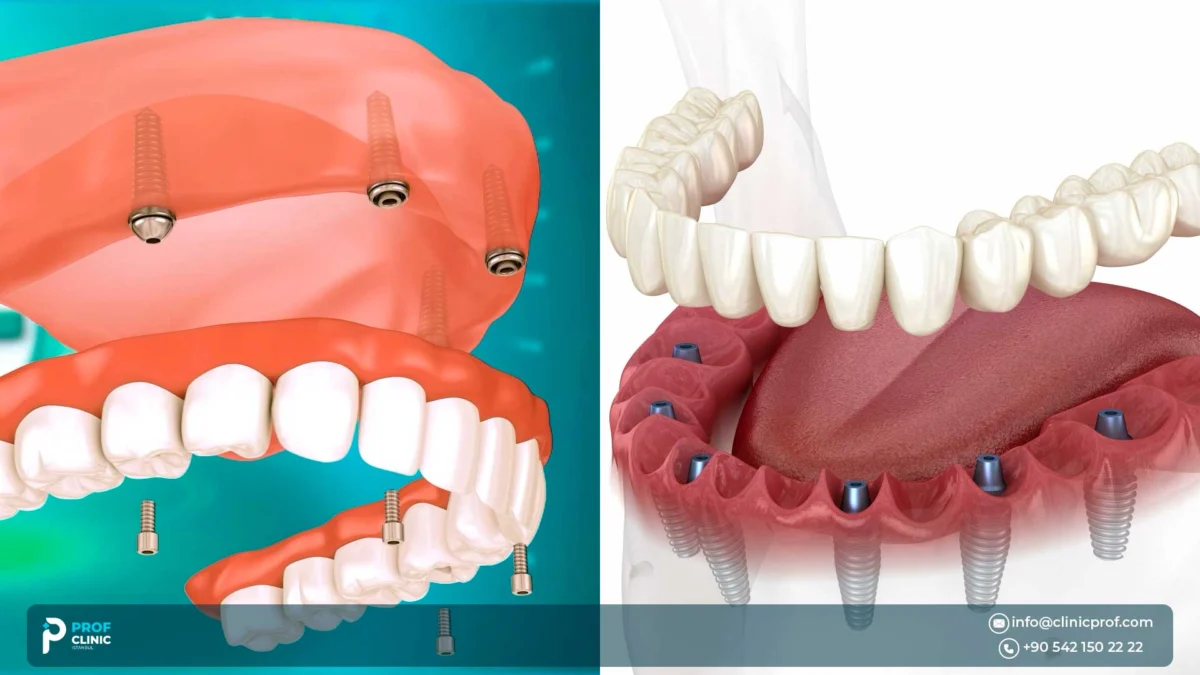
All-on-6 is a fixed bridge, which sets it apart from a removable overdenture. An overdenture clips onto implants, can be taken out for cleaning and, in the upper jaw, may cover part of the palate.
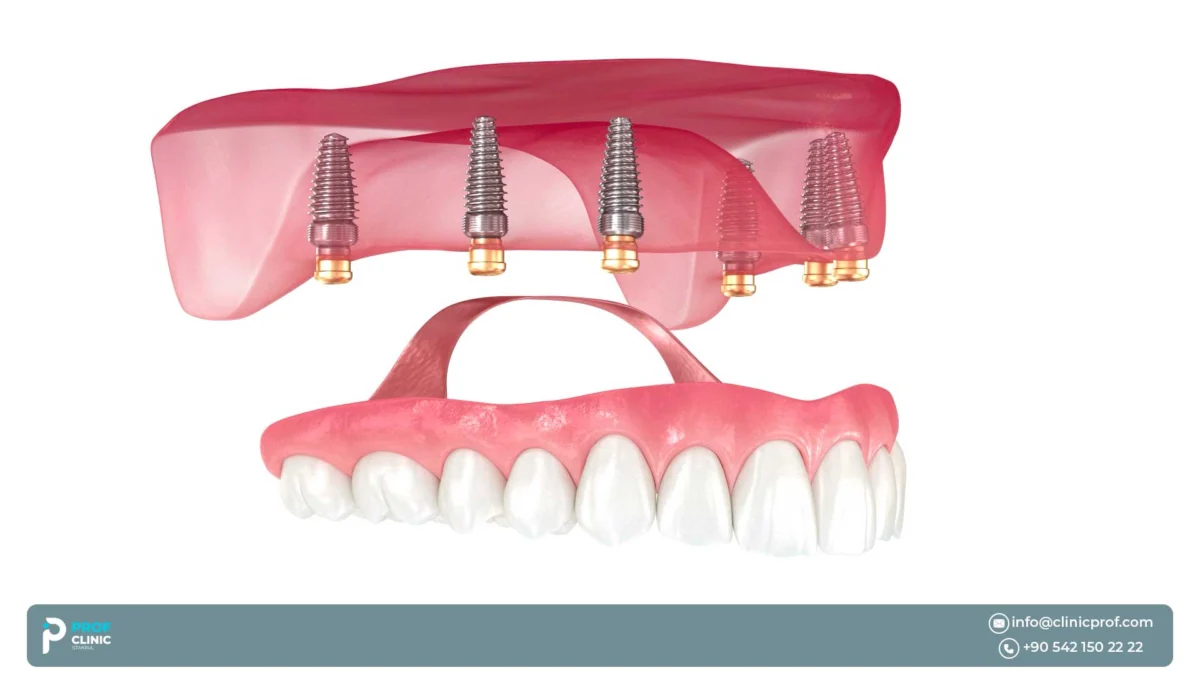
Cleveland Clinic describes both types: snap-on dentures that you remove every day, and fixed hybrid dentures that only a dentist can take out. Which one suits you depends on your bone, your hands, your hygiene routine and your preferences.
Who Is a Good Candidate for All-on-6 Dental Implants?
Good candidates for All-on-6 are adults who are missing most or all of the teeth in one jaw, have teeth that cannot be saved, or struggle with a loose denture. The following factors decide whether six implants are realistic:
- Enough bone along the arch: the CBCT scan must show room for six implants, including towards the back of the jaw.
- Gums under control: active gum disease is treated first, because inflammation can later threaten the implants.
- Stable general health: conditions such as diabetes should be well managed, and your medicines are reviewed beforehand.
- No smoking, or willingness to stop: a review in the Journal of Dentistry linked smoking with more implant failures and infections.
- Commitment to cleaning: a fixed bridge needs daily care underneath it and regular professional check-ups.
- Time for healing: the implants need several months to fuse before the final bridge is fitted.
If the bone at the back is thin, the dentist may suggest grafting or a sinus lift first, or switch to All-on-4 instead. People missing only a few teeth usually do better with individual dental implants than with a full-arch bridge.
If you are unsure where you stand, you can send your questions to our dental team with recent photos or X-rays, and they will explain what a full assessment needs to check.
The All-on-6 Procedure Step by Step
The All-on-6 procedure follows a clear order, from the first scan to the final bridge. A typical course of treatment looks like this:
- Consultation and CBCT scan: the dentist examines your mouth, reviews your health and takes a 3D scan of the jaw.
- Digital treatment plan: the position, length and angle of each implant are planned on the scan.
- Extractions and gum care: teeth that cannot be saved are removed, often on the day of surgery.
- Implant placement: six implants are placed under local anaesthesia, with sedation if needed.
- Temporary fixed bridge: attached within a few days if the six implants are firm enough.
- Healing: the implants usually need about three to six months to fuse with the bone.
- Final bridge and follow-up: new scans are taken, the final bridge is fitted, and check-ups continue.
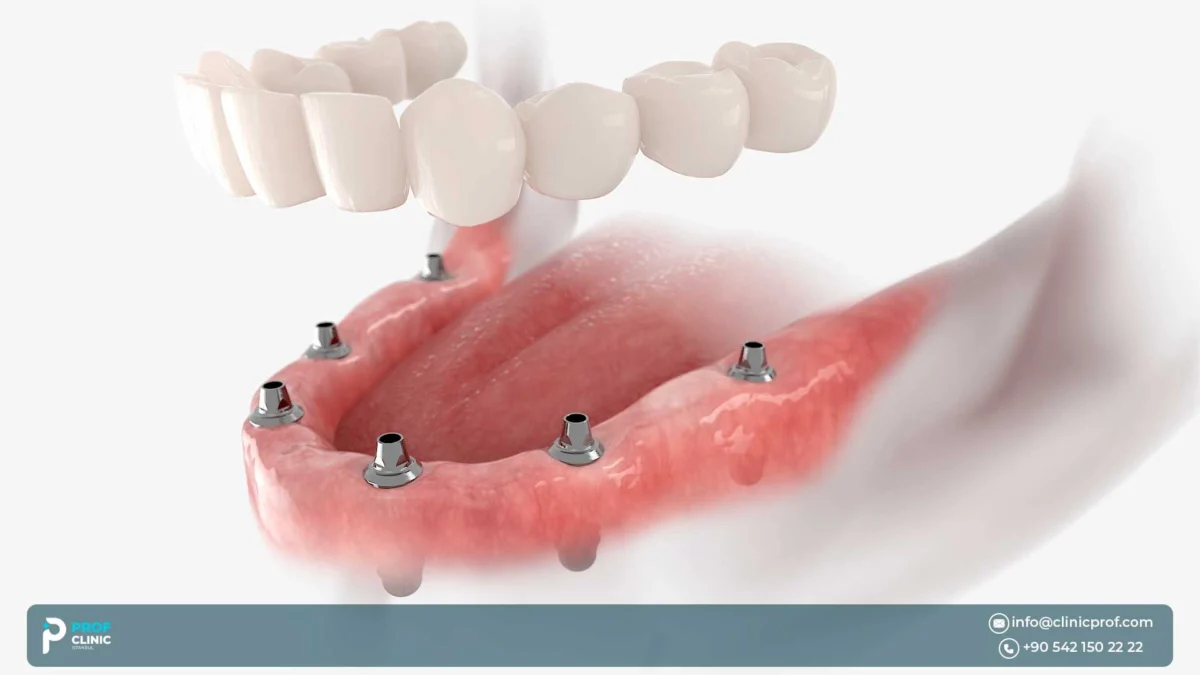
Not everyone receives a temporary fixed bridge within days. It depends on how firmly each implant holds in the bone at surgery. If stability is lower, the implants are left to heal first, and another temporary solution is used in the meantime.
Most people need two main stays: one for surgery and the temporary bridge, and one some months later for the final bridge. If you live abroad, our guide to planning All-on-6 treatment in Turkey explains how to organise both visits.
All-on-6 Benefits and Limits
All-on-6 has real benefits for the right patient, and limits that are just as important to understand before you decide.
Benefits of All-on-6 Dental Implants
The main benefits come from having a fixed full arch on a wide base of six implants:
- A set of teeth that stays put at meals, in conversation and when you smile.
- A stronger bite than a loose denture gives, so foods like meat, raw vegetables and crusty bread become easier.
- Wide support from six anchors, with a shorter unsupported end behind the last implant.
- No plate over the palate in the upper jaw, so taste and speech often feel more natural.
- Fuller support for the face, as the bridge holds out the lips and cheeks that sink after years without teeth.
Seeing real full-arch cases can help you picture the change. You can browse our before and after gallery, keeping in mind that every mouth is different.
Limits and Risks to Weigh
Before you commit, it helps to see the drawbacks clearly, since good planning can reduce most of them:
- Six implants need more bone, so grafting or a sinus lift is sometimes needed first.
- Surgery is longer than with four implants, and there are two more implant sites to heal.
- Any teeth left in that jaw are normally taken out, including some that still look fairly sound.
- Infection, nerve damage and a perforated sinus are possible after surgery, although Cleveland Clinic notes that such risks are usually minimal.
- Daily cleaning under the bridge takes effort, and plaque can inflame the tissue around implants.
Both designs perform well in studies. A recent meta-analysis of 55 studies found similar survival for All-on-4 and All-on-6, and a finite element study concluded that where the implants sit matters more than their number alone. Long-term results and possible problems are covered separately.
Also read: All-on-6 Dental Implant Problems, Success Rate and Long-Term Results
Caring for All-on-6 Implants After Treatment
Caring for All-on-6 implants comes down to a daily routine above and below the bridge. Clean the teeth morning and night with a soft brush and a gentle paste, then reach the gum side of the bridge with a water flosser, floss threaders or small interdental brushes.
Professional check-ups belong to the treatment itself. During these visits, the dentist checks the screws, the bite and the gums, and may remove the bridge for a deep clean. Early care keeps small problems, such as a loose screw or inflamed gums, from becoming bigger ones.
Planning All-on-6 at Prof Clinic in Istanbul
At Prof Clinic, an All-on-6 plan starts with your records rather than a ready-made package. The team first assesses your photos, X-rays and a 3D CBCT scan. The choice between four and six implants is then made on that scan, as our page on All-on-4 and All-on-6 dental implants in Turkey explains. If the assessment and CBCT scan show they suit you better, the clinic also offers All-on-8 and removable implant dentures (overdentures).
The implants are placed with the area numbed by local anaesthesia, and sedation can be added if needed. Your plan is written down clearly, and it covers a temporary fixed bridge once the implants are stable enough, fresh scans for the final bridge and a schedule of check-ups and cleaning. Your six-implant case can be planned with Dt. Orçun Özaydın, whose clinical work takes in prosthetic planning for All-on-4 and All-on-6.
No treatment is recommended before the team has examined you and studied your records. At Prof Clinic, All-on-6 treatment costs about €5,200–10,000 per jaw (roughly £4,300–8,400 or $5,700–11,100), and the exact amount for your case is confirmed in writing once your X-rays have been reviewed. When you feel ready, you can book a free consultation to go through your options calmly.
About these prices: These prices are approximate and meant for planning only. They are Prof Clinic’s indicative prices in euros; amounts in other currencies are converted at the exchange rate of 13 November 2026 and will change as exchange rates move. Your final price is set after your medical assessment and X-rays and confirmed in a written quote that lists what is included. Contact us to get the actual price for your case.
Frequently Asked Questions About All-on-6
How many teeth are on an All-on-6 bridge?
Most All-on-6 bridges carry 10 to 12 teeth per jaw. The exact number depends on the size of your jaw, how far back the implants can go and the design of the bridge. Your dentist plans this on the scan so that the bite feels balanced on both sides.
Is All-on-6 better than All-on-4?
Neither is better for everyone. Six implants give the bridge more support and suit people with enough bone along the jaw, especially in the upper jaw. Four implants, with the back two tilted, often suit people with less bone at the back. The CBCT scan shows which design fits your jaw.
Is the All-on-6 procedure painful?
You should not feel sharp pain during surgery, because the jaw is numbed with local anaesthesia and sedation can be added. Expect swelling, some bruising and soreness for several days afterwards. Prescribed painkillers, cold packs and soft food usually keep this manageable.
How long does the All-on-6 procedure take from start to finish?
Treatment usually spans about three to six months. Surgery and the temporary bridge take place in the first phase, then the implants are left to fuse with the bone. Grafting, slow healing or extra treatment for the gums can lengthen this timeline.
Can I get All-on-6 if I have gum disease?
Often yes, once the gum disease is under control. Teeth that cannot be saved are removed, and active infection is treated before or during surgery. Because gum disease can return around implants, careful cleaning and regular check-ups matter even more afterwards.
How much do All-on-6 dental implants cost?
The indicative price is given in the planning section above, and your plan shapes the final cost: one jaw or both, extractions, any grafting or sinus lift, and the bridge material. Prof Clinic gives you a written plan and quote after reviewing your photos, X-rays and scans.
The Bottom Line
All-on-6 dental implants give you a fixed full arch on six implants, with wide support for the bridge when the bone allows it. A 3D scan and an examination will show whether your bone, gums and general health make six implants the right number for you.
For an initial view of your case, send your X-rays to us on WhatsApp, or read more about full-arch treatment in Istanbul.
Sources
- PMC (Heliyon) — Maxillary fixed prosthesis supported by four or six implants: a systematic review and meta-analysis
- PubMed (Int J Oral Maxillofac Surg) — All-on-4 and All-on-6 implant-supported fixed prostheses for the edentulous jaw: a systematic review and meta-analysis
- PMC (Dentistry Journal) — All-on-4, All-on-5 and All-on-6 in the atrophic mandible: a finite element analysis
- PubMed (Journal of Dentistry) — Smoking and dental implants: a systematic review and meta-analysis
- Cleveland Clinic — Implant-Supported Dentures