Do exosomes for hair loss and stem cell injections actually work? Early studies are encouraging, but they are small, short and hard to compare, and no exosome product has been approved by the US FDA. In short, the science is real, and so is the marketing that runs ahead of it.
In this guide by Prof Clinic, you will learn what these treatments are, what the research shows, what regulators and safety agencies say, how to test an offer before you pay, and which hair loss treatments have stronger evidence today. By the end, you will know which questions to ask and when to walk away.
Exosomes and Stem Cell Treatments for Hair: What They Actually Are
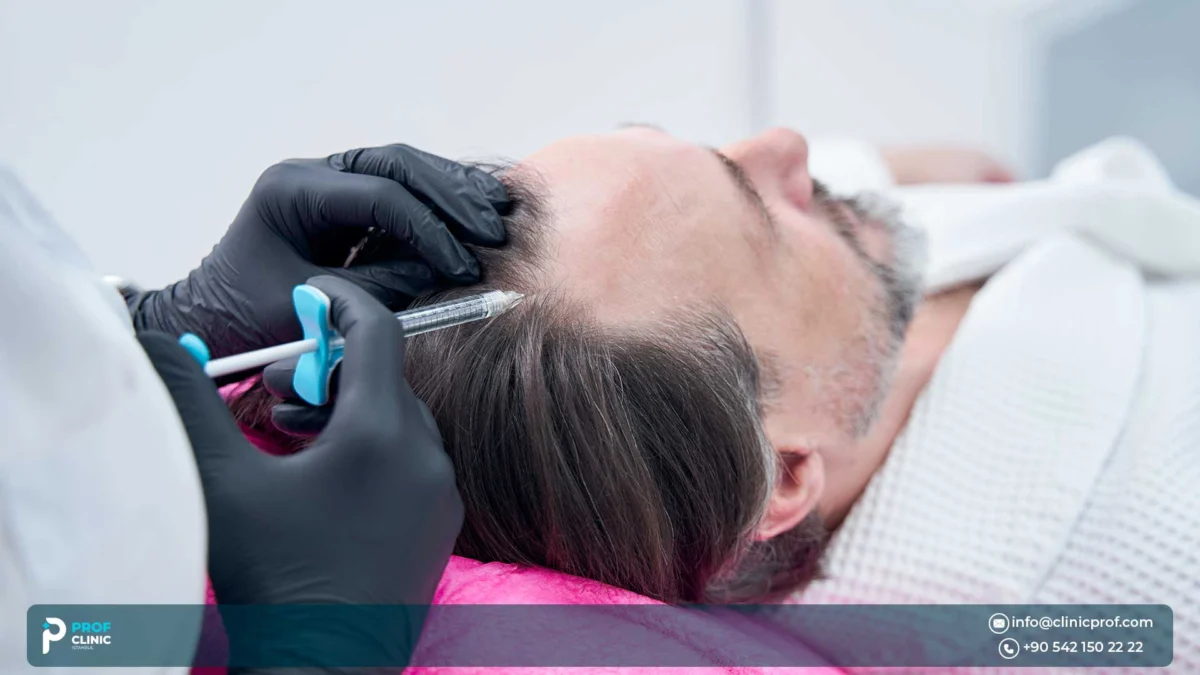
They are two different things that are often sold together. Exosomes are microscopic packages released by cells, carrying proteins, growth factors and genetic messages, and they contain no living cells. Stem cell treatments use living cells, or the fluid those cells were grown in, taken from sources such as fat, bone marrow, umbilical cord tissue or hair follicles.
The idea behind both is that signals from these cells could wake resting follicles or slow their shrinkage. It is a reasonable hypothesis: a 2025 review in JPRAS Open reports that, in laboratory studies, exosomes from several cell types stimulated dermal papilla cells (the cells that steer hair growth) and moved follicles into the growth phase. Results in a dish or in animals are not proof in people, though.
The table sets out the main offers you may come across, and where each one stands.
| Offer | What it is | Evidence in people so far | Status |
|---|---|---|---|
| Exosome injections or serums | Cell-free vesicles from fat or bone-marrow stem cells, cord tissue or plants, injected or applied to the scalp | Small studies, mostly 6 months or shorter, using different products; one small randomised trial of a topical plant-derived product | The FDA states that no exosome product is approved; reviewers note many formulations lack approval as medicines in key countries |
| Fat-derived stem cells (SVF or nanofat) | Cells from your own fat, usually collected by liposuction, injected into the scalp | Randomised and non-randomised trials, with different cell types and schedules | Experimental; no standard protocol |
| Stem cell conditioned medium | The liquid in which stem cells were grown, injected or applied | A few small trials, some with placebo groups | Experimental |
| Lab-grown follicle cells (“hair cloning”) | Cultured cells meant to create brand-new follicles | None available as a treatment | Research only |
| “Stem cell hair transplant” | A label that may mean a standard transplant, or a transplant plus an extra injection | Depends on what is actually injected | Ask for details in writing |
Do Exosomes for Hair Loss Work? What the Studies Show
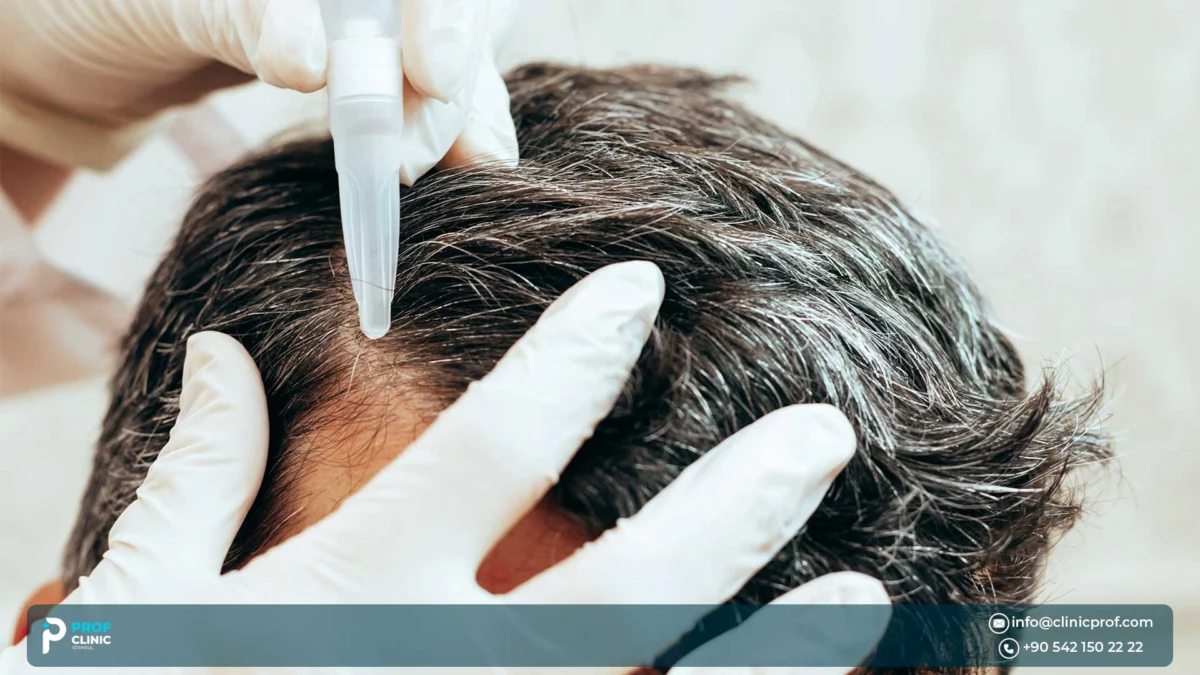
Some small studies report more hair density and thickness after exosome treatment, but the evidence is still preliminary: no large, long, well-controlled trial has settled the question. The JPRAS Open review drew on 42 laboratory and clinical studies and describes strong biology but clinical data it calls “preliminary and heterogeneous”.
What the Encouraging Studies Report
The clinical studies in that review enrolled between 1 and 72 people and followed them for 12 weeks to 6 months. Most injected exosomes derived from fat or other mesenchymal stem cells into the scalp and reported higher hair density and thickness, with mild side effects such as redness or swelling in a few cases. Among the studies in the review’s summary table, only one was a randomised trial: 40 men applied a plant-derived exosome product for 24 weeks and showed better density than the placebo group.
Why the Evidence Is Still Thin
Promising early results often shrink when treatments meet larger, better-controlled trials. These are the gaps that matter most here:
- Small and short: the largest study in the review’s table had 72 participants, and none followed people beyond 6 months, so durability is unknown.
- No standard product: source cells, isolation methods, doses and delivery routes (injection or topical) all vary between studies, so results cannot simply be added together.
- Few controls: without a placebo group, normal fluctuations in the hair cycle and the effect of other treatments are hard to rule out.
- Unclear long-term safety: the reviewers say immune reactions and a theoretical cancer risk are not yet well characterised over the long term.
What it means in real life: a striking before-and-after photo from an exosome clinic shows what happened to one scalp. It cannot tell you what will happen to yours.
Not sure which of these claims applies to your hair loss? Ask our team how an initial assessment works before you spend money on any injection.
Stem Cell Therapy for Hair Loss: Promising Trials, No Standard Treatment
Stem cell therapy for hair loss is still experimental: trials exist, but there is no agreed cell type, dose or schedule, and no cell-based product is available as a routine treatment. A 2023 systematic review in Cells covered studies from 2015 to 2021 with 653 people in total, and only five of those studies were randomised controlled trials.
The studies used fat-derived cells, follicle-derived cells and the fluid in which stem cells had been grown, with different numbers of sessions and follow-up times. That variety made it impossible to pool the results. The reviewers reported no major side effects and called stem cell injections a promising option, but said the findings should be interpreted with caution until larger studies reproduce them, and that standard methods for collecting, preparing and injecting cells are still needed. Fat-derived methods also begin with collecting fat from your body, usually by liposuction, which is a procedure with its own risks.
Stem Cell Hair Restoration vs a Hair Transplant
A hair transplant and a stem cell injection do different jobs. A transplant moves living follicles from the donor area to thinning areas, and those follicles already carry their own stem cells. An injection tries to stimulate follicles you still have, and no injectable treatment has been shown to rebuild follicles that are already lost.
When a clinic advertises a “stem cell hair transplant”, ask whether you are being offered a standard transplant or something extra, and what exactly would be injected. If the extra turns out to be PRP rather than stem cells, our guide to PRP After a Hair Transplant: Is It Necessary? Timing and Sessions explains where it fits.
Hair Cloning and “Unlimited Donor Hair”
Growing new follicles from a few cells in the lab is a genuine research goal, but it is not a treatment today. A 2020 review in Stem Cells Translational Medicine concluded that, despite progress in follicle biology, no cell-based product was clinically available for hair regeneration. Treat any offer of “unlimited” hair from a few cells with great caution.
Are Exosomes and Stem Cell Injections Approved? Regulation and Safety
For hair loss, no: the FDA states that there are currently no FDA-approved exosome products, and the only stem cell products it has approved are blood-forming cells from umbilical cord blood, for blood disorders. It says these are not approved for other uses.
Other countries are not more permissive by default. The JPRAS Open review notes that many exosome formulations lack approval as medicinal products in key jurisdictions, which creates regulatory uncertainty. The FDA also points out that it has no oversight of treatments given abroad, so patients should learn the local rules first. If you are offered one in Turkey or anywhere else, ask for the product’s authorisation documents and check the facility’s licence with the Ministry of Health.
What Safety Agencies Have Reported
The FDA’s notification on exosome products cites serious adverse events in patients in Nebraska who received unapproved exosome products. The CDC adds that these serious adverse events included bacterial infections. In a separate investigation of stem cell products, most affected patients developed pain, swelling or chills within a few days. The CDC concludes that unapproved stem cell and exosome products expose patients to potential risks without a clear benefit. These notices are not about hair loss specifically, but they show what can go wrong when product quality is not controlled.
Risks to Know About Before Any Injection
The agencies and reviewers point to a short list of risks. For the risks of established procedures such as a transplant, see Hair Transplant Side Effects and Risks: What’s Normal, What’s Not.
- Contamination and infection: the FDA lists bacteria, viruses and mold as possible contaminants of unapproved cell products, which is why the JPRAS Open reviewers say sterility testing and a batch-level certificate of analysis should be required.
- Immune reactions: the FDA lists unwanted immune reactions among the reported problems with unapproved products.
- Unknown long-term effects: follow-up in most studies stops at 6 months or earlier.
- The wrong diagnosis: if the cause of your hair loss is not identified first, an injection can cost you months and money without addressing the real problem.
How to Spot an Over-Promised Exosome or Stem Cell Offer
Use a simple three-question test before you pay anything: what is in the syringe, who has authorised it, and what has been shown in people? The checklist below turns those questions into practical steps.
- What exactly is it? Ask whether it contains exosomes or living cells, where they come from (a donor, your own fat, a plant, a lab culture), and the product name and manufacturer.
- Is it authorised? Ask for its regulatory status and batch documents such as sterility results. The CDC advises asking for FDA documentation, for example an IND application number, before treatment, even if the cells or exosomes are your own.
- Where are the human studies? Ask for published trials of this specific product, not of exosomes in general, with a comparison group and several months of follow-up.
- Is the language careful? Be wary of words like “regrow”, “reverse” or “no risk”. The FDA warns that a trial listing or FDA registration does not mean a product is legally marketed.
- Has someone diagnosed the cause? Pattern baldness, alopecia areata, thyroid or iron problems need different treatment. The NHS advises seeing a GP to find out what is causing hair loss before going to a commercial hair clinic.
- What are the plan and the price? Get the number of sessions, any maintenance and the total cost in writing.
- Who handles problems? Ask who treats a complication, and where, especially if you travel for treatment.
The same logic applies when you choose a surgeon: see How to Choose a Hair Transplant Clinic in Turkey: What to Check for what to check.
Holding an offer you are unsure about? Send clear photos of your hairline and crown to our team on WhatsApp and ask what an initial assessment would involve.
What Has Better Evidence Than Exosomes Today?
For male pattern baldness, the NHS names finasteride and minoxidil as the main treatments. It also says they do not work for everyone and only work for as long as they are used. Both are prescribed or advised by a doctor, and we compare them in detail in a separate guide.
Also read: Finasteride and Minoxidil for Hair Loss and After a Transplant
Platelet-rich plasma (PRP) is a related option that is generally better studied than exosomes, although its place in treatment is still debated.
Also read: PRP for Hair Loss and Mesotherapy: Do They Work?
Where follicles have been lost for good, moving hair from the donor area is the established option. Men with stable donor hair and a clear pattern of loss are often assessed for hair transplant for men in Turkey. A transplant moves hair but does not stop loss in the native hair around it, which is why doctors often discuss medical treatment alongside surgery.
Prof Clinic in Istanbul: Assessment First, No Exosome Claims
At Prof Clinic, the first step is working out why you are losing hair, not choosing an injection. Spc. Dr. Lütfi Öztürk, the internal-medicine specialist who leads hair restoration, handles medical assessment and treatment planning, including the evaluation of hair loss and hair-growth disorders. His page notes that not every pattern of hair loss suits transplantation, because the donor area, medical history, medications and progression all shape the plan.
Here is what you can check:
- What our hair pages list: transplant techniques (FUE, DHI, Sapphire FUE and Micro FUE) for the scalp, beard and eyebrows. Exosome and stem cell injections are not among them, so nothing in this article is an offer.
- A photo assessment: send clear photos of the front, sides, crown and donor area with a short medical and hair-loss history. Recommendations come only after assessment.
- Honest expectations: the expected density is discussed individually and is not promised in advance.
- Pre-op tests: because a transplant is surgery, it is preceded by a blood count, an ECG, kidney and liver function tests, electrolytes, blood sugar, and hepatitis and HIV screening.
- A written quote: it arrives once the team has looked at your photos, and it covers a transplant, not an injection course. Packages include the procedure, accommodation, airport and hotel transfers, and post-op care, and the coordination team gives advice over WhatsApp afterwards.
For context, a scalp hair transplant in Turkey package in Istanbul typically costs about €1,800–€3,500. That is an approximate 2026 range, not a final price: your own figure is set after assessment and confirmed in the written quote. We cannot give a typical price for exosome or stem cell courses, because there is no standard product to price.
To see what a transplant result looks like, browse the cases in our before-and-after gallery. If you would rather talk it through, book a free online consultation and bring your questions.
Medical note: this guide is general education, not a diagnosis. Hair loss has many causes, so treatment choices belong with a qualified doctor after an examination.
FAQs About Exosomes and Stem Cells for Hair
Do exosomes regrow hair?
Small studies report thicker, denser hair after exosome treatment, but no large, long-term trial has confirmed it. Reviews describe the evidence as preliminary, and the products differ widely. Exosomes may help some people, but nothing shows they can regrow hair where the follicles are already gone.
Are exosomes for hair loss FDA-approved?
No. The FDA states that there are currently no FDA-approved exosome products, and it warns that some clinics make unsubstantiated claims. Rules differ by country, so ask any clinic for the product’s authorisation documents and check the facility’s licence with the local health ministry.
Does stem cell hair restoration work?
Trials of fat-derived and follicle-derived stem cells report better hair density, and a 2023 systematic review found no major side effects. However, cell types, protocols and follow-up differ, and only five of the included studies were randomised. It remains experimental, not a standard treatment.
Is a stem cell hair transplant different from a normal hair transplant?
The term is used loosely. A standard transplant moves your own follicles, which already contain stem cells. Some clinics add an injection, such as PRP or another product, and call the whole package a stem cell treatment. Ask exactly what is injected and what evidence supports it.
Are exosome and stem cell hair injections safe?
Safety depends on product quality. Reviews of small studies report few side effects, but the CDC reports serious adverse events, including bacterial infections, in patients treated with products marketed as containing exosomes, and the FDA lists contamination and unwanted immune reactions as concerns with unapproved cell therapies. Long-term safety data are lacking.
How much does stem cell or exosome hair treatment cost?
There is no standard price, because there is no standard product, dose or number of sessions. Ask for a written breakdown that shows what is injected, how many sessions are planned, and what follow-up is included. Be wary of any quote described as typical.
The Bottom Line on Exosomes for Hair Loss and Stem Cells
Exosomes for hair loss are an interesting research area, not a proven treatment. Judge any offer by the product, the paperwork and the published human data, and treat before-and-after photos as the weakest evidence of the three. Start with a diagnosis, then compare options that have a track record.
If you are considering a hair transplant in Istanbul or simply want to know why your hair is thinning, contact Prof Clinic and ask for an initial assessment before you commit to anything.
Sources
- U.S. Food and Drug Administration — Public Safety Notification on Exosome Products
- U.S. Food and Drug Administration — Important Patient and Consumer Information About Regenerative Medicine Therapies
- Centers for Disease Control and Prevention — Stem Cell and Exosome Products
- NHS — Hair loss: Treatment
- JPRAS Open — Exosomes in trichology: A literature review (Lee et al., 2025)
- Cells — Human Stem Cell Use in Androgenetic Alopecia: A Systematic Review (Krefft-Trzciniecka et al., 2023)
- Stem Cells Translational Medicine — Tissue engineering strategies for human hair follicle regeneration: How far from a hairy goal? (Castro & Logarinho, 2020)