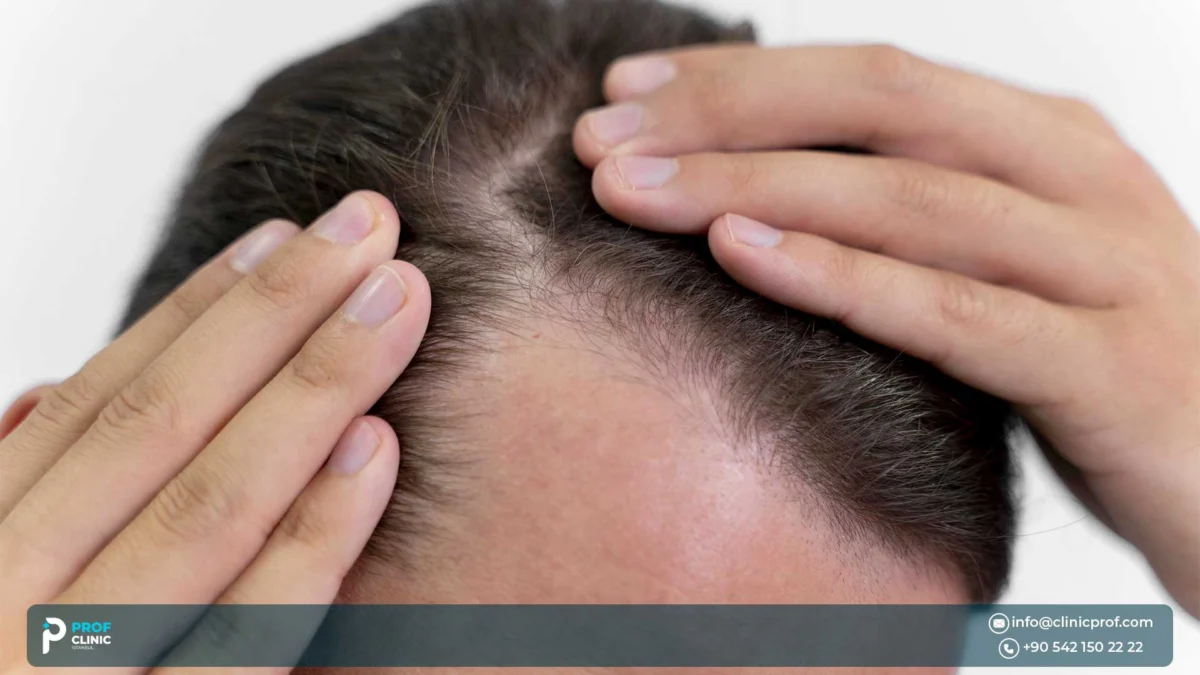
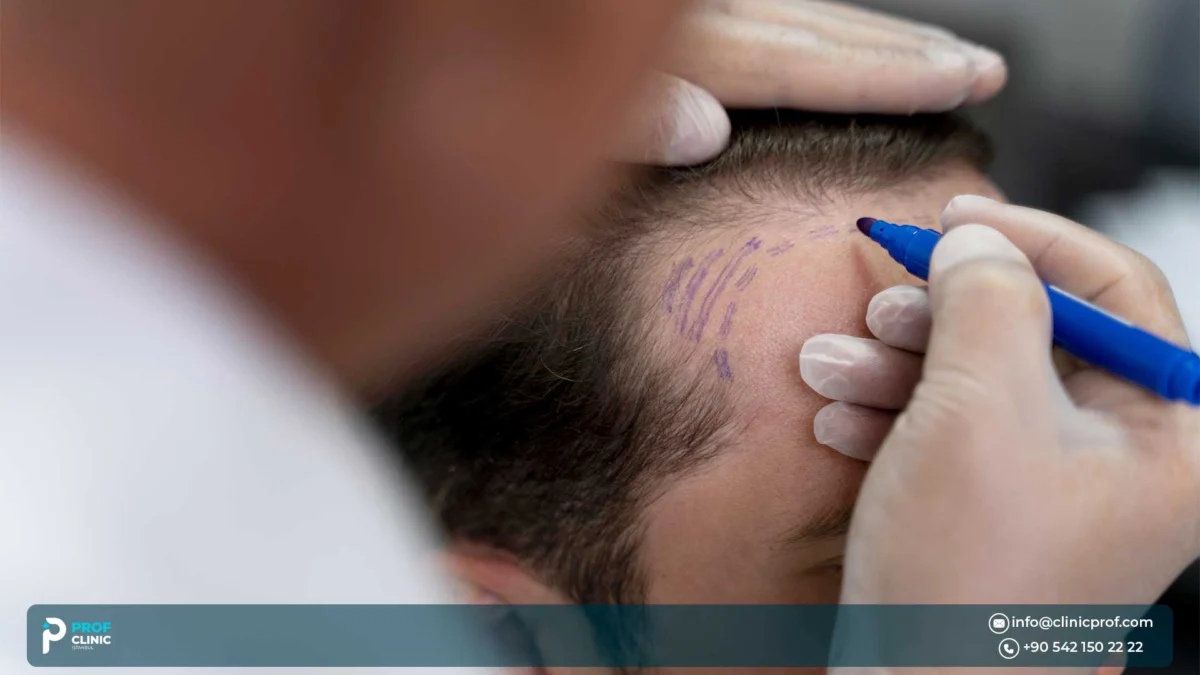
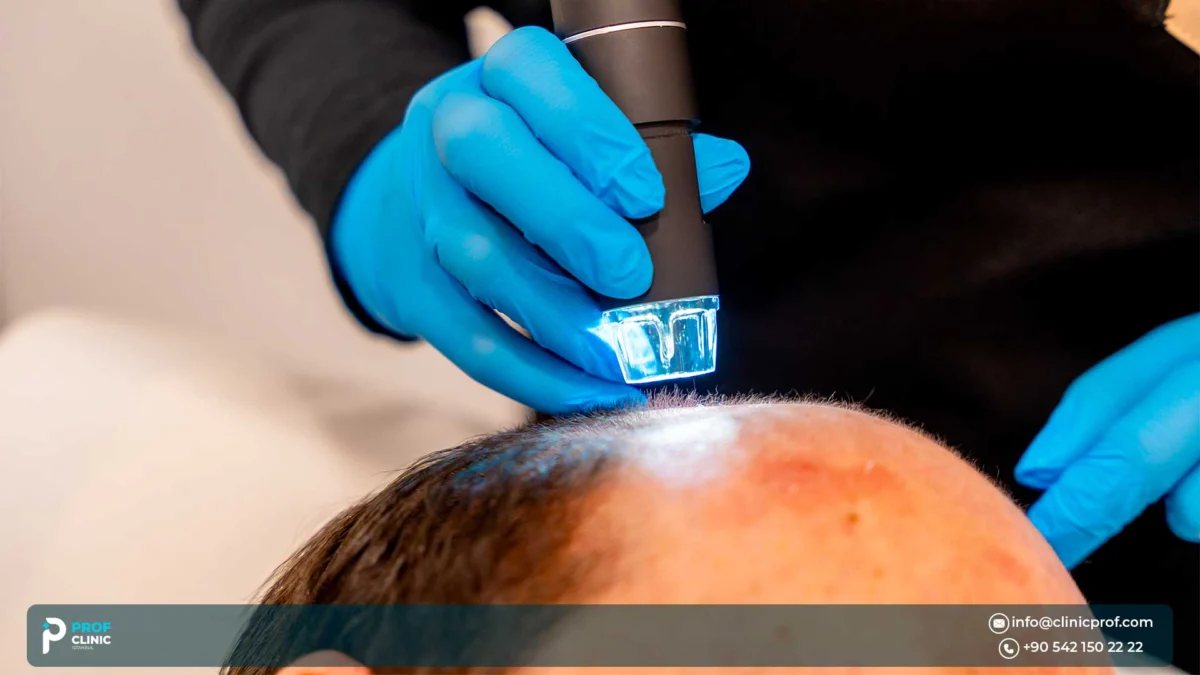
How many grafts do I need for a hair transplant? For most men the honest answer falls somewhere between about 1,000 grafts for a small hairline repair and 5,000 or more for advanced baldness. Where you sit in that range depends on three things: how much of your scalp has thinned, how dense you want the result to look, and how many grafts your donor area can safely give.
In this guide by Prof Clinic, you’ll learn what a graft actually is, the typical graft count for each Norwood stage and each area of the scalp, why the donor area sets the real limit, and how the number changes the price of a hair transplant in Turkey. By the end, you’ll know how to read a graft estimate and which questions to ask before you accept one.
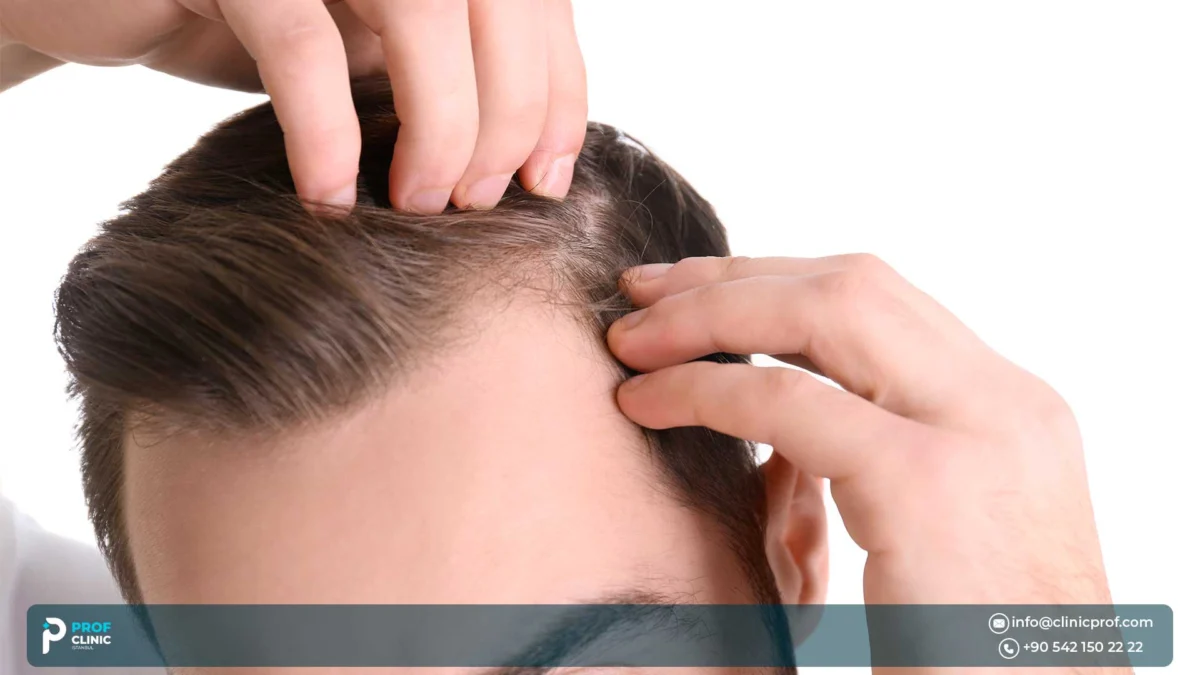
What Is a Graft, and How Many Hairs Does It Hold?
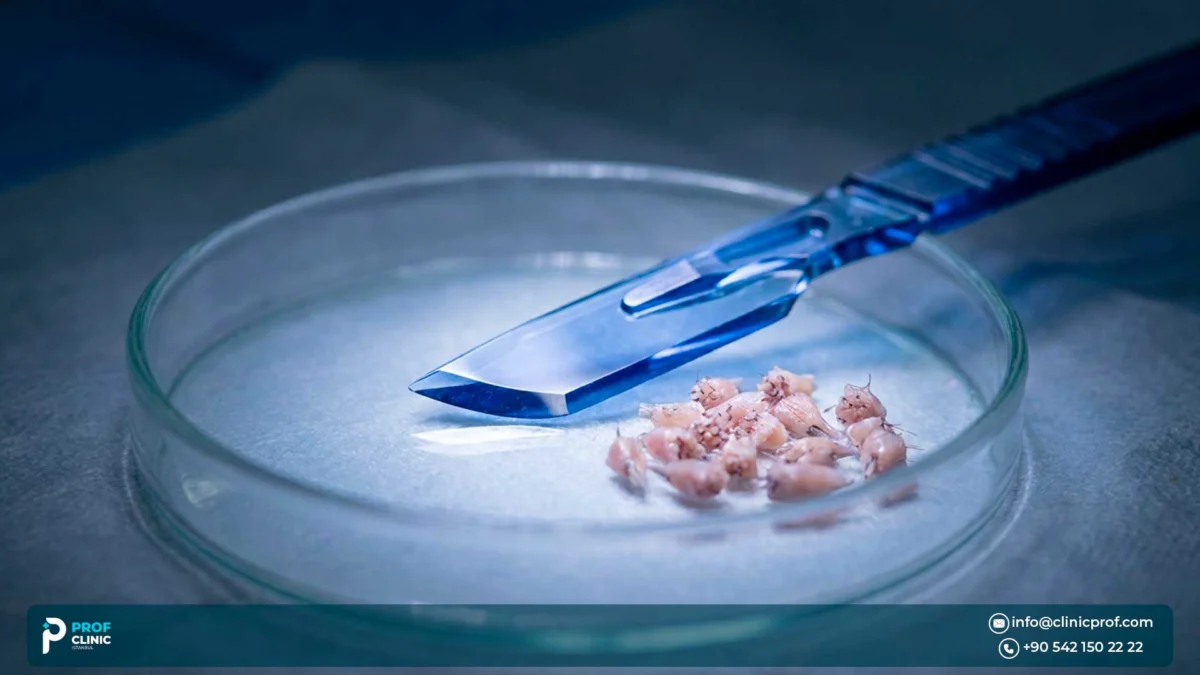
A graft is one follicular unit: a tiny natural group of hairs that grows from the scalp together and is moved as one piece. The NHS describes grafts as pieces containing 1 to 4 hairs. Single-hair grafts are used at the very front of the hairline to keep it soft, while two- and three-hair grafts build density further back.
On average, a graft carries a little over two hairs. In a study of FUE patients in the World Journal of Plastic Surgery, Mohmand and Ahmad measured a graft-to-hair ratio of 1:2.3. Your own ratio may be higher or lower, which is one reason two men with the same bald area can need different graft numbers.
How Many Hairs Are in 3,000 Grafts?
3,000 grafts usually hold roughly 6,000–7,500 hairs, assuming two to two and a half hairs per graft. This matters when you compare offers. Some quotes talk in hairs, which sounds like more, while most clinics plan and price in grafts. Ask every clinic to give its estimate in grafts, so you are comparing like with like. By the same arithmetic, 3,500 grafts is roughly 7,000–8,750 hairs and 5,000 grafts roughly 10,000–12,500.
Graft Count by Norwood Stage: Quick Reference Table
The Norwood (Hamilton-Norwood) scale grades male pattern hair loss from stage 1, with no real recession, to stage 7, where only a horseshoe of hair remains at the sides and back. It’s the scale most doctors use in a first assessment, so it’s a useful starting point for estimating how many grafts you need. For a fuller description of what each stage looks like, see our guide to the Norwood scale and its seven stages; this page stays with the numbers.
The table gives rough planning ranges for a man with average donor density. They are not taken from a single study, and your doctor may suggest a different figure after examining your scalp.
| Norwood stage | What it usually looks like | Rough graft range | Planning notes |
|---|---|---|---|
| Norwood 2 | Slight recession at the temples | About 800–1,500 | Often too early for surgery; medical treatment is usually discussed first |
| Norwood 3 | Deeper temple recession, an M- or V-shaped hairline | About 1,500–2,500 | Usually one session for the hairline and temples |
| Norwood 3 vertex | Stage 3 recession plus a thinning crown | About 2,000–3,000 | The front is often treated first; the crown may wait |
| Norwood 4 | Larger front loss and a bald crown, separated by a band of hair | About 2,500–3,500 | One large session is common if the donor area allows |
| Norwood 5 | The band between front and crown is thinning | About 3,500–4,500 | May be split over two days |
| Norwood 6 | The band has gone; the top is bald from front to crown | About 4,500–6,000+ | Often planned in stages; full crown coverage may not be possible |
| Norwood 7 | Only a narrow fringe remains at the sides and back | About 5,000–7,000+ | The front is usually prioritised; complete coverage is rarely realistic |
A Norwood stage is a shortcut, not a measurement. In the paper that introduced the PRECISE scale in Aesthetic Plastic Surgery, Pittella and colleagues show two patients with the same Norwood class whose recommended totals were about 3,900 and 6,150 grafts, because the size of their bald and thinning areas differed. So if you’ve been told “Norwood 3 needs 2,000 grafts”, treat it as an opening estimate.
Most men who search for a number sit between Norwood 3 and 5. Moving from stage 3 to stage 4 usually means a larger frontal area plus a bald crown, which is why the range steps up by about 1,000 grafts. At stage 5 the question changes from “how much can I cover?” to “how much should I leave for later?”, because the band between the front and the crown has started to thin too.
Not sure which stage you’re at? Send clear photos of your front, top and crown on WhatsApp and ask the team which stage the doctor sees.
Graft Count by Area: Hairline, Temples, Mid-Scalp and Crown
The simplest way to calculate the number of grafts is area multiplied by density: the size of the zone in square centimetres times the number of grafts planned per square centimetre. A natural, untouched scalp holds about 65–85 follicular units per cm², according to figures cited by Park and colleagues in Archives of Plastic Surgery. A transplant doesn’t need to copy that. The PRECISE authors use 50 grafts per cm² as a reasonable filling density for most areas, which gives around 100 hairs per cm².
The same Archives of Plastic Surgery paper notes Bernstein and Rassman’s observation that apparent density looked unchanged even when about half the hair was harvested from the donor area. In other words, hair can look full at roughly half its original density, and that’s what makes a transplant possible with a limited supply.
How to Estimate Your Own Graft Count: A Worked Example
Most online graft calculators use the same formula, but the result is only as good as the area you measure. As an illustration, a hairline-and-temple zone of about 30 cm² filled at 50 grafts per cm² needs roughly 1,500 grafts; planned at 40 grafts per cm², the same zone needs about 1,200. The 50 grafts per cm² figure is the filling density used by the PRECISE authors, and 30 cm² is an example, not a standard size. A doctor measures the real area and decides how dense each zone should be, so use your own sum to start the conversation, not as a final number.
How Many Grafts for the Hairline and Temples?
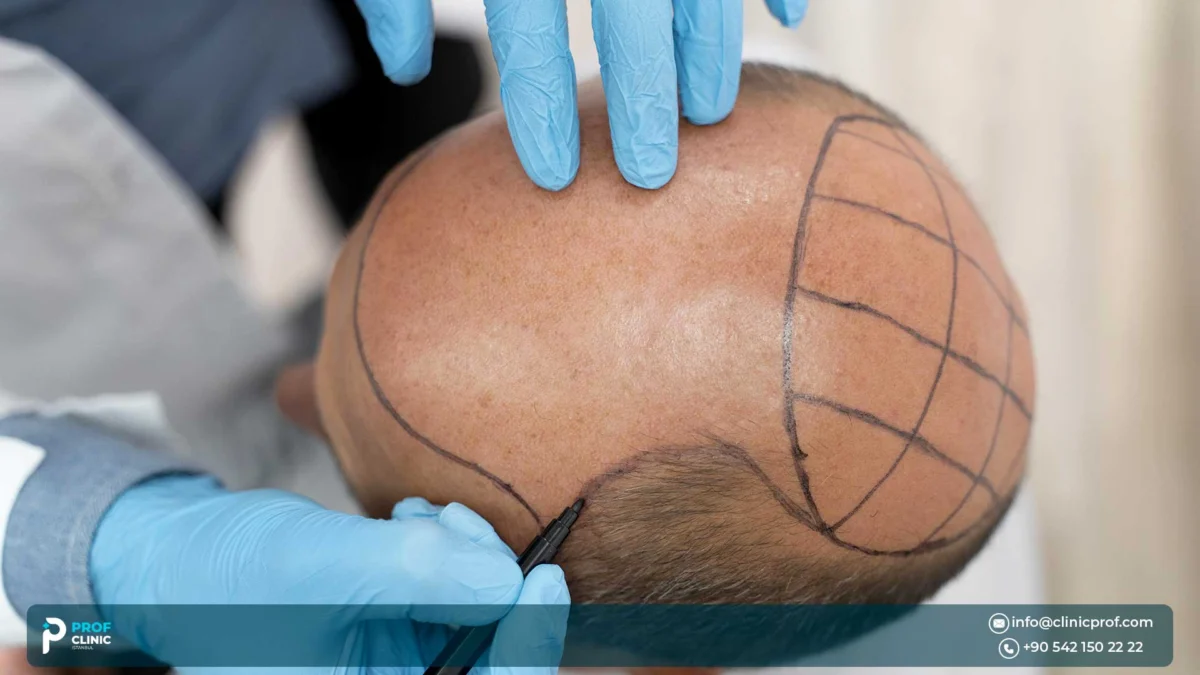
Rebuilding a receded hairline and temples usually takes about 1,000–2,000 grafts. The number goes up if the hairline is lowered a lot, if the temple points are rebuilt, or if you want a dense, straight front. A slightly irregular, age-appropriate hairline uses fewer grafts and still looks natural if the hair behind it thins later. Temple recession has its own detailed guide covering angles, density and design: hair transplant for temples and a receding hairline. For how hairline design fits into the wider procedure, see our guide What Is a Hair Transplant? Pros, Cons, Hairline & Who It Suits.
Mid-Scalp and Top of the Head
The mid-scalp joins the front to the crown and is often the largest single zone. Covering it usually adds about 1,000–2,000 grafts to a hairline plan. Because it’s seen from above, doctors often place grafts slightly less densely here than at the front and use the natural direction of the hair to create coverage.
The Crown
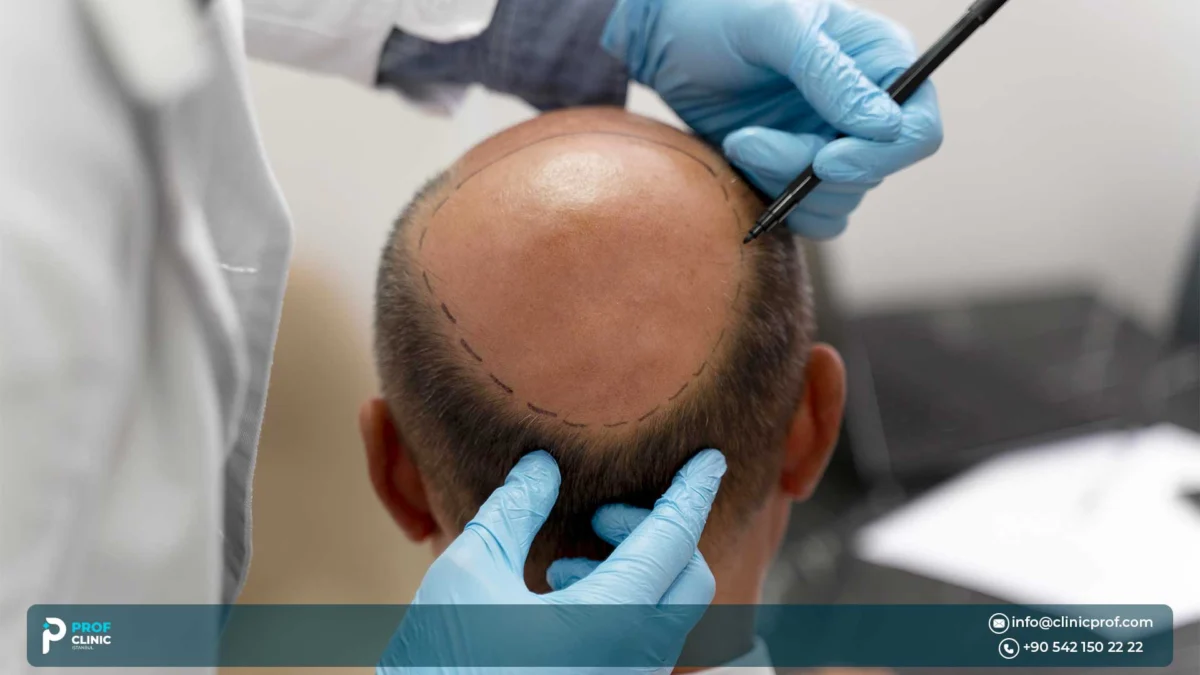
The crown (vertex) can absorb a surprising number of grafts, often 1,500–2,500 or more, because hair there grows in a spiral and the bald patch can keep widening for years. Many doctors therefore treat the front first and the crown later, once the pattern of loss is clearer. Our separate crown guide covers growth time and why results there take longer.
Also read: Crown Hair Transplant: Grafts, Growth Time and Results
How Your Donor Area Sets the Real Limit
The number of grafts you need and the number you can have are two different figures, and the donor area decides the second one. The ISHRS reminds patients that donor hair is a finite, non-renewable resource. Grafts are usually taken from the back and sides of the head, where hair is more resistant to pattern baldness, and every graft removed is a graft that can’t be used again.
How big is that supply? In a survey of 34 experienced surgeons published in Dermatologic Surgery, Unger and colleagues estimated that a man of average density heading towards Norwood 5 has about 6,400 follicular units of likely permanent hair for his whole lifetime. For Norwood 6 the estimate was about 5,400, and for men with below-average density it fell to around 4,200. That is the budget for every session you’ll ever have, not just the first.
Taking too much at once leaves the back of the head looking thin or patchy. A recent review in Frontiers in Medicine describes this overharvesting as a “moth-eaten” or see-through donor area and links it to inadequate donor assessment, high graft demands and repeated sessions in the same zone. Mohmand and Ahmad suggest keeping FUE extraction below about 35% of donor density in a first session, and the Frontiers review lists limits of 10–20% per session as a preventive step.
How the donor area heals, and how to tell normal thinning from overharvesting, is covered in our guide to the hair transplant donor area. If the donor area is already limited, for example after an earlier operation, see what options are left with a depleted donor area.
What Makes a Donor Area Strong or Weak
Doctors look at several features together, not just how much hair you can see at the back:
- Density: how many follicular units grow in each square centimetre of the donor zone.
- Hairs per graft: units with three or four hairs give more coverage than single hairs.
- Hair thickness: coarse hair covers more scalp per graft than fine hair.
- Colour contrast: dark hair on pale skin shows gaps more than hair close to skin colour.
- Curl or wave: curly hair lifts off the scalp and can look fuller with fewer grafts.
- Size of the safe zone: how much of the back and sides is likely to keep its hair for life.
14 Things to Check Before You Accept a Graft Estimate
Use this list when you compare quotes from clinics in Istanbul or anywhere else:
- Estimate format: the number is given in grafts, not hairs.
- A range, not a promise: a careful estimate is a range that may change after examination.
- Your Norwood stage: the clinic tells you which stage it sees and why.
- Area map: you know which zones the grafts will cover and which won’t.
- Density per zone: the planned density is explained for the front, mid-scalp and crown.
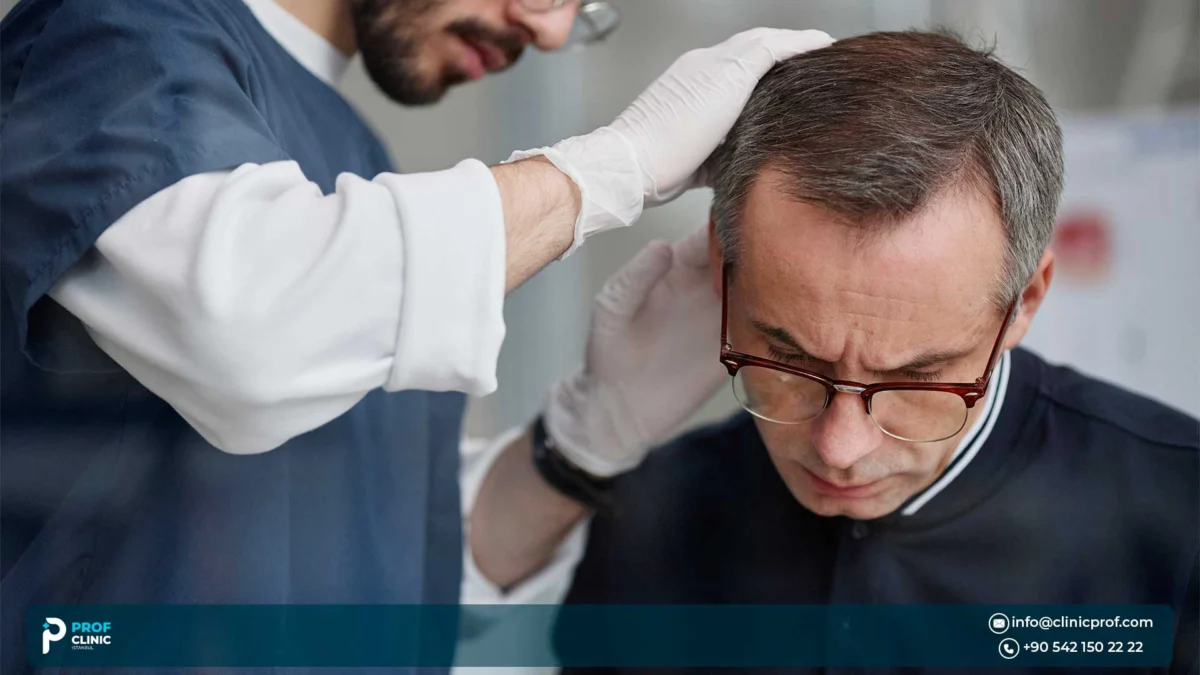
- Donor assessment: a doctor has checked your donor density, not just your bald area.
- Extraction share: the plan states roughly how much of the donor area will be used.
- Future loss: the hairline design allows for hair you may lose in the next 10–20 years.
- Reserve grafts: some donor supply is kept back for a possible second session.
- Medical treatment: the doctor discusses whether medication could protect the hair you still have.
- Session plan: you know whether the work is done in one day, two days or two procedures.
- Who decides: a named doctor assesses you and confirms the final number.
- Very high numbers: anything above about 5,000 grafts comes with an explanation of where they will come from.
- Written plan: the graft range, technique and inclusions are confirmed in writing.
A clinic that answers these points clearly is usually planning around your hair, not around a sales figure.
Advanced Baldness (Norwood 6–7): Is One Session Enough?
For most men at Norwood 6 or 7, one session isn’t enough to cover the whole bald area, and sometimes no number of sessions can. The arithmetic is simple: the area that needs hair can call for 6,000–9,000 grafts or more, while the lifetime donor estimates above are often lower. The PRECISE authors give the example of a very advanced pattern that would need about 15,000 grafts for complete restoration, a number they say many patients can’t supply even with body hair.
Good planning at this stage is about priorities. Doctors usually rebuild the front and mid-scalp first, because that frames the face, and set the hairline a little higher; the PRECISE paper notes that a higher hairline can save 3,000 grafts or more. The crown is then lightly covered or left for a later session. The ISHRS also advises patients to think of any transplant as their first one, because hair loss usually keeps progressing.
Is 5,000 Grafts Too Many?
5,000 grafts isn’t automatically too many, but it is a very large session that only makes sense for advanced loss and a strong donor area. The Frontiers review reports that complications and donor overharvesting are seen more often in high-volume sessions above about 3,000–4,000 grafts, and one study it cites found a higher risk of folliculitis above 4,000 grafts. That is why large cases are often split over two days, and the NHS notes that treating a large area may take two or more sessions on different days. Offers of 6,000 grafts or more in one go deserve the most caution: ask how many will come from the scalp and what will be left for the future.
Facing Norwood 6 or 7 and unsure what’s realistic? Book a free online consultation and ask for a staged plan that shows what one session can cover.
How Graft Count Affects Price: 1,000 to 5,000+ Grafts
The number of grafts sets the size and length of the procedure, so it’s the main thing that moves the price within a typical Istanbul package. As a rough guide for 2026, most scalp hair transplant packages in Istanbul cost about €1,800–€3,500, usually including the procedure, pre-op blood tests, medication and aftercare kit, hotel stay, and airport and hotel transfers. These are approximate averages, not final prices.
| Graft count (approx.) | Typical area | Where it usually sits in the €1,800–€3,500 range |
|---|---|---|
| 1,000–2,000 | Hairline and temples | Lower end |
| 2,000–3,500 | Front and part of the mid-scalp | Lower to middle |
| 3,500–5,000 | Front, mid-scalp and some crown | Middle to upper |
| 5,000+ | Advanced loss, often over two days | Upper end, if the donor area allows |
These are approximate 2026 ranges and depend on your case after assessment. Many Istanbul clinics charge per package rather than strictly per graft. Per-graft pricing can look cheaper for a small session, but the total climbs with every extra graft in a large one, so compare what each quote includes, not only the headline figure. For a male hair transplant in Turkey, the graft range, technique and number of days are the details that make two quotes comparable.
Also read: Hair Transplant Cost in Turkey 2026: Average Prices & Drivers
Comparing quotes with different graft numbers? Ask for a written quote that names the graft range and lists what is and isn’t included.
Planning Your Graft Count with Prof Clinic in Istanbul
At Prof Clinic, a graft estimate starts with photos and ends with an in-person examination. You send clear pictures of your hairline, top, crown and the back and sides of your head, and the clinic sends a written price offer after evaluating them. That first figure is a range. Spc. Dr. Lütfi Öztürk, an internal-medicine specialist who leads the medical assessment and treatment planning for hair restoration, confirms the plan once he has examined your scalp and donor area in Istanbul. You can read about his background on Dr. Lütfi Öztürk’s profile page.
Here is what you can verify about the process:
- Techniques: the clinic offers FUE, DHI, Sapphire FUE and Micro FUE, and the doctor recommends one based on your hair and donor area.
- Health checks: before surgery, pre-op tests include a blood count, ECG, kidney and liver function, electrolytes, blood sugar, and hepatitis and HIV screening.
- Honest density goals: expected density is discussed individually and is never promised in advance.
- Package: the procedure, accommodation, airport and hotel transfers and post-op care, set out in a transparent written quote.
- Follow-up: the coordination team stays in touch after you fly home and answers questions over WhatsApp.
You can see how other patients’ plans turned out in the before-and-after gallery, keeping in mind that every scalp and donor area is different. For an overview of all options, visit the hair transplant in Istanbul service page.
FAQs About How Many Grafts You Need
How many grafts do I need for the hairline?
Usually about 1,000–2,000 grafts to rebuild a receded hairline and temples. The number depends on how far the hairline has moved back, how low it’s being placed, how dense you want the front to look and how thick your hair is. A conservative, slightly irregular hairline needs fewer grafts and leaves donor hair in reserve.
How many hairs are in 3,000 grafts?
Roughly 6,000–7,500 hairs, because most grafts hold two or three hairs, with single-hair grafts at the front. Your own ratio may differ; one FUE study measured an average of 2.3 hairs per graft. When you compare clinics, ask for the estimate in grafts so the numbers match.
What is the maximum number of grafts in one session?
There’s no single safe maximum, because it depends on your donor area. Many plans stay around 3,000–4,000 grafts in a day, and larger cases are often spread over two days. Reviews link sessions above about 3,000–4,000 grafts with more complications and donor overharvesting.
Is 5,000 grafts too many?
Not always, but it’s a very large session that only suits advanced hair loss with a strong donor area. Experienced surgeons estimate that many men have about 4,200–7,900 permanent grafts for their whole lifetime, so 5,000 at once may use most of that supply. Ask how the number was calculated.
Is the price of a hair transplant per graft or per session?
In Istanbul, most clinics price by package, and the graft count moves you within the range; some charge per graft instead. Per-graft pricing can look cheaper for a small session, yet the total grows with each graft added in a larger one, and it rarely includes the hotel or transfers. Ask for a written quote that names the graft range.
How much does a 3,000 or 5,000 graft hair transplant cost in Turkey?
In Istanbul, a 3,000-graft plan usually sits in the lower-to-middle part of the approximate €1,800–€3,500 package range and a 5,000-graft plan toward the upper end, because more grafts mean a longer procedure. These are averages, not quotes. The final price depends on your case after assessment and is confirmed in a written offer.
The Bottom Line on Your Graft Count
The answer to “how many grafts do I need” comes from two numbers: the grafts your bald area calls for and the grafts your donor area can safely give. A good plan sits where those two meet, leaves some supply in reserve and is explained to you in writing, zone by zone. The safest first step is an assessment rather than a number from a chart. Contact Prof Clinic with your photos to get a graft range for your own scalp.
Sources
- NHS — Hair transplant
- ISHRS — Top 5 Things to Know About Hair Transplantation
- Dermatologic Surgery — Estimating the Number of Lifetime Follicular Units: A Survey and Comments of Experienced Hair Transplant Surgeons (Unger et al., 2013)
- Aesthetic Plastic Surgery — PRECISE Scale: A Quantitative Classification for Androgenetic Alopecia and Its Application to Hair Transplantation (Pittella et al., 2024)
- Frontiers in Medicine — Complications in Follicular Unit Excision Hair Transplantation: Current Evidence and Practical Approaches (Romera de Blas et al., 2026)
- World Journal of Plastic Surgery — Effect of Follicular Unit Extraction on the Donor Area (Mohmand & Ahmad, 2018)
- Archives of Plastic Surgery — Predicting the Permanent Safe Donor Area for Hair Transplantation in Koreans with Male Pattern Baldness (Park et al., 2014)