Can hair from your beard or chest be moved to your scalp? Yes, in selected men: a body hair transplant (BHT) uses follicular unit extraction (FUE) to harvest beard or body follicles when the back and sides of the head can’t supply enough. The catch is that body hair behaves differently from scalp hair, so it works best as a supplement to scalp donor hair, in men who have plenty of thick beard or body hair, and with realistic expectations about length and density.
In this guide by Prof Clinic, you’ll see which donor areas are used, how beard, chest and back hair compare, what the research says about survival and results, who is and isn’t a good candidate, and what to ask a surgeon before agreeing to it.
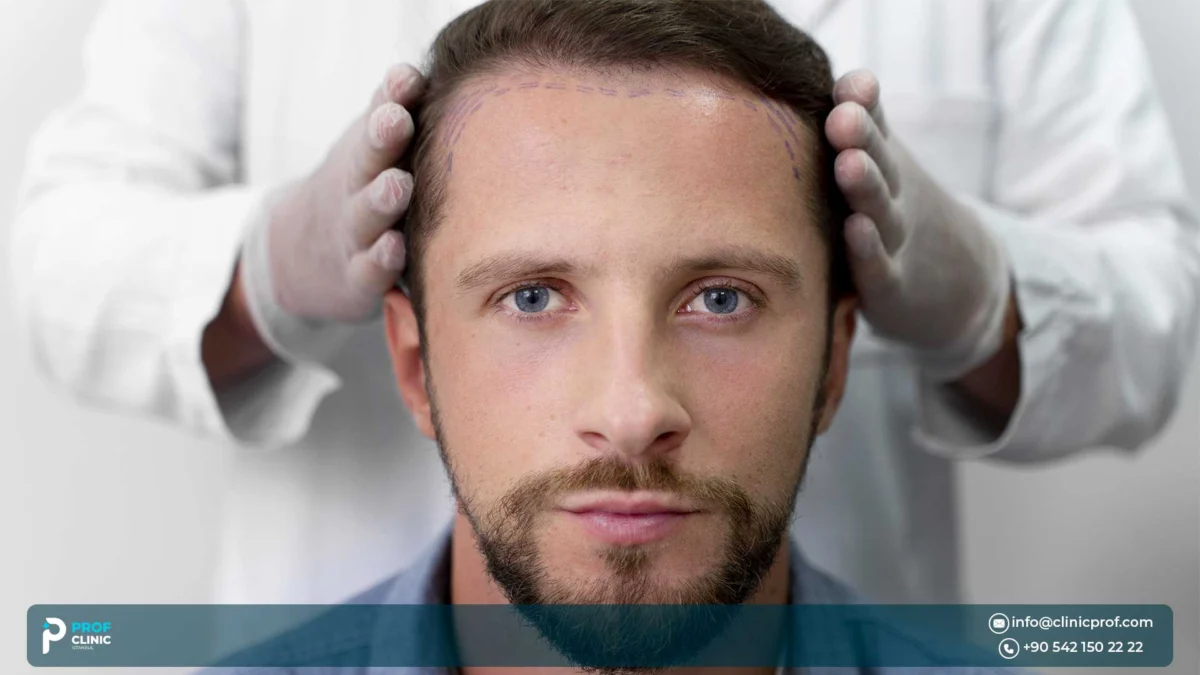
What Is a Body Hair Transplant (BHT) and Why Is It Used?
A body hair transplant takes follicles from the beard, chest or other body areas and implants them into the scalp, usually because the scalp donor area is limited or already depleted. A standard transplant draws from the back and sides of the head, the zone least affected by pattern baldness, and a 2017 review in the Indian Dermatology Online Journal estimates that this safe zone holds up to about 6,000 follicular units at best. That is often not enough for advanced baldness (Norwood grades VI and VII).
Because a strip removed from the body would leave an unacceptable scar, BHT is done with FUE, one follicular unit at a time, rather than with the strip method. It is a niche option inside a wider hair transplant in Turkey plan, and the main reasons surgeons consider it are:
- Advanced baldness: the scalp alone can’t cover the area that needs hair.
- A depleted donor area: earlier sessions have already used much of the safe zone.
- Softer hairlines: fine body hairs can blend the front edge and the temples.
- Scar camouflage: beard hair can fill a linear scar left by an earlier strip operation.
In one published series of 122 men treated by a US dermatologist between 2005 and 2011, beard hair was used in about 93% of cases and more than half had a strip scar repaired. Most also received scalp hair, so BHT is usually an add-on, not a replacement.
It also helps to keep the term straight: a beard transplant fills in the beard, while BHT uses the beard as a donor for the scalp.
Also read: Depleted Donor Area After Hair Transplant: What Options Are Left?
Which Body Areas Can Be Used as Donors?
Beard hair is the first choice, followed by chest and abdominal hair, while hair from the back, arms and legs is used rarely or avoided. Only terminal hair, the thick, pigmented kind that develops at puberty in the beard, trunk, armpits and pubic area, is usable, because most body hair is fine vellus hair that can’t build density.
| Donor area | What the hair is like | What it is mainly used for | Main limits |
|---|---|---|---|
| Beard (cheeks, under the jaw, neck) | Thickest body hair; often curly or wiry; can grow long | Adding density; covering scars | Not preferred for the hairline; may turn grey earlier; tiny pale dots at donor sites, more visible in darker skin; may leave the beard thinner |
| Chest and abdomen | Finer and shorter than scalp hair; often single-hair units | Blending, softer hairlines, extra coverage | Lower survival than beard in the one controlled comparison; keloid risk over the breastbone |
| Back | Sits in the thickest skin on the body | Generally avoided | Higher rates of cut or damaged grafts during extraction |
| Arms and legs | Very fine and short; often too sparse | Occasionally for softening the hairline or temples, if dense enough | Often too fine; limited data suggest lower survival than beard or chest |
The table summarises findings from a 2016 series in Aesthetic Surgery Journal and the 2017 review above, and individual surgeons differ in what they use. Beard hair is attractive because it is thick enough to add visible density. According to the surgeon in the 2016 series, finer, shorter hair from the legs suits hairlines and temples better, while the coarser beard hair suits density and scar repair. Surgeons usually mix donors to get a blended look rather than grafting islands of one type.
Not sure which of your areas would qualify? Send photos of your scalp, beard and chest to our team on WhatsApp so the assessment can start from your real donor supply.
How Does Body Hair Grow After It Is Moved to the Scalp?
Body hair has a much shorter growth phase than scalp hair, so transplanted body hair usually stays shorter and, apart from beard hair, thinner. The 2017 review puts the growth phase of body hair at a few months, against several years for scalp hair, and notes that between 30% and 85% of body hairs are resting at any moment. Body hair also tends to curl as it lengthens.
Beard hair is the exception on thickness, but it is relatively wiry and can be hard to style when it is long. The surgeon behind the 2016 series reports that transplanted body hair, other than beard hair, does not grow as long as head hair, so his patients keep the hair short, and some use hair dye to even out the colour. Beard hair can also turn grey earlier than scalp hair.
Research is not settled on how much the scalp changes the hair it receives. A case report found chest hair growing about four times longer after moving to the crown, while an observational study of 35 people, cited in a 2019 comparison, found that body and beard hair kept their own curl, colour and thickness. Plan for the cautious outcome.
What it means in real life: expect a short, close-cropped or textured style, and treat any extra length as a bonus. The general growth stages, from shedding to the final result, are the same as after a scalp operation; our Hair Transplant Timeline Month by Month: What to Expect Up to Month 18 guide explains them.
What Do Results and Survival Rates Look Like?
Results can look good in the right patient, but body hair grafts usually take less reliably than scalp grafts, and the evidence is small and mostly from single surgeons. In the 2016 series, 79 of 122 men answered a survey a mean of 2.9 years after surgery, and they scored healing, growth and overall satisfaction at an average of at least 7.8 out of 10. That surgeon also puts typical graft take at about 95% for scalp hair and 75–80% for body hair, and the 2017 review reports 60–80% elsewhere in the literature.
A small 2019 study in the Journal of Cutaneous and Aesthetic Surgery compared the three hair types in the same five men with grade 6–7 baldness, planting 30 single-hair grafts of each type in the same region. After one year, survival was about 95% for beard, 89% for scalp and 76% for chest hair. Chest hair also shed more in the first two months: about 53% of chest hairs had fallen out by then, against 40% for scalp and 30% for beard. Those numbers are from five patients, so treat them as a signal, not a promise.
Why this matters to you: because body hairs are thinner and mostly single, more grafts are needed to cover the same area, and each session can deliver fewer of them. The practical limits are:
- Longer surgery: one surgeon reports about 1,500–1,800 grafts in an 8–9 hour operating day, usually split between extraction and placement.
- Higher cost and skill: the procedure takes more time and surgical experience than a scalp session.
- More cut grafts: reported transection rates run from under 5% in the beard to about 30% in some body areas, depending on the site and surgeon.
- Hairy men only: the donor hair has to exist and be thick enough.
- Limited long-term data: the 2017 review calls for more controlled studies on long-term survival and growth.
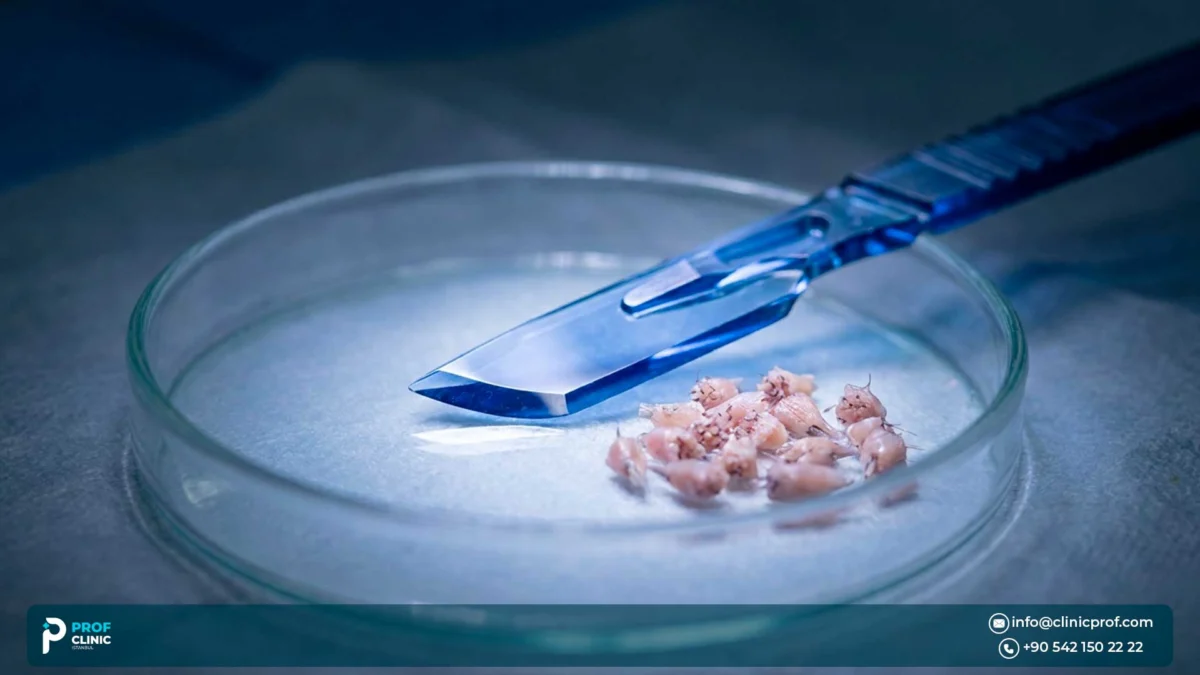
Before you judge any clinic’s claims, browse the before-and-after gallery and ask, for each case, which donor areas were used and how long ago the surgery was.
Also read: Hair Transplant Donor Area: Healing, Thinning and Limits
Who Is a Good Candidate for BHT, and Who Is Not?
The best candidates are hairy men with advanced baldness or a depleted scalp donor area who also have enough thick beard or body hair to harvest. A transplant moves hair rather than stopping loss, and the NHS notes that your hair might continue to thin around the transplant, so planning has to allow for further loss.
BHT usually suits a man who:
- has Norwood grade VI–VII baldness, or a scalp donor area that earlier sessions have used up;
- has thick, evenly spread terminal hair on the beard, chest or abdomen, with one surgeon treating a uniform density of at least about 8 hairs per cm² as good quality;
- wants a softer hairline or help covering a strip scar;
- accepts short hair and a slower, less predictable result.
It is usually not suited to:
- men with little body or beard hair, or hair that is mostly fine and sparse;
- women, who usually have less terminal body hair, and whose hair loss is assessed differently;
- people with patchy beard or body hair, where the cause should be found before any extraction (alopecia areata is a common cause in the beard);
- people with active alopecia areata, because the NHS says a transplant is not usually suitable for hair loss other than the permanent, inherited kind;
- people prone to keloid scars, especially for chest harvesting.

If your scalp donor area is the main worry, start with the stage of your hair loss and what is left, rather than assuming body hair is the answer.
Want a professional view of your donor supply? Book a free online consultation and share clear photos of your scalp, beard and chest.
How Is a Body Hair Transplant Done?
BHT follows the same FUE steps as a scalp transplant, but preparation and harvesting take longer. What follows is general information from the medical literature, since protocols vary between surgeons:
- Donor assessment: the surgeon checks how many thick terminal hairs you have, their density and thickness, and which areas can be used without leaving visible gaps.
- Pre-treatment: some surgeons prescribe 5% minoxidil on the donor areas for weeks to months beforehand, and shave the body donor area about a week before surgery (the beard about two days before), so growing hairs can be told apart from resting ones.
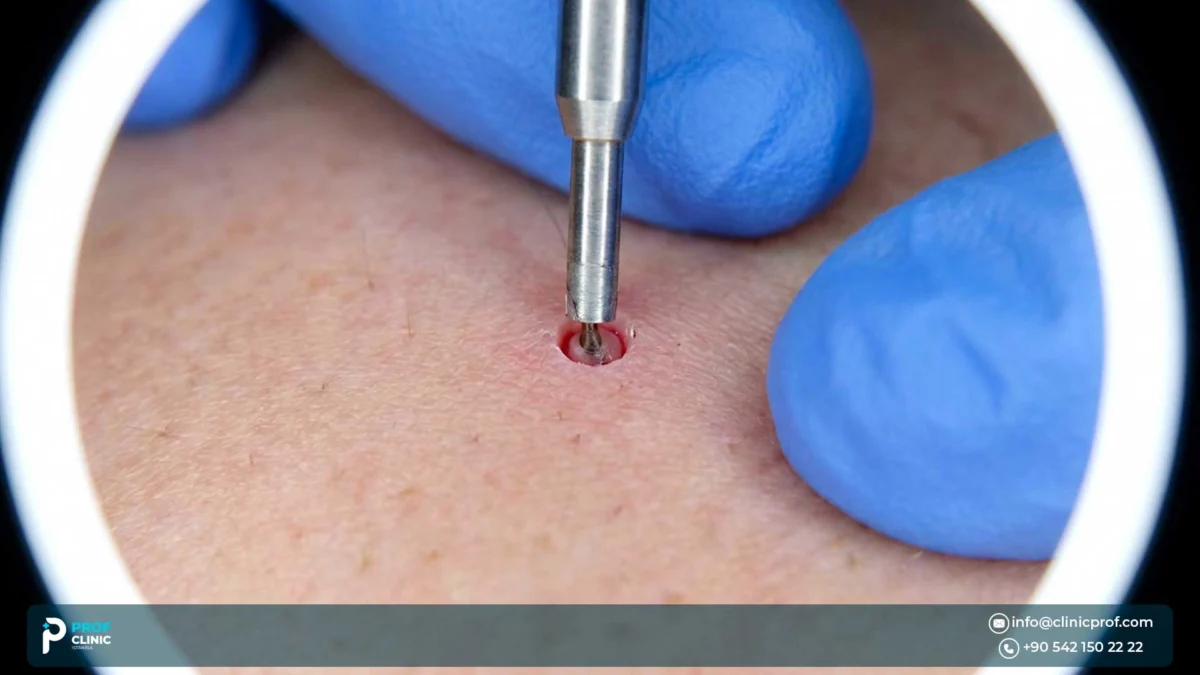
- Extraction: under local anaesthetic, small punches of about 0.75–0.9 mm remove one follicular unit at a time. Body hair lies shallower and changes direction more than scalp hair, which is why harvesting is slower.
- Implantation: the grafts are placed into the scalp, often mixed with scalp or beard hair for a blended result.
- Aftercare: donor sites are small wounds that heal over several days, and surgeons often advise ointment on them and continued minoxidil on the scalp. Your surgeon sets the details.
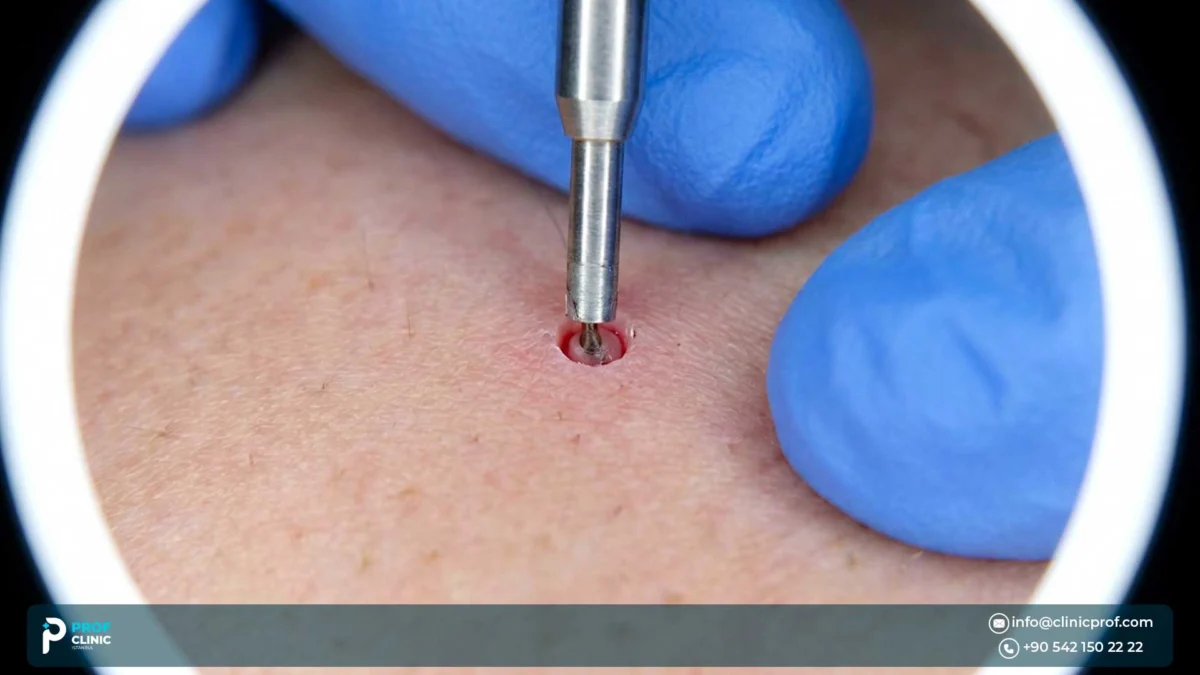
Donor sites can leave tiny pale dots, which are easier to see in darker skin. Folliculitis and ingrown hairs can occur, and keloid formation is a particular concern over the breastbone, so surgeons avoid that area in people prone to it. If you want to keep your beard, say so early: harvesting is usually spread over the cheeks and under the jaw, and the 2017 review advises counselling that a thinner beard, or a clean-shaven look, may be the result.
Because the donor sources are limited, BHT is often one stage in a longer plan. If an old strip scar is the issue, see FUT Scar Repair: Options to Hide or Correct a Linear Scar.
What to Ask a Surgeon Before Agreeing to a Body Hair Transplant
Ask for specifics, because BHT depends heavily on surgeon experience, and a clinic that only says “yes, we can use body hair” has told you very little. These questions help:
- Experience: how many body hair cases has the surgeon performed, and can you see consented results that state the donor source and the time since surgery?
- Donor choice: which areas would be used, and why not scalp only or a staged plan?
- Assessment: how will your body hair density and the share of growing hairs be checked?
- Expectations: what graft survival, hair length and density are realistic for your donor areas?
- The donor sites: how will the beard or chest look afterwards, and how long will healing take?
- Who does what: who performs extraction and implantation, and is the facility licensed by the Turkish Ministry of Health?
- The quote: does the written quote name the donor sources and number of sessions, so you can compare offers fairly?
Planning Body Hair as a Donor with Prof Clinic in Istanbul
At Prof Clinic, any donor plan starts with a medical assessment. Spc. Dr. Lütfi Öztürk, an internal-medicine specialist and the clinic’s hair restoration lead, assesses you medically, draws up the treatment plan (including the donor plan) and coordinates your follow-up. The techniques named on the clinic’s published male hair transplant in Turkey page and across its hair transplant in Istanbul services include FUE, DHI, Sapphire FUE and Micro FUE.
One point is worth being direct about: body hair transplant is not listed as a separate service on the clinic’s service pages. If body or beard hair is part of what you are considering, ask the team in writing whether it can be part of a plan for your case and who would carry it out. Before booking a flight, it helps to confirm these points:
- Pre-op tests: before any donor area is touched, you have a blood count, an ECG, kidney and liver function checks, electrolytes, blood sugar, and screening for hepatitis and HIV.
- Honest expectations: how dense the result may look is talked through for your own case, and nobody promises you a set density beforehand.
- A written quote: once the team has looked at your scalp and donor photos, you get the price in writing; a package covers the procedure, your hotel stay, airport and hotel transfers, and post-op care.
- Follow-up: once you are back home, the coordination team keeps in contact and answers your questions with advice over WhatsApp.
For reference only, scalp hair transplant packages in Istanbul run at about €1,800–€3,500, an approximate 2026 figure rather than a final price. Body hair work takes longer than a standard scalp session, so don’t assume that range applies to it: the written quote after assessment is what counts.
FAQs About Body Hair Transplant
Can you transplant chest hair to the head?
Yes, in selected men with thick, dense chest hair, usually alongside scalp or beard hair. Chest hair is finer and shorter than scalp hair and showed lower survival than beard hair in a small one-year comparison, so it is mostly used for blending and extra coverage rather than as the main donor.
Does body hair grow as long as scalp hair after a transplant?
Usually not. Body hair has a shorter growth phase, and surgeons report that transplanted body hair, apart from beard hair, does not grow as long as head hair. Some case reports describe longer growth on the scalp, but results are not predictable, so most patients plan on a short style.
Is beard hair a good donor for the scalp, and will my beard look thinner?
Beard hair is usually the first body donor because it is thick and survived well in a small comparison. Harvesting can thin the beard, so surgeons spread extraction over the cheeks and under the jaw. Tell your surgeon early if keeping a full beard matters to you.
How many grafts can be taken from the body in one session?
Fewer than from the scalp. One experienced surgeon reports about 1,500–1,800 grafts in an 8–9 hour operating day, and body hair often needs several sessions. Lower density and slower harvesting limit the number, and your surgeon sets the figure after checking your donor areas.
Are body hair transplant results permanent?
Long-term data are limited. One 122-man series followed patients for a mean of 2.9 years and reported good growth and satisfaction, but there are few controlled long-term studies. Body hair survives less reliably than scalp hair, and your untransplanted hair may keep thinning, so results can change over time.
Is a Body Hair Transplant Right for You? The Bottom Line
A body hair transplant can be a useful extra donor source for hairy men with advanced baldness or a depleted scalp, but it is slower, less predictable and more dependent on surgeon skill than a standard scalp operation. The deciding factors are your real donor density, how you feel about short hair, and whether the surgeon can show experience with body hair, not just the willingness to try.
If you are weighing it up, the safest first step is an assessment that looks at your scalp and body together. Contact Prof Clinic and ask for a written plan that states which donor areas would be used and why.
Sources
- Indian Dermatology Online Journal — Body to Scalp: Evolving Trends in Body Hair Transplantation (Saxena & Savant, 2017)
- Aesthetic Surgery Journal — Body Hair Transplant by Follicular Unit Extraction: My Experience With 122 Patients (Umar, 2016)
- Journal of Cutaneous and Aesthetic Surgery — A Comparative Study on the Rate of Anagen Effluvium and Survival Rates of Scalp, Beard, and Chest Hair in Hair Restoration Procedure of Scalp (Gupta et al., 2019)
- Journal of Cutaneous and Aesthetic Surgery — “Combination Grafting” of Scalp and Body Hair to Enhance the Visual Density of Hair Transplant (Garg & Garg, 2020)
- NHS — Hair transplant