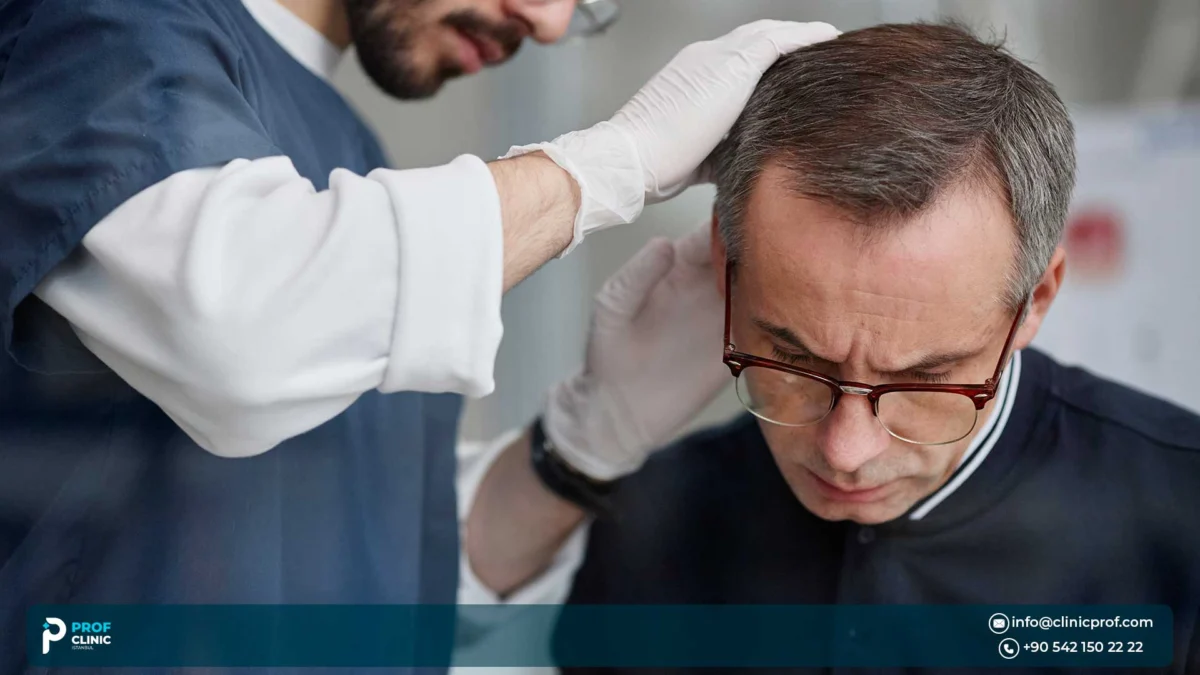
What is a hair transplant, and is it the right answer to your hair loss? A hair transplant is a surgical procedure, usually done under local anaesthetic, that moves your own hair follicles from the back and sides of the scalp to areas that have thinned or gone bald, most often the hairline, temples and crown. It suits many people with stable genetic hair loss and a good donor area, but it has real limits: it can’t create new hair, and it doesn’t stop the hair you still have from thinning.
In this guide by Prof Clinic, you’ll learn how the procedure works, who is a good candidate, what a hairline transplant involves, the honest pros and cons, and what it typically costs in Turkey. That way, you can walk into any clinic in Istanbul knowing which questions to ask.
What Is a Hair Transplant?
Put simply, a hair transplant redistributes hair you already have. It relocates follicles from a donor area, usually the back and sides of the head, to places where hair has thinned or been lost. The surgeon removes the follicles either one by one or as a thin strip of skin, then places them in tiny openings in the thinning area, following the angle and direction of your natural hair. The NHS describes it as suitable for permanent baldness of the type that runs in families.
It works because of a principle called donor dominance, first described by the dermatologist Norman Orentreich in 1959: hair moved from the back of the scalp keeps the behaviour of the place it came from. Those follicles usually resist the thinning that drives pattern baldness, so they tend to keep growing after they’re moved. It also explains why the donor area, not the technique, sets the limit on what any transplant can achieve.
Nothing artificial is implanted. The hair that grows is your own, and that is the main difference from synthetic fibre “hair implants”, which are a separate procedure.
Also read: Hair Implant vs Hair Transplant: Synthetic Fibres or Your Own Hair?
What Hair Loss Can a Hair Transplant Treat?
Hair transplants work best for permanent, patterned hair loss, and much less well for loss that comes and goes. The most common reasons people consider one are:
- Genetic (androgenetic) hair loss: the hereditary thinning seen in male-pattern and female-pattern hair loss, and the main reason people have a transplant.
- Scars from injury, burns or surgery: grafts can often be placed into stable scar tissue, although growth is less predictable and more than one session may be needed.
- Traction alopecia: years of pulling from tight hairstyles can permanently damage follicles along the hairline and temples. Once the pulling has stopped and the loss is permanent, a transplant may restore the area.
- Some scarring alopecias: only after the condition has been inactive for a long time and a specialist has reviewed it.
The NHS says a transplant is not usually suitable for alopecia areata. That condition is autoimmune and can come and go, so it needs medical treatment rather than surgery.
Who Is a Good Candidate for a Hair Transplant?
You’re usually a good candidate if you have enough healthy donor hair and your thinning area can still support growth. The American Academy of Dermatology (AAD) notes that men and women of all races can be good candidates when both conditions are met. In practice, doctors look at four things:
- A strong donor area: enough dense hair at the back and sides to harvest without leaving that area visibly thin.
- Stable, predictable loss: a pattern that has slowed, so the plan isn’t overtaken by future loss.
- Age: the International Society of Hair Restoration Surgery (ISHRS) says physicians don’t typically recommend surgery for anyone under 20, because the future pattern of loss is very hard to predict at that age.
- General health: uncontrolled diabetes, high blood pressure, bleeding problems or active scalp disease may need treating first, or may rule surgery out for now.
Smoking matters too. A 2018 review in the Journal of Cutaneous and Aesthetic Surgery lists heavy smoking and diabetes among the factors linked to poorer graft growth. If any of these apply to you, a careful assessment should tell you honestly whether to wait, treat something first or consider a different option.
Not sure whether your donor area is strong enough? Book a free online consultation and send clear photos of the front, top and back of your head, so your donor hair can be assessed before any plan is made.
Which Areas Can a Hair Transplant Cover?
A hair transplant can treat one small zone or most of the top of the scalp, depending on how much hair you’ve lost and how much donor hair you have. Many people need only a partial transplant that focuses on one area, such as the hairline, the temples or the crown, rather than the whole head. Partial work uses fewer grafts and keeps more donor hair in reserve for the future.
Hairline and Temple Transplant
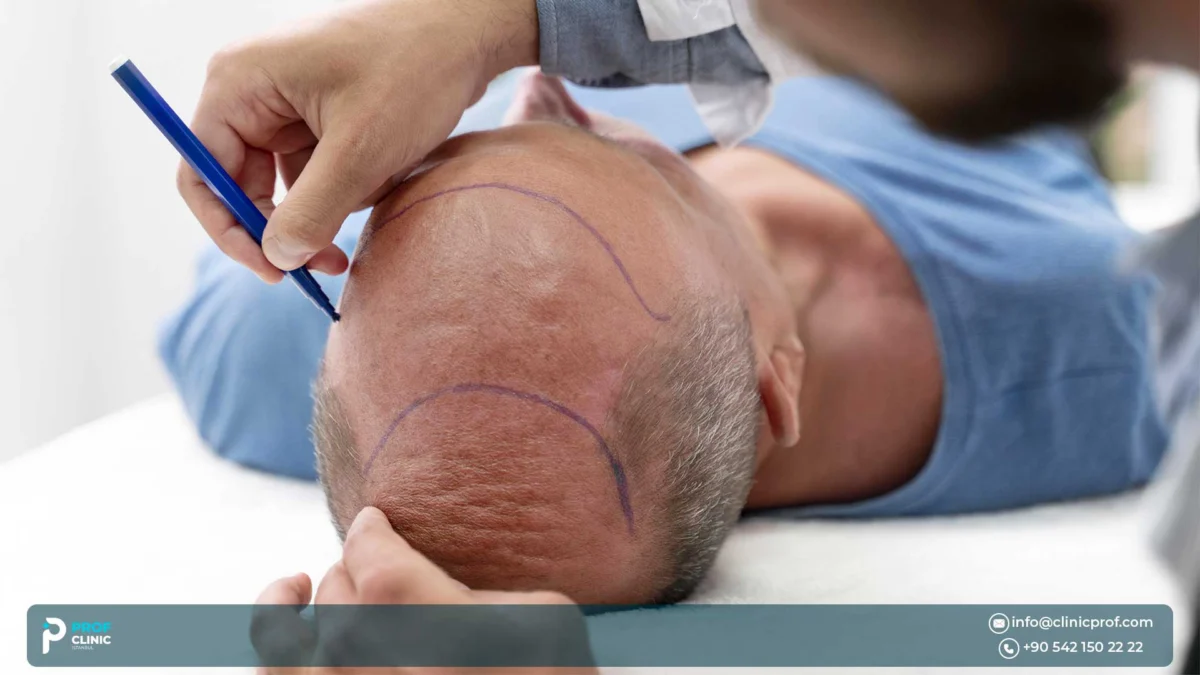
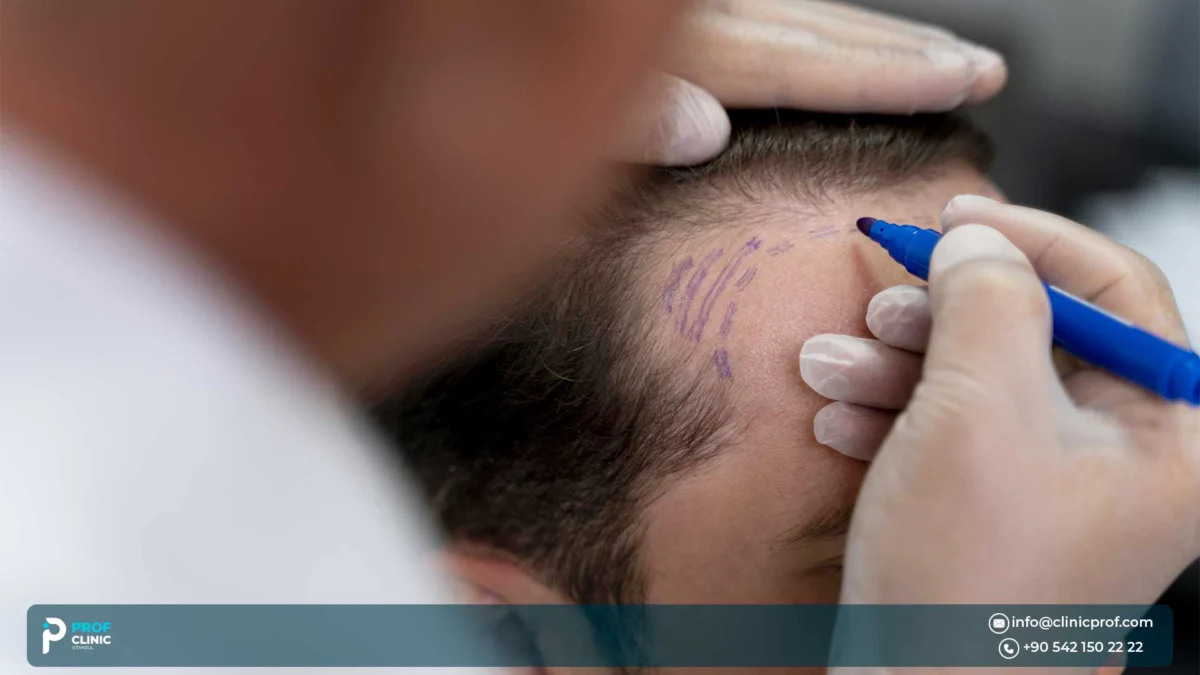
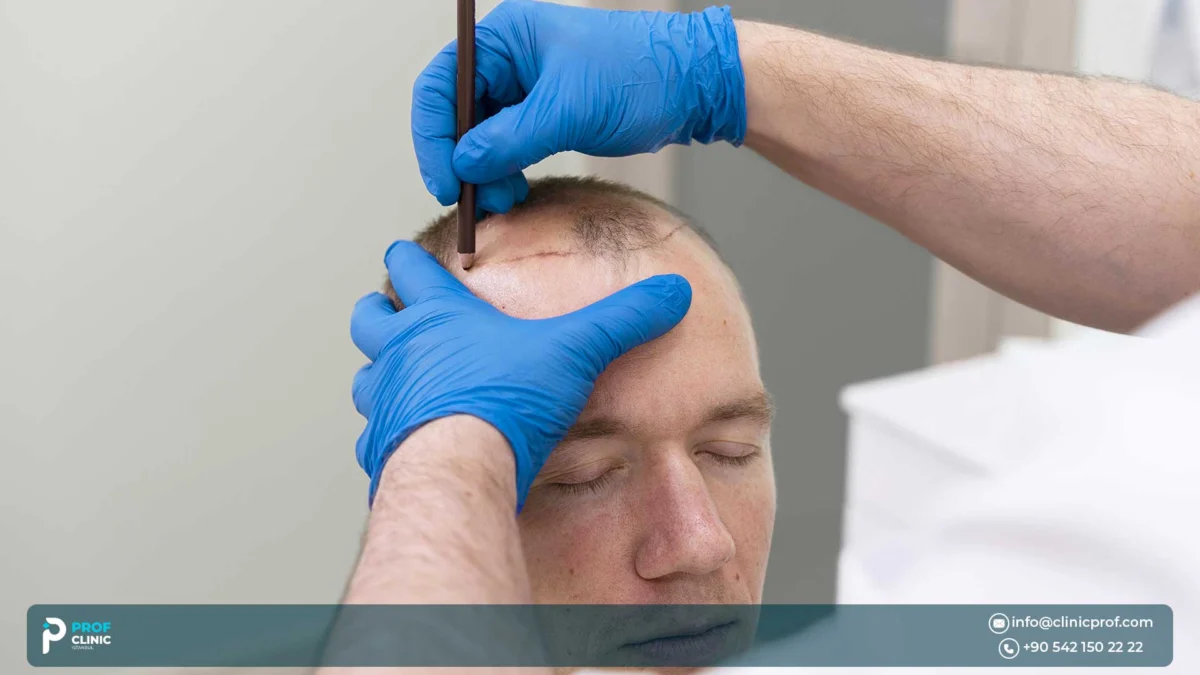
A hairline transplant rebuilds the front edge of your hair, and it is where design matters most, because the hairline frames the face. Surgeons usually place single-hair grafts at the very front with denser multi-hair grafts behind them, and lay the grafts flat in the temples, so the line looks slightly irregular and natural rather than straight and solid. A good plan also avoids placing the line too low, even if you ask for it, because it can look artificial as hair loss progresses behind it and uses up donor grafts you may need later. You should see and approve the drawing before surgery.
A small transplant that only fills receding temples is a typical partial procedure, with its own rules on angle and graft numbers. Those are covered in Temples and Receding Hairline: Hair Transplant for Temple Recession. If your current hairline already looks unnatural after a previous transplant, see Unnatural Hairline After Hair Transplant: How It’s Corrected.
Crown, Mid-Scalp and Other Areas
The crown (vertex) can be transplanted too, but it is harder to plan. Hair there grows in a whorl, and a bald crown can keep widening for years. For that reason the ISHRS notes that in young patients, surgery may be considered elsewhere on the scalp, but not in the vertex. The mid-scalp sits between the two and is often treated with the front, to give the hairline some depth behind it. The same follicle-moving method is used for beards, eyebrows and some scars, each with its own planning rules.
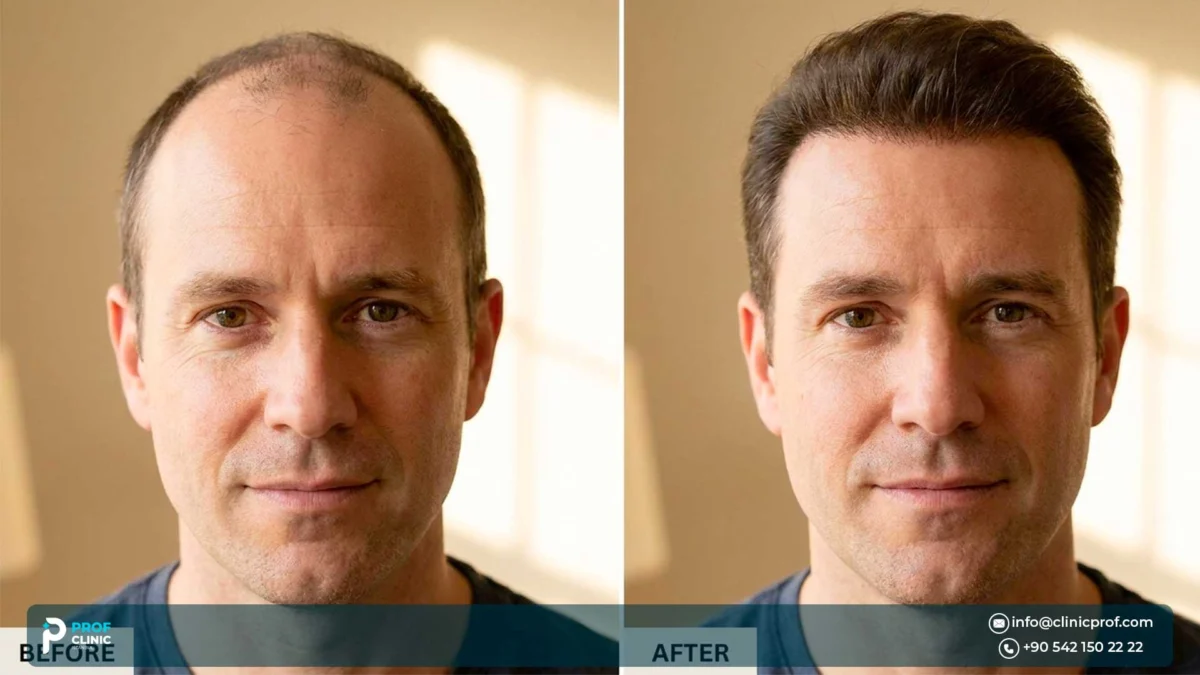
Wondering how a rebuilt hairline looks once it has grown in? Browse our before-and-after gallery to see hairline and crown cases at different stages.
How a Hair Transplant Is Performed, Step by Step
Most hair transplants are done in a single day under local anaesthetic, and you stay awake throughout. The AAD says the surgery usually takes four to eight hours, and the NHS says you shouldn’t need to stay overnight. Larger sessions can take longer or be split over two days.
Here’s the usual sequence:
- Consultation and planning: the doctor examines your hair loss and donor area, estimates the number of grafts and, for frontal work, draws the hairline with you. It is usually redrawn and confirmed on the day of surgery.
- Preparation: the donor area is usually trimmed short, and the recipient area may be trimmed too, depending on the plan.
- Local anaesthetic: both the donor and the recipient areas are numbed first. For most people, the injections are the most uncomfortable part of the day.
- Harvesting: follicles are removed one by one (FUE) or as a thin strip of skin that is then divided into grafts under magnification (FUT).
- Making the recipient sites: tiny openings are made in the thinning area, with the angle, direction and depth planned to match your natural hair.
- Placing the grafts: each graft goes into its site, either with fine forceps or with an implanter pen in DHI.
- Aftercare instructions: you return home or to your hotel with instructions on washing, sleeping, medication and protecting the grafts.
Recovery is shorter than many people expect, but the result takes much longer. The NHS says the scalp often feels tight, achy and swollen for a few days, and that you may need 1 to 2 weeks off work. According to the AAD, the transplanted hairs usually shed between two and eight weeks after surgery, which is normal, and most people see results at six to nine months, some only at 12. The NHS puts the full result at 10 to 18 months.
Planning a trip around your surgery? Send photos of your hair to our team on WhatsApp and ask how many days your plan would need in Istanbul.
Hair Transplant Techniques: FUT, FUE, DHI and Sapphire FUE
All modern hair transplants move follicular units, the natural groups of one to four hairs, and they differ mainly in how the grafts are harvested and placed. FUT and FUE are the two harvesting methods. DHI and Sapphire FUE are variations of FUE that change how the grafts are implanted.
| Technique | How grafts are harvested | How grafts are placed | Donor area afterwards |
|---|---|---|---|
| FUT (strip method) | A thin strip of scalp is removed and divided into grafts under magnification | Into small slits made by the surgeon | One fine linear scar, usually hidden by longer hair |
| FUE | Follicular units are extracted one by one with a tiny punch | Into channels opened with a fine steel blade or needle | Many tiny dot scars, usually hidden even with short hair |
| Sapphire FUE | As FUE | Into channels opened with a sapphire-tipped blade | As FUE |
| DHI | As FUE | Loaded into an implanter (Choi) pen that opens the site and places the graft in one movement | As FUE |
These are typical differences, not fixed rules, and no technique is better for everyone. The NHS notes that FUT leaves a single scar and FUE many very small scars. The right choice depends on your donor hair, the size of the area and how short you like to wear your hair, and with any method, the donor area remains the ceiling.
Also read: FUE Hair Transplant in Turkey: Procedure, Pros and Cons, and Cost
Pros and Cons of Hair Transplantation
The biggest advantage of a hair transplant is that it uses your own long-lasting hair; the biggest drawback is that it’s surgery with a limited supply of donor hair. Weighing the hair transplant pros and cons honestly is the best protection against disappointment. If you are a man trying to decide whether it pays off in your case, our guide on whether a hair transplant is worth it for men goes through ten common reasons and the main downsides in more detail.
Hair Transplant Pros
- Long-lasting, natural results: transplanted follicles usually keep the resistance of the donor area, so the hair tends to keep growing. The AAD describes the results as permanent and natural-looking, to the point that a barber or stylist often can’t tell.
- It’s your own hair: there’s no synthetic material, and once it has grown in, you can cut, wash, colour and style it like the rest of your hair.
- Often a one-off procedure: unlike daily treatments, one well-planned session can restore a hairline or crown, although some people choose a second session later.
- Short downtime: you can usually return to desk work within one to two weeks.
- Feeling like yourself again: for many people, the real benefit is no longer thinking about their hair every time they look in the mirror.
Hair Transplant Cons
- Cost: a transplant costs more up front than most non-surgical treatments, even in Turkey.
- Limited donor supply: you can only move the hair you have. With extensive baldness, the doctor may advise covering the front well and accepting lower density at the crown.
- It doesn’t stop hair loss: the AAD notes that loss and thinning can continue after a transplant, so the hair that wasn’t moved may keep thinning.
- A long wait: the new hairs shed first and take months to grow, so you won’t see the final result for about a year.
- Scars: FUE leaves tiny dot scars and FUT a linear scar. Both are usually hidden by hair, but they can show with a very short or shaved style.
- A second session may be needed: to add density, or to treat areas that thin in future.
- Surgical risks: uncommon, but real, as the next section explains.
In short, a hair transplant is a good fit when your expectations match your donor hair. It’s a poor fit when the goal is a teenage hairline or full density over a large bald area that the donor area can’t supply.
Risks, Permanence and Pain: The Short Answers
Three questions come up in almost every consultation: is it safe, will it last, and will it hurt? Here are the short answers. Each one has its own detailed guide.
Hair Transplant Risks and Side Effects
For healthy, well-selected patients, a hair transplant is generally a safe procedure. A 2018 review in the Journal of Cutaneous and Aesthetic Surgery calls it relatively safe surgery with very few complications, most of which can be avoided with good technique and wound care. Swelling, tightness, scabs, itching and shedding are common and temporary. Infection, cysts and an unnatural hairline are less common and mostly come down to patient selection, planning and technique. For the full picture, read Hair Transplant Side Effects and Risks: What’s Normal, What’s Not.
Is a Hair Transplant Permanent?
The transplanted hair is usually permanent, but the hair around it is not protected and may keep thinning, which is why some people use medicine or choose a second procedure years later. Find out more in Is a Hair Transplant Permanent? What Happens After 10 and 20 Years, which covers the long-term picture.
Does a Hair Transplant Hurt?
For most people, a hair transplant is uncomfortable rather than painful. The NHS says it is usually done under local anaesthetic and sedation, so you shouldn’t feel pain during the surgery. The anaesthetic injections are the most noticeable part, and the scalp often feels tight and sore for a few days afterwards. For a closer look at the day itself, see Does a Hair Transplant Hurt? Pain, Anesthesia and Surgery Time.
Hair Transplant Cost in Turkey
For FUE, DHI or Sapphire FUE, a scalp hair transplant package in Istanbul usually costs about €1,800–€3,500. The price depends mainly on the number of grafts, the technique, how easy your hair is to harvest and what the package includes.
| Procedure | Approximate package range in Istanbul |
|---|---|
| Scalp hair transplant (FUE, DHI or Sapphire FUE) | €1,800–€3,500 |
| FUT (strip method) | €1,500–€3,000 |
| Female hair transplant | €2,000–€3,800 |
| Afro or curly hair transplant | €2,500–€4,500 |
Read these as approximate 2026 figures rather than final prices: the amount you pay is set once your case has been assessed, then confirmed in a written quote. A typical package bundles the procedure with pre-op blood tests, medication and an aftercare kit, the hotel, and VIP airport and hotel transfers.
When you compare offers, look past the total. Check how many grafts are planned, who carries out each step and what follow-up you get after you fly home. For a fuller breakdown, see our guide to hair transplant cost in Turkey.
Want to know what your own plan would cost? Ask our team for a written quote once your photos have been reviewed.
How to Choose a Hair Transplant Clinic
Choose the team, not the price or the country. The NHS suggests asking a surgeon about their qualifications and experience, how many hair transplants they’ve performed, how many of those had complications, which type of transplant they’d recommend for you and why, and what follow-up to expect if things go wrong.
If you’re travelling to Turkey, add these questions:
- Who will draw my hairline, who will make the incisions, and who will place the grafts?
- Is the clinic licensed by the Turkish Ministry of Health for this procedure?
- How many grafts do you plan, and how much donor hair will I have left for the future?
- What happens if I have a problem after I fly home, and how do I reach the medical team?
- Can I see before-and-after photos of patients whose hair loss looked like mine?
A clinic that answers these clearly, in writing, is usually one that plans carefully. Our guide How to Choose a Hair Transplant Clinic in Turkey: What to Check goes through each point in more detail.
Planning a Hair Transplant at Prof Clinic in Istanbul
At Prof Clinic in Istanbul, a hair transplant in Turkey starts with a medical assessment of your hair loss and donor area. Your case is reviewed by Spc. Dr. Lütfi Öztürk, who heads hair restoration at the clinic and is a specialist in internal medicine. He assesses you, plans the treatment and coordinates your follow-up.
If you are weighing up a transplant abroad, these points are easy to check before travelling:
- Techniques: the clinic works with FUE, DHI, Sapphire FUE and Micro FUE, and offers a no-shave option, especially for women. Men can read about their options on the male hair transplant in Turkey page.
- Pre-op tests: before the procedure, your blood count, ECG, electrolytes and blood sugar are checked together with kidney and liver function, and you are screened for hepatitis and HIV.
- Session length and stay: an FUE session typically takes 7–8 hours and can be split across more than one day. A stay of typically 2–4 days in Istanbul covers most plans.
- Honest expectations: the density a transplant can give you is talked through case by case, never promised beforehand.
- A written quote: sent after the team reviews your photos, with an all-inclusive package covering the procedure, accommodation, airport and hotel transfers, and post-op care.
- Follow-up after you fly home: the coordination team remains in contact and advises you over WhatsApp while the new hair grows.
Hair Transplant FAQs
Is a hair transplant always successful?
No surgeon can promise a result, because growth depends on your donor hair, how the grafts are handled, how you heal and how your hair loss behaves later. The NHS notes a small risk that the transplant won’t take. In well-selected patients the outlook is usually good, and a careful clinic tells you before surgery what density is realistic for you.
Does a hair transplant use fake hair?
No. A hair transplant moves your own follicles from the donor area to the thinning area, so the hair that grows is yours, with the same colour, texture and growth pattern as before. Synthetic fibre implants are a different procedure and not part of a standard hair transplant.
What is the best age for a hair transplant?
There’s no single best age, but the ISHRS says physicians don’t typically recommend surgery for anyone under 20, because the future pattern of loss is hard to predict. Most doctors prefer to wait until the pattern is clearer and the loss has slowed, then plan conservatively, especially at the hairline and crown.
How long does a hair transplant take?
Usually most of a day. The AAD puts the surgery at four to eight hours, and the NHS says you shouldn’t need to stay overnight. Larger sessions can take longer or be split over two days. At Prof Clinic, FUE sessions usually last 7–8 hours and may be spread over more than one day.
Can transplanted hair fall out?
Yes, at first, and that’s expected. The AAD says transplanted hairs usually shed between two and eight weeks after surgery while the follicles stay in place, and the NHS says new hair usually starts to appear after about 4 months. Over the long term, transplanted hair usually lasts, while untreated native hair may keep thinning.
Can women have a hair transplant?
Yes. The AAD says men and women of all races can be good candidates, as long as there is enough donor hair and the thinning area can still grow hair. Hair loss in women can have several causes, so a medical assessment comes first. At Prof Clinic, a no-shave option is offered especially for women.
Is a Hair Transplant Right for You?
So, what is a hair transplant in one line? It’s a way of moving your own long-lasting hair to where you need it most, and it works best when your hair loss is stable, your donor area is strong and the plan fits your face for the decades ahead. Before you book, ask who will design and perform your surgery, how many grafts they plan and what happens if you need help after you return home.
Start with an assessment rather than a booking; it is the safer first step. Talk to Prof Clinic about your hair loss and ask for a written plan for your hair transplant in Istanbul.
Sources
- NHS — Hair transplant
- AAD — A hair transplant can give you permanent, natural-looking results
- ISHRS — Early Hair Loss: The Young Patient
- Journal of Cutaneous and Aesthetic Surgery — Complications in Hair Transplantation (Kerure & Patwardhan, 2018)
- Journal of Cutaneous and Aesthetic Surgery — Recipient Area (Marwah & Mysore, 2018)
- Annals of the New York Academy of Sciences — Autografts in Alopecias and Other Selected Dermatological Conditions (Orentreich, 1959)