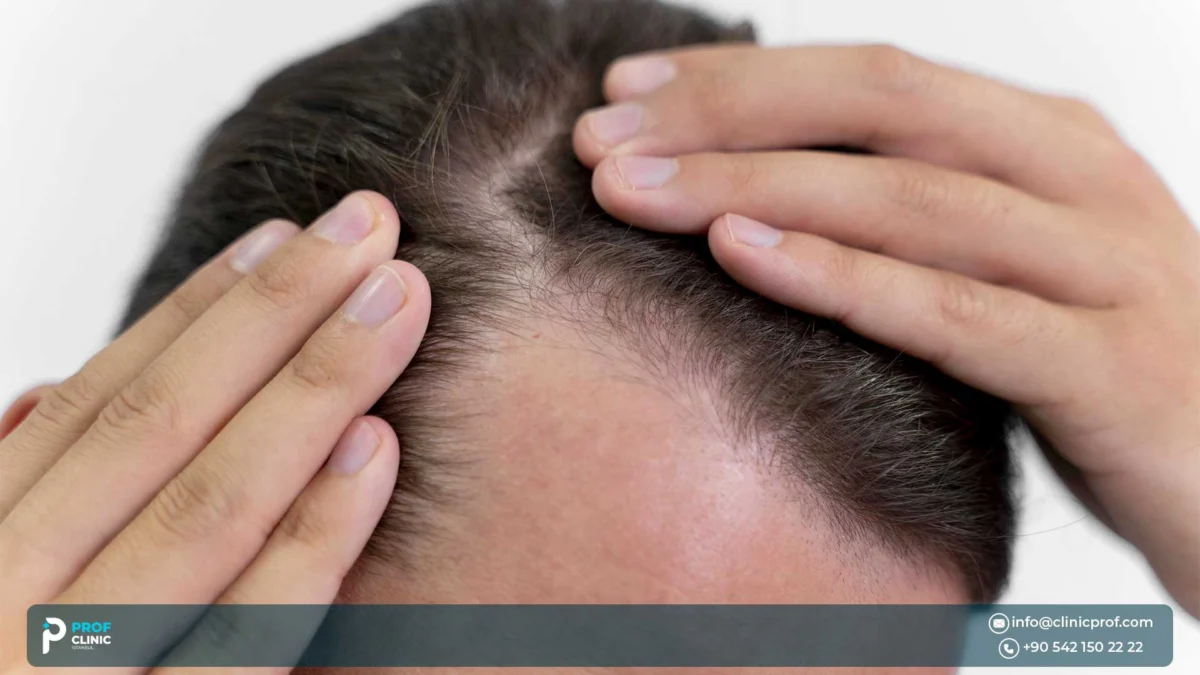
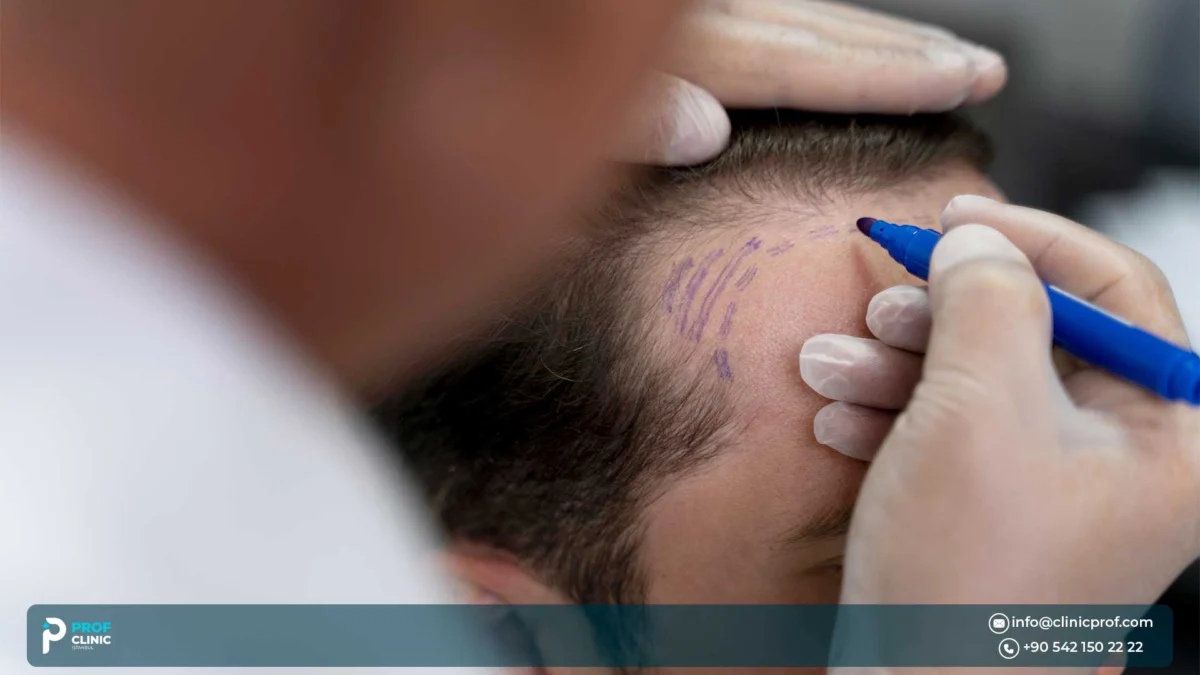
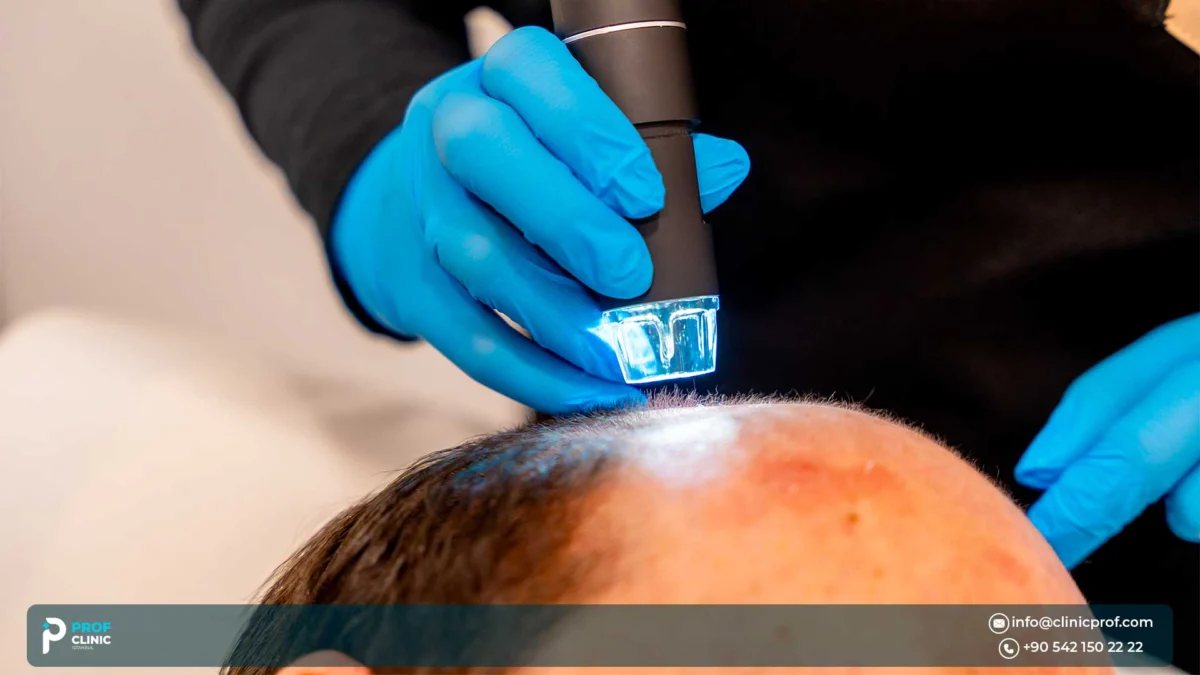
What should you actually do in the days after surgery, and what is normal to see in the mirror? Good hair transplant aftercare comes down to a few habits: protect the new grafts from pressure and friction, wash gently on the schedule your surgeon gives you, and give swelling and scabs the time they need. Most of the visible healing happens in the first two weeks, while the grafts themselves take months to grow.
In this guide by Prof Clinic, you’ll find a day-by-day recovery table for the first 30 days, how to wash (donor area included), what to expect at day 15 and day 30, when hats, sun and smoking are usually allowed, and the warning signs that mean you should contact your clinic. It’s written for anyone recovering from a hair transplant in Turkey, whether you’re still in Istanbul or already home.
Hair Transplant Aftercare in the First 72 Hours
The first three days are when the grafts are most fragile, so the main rule is simple: don’t touch, rub or press on the transplanted area. A review of hair transplant complications in the Indian Journal of Plastic Surgery recorded grafts becoming dislodged in the first 24 hours, which is why surgeons are strict about this window. The NHS adds that you need to be very careful with the transplanted hair for the first two weeks.
Day 0: The Evening After Surgery
Once the local anaesthetic wears off, the scalp usually feels tight, achy and a little swollen, which the NHS describes as common for a few days. A small amount of oozing from the donor area on the first night is also normal. Here’s how most patients get through the first evening:
- Rest with your head raised: sit or lie propped up on two or three pillows rather than flat.
- Keep your hands away: no touching, scratching or checking the grafts with your fingers.
- Take only approved medicine: use the pain relief and any other medication your doctor prescribed or approved, and don’t stop a regular medicine without asking.
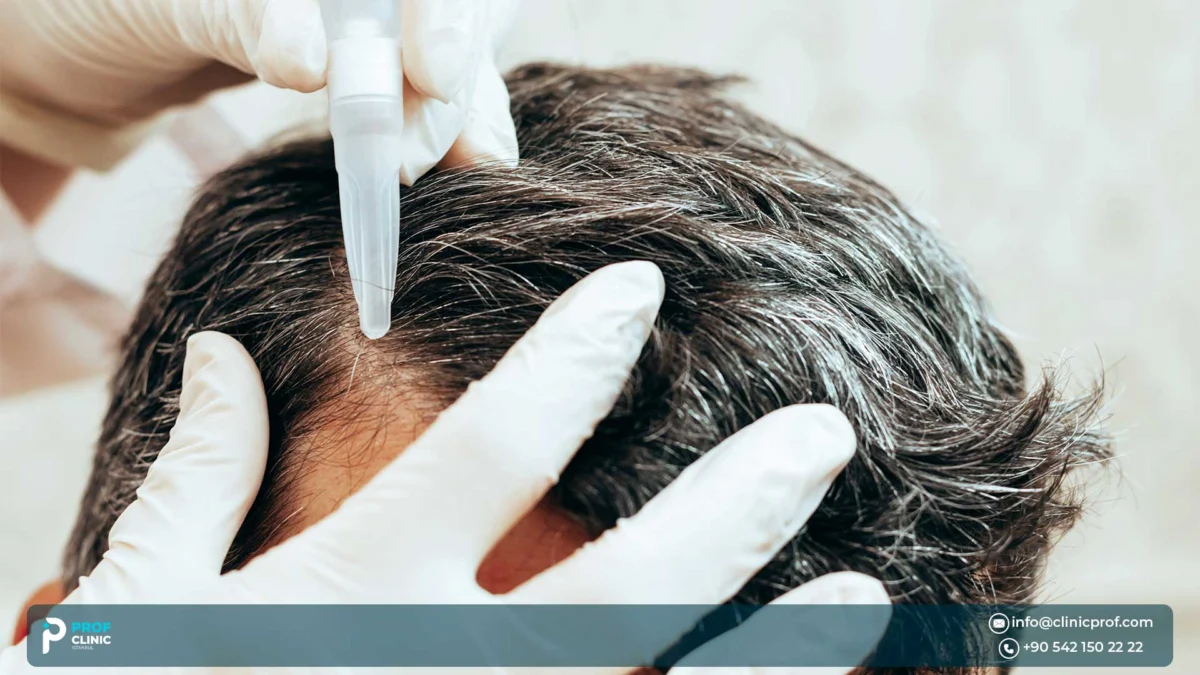
- Use the spray if you were given one: the NHS notes that many patients receive a spray to support healing.
Days 1–3: Bandage Off, First Check and Early Swelling
Any bandage is usually removed after a day or two; the NHS says it can be up to five days. Many patients return to the clinic the next day for a check, and the American Society of Plastic Surgeons (ASPS) notes that your doctor will probably want to see you several times in the first month. Swelling often starts around day 3 and first appears on the forehead, which is expected and covered in detail below.
So, what does a normal day 2 look like? Pink skin, tiny crusts around each graft, a tight feeling and mild soreness that improves day by day. Pain that gets worse instead of better is the exception, not the rule.
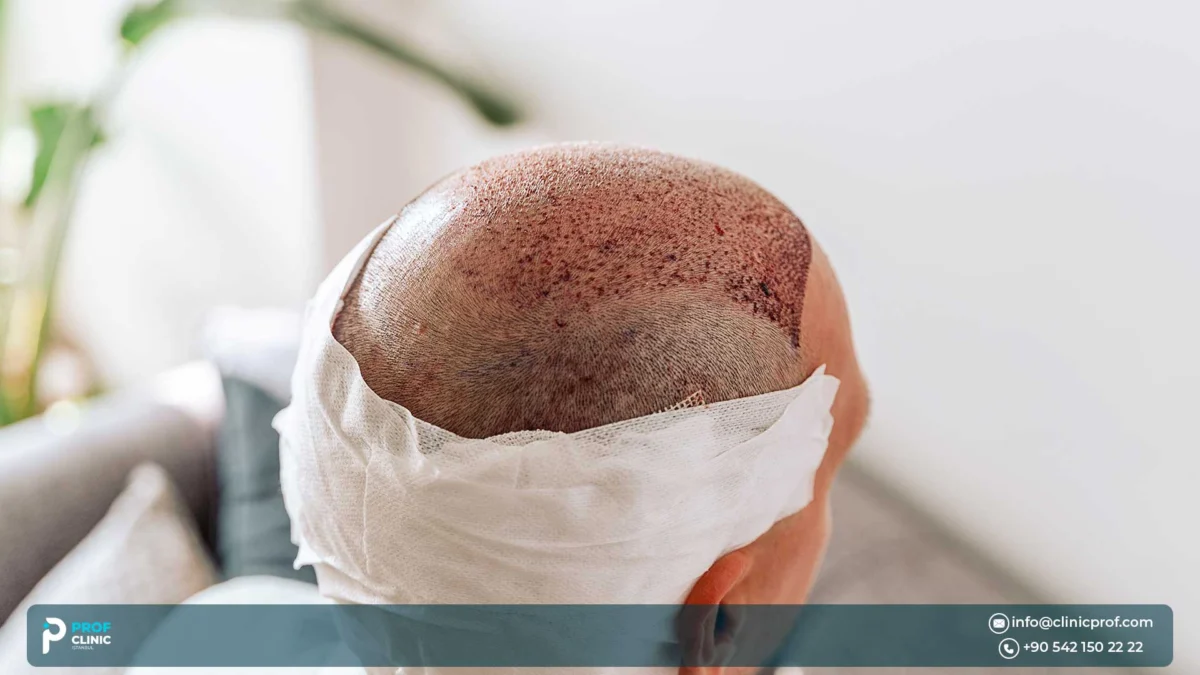
Hair Transplant Recovery Day by Day: Days 1–30 at a Glance
The quickest way to understand hair transplant recovery day by day is to separate what the skin is doing from what the follicles are doing. Think of it as two clocks: the skin heals within about two weeks, while the follicles rest, shed their hairs and only start producing new ones months later. The table below follows the skin clock through the first month.
| Day | What you’ll usually see | What to do | What to avoid |
|---|---|---|---|
| Day 0 | Numbness wearing off, tightness, slight oozing from the donor area | Rest with your head raised; take only approved medication | Touching the grafts, bending forward, alcohol |
| Days 1–2 | Bandage removed, pink skin, tiny crusts on each graft | Attend your check; start gentle washing when your surgeon says | Rubbing, strong water pressure, tight headwear |
| Days 3–5 | Forehead swelling, sometimes reaching the eyelids | Sleep propped up; keep washing gently; short walks | Sleeping face down or on your side, heavy lifting |
| Days 6–7 | Swelling settling, firm crusts, itching may start | Continue the washing routine; light desk work if you feel well | Scratching, strenuous activity, direct sun |
| Days 8–14 | Scabs loosening and falling away; stitches out if you had FUT | Move towards normal washing by about day 14 | Picking scabs off, swimming, saunas |
| Days 15–21 | Redness fading; some transplanted hairs may start to shed | Gradually return to normal routines | Vigorous exercise and contact sports (often until about week 3) |
| Days 22–30 | Shedding continues; the scalp may look much as it did before surgery | Return to the gym if your surgeon agrees; keep protecting from sun | Judging the result; direct sun on the grafts |
These are typical ranges drawn from NHS, Cleveland Clinic and StatPearls guidance, not fixed rules. The size of your session, the technique and your own healing can shift each step by a few days, and your surgeon’s written instructions come first.
Day 15 and Day 30: What to Expect
At about day 15, most scabs have usually come away, washing is close to normal and some redness may linger. StatPearls describes moving to normal washing over the first two weeks, and the NHS says non-dissolvable stitches, if you had FUT, usually come out after 10 to 14 days. Some transplanted hairs may start to shed from around this point, which is normal.
By day 30, the scalp can look much as it did before surgery, because the transplanted hairs have shed or are shedding and the new ones haven’t appeared yet. The AAD places shedding between two and eight weeks, and StatPearls says new hairs typically appear after 3 to 6 months. So a bare-looking scalp at one month is not a sign that something has gone wrong. Between the two milestones, this is what usually changes:
- Washing and brushing: back to a normal routine, with brushing and styling products allowed in stages (see below).
- Sun and haircuts: StatPearls advises avoiding direct sun and waiting about a month before cutting or dyeing your hair.
- Activity: exercise returns in steps, with full training and contact sports at around three weeks.
- Follow-up: a good moment to send your clinic a photo or attend a check-up, especially if you’re unsure about redness or bumps.
To see what comes after the first month, read our hair transplant timeline month by month.
Planning flights around your recovery? Ask the Prof Clinic team for a written timeline that shows your procedure day, check-up and the earliest sensible day to fly.
When Can I Wash My Hair After a Hair Transplant?
Most protocols start gentle washing within 24–48 hours of surgery. Cleveland Clinic lists day 2 for the first wash, and StatPearls, a peer-reviewed medical reference, advises washing without rubbing from 24 hours, then moving to normal washing over the following two weeks. The NHS describes washing gently by hand from around day 6, which shows how much protocols vary, so follow the day your own surgeon sets.
The First Wash, Step by Step
The aim of early washing is to keep the scalp clean and soften the crusts without moving any graft. A typical gentle routine looks like this:
- Use lukewarm water and pour it from a cup, or use a very soft shower flow; don’t aim strong water at the grafts.
- Lather the shampoo in your palms first, never directly on the scalp.
- Pat the foam onto the transplanted area with your fingertips; don’t rub or massage it.
- The donor area can usually be washed a little more normally, as instructed.
- Rinse by pouring water slowly over the head.
- Dab dry with a clean paper towel, or let the hair air-dry.
Caring for the Donor Area
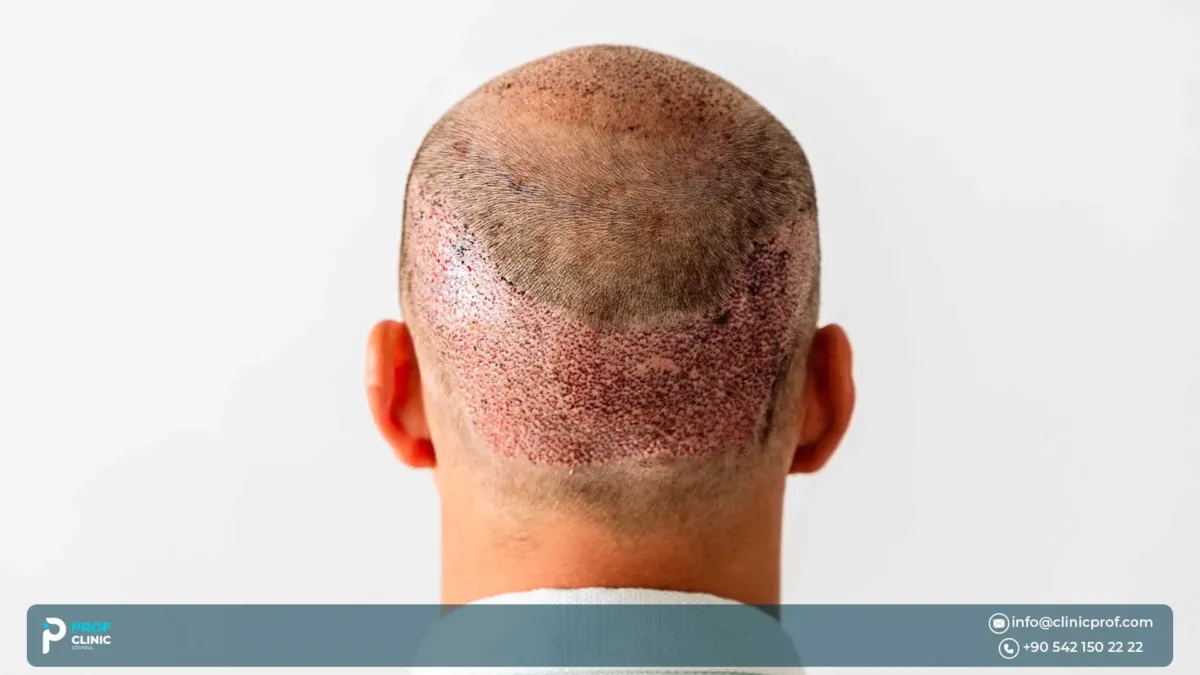
The donor area, at the back and sides of the head, heals in much the same window as the recipient area. After FUE, the ISHRS says tiny scabs form in both areas and usually stay until they are gently rubbed away, about 1 to 2 weeks later. StatPearls advises gently rubbing the donor area to remove crusts from about 5 to 7 days after surgery and avoiding full immersion of the head in water for 2 to 4 weeks. In practice:
- Wash it gently at first: pour water over it and pat it dry, then follow your surgeon’s instructions on when to rub a little more firmly.
- Don’t pick the crusts: let them loosen with washing, as on the recipient area.
- Protect it from the sun: StatPearls advises keeping both the donor and recipient sites out of direct sun for a month.
- Watch for warning signs: oozing that doesn’t settle, increasing pain, or hot, spreading redness deserve a call to your clinic.
Choosing a Shampoo and Drying Your Hair
Use the shampoo your clinic gives you or a mild, fragrance-free one. Leave styling products, hair dye and medicated lotions until your surgeon clears them. Skip the hairdryer in the early days unless you’re told a cool setting is fine, because heat and strong airflow add stress to healing skin.
The practical takeaway: washing doesn’t harm the grafts when it’s gentle. What harms them is rubbing, scratching and strong pressure.
Hair Transplant Scabs, Redness and Itching
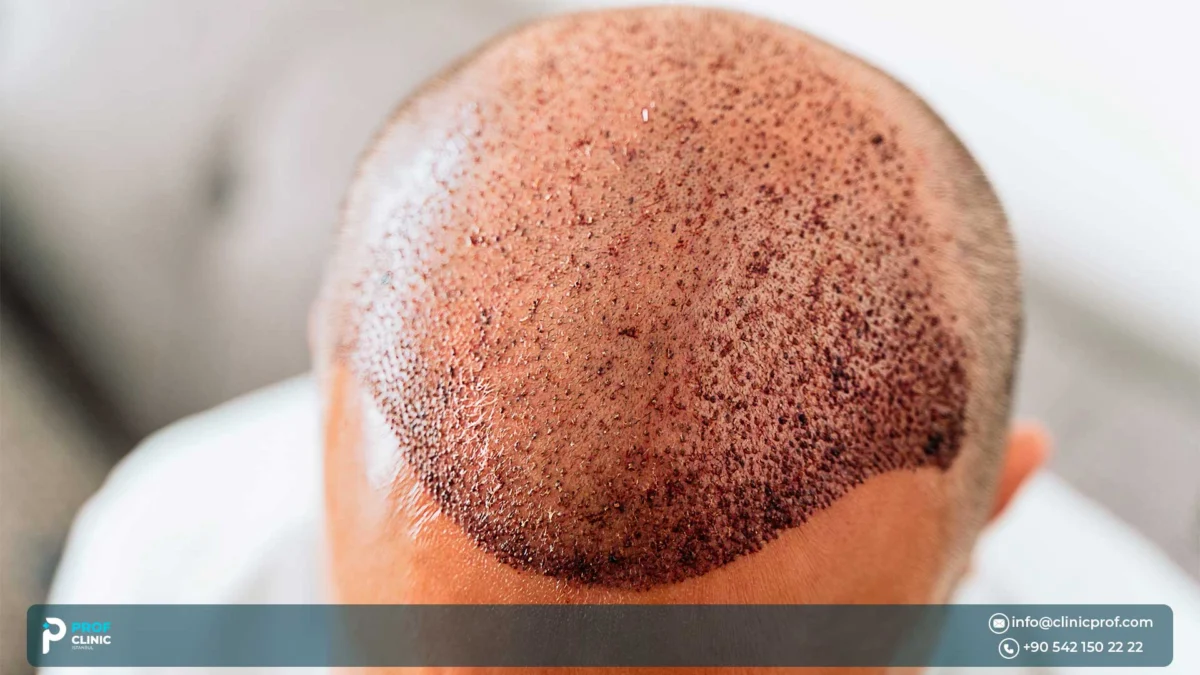
Hair transplant scabs are tiny crusts that form around each graft as the skin seals, and they are a normal part of healing. Pinkness of the recipient area and itching usually come with them. The Indian Journal of Plastic Surgery review explains that itching is common and is caused by drying and crusting of the skin.
When Do the Scabs Fall Off?
The ISHRS (International Society of Hair Restoration Surgery) says the tiny scabs usually stay until they are gently rubbed away, about 1 to 2 weeks after surgery. Daily washing softens them, and from around the second week many surgeons let you lift loose ones with gentle fingertip pressure in the shower. A hair may come away with a scab at this stage; that is usually the hair shaft, not the root.
Shedding is a separate process from scabbing. The American Academy of Dermatology (AAD) says the transplanted hair falls out between two and eight weeks after surgery, and that this is normal. How much falls, why some of your own hair can shed too, and when it returns are covered in our guide to shock loss after a hair transplant.
Why You Shouldn’t Pick or Scratch
A scab that’s pulled off too early can take a graft with it, and scratching irritates the skin and raises the chance of infection. If the itch is hard to bear, ask your clinic about a spray, saline or a medicine that is safe for you rather than reaching for your nails.
How Long Does Redness Last?
Pinkness around the grafts is expected and often fades gradually over the weeks as the scabs come away. No source gives a single number, so it varies from person to person and with the size of the session. Redness that is severe, hot or spreading is different: Cleveland Clinic lists severe redness or pain as a reason to call your provider right away.
Small pimple-like bumps can appear later. In the Indian Journal of Plastic Surgery series, sterile folliculitis persisted from 3 weeks to 3 months and was managed with warm compresses for non-infected cases. Send your clinic a photo if bumps are painful, spreading or come with a fever.
Also read: Hair Transplant Timeline Month by Month: What to Expect Up to Month 18
Forehead Swelling After a Hair Transplant: What Is Normal
Swelling after a hair transplant is common and usually harmless. It tends to appear around the third day, first over the forehead, and can then move down to the eyelids and cheeks. In the Indian Journal of Plastic Surgery series, facial swelling settled on its own by about day 6 or 7.
What Helps, and When to Worry
StatPearls advises placing ice on the forehead, never on the grafts, for 20 minutes every 2 to 3 hours during the first week. Staying upright and avoiding bending forward are the other usual measures.
Swelling becomes a concern when it comes with increasing pain, spreading redness or a fever. The same review says that combination should be taken seriously and checked straight away.
Sleeping Propped Up in the First Week
For about the first week, sleep on your back with your head raised, and avoid sleeping face down or on your side. That’s the advice in the Indian Journal of Plastic Surgery review, and StatPearls recommends raising the head of the bed by about 15–30° to limit swelling. Extra pillows, a wedge or a neck pillow all help; the full set-up, and when you can return to your usual position, is in our guide to sleeping, exercise and work after a hair transplant.
Hats, Sun, Smoking and Alcohol: A Quick Reference for the First Month
Most everyday activities return within the first month, but at different speeds, and the published guidance varies. The ISHRS notes that rules on things like exercise and water exposure differ from surgeon to surgeon, so treat this table as a typical range and follow your own written instructions.
| Activity | Typical timing | Why it matters |
|---|---|---|
| Loose, clean cap | StatPearls says a clean, loose hat is acceptable; many surgeons still prefer to wait about a week | A tight hat can rub or press on fresh grafts |
| Helmets and tight hats | Usually later; ask at your check-up | Pressure and friction on the recipient area |
| Heavy lifting, strenuous effort | Avoid for at least 1 week (StatPearls) | Raises blood pressure, bleeding and swelling |
| Vigorous exercise, contact sports | Usually after about 3 weeks (ASPS, Cleveland Clinic) | Sweat, knocks and raised blood pressure |
| Swimming, sauna, steam | Not until scabs have gone and your surgeon agrees; StatPearls advises no full head immersion for 2–4 weeks | Water, chlorine and heat irritate healing skin |
| Direct sun on the scalp | Avoid for about 1 month (StatPearls) | Sunburn on healing skin and redness that lasts |
| Smoking | Avoid for 3–6 weeks after surgery (StatPearls) | Reduces blood flow to the grafts |
| Alcohol | Avoid in the first days; ask your surgeon when to restart | Can increase bleeding and swelling |
Brushing, Styling, Haircuts and Hair Dye
StatPearls gives a simple sequence: wait 1 week before brushing your hair, avoid styling products for 2 weeks, and wait 1 month before cutting or dyeing it. That is one reference, so your surgeon’s own timing may differ, especially after a larger session. If you’re booking a barber, mention the transplant first.
Smoking After a Hair Transplant
Nicotine narrows small blood vessels, and grafts depend on a good blood supply to survive the first weeks. StatPearls advises stopping smoking 3–6 weeks before surgery and staying off it for the same period afterwards. In the Indian Journal of Plastic Surgery series, the few patients who developed small patches of dead skin in the recipient area were all smokers.
If you were also offered PRP after surgery, ask whether it’s included in your plan or billed per session, and when your surgeon would schedule it.
Also read: PRP After a Hair Transplant: Is It Necessary? Timing and Sessions
12 Aftercare Mistakes to Check in Your First Month
Most avoidable problems in recovery come from a handful of small habits, so here’s what to do after a hair transplant, framed as the mistakes to avoid. Before you go back to your normal routine, check that you’re not doing any of these:
- Touching the grafts: checking them with your fingers in the first days can dislodge them.
- Sleeping flat or face down: it increases swelling and presses on the recipient area.
- Skipping the first wash: crusts build up and itch more when the scalp isn’t cleaned gently.
- Rubbing while washing: pat the foam on and pour water from a cup rather than using strong shower pressure.
- Picking scabs: let them soften and come away on their own.
- Scratching an itch: ask about a spray or medicine instead.
- Wearing a tight hat too soon: pressure and friction can disturb fresh grafts.
- Going back to the gym early: sweat, strain and knocks are best avoided for about three weeks.
- Sunbathing without cover: keep the scalp out of direct sun for about a month.
- Smoking: it reduces blood flow to grafts that need it most.
- Taking unapproved medicine: some painkillers and supplements affect bleeding, so check first.
- Panicking at shedding: losing transplanted hairs in weeks 2–8 is expected, not a sign of failure.
Stick this checklist on your mirror for the first month. Small, consistent habits now protect the grafts while they settle.
Going Back to Work and Flying Home: The Short Version
Many people can return to a desk job within a few days, but the right date depends on your work and how visible the healing is. Cleveland Clinic gives days 3 to 5 for returning to work and light activities, while the NHS says you may need one to two weeks off. A physical job, a hard hat or a role where you’re on camera usually means the longer end of that range, because redness and scabs are most visible in the first 7–10 days. The detail, week by week, is in our guide to sleeping, exercise and work after a hair transplant.
International patients typically stay in Istanbul for about 2–4 days, so the procedure, the first check and often the first wash happen before they fly. For the journey itself, wear a loose hood or a cap your surgeon has approved, keep your aftercare kit with you and protect your head from knocks. Our guide to flying after a hair transplant covers timing and cabin tips in full.
For hairline and density planning, see our page on male hair transplant in Turkey. If you have curly or Afro-textured hair, aftercare has a few extra points; read Afro Hair Transplant Recovery: Timeline, Aftercare and What to Expect.
Warning Signs: When to Call Your Clinic
Normal healing gets a little better every day; warning signs get worse, spread, or come with a fever. Cleveland Clinic advises calling your doctor straight away about a fever that doesn’t go away, excessive bleeding, severe redness or pain, or green or yellow pus. The NHS says to contact the clinic as soon as possible about severe pain or any unexpected symptoms.
- Usually normal: tightness, mild soreness, forehead swelling that settles within about a week, pink skin, small scabs, itching, numbness that fades over weeks, and shedding after two weeks.
- Contact your clinic: pain that increases after day 3, bleeding that doesn’t stop with gentle pressure, redness that spreads or feels hot, pus, a fever, or swelling with pain and redness.
- Later bumps: small pimple-like spots can appear weeks after surgery; they’re often harmless folliculitis, but send a photo so your clinic can decide whether they need treatment.
This guide is general information drawn from medical sources. It doesn’t replace your surgeon’s instructions or an examination, and you should seek urgent care for a high fever or rapidly spreading redness.
Not sure whether what you’re seeing is normal? Send a photo to our team on WhatsApp with the date of your procedure, rather than guessing.
Recovering with Prof Clinic: Hair Transplant Follow-Up in Istanbul
At Prof Clinic, aftercare starts before surgery. Pre-operative tests (blood count, ECG, kidney and liver function, electrolytes, blood sugar, and hepatitis and HIV screening) help the medical team plan a safe procedure. The medical lead for hair restoration, Spc. Dr. Lütfi Öztürk, an internal-medicine specialist, carries out the medical assessment and treatment planning and coordinates follow-up. You can read his background on Dr. Lütfi Öztürk’s profile page.
Packages for a hair transplant in Istanbul include the procedure, accommodation, airport and hotel transfers and post-operative care, with a written quote sent after your photos are assessed. Once you’re home, the coordination team follows up and gives advice over WhatsApp (+90 542 150 2222). Expected density is discussed individually and can’t be promised in advance.
If you’re still planning, book a free online consultation and ask how your aftercare will be organised. You can also see consented results at different stages in the Prof Clinic before-and-after gallery.
Frequently Asked Questions About Hair Transplant Aftercare
When can I wash my hair normally after a hair transplant?
Most people are back to normal washing by about two weeks. Gentle washing, with no rubbing on the grafts, usually starts within one or two days, and StatPearls describes moving gradually to normal washing over the first two weeks. Once the scabs have gone, you can usually wash and massage the scalp as before.
How long should I sleep on my back after a hair transplant?
Usually for about a week. Sleeping on your back with your head raised limits swelling and keeps the recipient area off the pillow. Medical guidance advises against sleeping face down or on your side in this period. After the first week, most surgeons let you return to your usual position.
When do the scabs fall off after a hair transplant?
Usually between one and two weeks after surgery. Gentle daily washing softens the crusts, and they come away on their own or with light fingertip pressure in the shower once your surgeon allows it. If crusts are still firmly stuck after two weeks, ask your clinic for advice.
When can I wear a cap or brush my hair after a hair transplant?
A clean, loose cap is sometimes fine early if it doesn’t press on the grafts, though many surgeons prefer to wait about a week. Tight hats and helmets usually need longer. StatPearls advises waiting a week before brushing and a month before cutting or dyeing hair, but follow your own surgeon’s timing.
What should I expect 15 days and 30 days after a hair transplant?
At 15 days, most scabs have usually gone, redness is fading and some transplanted hairs may start to shed. At 30 days, the scalp can look much as it did before surgery, because shedding is normal and new hairs typically appear after 3 to 6 months. Sun and haircut restrictions usually ease around one month.
Is it normal for my forehead to swell after a hair transplant?
Yes, it’s common. Swelling usually appears around day 3, starts on the forehead and can spread to the eyelids before settling within about a week. Sleeping propped up helps. Contact your clinic if the swelling comes with increasing pain, spreading redness or a fever.
Your First Month, in Short
Good hair transplant aftercare in the first month comes down to protection and patience: keep pressure and fingers off the grafts, wash gently on your surgeon’s schedule, sleep propped up for a week, and bring back sport, sun and hats in stages. Swelling and scabs are temporary, and shedding in weeks 2–8 is part of the normal cycle. The harder part is waiting months for growth.
If something doesn’t look right, ask before you guess. Contact Prof Clinic with your questions, before or after your procedure.
Sources
- NHS — Hair transplant
- Cleveland Clinic — Hair Transplant: How Does It Work, Success Rates
- American Academy of Dermatology — A hair transplant can give you permanent, natural-looking results
- ISHRS — Guide to FUE Hair Transplant: Benefits, Process & Recovery
- American Society of Plastic Surgeons — Hair Transplant Recovery
- StatPearls (NCBI Bookshelf) — Hair Transplantation (Goldin, Zito & Raggio)
- Indian Journal of Plastic Surgery — Complications of Hair Transplant Procedures: Causes and Management (Garg & Garg, 2021)