Full arch dental implants are one of the most popular ways to rebuild a complete smile when you’ve lost most or all teeth in the upper jaw, lower jaw, or both. Instead of replacing each tooth with an individual implant, a small number of implants can support a full-arch bridge (fixed teeth) or a more stable denture.
If you’re comparing All-on-4 vs All-on-6 vs implant-supported dentures, the right choice usually comes down to: your bone and gum health, bite forces, whether you want teeth that are fixed vs removable, and how you feel about timeline and maintenance.
This article by Prof Clinic Turkey explains full arch dental implants—how complete arch implants replace all teeth in one jaw, the main options, what results to expect, the procedure and recovery, who qualifies, key risks, and what drives the total cost.
This guide is for education and decision support. It doesn’t replace an in-person dental exam, imaging, or medical clearance when needed.
What Are Full Arch Dental Implants?
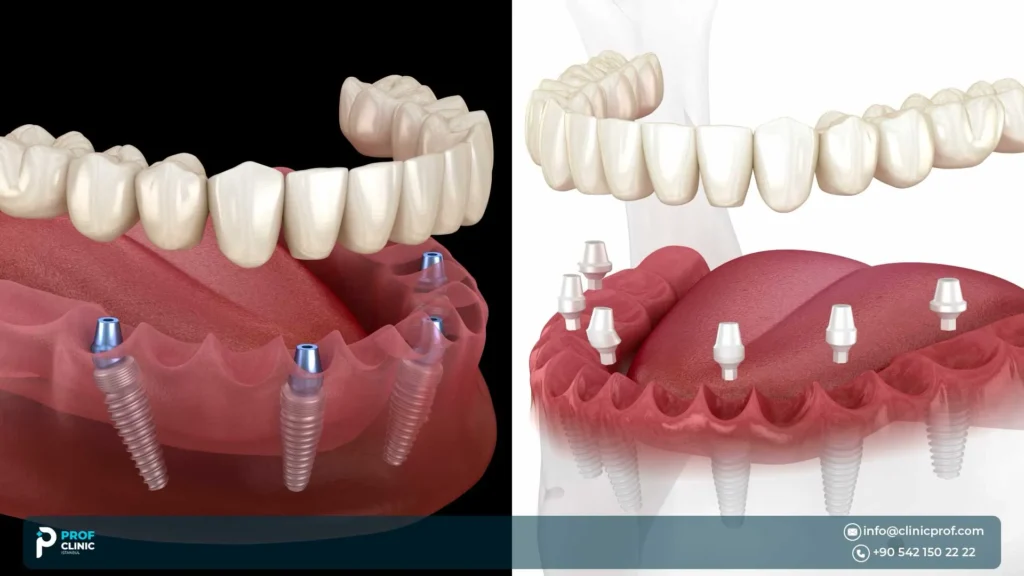
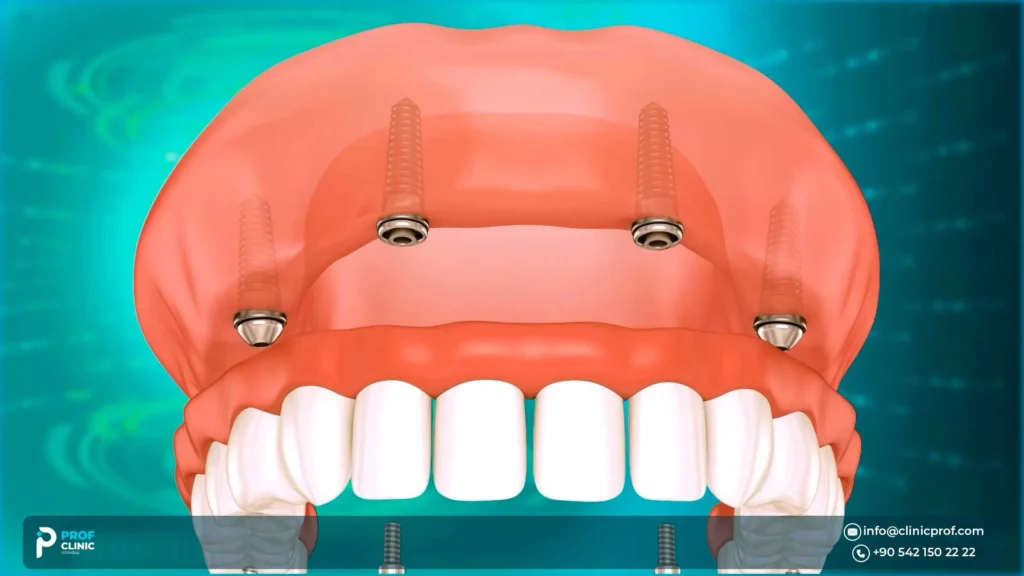
Full jaw implants is a way to replace all teeth in one jaw, upper or lower, using dental implants as anchors for a bridge or a denture.
Here’s the simplest way to think about it:
- Full arch dental implants is the umbrella term.
- All-on-4 and All-on-6 are specific techniques inside that category.
- The final teeth can be fixed or removable.
What happens if you don’t replace missing teeth?
Not replacing missing teeth isn’t just an aesthetic issue. Over time, the jaw can lose bone in areas without teeth, and chewing or speech may get harder. The American College of Prosthodontists notes that the longer you wait, the more bone can be lost. Sometimes enough to limit implant options.
If you’re unsure whether you need a full-arch plan or a simpler solution, start with a consultation request; our team can help you map the next step. You can also explore our Dental Implants service hub to understand the broader implant options.
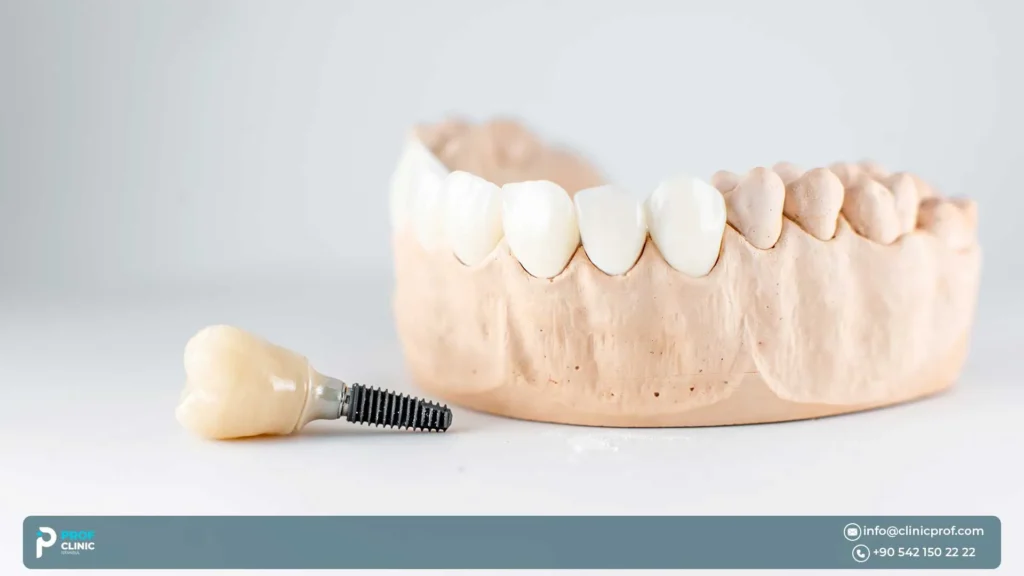
Full-Arch Options Types and Comparison
Below are the most common ways you can replace a full arch:
- Traditional dentures: Removable, no implants.
- All-on-4: Four implants support a full-arch fixed bridge.
- All-on-6: Six implants support a full-arch fixed bridge.
- Implant-supported dentures: A removable denture that clips onto implants.
Many teeth-in-a-day concepts place four to six implants for a full arch, depending on the plan and anatomy.
| Option | Fixed or removable? | Typical implants per arch | Timeline | Maintenance reality | Best for |
| Traditional denture | Removable | 0 | Fastest to deliver | Requires relines/adjustments; stability varies | Not a surgical candidate or needs a temporary step |
| All-on-4 | Fixed | 4 | Some suitable cases can receive a temporary fixed bridge soon after surgery; final teeth are placed after healing. | Daily cleaning under the bridge & professional checks | Want fixed teeth with fewer implants |
| All-on-6 | Fixed | 6 | Similar concept; added implants may help distribute forces in some cases | Daily cleaning under the bridge & professional checks | Higher bite forces, bruxism concerns, or when support distribution is a priority |
| Implant-supported denture (overdenture / snap-on) | Removable | Often 2 implants for the lower jaw is widely referenced as a standard option; upper jaw varies by case | Implants placed → denture clips on (timing depends on loading protocol) | You remove it to clean; attachments wear and need maintenance | Want stability but prefer removable for cleaning or budget |
Not sure whether All-on-4 or All-on-6 fits your bone and bite? Ask our doctors for a personalized plan that spells out: implant count, temporary vs final teeth, and the visit schedule.
To avoid duplicating your deep-dive pages, you can have more details by reading our following blogs:
- All-on-4 Dental Implants in Turkey: Cost & Advantages
- All on 6 Dental Implants: Everything you want to know
Do full arch dental implants look natural?
Most patients consider full-arch treatment for two reasons: function and confidence.
Let’s make it clearer:
What do complete arch implants improve?
- Chewing stability: Fixed bridges don’t move like traditional dentures can.
- Speech confidence: Reduced slipping can help pronunciation for some people.
- Day-to-day comfort: No denture adhesives; less gum rubbing for many patients.
Will do complete arch implants look natural?
It can look very natural, but its level depends on planning:
- Tooth shape, gum contour, smile line, and bite.
- Material choices and lab work quality.
- Whether you’re wearing temporary teeth vs the final bridge.
Temporary fixed teeth are sometimes bulkier or simpler in contour while tissues heal, and final aesthetics are refined after integration and bite checks.
If you’d like visual proof, you can visit our before-and-after hub and keep the message via WhatsApp to our team, knowing that results always vary by case.
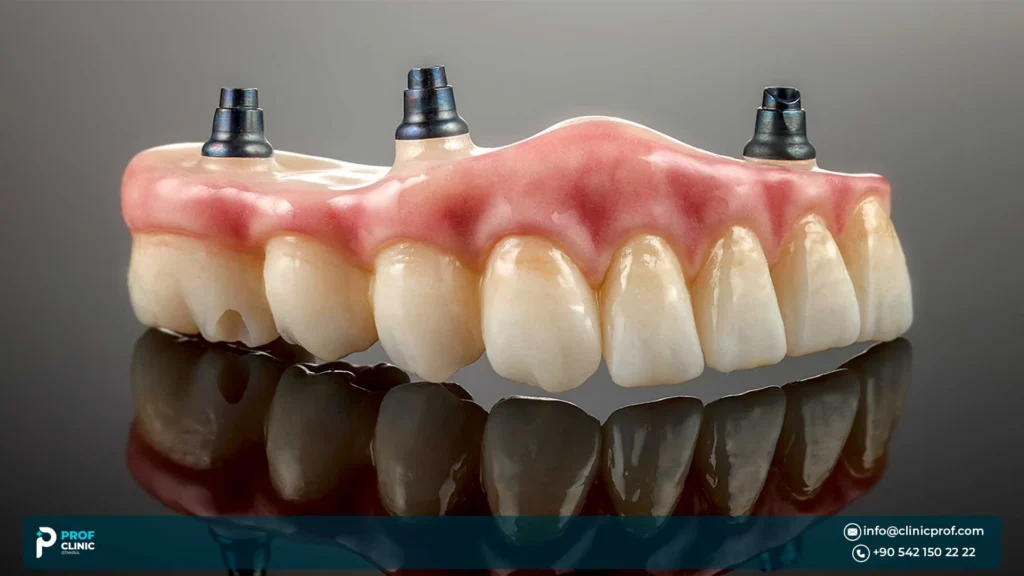
Full Arch Dental Implant Procedure in Turkey
Below is the typical full-arch pathway:
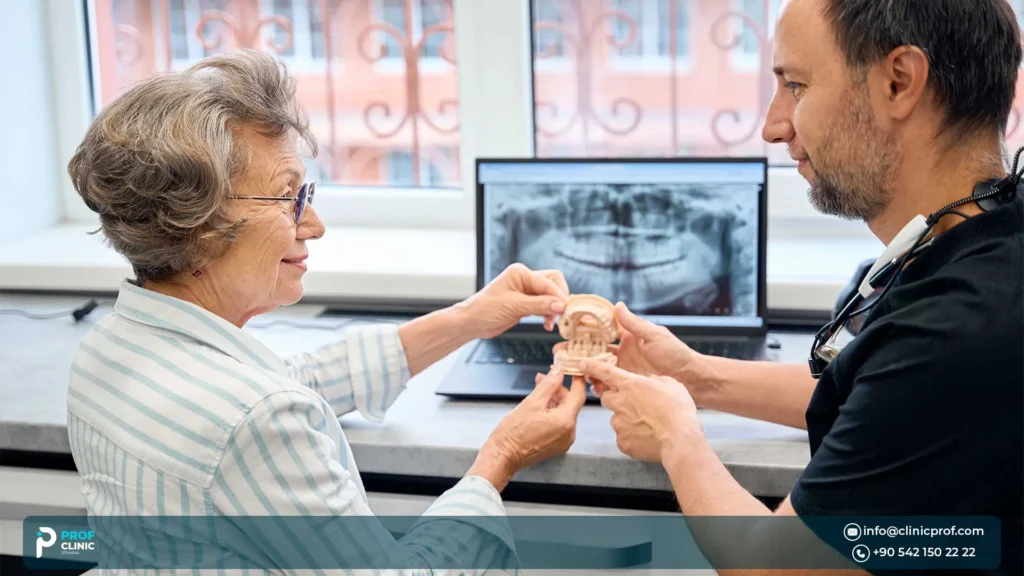
- Consultation: Medical history, dental history, and what you want from the final smile.
- Imaging and planning: The implant count and positions are confirmed after imaging, not guesswork.
- Extractions: If teeth are failing, extractions may be part of the plan.
- Implant placement: Full-arch fixed concepts often use 4–6 implants per arch, depending on the design.
- Temporary fixed teeth: This is where teeth in a day confusion happens.
- Healing: After implants are placed, many protocols wait at least ~3 months before the implants support the definitive teeth.
- Final bridge placement and bite refinement: Final teeth are placed after healing; bite and aesthetics are refined.
So… can it be done in one day?
Often, one day refers to receiving temporary fixed teeth soon after surgery, while the final bridge typically comes later.
If you’re specifically evaluating immediate loading, we recommend our previous article about Immediate Load Dental Implants: Pros, Cons & Candidacy
How Many Visits Are Typical for International Patients in Istanbul?
Most full-arch journeys fall into one of these patterns:
- Two-phase travel: surgery and temporary teeth on one visit, then return after healing for the final bridge.
- Hybrid: one visit for surgery, then remote check-ins, and a return trip for finalization.
- Longer course: if bone grafting or staged care is needed, timelines extend.
How long is the recovery time for full arch implants?
Recovery has two layers: the short-term surgical recovery and the longer biological healing.
The first week
- Bruising: swelling often peaks early and commonly improves over about 5–7 days after dental surgery.
- Pain control: Many patients use routine pain relief, especially in the first 48 hours, but needs vary.
- Bleeding: Small oozing can happen; persistent bleeding should be treated as urgent.
Diet progression
- Start with cool liquids and soft foods.
- Avoid crunchy and hard foods early.
- If you have immediate-load temporary teeth, follow your bite and diet rules carefully.
Sleeping tips
- Sleep with your head slightly elevated.
- Avoid pressure on the surgical side.
- Follow your instructions on rinsing and brushing.
Pay attention in these cases:
- Fever, pus, worsening pain after initial improvement
- Persistent bleeding
- A sudden change in bite or a bridge that feels loose

Who is a good candidate for full arch dental implants?
You’re often a good candidate for full-arch dental implants if you’re missing most or all teeth in one jaw, have multiple failing teeth that can’t be reliably saved, or you’ve worn dentures long-term and want a more stable, fixed solution.
However, candidacy isn’t based on missing teeth alone. Your clinician also checks a few key factors because they directly affect whether implants are predictable and what type of plan is safest:
- Bone and gums: Healthy gums and adequate bone are essential. Active gum disease should be treated first (or managed alongside planning). Bone volume and quality determine whether standard placement is possible, whether angled implants are appropriate, or whether grafting/advanced anchorage is needed. If bone is insufficient, grafting may be recommended and in some cases healing time is required before proceeding.
- Smoking: Smoking increases the risk of healing problems, infection, and implant failure. That’s why it’s discussed during planning not to judge, but to reduce risk. Practical takeaway: be upfront and ask for a realistic stop/reduction plan around surgery.
- Diabetes: Diabetes doesn’t automatically rule out implants, but poorly controlled blood sugar can increase complication risk. Practical takeaway: expect medical clearance and closer follow-up if you’re diabetic.
- Older adults: Age alone rarely decides eligibility. Overall health, medications, bone condition, and your ability to maintain daily hygiene and attend follow-ups are usually more important.
You’re typically a stronger candidate if you can say yes to most of these:
- I can attend follow-up visits and commit to maintenance.
- I can keep the area clean daily and won’t skip checkups.
- My medical conditions (if any) are stable and managed.
- I understand temporary teeth (if used) are not the final result.
If any point is uncertain, that’s exactly what a consultation is for. Book your appointment to confirm candidacy with an exam and imaging, then receive a personalized plan.

What are the risks or complications of full arch implants?
Every surgical treatment has risks. The goal is not fear; it’s preparedness.
Short-term risks
- Infection, swelling, bruising
- Nerve or sinus considerations (especially in the upper jaw)
- Temporary bite imbalance while healing
- Prosthetic issues (chipping/wear, screw loosening)
Long-term risks
Peri-implant disease is one of the major long-term concerns, especially in patients with risk factors (e.g., smoking, past gum disease, poor hygiene). However, meticulous cleaning and regular care are critical, and notes smoking as a significant risk factor for failing implants.
Here is a list of rules to avoid all these risks to happen:
- Daily cleaning under the bridge.
- Professional maintenance at intervals recommended for your risk profile.
- Night guard if you grind or clench.
- Don’t ignore early warning signs: bleeding gums around implants, persistent bad taste, swelling, or mobility.
How much do full arch dental implants cost?
Because full-arch plans vary a lot, the most honest way to discuss full-arch dental implants cost is to explain the drivers, then encourage an itemized quote after imaging.
What usually affects the price
- Fixed vs removable design
- Implant count and implant system
- Extractions and any infection management
- Bone grafting or advanced techniques (when needed)
- Sedation/anesthesia needs and surgical complexity
- Temporary bridge vs final bridge materials and lab work
What’s often included
When comparing clinics, ask for a written plan that states:
- What imaging is included
- What type of temporary teeth you’ll receive (if any)
- What final teeth material is proposed
- Follow-up schedule and what happens if adjustments are needed
At Prof Clinic in Turkey, we provide a dedicated dental implant cost guide and encourage booking for an individualized plan.
Request an itemized quote and timeline, so you can compare options fairly.
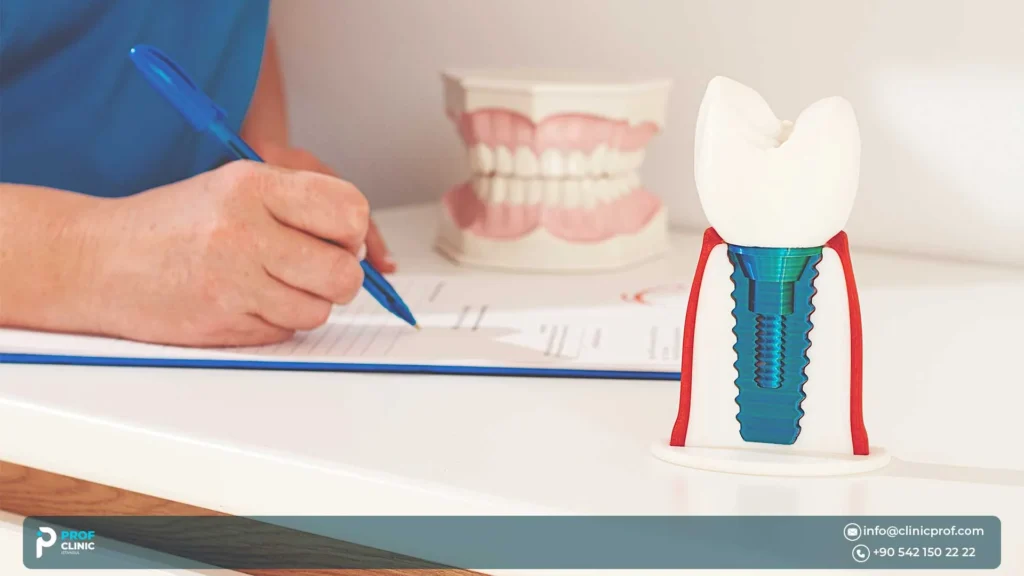
Prof Clinic in Istanbul and Full-Arch Dental Implants
At Prof Clinic Istanbul, full jaw implants are approached with an evaluation-first plan, meaning the our reviews your case (health history, bite, and imaging) before recommending whether All-on-4, All-on-6, or another full-arch option is the best fit.
The goal is to set realistic expectations about what same-day teeth usually means (often a temporary fixed bridge when suitable) versus the timing of the final teeth after healing.
If you want a clear roadmap with your likely option, visits, and timeline, you can request a free consultation.Full arch dental implants can be life-changing when the plan matches your anatomy, health profile, and expectations, especially around temporary vs final teeth, maintenance, and timeline. If you’re choosing between All-on-4, All-on-6, or implant-supported dentures, the safest shortcut is a proper evaluation and a written plan.
Book your free consultation with one of our medical team and ask for a clear, personalized roadmap: the best option for your jaw, the number of visits, and how your final teeth will be designed.
FAQs about full arch dental implants
What are full arch dental implants?
Complete arch implants replace all teeth in the upper or lower jaw using implants to support a fixed bridge or a removable implant-retained denture.
What is the difference between All-on-4 and full arch implants?
Full arch implants is the category. All-on-4 is one approach within it, using four implants to support a full-arch bridge.
How many implants are needed for a full arch?
Many fixed full-arch concepts use four to six implants per arch, but the final number is confirmed after imaging and planning.
Are full arch implants permanent, and how long do they last?
They’re designed for long-term function, but longevity depends on risk factors (smoking, gum disease history), bite forces, and daily hygiene plus professional maintenance.
Is full arch dental implant surgery painful? What anesthesia is used?
You typically won’t feel pain during placement because anesthesia is used. Post-op swelling is common, and many patients use routine pain relief in the first couple of days.
How much do full arch dental implants cost?
Full jaw implants price depends on the design (fixed vs removable), implant count, grafting needs, sedation, and the temporary/final bridge. The most accurate step is an itemized plan after imaging. Contact us to ask what financing options are available.