Why are my eyebrows falling out? The question usually starts in front of the mirror, and the answer is rarely just age. The most common eyebrow hair loss causes are thyroid problems, alopecia areata, skin conditions such as eczema, nutritional gaps and years of plucking or rubbing, and the pattern of the loss often hints at which one is involved. Most of these causes can be treated, and in many cases the brows grow back once the cause is dealt with.
In this guide by Prof Clinic, you’ll learn how to tell normal shedding from real eyebrow thinning, what each pattern can point to, which doctor and tests to start with, and the treatment options, including when an eyebrow transplant makes sense and when it doesn’t.
Medical note: this article is general information, not a diagnosis. Eyebrow loss can be the first visible sign of a condition that needs treatment, so have new or unexplained loss checked by a doctor.

Is Eyebrow Shedding Normal? Everyday Turnover vs Real Hair Loss
Losing a few eyebrow hairs every day is normal. Brow hairs live on a short cycle: according to a 2022 clinical review in the American Journal of Clinical Dermatology, the growth phase of an eyebrow hair usually lasts only 2–3 months, followed by a transition of 2–3 weeks and a resting phase of 2–3 months before the hair falls out and a new one replaces it. That short cycle is also why brows stay short without trimming.
The same review notes that brows can gradually thin and turn white with age, although some people, mostly men, find their brows grow thicker instead. A slow, even change over many years is usually part of ageing. What deserves attention is a change you can actually see over weeks or months.
Here’s how real eyebrow thinning usually shows itself:
- Gaps or bare patches: skin showing through where hair used to be.
- A shrinking tail: the outer end of the brow getting shorter, often on both sides.
- Hair not coming back: areas that stay bare for several months after plucking or shedding.
- Changes in the skin: redness, scaling, itching, pain, or shiny skin that looks scarred.
- Loss elsewhere: thinning scalp hair, eyelashes or body hair at the same time.
If you notice one or more of these, it’s worth looking for a cause before reaching for a brow pencil.
Medical Eyebrow Hair Loss Causes
Most medical causes of eyebrow loss fall into a few groups: hormone problems, autoimmune hair disorders, skin inflammation, and the effects of medicines or illness. DermNet lists alopecia areata, an underactive or overactive thyroid, atopic dermatitis, psoriasis, infections and trauma among the common causes, and Cleveland Clinic notes that non-scarring eyebrow loss is usually temporary, with hair growing back once the cause is treated.
Thyroid Problems and the Outer Third of the Eyebrow
Eyebrow hair loss and thyroid disease are closely linked. Loss of the outer third of both eyebrows, known as Hertoghe’s sign or Queen Anne’s sign, is a classic sign of an underactive thyroid (hypothyroidism), and Cleveland Clinic lists both underactive and overactive thyroid among the causes of eyebrow loss. The 2022 review calls it classic but nonspecific, because other conditions can thin the same area.
Hypothyroidism rarely shows up in the brows alone. The NHS lists tiredness, feeling cold, weight gain, constipation, low mood, dry skin, dry hair or hair loss, and irregular or heavy periods among its symptoms, and a GP checks it with a blood test for TSH and T4. The AAD says treating thyroid disease can reverse the hair loss it causes.
Eyebrow Alopecia Areata
Alopecia areata is an autoimmune condition in which the immune system attacks hair follicles. When it affects the brows, the AAD says it usually causes patchy loss on both eyebrows, and some people lose most or all of their brow hair. In a Japanese study cited in the 2022 review, about 1 in 5 people with alopecia areata (19.8%) had current eyebrow loss.
Because the follicles are not destroyed, regrowth is possible, but the course is hard to predict. The AAD notes that hair can start to regrow on its own in one area while it falls out in another. That unpredictability matters later, when deciding whether a transplant is sensible.
Frontal Fibrosing Alopecia
Frontal fibrosing alopecia (FFA) is a scarring type of hair loss that mostly affects women, though men can get it too. The AAD says many people with FFA notice eyebrow loss, typically along the outer edges, and some see their brows thin before they notice a receding hairline. In one study cited in the 2022 review, eyebrow loss came before scalp hair loss in 43.7% of patients.
This is the cause where timing matters most. Because FFA destroys follicles, the AAD warns that it can cause permanent hair loss and that, without treatment, the loss tends to spread. If your brow tails are thinning and your hairline is moving back at the front or sides, see a dermatologist rather than waiting.
Eczema, Dermatitis and Other Skin Conditions
Inflamed skin can shed brow hairs. According to the 2022 review, atopic dermatitis (eczema) causes loss of the outer third of the eyebrows in up to 39% of patients, partly from rubbing and possibly from the inflammation itself. Seborrhoeic dermatitis causes scaling and redness in the brows, and Cleveland Clinic lists contact dermatitis, a reaction to something that touches the skin, among the causes. Psoriasis and fungal infections can affect the brow area too.
The clue here is the skin: itching, redness, flaking or a rash under the hairs. Treating the skin condition is the first step, and in non-scarring cases the brows can recover.
Medicines, Chemotherapy and Other Illnesses
Several treatments and illnesses can thin the brows. Chemotherapy commonly causes eyebrow and eyelash loss; the hair usually returns, but the 2022 review reports that the loss is permanent in about 5% of cases. Hormone-blocking treatments, such as those used after breast cancer, can also affect the brows, and DermNet lists radiotherapy, laser treatment and botulinum toxin injections among treatment-related causes.
A serious illness or severe emotional stress can push many hairs into the resting phase at once. This shedding, called telogen effluvium, can cause diffuse eyebrow loss, according to a review in the International Journal of Trichology. Less common causes include lupus, infections such as leprosy and syphilis, and skin cancers growing in the brow area.
Nutrition and Lifestyle: Deficiencies, Over-Plucking and Tattooing
Nutritional and lifestyle causes are common, and many are reversible once you change what’s driving them, but they are also the ones people most often try to fix alone, sometimes with the wrong supplement.
Iron, Zinc, Biotin and Vitamin D
Eyebrow loss from a vitamin or mineral deficiency is possible, but it is less common than many websites suggest. The AAD says a shortage of biotin, iron, protein or zinc can cause noticeable hair loss, and that hair can regrow once the body gets enough of the missing nutrient. Zinc deficiency has been reported to cause eyebrow loss in people fed only through a drip, while the International Journal of Trichology review describes the exact role of iron as uncertain. Vitamin D is often tested too, but the evidence linking it directly to eyebrow loss is weaker.
More is not better. The AAD warns that large amounts of vitamin A or selenium are toxic and can themselves cause hair loss. Ask for blood tests before you start supplements, especially if you have heavy periods, a restrictive diet, digestive problems or recent weight loss.
Over-Plucking, Rubbing and Hair Pulling
Repeated pulling is one of the most common reasons brows look thin. Dermatology reviews list over-plucking and trichotillomania, a hair-pulling disorder, among the traumatic causes of eyebrow loss. Trichotillomania typically leaves irregular patches with hairs of different lengths, and habitual rubbing of itchy skin can cause a similar picture.
Plucked hairs usually grow back, but brows that have been kept very thin for years may not return to their old fullness. If the pulling feels hard to control, raise it with your GP: the AAD notes that for the hair to regrow, the pulling has to stop.
Microblading, Tattoos and Cosmetic Products
Cosmetic brow treatments are about adding colour, not removing hair, but they can affect the skin underneath. Eyebrow tattooing places ink in the deeper layer of the skin and triggers an inflammatory reaction, and the 2022 review lists infections, allergic reactions, granulomas and keloids among the possible complications. Reactions to dyes, glues and other products can also cause contact dermatitis.
If your brows thinned after a cosmetic treatment, tell your doctor exactly what was done and when. A reaction that only inflames the skin may settle, while one that scars is more likely to leave a lasting gap.

What Your Eyebrow Loss Pattern May Point To
Where and how the hair is missing narrows down the cause, although no pattern proves anything on its own. Use the table as a starting point for your conversation with a doctor, not as a diagnosis.
| Pattern you notice | Causes it may point to | Clues worth mentioning |
|---|---|---|
| Outer third of the eyebrow missing on both sides | Underactive thyroid, eczema, frontal fibrosing alopecia, ageing; rarely infections such as leprosy or syphilis | Tiredness, feeling cold, eczema elsewhere, a receding front hairline |
| Smooth, round or oval bare patches | Alopecia areata | Patches on the scalp or beard, autoimmune conditions in the family |
| Irregular patches with broken hairs of different lengths | Hair pulling (trichotillomania), habitual rubbing | An urge to pull, pulling when stressed or bored |
| Red, scaly or itchy brows | Seborrhoeic or atopic dermatitis, contact dermatitis, psoriasis, fungal infection | New cosmetics, tints or glues; flaking elsewhere on the face |
| Even thinning across both brows | Ageing, thyroid problems, nutritional deficiency, shedding after illness or stress, medicines | Recent illness or surgery, diet changes, new medication |
| Complete loss of the brows, often with lashes or scalp hair | Chemotherapy, extensive alopecia areata | Timing of any treatment, hair loss elsewhere |
| Loss in one spot with a scar, lump or sore | Injury, burn, a scarring skin condition or, rarely, a skin tumour | A sore that won’t heal, a changing lump, bleeding |
So, what does it mean when the outer third of your eyebrow is missing? Often a thyroid problem or skin inflammation, sometimes FFA, and occasionally simply age. That’s why a blood test and a close look at the skin and hairline usually come first.
Which Doctor to See for Eyebrow Loss and Which Tests Help
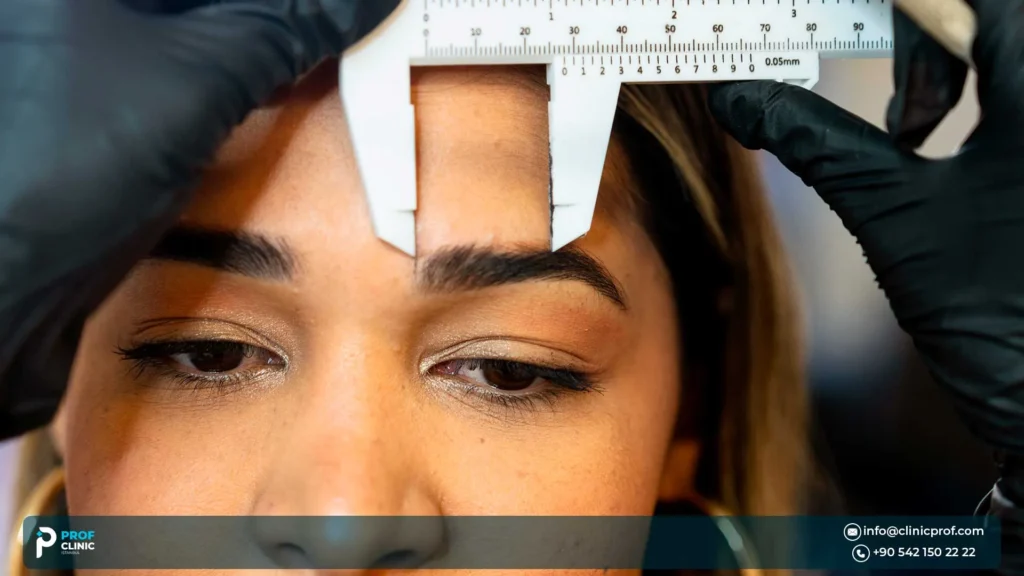
For most people, a GP or family doctor is the right first stop, and a dermatologist is the specialist to see when the skin looks abnormal, the loss is patchy, or the hairline is changing as well. The AAD describes dermatologists as doctors who specialise in the skin, hair and nails, and the 2022 review recommends a magnified examination of the brows, called trichoscopy, as the first step when the brows or lashes are affected on their own.
GP, Dermatologist or Eye Specialist?
- GP or family doctor: a good first stop for even thinning with tiredness, weight change or other body-wide symptoms, and for blood tests.
- Dermatologist: for bare patches, red or scaly skin, scarring, a receding hairline, or loss that keeps getting worse.
- Eye specialist: if your eyelids or lashes are also affected, or your eyes are sore or your vision has changed; Cleveland Clinic notes that eye-care specialists also assess brow and lash loss.
Tests Your Doctor May Suggest
DermNet notes that eyebrow loss can often be diagnosed from a careful history and examination. When tests are needed, they may include:
- Thyroid blood tests: TSH and T4, as the NHS describes for a suspected underactive thyroid.
- Blood count and iron levels: especially with heavy periods, a restrictive diet or tiredness.
- Other nutrient levels: such as zinc, when diet, digestion or weight loss suggest a shortage.
- Trichoscopy: a magnified look at the hairs and follicle openings that helps separate alopecia areata, FFA, hair pulling and fungal infection.
- Skin scrapings or swabs: to check for a fungal or bacterial infection.
- A small skin biopsy: when a scarring condition such as FFA is suspected.
14 Things to Note Before Your Appointment
A clear history speeds up the diagnosis. Before you go, write down:
- When it started: the month you first noticed thinning, and whether it was sudden or gradual.
- Which part: the inner end, the middle, the outer tail, or the whole brow.
- One side or both: loss on both sides points to different causes than loss on one side.
- Lashes and scalp: any thinning there, or a hairline moving back.
- Body hair: changes in beard, arm or leg hair.
- Skin symptoms: itching, burning, flaking, redness or pain.
- Grooming habits: plucking, threading, waxing, tinting or lamination, and how often.
- Cosmetic procedures: microblading, tattooing, laser or botulinum toxin, with dates.
- New products: brow serums, dyes, glues, make-up or skincare.
- Medicines and supplements: including hormone treatments and high-dose vitamins.
- Recent illness or stress: fever, surgery, childbirth, crash diets or major life events in the past few months.
- Body symptoms: tiredness, feeling cold, weight change, a racing heart or changes to your periods.
- Family history: thyroid disease, alopecia areata or other autoimmune conditions.
- Photos: older pictures of your brows that show the change over time.
Photos from a year or two ago often say more than a description from memory.
When to Get Checked Quickly
Book a prompt appointment rather than waiting if:
- your brows are falling out quickly or in patches;
- the skin is painful, red, scaly or changing colour;
- there’s a lump, a sore that won’t heal, or bleeding in the brow;
- your hairline is receding at the front or temples at the same time;
- you also have tiredness, weight change or other new symptoms.
Cleveland Clinic advises seeing a provider as soon as you notice hair loss around the eyes, especially with pain or skin discolouration, and going to an emergency department if you lose vision or can’t move your eyes.
Eyebrow Hair Loss Treatment Options
Effective eyebrow hair loss treatment starts with the cause. Cleveland Clinic notes that providers usually treat the underlying condition rather than the hair loss itself, which should stop more hair falling out. Brow serums and cosmetic options can help alongside that, but they don’t replace a diagnosis.
Treating the Cause First
When the cause is a thyroid problem or a confirmed deficiency, the AAD notes that treating it can be enough for the hair to regrow. Other causes need more targeted care:
- Alopecia areata: dermatologists may use steroid creams or steroid injections into the brows; the 2022 review describes injections every 4–6 weeks for up to 6 months, and tablets called JAK inhibitors have been reported to help in more severe cases.
- Frontal fibrosing alopecia: treatment aims to slow or stop the loss, which is why early diagnosis matters.
- Skin conditions: the 2022 review describes antifungal, mild steroid and calcineurin-inhibitor creams as safe and effective for seborrhoeic dermatitis of the brows.
- Hair pulling: the hair can regrow once the pulling stops, and your GP can advise on support.
Brow Serums: Minoxidil and Bimatoprost
Two medicines have trial evidence for thin brows. In a randomised trial of 357 people with eyebrow thinning, bimatoprost 0.03%, a drug approved for eyelash growth, improved brow fullness compared with no treatment. A smaller trial of 39 people found that minoxidil 2% lotion applied twice daily for 16 weeks improved hair counts compared with a placebo lotion. Both trials are described in the 2022 review.
Use these products only with medical advice. They have to be applied carefully near the eyes, results take months, and they work only where living follicles remain, so they won’t regrow hair in scarred skin.
Microblading and Other Camouflage
Camouflage changes how the brow looks while you treat the cause or wait for regrowth. Brow pencils and powders are the simplest option. Microblading uses fine needles to place pigment in hair-like strokes, and according to the 2022 review it lasts about 12–18 months before it needs repeating, while traditional tattooing goes deeper and lasts longer, with a higher risk of skin reactions.
If you don’t have a diagnosis yet, it’s sensible to hold off on permanent tattooing over an active skin problem, because the pigment can make the skin harder for a doctor to assess.

Also read: Eyebrow Transplant Alternatives: Microblading, PRP, Tattoo & More
When an Eyebrow Transplant Is the Right Solution (and When It Is Not)
An eyebrow transplant makes sense when the cause is known, the loss is stable, and the follicles in the brow are gone for good. It moves hair follicles, usually from the scalp, into the brow, so it can restore hair where medicine can’t. It can’t, however, stop an active disease from attacking the new hairs as well.
When a Transplant Usually Fits
- Long-term over-plucking: brows that have stayed thin many months after you stopped plucking.
- Scars from injuries, burns or surgery: once the scar has matured.
- Naturally sparse or uneven brows: with healthy skin and no underlying condition.
- Stable scarring loss: where a dermatologist confirms the condition is no longer active.
The International Journal of Trichology review describes hair transplant as the main way to restore brows lost to scarring, where hair won’t regrow on its own. An eyebrow hair transplant in Istanbul is planned around your face shape, the direction of your natural brow hairs and the condition of the skin.
When to Wait or Choose Another Option
- Active alopecia areata: the hair may regrow on its own, and new patches can still appear.
- Active frontal fibrosing alopecia: in a small study cited in the 2022 review, 8 of 10 patients with FFA had good early growth after a transplant, but in all but one the transplanted hairs were lost after 3–4 years.
- Untreated thyroid, nutritional or skin problems: these often improve with treatment, and the brows may recover without surgery.
- Recent chemotherapy: brows usually regrow, so it makes sense to give them time first.
- Ongoing hair pulling: transplanted hairs can be pulled out too.
If you’re not sure which list you belong to, ask your doctor for the diagnosis in writing before any transplant consultation. Results also depend on the skin and the planning; Is Eyebrow Hair Transplant Permanent? Longevity & Success Rate explains how long transplanted brows usually last.
Also read: Eyebrow Scar Hair Transplant: Scars, Alopecia and Who Qualifies
Your brows have been stable for a while and you know the cause? Send clear photos of your brows to our team on WhatsApp and ask whether a transplant could be considered, or browse consented eyebrow cases in our before-and-after gallery.
Prof Clinic: Eyebrow Restoration in Istanbul Once the Cause Is Clear
At Prof Clinic in Istanbul, the useful first question about thinning brows is why they thinned, not how many grafts they need. The medical lead for hair restoration, Spc. Dr. Lütfi Öztürk, is an internal-medicine specialist who carries out the medical assessment and treatment planning and coordinates follow-up.
Here is what you can check before you travel:
- Your diagnosis: share any diagnosis or test results you already have; if the loss looks active or unexplained, getting it diagnosed first is the safer route.
- Pre-op tests: blood count, ECG, kidney and liver function, electrolytes, blood sugar, and hepatitis and HIV screening before surgery.
- Techniques: eyebrow work is part of the clinic’s hair transplant services in Istanbul, using FUE-based methods such as Sapphire FUE and Micro FUE, with a no-shave option offered especially for women.
- The procedure day: an eyebrow transplant usually takes 2–3 hours, with discharge the same day and a check on day 2.
- Honest expectations: expected density is discussed individually and is not promised in advance.
- A written quote: sent after the team reviews your photos. Packages include the procedure, accommodation, airport and hotel transfers, and post-op care.
- Follow-up after you fly home: the coordination team stays in touch and gives advice over WhatsApp.
As a general guide, an eyebrow transplant in Turkey costs about €1,200–€2,000. This is an approximate range as of October 2026, not a final price; your price depends on your case after assessment and is confirmed in the written quote.
Ready to ask whether a transplant suits your brows? Book a free online consultation and bring your diagnosis or test results with you.
FAQs About Eyebrow Hair Loss
Is eyebrow hair loss a sign of cancer?
Usually not. Most eyebrow loss comes from thyroid problems, alopecia areata, skin inflammation, nutrition or grooming habits. Cancer treatment, especially chemotherapy, commonly causes it, and skin cancers or some lymphomas can rarely cause loss in one area. See a doctor promptly if the loss sits over a lump, a sore that won’t heal or a changing patch of skin.
Which vitamin deficiency causes eyebrow hair loss?
Shortages of iron, zinc, biotin and protein are the ones the AAD links with hair loss, and zinc deficiency has been reported to cause eyebrow loss specifically. Too much vitamin A can also cause hair loss. A deficiency is only one possible cause, so ask for a blood test before taking supplements rather than guessing.
Why is the outer part of my eyebrow thinning?
Thinning of the outer third is a classic sign of an underactive thyroid, but it isn’t specific to it. Eczema, frontal fibrosing alopecia, ageing and, rarely, some infections can cause the same pattern. A thyroid blood test and a look at your skin and front hairline usually come first, especially if you also feel tired or cold.
Which doctor should I see for eyebrow loss?
Start with your GP or family doctor, who can look for body-wide causes and order blood tests such as thyroid function. A dermatologist is the right specialist for patchy loss, red or scaly skin, scarring or a receding hairline. If your eyelids, lashes or vision are affected, an eye specialist should examine you too.
Will eyebrows grow back after falling out?
In many cases, yes. When the follicles are intact, as with thyroid problems, nutritional gaps, alopecia areata and most chemotherapy-related loss, the hair can regrow once the cause is treated or settles. Scarring conditions, such as frontal fibrosing alopecia or deep injuries, can destroy follicles, and that loss is more likely to be permanent.
Can you have an eyebrow transplant with alopecia?
It depends on the type. A transplant is usually not advised while alopecia areata is active, because the hair may regrow by itself and new patches can still form. In frontal fibrosing alopecia, transplanted hairs have been lost over time in studies. Stable scarring loss confirmed by a dermatologist is a different situation and may be suitable.
Final Thoughts
The main eyebrow hair loss causes are thyroid problems, alopecia areata, frontal fibrosing alopecia, skin inflammation, nutritional gaps and repeated pulling, and the pattern of the loss is your best first clue. See a GP or dermatologist, get the cause named, and treat it before choosing serums, microblading or surgery. Most non-scarring loss can recover; scarred or long-lost brows are where a transplant earns its place.
The safest next step is a diagnosis, then a plan. Once you know why your brows thinned, talk to Prof Clinic about whether restoring them with a transplant is realistic for you.
Sources
- Cleveland Clinic — Madarosis (Eyebrow & Eyelash Hair Loss): Causes & Treatment
- DermNet — Madarosis
- AAD — Hair loss types: Alopecia areata signs and symptoms
- AAD — Hair loss types: Frontal fibrosing alopecia signs and symptoms
- AAD — Hair loss: Who gets and causes
- NHS — Underactive thyroid (hypothyroidism): Symptoms
- American Journal of Clinical Dermatology — Eyebrow and Eyelash Alopecia: A Clinical Review (Nguyen, Hu & Tosti, 2022)
- International Journal of Trichology — Madarosis: A Marker of Many Maladies (Kumar & Karthikeyan, 2012)