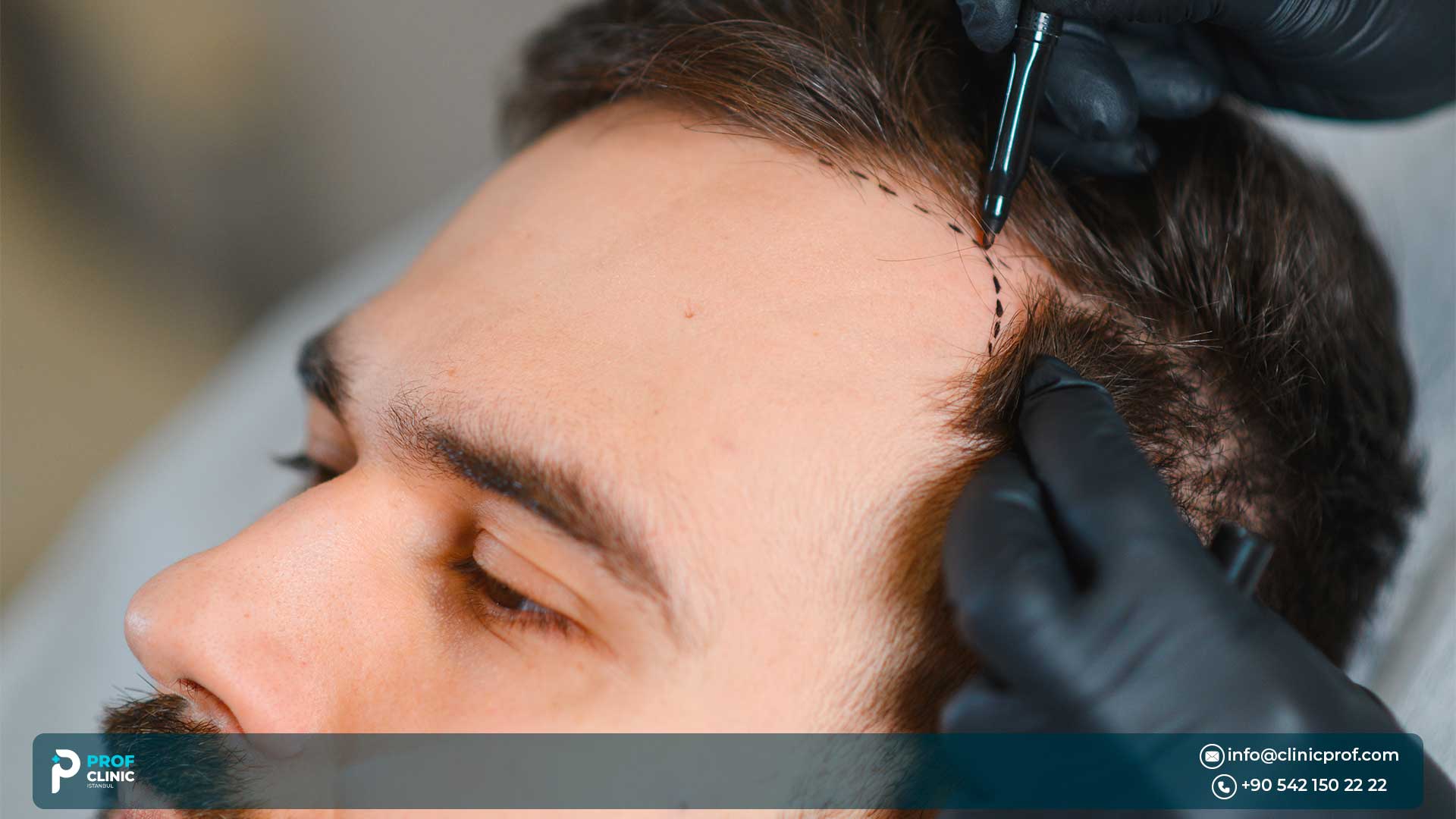
Does a hair transplant hurt? For most patients, the honest answer is less than they feared, but not zero. The numbing injections at the start sting for a few minutes, the rest of the surgery usually feels like pressure and tugging rather than pain, and the scalp is sore and tight for a day or two afterwards.
In this guide by Prof Clinic, you’ll learn what happens on surgery day hour by hour, how long a hair transplant takes, which anesthesia options exist (local, sedation and needle-free), and what pain after a hair transplant usually feels like. By the end, you’ll know which comfort questions to ask before you book a hair transplant in Turkey.

Does a Hair Transplant Hurt? The Short Answer
A hair transplant is done under local anesthesia, so the area being worked on is numb and most people feel very little during the procedure itself. The ISHRS, the international society of hair restoration surgeons, is careful with its wording: it says plainly that the surgery is not free of pain, but that pain control is far more effective today than in the past. It also reports that most patients say, after surgery, that it hurt less than a visit to the dentist.
It helps to think of the day as having two pinch points. The first is the numbing itself: a series of small injections into the donor area and, later, the recipient area, which sting until the anesthetic takes hold. The second comes in the evening and the first night or two, when the anesthetic wears off and the scalp feels tight and sore. Between those two points, most patients rest, chat, watch something or doze.
Pain tolerance varies a great deal from one person to another, as the ISHRS points out. The same procedure can feel like a few uncomfortable minutes to one patient and a hard morning to another, which is why your anesthesia plan is worth discussing before surgery day, not on it.
Hair Transplant Day Step by Step: What You Feel at Each Stage
Hair transplant day follows the same broad sequence at most clinics: checks and design, numbing, extraction, channel opening and implantation, then dressing. The ISHRS notes that the setup and order of steps vary from surgeon to surgeon, so treat the table below as a typical outline rather than a fixed schedule.
| Stage | What happens | What you usually feel |
|---|---|---|
| 1. Arrival and checks | Consent forms, photos, a review of your pre-op test results and your medicines | No pain; nerves are the main issue |
| 2. Hairline and zone design | The doctor marks the new hairline and the areas to be filled | Nothing beyond the marker pen |
| 3. Numbing the donor area | The donor hair is trimmed and local anesthetic is injected into the back and sides of the scalp | Stinging and pressure for a few minutes: the first pinch point |
| 4. Extraction | Grafts are removed one by one with a tiny punch (FUE), usually while you lie face down | Pressure, vibration and sound; little or no pain once the area is numb |
| 5. Numbing the recipient area | Anesthetic is injected along and behind the hairline | A second, usually shorter round of stinging |
| 6. Channel opening and implantation | Tiny incisions are made and the grafts are placed, or implanted directly with a DHI pen | Light pressure; this is the longest phase and mostly spent resting |
| 7. Dressing and going back to the hotel | The donor area is dressed and the aftercare plan is explained | Comfortable while the anesthetic lasts; soreness builds in the evening |

Extraction vs Implantation: Which Part Feels Worse?
For most patients, extraction is the more uncomfortable of the two phases, mainly because it starts with the larger round of injections and means lying face down for a long stretch. A study in Archives of Plastic Surgery that measured donor-area pain after surgery found it was lower after FUE than after strip (FUT) harvesting, and the authors note that pain after a hair transplant comes mainly from the donor area rather than the recipient area. Implantation tends to be the calmer phase: once the top of the scalp is numb, most people feel only light pressure as the grafts go in.
For the basics of the procedure itself, see What Is a Hair Transplant? Pros, Cons, Hairline & Who It Suits.
How Long Does a Hair Transplant Take?
Most hair transplants take between 4 and 8 hours of actual surgery, according to the American Academy of Dermatology, and the whole visit usually fills a working day. The NHS says the procedure normally takes a day without an overnight stay, and that large areas may need two or more sessions on different days. On Prof Clinic’s own service page, FUE sessions are described as usually lasting 7–8 hours, sometimes spread over more than one day.
The exact length depends on a few practical factors:
- Graft count: every graft has to be removed and placed individually, so a larger session simply takes longer.
- Technique: FUE, Sapphire FUE and DHI hair transplant in Turkey all extract grafts one by one, but the implantation step is organised differently, which changes the rhythm of the day.
- Hair type: curly and Afro-textured hair curves under the skin, so extraction is usually slower and needs more care.
- Shaven or unshaven: working between long hairs is slower than working on a trimmed donor area.
- Breaks and pace: meals, bathroom breaks and anesthetic top-ups all add time, and that is a good thing for comfort.
What it means in real life: plan the surgery day as a full day with nothing else in it. Most international patients arrive the day before and have a check the day after, so a stay of typically 2–4 days is common. Your own timing comes with your treatment plan.
Also read: FUE Hair Transplant in Turkey: Procedure, Pros and Cons, and Cost
Hair Transplant Anesthesia: Local, Sedation and Needle-Free Options
Almost every hair transplant is done under local anesthesia, often combined with a mild sedative to help you relax. General anesthesia, which makes you fully unconscious, is rarely used: the ISHRS explains that it is better when the patient can respond to the surgeon’s instructions during surgery. Within that framework there are several choices, and the right one depends on your health, your anxiety level and the length of the session.
Local Anesthesia: Why the First Few Minutes Sting
Local anesthetic is injected into the skin of the donor and recipient areas through fine needles and blocks the nerves in that zone. The sting comes from the injections themselves, in the short window before the anesthetic starts working. Once the area is numb, the team can top it up during a long session so the effect does not wear off. The ISHRS describes a dilute “tumescent” technique for FUE that gives longer-lasting numbness with a lower total dose of anesthetic.
For patients who find injections hard, the ISHRS mentions a numbing cream or gel applied to the skin beforehand to dull the first pricks. Not every clinic uses it, so ask.
Sedation: Will You Be Awake?
Yes, in most cases you stay awake. The AAD notes that most patients remain awake for the whole surgery and need only numbing of the scalp, with some taking a mild sedative to help them relax. The ISHRS describes premedication with an anti-anxiety drug such as Valium (diazepam) to reduce anxiety and raise the discomfort threshold. Hair transplant sedation leaves you calm and drowsy; some patients doze off, but you can still talk and move your head when asked.
Needle-Free Anesthesia: Does It Remove the Sting?
It can reduce it, but it does not remove all sensation, so be wary of any “pain-free” promise. Needle-free systems use a jet injector that pushes the anesthetic through the skin with a high-pressure stream instead of a needle. A review in Clinical, Cosmetic and Investigational Dermatology found that jet injectors can reduce pain during drug delivery, but the authors flag low-quality evidence, small sample sizes and varied device settings. The same review stresses that the device must be sterilised properly, or use disposable cartridges, to avoid infection risk.
What to ask your clinic: is the needle-free device used for all of the numbing, or only for the first layer before conventional injections? How is it cleaned between patients? And is it part of the package or billed as an extra?
Nervous about the injections? Message the Prof Clinic team on WhatsApp and ask which anesthesia and sedation options would suit your case.
Pain After a Hair Transplant: The First Few Nights
Pain after a hair transplant is usually mild and short-lived. The ISHRS says most patients report no more than mild discomfort, which typically lasts no longer than a day or two, followed by 7 to 10 days when the scalp is tender to the touch. The NHS lists a tight, achy and swollen scalp for a few days as a common side effect.
The Archives of Plastic Surgery study gives a closer picture. Donor-area pain peaked on the first day after surgery in both groups. On a 0–5 faces scale, FUE patients averaged about 1.3 on day 1 and about 0.3 by day 3, while strip (FUT) patients scored higher for the first four days. Women in that study reported more pain than men on several days.
Donor Area Pain vs the Recipient Area
The donor area at the back of the head is usually the sorer of the two. With FUE it feels like a bruised, tender patch; with FUT, the authors link the extra pain to the stretched, stitched wound. The recipient area tends to feel tight, itchy or numb rather than painful. The NHS also mentions temporary scabbing where the hair was transplanted, which is part of normal healing.
Painkillers and Simple Comfort Measures
Your doctor will usually prescribe pain relief for the first days, as the ISHRS describes. Take only what you have been prescribed, and check with the clinic before adding any other medicine, because some over-the-counter painkillers can affect bleeding. Sleeping with your head raised on two or three pillows and keeping your hands off the grafts also make the first nights easier.
Normal Discomfort or Warning Sign?
The simplest test is direction: normal soreness gets a little better each day, while a warning sign gets worse, spreads or comes with a fever. The NHS notes that, as with any operation, there is a small risk of bleeding and infection.
| What you notice | Usually normal | Contact your clinic if |
|---|---|---|
| Soreness | Mild ache that eases each day and is controlled by prescribed painkillers | Pain keeps increasing after day 3 or isn’t controlled by your medicine |
| Swelling | Puffiness on the forehead for a few days | Swelling spreads quickly, closes the eyes or comes with a fever |
| Redness and crusts | Pink skin and small scabs around the grafts | Redness spreads, feels hot, or there is pus or a bad smell |
| Bleeding | A little spotting on the first night | Bleeding doesn’t stop with gentle pressure from clean gauze |
| Numbness and tightness | Patchy numbness or a tight scalp that slowly fades | Sudden, severe pain or new symptoms you weren’t told to expect |
Also read: Hair Transplant Aftercare: Day-by-Day Guide to the First 30 Days
Not sure whether what you feel is normal? Contact the Prof Clinic team with your surgery date and a short description of your symptoms, rather than waiting it out.
Who Needs Extra Care: Anxiety, Low Pain Threshold and Health Conditions
Some patients need a more tailored comfort plan, and the best time to say so is at the consultation. The ISHRS encourages patients not to keep fear of pain as a hidden reason to avoid surgery: once it is raised, the doctor can plan anti-anxiety medication, numbing cream before the injections or a different level of sedation. It also explains that an anxious, poorly numbed patient may have a faster heart rate and higher blood pressure, which can increase bleeding, so comfort is a safety issue as well as a kindness.
Mention it early if you have strong anxiety or a fear of needles, a low pain threshold, a past reaction to an anesthetic, a heart, blood-pressure or blood-sugar condition, or if you take blood thinners. The ISHRS lists allergic reactions, nausea, itching, breathlessness and heart-rate changes among the reactions your doctor needs to hear about, and none of these conditions should be managed by stopping a medicine on your own.

12 Things to Check Before Your Hair Transplant Day
Before you choose a date, run through this list with your clinic:
- Anesthetic plan: how the numbing is done and how you are kept numb during a long session.
- Sedation level: whether it is a tablet or given another way, and how drowsy you will be.
- Needle-free use: whether a jet injector is used for all of the numbing or only the first layer.
- Numbing cream: whether it can be applied before the first injections.
- Medicines list: every prescription, supplement and herbal product you take.
- Blood thinners: what your doctor wants you to do, decided by the doctor and not by you.
- Past reactions: any problem you have had with dental or other local anesthetics.
- Smoking: Prof Clinic’s service page asks patients to stop at least 24 hours before surgery.
- Alcohol: the same page advises avoiding it for 3 days before, to reduce bleeding risk.
- Session length: whether your plan is one day or split across two.
- Breaks and position: how often you can stop, stretch and change position.
- After-hours contact: who to call or message on the first night if the pain worries you.
A clinic that answers these questions clearly is usually one that has thought about your comfort, not just the graft count.
How Prof Clinic Keeps Your Hair Transplant in Istanbul Comfortable
At Prof Clinic, comfort starts before surgery day. According to the clinic’s service pages, scalp procedures such as a male hair transplant in Turkey are done under local anesthesia with mild sedation, and patients have pre-op tests first: a blood count, ECG, kidney and liver function, electrolytes, blood sugar, and hepatitis and HIV screening. These results help the medical team plan the anesthetic safely.
Medical assessment and treatment planning for hair restoration are led by Spc. Dr. Lütfi Öztürk, an internal-medicine specialist who also coordinates follow-up. Packages include the procedure, accommodation, airport and hotel transfers and post-op care, so after a long day you are driven back to your hotel rather than finding your own way. After the procedure, the coordination team follows up and answers questions over WhatsApp.
What we won’t do is promise a day without discomfort. Discomfort is managed, not abolished, and the expected density is discussed individually rather than promised in advance. If you’re comparing options for a hair transplant in Istanbul, the clinic sends a written price offer after evaluating your photos, so you can see the plan before you travel.
Ready to plan your surgery day? Book a free online consultation and send photos of your hair loss for a written treatment plan and quote.
To see how real, consented cases look once the healing phase is over, browse the before-and-after gallery.
This article is general information, not medical advice. Your anesthesia plan and your suitability for surgery need an assessment by a qualified doctor.
Frequently Asked Questions About Hair Transplant Pain
Is a hair transplant painful?
Usually only for short moments. The numbing injections sting for a few minutes, and the scalp is sore for a day or two afterwards. For the rest of the surgery, most patients feel pressure rather than pain. Pain tolerance varies, so discuss your comfort plan in advance.
How many hours does a hair transplant take?
Usually 4 to 8 hours of surgery, according to the American Academy of Dermatology, plus time for checks, design and dressing, so plan on most of a day. Very large sessions may be split, with a few extra hours the next day.
Am I awake during a hair transplant?
Yes, in most cases. Hair transplants are done under local anesthesia, often with a mild sedative that leaves you relaxed and drowsy. You can talk, watch something or doze, and change position when the team asks. General anesthesia is rarely used, because surgeons prefer a patient who can respond during the procedure.
Does needle-free anesthesia hurt less?
It can, but no method removes all sensation. Needle-free jet injectors push the anesthetic through the skin with a high-pressure stream, and research suggests they can reduce injection pain, although the evidence is still limited. You may feel a sharp pressure pulse. Ask your clinic whether conventional injections are still needed afterwards.
How long does the pain last after a hair transplant?
Most discomfort fades within a day or two. The ISHRS describes mild discomfort for one to two days, then 7 to 10 days when the scalp is tender to the touch. Pain is usually lower after FUE than after strip (FUT) surgery. Pain that keeps growing after day 3 should be checked by your clinic.
Can a hair transplant be done under general anesthesia?
It is possible but rarely done. The ISHRS explains that general anesthesia is uncommon in hair restoration, because it is safer and more practical when the patient can respond to the surgeon. For very anxious patients, sedation with local anesthesia is the usual middle ground.
So, Does It Hurt? The Honest Bottom Line
Does a hair transplant hurt? A little, at two predictable moments: the numbing injections at the start and the sore, tight first night or two. Most of the 4–8 hours in between feel like pressure, not pain, and the discomfort afterwards usually fades within days. What makes the biggest difference is planning: the right anesthesia and sedation for you, a session length that suits your case, and a team you can reach on the first night.
The safest first step isn’t booking a date; it’s an assessment that answers your comfort questions before you fly. Contact Prof Clinic to start there.
Sources
- ISHRS — After Hair Restoration Surgery
- ISHRS — Anesthesia: Maximizing Patient Comfort in Surgical Hair Restoration
- ISHRS — FUE Hair Transplant: Benefits, Process & Recovery
- American Academy of Dermatology — A hair transplant can give you permanent, natural-looking results
- NHS — Hair transplant
- Archives of Plastic Surgery — Comparison of postoperative pain according to the harvesting method used in hair restorative surgery (Park et al., 2019)
- Clinical, Cosmetic and Investigational Dermatology — Current trends in needle-free jet injection: an update (Barolet & Benohanian, 2018)