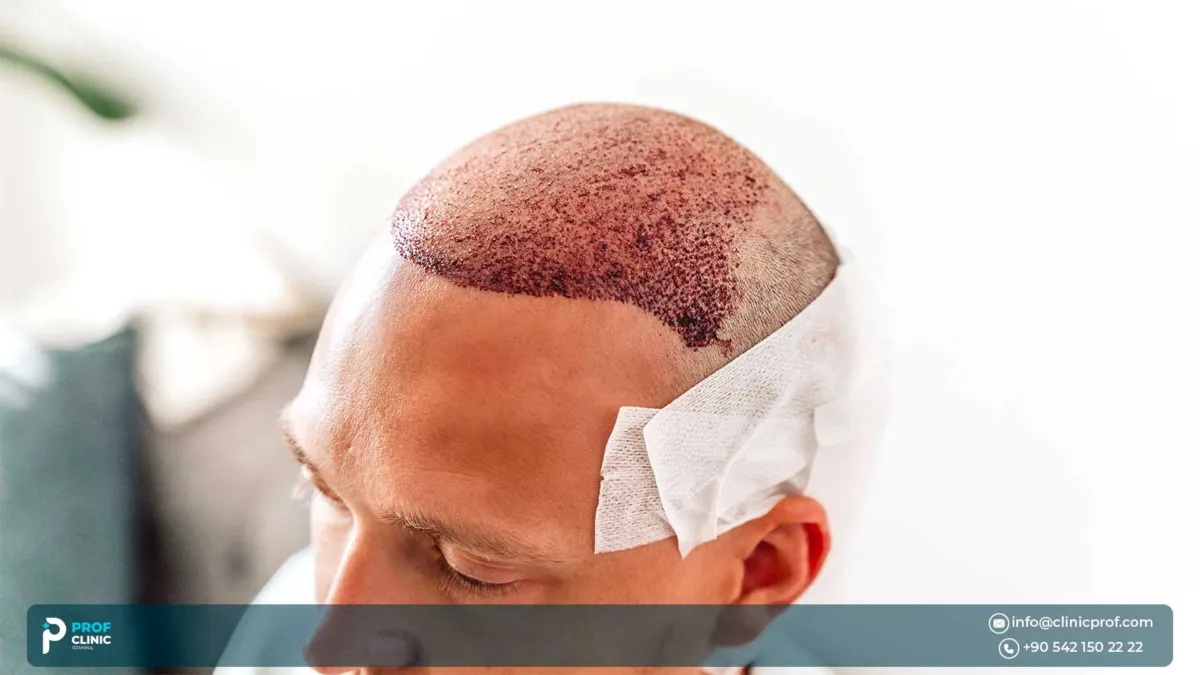
What is the best age for a hair transplant, and is 20–25 too young? There is no single best age, because surgeons look less at your birth year than at whether your hair loss has settled into a clear pattern. Transplanted hair stays, but your own hair around it can keep thinning, so an early operation can leave a result that no longer matches your head a few years later. In practice, surgery is not usually advised under 20, is decided case by case in the early 20s, and has no fixed upper limit later in life.
In this guide by Prof Clinic, you’ll see how surgeons think about age decade by decade, why men in their early 20s are often asked to wait, what to try first, and what changes at 30, 50 and 60. By the end, you’ll know what to ask at a consultation, wherever you are on the timeline.

Best Age for a Hair Transplant: What Surgeons Look at Instead of a Number
Medical guidance doesn’t give one number. The International Society of Hair Restoration Surgery (ISHRS) says physicians do not typically recommend a hair transplant for anyone younger than 20, and the American Academy of Dermatology (AAD) says a man in his 20s may be asked to wait and start a hair loss medicine first. The AAD sets no age cut-off, and the NHS page on hair transplants gives none either. So age works as a warning light rather than a rule: the nearer you are to your late teens, the more likely it is that your pattern has not settled yet.
The table shows how surgeons usually reason by age band. These are typical patterns, not fixed rules, and your own assessment can differ.
| Age | What surgeons usually advise | Main reason |
|---|---|---|
| Under 20 | Surgery is not typically recommended; medical treatment and a review after about 12 months come first | The pattern is very hard to read, and future loss is the main risk |
| 20–25 | Decided case by case; you may be asked to wait and treat first | The pattern may still be unfolding, and donor hair has to last |
| 25–30 | Often reasonable if the loss has slowed and the pattern is clear | Dated photos from a year or two show where it is heading |
| 30–50 | Planning is usually easier; medicine still matters | The pattern is clearer, but loss can continue |
| 50–60 and over | Age alone does not exclude you; health and donor hair decide | The same criteria apply as for younger patients |
Is 20–25 Too Young for a Hair Transplant?
For many men it is, but the reason is the pattern, not the number: in your early 20s, hair loss is often still moving, and a transplant can’t stop the hair around it from thinning. MedlinePlus notes that pattern hair loss can start as early as the teens and that the risk increases with age, so a man who notices thinning at 21 may be far from the end of it.
Why Surgeons Ask Young Men to Wait
Three reasons come up again and again. First, the pattern is hard to read: the ISHRS says it is extremely difficult to determine the pattern of hair loss at a young age because the condition keeps progressing. Second, future loss is still a factor; the NHS makes the same point for every age, noting that your hair might continue to thin around the transplant. Third, donor hair is limited. The ISHRS compares the donor area to a savings-and-loan account and says the strategy for younger men is to keep more donor hair in reserve for future use.
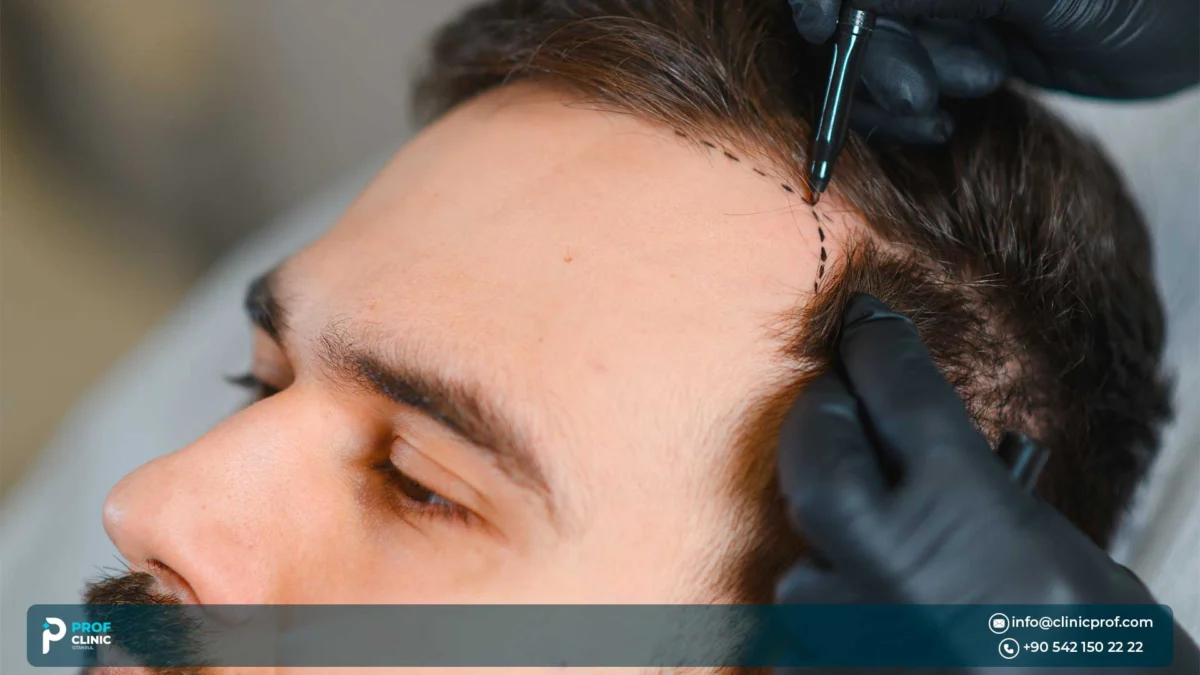
What it means in real life: a hairline that looks right at 22 can look out of place if the hair behind it keeps receding. That is why the NHS says your surgeon should plan the design of the transplant so the hair looks natural as time passes.
What Usually Comes First: Treatment and a 12-Month Review
The usual first step is medical treatment, not surgery. The ISHRS says oral finasteride combined with topical minoxidil should be the first attempt at slowing the progression of hair loss in a young patient, followed by a re-examination after 12 months to see whether it has advanced. The AAD adds that the men who tend to see the best results start treatment soon after noticing hair loss, and that finasteride slows further loss in about 80–90% of the men taking it. The NHS cautions that these treatments do not work for everyone and only work for as long as they are used.
Finasteride is a prescription medicine, and the AAD lists possible side effects that include sexual side effects and depression, so a doctor needs to review your health history before you start. For how each treatment works and how it fits around surgery, see Finasteride and Minoxidil: Hair Loss Treatment and After a Hair Transplant.
When a Transplant Under 25 Can Still Make Sense
Waiting is not the answer for everyone. A transplant in your early or mid-20s is more likely to be reasonable when several conditions line up:
- The pattern is already clear: for example, advanced recession with a strong family history, where the direction is not in doubt.
- The loss has slowed on treatment: your surgeon can compare photos and a scalp exam from about 12 months apart.
- The plan is conservative: a modest hairline rather than covering the whole top of the head at once. For young patients who do go ahead, the ISHRS advises leaving the vertex (the top of the head) out.
- You accept that more sessions may follow: the ISHRS says younger men with progressive loss may need several procedures over a number of years.
- The cause is confirmed: the NHS says a transplant suits inherited, permanent baldness and is not usually suitable for other types of hair loss, such as alopecia areata.
If most of these are true and a doctor has examined you, 22 or 24 can be a reasonable age. If not, waiting while you treat the loss keeps your donor hair in reserve.
Not sure which group you are in? Send a few clear photos of your hairline to our team on WhatsApp and ask what an assessment would look at.
Why Stability and Hair Loss Pattern Matter More Than Age
A clear, slow-moving pattern is what makes a transplant plan reliable, and men reach it at different ages, which is why two 24-year-olds can get different advice. A careful assessment usually covers:
- The cause of the hair loss: the ISHRS says health conditions, diet and genetics can all contribute, and the AAD says a dermatologist may use a scalp exam, a blood test or a scalp biopsy to confirm the type.
- Family history: the ISHRS says it can suggest your probable future pattern, and a family pattern of severe hair loss may mean the safe donor area is small.
- Stage and speed: where you are on the Norwood scale now, compared with dated photos from 6–12 months ago.
- Donor hair: the AAD says you need enough healthy hair on your scalp to transplant.
- Expectations: the AAD says a full head of hair may be unrealistic, but a fuller head of hair can be the goal.
You can start the groundwork yourself. Take photos every 2–3 months in the same light, with dry hair at the same length, from the front, both temples and the crown. Three or four sets show far more about stability than a mirror does, and a surgeon can use them straight away.
Also read: Norwood Scale: The 7 Stages of Male Hair Loss and Grafts Needed
Curious how results look in real cases? The Prof Clinic before-and-after gallery shows consented patient photos; note how many months after surgery each one was taken.
Hair Transplant in Your 30s and 40s: Is This the Easier Window?
For many men it is easier to plan, but no age makes hair loss stop. By the 30s the pattern is usually clearer than in the early 20s, so a surgeon can judge how far it has progressed. Yet MedlinePlus says more than 50% of men over 50 have some degree of hair loss, and the ISHRS says male pattern hair loss is progressive for the lifetime of a man, although not all of it reaches its most severe form.
That is why the AAD says a dermatologist may recommend medicine alongside surgery: hair loss and thinning can continue even after a hair transplant, and medicine can prevent or slow down new loss. In your 30s and 40s the question becomes less “am I old enough?” and more “how much donor hair should I use now?”. If you are weighing a hair transplant for men in Turkey, ask for a plan that treats the first session as one step in a longer one.
Hair Transplant After 50 and 60: Is There a Maximum Age?
There is no fixed maximum age. The ISHRS says age alone does not remove a person from consideration for a hair transplant, and reports successful transplants in patients more than 80 years old. The deciding factors are the same as for younger patients: the cause of hair loss, your physical condition on medical examination, your medical history, your scalp condition, your pattern of loss and your expectations.
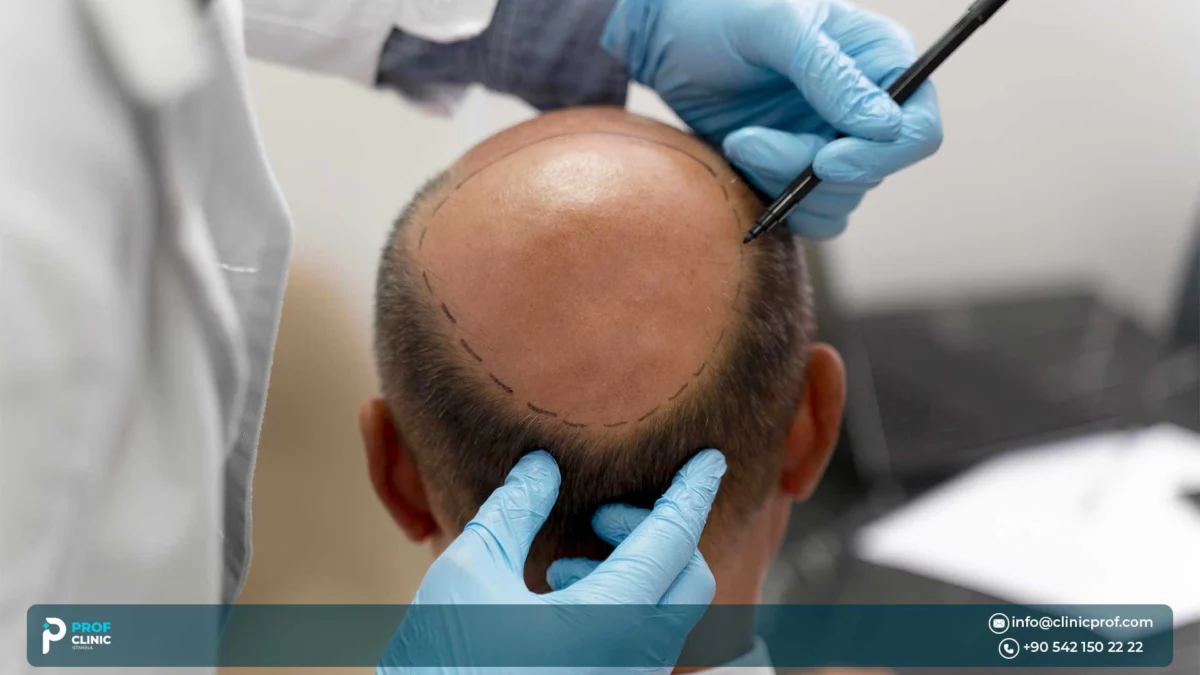
Three practical points apply in later life. First, general health matters more than the date of birth, so chronic conditions and regular medicines need to be reviewed before surgery; see Smoking, Diabetes and Hair Transplant: Risks and Preparation. Second, grey hair is not a barrier: the ISHRS says grey hair can be transplanted as safely and successfully as hair of any colour, and suggests discussing how you want to look now and in the future, because graying is likely to continue. Third, the donor arithmetic is gentler: the ISHRS says older men may need fewer procedures than younger men with progressive loss.
Over 50 and unsure if you are a candidate? Book a free online consultation and share your photos along with a list of your regular medicines.
Planning Ahead: Donor Hair, Hairline Design and Second Sessions
The most useful question at any age is not “can I have a transplant now?” but “what will my plan look like if my hair loss continues?”. Donor hair is a limited supply. The ISHRS explains that tissue which looks like safe donor hair at a casual examination may eventually be lost to pattern hair loss over months or years, which is why careful evaluation, including family history and a scalp examination, matters.
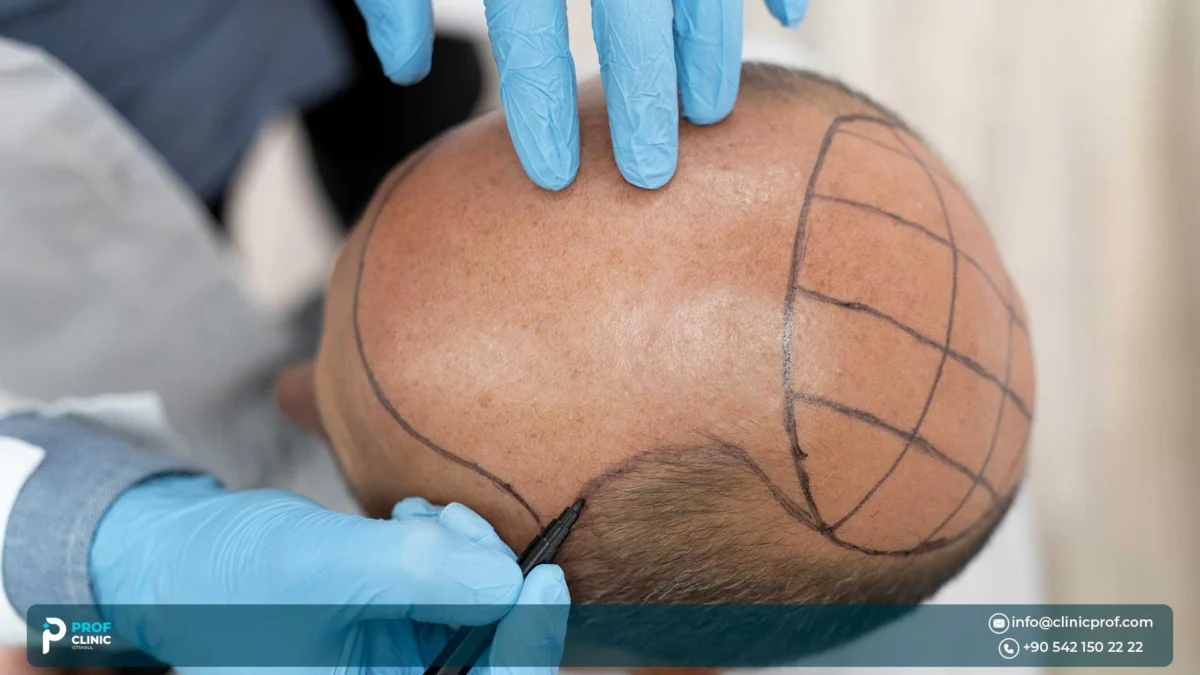
A careful plan usually does four things: it keeps donor hair in reserve, designs a hairline that will still look natural as the hair behind it changes, uses medicine to protect your own hair, and leaves room for a later top-up. To see how far the back and sides of the scalp can be used, read Hair Transplant Donor Area: Healing, Thinning and Limits.
Also read: Second Hair Transplant Session: When to Do It and How to Add Density
Seven Questions to Ask Before You Book at Any Age
Bring these to your consultation and ask for the answers in writing:
- Cause: has a doctor confirmed what is causing my hair loss?
- Stability: is my pattern settled enough to plan around, and how do you know?
- Medicine: should I try treatment first, and for how long?
- Grafts: how many does the plan use now, and how many stay in reserve?
- Hairline: how will it look if the hair behind it keeps thinning?
- Team: who will carry out and supervise the procedure, and who reviews me afterwards?
- Next step: what would a second session involve, and when would it be considered?
Want these answered for your own hair? Ask for a written plan that covers the first session and what happens if your loss continues.
Age and Candidacy Assessment at Prof Clinic in Istanbul
At Prof Clinic, timing is decided from your own assessment, not from a number. Our male hair transplant in Istanbul service starts with a medical assessment: Spc. Dr. Lütfi Öztürk, an internal-medicine specialist and the clinic’s hair restoration lead, assesses you medically, plans the treatment and coordinates your follow-up. His assessment looks at the pattern and stability of hair loss, donor-area quality, scalp condition, medical history, medication use and your expectations, and the clinic’s male service page lists age among the factors reviewed. That page says the usual age for a male hair transplant is between 25 and 45, when hair loss patterns have stabilised, and that many men outside this range also do well depending on their donor area.
Whatever your age, these points can be confirmed before you book a flight:
- Health checks before surgery: at any age, you are screened with a blood count, ECG, kidney and liver function tests, electrolytes, blood sugar, and hepatitis and HIV tests.
- Techniques: FUE, DHI, Sapphire FUE and Micro FUE, chosen for your hair and donor area as part of our wider hair transplant in Turkey service.
- Honest expectations: the extent of treatment and the expected density are discussed individually, and no specific density is promised in advance.
- Quote and package: the price comes in writing once the team has looked at your photos, and the package covers the procedure, your stay, airport and hotel transfers, and post-op care.
- Follow-up: the coordination team stays in touch after you fly home and gives advice over WhatsApp.
For planning purposes, the package price for a scalp transplant in Istanbul sits at roughly €1,800–€3,500. It is only an approximate 2026 guide, not a final price: your own quote follows the assessment and is confirmed in writing. A stay in Istanbul typically lasts 2–4 days.
FAQs About the Right Age for a Hair Transplant
What is the youngest age for a hair transplant?
There is no single legal or medical cut-off in the guidance we reviewed, but the ISHRS says physicians do not typically recommend a transplant for anyone younger than 20. Most surgeons also want a clear hair loss pattern first, which for many men does not happen until their mid-20s or later.
Is 22 or 23 too young for a hair transplant?
Not automatically, but you may be asked to wait. The AAD says a man in his 20s may be asked to wait and start a hair loss medicine first. A transplant at this age is more likely to suit you if your pattern is clear, your loss has slowed on treatment and the plan is conservative.
Is 30 a good age for a hair transplant?
Often, yes, because the pattern is usually clearer than in your early 20s and a surgeon can judge how far it has progressed. The date on your passport is not the test, though. Hair loss can continue after 30, so the plan should protect donor hair and allow for a later session.
What is the maximum age for a hair transplant?
There is no fixed maximum age. The ISHRS says age alone does not remove a person from consideration and reports successful transplants in patients more than 80 years old. What counts is your general health, the cause and pattern of your hair loss, your scalp and your expectations.
Should I start finasteride or minoxidil before a hair transplant at a young age?
That is often the first step. The ISHRS says finasteride combined with minoxidil should be the first attempt at slowing hair loss in young patients, with a review after 12 months. Finasteride is a prescription medicine with possible side effects, so a doctor should review your health first.
Will I need more than one transplant if I start young?
Possibly. The ISHRS says younger men with progressive hair loss may need several procedures over a number of years, while older men may need fewer. A good plan keeps donor hair in reserve and explains in advance what a second session would involve.
The Right Age Is When Your Pattern Is Clear
The best age for a hair transplant is the point at which your hair loss pattern is clear enough to plan around, medical treatment has had a fair trial, and your surgeon can show how the result will hold up if the loss continues. For many men that is after the early 20s; for others it is their 40s or 50s, and age on its own rarely rules anyone out.
If you would like a view on your own hair, send clear photos of the front, sides, crown and donor area to Prof Clinic on WhatsApp with a short hair loss and medical history, and ask what the next sensible step is.
Sources
- ISHRS — Early Hair Loss: The Young Patient
- ISHRS — The Donor Site: Savings & Loan of Hair for Transplantation
- ISHRS — Transplantation of Graying and Gray Hair
- American Academy of Dermatology — A hair transplant can give you permanent, natural-looking results
- American Academy of Dermatology — What is male pattern hair loss, and can it be treated?
- NHS — Hair transplant
- NHS — Hair loss
- MedlinePlus Genetics — Androgenetic alopecia