Planning a full arch of new teeth abroad raises a fair question: is All-on-4 in Turkey safe? For most healthy adults it can be, provided the clinic plans from a 3D scan, puts the plan in writing and stays reachable after you fly home.
Safety here has less to do with the country than with the process. The same surgery can go smoothly or badly depending on who assesses you, how carefully the implants are planned and what happens when a small problem appears later at home.
This guide covers the checks to make before you choose a clinic and what a written treatment plan should list. It also explains how many days and visits treatment usually takes, and how aftercare works across borders. What All-on-4 is and who it suits has its own guide, linked below.
Is All-on-4 in Turkey Safe?
All-on-4 in Turkey is generally safe when it is planned and carried out to the standards you would expect at home. The risks come from the surgery itself, from your own health and from gaps in follow-up, far more than from the country where the clinic happens to be.
Research on the concept itself is reassuring. A systematic review in the Journal of Clinical and Experimental Dentistry reported about 99.8% implant survival beyond two years with All-on-4. It also warned that many studies were small and that follow-up was often short.
Where travel adds risk is continuity of care. In a British Dental Association survey of more than 1,000 dentists, 95% had seen patients treated abroad and 86% of those had treated complications, most often after implants and crowns. Nearly all were worried about continuity of care, and two-thirds pointed to poor communication between patients and overseas dentists.
The more useful question is therefore a narrower one: whether a particular clinic, with a particular plan, is safe for you. The sections below turn that into practical checks. All-on-4 is one part of dental treatment in Istanbul, and it deserves the same scrutiny as any other surgery.
Also read: All-on-4 Dental Implants in Turkey: What They Are and Who They Suit
What Should I Check Before Choosing an All-on-4 Clinic in Turkey?
Before choosing an All-on-4 clinic in Turkey, check who will treat you, how the plan is made and what happens after you leave. The UK General Dental Council suggests questions like these before any dental treatment abroad, and they suit full-arch work well:
- Named dentists and their roles: who places the implants, who designs the bridge, and what qualifications each of them holds.
- Assessment before commitment: a full medical history and an examination before you receive a plan and an estimate.
- A 3D CBCT scan: the final number and position of the implants should be decided on this scan, because photos cannot show the bone.
- A written plan in a language you read well: including the consent forms and aftercare instructions.
- Aftercare and contact: who answers your messages once you are home, and how quickly.
- Complications and remedial work: what the plan covers, and who covers the travel if you need to return.
- A complaints process: ask to see it before you book.
The GDC also advises telling your own dentist about your plans before you travel. They know your dental history, and they may be the first person you see if something feels wrong later.
To see how these points apply to your case, you can contact our dental team with recent photos or X-rays and ask them any of the questions above.
Red Flags When Comparing All-on-4 Clinics
Warning signs usually show up in the first conversations, well before surgery. Pause, or ask for a second opinion, if you notice any of the following:
- Pressure to pay a deposit or fix dates before anyone has seen an X-ray.
- A final plan promised without a CBCT scan.
- “Permanent teeth in one day” presented as certain for everyone.
- Vague answers about the implant system, or no paperwork for the components.
- No named dentist, only a coordinator.
- No clear answer on whom to contact after you return home.
A careful clinic will often slow you down rather than hurry you. It may suggest treating gum disease first, adding implants or changing the plan once the scan has been reviewed.
How to Read All-on-4 Turkey Reviews and Before-and-After Photos
Reviews and photos of All-on-4 in Turkey show what a clinic can achieve, but they rarely show how a case was planned or how it looks five years on. Treat them as a starting point, not as proof of safety.
Look for photos of full-arch cases similar to yours, taken in natural light with the gums visible. Ask how cases like yours were planned, then compare the answer with the pictures. You can browse before-and-after full-arch cases and ask which ones come closest to your situation.
What Should a Written All-on-4 Treatment Plan List?
A written All-on-4 treatment plan should state what will be done to each jaw, with which components, on what timeline and with what follow-up. If an item is missing, ask for it in writing before you book flights.
| Item in the plan | What it should say | Why it matters |
|---|---|---|
| Diagnosis | Which teeth will be removed and why, and the condition of your gums and bone | Confirms the treatment fits your mouth |
| Implants per jaw | Four or six implants and their planned positions, decided on the CBCT scan | Shows the plan was built from 3D imaging |
| Implant system | The implant brand and the parts used, with documents you keep | Lets another dentist find compatible parts later |
| Temporary teeth | Whether a fixed temporary bridge is planned, and the fallback if the implants are not stable enough | Sets honest expectations for the first visit |
| Final bridge | Its material and when it will be made | Affects strength, weight and repairs |
| Anaesthesia | Local anaesthesia, with sedation if needed | Helps you prepare and arrange medical clearance |
| Visits and days | How many trips, and how many days each one takes | Lets you book flights and time off work |
| Aftercare | Check-ups, cleaning advice and a named contact | Keeps small problems small |
A written agreement on the treatment and the care your fee covers is also what NHS travel-health guidance (Fit for Travel) recommends before any medical trip abroad.
All-on-4 Dental Implant Packages in Turkey: What to Compare
An All-on-4 package in Turkey is only as useful as the treatment items it lists. Compare packages line by line against the plan above, rather than by the headline offer.
Check whether extractions, any grafting, the temporary bridge, the final bridge and the follow-up visits are included, and what happens if the scan changes the plan. Our guide to All-on-4 cost factors abroad explains how to read each line of a quote.
How Many Days Do You Need in Turkey for All-on-4?
All-on-4 usually needs two trips to Turkey. The first covers the scan, surgery and temporary teeth; a shorter second visit a few months later is for the final bridge. Prof Clinic plans the length of each visit with you, shorter or longer to suit your wishes, within what extractions, healing and implant stability need, including a healing check before you fly.
First Visit: Scan, Surgery and Temporary Teeth
The first visit starts with an examination and a CBCT scan, which confirm or adjust the plan you received remotely. Surgery follows once the plan is final, under local anaesthesia with sedation if needed.
- Arrival and assessment: an examination, a review of your medical history and the 3D scan.
- Surgery: removal of teeth that cannot be saved and placement of the implants.
- Temporary bridge: fitted within a few days when the implants are stable enough.
- Checks before you fly: a look at healing and your bite, plus written cleaning and diet instructions.
Leave some slack in your booking. Swelling usually peaks in the first two to three days, and your bite may need an adjustment before you leave.
Healing at Home: Usually 3–6 Months
Between visits the implants fuse with the bone while you are at home, which usually takes about 3–6 months. You eat soft food, clean carefully around the temporary bridge and send photos or questions if anything worries you. A loose temporary bridge, a sore spot that does not settle or a change in your bite is worth reporting straight away rather than at the second visit.
There is no need to stay in Turkey during this phase. Our All-on-4 recovery timeline covers diet, swelling and the first weeks in detail.
Second Visit: Fitting the Final Bridge
The second visit is for new scans, try-ins and fitting the final bridge, so it is usually shorter than the first. Its exact length depends on the lab steps and on any bite adjustments the new bridge needs. Bring notes or X-rays from any check-ups at home, so the team can see how healing went.
Plan this trip once your dentist confirms that healing is complete, rather than fixing a date months ahead. Flexible dates are part of a safe plan for All-on-4 dental implants in Turkey.
What Tests and Records Do You Need Before Travelling to Turkey?
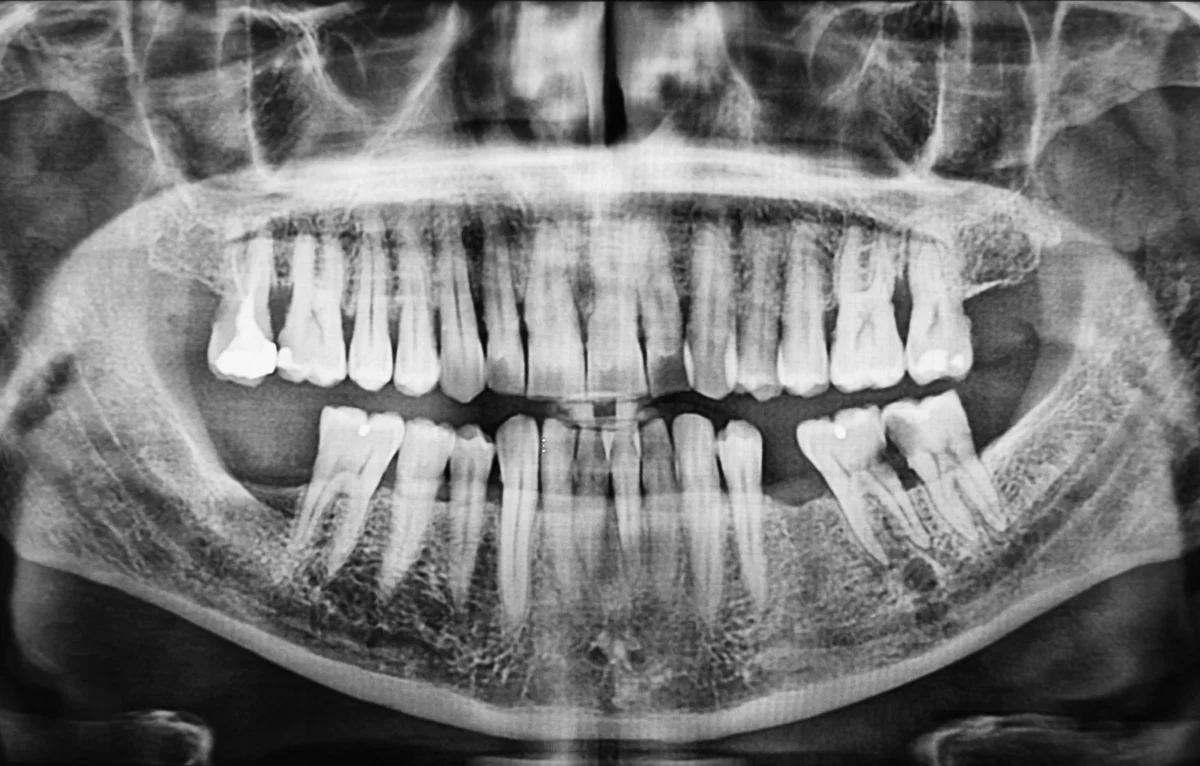
Before travelling for All-on-4, you usually need recent dental X-rays, clear photos of your teeth and a full list of your health conditions and medicines. With these, the dentist can judge whether the treatment is realistic before you book anything.
- A panoramic X-ray or CBCT scan, if you already have one.
- Photos of your smile and of both jaws.
- Your medical history, including diabetes, heart conditions and any past radiotherapy to the head or neck.
- Your medicines, especially blood thinners and bone medicines such as bisphosphonates.
- Your smoking habits and gum history, stated honestly.
Honest answers protect you. Smoking, poorly controlled diabetes and active gum disease all raise the risk of problems around implants, so the dentist may change the protocol or ask you to treat them first.
NHS travel-health guidance also suggests carrying copies of your medical records, allergies and medicines, and getting copies of any new records before you return. If the scan shows that several teeth can be kept, dental implants for a few teeth may suit you better than a full arch.
Can You Get Fixed Temporary Teeth Within Days in Turkey?
Yes, a fixed temporary bridge is often attached within a few days of surgery, but only when the implants are stable enough. That stability depends on bone quality and is measured during surgery, so no one can promise it in advance.
Fixing teeth early does not appear to add risk in suitable patients. A Cochrane review of randomised trials found no convincing difference in implant or prosthesis failure between immediate and conventional loading in the first year. Its authors still called for more well-designed trials.
If stability is not sufficient, the safer choice is to let the implants heal first with a different temporary solution. A clinic that explains this openly deserves more trust than one that promises fixed teeth to everyone.
What Happens If You Have a Problem After Flying Home?
If you have a problem after flying home, contact the clinic first and send photos; many issues can be assessed remotely, and some can be handled by a local dentist. Urgent signs such as heavy bleeding, fever or fast-growing swelling need local care straight away.
Before you leave Istanbul, make sure you take these documents with you:
- The implant system and component details.
- A summary of the bridge type and material.
- Your post-operative instructions and list of medicines.
- Your follow-up schedule and a named contact, ideally reachable by message.
A local dentist can often deal with cleaning, a bite check or a loose screw. A cracked bridge or a surgical complication, however, may mean going back to the clinic that placed the implants. Our article on All-on-4 problems and how to avoid them covers the common ones.
Long-term safety depends on you as much as on the surgery. An umbrella review in the International Journal of Oral & Maxillofacial Implants linked peri-implantitis to modifiable factors such as smoking, poor plaque control, bite overload and infrequent check-ups. If a question comes up between visits, you can message the team on WhatsApp.
Planning Your All-on-4 Trip with Prof Clinic in Istanbul
At Prof Clinic, planning starts before you travel: you send photos and any X-rays, and treatment recommendations are made only after a clinical assessment and review of your records. In Istanbul, a 3D CBCT scan and a digital treatment plan decide whether you need four or six implants per jaw.
Surgery takes place under local anaesthesia, with sedation if needed. When the implants are stable enough, a temporary fixed bridge is often attached within a few days. The final bridge follows after about 3–6 months of healing and is made from new scans, with regular check-ups and cleaning afterwards.
Prosthetic planning for All-on-4 and All-on-6 cases is part of the work of Dt. Orçun Özaydın. To see whether All-on-4 in Istanbul could suit your case, you can book a free consultation and receive a written plan to review at home.
Frequently Asked Questions
Are dental implants in Turkey safe?
Dental implants in Turkey are generally safe when a qualified dentist plans them from a 3D scan and the clinic offers clear aftercare. Check the dentist’s qualifications, ask for the plan in writing and tell your own dentist before you go. Your health, especially smoking and gum disease, affects the risk as much as the clinic does.
Do I have to stay in Turkey while the implants heal?
No, you go home between the two visits. After surgery and the temporary bridge, the implants usually need about 3–6 months to fuse with the bone. You spend that time at home on a soft diet with careful cleaning. You return for the final bridge once the dentist confirms healing.
Is it safe to fly home after All-on-4 surgery?
Most people fly home a few days after surgery, once the dentist has checked their healing and bite. Flying is usually fine after implant surgery under local anaesthesia, but your dentist, who knows exactly what was done, should confirm the date. Keep your medicines and instructions in your hand luggage.
Should I tell my dentist at home before having All-on-4 abroad?
Yes, the General Dental Council recommends speaking to your own dentist before treatment abroad. They know your dental history and can share earlier X-rays, and it is easier for them to support check-ups later when they know the plan from the start. Give them a copy of your plan and implant details when you return.
Can a dentist at home maintain an All-on-4 bridge made in Turkey?
Usually yes, as long as you bring the implant system details and a summary of the bridge. Most dentists can clean around implants and check the bite, while screw or component problems should go to a dentist experienced with implants. Major repairs may still mean returning to the clinic that made the bridge.
The Bottom Line
The answer to “is All-on-4 in Turkey safe?” is yes for many people. It holds when the clinic plans from a CBCT scan, names the dentists, puts every step in writing and stays in touch after you fly home. Judge clinics on those points rather than on speed or packaging, and be open about your own health.
A sensible next step is to gather your X-rays and medical history and ask for an assessment before you book any flights.
Sources
- PMC (J Clin Exp Dent) — The all-on-four treatment concept: Systematic review
- PubMed (Cochrane Database Syst Rev) — Interventions for replacing missing teeth: different times for loading dental implants
- PubMed (Int J Oral Maxillofac Implants) — Peri-implantitis Risk Assessment (PiRA) Part 1: Umbrella Review
- General Dental Council — Going abroad for dental treatment
- British Dental Association — Dental tourism: Patients need to know the risks
- NHS Fit for Travel — Medical tourism: What do I need to know before I travel?