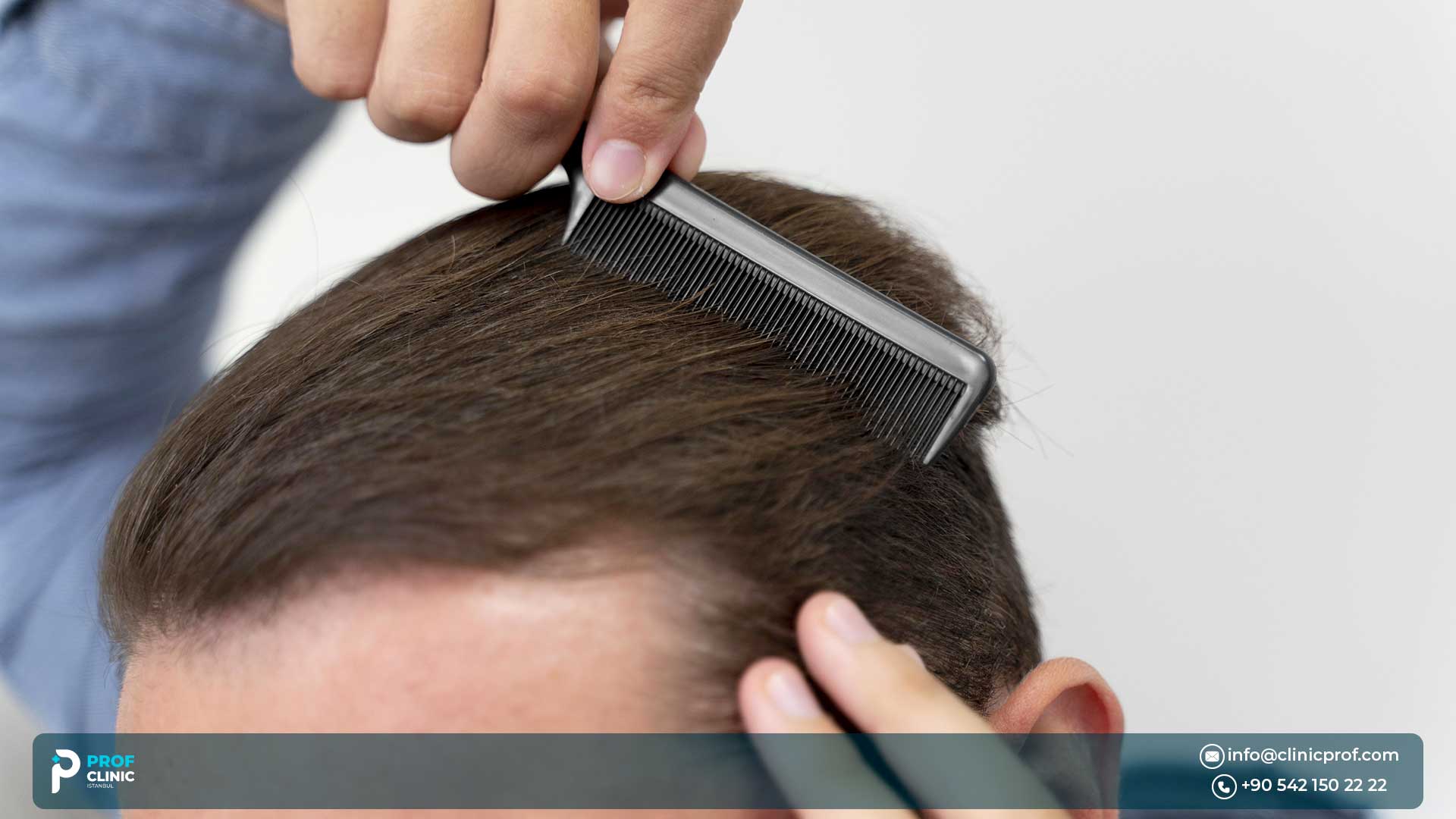
What are the real hair transplant side effects, and how likely is something to go seriously wrong? For most people the side effects are temporary and predictable: swelling, scabs, itching, some numbness and a shedding phase in the first weeks. Serious complications such as infection or scalp necrosis are rare, and many of them trace back to screening, planning, hygiene or the setting where the surgery happens rather than to bad luck.
In this guide by Prof Clinic, you’ll learn which effects are part of normal healing, which warning signs need a same-day call, which rare hair transplant risks deserve attention before you book, and how to lower your risk if you travel to Turkey for surgery. By the end, you’ll know what to ask your clinic and when to stop waiting.

Is a Hair Transplant Safe? How Serious Complications Really Are
For healthy, well-selected patients, a hair transplant is generally a safe, low-risk procedure, but it is still surgery. The NHS describes it as generally safe, with a small risk of bleeding, infection and an allergic reaction to the anaesthetic, plus a small risk that the grafts don’t take or that a noticeable scar forms. A 2023 joint statement by UK plastic surgery and hair restoration associations and the Turkish Society of Plastic, Reconstructive and Aesthetic Surgeons put it plainly: hair transplant surgery is not without risk, life-threatening complications are less likely than with general plastic surgery, and appearance-related problems are more common.
It helps to sort the risks into three tiers, which is how the rest of this guide is organised:
- Tier 1, common and temporary: swelling, scabs, itching, soreness, numbness and shedding. Most patients notice at least some of these, and they fade on their own.
- Tier 2, less common and treatable: folliculitis, infection and cysts. They need attention, but they usually respond to treatment when caught early.
- Tier 3, rare but serious: scalp necrosis, reactions to the anaesthetic and permanent damage to the donor area. They are uncommon and closely linked to patient health, planning and technique.
Exact figures vary, because most studies are small. A review in the Journal of Cutaneous and Aesthetic Surgery puts infection, minor and serious, at under 1%, and found no published case report of a death caused by hair transplant complications (one death after a transplant was reported in the press).
What it means in real life: the question isn’t whether you’ll have side effects (you almost certainly will), but whether you’ll recognise the rare ones early and have a doctor to call when you do.
Common Hair Transplant Side Effects in the First Weeks
The most common hair transplant side effects are the scalp’s normal response to thousands of tiny wounds, and they usually improve a little each day. The NHS says to expect a tight, achy and swollen scalp for a few days, temporary scabbing where the hair was transplanted, and either a single scar or many very small ones, depending on the technique.
Swelling Around the Forehead and Eyes
Swelling is the most frequent side effect. The Frontiers in Medicine review puts it at about 40–50% of FUE patients, starting on day 1–2, peaking on days 2–3 and usually settling by days 5–7. It often begins on the forehead and drifts down to the eyelids and the bridge of the nose, which looks dramatic but is usually harmless. Keeping your head raised and using cold compresses on the forehead, away from the grafts, are the standard measures described in the medical literature.
Redness, Scabs and Itching
Small crusts form around each graft as the skin seals and normally loosen over the first couple of weeks; picking them can pull grafts out. Itching is common too: the same review notes it usually starts around days 3–7 and fades within days or weeks.
Pain and Numbness After a Hair Transplant
Pain is usually mild and short-lived. In the Frontiers review, donor-site pain was the most frequently reported early complication, with a pooled rate of about 6% after FUE, and it typically peaks on the first day and has nearly gone by day 3. Numbness after a hair transplant lasts longer, because tiny skin nerves are cut during extraction. It usually resolves within 4–8 months, and one large FUE series reported long-term numbness in about 2% of patients.
Shedding and Shock Loss
Losing the transplanted hairs is expected. According to the American Academy of Dermatology (AAD), the transplanted hair falls out between two and eight weeks after surgery, and this is normal: the follicle stays in the skin and grows a new hair later. Some patients also lose nearby native hair, known as shock loss. The Frontiers review reports it in roughly 0.15–15% of cases, usually 2–8 weeks after surgery, with regrowth from around month 3. The stages are explained in Hair Transplant Timeline Month by Month: Growth and Shock Loss.

Normal Healing or Warning Sign? A Quick Check
The simplest test is direction: normal side effects slowly improve, while warning signs get worse, spread or come with a fever. Use this table to decide when to stop waiting and ask for help.
| What you notice | Usually normal | Warning sign | What to do |
|---|---|---|---|
| Swelling | Forehead and eyelid puffiness that peaks around days 2–3 and eases by about day 7 | Swelling that keeps growing after day 3, or comes with fever or spreading redness | Contact your clinic the same day |
| Redness and scabs | Pink skin and small crusts around each graft | Redness that spreads, feels hot, smells bad or oozes pus | Contact your clinic promptly, as it may be an infection |
| Skin colour | Pink to red recipient area | Pale, grey, bluish or black patches, especially in the first days | Treat it as urgent and contact the clinic immediately |
| Pain | Soreness that eases by around day 3 | Severe or throbbing pain that gets worse instead of better | Contact your clinic as soon as possible |
| Bumps | A few small pimples as new hairs come through | Many painful pustules or tender lumps | Send photos to your clinic; it may need treatment |
| Sensation | Patchy numbness or tingling that slowly fades | Numbness that spreads, or burning pain that persists for months | Raise it at follow-up for a medical review |
The NHS advises contacting the clinic where you had your transplant as soon as possible if you have severe pain or any unexpected symptoms. If you feel very unwell or have a high fever, get urgent medical care where you are rather than waiting for a reply from abroad. The table won’t diagnose you; it tells you when waiting is no longer the safe option.
Good general aftercare from medical sources, such as gentle washing, not picking scabs and sleeping with your head raised, prevents many of these problems. The full routine is in Hair Transplant Aftercare: Day-by-Day Guide to the First 30 Days.
Not sure which column you’re in? Send a photo to the Prof Clinic team on WhatsApp with the date of your procedure, rather than guessing.
Less Common Complications: Folliculitis, Infection and Cysts
Folliculitis, infection and cysts are less common than swelling or shedding, and most respond to treatment when they’re caught early. They tend to appear after the first week, so they can surprise patients who thought recovery was over.
Folliculitis After a Hair Transplant
Folliculitis after a hair transplant looks like small red or white-headed pimples around the grafts. The Frontiers review puts it at about 12% after FUE, usually in weeks 1–4, with a later wave around week 10 linked to new hairs pushing through the skin. Many cases are sterile, meaning no bacteria are found: in a retrospective study of 73 men, mostly after strip surgery (FUT), sterile folliculitis affected 23% and bacterial folliculitis 11%. It was usually managed with oral antibiotics and warm compresses.
Infection After a Hair Transplant
A true infection after a hair transplant is uncommon, because the scalp has a rich blood supply. Reviews put it at under 1%, usually in the first 1–4 weeks and linked to poor hygiene, heavy crusting, diabetes or a weakened immune system. Spreading redness, warmth, increasing pain, pus or a fever are the signs to act on. Don’t self-treat with leftover antibiotics; a doctor needs to examine it and choose the right treatment.
Cysts and Scars
Small, firm lumps can appear weeks or months later when a graft or a fragment of skin sits too deep; they are uncommon and treated if they become inflamed. Scarring depends on the technique: FUE leaves tiny dot scars, while FUT leaves a single line that can widen, which happened in 15% of patients in the same retrospective study.
Serious but Rare: Necrosis, Anaesthetic Reactions and Overharvesting
Three complications deserve attention before you book, not because they are common but because they can leave lasting damage. All three are rare, and all three are closely tied to patient selection and surgical planning.
Hair Transplant Necrosis: How to Recognise It
Hair transplant necrosis is the death of an area of skin because its blood supply has failed. The Frontiers review calls it rare but potentially severe, and notes that its true rate is unknown because only case reports and small series have been published. It usually shows within hours to days: early signs include pale or bluish skin, followed by dark discolouration, thick crusting and a hard black scab. Risk factors include smoking, diabetes, vascular disease, previous scalp surgery or radiotherapy, very dense graft placement, very large sessions and a high concentration of adrenaline in the anaesthetic fluid. Healing can take weeks or months and may leave a scar, so a dusky or darkening patch needs to be seen urgently, not watched for a week.
Reactions to the Local Anaesthetic
Hair transplants are done under local anaesthetic, sometimes with mild sedation. The NHS lists an allergic reaction to the anaesthetic among the small risks, although the Journal of Cutaneous and Aesthetic Surgery review notes that true allergy is rare and most reactions are related to fear. Fainting can happen at the end of a long session, and, rarely, too much local anaesthetic causes toxicity, which may be linked to seizures. The authors recommend an ECG and a physician’s fitness check, especially after 40, and monitoring during surgery.
Overharvesting the Donor Area
The donor area at the back and sides of the head is a limited supply. Taking too many grafts, or taking them from outside the safe zone, can leave a thin, “moth-eaten” patch that doesn’t grow back. The same review advises extracting no more than about one in four follicular units from an area. How the donor area heals and how much it can safely give are covered in Hair Transplant Donor Area: Healing, Thinning and Limits.
Some problems only show months later: low density, an unnatural hairline or patchy growth. These are result problems rather than healing problems, and they can’t be judged until the hair has matured; the NHS says full results should be visible after 10–18 months.
Also read: Failed Hair Transplant: Signs, Causes and How to Repair It
Hair Transplant Risks in Turkey: How to Reduce Them
Travelling to Turkey doesn’t make the surgery itself more dangerous; what changes the risk is who operates, how the clinic works and what happens after you fly home. UK and Turkish surgical societies issued their 2023 joint statement because more people are travelling abroad for hair transplants.
The ISHRS is clear on one point: a licensed physician trained in hair restoration should perform all surgical incisions and excisions. It warns that when unlicensed technicians operate, patients risk misdiagnosis, unnecessary surgery and major complications, even life-threatening ones. The joint statement adds minimum standards: a consultation with the doctor who will operate, two weeks to consider the plan before paying, clear disclosure of whether a doctor or a technician does each step, follow-up by the operating doctor, and a system for handling complications such as necrosis, infection, cysts and abnormal sensation.

14 Things to Check Before You Book a Hair Transplant in Turkey
Before you choose a plan, check these points with the clinic, ideally in writing:
- The operating doctor: the name of the doctor who will perform your surgery, not just the clinic’s medical director.
- Who does each step: whether a doctor or a technician makes the incisions, extracts and implants the grafts.
- Licensing: that the clinic is licensed by the Turkish Ministry of Health for the procedure.
- A real consultation: an assessment of your donor area and the cause of your hair loss by the doctor, not only by a sales adviser.
- The graft plan: the planned number of grafts, the technique and the hairline design.
- Time to decide: enough time to read the plan and consent form before you pay.
- Your medical history: a review of your medicines, blood thinners, diabetes and blood pressure.
- Pre-op tests: blood tests and an ECG before the day of surgery.
- Session size: whether a very large session is planned, and why it is safe in your case.
- Hygiene: how instruments are sterilised and where the procedure takes place.
- Written aftercare: instructions you can take home, in a language you understand.
- A complication plan: who to call out of hours, and how necrosis or infection would be handled.
- Follow-up at home: photo reviews in the first weeks and an assessment of the final result.
- A complaints process: what happens if you’re unhappy with the care or the result.
A clinic that answers these questions clearly is giving you more than reassurance; it is showing you how it manages hair transplant risks in Turkey in practice.
Also read: How to Choose a Hair Transplant Clinic in Turkey: What to Check
Planning a trip to Istanbul? Book a free online consultation and ask who will perform each step of your procedure.
Who Should Not Have a Hair Transplant?
A hair transplant isn’t right for everyone, and saying “no” or “not yet” is part of safe practice. Some of these factors rule surgery out, while others mean treating something first or waiting:
- Not enough donor hair: the AAD says you need enough healthy hair on your scalp to move to the area that needs it.
- Hair loss that isn’t pattern baldness: the NHS notes that transplants aren’t usually suitable for other types of hair loss, such as alopecia areata.
- Early hair loss in young men: the AAD says a man in his 20s may be asked to wait and start hair loss medicine first.
- Bleeding problems or blood thinners: surgeons screen for bleeding disorders and for aspirin, anti-inflammatories, vitamin E and alcohol. Never stop a prescribed medicine without the doctor who prescribed it.
- Uncontrolled diabetes, high blood pressure or smoking: these raise the risk of necrosis and poor growth, so they need to be addressed before surgery.
- An untreated scalp condition: a pre-existing skin disorder can raise the risk of folliculitis, so it is usually treated first.
- Unrealistic expectations: the retrospective study above stresses that body dysmorphic disorder and other red flags must be identified before surgery.
If one of these applies to you, it doesn’t always mean never; it means the plan starts with a diagnosis rather than a surgery date. For men with pattern baldness, the assessment for a male hair transplant in Turkey begins with the cause of hair loss and the strength of the donor area.

How Prof Clinic Handles Hair Transplant Safety in Istanbul
At Prof Clinic in Istanbul, a hair transplant in Turkey starts with a medical assessment, not a surgery date. Medical assessment and treatment planning for hair restoration are led by Spc. Dr. Lütfi Öztürk, an internal medicine specialist who also coordinates follow-up.
Here’s what you can check before you travel:
- Pre-op tests: blood count, ECG, kidney and liver function, electrolytes, blood sugar, and hepatitis and HIV screening.
- Anaesthesia: the male hair transplant service page states that the procedure is done under local anaesthesia with mild sedation.
- Session length: FUE sessions usually last 7–8 hours and may be spread over more than one day.
- Before surgery: the clinic asks patients to stop smoking at least 24 hours before the procedure and to avoid alcohol for 3 days beforehand.
- Honest expectations: expected density is discussed individually and is not promised in advance.
- A written quote: sent after the team reviews your photos. Packages include the procedure, accommodation, airport and hotel transfers, and post-op care.
- Follow-up after you go home: the coordination team stays in touch and gives advice over WhatsApp.
As a general guide, a scalp hair transplant package in Istanbul costs about €1,800–€3,500. This is an approximate range as of October 2026, not a final price; your price depends on your case after assessment and is confirmed in the written quote.
To see how real, consented cases look as they heal and grow, browse the Prof Clinic before-and-after gallery.
FAQ: Hair Transplant Side Effects and Risks
Is a hair transplant dangerous?
For healthy, well-selected patients, a hair transplant is generally a safe procedure done under local anaesthetic, and life-threatening complications are rare. Most problems are temporary, such as swelling, scabs and shedding. The real dangers come from poor screening, unlicensed staff doing surgical steps and no plan for complications, so check who operates and who looks after you once you are home.
How do I recognise necrosis after a hair transplant?
Watch the colour of the treated skin in the first days. Early necrosis can look pale, grey or bluish, and then turns dark, with thick crusts or a hard black scab that is larger than the small scabs around single grafts. It is often painful. Do not wait to see how it develops: contact your clinic the same day and send clear photos.
What are the signs of infection after a hair transplant?
The signs are redness that spreads instead of fading, skin that feels hot, swelling or pain that gets worse after the first few days, pus, a bad smell or a fever. Infection is uncommon and usually appears in the first one to four weeks. It needs a doctor’s assessment and the right treatment, so don’t use leftover antibiotics.
How long does numbness last after a hair transplant?
Numbness or tingling usually fades over a few weeks to months as small skin nerves recover. A 2026 review reports that persistent cases usually resolve within 4–8 months, and one large FUE series found long-term numbness in about 2% of patients. If numbness spreads, worsens or comes with burning pain, mention it at your follow-up.
Can a hair transplant affect the brain or eyes?
A hair transplant works only in the skin of the scalp. It doesn’t go through the skull, and the medical reviews cited here don’t list brain injury among its complications. The eyes can be affected indirectly: swelling from the forehead often reaches the eyelids around days 2–3 and usually settles within a week. Swelling that affects your vision should be checked promptly.
The Bottom Line
Most hair transplant side effects are temporary: swelling for days, scabs and itching for a couple of weeks, numbness that fades over months and a shedding phase before new growth. The risks that matter, such as infection, necrosis and overharvesting, are rarer and depend on screening, planning and who holds the instruments. Judge a clinic by how clearly it explains them and what it does if one happens.
The safest first step isn’t booking surgery; it’s an assessment that tells you whether a transplant suits you. Read more about hair transplant options in Istanbul, then contact Prof Clinic with your questions.
Sources
- NHS — Hair transplant
- American Academy of Dermatology — A hair transplant can give you permanent, natural-looking results
- ISHRS — Consumer alert
- Frontiers in Medicine — Complications in follicular unit excision hair transplantation: current evidence and practical approaches (Romera de Blas et al., 2026)
- Journal of Cutaneous and Aesthetic Surgery — Complications in Hair Transplantation (Kerure & Patwardhan, 2018)
- International Journal of Trichology — Complications of Hair Restoration Surgery: A Retrospective Analysis (Loganathan et al., 2014)
- BAAPS — UK and Turkish medical associations unite to issue minimum guidelines for hair transplant surgery (2023)