
What do real hair transplant results look like, and how can you tell a good one from a weak one before you book? A good result usually looks unremarkable in the best sense: a soft, slightly irregular hairline, even coverage at normal viewing distance, and a donor area that still looks full. It takes about a year to judge, because transplanted hair sheds first and regrows over several months.
In this guide by Prof Clinic, you’ll learn what good results look like area by area, what different graft counts can usually cover, what decides the outcome, and how to read before-and-after photos and reviews with a critical eye. By the end, you’ll know what a realistic result looks like for your own hair and which questions to ask before surgery in Turkey.

Medical note: this guide is general information. What is realistic for you can only be decided after a medical assessment of your scalp, donor area and health.
What Good Hair Transplant Results Look Like
Good hair transplant results look natural at a normal social distance and still hold up when someone looks closely. The American Academy of Dermatology (AAD) says modern techniques can give results so natural that a barber or stylist cannot tell you’ve had anything done. It also says that a full head of hair may be unrealistic, while a fuller head of hair can be the goal. That second point is the most useful expectation to bring to any consultation.
A simple way to judge any result, yours or someone else’s, is the three-distance test:
- Across the room (2–3 metres): the hair looks balanced, and the hairline suits the face and age.
- Conversation distance (about 1 metre): the front looks soft, with no tufts, gaps or straight “drawn-on” edge.
- Close up, under bright light: the hairs point in a natural direction, and the donor area shows no obvious patches or scars.
Most good results pass the first two checks easily. The third is where planning and careful graft placement show.
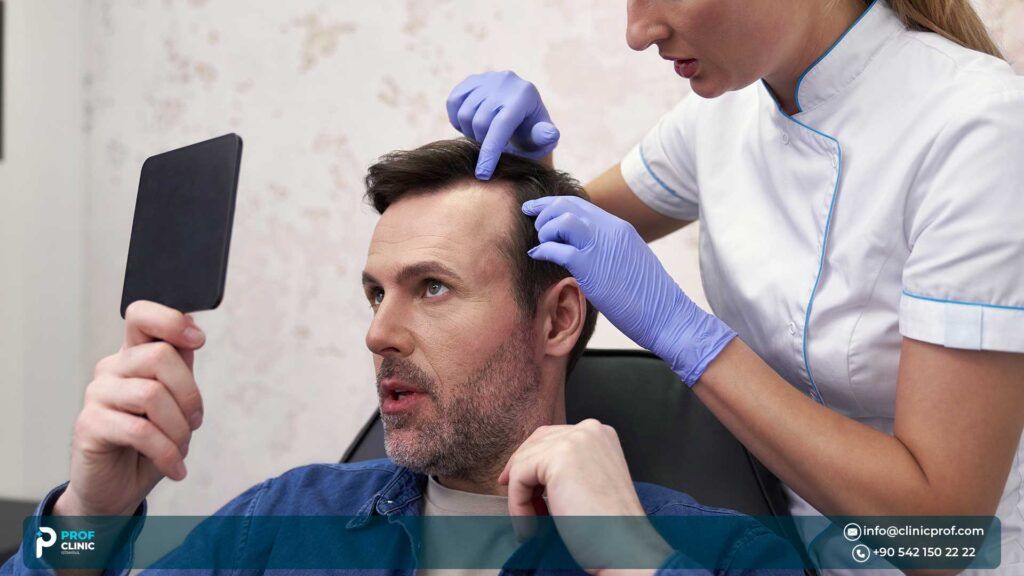
Density Is About Coverage, Not Hair Count
A transplant does not recreate the density of a teenage scalp; it creates the look of coverage. In a retrospective study of 158 men treated with FUE, published in BMC Surgery, the transplanted areas reached an average of about 35 follicular units per square centimetre, within a range of 25–40. Whether that looks full depends on your hair. The International Society of Hair Restoration Surgery (ISHRS) lists hair colour, the match between hair and skin colour, the thickness of each hair, the degree of curl and the angle of growth among the traits that shape a result. Thick or wavy hair close to your skin tone usually looks fuller than fine, dark, straight hair on pale skin at the same density.
A Hairline That Doesn’t Look Drawn On
A natural-looking hair transplant starts at the hairline. A natural front edge is slightly irregular, with fine single hairs at the very front and stronger grafts behind them. A surgical review in Frontiers in Medicine names poor hairline design, the wrong hair angle or direction, and a “pluggy” or tufted look as the main features of unnatural results. It links them to inadequate planning and to failing to anticipate further hair loss. A hairline set too low can look right at 28 and wrong at 45.
A Donor Area That Still Looks Full
The back and sides should still look normal with your usual haircut once they have healed. FUE leaves tiny dot scars that surrounding hair usually hides, but taking too many grafts can leave the donor area visibly thin. The same review lists donor depletion among the complications to prevent, which is why a careful plan takes only what your donor area can safely give.
Hair Transplant Before and After by Area
Hair transplant before and after photos look different depending on where the grafts go, because each part of the scalp does a different job. The hairline frames the face, the front and mid-scalp give volume when seen from the front, and the crown is seen mostly from above and behind. The table shows what a good result usually looks like in each area and what to look for in photos.
| Area | What a good result usually looks like | What to check in photos |
|---|---|---|
| Hairline | A soft, slightly irregular front edge with fine hairs leading in | Straight edges, visible tufts, or a line set too low for the person’s age |
| Temples | Corners rebuilt in proportion to the face, with hairs lying flat in their natural direction | Hairs sticking straight out, or corners that look squared off |
| Front and mid-scalp | Even coverage that holds up whichever way the hair is styled | Photos taken only with the hair combed forward over the area |
| Crown | Coverage that blends into the natural swirl and is judged from above | Photos taken only from the front, or flash glare that hides the scalp |
| Larger bald areas | A framed, balanced look, with the most density placed at the front | Claims of full original density across the whole scalp |
Hair type changes the picture too. A review of FUE complications notes that hair colour, curl pattern and usual hair length all influence how dense the same number of grafts looks. If your hair is curly, Curly Hair Transplant Before and After: Results, Texture & Timeline covers texture-specific photos and timings.
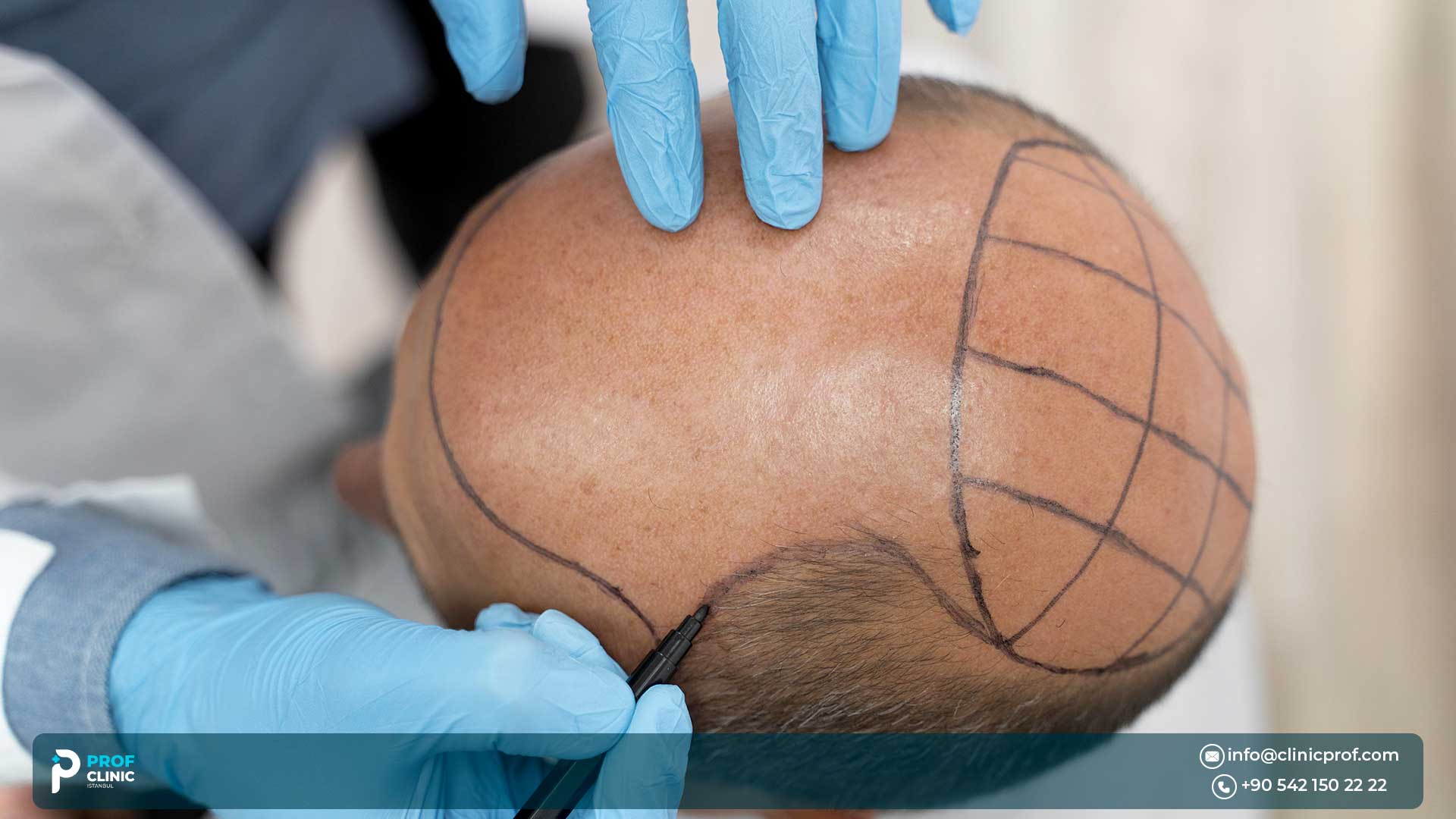
Wondering which areas your grafts could realistically cover? Send your photos to the Prof Clinic team and ask for a written plan, area by area.
What 2,000, 3,000 or 4,000+ Grafts Can Usually Cover
The graft number matters less than where the grafts go and how many hairs each one carries. A graft is a follicular unit, a small natural group of hairs, and the number of hairs per unit varies from person to person. That’s why “3,000 grafts” can mean quite different amounts of hair in two different patients.
As a real-world reference, here are the graft ranges used by stage of hair loss in the BMC Surgery study mentioned above:
| Stage of hair loss (Norwood scale) | Grafts used in the study |
|---|---|
| Stage II: mild recession at the temples | 500–1,000 |
| Stage III: deeper recession at the temples and front | 1,000–1,800 |
| Stage IV: front recession plus early thinning at the crown | 1,500–3,300 |
| Stage V: larger bald areas at the front and crown | 1,500–4,000 |
These figures come from one hospital’s patients, so treat them as a reference rather than a prescription. Seen in that light, a typical “3000 grafts before and after” photo usually shows a rebuilt hairline and front in a man with moderate loss, not a fully bald scalp restored to its original density. Your own number depends on the size of the area, your donor density and what you want to achieve.
Also read: How Many Grafts Do I Need? Graft Count by Norwood Stage
What Decides Your Result
Four things decide most of the outcome: your donor area and hair type, the skill and planning behind the surgery, the technique, and whether your own hair loss keeps progressing. Aftercare and general health matter too. The AAD puts it plainly: the outcome still depends largely on the surgeon you select.
Your Donor Area and Hair Characteristics
Your donor area sets the real limit. The AAD says a good candidate needs enough healthy hair on the scalp to move to the thinning area. The Frontiers in Medicine review recommends assessing donor density, hairs per graft, hair thickness and signs of miniaturisation before planning, so that harvesting stays within safe limits and the donor area stays stable over time.
Surgical Skill and Graft Handling
Grafts are living tissue, and how they are handled affects how many grow. The same review says poor growth is most often caused by physical damage to the follicles during harvesting, handling or implantation. It also lists long time outside the body, drying out, smoking and vascular disease among the factors behind sparse or uneven regrowth. This is the part of the result you can’t see in a brochure, which is why it’s worth asking who performs each step of the procedure.
The Technique: FUE, DHI or Sapphire
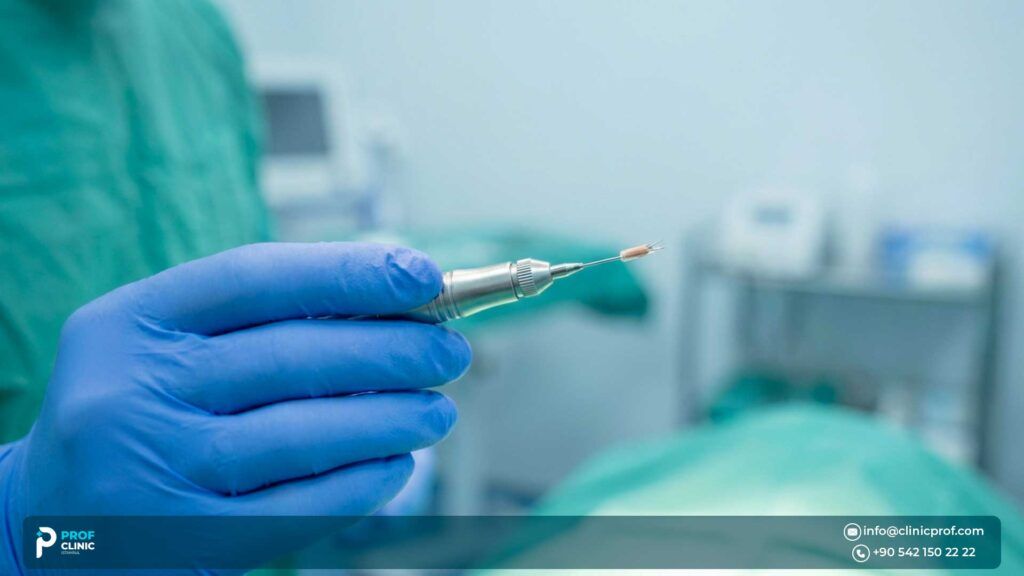
No technique produces good results on its own. FUE, DHI and Sapphire FUE all move follicular units from the donor area to the thinning area; they differ in how the channels are opened and how the grafts are placed. DHI uses an implanter pen to place grafts directly, which some surgeons prefer for precise angles at the hairline. For the details of that method, see DHI Hair Transplant in Turkey: Choi Pen Method, Cost & Results.
Ongoing Hair Loss and Medication
Transplanted hair is only part of what you’ll see in five years. The AAD notes that hair loss and thinning can continue after a transplant, and that medicine can prevent or slow new loss, which helps you keep a natural-looking result. The NHS also warns that your hair might continue to thin around the transplant. Ask your doctor whether treatment to protect your own hair makes sense in your case.
Hair Transplant Success Rate: What the Numbers Mean
There is no single hair transplant success rate, because “success” can mean graft survival or a result you’re happy with. In the BMC Surgery study, an average of about 91% of grafts survived at 12 months (range 89–95%), and the complication rate was below 6%. The Frontiers in Medicine review puts overall complication rates in large FUE series at 1.2–4.7%. These are results from specific settings, not a forecast for any one patient. For you, success means the areas you care about are covered at a density that looks natural, so ask any clinic how it defines and measures success.
When Do You See Hair Transplant Results?
Most people see the first new hairs after about 3–4 months, a clear change by 6–9 months, and the final result between 10 and 18 months. The AAD says most patients see results six to nine months after surgery, and some need 12 months. The NHS says new hair usually starts to appear after 4 months and that the full results should be seen after 10 to 18 months.
| Time after surgery | What you usually see |
|---|---|
| Weeks 2–8 | Most transplanted hairs shed, while the follicles stay in the skin |
| Around month 3 | The area can look thinner than before surgery, which the AAD describes as normal |
| Months 3–4 | Fine new hairs start to appear |
| Months 6–9 | A visible change for most patients |
| Months 12–18 | The final density and texture, and the right time to judge the result |
These are typical ranges, not fixed rules. The Frontiers in Medicine review notes that dissatisfaction in the early months is often linked to temporary shedding and usually improves by 6–12 months, and that a second procedure, if needed, is considered only after at least 12 months. So hair transplant results after 1 year are the first fair verdict, not the photos at month four.
Also read: Hair Transplant Timeline Month by Month: Growth and Shock Loss
Comparing your own growth with this timeline? Send your progress photos to the team on WhatsApp with the date of your procedure.
How to Judge Before-and-After Photos and Reviews
A before-and-after photo is only useful when both pictures were taken in the same way. A clinical photography guide in the International Journal of Trichology says that consistency in positioning, lighting, camera settings and background is the most important factor when photos document progress. It also warns that light reflection and glare can spoil hair images.
15 Things to Check in Hair Transplant Before-and-After Photos
Before you trust a photo set, run through these points:
- Same lighting: harsh overhead light or flash can make the same scalp look thinner or fuller.
- Same angles: front, top, crown and both sides, with the head tilted the same way.
- Same distance and background: a closer or farther camera changes how dense hair looks.
- Same hair length: longer hair combed over an area covers more than it grows.
- Dry and wet or flattened views: flattened hair shows the real coverage.
- No styling tricks: hair fibres, sprays, heavy products or fresh dye can hide the scalp.
- A stated date: the “after” photo should say how many months after surgery it was taken.
- At least 12 months: photos taken earlier do not show the final result.
- Graft count and technique: without them, you can’t compare a case with your own plan.
- A starting point like yours: similar stage of hair loss, age and hair type.
- A hairline close-up: a soft edge with fine single hairs at the front.
- Temples and direction: hairs should lie flat and follow the natural pattern.
- The crown from above: front views alone can hide a thin crown.
- The donor area: healed back and sides should be shown, not only the front.
- Several similar cases: a gallery of comparable results says more than one standout photo.
A photo set that fails several of these checks may still show a good result, but it tells you very little about what you can expect.
How to Read Patient Reviews
Reviews tell you more about communication, logistics and aftercare than about medical outcomes. Give more weight to reviews written 12 months or more after surgery, with photos, and to how the clinic responded when something went wrong. The NHS suggests asking a surgeon how many of their procedures have had complications and what their patient satisfaction rates are. For a fuller checklist, see How to Choose a Hair Transplant Clinic in Turkey: What to Check.
Want to practise on real cases? Browse the Prof Clinic before-and-after gallery and apply the checklist above to each case.
Prof Clinic in Istanbul: How Your Result Is Planned
Hair transplant results in Turkey are judged by the same standards as anywhere else, so planning matters more than the destination. At Prof Clinic, a hair transplant in Istanbul starts with your photos and a medical assessment rather than a fixed graft number. The medical lead for hair restoration, Spc. Dr. Lütfi Öztürk, is an internal-medicine specialist who carries out the medical assessment and treatment planning and coordinates follow-up.
Here is what you can check before you travel:
- Honest expectations: expected density is discussed individually, and no specific density is promised in advance.
- Techniques: FUE, DHI, Sapphire FUE and Micro FUE, chosen for your hair and the area being treated. The male hair transplant in Turkey page explains the options for men.
- Pre-op tests: blood count, ECG, kidney and liver function, electrolytes, blood sugar, and hepatitis and HIV screening before surgery.
- A written quote: sent after the team reviews your photos. Packages include the procedure, pre-op blood tests, medication and an aftercare kit, the hotel, and VIP airport and hotel transfers.
- Follow-up after you fly home: the coordination team stays in touch and gives advice over WhatsApp, which matters because the result is judged many months later.
As a general guide, a scalp hair transplant package in Istanbul (FUE, DHI or Sapphire) costs about €1,800–€3,500. This is an approximate range as of October 2026, not a final price; your price depends on your case after assessment and is confirmed in the written quote. The stay is typically 2–4 days, depending on your plan.
Ready to find out what’s realistic for your hair? Book a free online consultation and send clear photos of your front, top, crown and donor area.
Hair Transplant Results: Frequently Asked Questions
When will I see the final result of my hair transplant?
Usually between 10 and 18 months after surgery, according to the NHS. Fine new hairs tend to appear from around month 4, and the AAD says most patients see results between months 6 and 9. The hair keeps thickening after that, so judge the density, texture and hairline only once the first year has passed.
What is the success rate of a hair transplant?
There is no single figure, because success can mean graft survival or a result you’re happy with. In one study of 158 men treated with FUE, an average of about 91% of grafts survived at 12 months. Your own result depends on your donor area, planning, graft handling and aftercare, so question any percentage a clinic quotes.
Will my transplanted hair look natural?
In most well-planned cases, yes. The AAD says modern results can look so natural that a barber or stylist cannot tell. Naturalness depends on a soft, irregular hairline, the right hair angles and a hairline height that suits your age, so ask to see healed close-ups of the hairline, not only photos taken from a distance.
How many grafts give a visible difference?
It depends on the area and your hair. In one hospital study, mild recession at the temples was treated with 500–1,000 grafts, while men with front recession and early crown thinning received 1,500–3,300. Thick, wavy or curly hair covers more per graft. Ask for an estimate by area after a photo assessment.
Can a woman get the same results as a man?
Women can get natural-looking results, and the AAD says men and women of all races can be good candidates. The key questions are whether there is a stable donor area and a clearly defined thinning zone. A surgical review also lists female sex and female pattern hair loss among risk factors for temporary shedding of existing hair after surgery.
Final Thoughts
The fairest way to judge hair transplant results is to give them time: wait about 12 months, then check the hairline, coverage under normal light and the donor area. Before surgery, judge a clinic by how honestly it plans, not by its single most impressive photo. Ask how many grafts each area needs, what density is realistic for your hair type, and who will follow up after you return home.
The safest first step is an assessment, not a booking. Talk to Prof Clinic about your hair and ask for a written plan for your hair transplant in Turkey.
Sources
- AAD — A hair transplant can give you permanent, natural-looking results
- NHS — Hair transplant
- ISHRS — Hair Transplantation Brings Out the Best in You
- BMC Surgery — Using the follicular unit extraction technique in treatment of male androgenetic alopecia (Wang et al., 2024)
- Frontiers in Medicine — Complications in follicular unit excision hair transplantation: current evidence and practical approaches (Romera de Blas et al., 2026)
- International Journal of Trichology — Clinical Photography for Trichology Practice: Tips and Tricks (Ashique & Kaliyadan, 2011)