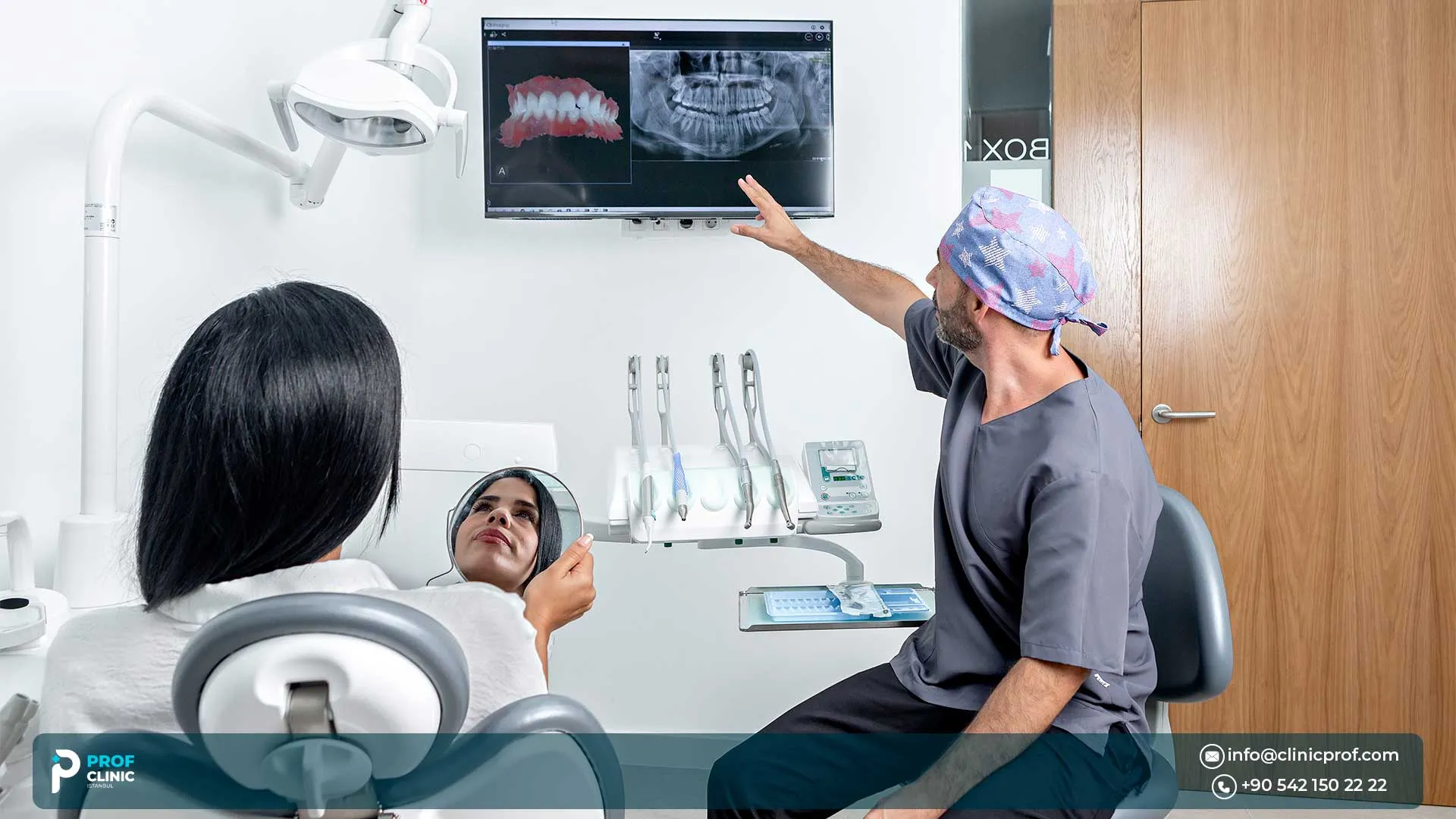
If you have a missing tooth, loose denture, broken bridge, or a treatment plan you do not fully understand, the first question usually is “Am I really suitable for implants, and what will happen if I travel for treatment?” A dental implant consultation is where that uncertainty becomes a clearer medical plan.
This guide explains what happens during your first implant visit, what information the dentist checks, which scans may be needed, and the most useful implant consultation questions to ask. You will also see how an online review can help international patients prepare before flying to Turkey, and when the next step may involve implants, bone grafting, sinus lift, same-day implants, or a full-arch solution.
Medical note: This article is educational. It does not replace diagnosis, in-person examination, X-rays, CBCT review, or a personalized treatment plan from a qualified dentist or implant specialist.
Why does a dental implant consultation matter?
A dental implant consultation matters because implants are not a one-size-fits-all treatment. Two people may both be missing one tooth, but their bone level, gum condition, bite pressure, medical history, smile goals, and travel limitations can be completely different.
The consultation helps the dentist answer practical questions before surgery is discussed. Are implants suitable for you? Is there enough bone? Are the gums healthy? Do you need extraction, bone grafting, or sinus lift first? Would a crown, bridge, or full-arch solution be more appropriate? For patients comparing treatment in Turkey, it also helps clarify how many visits may be needed and what can realistically be planned before you fly.
For a broader service overview, you can review our Dental Implants in Turkey, then use this consultation guide to understand what should be checked before a treatment plan is finalized.
- You understand whether implants are possible now or whether preparation is needed first.
- You learn which records or scans are needed before a reliable plan can be made.
- You compare realistic options instead of choosing treatment based only on price or speed.
- You can ask about risks, timeline, temporary teeth, aftercare, and travel planning before booking treatment.
What happens during a dental implant consultation?
A dental implant consultation usually follows a structured process. The details may vary between an online consultation and an in-person visit, but the aim is the same: collect enough information to understand your mouth, risks, treatment goals, and next steps.
| Consultation step | What the dentist checks | Why it matters |
| Medical history review | Health conditions, medications, allergies, smoking, previous surgery | Healing, infection risk, anesthesia planning, and treatment timing may be affected. |
| Dental history review | Missing teeth, failed crowns, dentures, gum disease, past treatments | Shows why teeth were lost and what must be corrected before implants. |
| Oral examination | Teeth, gums, bite, soft tissues, hygiene, smile line | Reveals whether the mouth is ready for implant planning or needs treatment first. |
| Gum and bone assessment | Inflammation, bone support, gum pockets, recession | Active gum disease can affect implant timing and long-term maintenance. |
| Imaging review | Panoramic X-ray, CBCT, bone height, bone width, sinus or nerve proximity | Helps the dentist see structures that cannot be judged reliably by sight alone. |
| Treatment discussion | Implant number, restoration type, stages, temporary teeth, risks | Turns clinical findings into options the patient can understand. |
The American Dental Association explains that dental X-rays help diagnose disease or damage that is not visible during a regular dental examination, and that the timing of X-rays depends on the patient’s oral health, risk factors, and symptoms. For implant planning, this supports an individualized approach rather than a fixed scan rule for everyone.
In more complex cases, CBCT or 3D imaging may be recommended. Our blog on 3D Dental Implant Planning in Turkey explains how digital planning can help evaluate bone anatomy, nearby structures, implant angulation, and the planned final tooth position before surgery.
Already have a panoramic X-ray or CBCT? Send it during your Prof Clinic consultation so the team can understand your case earlier and tell you whether more detailed imaging may be needed. Start your consultation
How does the dentist decide if you are a Dental Implant candidate?
The dentist does not decide implant suitability only by counting missing teeth. A responsible dental implant consultation studies the full picture: bone, gum health, bite forces, medical risk, oral hygiene, expectations, and the type of final restoration.
You may be a good candidate if you have:
- Enough jawbone volume and density for the planned implant position.
- Healthy gums, or gum disease that can be treated and controlled before implant placement.
- Good oral hygiene habits and willingness to attend follow-up appointments.
- Controlled medical conditions and a medication profile the dentist can safely plan around.
- No untreated infection around the implant site.
- A bite that can be managed without overloading the implant or restoration.
- Realistic expectations about healing, maintenance, and possible staged treatment.
You may need extra planning if you have:
- Severe bone loss or a narrow ridge.
- Active gum disease or infection.
- Heavy smoking habits.
- Uncontrolled diabetes or complex medical history.
- Teeth grinding or clenching.
- Upper-jaw sinus concerns.
- A need for full-mouth restoration rather than one simple implant.
The FDA lists factors and complications that can affect dental implant outcomes, including:
- Local infection
- Delayed healing
- Smoking, poor oral hygiene
- Untreated periodontal disease
- Nerve-related issues
- Sinus perforation in upper-jaw surgery.
This does not mean every higher-risk patient is automatically rejected. It means the plan should be more careful and specific.
First implant visit: Online vs in-person
Your first implant visit may begin online, especially if you are coming from Saudi Arabia, Kuwait, Qatar, the UAE, Bahrain, Oman, Europe, or another country. Online consultation can help you understand whether implants may be possible, what records are needed, and whether travel to Istanbul is worth planning.
| Consultation type | What it can help with | Main limitation |
| Online consultation | Review photos, X-rays, treatment goals, medical notes, and travel timeline | It cannot replace a clinical exam or final in-person diagnosis. |
| In-person first implant visit | Full oral examination, updated imaging, bite assessment, treatment confirmation | You need to be physically present in Istanbul. |
| Final pre-surgery visit | Confirm plan, scan details, medical readiness, consent, and treatment sequence | Changes may still be needed if new findings appear. |
For some patients, online triage may show that a standard implant is possible. For others, it may suggest the need for same-day dental implant evaluation, grafting, sinus lift, or a full-arch plan such as All-on-4 dental implants in Turkey. The important point is that these options should be compared after reviewing your anatomy, not chosen from a generic package.
If you are still deciding whether Istanbul is the right destination, our Dental Implants Istanbul guide can help you compare destination-related factors alongside the clinical consultation process.
Implant consultation questions you should ask
Good implant consultation questions help you leave the appointment with fewer doubts. You do not need to sound technical. You only need to ask questions that reveal whether the plan is clear, safe, personalized, and practical for your life.
Candidacy questions
- Am I suitable for dental implants now, or do I need treatment first?
- Is my issue bone height, bone width, gum health, bite pressure, or a combination?
- Do I need extraction, bone grafting, sinus lift, or gum treatment before implant placement?
- Are any medical conditions or medications affecting my plan?
Imaging and planning questions
- Do I need a panoramic X-ray, CBCT, or both?
- What does the scan show about my bone, sinus, nerve position, roots, or infection?
- Would 3D planning change the treatment approach in my case?
- Will I receive a written treatment plan before I decide?
Procedure and timeline questions
- How many implants do I need?
- Will I have temporary teeth during healing?
- How long should I stay in Istanbul after treatment?
- What follow-up is needed after I return home?
- Can implant placement be done in one stage, or will I need more than one visit?
Implant and restoration questions
- Which implant system or brand do you recommend, and why?
- Will I receive documentation for the implant components used?
- Will the final tooth be a crown, bridge, or implant-supported denture?
- What material will be used for the final restoration?
- How will the bite be adjusted to protect the implant?
Risk and aftercare questions
- What risks apply specifically to my case?
- What symptoms should make me contact the clinic after surgery?
- How should I clean around the implant?
- Do I need a night guard if I grind my teeth?
- What maintenance schedule do you recommend?
Save these implant consultation questions before your appointment. At Prof Clinic, clear questions help us give clearer answers and build a treatment path that fits your diagnosis, timeline, and travel needs. Book your first online consultation
What to bring to your first implant visit?
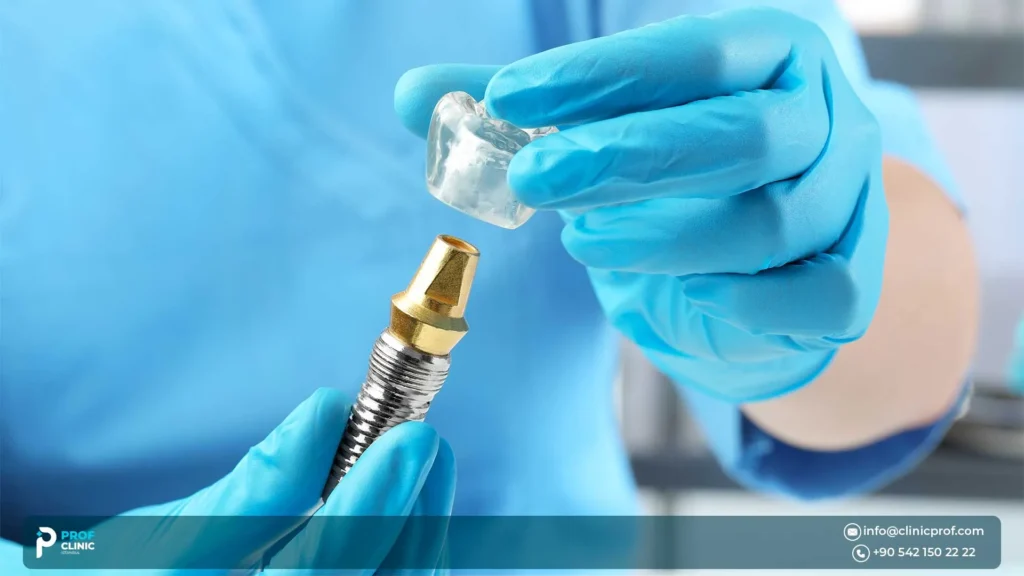
Your first implant visit becomes more useful when you bring the right information. This is especially important for patients traveling to Turkey, because better preparation can reduce uncertainty before flights, hotel booking, and treatment scheduling.
- Recent panoramic X-rays or CBCT scans, if available.
- Clear photos of your teeth, smile, bite, missing teeth, or dentures.
- A list of medications, including blood thinners and supplements.
- Medical conditions such as diabetes, heart conditions, immune problems, or osteoporosis treatment.
- Allergy history and previous surgery details.
- Previous dental treatment plans, implant quotes, or brand recommendations from other clinics.
- Your main complaint: chewing difficulty, pain, loose denture, missing tooth, speech issue, or smile concern.
- Your travel window and how long you can stay in Istanbul.
- Your priority questions about cost factors, timing, temporary teeth, risks, and aftercare.
What do you need to know after dental implant consultation?
After a dental implant consultation, the dentist should explain the findings in language you can understand. A useful plan does not simply say “you need implants.” It explains why, where, how many, in what sequence, and what may affect timing or cost.
- Number and position of implants recommended.
- Teeth that may need extraction first.
- Whether bone grafting, sinus lift, or gum treatment is needed.
- Whether immediate loading is possible or whether delayed loading is safer.
- Temporary tooth options during healing.
- Final crown, bridge, or denture design.
- Estimated treatment stages, healing periods, and follow-up plan.
- Cost drivers, including implant system, scans, grafting, prosthetic material, and number of visits.
For cost context, read our Cost of Dental Implants in Turkey guide.
When does the consultation show you need more than a simple implant?
Some patients arrive expecting one simple implant and discover that the real issue is bone loss, infection, bite overload, gum disease, or a full-arch problem. That is exactly why the consultation matters.
| Finding during consultation | Possible next step | What to ask |
| Low bone volume | Bone grafting, short implants, or staged implant placement | Is grafting necessary, or is another implant approach suitable? |
| Upper back jaw bone loss | Sinus lift or alternative upper-jaw planning | Is the sinus close to the implant site on my scan? |
| Several failing teeth | Segmental bridge or full-arch planning | Should we save teeth, extract, or plan a full-arch restoration? |
| Need for fast temporary teeth | Same-day implant assessment if stability criteria are met | Am I a candidate for immediate loading, or is delayed loading safer? |
| Full-arch tooth loss | All-on-4 or another full-arch solution | How will implant positions, bite, and cleaning be planned together? |
The awareness stage is not about choosing the most dramatic solution. It is about understanding what your mouth actually needs. At Prof Clinic, we prefer to compare options after examining your records, because the safest plan for one patient may be unnecessary or unsuitable for another.
Planning your dental implant consultation at Prof Clinic in Turkey
At Prof Clinic, we support international patients who want a clearer dental implant plan before traveling to Istanbul. If you live in the Gulf region or elsewhere abroad, the consultation should help you understand three things before you commit: your clinical situation, your treatment options, and your practical travel pathway.
A Prof Clinic-style consultation pathway may include reviewing your photos, panoramic X-ray or CBCT, dental goals, health information, missing-tooth area, and previous treatment plans. Then the team can explain whether your case appears simple, whether more imaging is needed, whether you may need preparatory treatment, and what your next step should be.
- Send your photos, X-ray or CBCT, and main concerns.
- Share your medical history, medications, and smoking status honestly.
- Ask your implant consultation questions before you travel.
- Review the proposed plan, timeline, cost factors, and follow-up needs.
- Confirm the plan in person after examination and any required imaging in Istanbul.
Ready to understand your options before making a treatment decision? Request your dental implant consultation for discussing your photos, scans, medical history, and goals.
For what happens after surgery, review our Dental Implant Aftercare in Turkey and Dental Implant Maintenance guides.
FAQs about dental implant consultation
What happens during a dental implant consultation?
The dentist reviews your dental and medical history, examines your mouth, checks gum and bone condition, evaluates your bite, and may request X-rays or CBCT imaging. The goal is to decide whether implants are suitable and what steps may be needed before treatment.
What questions should I ask at a dental implant consultation?
Ask whether you are a candidate, whether you need bone grafting or sinus lift, how many visits are required, what implant system may be used, what risks apply to your case, and how the final crown, bridge, or denture will be planned.
Do I need an X-ray before dental implants?
Often, yes. X-rays or CBCT scans help the dentist evaluate bone, roots, infection, sinus position, nerve location, and other structures that cannot be judged by a visual exam alone. The exact imaging decision depends on your case.
How long does a first implant visit take?
The length depends on whether the visit includes imaging, examination, medical-history review, bite assessment, and treatment discussion. An online first step may be shorter and based on photos, X-rays, and case details.
Can I get dental implants immediately after the consultation?
Sometimes, but not always. Some patients are ready for implant placement, while others need gum treatment, extraction, bone grafting, sinus lift, or additional planning first.
Is an online dental implant consultation enough?
An online consultation can help you understand possible options and whether travel may be worthwhile. Final diagnosis and surgical planning usually require in-person examination and appropriate imaging.
What should international patients ask before traveling to Istanbul?
Ask how many trips may be needed, how long to stay after treatment, whether temporary teeth are included, what follow-up is possible after returning home, and what records you should keep for your local dentist.
Is a dental implant consultation only about cost?
No. Cost is important, but the consultation should first clarify diagnosis, suitability, treatment sequence, implant options, risks, and aftercare. A price without imaging and planning may be incomplete.