If you’re researching all on 6 dental implants, you’re probably past “what is it?” and into: Will it feel stable? Can I get teeth in one day? How does it compare to All-on-4 or dentures, and how do I choose safely?
This guide by Prof Clinic in Istanbul focuses on how stability is created (not just “more implants = better”) and gives you a practical decision framework.
This article is for education and decision support and doesn’t replace an in-person dental exam, imaging, or medical clearance.
What are All-on-6 dental implants?
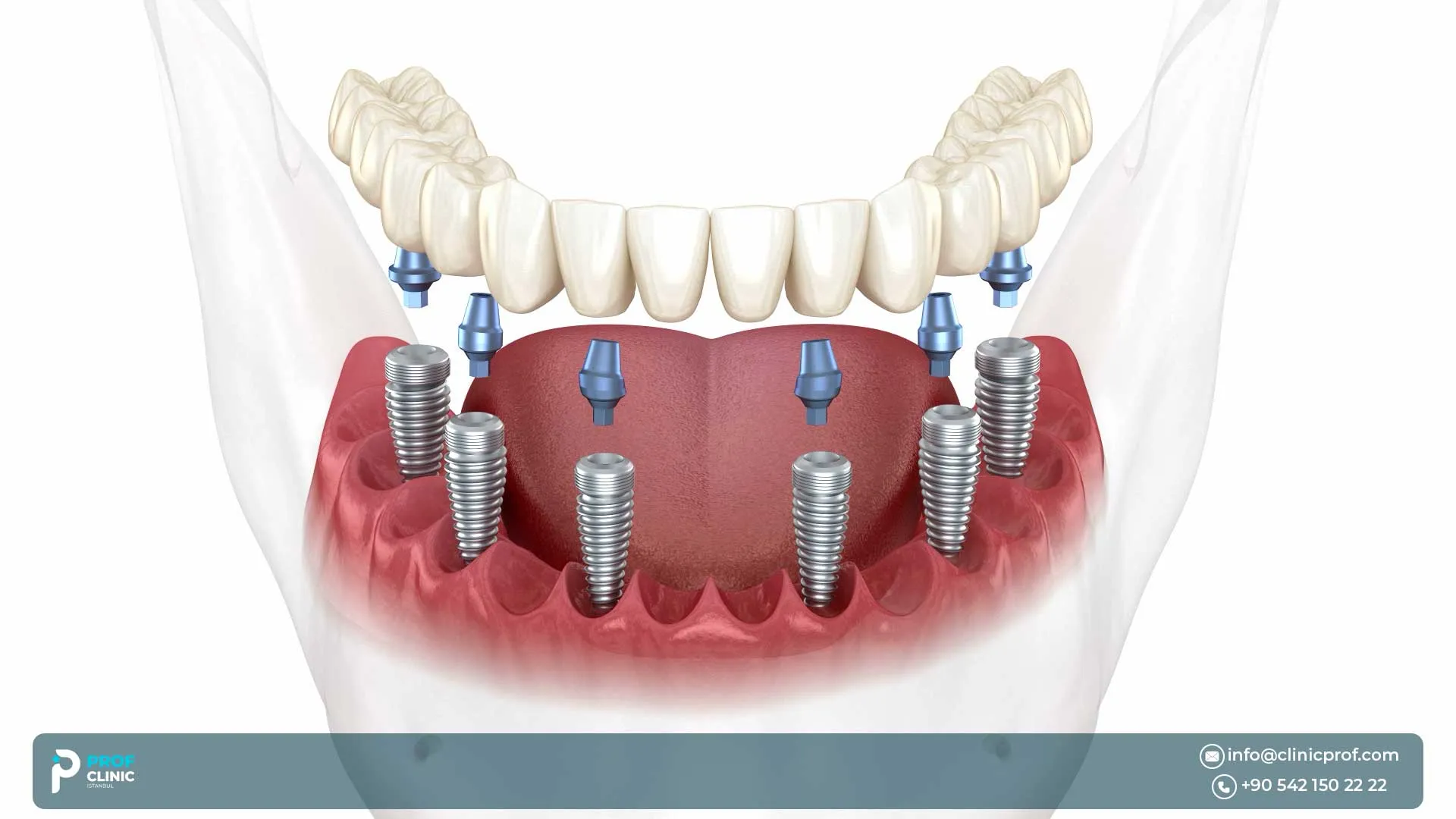
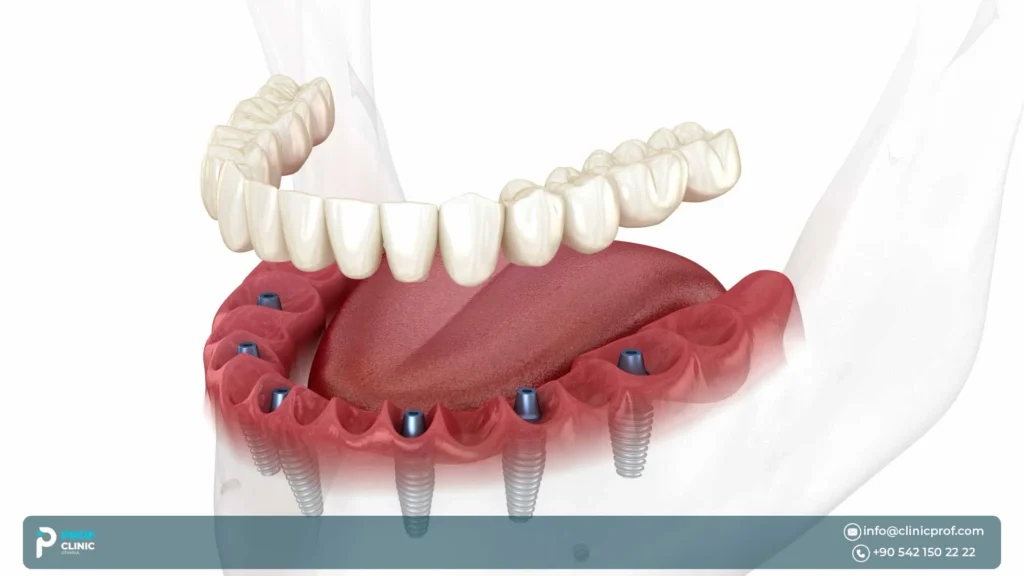
All-on-6 is a full-arch tooth replacement approach where six implants are placed in one jaw to support a fixed bridge, a full arch of teeth attached to implants, not sitting on the gums like a traditional denture.
Learn more about this approach by reading our blog, all on 6 Dental Implants: Everything you want to know
What do you actually receive in 6 implants full arch?
- Implants: Titanium posts placed in the jawbone.
- Abutments or components: Connectors that help secure the bridge.
- A fixed full-arch bridge: Your new teeth, in suitable cases, typically delivered as a temporary fixed bridge first, then a final bridge after healing.
Who is it for?
- People missing most/all teeth in one jaw, or with multiple failing teeth that can’t be predictably saved
- Long-time denture wearers who want less movement and more chewing confidence
- Patients seeking fixed teeth, but who understand that evaluation + imaging determine what’s safe and realistic
For a broader overview of full-arch options, including implant-supported dentures, see our Full Arch Dental Implants guide.
How does all-on-6 work?
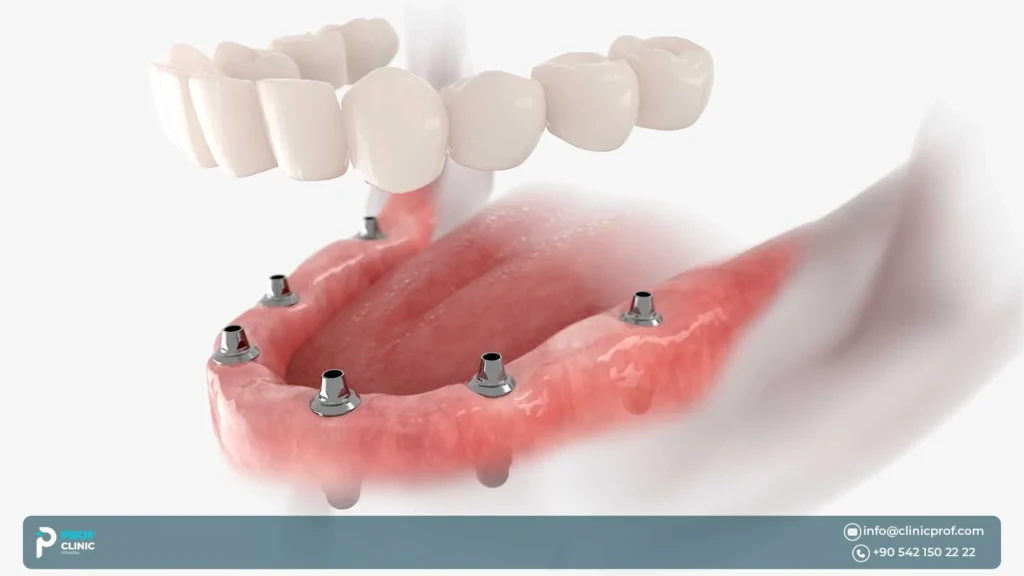
Think of six implants full arch as a foundation plan that starts with diagnostics and ends with a bridge designed around your bite.
Here are the details:
- Planning stage (consult and imaging): A clinical exam plus imaging helps determine bone volume, quality, and a safe implant plan. Positions are confirmed after imaging, not guesswork.
- Implant placement: Six implants are placed in strategic positions; distribution matters more than the number alone.
- Temporary vs final teeth:
- Temporary fixed teeth: In many full-arch pathways, a fixed provisional bridge may be delivered soon after surgery when stability criteria are met.
- Healing: Bone biologically fuses to implants over months; many protocols wait ~3+ months before definitive teeth.
- Final bridge: Delivered after integration and bite refinement.
Why planning matters for stability?
Stability is created by a chain of decisions:
- bone quality and volume, including whether grafting is needed
- implant distribution and angulation
- bite alignment and how forces will be shared across the bridge
- prosthesis design that allows hygiene access and reduces overload risks (ScienceDirect)
Also read: Immediate Load Dental Implants: Pros, Cons & Candidacy
Why can six implants feel more secure?
Patients often mean two different things by stability.
Mechanical stability vs biological stability
- Mechanical stability (day-of-surgery stability): How firmly the implant locks into bone at placement; it’s the primary stability.
- Biological stability (long-term stability): Bone healing and integration around the implant over time, it’s the secondary stability.
Same-day temporary fixed teeth usually depend on primary stability and case selection, not marketing promises.
Why are six implants more stable than four?
Sometimes, but not automatically. Here’s the stability logic in patient-friendly terms:
- Load sharing (less stress per implant):
With six anchors, bite forces can be distributed across more support points, which may reduce stress on each implant and on portions of the bridge. - Wider support distribution (when anatomy allows):
Good planning can place implants to improve the spread of support under the bridge. It is helpful for people with higher bite forces or parafunction (grinding/clenching). - Redundancy (backup support concept):
If a single implant develops a problem, having more implants can sometimes provide more options for repair planning, though any implant issue still requires professional assessment. This is not a guarantee; it’s a planning advantage in some cases.
How does All-on-6 provide more stability?
Stability comes from system design, not just implant count:
- Implant distribution and splinting: In full-arch fixed bridges, implants are splinted together by one bridge, which can help stabilize the system under function.
- Biomechanics evidence (in plain English): Finite element analyses often show different stress patterns between all-on-four and all-on-six designs, with some models reporting more favorable stress behavior for all-on-six under certain loading conditions.
- Clinical outcomes nuance: A 2024 systematic review/meta-analysis found no significant differences in implant/prosthesis survival and many complications between 4-implant and 6-implant maxillary fixed complete dentures, though it reported higher marginal bone loss in the 4-implant group.
Both can work when planned well; the right choice depends on your anatomy, risk factors, and design details.
What does make All-on-6 implants more stable than traditional dentures?
Traditional dentures rely on gum and bone surface contact and can move under function. Fixed full-arch bridges are anchored to implants, so many patients experience:
- less need for adhesives.
- more consistent chewing confidence.
- less rocking or slipping, especially the lower jaw.
How should it feel with all on six implants?
Can I chew normally with All-on-6 implants?
Many patients return to strong function after healing and with clinician approval, but the normal depends on bite setup, bone healing, and whether you grind or clench.
Do All-on-6 implants feel like natural teeth?
They often feel more secure than dentures, but they’re still a prosthesis: you may notice differences in gum feel, temperature sensation, and cleaning routine under the bridge.
Will All-on-6 implants look natural?
Natural appearance is achievable, but it’s driven by planning, smile line, tooth design, and the transition from temporary to final teeth.
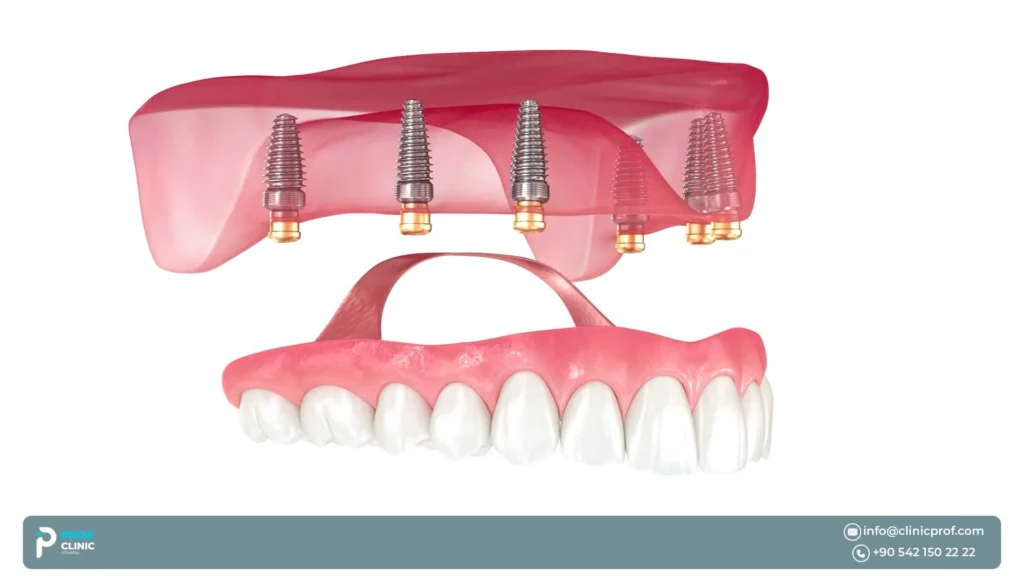
Fixed permanence and loosening of all on six implants
Are All-on-6 implants fixed permanently?
The implants are intended as long-term anchors. The bridge is fixed for you, but it can be removed by a dentist for repairs/maintenance when needed.
Can All-on-6 implants loosen over time?
Two different issues get called loose:
- Prosthetic loosening: A screw or component loosens; it is often repairable.
- Implant integration problem: True implant mobility. it requires urgent evaluation
Maintenance and bite protection reduce risk.
| Stability factor | What it means | What to ask |
| Bone quality and volume | Dense bone improves primary stability and long-term support | Do I have enough bone for 6 implants full arch without grafting? |
| Primary stability | Whether immediate temporary teeth are safe | What stability criteria do you use for immediate loading |
| Implant distribution | Where implants are placed matters as much as how many | How are you distributing implants to manage bite forces? |
| Bite force | Higher forces can increase mechanical complications | Do I need a night guard? How will you adjust my bite? |
| Hygiene access | Cleanability reduces peri-implant disease risk | How will I clean under the bridge, and how often are recalls? |
If stability is your #1 priority, contact us via WhatsApp for a written plan comparing All-on-4 vs All-on-6 based on your scan and bite.
All-on-6 vs All-on-4 vs dentures: Which option fits your case?
What is the difference between All-on-6 and All-on-4?
Both are fixed full-arch concepts. All-on-6 uses two additional implants, which may help with force distribution or support spread in some cases. The best option depends on anatomy, risk profile, and prosthetic design.
Are All-on-6 implants better than traditional dentures?
For stability and chewing confidence, many patients prefer fixed implant solutions; however, dentures can still be appropriate when surgery isn’t suitable or as a staged step.
What are the pros and cons of All-on-6?
Pros: fixed teeth, strong support, potential force distribution advantages, and confidence gains.
Cons: surgery and healing time, maintenance under the bridge, possible repairs over time, and candidacy limits.
| Option | Stability feel | Bone needs | “Teeth in a day” potential | Maintenance reality | Repair tolerance | Cost drivers |
| All-on-6 (fixed) | Often very stable | Usually needs adequate bone for 6 sites | Possible for temporary fixed in selected cases | Daily cleaning under bridge and professional recalls | Some repairs are component-based | implant number, grafting, temp vs final bridge, materials, complexity |
| All-on-4 (fixed) | Often very stable | Can be used in anatomy-limited cases | Also possible for temporary fixed in selected cases | Similar under-bridge hygiene | Similar | same drivers; anatomy may steer design |
| Implant-supported denture | More stable than traditional denture, less “fixed” feel | Often fewer implants | Sometimes, but varies by plan | Remove to clean; attachment wear | Attachments can wear/need replacement | implant count + denture design and attachments |
| Traditional denture | Most likely to move | No implant bone needs | Fast delivery | Adhesives/relines; may rub | Relines common | denture type + relines/adjustments |
Ready to choose? Ask for an itemized, scan-based plan that explains why a certain implant count is recommended for your bite and bone.
Also read: All-on-4 Dental Implants in Turkey: Cost & Advantages
All-on-6 Dental Implants in Istanbul: Step-by-Step Procedure
For patients traveling to Istanbul for All-on-6 treatment, the step-by-step pathway usually includes diagnostics, implant placement, temporary teeth when suitable, healing, and a final bridge after integration.
What is the step-by-step procedure for All-on-6 implants?
A typical full-arch pathway looks like:
- consultation and medical/dental history
- imaging snd treatment planning
- extractions, if needed
- implant placement
- temporary fixed teeth
- healing
- final bridge and bite refinement
Can I get teeth in one day with All-on-6?
Sometimes, when primary stability is strong and the case is suitable for immediate loading.
What does “one day” usually mean?
A temporary fixed bridge soon after surgery, while the final bridge comes after healing
What do stability criteria often involve?
- Enough bone quality/volume to stabilize implants
- Primary stability targets
- A provisional bridge designed to reduce overload during early healing
How long does the All-on-6 procedure take?
Time is best thought of in phases, not hours:
- Surgery and temporary teeth phase: may be completed in a short visit for suitable cases.
- Healing phase: commonly 3–6 months for integration before definitive teeth in many protocols
- Finalization visit: impressions/fit and bite refinement for the definitive bridge.
Is the All-on-6 surgery painful?
During surgery, local anesthesia is standard, and some cases may involve sedation depending on plan and patient needs. After surgery, swelling and soreness are common and vary by person; many recover through the first week with gradual improvement.
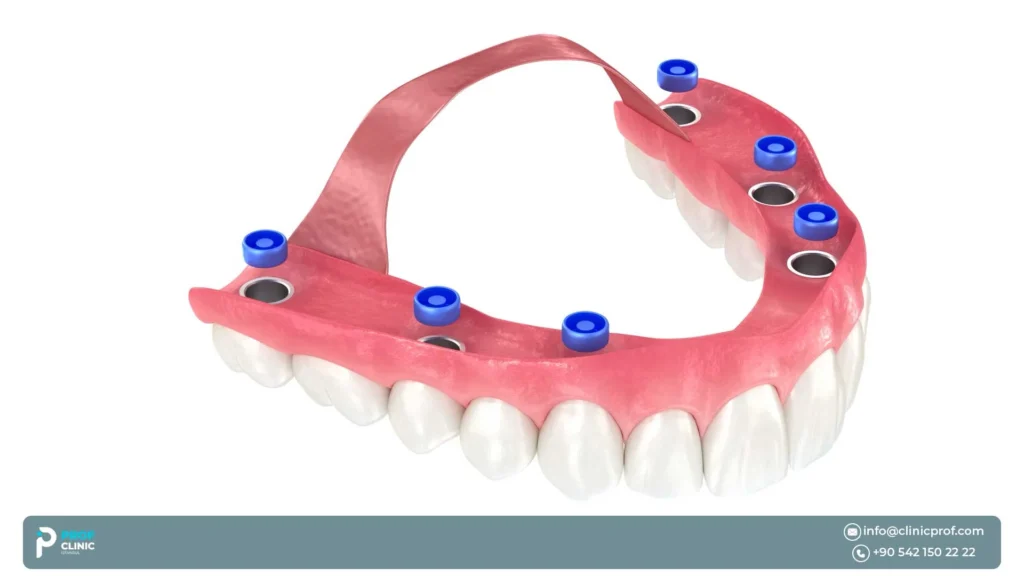
Recovery and Daily Life After All-on-6 in Turkey
For international patients having All-on-6 treatment in Turkey, recovery planning also affects travel timing, hotel stay, food choices, and the schedule for early follow-up checks.
What is the recovery time after All-on-6 implants?
Recovery has two layers:
- Short-term surgical recovery: swelling/bruising often peaks early and commonly improves over about 5–7 days after dental surgery.
- Long-term biological healing: osseointegration and tissue stabilization over months before (or while) final teeth are delivered.Prof Clinic Turkey)
Can I eat normally after All-on-6 treatment?
- Early phase: expect soft foods and bite limits, especially with immediate-load temporary teeth.
- After healing/final bridge: many patients return to broader diets, guided by bite checks and clinician approval.
Can I chew normally with All-on-6 implants?
Often yes after healing, but chewing normally should be earned gradually to protect integration and the prosthesis, especially if you grind/clench.
How do I clean and maintain All-on-6 implants?
All-on-6 is fixed, but hygiene is non-negotiable because implants can develop peri-implant inflammation similar to gum disease.
Here is a daily home routine:
- Brush twice daily (often with an electric brush)
- Clean under the bridge with floss threaders/superfloss or interdental tools
- Consider an oral irrigator to flush under the bridge
- Don’t skip professional recalls
The ITI consensus recommends a recall frequency at least once per year, and more often when risk factors exist; professional cleaning and hygiene reinforcement are part of prevention.
When to contact your clinic?
Seek professional advice promptly if you have:
- Persistent bleeding.
- A sudden bite change or anything that feels loose.
- Fever, pus, worsening pain after initial improvement.

Who is a good candidate for All-on-6 implants?
Good candidacy is determined by:
- bone qualityand gum health
- medical history
- bite forces and habits
- willingness to maintain hygiene and attend follow-ups
Do I need bone grafting before All-on-6?
Not always. Grafting depends on whether bone volume/quality is sufficient for safe placement and long-term support. Imaging is key, and some plans require staged healing if grafting is necessary.
Can smokers get All-on-6 implants?
Smoking is a known risk factor for adverse implant outcomes and peri-implantitis. Some smokers still receive implants, but candidacy often involves a risk-reduction plan and honest expectations.
Are All-on-6 implants suitable for elderly patients?
Age alone rarely decides eligibility; overall health status, bone condition, medications, and ability to maintain hygiene/follow-ups matter more.
However, you’re often a stronger candidate if most of these are true:
- I can commit to daily under-bridge cleaning
- I can attend follow-ups/maintenance visits
- My medical conditions are stable and managed
- I’m willing to address risk factors
- I understand temporary teeth are not the final result
Not sure where you stand? Book a free online consultation with our medical team to request a scan-based evaluation, including candidacy and the safest timeline.
How long do All-on-6 dental implants last?
With good planning and maintenance, implants can last many years; however, long-term outcomes depend on risk factors (smoking, history of gum disease, diabetes control), prosthesis design, bite forces, and hygiene.
“Implants lasting” and “the bridge lasting” are not identical. Bridges may need maintenance or repair over time even when implants remain integrated.
What are the risks or complications of All-on-6?
- Short-term: Swelling, bruising, infection risk, bite discomfort during adaptation.
Long-term: Peri-implant mucositis/peri-implantitis, prosthetic wear/chipping, screw loosening, and less commonly implant failure.
What is the success rate of All-on-6 implants?
Success is case- and protocol-dependent. Rather than quoting a single number, a better question is: What factors most influence success in my case?
Evidence comparing four vs six fixed complete dentures often shows high survival in both when systematically planned; differences can be small in many datasets, while biomechanics and bone-level outcomes may differ by design and case selection.
Can All-on-6 implants fail?
Yes, any implant treatment can fail, especially when early healing is disrupted (micro-movement) or when long-term inflammation is unmanaged. Preventive maintenance and risk-factor control matter.
Can All-on-6 implants loosen over time?
- Prosthetic loosening can happen and is often fixable.
- True implant mobility is a warning sign and should be evaluated promptly.
How Much Do All-on-6 Dental Implants Cost in Turkey?
Ethically, the most useful answer is what drives the quote, because full-arch plans vary widely. ClinicProf frames full-arch costs around variables like fixed vs removable design, grafting needs, and case complexity—then recommends an itemized quote after imaging.
Common cost drivers:
- Extractions and pre-treatment
- Bone grafting or advanced anchorage
- Immediate temporary bridge vs delayed provisional
- Final bridge material and number of appointments)
- Sedation/anesthesia approach
Are All-on-6 implants worth the cost?
They can be, especially if your top priorities are:
- Fixed teeth
- Stability and chewing confidence
- A long-term plan where maintenance is built into the design
A practical value question to ask yourself: If stability is my #1 goal, do I also accept the daily hygiene routine and maintenance visits required to protect that stability?
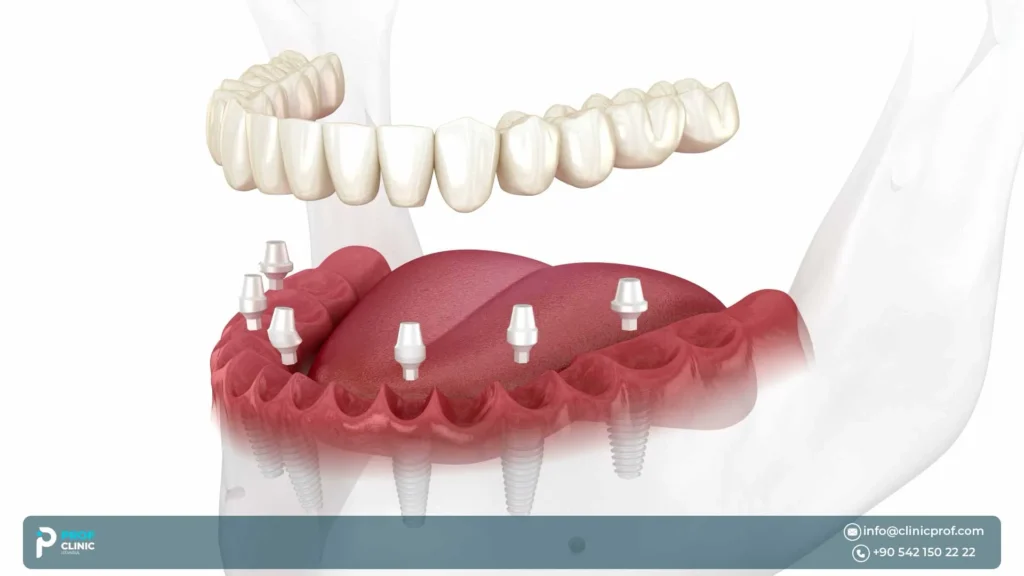
Why Is Prof Clinic Istanbul the Best Destination for All-on-6 Implants in Turkey?
At Prof Clinic Istanbul, full-arch implant plans are presented as case-by-case decisions informed by your health history, bite, and imaging, so the team can recommend whether All-on-6, All-on-4, or another full-arch option fits your anatomy and timeline.
For international patients, ClinicProf offers an English-language booking pathway (including WhatsApp details) and consultation requests to receive a personalized treatment plan.
You can review our before-and-after hub to understand the range of outcomes
If you want the most stable option for your anatomy, book a free online consultation and request a written plan that explains implant distribution, loading approach, and maintenance schedule.
FAQs about all on 6 dental implants
What is the difference between All-on-6 and All-on-4?
All-on-6 uses two additional implants; both can be successful when planned well. The best option depends on anatomy, risk factors, and prosthetic design.
Can I get teeth in one day with All-on-6؟
Sometimes. Typically a temporary fixed bridge when primary stability and case selection allow immediate loading.
Do I need bone grafting before All-on-6?
Not always; it depends on imaging findings and whether bone volume/quality is sufficient for safe placement and predictable support.
Can smokers get All-on-6 implants?
Smoking increases risk for peri-implantitis and adverse outcomes; some smokers still proceed with risk-reduction strategies and close maintenance.
What are the risks or complications of All-on-6?
Short-term surgical risks plus long-term biological risks (peri-implant disease) and mechanical/prosthetic issues (wear, screw loosening).
Can All-on-6 implants loosen over time?
Prosthetic components can loosen and be repaired; true implant mobility requires prompt evaluation. Maintenance and bite control help reduce risk.
Additional sources
- Outcomes that may affect implant and prosthesis survival and complications in maxillary fixed prosthesis supported by four or six implants: A systematic review and meta-analysis
- Comparison between all-on-four and all-on-six treatment concepts on stress distribution for full-mouth rehabilitation using three-dimensional finite element analysis: A biomechanical study
- Effects of Anti-Infective Preventive Measures on Biologic Implant Complications and Implant Loss
- Consensus statements and clinical recommendations on treatment indications, surgical procedures, prosthetic protocols and complications following All-On-4 standard treatment. 9th Mozo-Grau Ticare Conference in Quintanilla, Spain
- Implant insertion torque value in immediate loading: A retrospective study
- Peri-Implant Diseases
- Four vs. Six Implant Full-Arch Restorations—A Direct Comparative Retrospective Analysis in a Large Controlled Treatment Cohort