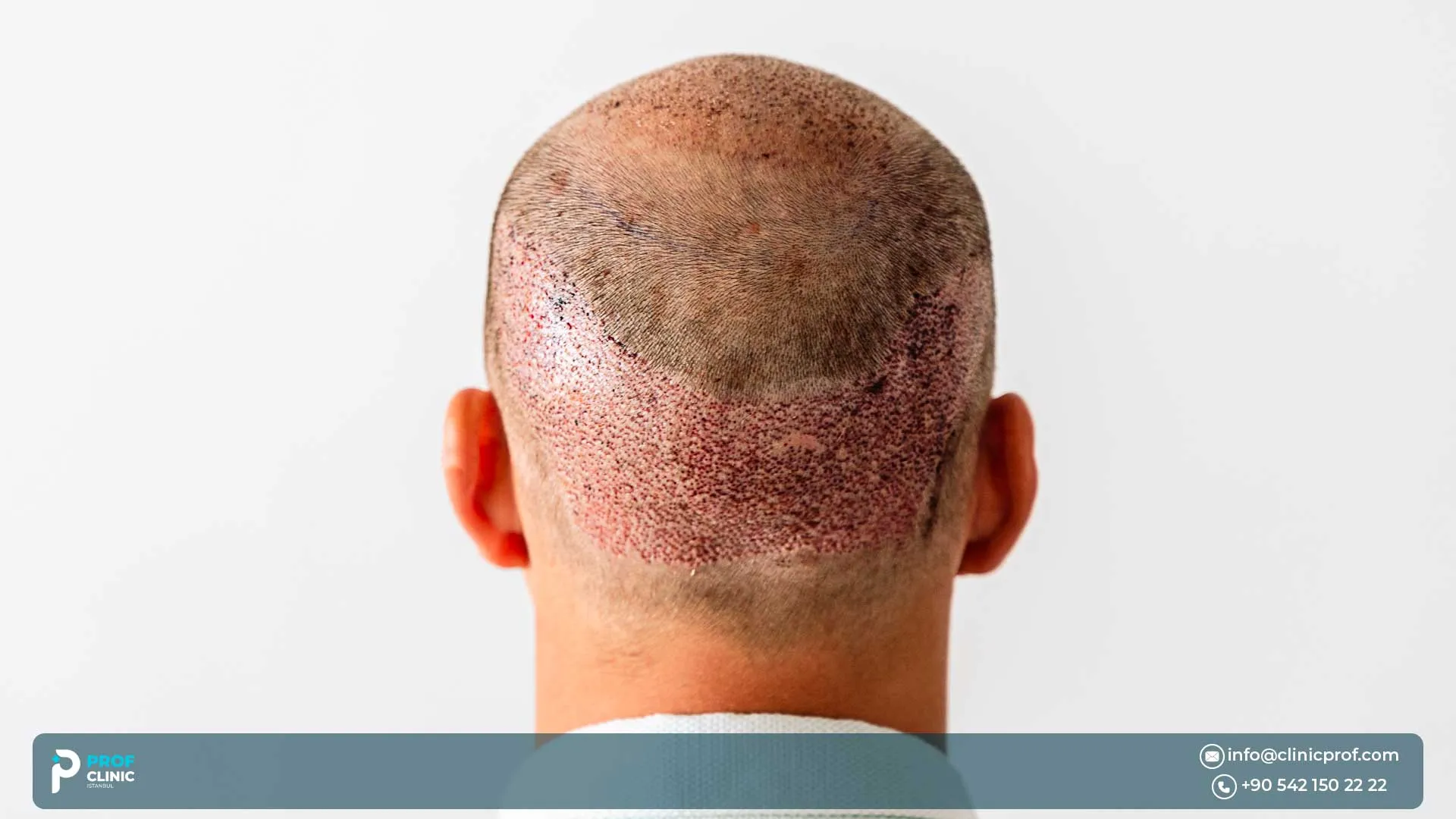
For many men, a sharp hairline is the foundation of confidence. However, when male pattern baldness begins to cause your edges to recede or thin your crown, it can feel like you’re losing your signature look. An Afro Hair Transplant for Men is no longer a complex “maybe”—it is now a precise, highly successful solution for restoring Type 4 hair.
In this guide, we’ll explore why black men’s hair restoration requires a specialized touch and how to achieve a natural, sharp lineup. From the technical nuances of a hair transplant for black patients to finding the right team at Prof Clinic in Istanbul, here is everything you need to know about reclaiming your crown.
Why is restoring the Afro-textured hairline the ultimate fix?
Male pattern baldness in Black men typically follows a specific pattern, starting at the temples and moving toward the crown. An African American male hair transplant is the ultimate fix because it addresses the “visual density” unique to textured hair. Unlike straight hair, which requires more grafts to look thick, the natural coil and spring of Afro hair provide more scalp coverage per follicle.
A permanent hair transplant African American procedure doesn’t just “fill gaps”; it redistributes healthy, DHT-resistant follicles from the back of your head to the thinning areas, ensuring that the results withstand the progression of male pattern baldness over time. We recommend to visit our page about the hair transplant service to learn more about the quality and the services we offer.
Also read:
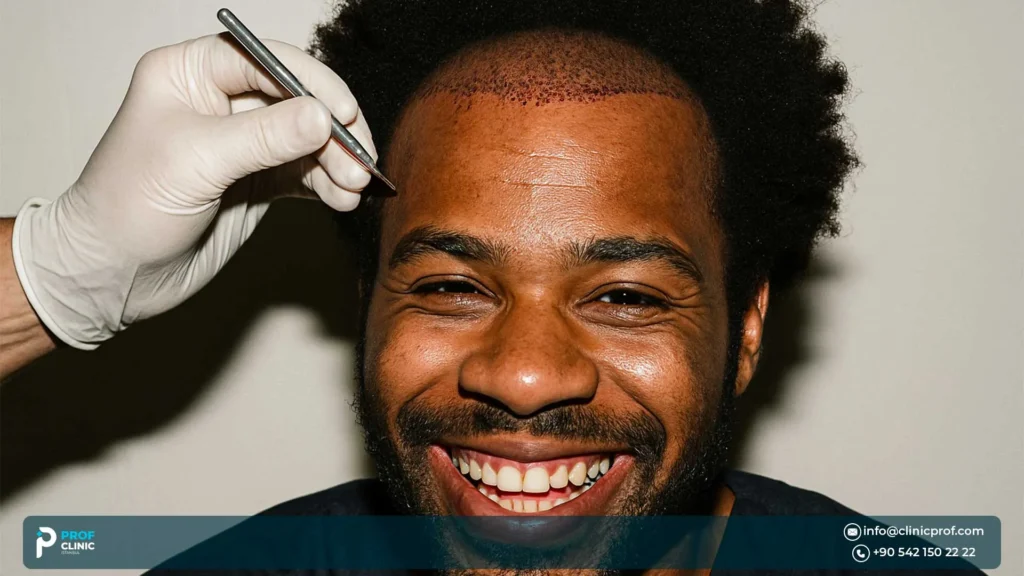
Technical Challenges of Hair Transplant for African American Patients
The complexity of Type 4 hair follicle extraction lies beneath the surface. While straight hair grows vertically, Afro hair grows in a subcutaneous spiral.
- The “C-Curve” Challenge: The follicle curves like a “C” under the skin. An inexperienced surgeon might cut the bulb during extraction, leading to graft transection or failure.
- Tissue Adhesion: The dermis in African American scalps is often denser, requiring precise pressure control during the extraction process to avoid scarring or keloids.
- Graft Fragility: Because the follicles are curved, they occupy more space and are more delicate to handle during the implantation phase.
Protect Your Donor Area: Don’t risk permanent scarring with inexperienced clinics. Consult with the Afro-specialists at Prof Clinic for a safe, high-survival procedure.
Also read: Afro Hair Transplant Success Rate: What Impacts Your Results Most
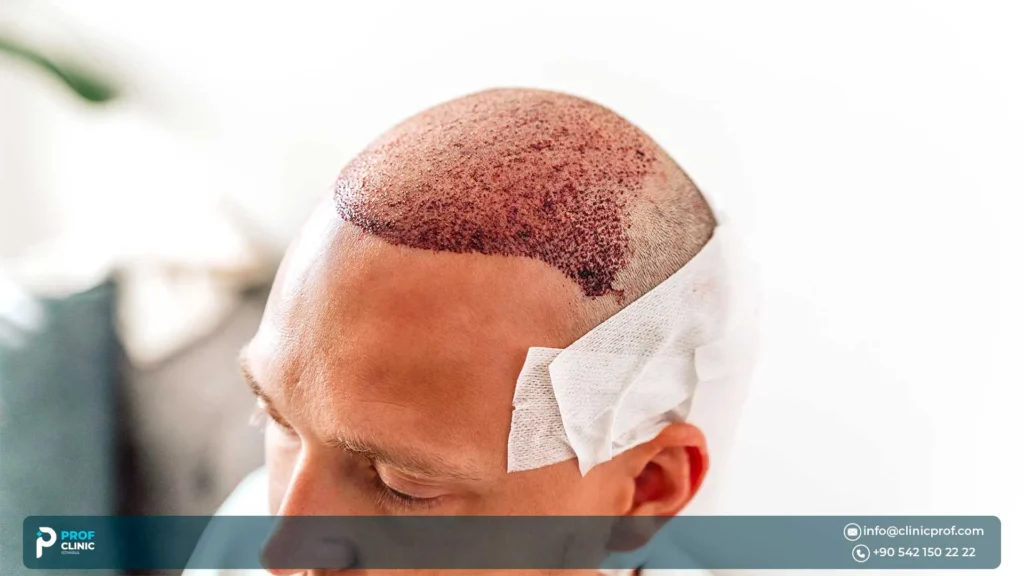
Choosing the Best Hair Transplant for African American Men
Selecting the right technique is half the battle. For hair transplant for African American men, we focus on methods that minimize skin trauma:
| Technique | Best For | Advantage |
| Micro-FUE | Large Areas | Uses custom flared punches to safely extract curly roots. |
| DHI (Direct Hair Implantation) | Precise Edges | Allows for extreme precision in hair angle and “lineup” sharpness. |
| Sapphire FUE | High Density | The V-shaped sapphire blades create smaller channels, leading to faster healing for darker skin tones. |
Design Secrets for African American men’s hair transplant
The success of an African American men’s hair transplant is judged by the hairline. A “straight-line” aesthetic is often requested, but a truly professional curly hair transplant solution requires:
- Temple Restoration: Rebuilding the 90-degree angle at the temples that characterizes a fresh haircut.
- Macro & Micro-Irregularity: Placing single follicles in a zigzag pattern at the very front so the hairline doesn’t look like a “wig.”
- Forward Projection: Designing the hair to grow forward and slightly upward to maintain the natural volume required for fades or sponges.
Real Results You Can Expect from an Afro Hair Transplant
When you undergo an Afro hair men transplant, the timeline of your transformation is a marathon, not a sprint:
- The Shedding Phase (2-6 Weeks): The “Shock Loss” where temporary hairs fall out, leaving the healthy roots behind.
- The Growth Phase (4-9 Months): You will see thin, curly hairs starting to sprout. This is the stage where density begins to build.
- The Final Reveal (12-15 Months): The hair thickens, the texture matures, and you can finally get a professional lineup or fade without any visible signs of surgery.
Also read: Afro Hair Transplant Recovery: Timeline, Tips, and What to Expect
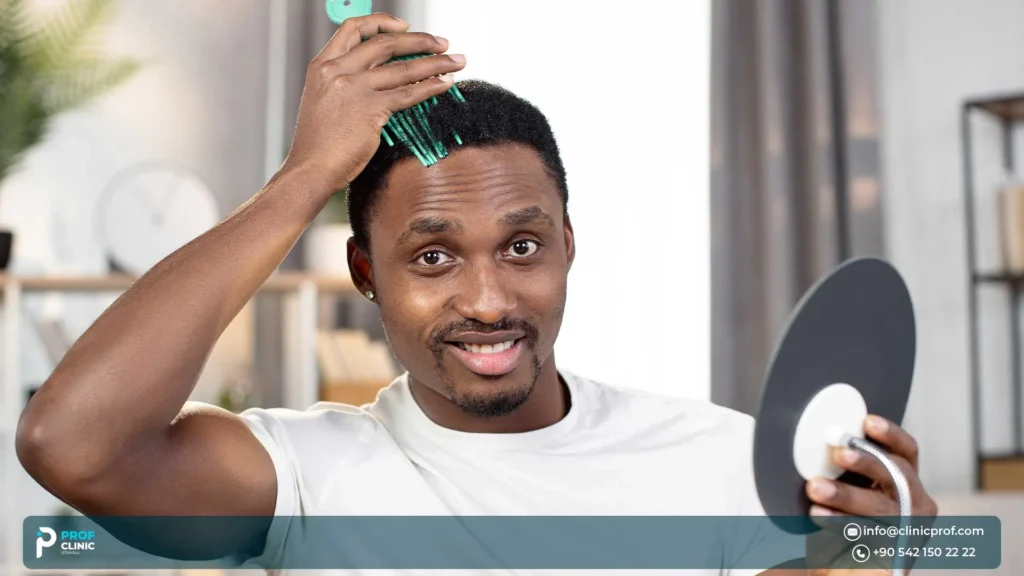
Why Choose Prof Clinic for African American Male Hair Transplant
At Prof Clinic, we don’t treat Afro hair as an “add-on” service. It is a core specialty. We understand that an ethnic hair transplant surgery requires different tools and a different mindset.
- Specialized Punches: We use wider, flared extraction tips specifically for curly follicles.
- Scalp Care: We use specialized post-op solutions to prevent folliculitis, a common concern for Black men after surgery.
- Proven Track Record: Our gallery is filled with hair transplant for African American men success stories, showcasing natural hairlines and high-density crowns.
Your New Look Starts Here: Join the hundreds of men who fixed their hairline in Turkey. WhatsApp us now to get your customized treatment plan.
Don’t wait for the baldness to win. Reclaim your sharp edges today.
Visit ClinicProf.com | Talk to a Specialist on WhatsApp
Also read: Best Afro Hair Transplant Clinic in Turkey: How to Choose the Right One
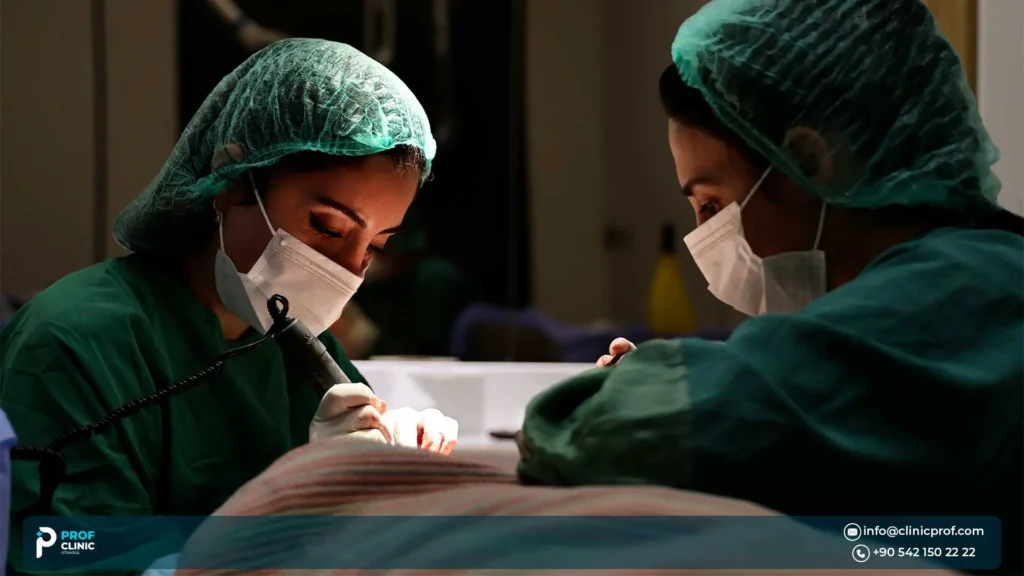
FAQs about Afro Hair Transplant for Men
Is hair transplant effective for African American men?
Absolutely. Due to the volume of curly hair, African American men often achieve the most dramatic transformations with fewer grafts.
What is the best technique for black male hair transplant?
FUE using specialized flared punches is the gold standard to ensure the “C-curve” follicle remains intact
How many grafts do African American men typically need?
Depending on the Norwood scale (baldness level), most men need 2,000 to 3,500 grafts for a full hairline and crown restoration.
What should black men consider before hair transplant?
The risk of keloid scarring and the surgeon’s specific experience with the subcutaneous curl are the two most important factors.
How to find experienced surgeons for Afro male hair?
Look for clinics that show clear, healed results on Type 4C hair. Generic results on straight hair are not an indicator of success for Afro hair.