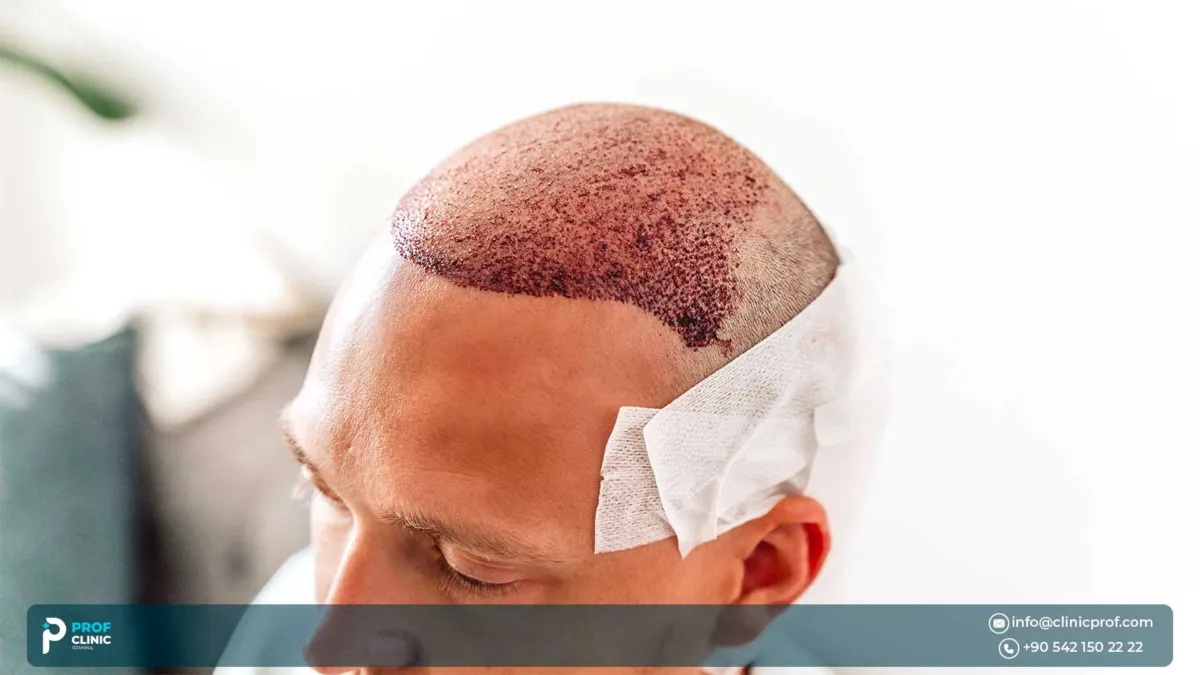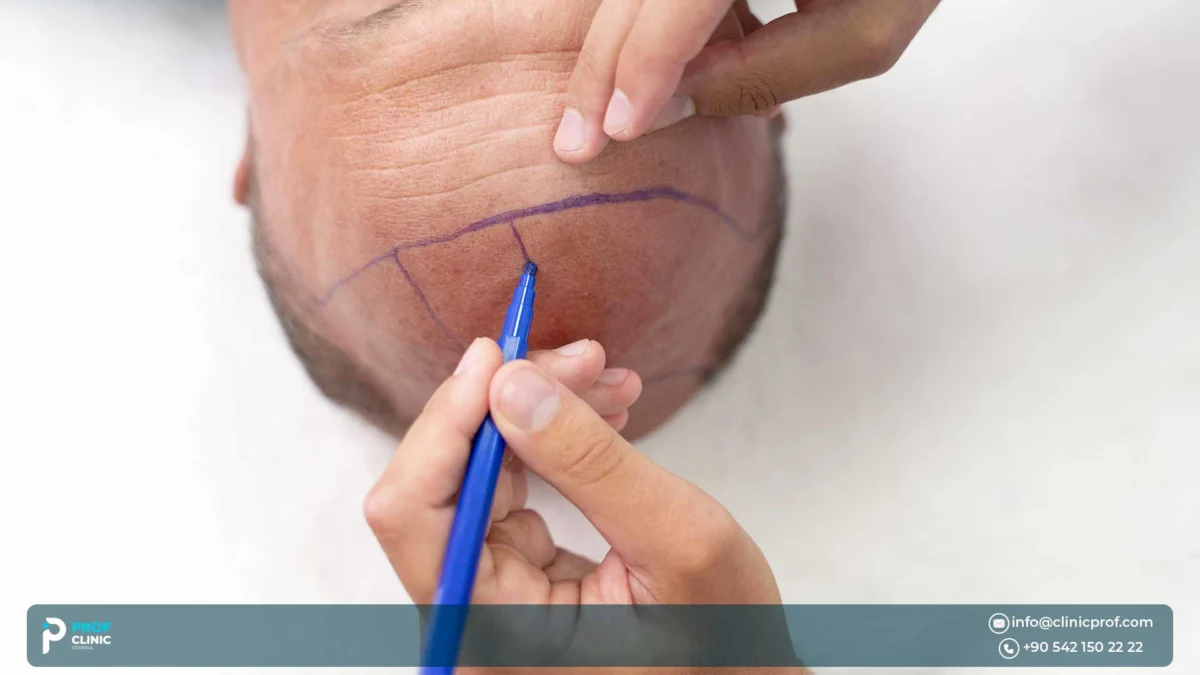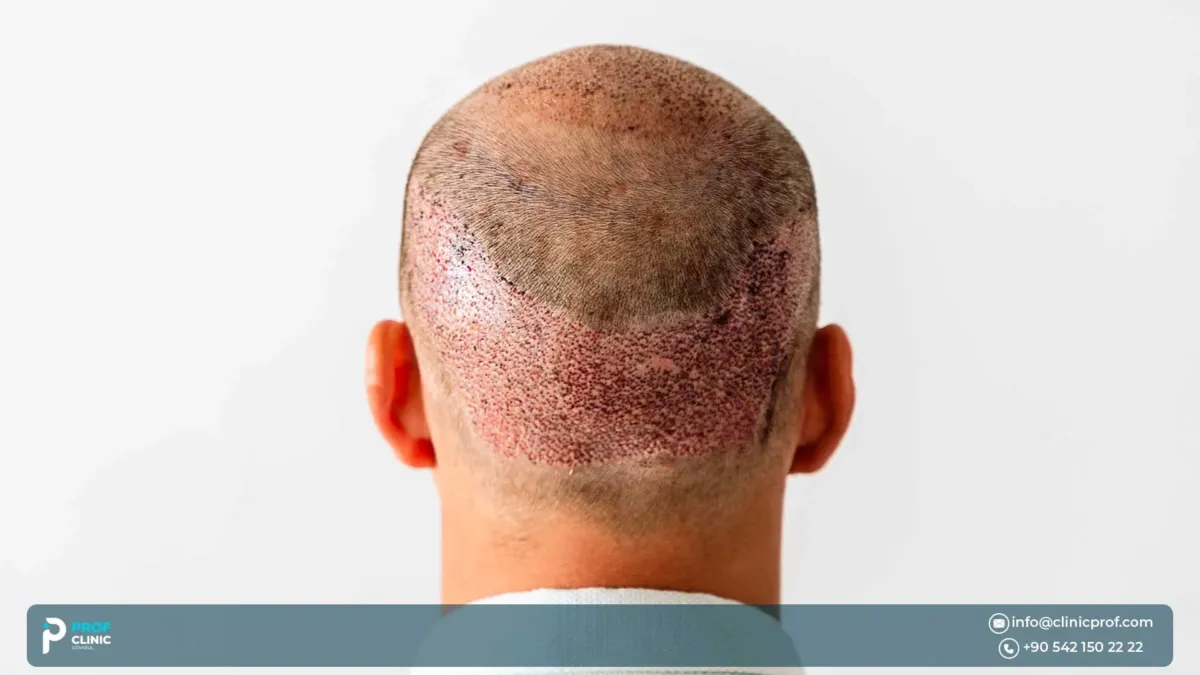
Can a hair transplant for Black men give back a sharp, natural hairline, or does afro hair make surgery too risky? For most men with hereditary hair loss, it can work well: according to the ISHRS, hair restoration is as available and as successful for patients of African descent as for anyone else. The difference lies in the planning, because curly roots, skin that can scar easily and the hairline you want all change how the procedure is done.
In this guide by Prof Clinic, you’ll learn how male pattern baldness shows up in Black men, which causes need a diagnosis before surgery, what non-surgical treatment can do, and how a lineup-friendly hairline is designed. We also cover graft numbers, keloid and bump risks, recovery and cost in Turkey, so you know what to ask before you book.
Can Black Men Get Hair Transplants?
Yes. Black men can get hair transplants, and the results can look natural when the team understands afro hair. The NHS explains that a hair transplant suits permanent baldness of the type that runs in families. A transplant moves your own follicles from the back and sides of the head, where hair is resistant to that hereditary loss, to the thinning areas.
Afro hair even brings one advantage. Dr William Yates, writing for the ISHRS, notes that tightly curled hair gives a stronger impression of density with fewer grafts, so a Black man with significant loss may still be a candidate when a man with straight hair and similar loss would not be. That’s why an afro hair transplant for men is often judged on coverage rather than on raw graft counts.
Signs You May Be a Good Candidate
No article can confirm your suitability, but these points usually count in your favour:
- A clear pattern: receding temples, a thinning front or a thinning crown that has developed slowly over years.
- A healthy donor area: enough hair at the back and sides, with no bumps, scars or active inflammation.
- A stable cause: hereditary loss rather than active traction damage or a scarring condition.
- No history of keloids, or a history you’ve disclosed: the team needs to know before planning any incisions.
- Realistic goals: a hairline that suits your age and leaves donor hair for the future.
The same principles apply to any male hair transplant in Turkey; afro hair adds a few extra checks, which the next sections explain.
How Male Pattern Baldness Shows Up in Black Men
Male pattern baldness in Black men usually follows the same course as in other men: the hairline pulls back above both temples into an “M” shape, and the crown thins. MedlinePlus Genetics describes this pattern and links it to androgens, particularly dihydrotestosterone (DHT). It can begin as early as the teenage years, and the risk rises with age, with more than half of men over 50 showing some degree of loss.
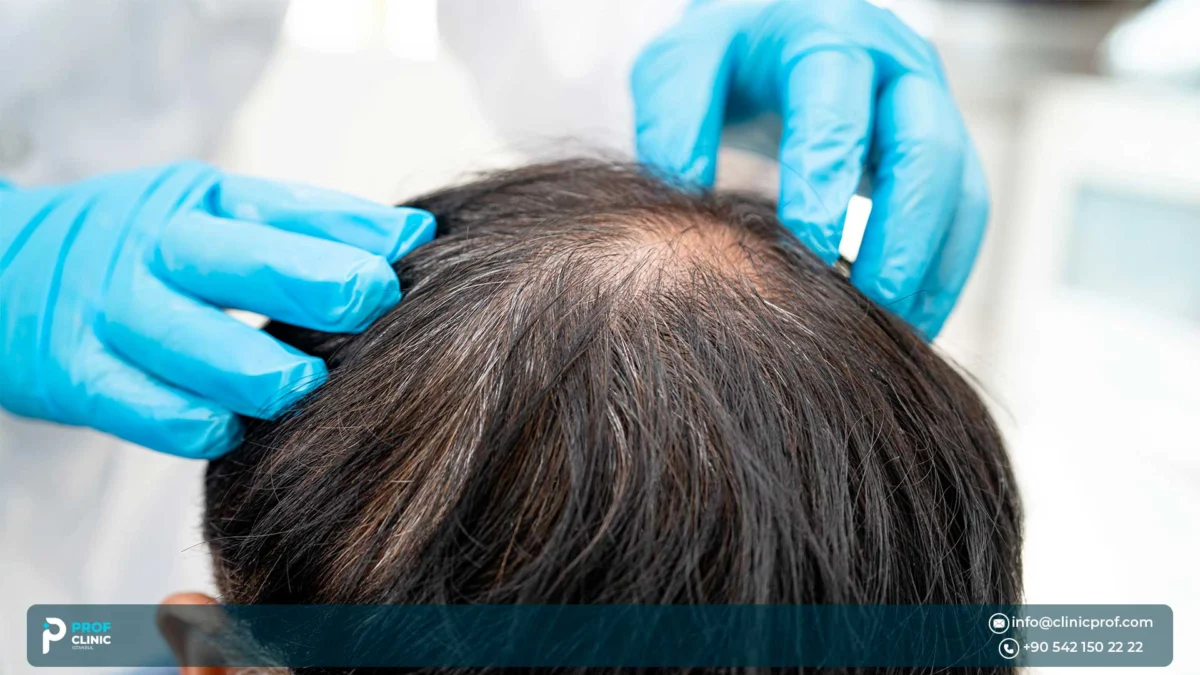
What often differs is how early it becomes visible. A regular lineup or edge-up at the barber draws a crisp border around the front and temples, so even small changes in the corners can stand out. Many men first notice the problem not in the mirror but when their barber has to move the line back to keep it clean.
When It Isn’t Male Pattern Baldness
Not every receding hairline in a Black man is hereditary, and some causes change the plan completely. These are the ones a doctor should rule out first:
- Traction alopecia: the AAD explains that tight cornrows, locs, braids and buns, and even hats rubbing on hair pulled back tightly, can cause hair loss. Early signs include a receding hairline and broken hairs around the forehead, and the loss can become permanent the longer it goes untreated.
- Acne keloidalis nuchae: firm bumps at the back of the neck and lower scalp, the very area surgeons use as a donor. The AAD says men of African descent have the highest risk, that frequent close-shave haircuts, caps and durags can irritate it, and that untreated it can leave scars and permanent hair loss.
- Scarring conditions: the ISHRS lists central centrifugal cicatricial alopecia (CCCA) and dissecting cellulitis among the conditions to check in African-American men, and notes that transplanted hair may grow less well in scarred scalp even when the condition seems quiet.
If one of these is active, the first step is usually medical treatment, not surgery. Scarring conditions such as CCCA are seen most often in Black women, and our guide for women covers them in more depth.
Also read: Afro Hair Transplant for Women: What Black Women Should Know
Not sure what’s behind your receding edges? Send photos of your hairline, crown and the back of your head on WhatsApp so the team can look at the pattern before you plan any travel.
African American Male Hair Loss Treatment Without Surgery
Medication can slow hereditary hair loss and sometimes regrow some hair, but it cannot rebuild a hairline that has already gone. For many men the best plan combines both: medicine to protect the hair you still have, and a transplant to restore the areas that won’t come back. This matters because, as the NHS points out, the hair around a transplant may keep thinning after surgery.

The AAD summarises the two most established options for male pattern hair loss, and the table compares them with surgery.
| Option | What it does | When you may see a change | What to keep in mind |
|---|---|---|---|
| Minoxidil | Can help early hair loss; it cannot regrow a whole head of hair | Usually about 6–12 months | Needs daily use; the benefit is lost if you stop |
| Finasteride | A tablet approved by the US FDA for male pattern hair loss | About 4 months to notice improvement | Works only while you keep taking it; discuss side effects with a doctor |
| Hair transplant | Moves your own resistant follicles to bald or thinning areas | New hair at about 4 months; full result at 10–18 months (NHS) | Doesn’t stop loss in untreated areas; needs enough donor hair |
The AAD also describes platelet-rich plasma (PRP) and laser therapy as options studies support, with the caveat that lasers need many sessions. If PRP is offered alongside surgery, ask whether it’s included in your plan or billed per session. Never start or stop a prescription medicine without your own doctor’s advice. For how each medicine works, its side effects and how it fits around surgery, see Finasteride and Minoxidil for Hair Loss and After a Transplant.
What Makes Afro Hair Different in Surgery
Afro hair is curly beneath the skin as well as above it, and that single fact shapes the whole operation. The ISHRS explains that both the follicle and the hair curve in relation to the scalp, so a punch that follows the visible hair can cut through the root below. A cut root, known as transection, is less likely to grow.
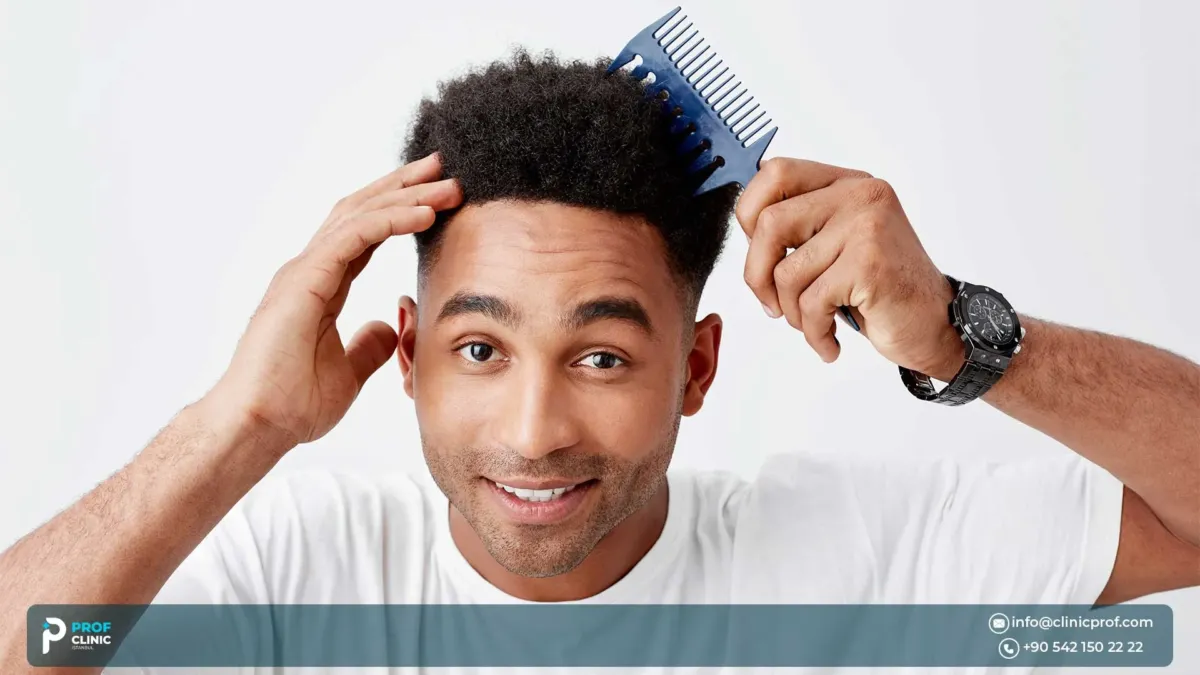
Three practical consequences follow:
- Extraction is slower and more careful: the team has to read the direction of each root, and the ISHRS describes trimming donor hair almost flush with the skin to see the true exit angle.
- The donor area can look richer than it is: thick curls can disguise the real density, so the safe number of grafts has to be counted, not guessed.
- Skin matters as much as curl: in a 2023 study of 64 patients of African descent in Dermatologic Surgery, skin thickness and firmness affected transection more than the degree of curl, with a mean transection rate of 3–6% using a skin-responsive device.
That study was small and led by the device’s developer, so read it as encouraging rather than final. The practical takeaway is simple: ask how the team protects curved roots, not just which technique it uses. FUE extraction is the usual starting point, and DHI implanters or Sapphire blades describe how the channels are opened and grafts placed; our technique guide compares them in detail.
Also read: Afro Hair Transplant Techniques: FUE vs DHI for Coily and Curly Hair
Designing a Black Male Hairline: Lineup or Natural Edge?
Many Black men want a straighter, fuller hairline with less recession at the temples, and a good design respects that while still looking natural up close. The ISHRS notes that Black male patients usually ask for less temporal recession than other men. That preference fits the clean lineups and sharp temple corners that are part of many men’s grooming, which also explains why so many Black men’s hairlines look straighter than average.
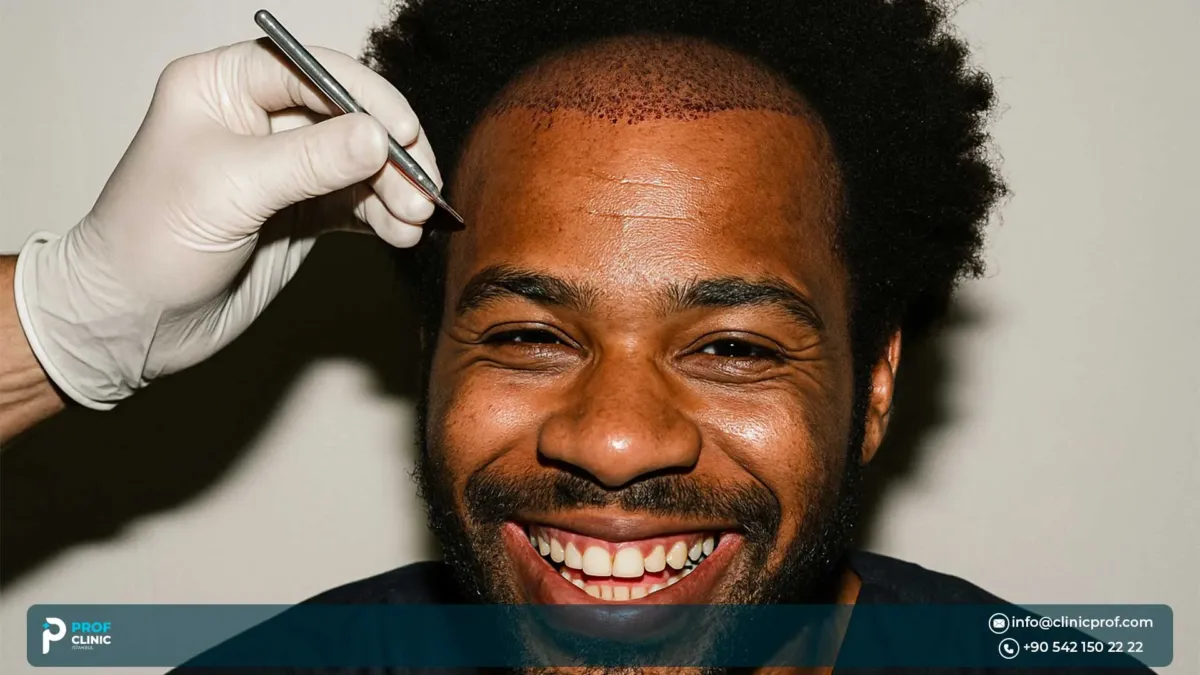
A black male hairline transplant is still a balance between three things:
- The front edge: a hairline that looks straight from a distance but has a slightly irregular first row of fine, single-hair grafts, so it doesn’t read as a wig line.
- The temple corners: rebuilding the corners gives the squared frame many men want for a lineup, but setting them too low or too sharp can look unnatural as you age.
- The donor budget: every graft used at the front is one that can’t be used later at the crown, so the plan should leave reserve hair if your loss is still progressing.
What it means in real life: the hairline you’d ask your barber for at 25 may not be the one that suits you at 50. A good plan places the line where your face and your donor supply can support it for decades, and your barber can still sharpen the edge on top. If recession at the temples is your main concern, see Temples and Receding Hairline: Hair Transplant for Temple Recession.
Fades, Lineups and Short Haircuts
If you wear your hair very short, the donor area matters as much as the hairline. FUE leaves small dot scars that are usually hard to see, while the strip method (FUT) leaves a single line, as the NHS explains, which is harder to hide under a skin fade. The ISHRS also notes that the skin can darken at donor and recipient sites in some patients, which is more noticeable with a close cut. Tell the team how short you usually go, so the extraction pattern can be planned around your haircut.
Want a hairline drawn around your face and haircut? Book a consultation and ask for the proposed design to be marked on your photos before any date is fixed.
How Many Grafts Do Black Men Usually Need?
The number of grafts depends on how far your hair loss has progressed and how much donor hair you have, so no fixed figure fits everyone. Restoring the temples and front hairline needs far fewer grafts than rebuilding the front, mid-scalp and crown together. Because curly hair covers more scalp per hair, Black men often reach a convincing look of density with fewer grafts than men with straight hair, as the ISHRS notes.
Your count is usually set by four factors:
- Your Norwood stage: the size of the area to cover now.
- Your real donor density: measured, not judged from the curls.
- Future loss: younger men with active loss need more reserve.
- Your goal: a defined hairline and temples, or full coverage including the crown.
For general ranges by stage, see our guide How Many Grafts Do I Need? Graft Count by Norwood Stage. A precise number comes only after an assessment of your photos or scalp.
Risks Black Men Should Discuss First: Keloids, Bumps and Pigment
The risks of a hair transplant are mostly the same for everyone, but a few deserve extra attention in darker skin and curly hair. The NHS describes the procedure as generally safe, with a small risk of bleeding, infection, an allergic reaction to the anaesthetic, a noticeable scar, or grafts that don’t take. The table lists the issues to raise before surgery.
| Issue | Why it matters in Black men | What to ask |
|---|---|---|
| Keloid or raised scars | The ISHRS lists a history of keloid or hypertrophic scarring as a key pre-op factor | How will you test or plan around my scarring history? |
| Ingrown hairs and folliculitis | Curly hairs growing back can cause bumps about 2–3 months after surgery, usually easily treated with antibiotics (ISHRS) | Who do I contact if bumps appear after I fly home? |
| Skin darkening | Pigment changes can appear at donor and recipient sites (ISHRS) | How visible is this likely to be with my skin and haircut? |
| Bumps at the back of the neck | Acne keloidalis nuchae affects the donor zone and is most common in men of African descent (AAD) | Is my donor area healthy enough, or does it need treatment first? |
Strip surgery adds one more point. The ISHRS author reports that some African-American patients react badly to dissolvable stitches and agrees with surgeons who use non-dissolvable ones. FUE doesn’t need stitches, so this issue doesn’t arise.
Recovery and Results Timeline for Afro Hair
Recovery has two speeds: the skin settles within a couple of weeks, while the new hair takes most of a year. The NHS advises being very careful with transplanted hair for the first 2 weeks, says you may need about 1–2 weeks off work and may be asked to limit exercise for the first month. The transplanted hairs often fall out after a few weeks, new hair usually appears after about 4 months, and the full result should be visible after 10–18 months.
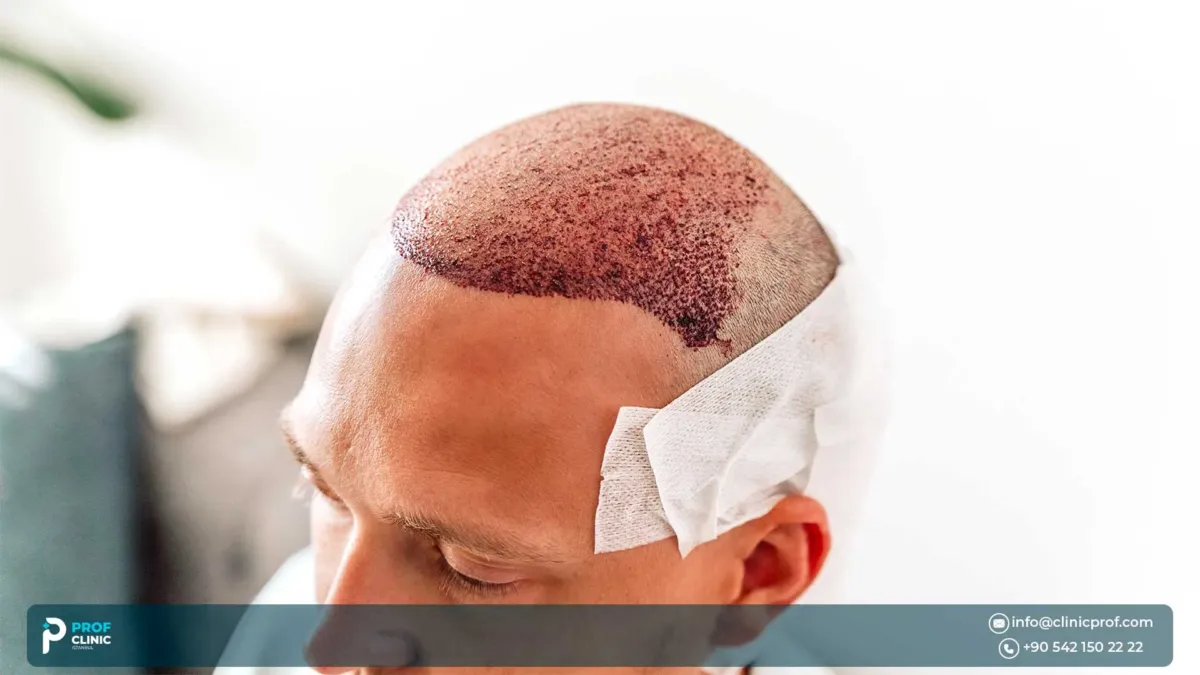
Here’s what most men notice:
- Weeks 1–2: small scabs, redness and mild swelling while the grafts settle. Follow your aftercare instructions closely and don’t pick or scratch.
- From about week 2: shedding of the transplanted hairs. The root stays under the skin, so this is not graft loss. It is a different thing from shock loss in your existing hair, which our guide to shock loss after a hair transplant explains.
- Months 2–4: the stage when ingrown hairs or small bumps may appear as curly hairs break through. Send photos rather than squeezing them.
- Months 4–18: new growth, which starts fine and thickens as the curl pattern matures.
Healing speed varies, so treat these as averages rather than rules. Before your first fade or lineup, ask the team when clippers, and later a razor, can safely go near the donor area and the new hairline. Our afro hair transplant recovery guide sets out the full week-by-week aftercare plan.
Curious how afro hairlines look once they mature? Browse our before-and-after gallery to see results at different stages.
Hair Restoration for Black Men at Prof Clinic in Istanbul
At Prof Clinic in Istanbul, an afro hair transplant in Turkey starts with a medical assessment and a look at your photos, not with a fixed graft number. Your case is reviewed by Spc. Dr. Lütfi Öztürk, the clinic’s medical lead for hair restoration; an internal-medicine specialist, he carries out the medical assessment, draws up the treatment plan for your afro hair transplant and coordinates follow-up.
Before you fly to Istanbul for an afro hair transplant, these are the points to confirm:
- Techniques: the clinic’s hair transplant in Turkey service uses FUE, DHI, Sapphire FUE and Micro FUE, and the method is chosen after your hair and scalp are assessed.
- Pre-op tests: on the medical side, surgery is preceded by an ECG, blood count, blood sugar, electrolytes, kidney and liver function tests, and hepatitis and HIV screening.
- Honest expectations: how dense your coily hair can look is discussed with you individually, and no particular density is promised beforehand.
- A written quote: once the team has seen your photos, which show your curl pattern and donor area, the price comes in writing and covers the procedure, accommodation, airport and hotel transfers, and post-op care.
- Follow-up from home: the coordination team stays in touch and gives advice over WhatsApp after you leave.
As a general guide, an afro hair transplant in Istanbul costs about €2,500–€4,500, a little more than a standard scalp transplant because careful extraction of curly roots takes longer. This is an approximate 2026 range, not a final price; yours depends on your case after assessment and is confirmed in the written quote. For a full breakdown, see our guide to afro hair transplant cost in Turkey. Stays are typically 2–4 days, and the clinic’s men’s service page puts an FUE session at about 7–8 hours, sometimes spread over more than one day.
How to Judge a Clinic for Afro Hair
Whichever clinic you consider, judge it by what it can show and explain rather than by what it claims. Ask for healed results from men with similar hair and skin, photographed from the same angle about 12 months after surgery. Ask how the team checks for keloid scarring and bumps in the donor area, how it protects curved roots during extraction, and what the written quote covers. Also check the clinic’s licence with the Turkish Ministry of Health. Our guide to choosing an afro hair transplant clinic in Turkey gives a fuller checklist.
FAQs About Hair Transplants for Black Men
Can Black men get hair transplants?
Yes. Black men with hereditary hair loss and a healthy donor area are often good candidates, and the ISHRS describes results as equally successful as in other groups. The extra steps are checking for keloid scarring, traction alopecia and scalp conditions, and using an extraction method that follows the curved root.
Do hair transplants work on 4C hair?
They can. Very tightly coiled hair is harder to extract because the root curves more under the skin, so the risk of cutting grafts is higher with the wrong tools or rushed work. In return, coiled hair gives more coverage per graft. Ask the team how it handles highly curved roots and to show healed results on similar hair.
Why do Black men have straight hairlines?
Partly grooming and partly preference. Regular lineups and edge-ups trim the front and temples into a crisp, straight border, and the ISHRS notes that Black men usually want less temple recession than other patients. In a transplant, the line can look straight from a distance while the first row stays slightly irregular, so it looks natural up close.
Is a hair transplant for Black men more expensive?
Often slightly, because extracting curly roots carefully takes more time. In Istanbul, an afro hair transplant costs about €2,500–€4,500 as an approximate 2026 range, compared with about €1,800–€3,500 for a standard scalp package. Your final price depends on the area, your donor hair and the plan confirmed in your written quote.
Can I get a lineup or fade after a hair transplant?
Yes, but not straight away. The skin and grafts need time to settle, and the NHS advises being very careful with transplanted hair for the first two weeks. Ask your clinic when clippers can be used on the donor area and when a razor can touch the new hairline, and tell your barber about the procedure.
Will I still need finasteride or minoxidil after surgery?
Many men do. A transplant moves resistant follicles but doesn’t stop hereditary loss in the hair around them, which may keep thinning. Minoxidil or finasteride can help protect that native hair, according to the AAD, but they only work while you keep using them. Discuss whether they suit you with a doctor before starting.
Final Thoughts
A hair transplant for Black men works best when the plan respects three things at once: the curved roots under the skin, a donor area and skin type that may need extra care, and a hairline that suits your lineup today and your face in twenty years. Get the cause of your hair loss confirmed first, ask how the team protects curly grafts, and judge the result only after a full year.
Start with an assessment rather than a booking. Contact Prof Clinic with your photos and ask for a written plan for your afro hair transplant in Istanbul.
Sources
- ISHRS — Hair Restoration in African-Americans
- NHS — Hair transplant
- American Academy of Dermatology (AAD) — Hair loss: Diagnosis and treatment
- American Academy of Dermatology (AAD) — Acne keloidalis nuchae: Causes
- American Academy of Dermatology (AAD) — Hairstyles that pull can lead to hair loss
- MedlinePlus Genetics — Androgenetic alopecia
- Dermatologic Surgery — Follicular Unit Excision in Patients of African Descent: A Skin-Responsive Technique (Umar et al., 2023)