If you are searching for the best afro hair transplant clinic in Turkey, focus on evidence, not hype: Afro-specific experience, curvature-aware extraction, and results you can verify.
Afro-textured (coily/curly) hair can look exceptionally natural after a transplant. The difference is not the marketing label on the website—it is whether the team understands what your follicles are doing under the skin and plans every step around that anatomy.
Why Afro-Textured Hair Needs an Afro Hair Transplant Specialist in Turkey?
Afro-textured hair often has a curved follicle path beneath the scalp. That curvature can increase the risk of graft transection (follicle injury during extraction) when a clinic uses a one-size-fits-all punch and technique.
A true afro hair transplant specialist in Turkey should be able to explain, in plain language, how they handle:
- Under-skin curl versus above-skin curl (they are not always the same).
- Extraction strategy (the make-or-break step for survival and growth).
- Angle and direction control during implantation (to match curl behaviour).
- How FUE dot scarring may look on your skin tone, including hypopigmentation risk.
Practical rule: If a clinic cannot clearly explain how it limits transection for tight curls, it is not ready for your case.
Criteria for the Best Afro Hair Transplant Clinic in Turkey
Use these criteria to compare any afro hair transplant clinic in Turkey. You are not trying to find the “perfect” clinic—you are trying to eliminate clinics that cannot prove Afro-specific competence.
1) Proven Afro case volume
- Ask for multiple Afro/curly/coily cases similar to your pattern (hairline, temples, crown).
- Prefer consistent angles, lighting, and hair length across photos—and include donor-area images.
2) Clear medical accountability (who do
- Get names and roles: who designs the hairline, who extracts, who creates recipient sites, and who implants.
- Avoid vague answers such as “the team does it.” Delegation without medical governance is a risk signal.
3) Tooling and technique adapted to curved follicles
- Look for curvature-aware punch strategy, magnification, depth control, and hydration protocols.
- Ask how they monitor transection during extraction and what target rates they consider acceptable.
4) Skin-of-colour counselling and risk planning
- You should be screened for keloid tendency and educated about PIH (dark spots) prevention.
- Aftercare should be specific, written, and realistic—no “scarless” promises.
5) A realistic design philosophy for Afro hairlines
- Expect an age-appropriate hairline, natural direction/angles, and a density plan that respects donor limits.
- The goal is believability and long-term donor safety, not an aggressive “instant transformation.”
Summary comparison table
| Criterion | What good looks like | What to request |
| Afro-specific portfolio | Multiple Afro cases with long-term follow-up | Dated photos, angles, and timeline notes (plus donor photos) |
| Accountability | Named, licensed clinician roles per step | Written workflow showing who performs each step |
| Extraction strategy | Curvature-aware approach with depth control | Punch strategy, transection monitoring, graft handling protocol |
| Skin-of-colour counselling | Discusses keloids and PIH upfront | Consent notes + aftercare plan tailored to Fitzpatrick IV–VI |
| Communication | Clear expectations and no guarantees | Clear expectations and no guarantees |
Tip: Send 3–5 clear photos (front, both temples, crown, and donor area) and ask Prof Clinic to reply with an Afro-specific plan in writing.
How to Verify Real Results at a Turkish Afro Hair Transplant Clinic
When clinics claim they are the best afro hair transplant clinics in Turkey, verification is your leverage. Do not rely on a single hero photo.
1) Validate the before/after media
- Same patient, same angles, similar hair length, and consistent lighting.
- No heavy filters or “wet hair” tricks to hide gaps.
- Donor-area photos included (overharvesting risk is real).
2) Demand timeline honesty
Early photos can look worse before they look better. Prefer clinics that show progress stages (not only “final” shots) and explain the typical growth timeline.
3) Look for independent signals
- Video testimonials (harder to fake than still images).
- Reviews that mention Afro-textured hair specifically and describe the process, not only the result.
- Direct contact with a prior patient (when possible and ethical).
4) Ask for clinical documentation
A serious clinic can provide:
- Pre-operative assessment summary (donor evaluation and plan).
- Written aftercare instructions and medication guidance.
- ·Clear emergency contact process (what to do if swelling, infection, or abnormal scarring occurs).
Ask one hard question: What complications do you watch for in Afro hair cases, and what is your protocol if growth is uneven or the donor is stressed?
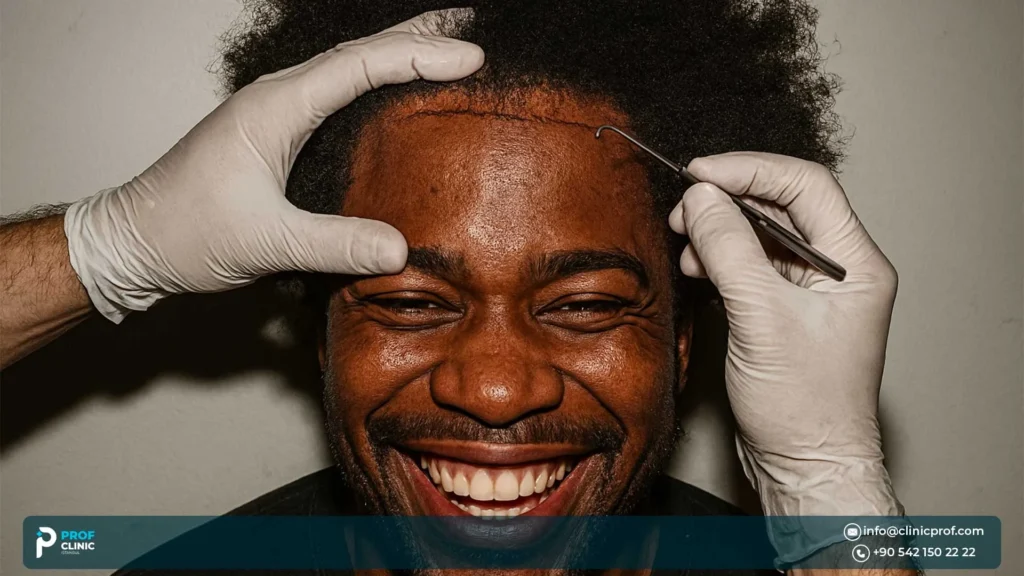
Key Techniques and tools Used in an Afro Hair Transplant Clinics in Turkey
There is no single “best” method for everyone. The best hair transplant in Turkey for Afro hair depends on your donor quality, your follicle curvature under the scalp, and the clinic’s execution.
Common technique options
- FUE (Follicular Unit Extraction): the most common approach; outcomes depend heavily on extraction skill in curved follicles.
- DHI (Direct Hair Implantation): often chosen for placement control (angle/direction). Extraction quality still matters most for survival.
What matters more than the label
| Challenge in Afro hair | Challenge in Afro hair | What to ask the clinic |
| Curved follicles under the skin | Curvature-aware extraction strategy (e.g., punch selection + depth control) | “How do you adapt your punch strategy for tight curls?” |
| Transection risk | Experienced operator + transection monitoring | “How do you monitor and limit transection during extraction?” |
| Angle/direction matching | Careful recipient-site design and implantation | “Who creates recipient sites, and how do you match curl direction?” |
| Donor management | Density measurement + conservative harvesting plan | “How do you assess safe donor limits and prevent overharvesting?” |
| Scar visibility/contrast | Honest counselling + punch-size strategy + aftercare | “How might FUE dot scars look on my Fitzpatrick type?” |
Safety and Skin-of-Color Standards in an Afro Hair Transplant Clinic in Turkey
For many patients, the best place for Afro hair transplant is the clinic that takes skin-of-colour healing seriously—not the clinic that promises the fastest transformation.
1) Keloid risk screening
Keloids (raised scars) are more common in darker skin tones, and personal/family history matters. You should be screened before surgery.
Ask directly:
- Do you or close relatives form raised scars?
- Have you developed keloids from piercings, acne, or prior surgery?
- If I am higher risk, how does your plan change (or do you advise against surgery)?
2) PIH (dark spots) prevention mindset
Post-inflammatory hyperpigmentation (PIH) can follow irritation or inflammation. You want a clinic that plans to minimise unnecessary trauma and gives clear aftercare.
Look for:
- Simple wound-care instructions and realistic expectations for redness and healing.
- Sun-protection guidance after the procedure.
- Avoidance of harsh, irritating products early on.
3) Proper medical governance
Sound governance means informed consent, sterile technique, and a defined pathway if complications occur. It also means transparency about delegation and clinician licensing.
- Clear consent and documentation.
- Sterile workflow and graft handling standards.
- A written plan for infection, excessive swelling, or abnormal scarring.
- Follow-up schedule and accessible clinical contact.

Questions to ask and Red Flags When Choosing the Best Turkish Afro Hair Transplant clinic
Questions to ask (use these on every consultation)
- How many Afro-textured cases do you perform per month or per year?
- Who performs extraction, who creates recipient sites, and who implants grafts?
- How do you adapt extraction for curved follicles under the scalp?
- How do you monitor transection during extraction?
- What is your plan to protect the donor and avoid overharvesting?
- How do you counsel Fitzpatrick IV–VI patients about FUE dot visibility and healing?
- What is your protocol if I develop infection, prolonged redness, or raised scarring?
- Can you show 3–5 cases similar to mine (pattern, hairline goals, and density)?
Red flags (reasons to pause or walk away)
- We use the same method for everyone.”
- No scars at all.” (FUE is not scarless.)
- Refusal to say who performs each surgical step.
- Only perfect hairline photos; no donor photos and no long-term follow-up.
- Pressure tactics (today-only pricing, urgent deposits, limited-time threats).
- Guaranteed density or “100% growth” promises.
If you hear multiple red flags, get a second opinion. Contact us to have comfortable explaining about Afro-specific extraction strategy in detail.
Why patients choose Prof Clinic Istanbul for Afro hair transplants
At Prof Clinic in Istanbul, patients choose us because we combine an Afro-specific approach with visible proof of work and a clear, simple path to start.
- Afro-textured hair is a dedicated focus at our clinic: On the ClinicProf website, Afro hair transplant is presented as a standalone service—not a generic hair transplant page. This reflects how we work: we plan and execute cases with Afro-textured follicles in mind from the first assessment to the final design.
- Our results are easy to evaluate through real case examples: We understand that “experience” should be verifiable. That is why we make it possible for patients to review Afro-relevant cases and look for results that match their goals, curl pattern, and donor characteristics.
- We make it easy to begin an Afro-specific evaluation: Our website encourages booking a consultation, including free consultation messaging, so patients can start with a clear assessment rather than guesswork. Our team can review photos and guide the next steps based on what we see.
- Our team offers established transplant options in Istanbul (FUE/DHI): ClinicProf’s main site positions Prof Clinic in Istanbul as offering hair transplant services, including FUE and DHI. We use these established approaches within a patient-specific plan, based on hair characteristics and the most suitable execution strategy.
If you are considering Prof Clinic in Istanbul, we recommend requesting an Afro-specific assessment with our team
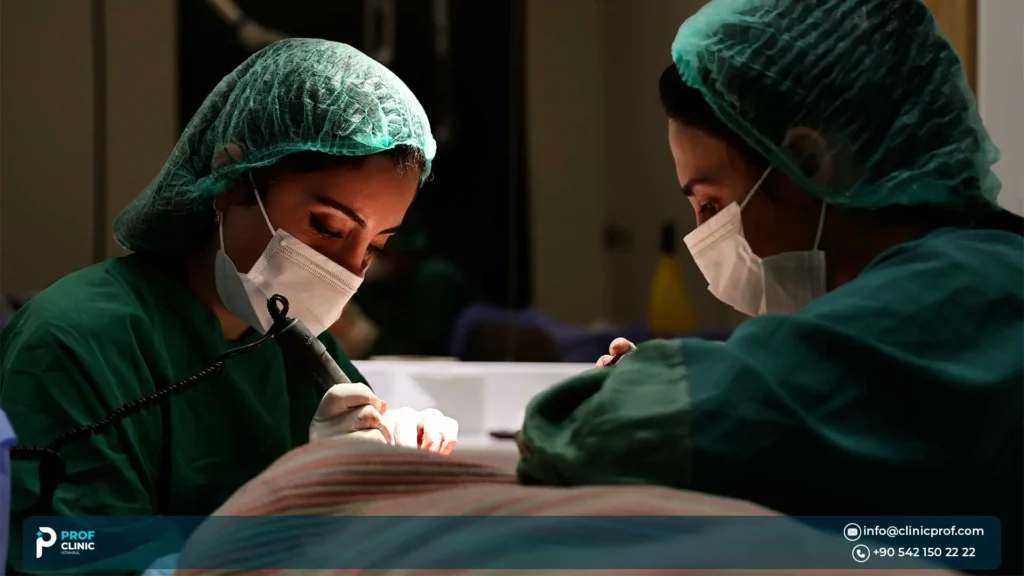
FAQs
Which is the best hair transplant clinic for black men in Turkey?
The “best” clinic is the one that can prove consistent Afro-textured outcomes (verifiable before/after + follow-up), explain its curved-follicle extraction strategy, and show clear medical accountability for each surgical step.
What should I look for in an afro hair transplant clinic?
Prioritize Afro-specific case volume, a curvature-aware extraction approach, honest scarring counseling for darker skin types, and a written plan covering who does what and how donor safety is managed.
Are there specialized clinics for afro hair in Turkey?
Yes—some clinics market dedicated Afro hair transplant services. The key is verifying the clinic’s Afro-case portfolio and clinician roles, rather than relying on the label alone.
How do I verify a clinic’s experience with afro hair?
Ask for multiple Afro cases similar to your pattern, with consistent lighting/angles and long-term follow-up. Also request donor-area photos and a clear description of the extraction tools/approach used for curved follicles.
What questions should I ask before choosing a clinic?
Ask who performs extraction/incisions/implantation, how they adapt extraction for curved follicles, how they prevent overharvesting, and how they counsel/monitor skin-of-color healing risks like keloids or PIH.