What makes the best afro hair transplant clinic in Turkey for you, and how can you tell it apart from a clinic that has simply added the word “afro” to its website? It’s the clinic that can show afro-textured results similar to yours, explain how it protects follicles that curve under the skin, and check your skin for keloid risk before anyone talks about dates. No ranking, advert or review score can do that checking for you.
In this guide by Prof Clinic, you’ll learn why afro hair needs a specific approach, the criteria that separate real experience from marketing, how to judge results, reviews and quotes, and which red flags mean you should walk away. By the end, you’ll have a checklist to use in every consultation, whether you’re comparing clinics in Istanbul or elsewhere in Turkey.
Why Afro Hair Needs a Clinic With Afro-Specific Experience
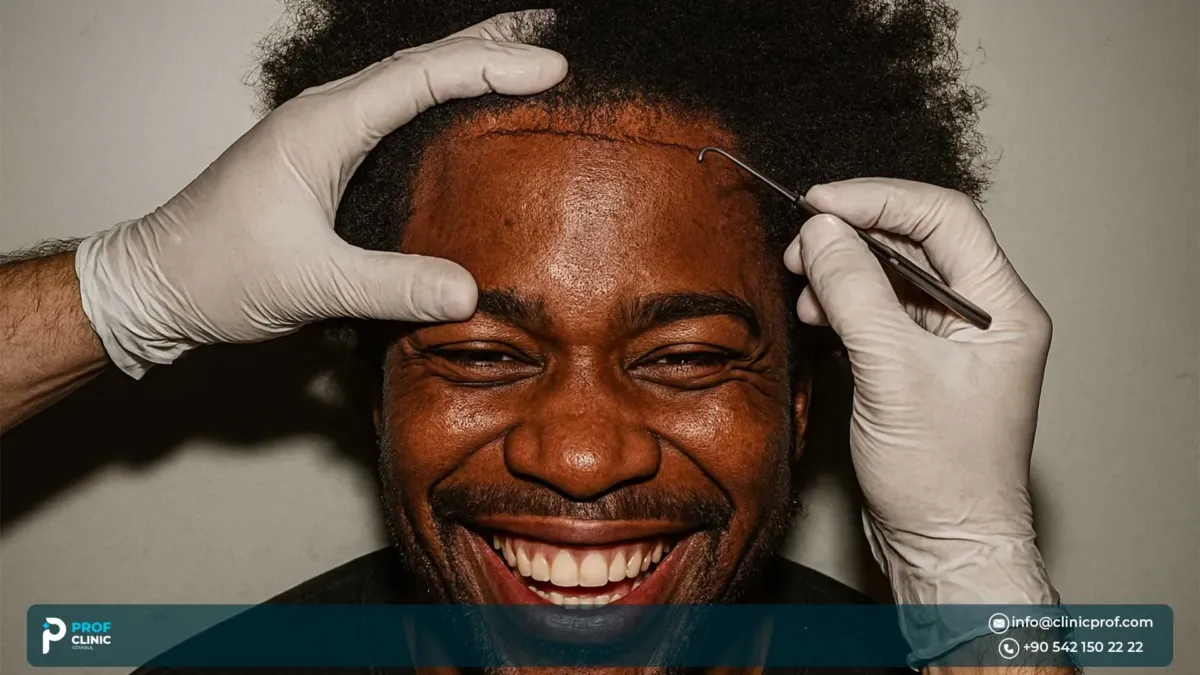
Afro hair needs a different approach because it is curly beneath the skin, not just above it. The ISHRS (International Society of Hair Restoration Surgery) explains that in people of African ancestry both the follicles and the hairs curve in relation to the scalp, so the way grafts are harvested has to allow for that curve. A punch aimed along the angle the hair seems to have at the surface can cut through the root below. This is called transection, and a cut graft is less likely to grow.
Curl also changes how much donor hair you appear to have. The same ISHRS article notes that thick curls can make the donor area look denser than it really is. The other side is encouraging: because each curly hair covers more scalp, fewer grafts can create a convincing impression of density, so some patients with modest donor supply are still reasonable candidates.
That’s why a clinic with genuine afro experience should be able to explain, in plain language, how it handles:
- Under-skin curl: how tightly your roots bend, which isn’t always the same as the curl you see on the surface.
- Extraction: the step that most decides how many grafts survive in afro hair.
- Angle and direction: placing each graft so the new hair follows your natural curl pattern.
- Skin healing: how FUE dot scars, darker marks and raised scars may behave on your skin tone.
The practical takeaway: if a clinic can’t explain clearly how it limits transection in tightly curled hair, it isn’t ready for your case.

Also read: Afro Hair Transplant in Turkey: What to Know Before You Travel
Afro Hair Transplant in Turkey for Black Men and Women
The same principles apply to Black men and women, but the usual causes of hair loss differ, and that changes what a careful clinic checks first. For many Black men, the problem is pattern hair loss at the temples, hairline or crown. The NHS notes that a hair transplant suits permanent baldness of the type that runs in families, and is not usually suitable for other types of hair loss such as alopecia areata.
For many women of African descent, the picture is different. The American Academy of Dermatology (AAD) explains that tight braids, cornrows, locs, weaves and extensions can cause traction alopecia, and that the shape of afro hair follicles makes the hair more prone to damage from tight styles. Early signs include broken hairs around the forehead and a receding hairline. If the pulling continues, the AAD says the hair can eventually stop growing for good.
The ISHRS also lists scarring conditions, most commonly central centrifugal cicatricial alopecia (CCCA), traction alopecia and dissecting cellulitis, among the factors to assess before surgery. It adds that growth in scarred scalp can be less robust than in untouched scalp, even when the condition seems quiet. Looser curly hair sits between the two: the curve under the skin is often less tight, but the same questions about extraction and healing still apply to a curly hair transplant in Turkey.
A note on labels: patients search for an afro, African-American or Afro-Caribbean hair transplant, and clinics use all three terms. What matters is not the label but how tightly your own follicles curve and how your scalp heals, so ask any clinic to assess photos of your hair and scalp before it describes what it can do.
What it means in real life: whether you’re looking for the best hair transplant in Turkey for Black men or for a woman with afro hair, the first good sign is a clinic that asks about the cause of your hair loss before it quotes a graft number.
How to Choose the Best Afro Hair Transplant Clinic in Turkey for You: 6 Criteria
Use these criteria to compare any clinic offering an afro hair transplant in Turkey. You’re not looking for a perfect clinic. You’re ruling out the ones that can’t prove afro-specific competence.
1) Proven Afro Case Experience
- Ask to see several afro, coily or curly cases with a pattern similar to yours: hairline, temples or crown.
- Prefer photos with consistent angles, lighting and hair length, and make sure donor-area photos are included.
2) Clear Medical Accountability: Who Will Perform Your Afro Hair Transplant?
Many patients search for an afro hair transplant surgeon in Turkey, but the title on a website says little about who actually holds the instrument on the day.
The ISHRS has warned patients who travel abroad about a “bait and switch” model, where a doctor’s credentials attract the patient but the surgery is performed by technicians who are not licensed to operate. It advises asking these questions before you book:
- Who will evaluate my hair loss and recommend treatment, and what is their training, licence and experience?
- Who will be involved in my surgery, and what role will each person play?
- Will anyone who isn’t licensed make incisions or harvest grafts? If so, why are they legally allowed to?
Vague answers such as “the team does it” are a warning sign, not a reassurance.
3) Tools and Technique Adapted to Curved Follicles
- Look for an extraction strategy that follows the curve, with magnification, depth control and a clear routine for keeping grafts moist.
- Ask how the team checks transection during extraction and what it changes if the rate climbs.
4) Skin-of-Colour Screening and Counselling
- You should be asked about keloids and raised scars, and told how darker marks after healing are managed.
- Aftercare should be written, specific and realistic, with no promise of a “scarless” result.
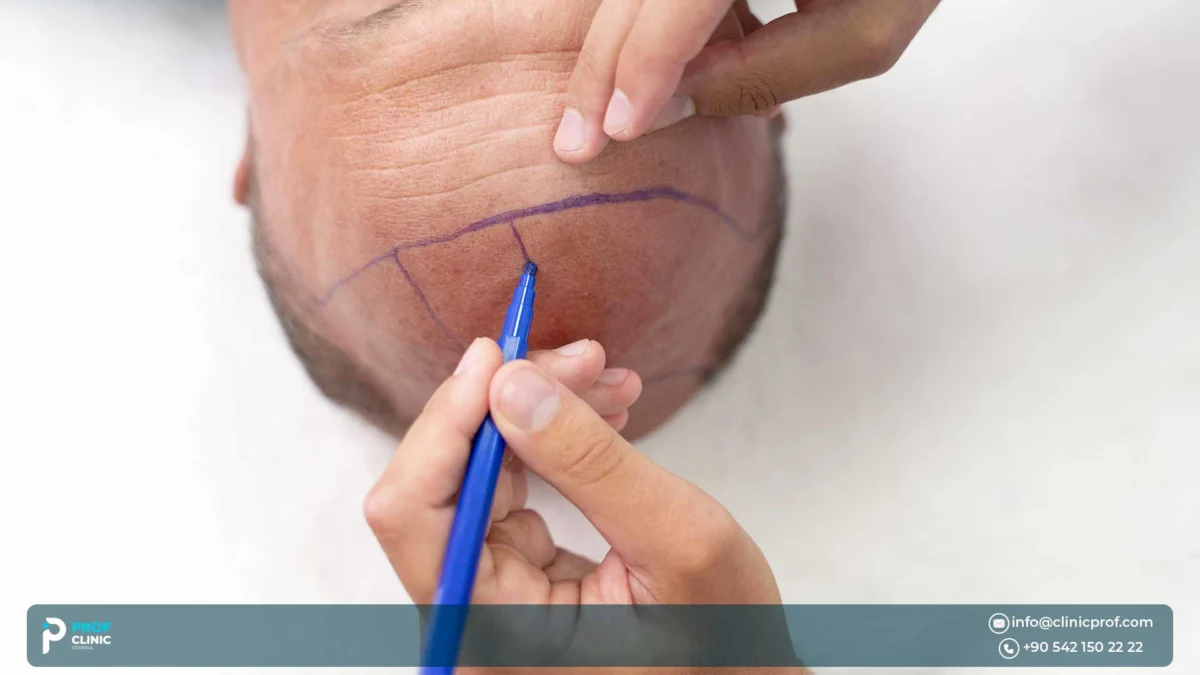
5) A Realistic Hairline and Density Plan
- Expect an age-appropriate hairline with natural direction, and a density plan that respects donor limits. The ISHRS notes that Black men often prefer less temple recession, which a good design discusses openly.
- The aim is a believable result and a protected donor area, not an aggressive “instant transformation”.
6) Licensing and Honest Communication
- Check that the clinic and the facility where surgery takes place are licensed by the Turkish Ministry of Health.
- Expect realistic goals and a written plan. Promises of a set density or full growth are a reason to keep looking.
Here’s a summary to keep beside you during consultations:
| Criterion | What good looks like | What to request |
|---|---|---|
| Afro-specific portfolio | Several afro cases followed over months | Dated photos from consistent angles, plus donor photos |
| Medical accountability | Named, licensed clinicians for each step | A written outline of who does what |
| Extraction strategy | A curve-aware approach with depth control | How the punch is chosen and transection is monitored |
| Skin-of-colour care | Keloid and pigmentation risks discussed upfront | Consent notes and a written aftercare plan |
| Communication | Realistic goals and no fixed promises | A written treatment plan and itemised quote |
Want an afro-specific opinion before you compare quotes? Prepare clear photos of your front, both temples, crown and donor area, then contact the Prof Clinic team and ask for a written assessment of your case.
How to Verify Real Results and Reviews
The most reliable way to judge a clinic’s afro experience is to look at its results the way a doctor would: the same patient, from the same angles, in the same light, over time. A single striking photo proves very little.
Check Before-and-After Photos Carefully
- Same patient, same angles, similar hair length and steady lighting.
- No heavy filters or wet-hair styling that hides gaps.
- Donor-area photos included, because overharvesting the back of the head is a real risk.
Expect an Honest Growth Timeline
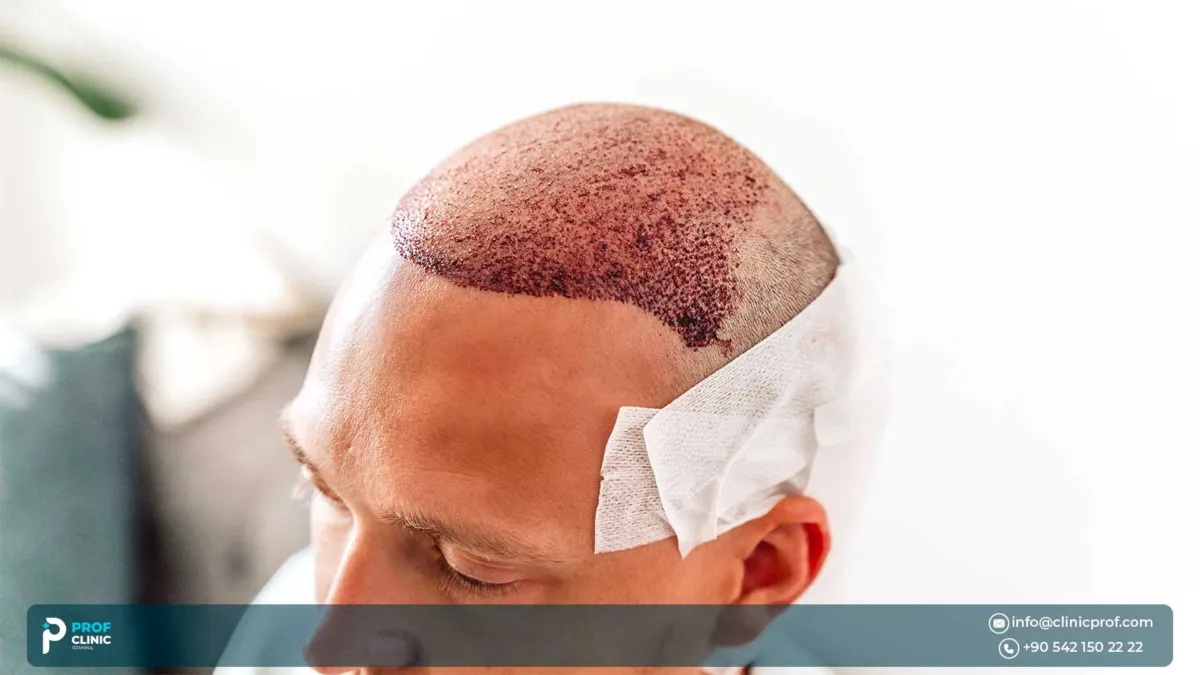
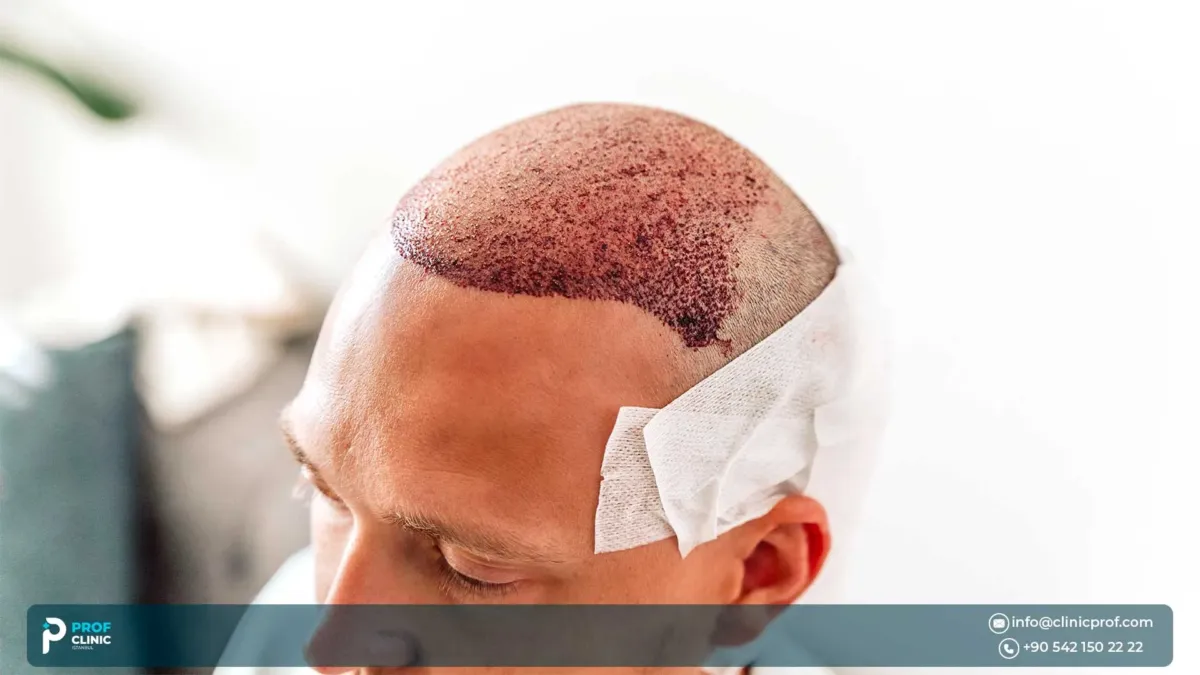
Early photos can look worse before they look better. According to the NHS, transplanted hair often falls out a few weeks after surgery, new hair usually starts to appear after about 4 months, and the full result takes 10 to 18 months. A clinic that shows progress stages, not only final shots, is giving you a truer picture. Our guide Hair Transplant Results: What to Expect and When to Judge Them explains each stage in more detail.
Read Afro Hair Transplant Reviews for Detail
- Video testimonials: harder to fake than still images.
- Specific reviews: ones that mention afro or curly hair and describe the process, not only the result.
- Aftercare stories: how the clinic responded once the patient had flown home.
- A sense of proportion: reviews describe one person’s experience. They tell you how a clinic communicates, not how your hair will grow.
Our guide to reading hair transplant reviews and spotting fakes covers paid and invented reviews in more detail.
Ask for Clinical Documentation
A careful clinic can give you:
- A pre-operative assessment summary, including the donor evaluation and the plan.
- Written aftercare and medication guidance.
- A clear emergency contact route if swelling, infection or abnormal scarring appears.
Then ask one hard question: what complications do you watch for in afro cases, and what happens if growth is uneven or the donor area looks overused?
Curious how results develop month by month? Browse our before-and-after gallery, then ask for the cases closest to your hair type and pattern.
Techniques and Tools: What Matters More Than the Label
No single technique suits every afro hair transplant. The outcome depends more on your donor quality, the curve of your follicles and the team’s execution than on the name of the method. Here’s what each term usually means:
- FUE (follicular unit extraction): grafts are removed one by one with a small punch. The ISHRS notes that FUE is becoming more popular among Black men, who often wear their hair very short. Results depend heavily on extraction skill.
- DHI (direct hair implantation): describes how grafts are placed, using an implanter pen that opens the channel and inserts the graft in one motion. It’s often chosen for angle control at the hairline, but extraction quality still matters most.
- Sapphire FUE: FUE extraction, with the recipient channels opened by sapphire-tipped blades instead of steel.
- FUT (strip method): leaves a single linear scar that, according to the NHS, should not be visible unless the hair is cut very short. The ISHRS adds that afro patients can react to dissolvable stitches, so some surgeons prefer non-dissolvable ones.
Tool design can make a measurable difference to graft survival. In a case series of 18 patients with tightly curled afro hair, published in Plastic and Reconstructive Surgery Global Open, conventional sharp and dull rotary punches failed or caused excessive transection in 8 patients, while a curved, non-rotary punch kept transection below 5% in every case. A later study of 64 patients of African descent in Dermatologic Surgery reported a mean transection rate of 3–6% with a skin-responsive device, and found that skin thickness and firmness affected it more than curl. Both were small, retrospective studies led by the device’s developer, so treat the figures as a benchmark for your questions rather than a promise.
That gives you a useful test for any clinic that claims high graft survival with curly or afro hair: how do you measure transection in your own cases, and what do you change if it rises?
| Challenge in afro hair | What helps | What to ask the clinic |
|---|---|---|
| Curved follicles under the skin | Extraction that follows the curve, with careful punch choice and depth control | “How do you adapt extraction for tightly curled roots?” |
| Transection risk | An experienced operator and ongoing checks of graft quality | “How do you monitor and limit transection during extraction?” |
| Angle and direction | Careful recipient-site design and placement | “Who makes the channels, and how do you match my curl direction?” |
| Donor management | Density assessment and a conservative harvesting plan | “How do you set safe donor limits and avoid overharvesting?” |
| Scar visibility | Honest counselling, suitable punch size and aftercare | “How might FUE dot scars look on my skin tone?” |
How FUE and DHI compare on coily hair is covered in our guide to afro hair transplant techniques.
Safety and Skin-of-Colour Standards
For many patients, the right clinic is the one that takes the healing of darker skin seriously, not the one promising the fastest transformation. Three areas deserve direct questions.
Keloid Risk Screening
Keloids are raised scars that grow larger than the wound that caused them. The AAD notes that they are more common in Black people than in people with lighter skin, that about one-third of people with keloids have a parent, sibling or child who also gets them, and that a wound from surgery or a procedure can trigger one in keloid-prone skin. The ISHRS lists a history of keloid or hypertrophic scarring as a factor to check before an afro hair transplant.
Expect to be asked:
- Do you or close relatives form raised scars?
- Have you developed keloids after piercings, acne or previous surgery?
- If your risk is higher, how would the plan change, and would the doctor advise against surgery?
Darker Marks and Ingrown Hairs
The ISHRS notes that darkening of the skin, called hyperpigmentation, can occur at the donor and recipient sites. It also reports that ingrown hairs or folliculitis can appear around 2–3 months after surgery, when curly hair starts to grow, and that they are usually easy to treat with antibiotics. A good clinic tells you this before surgery, not after.
Look for aftercare that includes:
- Simple wound-care instructions and realistic expectations for redness.
- Sun-protection advice once the clinic says the skin can tolerate it.
- Guidance to avoid harsh or irritating products in the early weeks.
- A way to send photos if bumps or dark patches appear.
Sound Medical Governance
Good governance means informed consent, sterile technique and a defined plan if complications occur. The NHS describes hair transplants as generally safe, with a small risk of bleeding, infection or an allergic reaction to the anaesthetic, and advises contacting the clinic as soon as possible about severe pain or unexpected symptoms. Look for:
- Clear consent and documentation.
- A sterile workflow and graft-handling standards.
- A written plan for infection, heavy swelling or abnormal scarring.
- A follow-up schedule and a medical contact you can reach after you fly home.

Comparing Afro Hair Transplant Costs and Quotes in Turkey
Comparing costs only makes sense when you compare what each quote includes. As a general guide, an afro hair transplant in Istanbul costs about €2,500–€4,500, a little more than a standard scalp transplant because curly follicles take longer to extract and handle. Treat it as an approximate 2026 figure rather than a final price, since your own quote follows the assessment of your case.
Before you compare two quotes, check that each one states:
- The graft estimate: and how it was worked out from your photos and donor area.
- The team: who performs extraction, channel opening and implantation.
- The inclusions: procedure, pre-op blood tests, medication and aftercare kit, hotel, and airport and hotel transfers.
- The follow-up: what support you get after you return home, and how.
- The extras: flights, extra nights, and treatments such as PRP. Ask whether these are included or billed separately.
A quote far below the rest deserves a closer look, not a quick deposit. The ISHRS has warned that the lower prices sometimes offered abroad can come with surgery performed illegally by technicians, which puts patients at risk of misdiagnosis and unnecessary or ill-advised surgery. For a full breakdown, see Afro Hair Transplant Cost in Turkey 2026: Prices & Packages, and for what a standard package covers, see What Is Included in a Hair Transplant Package in Turkey?.
What to Ask and Red Flags When Choosing a Clinic
The quickest way to test a clinic is to ask the same specific questions everywhere and compare the answers. Clinics with real afro experience usually answer in detail, without changing the subject to price.
Questions to Ask in Every Consultation
- How many afro-textured cases does your team treat, and can I see 3–5 that resemble mine?
- Who performs extraction, who opens the recipient sites, and who implants the grafts?
- How do you adapt extraction for follicles that curve under the scalp?
- How do you monitor transection during extraction?
- How do you protect my donor area and avoid overharvesting?
- What do you tell patients with darker skin about FUE dot scars, darker marks and healing?
- What happens if I develop an infection, lasting redness or raised scarring after I fly home?
- What density can I realistically expect, and what could limit it in my case?
Red Flags That Mean Pause or Walk Away
- “We use the same method for everyone.”
- “There are no scars at all.” FUE leaves many tiny dot scars, even when they’re hard to see.
- Refusal to say who performs each surgical step.
- Only perfect hairline shots, with no donor photos and no long-term follow-up.
- Pressure tactics: today-only prices, urgent deposits or limited-time offers.
- Promises of a set density or full growth before anyone has examined your scalp.
If you hear several red flags, get a second opinion. Heard an answer that didn’t sound right? Send your questions to our team on WhatsApp and ask how extraction would be planned for your hair type.
Also read: How to Choose a Hair Transplant Clinic in Turkey: What to Check
Prof Clinic for Afro Hair Transplants in Istanbul: What You Can Check
Prof Clinic lists afro hair transplant in Istanbul as a service in its own right, and no plan is booked before a medical assessment. That assessment, along with treatment planning and follow-up coordination, sits with Spc. Dr. Lütfi Öztürk, the internal-medicine specialist who leads hair restoration at the clinic.
When you compare afro clinics, these are the points you can verify with us:
- Techniques: afro cases are planned within the clinic’s wider hair transplant in Turkey service, which uses FUE, DHI and Sapphire FUE. The method is chosen after your hair and scalp are assessed.
- Medical screening: a clinic worth choosing tests you before surgery; here that means a blood count, ECG, kidney and liver function, electrolytes, blood sugar, and hepatitis and HIV screening.
- No density promised: how dense your coils are likely to look is discussed for your case only and never fixed up front.
- A quote you can compare: it arrives in writing once the team has reviewed your photos, so you can set it against other offers; the package covers the procedure, accommodation, airport and hotel transfers, and post-op care.
- After you leave Istanbul: the coordination team stays in contact with you and keeps advising you over WhatsApp.
Most international patients plan a stay of typically 2–4 days in Istanbul; your exact schedule depends on the plan agreed after assessment. For a day-by-day plan, see How Many Days Do You Need in Turkey for a Hair Transplant?
FAQs About Choosing an Afro Hair Transplant Clinic in Turkey
Is there one best hair transplant clinic in Turkey for Black men?
No single clinic is right for every Black man. Look for one that shows afro results similar to your pattern, followed over months, explains how it limits transection in curved follicles, names the licensed clinicians for each step and screens for keloids before you book. A clinic that does all of this is a stronger choice than one with the most adverts.
What should I look for in an afro hair transplant clinic?
Look for afro-specific case experience, an extraction approach adapted to curved follicles, honest counselling about scars and darker marks on darker skin, and a written plan. That plan should say who performs each step, how your donor area will be protected and what follow-up you get after flying home.
Are there clinics in Turkey that specialise in afro hair?
Yes, several clinics in Turkey offer dedicated afro hair transplant services. The label alone doesn’t prove expertise, so check the afro case portfolio, who performs extraction and implantation, and whether risks such as keloids, darker marks and ingrown hairs are discussed before surgery rather than after.
What graft survival rate is realistic for afro hair?
There’s no single agreed figure, but transection, the share of grafts cut during extraction, is a useful guide. With tools adapted to curly roots, a study of 64 patients of African descent reported a mean of about 3–6%, and a smaller series kept it below 5%. Both were small and developer-led, so ask each clinic how it measures graft quality in its own cases.
Can women with afro hair get a hair transplant in Turkey?
Often, yes, but the cause of hair loss comes first. Traction alopecia from tight styles and scarring conditions such as CCCA are common reasons for hair loss in women of African descent, and both need a diagnosis before surgery. Transplanting into scalp that is still under tension, or where scarring is active, usually gives weaker growth.
Can African-American and Afro-Caribbean patients get a hair transplant in Turkey?
Yes. Patients with afro-textured hair from African-American, Afro-Caribbean and African backgrounds have hair transplants in Turkey, and the same checks apply: afro results followed over months, a named licensed team for each step, keloid screening and a written plan. Curl tightness and scarring risk vary from person to person, so ask the clinic to review photos of your own scalp before it quotes.
Final Thoughts
The best afro hair transplant clinic in Turkey for you is the one that proves afro-specific results, explains how it protects curved follicles, screens your skin for keloids and tells you honestly what density to expect. Use the criteria and questions above in every consultation, and compare written plans rather than headline prices.
When you’re ready, book a free online consultation and send your photos so the team can prepare an afro-specific plan and quote.
Sources
- ISHRS — Hair Restoration in African-Americans
- ISHRS — Buyer Beware: Medical Tourism for Hair Transplants Can Have Costly Consequences
- NHS — Hair transplant
- American Academy of Dermatology (AAD) — Keloid scars: Causes
- American Academy of Dermatology (AAD) — Hairstyles that pull can lead to hair loss
- Plastic and Reconstructive Surgery Global Open — Comparative Study of a Novel Tool for Follicular Unit Extraction for Individuals with Afro-textured Hair (Umar, 2016)
- Dermatologic Surgery — Follicular Unit Excision in Patients of African Descent: A Skin-Responsive Technique (Umar et al., 2023)