The success of your surgery depends on what happens next. The eyebrow hair transplant recovery phase is a dual journey of skin healing and biological hair cycles.
This guide provides a clear roadmap, from the first 48 hours to the final stages of eyebrow transplant hair growth, we’ll show you how to protect your investment and support natural, lasting results.
What is the eyebrow hair transplant recovery
The most critical thing to understand about eyebrow hair transplant recovery is that your body is managing two different timelines simultaneously: the healing of your skin and the biological cycle of your hair follicles.
The Two-Track Healing Process
- Skin Recovery: This phase usually lasts 7 to 14 days. You will see minor redness and “pin-sized” scabs. While your skin may look healed within two weeks, the work beneath the surface is just beginning.
- Follicular Growth: This is where eyebrow transplant hair growth requires patience. Your brows will look full immediately after the procedure, but they will appear thinner again as the hair shafts shed. This is a perfectly normal part of the eyebrow hair transplant recovery time.
Healing body vs. medical concern
It is vital to distinguish between a healing body and a medical concern.
- Normal: Mild swelling, pinkness, itching, and the eventual shedding of transplanted hairs.
- Not Normal: Severe pain that increases after day 3, unusual yellow discharge, or swelling that spreads toward the eyes.
Don’t mistake shedding for failure. The hair can shed, while the follicle typically remains in place. Following your surgeon’s specific aftercare instructions is the only way to ensure those factories start production on schedule.
Are you experiencing unusual symptoms or just need reassurance? It’s always better to ask an expert than to guess. Book a free consultation with Prof Clinic to have a surgeon review your recovery progress or photos.
Also read: Eyebrow Hair Transplant in Turkey: Guide 2026

Eyebrow hair transplant recovery timeline
In the world of hair restoration, clarity is the best cure for anxiety. Your eyebrow hair transplant recovery time isn’t a single event, but a series of biological milestones.
While every patient heals differently based on skin sensitivity and the number of grafts, the path to full eyebrow transplant hair growth generally follows this structured roadmap:
Recovery & Growth Checklist: Day 1 to Month 12+
| Timeframe | What’s Normal (The Reality) | What to Do (The Protocol) | What to Avoid (The Risks) |
| Days 1–3 | Mild redness, swelling, and a feeling of tightness around the brows. | Rest with your head elevated to minimize fluid retention. | Do not touch, rub, or wash the brow area. |
| Days 4–7 | Small, pin-sized scabs will form around each graft. | Begin gentle cleansing only if specifically cleared by your surgeon. | Never pick the scabs. This can dislodge the graft. |
| Weeks 2–3 | Scabs fall off naturally. You may notice the “Shock Loss” (initial shedding). | Keep the area clean and follow your hydration spray routine. | Aggressive scratching or using heavy brow makeup. |
| Months 1–2 | The “Quiet Phase.” Brows may look sparse as follicles enter a resting state. | Stay patient; this is the most deceptive part of the recovery. | Harsh chemical peels or laser treatments near the brows. |
| Months 3–6 | The “Awakening.” New eyebrow transplant hair growth finally begins to sprout. | Begin light grooming and trimming as instructed. | Over-trimming or plucking the new, fine hairs. |
| Months 9–12+ | Final density and texture maturity are achieved. | Resume normal brow care and enjoy your permanent results. | Skipping your 12-month clinical follow-up. |
While the timeline above is standard, you should contact the clinic immediately if you notice increasing redness after day 5, pus/fluid leakage, or severe pain that doesn’t respond to prescribed medication.
Unsure if what you’re seeing in the mirror is normal? Don’t guess with your results. Message the Prof Clinic medical team for instant guidance or a quick photo review of your progress
Also read: Medical Tourism in Turkey: A Complete Guide for Patients
Protecting Your Grafts During the Critical 14-Day Window
The first two weeks of your eyebrow hair transplant recovery time are the make or break period for graft survival. During this phase, the follicles are still anchored into their new home; any friction or neglect can compromise your final eyebrow transplant hair growth.
Key Principles of Graft Preservation
To ensure the highest take rate for your new brows, follow these non-negotiable principles:
- The Elevation Rule: Sleep with your head elevated at a 30-45 degree angle for the first 3 nights. This utilizes gravity to reduce post-op swelling and prevents you from accidentally rubbing your brows against the pillow.
- The “Dab, Don’t Rub” Policy: When you are cleared to clean the area, use a gentle dabbing motion. Any lateral friction (rubbing) can dislodge a graft before it is fully anchored.
- Managing the Itch: Itching is a sign of healing, but scratching is a risk. If the sensation becomes intense, use the saline spray provided by the clinic to soothe the skin.
Your 14-Day Safety Checklist
Stick this checklist on your mirror to ensure a flawless recovery:
- Stay Dry: Keep your brows away from direct shower pressure until cleared by your surgeon.
- Zero Pressure: Avoid wearing hats, helmets, or tight sunglasses that rest on the brow line.
- No Cosmetics: Keep makeup, brow pencils, and skincare acids away from the recipient area to avoid chemical irritation.
- Sun Protection: Avoid direct, prolonged sun exposure, which can cause hyperpigmentation on the healing skin.
- Monitor & Report: Immediately report any unusual discharge or pain that feels “throbbing” rather than just tight.
Think of the first 14 days as an investment. The more disciplined you are now, the more natural and dense your eyebrow hair transplant results will be in the months to come.
Still have questions about your specific aftercare routine? Don’t leave it to chance. Contact Prof Clinic for personalized post-op advice and ensure your recovery is on the right track.
ِAlso read: Why Do People Go to Turkey for Hair Transplants?
What to avoid during eyebrow transplant recovery and when you can usually resume
One of the most surprising aspects of eyebrow transplant hair growth is that the new hair retains the memory of its donor site. Because the hair typically comes from your scalp, it will continue to grow at its original rate and retain its natural texture.
This leads to two common scenarios: eyebrow transplant long hair and, for some, eyebrow transplant curly hair.
The long hair reality
Unlike original brow hairs that stop growing at a specific length, eyebrow hair transplant long hair requires ongoing maintenance.
- The Trimming Routine: You will likely need to trim your new brows every 7–14 days.
- The Maturation Phase: Over several years, some patients notice a adaptation effect where the hair begins to grow slightly slower as it adapts to the brow’s blood supply, but regular grooming remains a standard part of the eyebrow hair transplant recovery journey.
eyebrow transplant curly hair
If you have naturally wavy or curly hair, you may notice eyebrow transplant curly hair patterns as the grafts mature.
- Training the Hair: During the early months of eyebrow transplant hair growth, we recommend using a light brow gel or wax. This “trains” the hair to lay flat against the skin and follow the desired arch.
- The Angle Factor: This is where the surgeon’s skill is tested. By placing curly follicles at an extremely shallow angle, we ensure that even if the hair has a natural bend, it follows the curve of your face rather than curling outward.
Don’t be discouraged by the wild appearance of new hairs in months 4–6. As the hair thickens and you begin a consistent trimming routine, the brows will become much easier to manage and style.
Worried about how your specific hair type will look as it grows? Whether you have straight, wavy, or coarse hair, our surgeons can explain how we customize the placement for your texture. Get a professional texture assessment from Prof Clinic today.
Also read: Eyebrow Hair Transplant Procedure: How it Works & Donor Hair Options
The stages of eyebrow transplant hair growth
Understanding the biological stages of eyebrow transplant hair growth is the best way to manage your expectations.
Many patients feel a wave of anxiety when their new brows seem to disappear a few weeks after surgery.
However, this is a sign that your follicles are functioning exactly as they should.
Your journey to full, dense brows follows the natural hair cycle, divided into four distinct phases:
- The Shedding Phase (Weeks 2–4): This is the most deceptive stage of eyebrow hair transplant recovery. The transplanted hair shafts fall out—a process known as shock loss. Shedding does not mean graft loss. The follicle is firmly anchored beneath the skin; it is simply shedding the old hair to prepare for new growth.
- The Resting Phase (Months 2–3): Your brows may look sparse, much like they did before the procedure. During this time, the follicles are resting (Telogen phase) and consolidating their blood supply.
- The Re-Emergence Phase (Months 3–6): You will finally see new eyebrow transplant hair growth. Initially, the hairs may be fine or sprout at different intervals, but this is the stage where the transformation becomes visible.
- The Maturation Phase (Months 9–12+): This is the finish line. The hair thickens, the texture stabilizes, and the final density is achieved. By the one-year mark, your eyebrow hair transplant recovery time is officially complete.
If you have eyebrow transplant long hair, the maturation phase is when you will establish your permanent trimming routine. The new hair is now a permanent part of your face.
Want to see how these stages look in real life? Witness the month-by-month evolution of our patients. View real patient journeys in our Before & After gallery.
Also read: Before and After Hair Transplant: What Results Are Realistic?
How to manage eyebrow transplant long hair & curly hair
It is a biological reality: your new brows will initially “remember” where they came from. Because the donor follicles are usually harvested from the scalp, many patients are surprised by eyebrow transplant long hair or a change in texture, such as eyebrow transplant curly hair.
Follicles relocated during an eyebrow hair transplant recovery period retain their genetic memory. Scalp hair is programmed to grow longer and may have a different curl pattern than original brow hair. However, with the right management, these traits become easy to control.
What to expect during maturation
- Continuous Growth: Unlike original brow hairs that stop at a certain length, eyebrow hair transplant long hair will continue to grow.
- Texture Shifts: During the early stages of eyebrow transplant hair growth, hairs may appear slightly coarser or wavier.
- Directional Adaptation: Over time, and with proper grooming, the hair often becomes more manageable as it integrates with the surrounding skin.
How to manage your new brows once healed?
Once your surgeon confirms you are fully recovered, follow these grooming essentials:
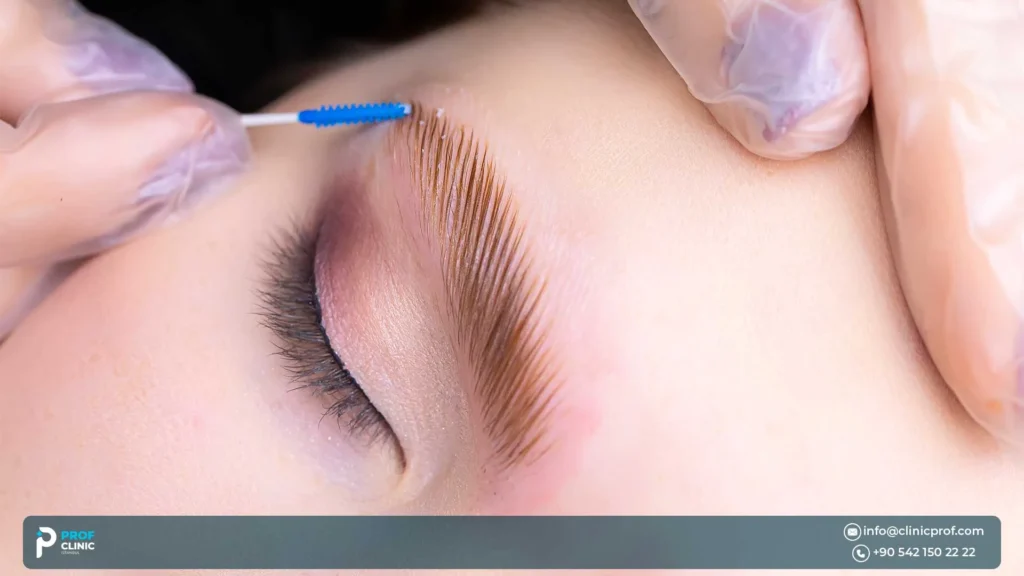
- The precision trim: Use small, high-quality brow scissors to trim your eyebrow transplant long hair every 7–10 days. Always trim in the direction of the hair growth.
- The training method: Use a clean spoolie brush daily to “train” the hairs to lay flat.
- Styling aids: Once the eyebrow hair transplant recovery time is complete, you can use a light brow gel or wax to hold eyebrow transplant curly hair in a sleek, horizontal position.
Don’t judge the final texture in the first 6 months. As the hair cycles through several growth phases, it often softens and becomes more aesthetically synchronized with your face.
Are you noticing persistent misdirection or texture issues? Our medical team can provide specific grooming techniques tailored to your hair type. Consult the Prof Clinic medical team for expert styling guidance.
When to contact your Clinic
While the eyebrow hair transplant recovery process is generally straightforward, your safety is our priority. Most post-op symptoms, like mild itching or pinkness, are signs of healing.
However, you should contact our medical team immediately if you notice any of the following “Red Flags”:
- Persistent pain: Severe or worsening pain that does not respond to prescribed medication after the first 72 hours.
- Worsening inflammation: Increasing swelling or redness that spreads toward the eyes or feels hot to the touch.
- Signs of infection: Any pus, unusual fluid leakage, or the onset of a fever.
- Uncontrolled bleeding: Bleeding from the graft sites that does not stop with light rest and elevation.
If you experience a sudden throbbing sensation or increased swelling after physical exertion, stop all activity immediately. Your grafts require a stable environment to thrive during the initial eyebrow hair transplant recovery time.
Have an urgent concern? Our team is available for immediate support. Contact Prof Clinic via WhatsApp for a priority medical review.
Also read: Is Eyebrow Hair Transplant Permanent? Longevity, Success Rate & Maintenance
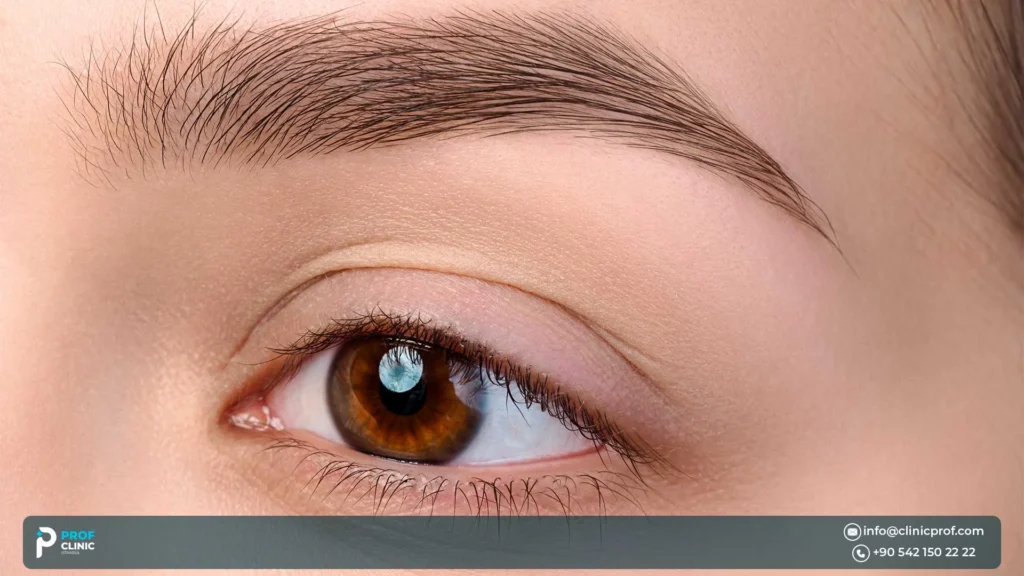
Long-term eyebrow hair transplant expectations
An eyebrow transplant is not a temporary fix; it is a permanent biological restoration. Because of the way we manage eyebrow transplant hair growth, your results are designed to last for decades.
However, it is important to understand how your new brows will evolve.
How is your brows age?
The transplanted follicles are permanent, but they are still part of your living body. This means:
- Natural aging: Just like the hair on your scalp, your transplanted brow hair may eventually gray or thin naturally as you age.
- Native hair shifts: While the transplanted hair remains, your “native” (original) brow hair may continue to change due to hormonal shifts or genetics.
- Maintenance is key: As mentioned, managing eyebrow transplant long hair through regular trimming remains a permanent part of your grooming routine to keep the look sharp and polished.
For long-term success, any underlying causes of hair loss, such as dermatological or autoimmune conditions should be managed alongside your transplant.
At Prof Clinic, we don’t just look at the now; we plan for your appearance ten years down the road. Get your personalized long-term plan with Prof Clinic’s eyebrow transplant service today.
Also read: How to Choose a Hair Transplant Clinic in Turkey
FAQs about eyebrow hair transplant recovery
How long does an eyebrow hair transplant last?
An eyebrow transplant is a permanent procedure. Because the follicles are harvested from “donor-dominant” areas (usually the back of the scalp), they are genetically resistant to thinning and loss. Once the eyebrow hair transplant recovery time is complete and the follicles have anchored, they will continue to produce hair for a lifetime.
When can I wear makeup again after an eyebrow transplant?
You should wait at least 14 days before applying any makeup to the brow area. The primary reason is to avoid chemical irritation and the mechanical friction required to remove makeup, which can dislodge new grafts. After two weeks, you can usually resume your routine, but we recommend using mineral-based, non-comedogenic products during the early stages of eyebrow transplant hair growth.
Why are my transplanted eyebrow hairs growing long or curly?
This is a result of “donor memory.” Since the hairs are moved from your scalp, they behave like scalp hair, which grows longer and may have a different curl pattern. Eyebrow transplant long hair is easily managed with simple trimming every week or two. If you experience eyebrow transplant curly hair, using a brow gel can help “train” the hairs to lay flat as they mature.
What happens 10–20 years after a hair transplant?
Your transplanted brows will age just like the rest of your hair. If your scalp hair begins to gray or thin naturally due to age, your transplanted eyebrows will likely follow the same biological timeline. However, the follicles themselves will remain in place. A successful eyebrow hair transplant recovery today ensures a stable foundation that maintains your facial structure decades into the future.