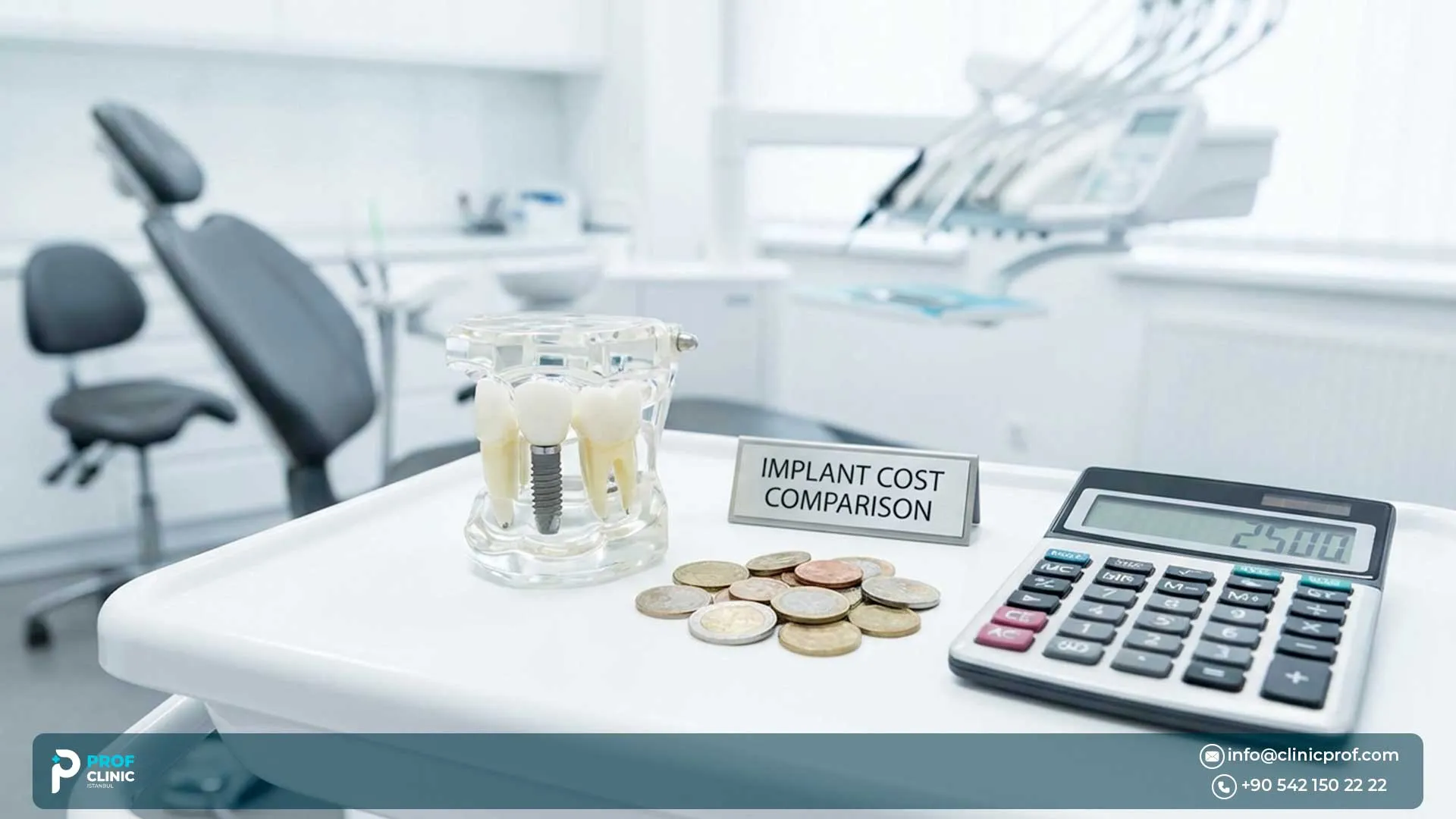
Choosing the material for the visible tooth on your implant can feel stressful. You want a crown that looks natural when you smile, feels stable when you chew, and fits your budget before you travel. This is why many international patients compare zirconia crowns dental implants before deciding on treatment in Istanbul.
In this guide from Prof Clinic in Istanbul, you will learn what zirconia implant crowns are, when a zirconium crown implant option may be suitable, how zirconia compares with other ceramic crown implant choices, what affects cost, and which questions to ask before choosing your final implant crown.
What are Zirconia Crowns for dental implants?
Zirconia crowns for dental implants are tooth-colored crowns made from zirconium dioxide and attached to an implant system to replace the visible part of a missing tooth. They are used to restore both chewing function and natural appearance after the implant fixture has been placed in the jawbone.
A dental implant restoration usually includes three main parts: the implant fixture, the abutment, and the crown. The fixture replaces the missing tooth root inside the jawbone, the abutment connects the implant to the crown, and the crown is the visible tooth-shaped restoration you see when you smile and use when chewing.
For patients comparing Dental Implants in Turkey, understanding this difference is important because the implant and the crown are separate components within one treatment plan. In patient language, terms such as zirconium crown implant or zirconia crown implant usually refer to a zirconia crown placed on an implant, not an implant fixture made entirely from zirconia.
Although zirconia is strong, durable, and aesthetically suitable for many cases, it should not be chosen only because it is popular. At Prof Clinic, our dentist evaluates implant position, gum thickness, bite force, smile line, shade expectations, and the opposing teeth before recommending the most suitable crown material. For a related overview, read our Dental Implant Zirconia Crowns guide.
| Implant part | Explanation | Why it matters |
| Implant fixture | The screw-like part is placed in the jawbone. | Acts as the foundation for the future tooth. |
| Abutment | The connector between implant and crown. | Affects crown position, gum shape, and cleanability. |
| Zirconia crown | The visible tooth-colored restoration. | Restores appearance, chewing, and smile balance. |
Benefits of Zirconia Crowns for dental implants
When choosing a crown material for dental implants, patients usually look for a balance between durability, appearance, comfort, and long-term reliability. This is why zirconia crowns for dental implants are often discussed as an option for patients who want a strong, tooth-colored, and metal-free restoration.
Their benefits can differ depending on the tooth location, bite force, gumline visibility, and aesthetic expectations.
- Strength for chewing: zirconia is commonly considered for molars, premolars, and higher-bite areas.
- Tooth-colored appearance: modern zirconia can be designed to blend with surrounding teeth when shade and contour are planned carefully.
- Metal-free crown structure: this may appeal to patients who prefer an all-ceramic visible restoration.
- Biocompatibility: zirconia is generally well tolerated in dental use, though gum health and hygiene still matter.
- Stain resistance: zirconia is less likely to discolor than some materials, but professional cleaning and daily care remain necessary.
Zirconia should not be described as unbreakable, permanent forever, or suitable for everyone. Crowns can loosen, chip, wear, feel high in the bite, or need replacement depending on bite forces, crown design, hygiene, trauma, and follow-up. Our Zirconia Crowns Comprehensive Guide explains benefits and limitations in more detail.
Care, maintenance, and possible problems of Zirconia Crowns
A strong zirconia crown still needs daily care. The crown itself does not decay like a natural tooth, but the gum and bone around the implant can become inflamed if plaque builds up or if the bite is overloaded.
- Brush twice daily and clean around the implant crown as instructed.
- Use floss, interdental brushes, or a water flosser only if your dentist recommends them for your restoration.
- Avoid chewing ice, hard objects, or sticky foods on the crown.
- Wear a night guard if you grind or clench and your dentist prescribes one.
- Attend professional cleanings and implant checkups.
- Report looseness, pain, swelling, bleeding, bad taste, food trapping, or bite changes early.
Possible problems can include crown looseness, chipping in layered designs, bite discomfort, gum inflammation, food trapping, and wear on opposing teeth if the crown is not adjusted and polished properly. Early review is safer than waiting until discomfort becomes severe.
Types of Zirconia implant crowns
Choosing between the types of zirconia implant crowns is not only about selecting a strong material. Each type is designed to serve a different clinical and aesthetic need, depending on where the implant is placed, how much chewing pressure it receives, and how visible the crown is when the patient smiles.
Here are the most common types:
Monolithic Zirconia implant crowns
Monolithic zirconia crowns are made from one solid zirconia structure. They are often discussed for molars and premolars because these teeth handle stronger chewing forces. If the patient grinds or clenches, bite analysis and polishing become especially important.
Layered Zirconia implant crowns
Layered zirconia crowns combine a zirconia base with aesthetic porcelain layering. This can help create a more natural look in visible areas, but the layered surface may be more sensitive to chipping in heavy-bite cases.
High-translucency Zirconia crowns
High-translucency zirconia is designed to look more natural than older, more opaque zirconia. It may be considered for front teeth or smile-zone implants, but the final appearance still depends on gumline, crown thickness, abutment color, implant angle, and nearby tooth shade.
The table below summarizes the main types of zirconia implant crowns, their common uses, key advantages, and possible limitations.
| Type | Cases | Main advantage | Main limitation |
| Monolithic zirconia | Molars, premolars, heavy-bite areas | High strength and fewer layering concerns | May need careful shade matching and polishing |
| Layered zirconia | Smile-zone cases where aesthetics matter | More natural-looking surface layering | Layering may chip in selected cases |
| High-translucency zirconia | Visible implant crowns | Better light transmission than older opaque zirconia | Still depends on gumline, abutment color, and adjacent teeth |
| Pre-shaded zirconia | Cases needing consistent color control | Predictable starting shade | May still require staining or customization |
At Prof Clinic, dental implant cases are planned with a personalized approach, using diagnostic details such as photos or X-rays to create a suitable treatment plan and clear quote for each patient. If you are comparing zirconia implant crowns in Turkey, you can book a consultation with Prof Clinic to understand which type of zirconia crown fits your smile, bite, and treatment goals.
Zirconia vs ceramic crown implant: Which option fits your case?
A ceramic crown implant can mean different things to patients. Technically, zirconia is a type of ceramic material, but not every ceramic crown is zirconia. Many patients use “ceramic crown” to refer to porcelain, E.max, lithium disilicate, or other all-ceramic options. The better choice depends on where the implant is located and what the crown needs to do.
A zirconia crown implant may be preferred when strength is a major priority. E.max, lithium disilicate, or another aesthetic ceramic may be discussed when translucency is the main concern, especially for front teeth. You can compare the material angle further in our Emax Crowns article.
| Option | Often Better For | Main Strength | Main Consideration |
| Zirconia crown implant | Molars, premolars, high-bite cases | Strength and tooth-colored appearance | Needs careful bite adjustment and polishing |
| High-translucency zirconia | Visible implant crowns | Aesthetic balance with strength | Not every case achieves the same translucency |
| E.max / lithium disilicate | Front teeth and smile-zone restorations | Excellent translucency | May not suit every heavy-bite molar |
| PFM crown | Budget-conscious strength/aesthetic balance | Strong underlying support | Metal base may affect gumline appearance |
| Other ceramic crowns | Selected aesthetic cases | Natural appearance | Strength varies by material and case |
Zirconia is one type of ceramic crown material, while “ceramic crown implant” is a broader term that may include zirconia, E.max, porcelain, lithium disilicate, and other tooth-colored options.
Is Zirconia the right Crown material for your dental implant?
Zirconia can be a strong option, but it is not automatically the right choice for every implant. A back molar may benefit from monolithic zirconia because chewing forces are higher. A visible front tooth may need more translucency, shade customization, and gumline planning.
For patients from the Gulf, Europe, the UK, the US, or other countries, the material decision should be made before travel whenever possible. Sharing X-rays, dental photos, and treatment goals helps the dental team in Istanbul explain whether zirconia, E.max, PFM, or another ceramic crown implant option fits the case.
| Zirconia may suit Patients if they | Extra Evaluation is needed When |
| Need a strong tooth-colored crown for a molar or premolar. | There is heavy grinding or clenching. |
| Prefer a metal-free visible crown structure. | There is active gum disease or poor oral hygiene. |
| Want a balance between function and aesthetics. | The implant angle or crown space is limited. |
| Can maintain regular cleaning and follow-up. | The case involves a high smile line or thin gum tissue. |
If you are comparing crown materials before dental treatment in Turkey, schedule a meeting with our doctors to review your X-ray, bite, and smile goals before choosing a final crown material.
Questions to ask before choosing Zirconia for an implant crown
- Is zirconia suitable for my implant position and bite force?
- Do I need monolithic, layered, or high-translucency zirconia?
- Is another ceramic crown implant option better for my front tooth?
- What abutment type will be used under the crown?
- How will you match the crown shade with my natural teeth?
- Will I need a temporary crown before the final zirconia crown?
- What is included in the quote besides the crown material?
- How many visits should I plan if I am travelling to Istanbul?
- What records will I receive for future maintenance in my home country?
Zirconia Crown cost for dental implants in Turkey
The cost of zirconia crown implant depends on the full treatment plan, not only the crown material. One implant crown is different from several crowns, a bridge, or a full-arch restoration. International patients should compare what is included in the plan, not only the headline price.
- Number of implant crowns needed.
- Type of zirconia: monolithic, layered, high-translucency, or pre-shaded.
- Implant brand or system used.
- Abutment type and whether customization is needed.
- Digital scan, shade matching, and lab customization.
- Temporary crown or provisional restoration needs.
- Additional procedures such as bone grafting or sinus lift when required.
- Number of visits and travel planning for international patients.
- Follow-up, documents, and aftercare communication.
For a broader price framework, review our Cost of Dental Implants in Turkey article. Exact pricing should always be given only after case review because crown material, implant system, bone condition, and treatment stages can change the plan.
Contact our doctors to receive a personalized quote based on your X-ray, crown material, implant system, and treatment plan.
How Prof Clinic plans Zirconia crowns for dental implants in Istanbul
Prof Clinic is based in Istanbul and provides many dental treatment services for international patients, including implants, veneers, whitening, zirconia, and E-max options.
At Prof Clinic, the goal is not to push one crown material for every patient, but to match the crown to the implant position, bite force, smile expectations, and travel timeline.
For zirconia crowns dental implants, the value is not choosing one material for every patient. The value is matching the crown material with the implant position, bite, gumline, smile goals, and travel timeline.
Review our Dental Treatment in Turkey service for the broader dental pathway and our Dental Implants in Turkey service for implant-specific treatment context.
| Planning point | What our team reviews | Why it matters |
| Implant position | Location, angle, depth, and restorative space | Affects crown shape, emergence, and cleanability |
| Bite forces | Chewing pressure, grinding, and opposite teeth | Reduces risk of discomfort, loosening, or wear |
| Gumline and smile zone | Gum thickness, visibility, and shade needs | Helps decide whether zirconia or another ceramic is more suitable |
| Abutment design | Material, color, and compatibility with implant system | Influences final crown appearance and support |
| Travel plan | Number of visits, healing time, and follow-up needs | Supports realistic planning for Gulf and worldwide patients |
Send us via WhatsApp your photos, X-ray if available, and smile goals for a personalized comparison of zirconia, E.max, and other implant crown options.
FAQs about Zirconia crowns dental implants
Are zirconia crowns good for dental implants?
Yes, zirconia crowns can be a strong and aesthetic option for dental implants. They are often considered when patients want a tooth-colored, metal-free crown, but suitability depends on bite force, implant position, gum health, and dentist evaluation.
Is a zirconium crown implant the same as a zirconia implant?
Not exactly. A zirconia crown is the visible tooth-shaped restoration placed on top of an implant system. A zirconia implant is a ceramic implant fixture that replaces the tooth root. Many patients use the terms interchangeably, so the dentist should clarify the treatment plan.
Is zirconia better than a ceramic crown implant?
Zirconia is a type of ceramic and is often discussed when strength is a priority. Other ceramic options, such as E.max, may be considered when translucency is the main concern, especially in visible front-tooth cases. The better option depends on your case.
How much do zirconia crowns for dental implants cost in Turkey?
The cost depends on the number of crowns, zirconia type, implant system, abutment, lab customization, additional procedures, number of visits, and clinic planning. Prof Clinic should provide a personalized quote after reviewing your X-rays, oral health, and treatment goals.
Can a zirconia crown implant chip or break?
Zirconia is durable, but no crown material is indestructible. Chipping, bite discomfort, loosening, or wear can happen, especially with grinding, poor bite adjustment, trauma, or inadequate maintenance. A dentist should check any discomfort or movement.
How do I know if zirconia is right for my implant crown?
A dentist should assess implant location, gumline, bite force, smile visibility, oral hygiene, abutment design, and budget. Zirconia may be suitable for many patients, especially when strength and natural appearance are both important.
Can Gulf patients plan zirconia implant crowns in Istanbul before travelling?
Yes. Patients from the Gulf region and worldwide can usually send dental photos, X-rays, medical history, and treatment goals before travel. Online review can support planning, but the final decision should be made after clinical examination in Istanbul.