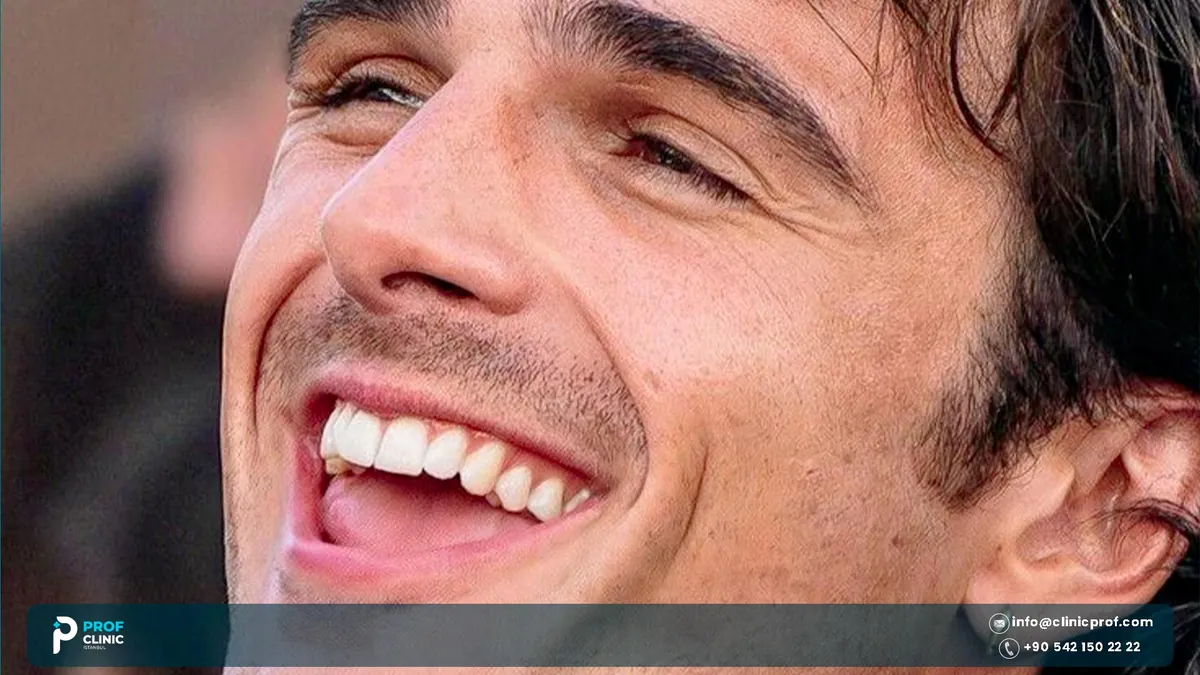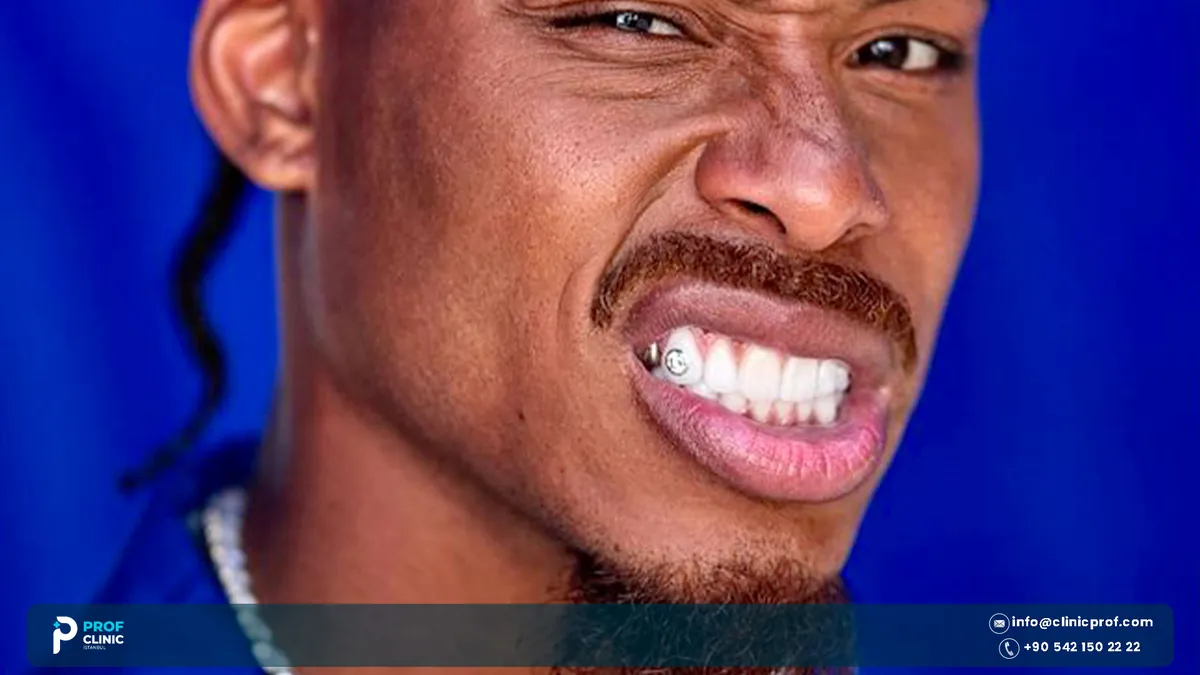
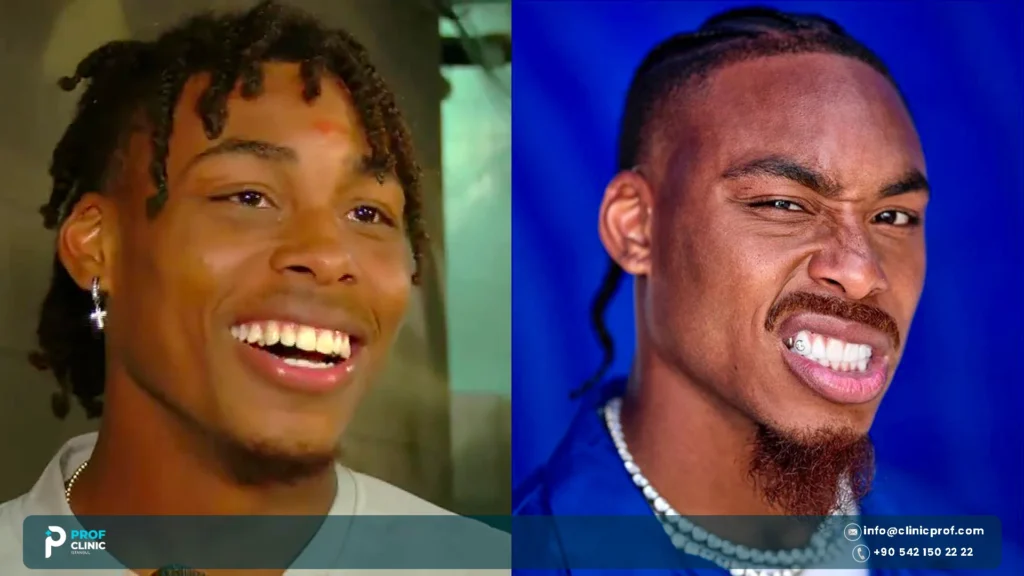
Justin Jefferson teeth have drawn attention as his NFL profile has grown, especially in close-up celebration footage and media appearances. His smile can look brighter and more uniform than in some earlier college and rookie-era images, but Jefferson has not publicly confirmed veneers, crowns or a Hollywood Smile treatment.
That means there is no verified Justin Jefferson teeth cost to report. For patients seeking a similarly bright and coordinated smile, treatment costs depend on whether the plan involves whitening, bonding, veneers, crowns or a combination of procedures.
Medical note:
This article is for educational purposes only. It does not diagnose Justin Jefferson or any reader. Veneers, crowns, whitening and other smile-design treatments should be planned after examining the teeth, gums and bite, with dental imaging when clinically necessary.
Justin Jefferson has no known connection to Prof Clinic. His public smile is discussed only as a familiar example for explaining smile design, restorative materials and dental protection for athletes.
The Smile That Became Part of the Celebration
The Justin Jefferson smile gets unusually high visibility because his signature celebration puts his face directly in front of television cameras.
Jefferson’s Griddy quickly became part of his touchdown identity after he reached the NFL. The Minnesota Vikings documented the celebration as part of Jefferson’s early NFL rise, including his first career touchdown, when he started the Griddy before even reaching the end zone.
That matters for a dental comparison. A receiver who scores, celebrates, laughs on the sideline and appears in endorsement photography gives cameras far more opportunities to capture his teeth than an athlete whose face is rarely shown outside a helmet.
Justin Jefferson’s Teeth Before the NFL Spotlight
College and early NFL footage provide the best public baseline for Justin Jefferson teeth.
In those earlier appearances, his smile looks natural and expressive, with more visible variation in tooth shade and proportions than some more recent close-ups. Later photographs can make the visible upper teeth appear brighter and more consistent.
Those observations remain visual. They do not prove that Jefferson had veneers, crowns, bonding or any other specific cosmetic procedure.
Lighting matters as well. Stadium LEDs, professional photography, whitening, camera processing and even skin-tone contrast can make teeth look substantially brighter without any restorative work.
His smile appears more polished in many recent images, but Jefferson has not publicly disclosed what, if any, dental treatment produced that appearance.
Why NFL Close-Ups Put Teeth on Display
NFL broadcasts are almost designed to create dental close-ups.
After a touchdown, cameras follow the scorer into the end zone. Slow-motion replays capture expressions. Sideline cameras zoom in between drives. Media days and endorsement campaigns add controlled studio lighting.
Jefferson amplifies that visibility because smiling, laughing and the Griddy are already part of his public image. Even the NFL has published video of Jefferson discussing his grill during Pro Bowl coverage, showing how closely his style and smile are connected to his camera-facing persona.
This does not make every visual difference evidence of dental work. It simply explains why small changes in shade, edge shape or tooth proportions may be noticed quickly.
Reading the Change in His Smile
When comparing Jefferson across college, rookie-season and more recent appearances, the safest approach is to describe what can actually be seen.
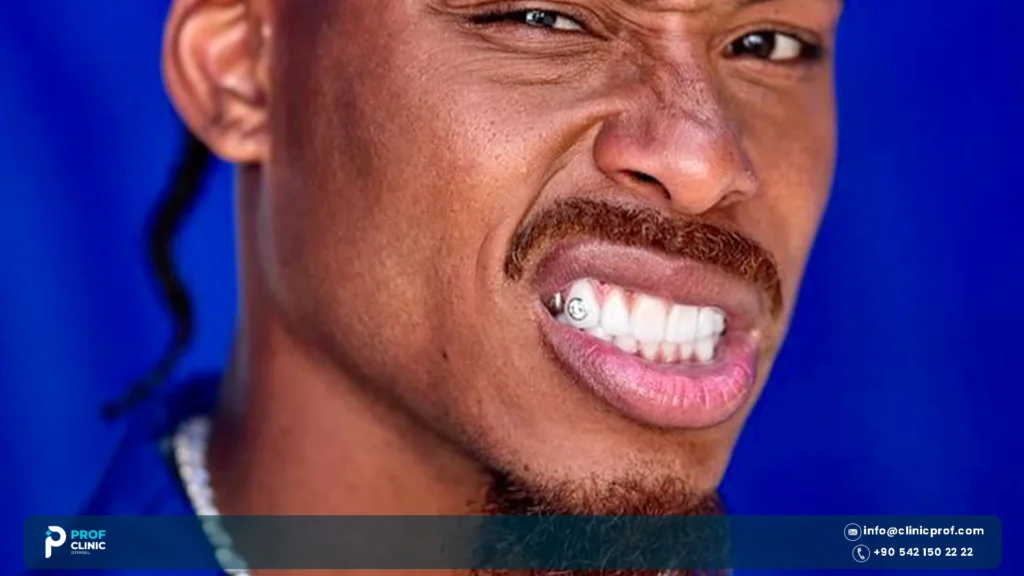
The visible smile sometimes appears brighter, smoother and more uniform in later professional photography. The front teeth can also look more coordinated in apparent proportion.
None of those observations tells us exactly how the effect was achieved.
Possible explanations for a more polished smile can include professional whitening, composite bonding, orthodontics, veneers, crowns or simply differences in photography. Several of those treatments can produce overlapping visual effects.
What Looks Different Now
Three details stand out most in some recent images.
First, the visible upper teeth often appear brighter. That could reflect whitening, restorations or simply professional lighting.
Second, the tooth-to-tooth shade looks relatively consistent in many close-ups. Uniformity is one of the characteristics that can be created during cosmetic smile design, but it is not proof of veneers.
Third, the overall smile can appear more polished because tooth edges and visible proportions look relatively coordinated.
Jefferson has not publicly documented veneers, crowns or another cosmetic dental treatment, so the exact cause of the visible change remains unknown.
Read as well: Tom Hardy Teeth: Before, After and What Really Changed
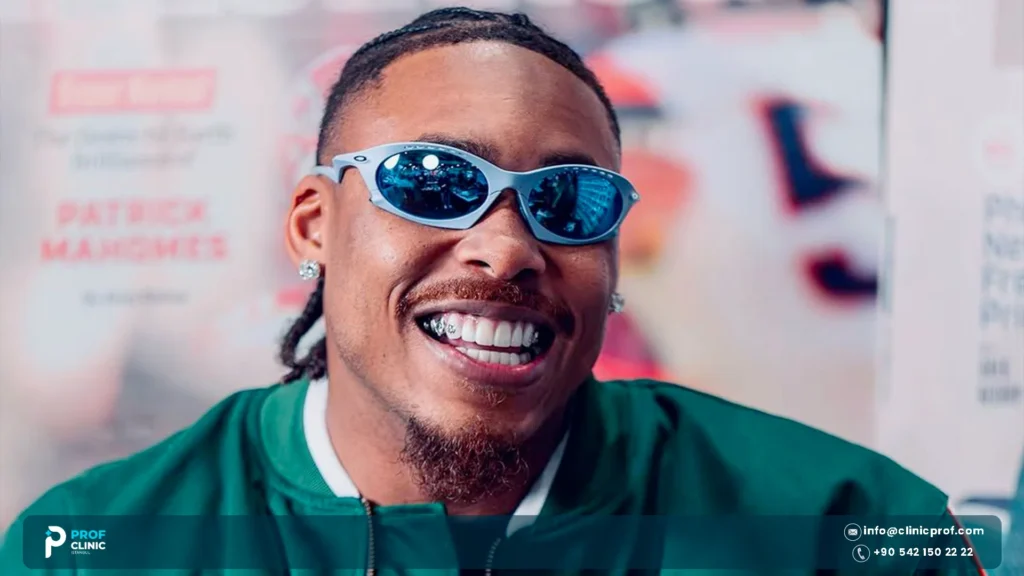
Justin Jefferson Teeth Cost: What Treatment Like This Runs
There is no confirmed Justin Jefferson teeth cost because Jefferson has not publicly disclosed a cosmetic dental treatment plan.
For someone seeking a similarly bright and coordinated smile, cost depends mainly on the treatment route. Professional whitening is usually far less expensive than veneers or crowns, while a full smile design becomes more expensive as the number of treated teeth, material choice and additional dental work increase.
The largest cost difference often comes from whether the patient needs a limited cosmetic correction on a few visible teeth or a broader Hollywood Smile involving multiple restorations across the smile line.
Why Athletes Invest in Their Smiles
For a professional athlete, appearance and function overlap.
High-profile players are photographed constantly. Their faces appear in broadcasts, sponsorship campaigns, press conferences, social media and advertising. A smile may therefore carry professional visibility far beyond the playing field. But durability matters more for an athlete than it does for someone choosing cosmetic treatment only for photographs.
American football is a collision sport. The American Dental Association specifically lists football among sports where mouthguards are recommended and notes that properly fitted mouthguards help reduce the incidence and severity of dental and orofacial injuries.
That means an athlete considering veneers or crowns should think about two plans at the same time: how the smile will look and how those restorations will be protected.
Smile Design for Athletes
A Hollywood Smile for a contact-sport athlete should not be planned exactly like one for a patient whose teeth are exposed only to normal chewing.
The dentist needs to consider impact risk, clenching, mouthguard fit, restoration thickness and repair options alongside shade and proportion.
A beautiful restoration that repeatedly fractures under athletic stress is not a successful treatment plan.
Choosing Materials That Survive Contact Sport
E-max and zirconia are often discussed together because both can be used in aesthetic dentistry, but they have different material properties.
E-max is based on lithium disilicate glass ceramic. It is valued for translucency and natural light behaviour, which can be particularly useful in highly visible anterior teeth.
Zirconia generally provides greater flexural strength but historically has been more opaque. Modern translucent zirconias have improved aesthetically, but there remains a trade-off between strength and translucency.
A laboratory study indexed by PubMed found lithium disilicate to be the most translucent material tested while high-strength zirconia was the strongest and most opaque, demonstrating the underlying strength-versus-translucency trade-off.
Another systematic review of monolithic zirconia reached a similar broader conclusion: zirconia offers substantial mechanical performance, while glass ceramics continue to have advantages in translucency.
That does not mean every athlete should automatically receive zirconia. Material choice also depends on where the restoration sits, how much tooth structure remains, aesthetic demands, preparation design and bite forces.
And no ceramic material makes a mouthguard unnecessary.
13 Things Athletes Should Ask Before Smile Treatment
- What happens if I take a direct hit to the mouth? Ask how the planned restoration behaves under impact and what repair would involve.
- Do I need veneers, crowns or something more conservative? Healthy tooth structure should not be removed simply because ceramic looks attractive.
- Which material fits my position and sport? Strength, translucency and preparation requirements should all influence the choice.
- How much natural enamel can be preserved? Conservative preparation can matter for bonding and long-term tooth health.
- Will my current mouthguard still fit? Dental treatment can change tooth contours enough to make an old guard unsuitable.
- When should a new custom mouthguard be made? It should fit the final dental anatomy rather than restorations that are about to change.
- Do I clench while training or lifting? Heavy jaw loading can place additional stress on restorations.
- How easily can the material be repaired? An athlete should know what happens if a veneer chips during a season.
- Can treatment be timed around the season? Elective cosmetic treatment may be easier to manage during a lower-risk period.
- How many teeth genuinely need treatment? More restorations mean more surfaces potentially exposed to future maintenance.
- How will my bite be checked? Excessive contact on one restoration can increase mechanical stress.
- What does the warranty cover after sports trauma? Impact damage may be treated differently from normal restoration failure, so written terms matter.
- What happens after treatment? Hygiene, reviews, mouthguard maintenance and early repair of small defects should be part of the plan.
Also Read: Matt Rife Teeth: What the Close-Ups Smile Show
Custom Mouthguards Over Veneers
Athletes can wear mouthguards over veneers and other restorations, but the guard needs to fit the final restored tooth shapes accurately.
The ADA’s mouthguard guidance explains that a mouthguard should remain secure and comfortable while providing a resilient protective surface over the dental arch. Custom-made mouthguards are produced from an individual impression or scan and can be adapted to the athlete’s specific anatomy.
For someone who has just completed veneers or crowns, the mouthguard should usually be fitted to the final restored tooth shapes. Reusing a tightly fitted guard made before cosmetic treatment can create poor fit or unwanted pressure.
The simpler ADA MouthHealthy patient guidance also emphasizes that mouthguards cushion blows to the face and help protect teeth, lips, tongue and jaw.
For an athlete, the guard is part of the restoration plan, not an optional accessory added afterward.
Hollywood Smile at Prof Clinic, Istanbul: What’s Involved
A high-profile athlete’s smile can be useful inspiration, but it cannot become another patient’s treatment plan.
We do not connect any patient plan to a celebrity smile. Justin Jefferson has no known connection to Prof Clinic, and we do not know whether his current smile involved veneers, whitening, bonding or another treatment.
At Prof Clinic in Istanbul, Hollywood Smile planning begins with the patient’s own teeth, gums, bite, facial proportions and aesthetic goals.
Our Hollywood Smile service describes a personalised plan that may include E-max veneers, zirconium restorations, whitening, gum contouring or orthodontic adjustment depending on what the patient actually needs.
Prof Clinic’s Hollywood Smile Services
Hollywood Smile treatment at Prof Clinic can combine aesthetic planning with restorative decisions.
Digital 3D imaging helps evaluate the existing smile before treatment. Tooth shade, shape and proportion are then considered in relation to the face rather than chosen independently.
Depending on the case, the plan may include:
- Digital smile design
- E-max restorations
- Zirconia restorations
- Professional whitening
- Gum contouring where indicated
- Orthodontic adjustment when tooth position should be corrected first
For patients who prioritise a more natural appearance, E-max can offer strong translucency in the aesthetic zone. Cases requiring different mechanical demands may lead to a different material discussion.
Material selection should be based on the patient’s tooth position, bite, aesthetic goals and functional demands rather than on a pre-set package.
Read as well: Walton Goggins’ Teeth: The Real Story Behind His Distinctive Smile
What a Prof Clinic Smile Plan Costs and Includes
Prof Clinic’s published pricing currently places a full Hollywood Smile in the approximate €3,500 to €5,000 range, while individual restoration prices vary by material. Prof Clinic’s published Hollywood Smile price guide provides the current examples used below.
| Planning element | What may be included or assessed | Why it matters |
| Consultation | Dental history, concerns and smile goals | Determines what the patient actually wants changed |
| Imaging | 3D imaging or dental X-rays when clinically needed | Checks structures that cannot be assessed from photos |
| Smile design | Shade, width, length and facial balance | Creates the visual plan |
| Material | E-max, zirconia, composite or another indicated option | Balances aesthetics and function |
| Number of units | Based on visible teeth and clinical need | Major driver of total cost |
| Composite veneer example | €150 per tooth | Lower-cost published option |
| Zirconium-based crown example | €225 per tooth | Published stronger ceramic option |
| E-max or laminate example | €350 per tooth | Published high-aesthetic option |
| Full Hollywood Smile | Approximately €3,500–€5,000 | Depends on units, material and other procedures |
| Visits | Multiple clinical and fitting stages | Allows design, preparation and final checks |
| Aftercare | Hygiene, bite review and restoration maintenance | Supports long-term performance |
These are Prof Clinic’s published prices, not a universal Turkey price and certainly not an estimate of Justin Jefferson teeth cost.
For an athlete, a custom mouthguard plan should also be discussed separately once the final restorations and bite are established.
Smile Results at Prof Clinic
A strong Hollywood Smile should balance shade, tooth proportions, gum harmony and long-term function. For athletes, durability and protection matter just as much as appearance.
Our Prof Clinic Before and After gallery shows consented dental transformations across different starting conditions and treatment approaches.
The Justin Jefferson smile may look brighter and more uniform in recent appearances, but Jefferson has not publicly confirmed veneers, crowns or another cosmetic dental treatment. For patients seeking a similarly polished result, the right plan may involve whitening, veneers, orthodontics or a combination of treatments depending on the teeth and bite.
At Prof Clinic, we design around the patient’s own smile rather than reproducing a celebrity result. Send us your smile photos and available dental X-rays to receive a personalised assessment and find out which treatment options may suit your case.
People Also Ask: Justin Jefferson’s Teeth
- Did Justin Jefferson have work done on his teeth?
There is no reliable public confirmation from Justin Jefferson that he has undergone veneers, crowns or another cosmetic dental procedure. Some recent images show a brighter and more uniform-looking smile than earlier footage, but photographs alone cannot determine the treatment behind that appearance.
- How much does a smile like this cost?
The price depends on the treatment. At Prof Clinic, current published prices list composite veneers at €150 per tooth, zirconium-based crowns at €225 and E-max or laminate restorations at €350, with a full Hollywood Smile package generally listed around €3,500 to €5,000 depending on the number of teeth and materials selected. These figures describe Prof Clinic pricing, not Jefferson’s treatment.
- Can you play contact sport with veneers?
Yes. Veneers do not automatically prevent participation in contact sport, but protecting the teeth becomes especially important. The American Dental Association recommends properly fitted mouthguards for football and other collision sports because they help reduce the incidence and severity of dental injuries.
- Which is stronger, zirconia or E-max?
Zirconia generally has greater flexural strength, while E-max lithium disilicate is generally more translucent and can provide highly natural optical properties in visible teeth. The choice should not be based on strength alone; tooth position, preparation, aesthetics, bite and the type of restoration all matter.
References / Sources:
- NFL.com — Justin Jefferson and the rise of his signature Griddy celebration
- American Dental Association — Athletic Mouth Protectors and sports dental injury prevention
- ADA MouthHealthy — Mouthguards and protecting teeth during sport
- PubMed — Translucency and flexural strength of zirconia and lithium disilicate ceramics
- PubMed — Systematic review of strength and translucency in monolithic zirconia
Read as well: Roman Reigns Teeth: Ring Damage, Repairs and Smile Today