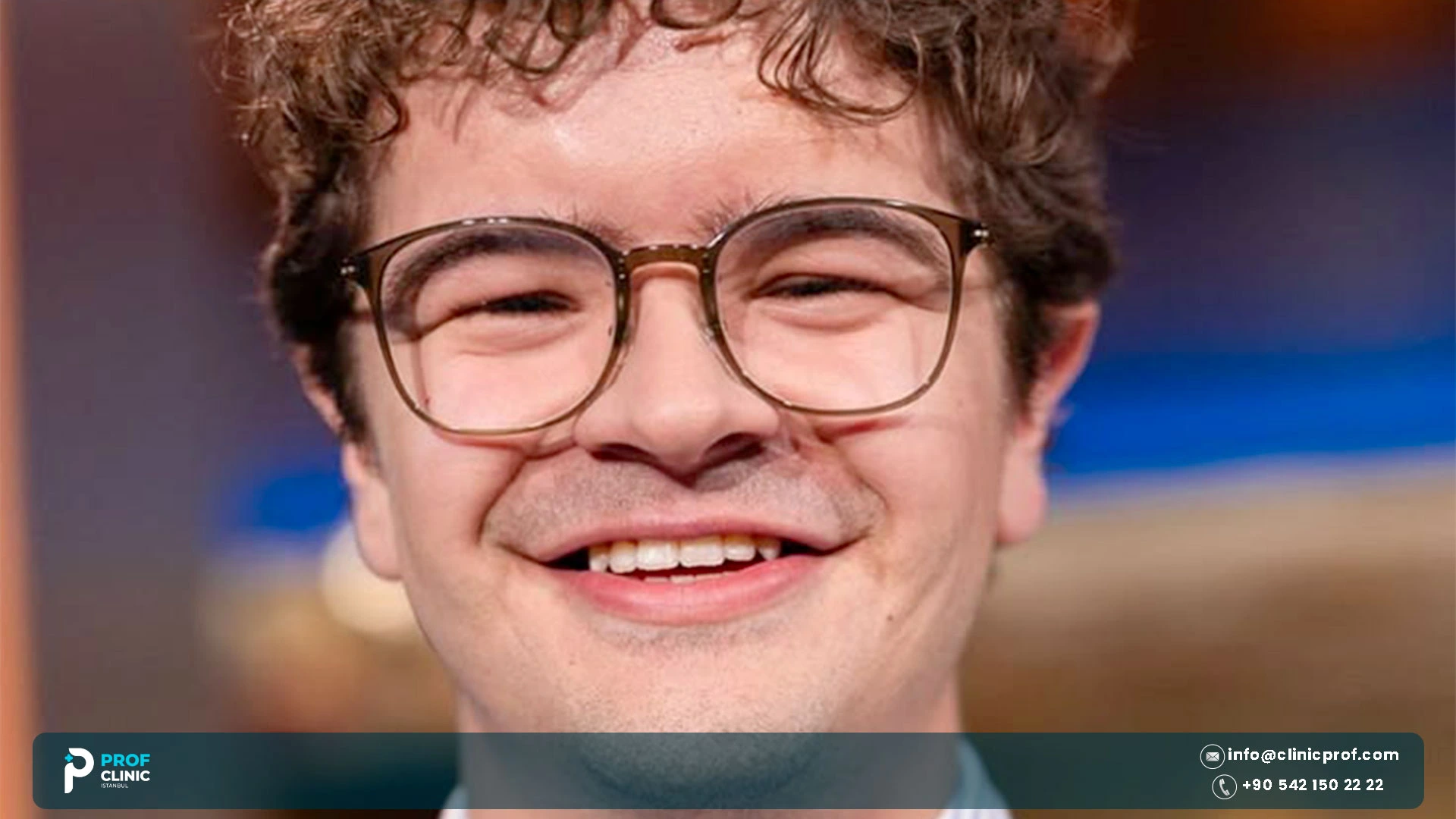
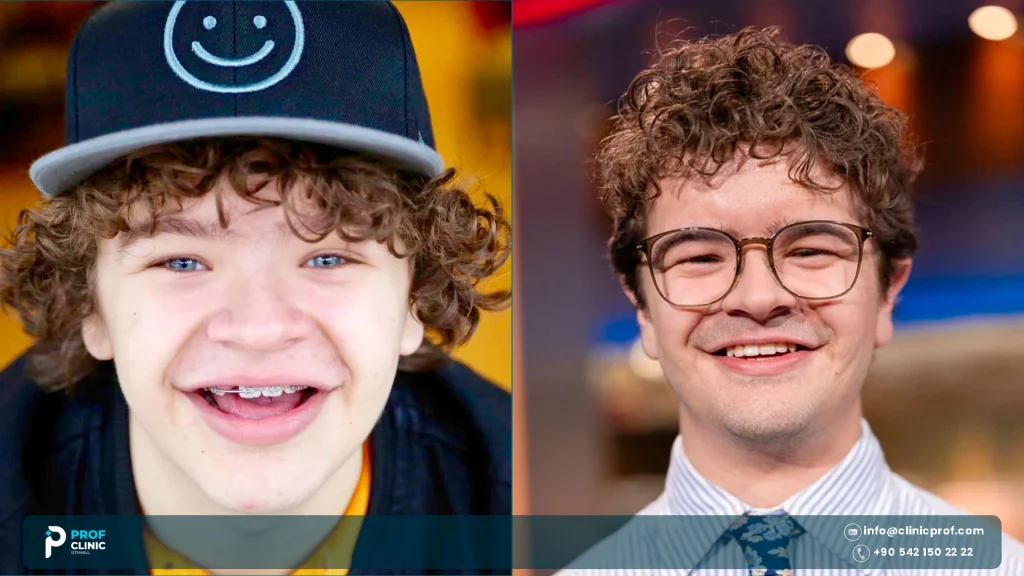
Gaten Matarazzo teeth are different because he was born with cleidocranial dysplasia, or CCD, a rare genetic condition that affects bone and tooth development. He has spoken publicly about retained baby teeth, dentures, extra teeth in the gums, multiple surgeries and the reality that having teeth is not cosmetic.
This is not a smile makeover story. It is a medical condition story, and it should be handled with respect.
Medical note:
This article is for educational purposes only. It does not diagnose Gaten Matarazzo or any reader. Cleidocranial dysplasia, delayed tooth eruption, impacted teeth, extra teeth, dentures, implants and prosthetics should be evaluated by qualified dental and medical specialists using examination, imaging, medical history and long-term planning.
This article discusses Gaten Matarazzo’s condition from his own public comments, interviews and medical sources. Gaten Matarazzo has no known connection to Prof Clinic, and his story is used only as a public example to explain CCD-related dental care, implants and prosthetics.
The Condition Behind the Stranger Things Smile
The reason Gaten Matarazzo smile became so meaningful is that it was not edited out of his public image. His condition was written into Stranger Things, and many families living with CCD saw representation that rarely appears on screen.
The phrase Gaten Matarazzo no teeth can sound blunt, but the medical reality is more specific. CCD can cause baby teeth to stay in place, adult teeth to remain trapped in the jaw and extra teeth to block eruption. That is very different from a cosmetic dental choice.
Health Insight published Matarazzo’s own explanation that teeth are not cosmetic because they affect health and wellbeing. He also explained that waiting is not always enough, because teeth may fuse to the jaw if treatment is delayed.
What Is Cleidocranial Dysplasia?
Cleidocranial dysplasia is a rare genetic condition that affects the development of bones and teeth. It is also called cleidocranial dysostosis or CCD.
MedlinePlus Genetics explains that CCD often involves underdeveloped or absent collarbones, delayed skull bone development, delayed loss of baby teeth, delayed eruption of adult teeth, misaligned teeth and extra teeth. The same source estimates CCD at about 1 in 1 million people worldwide.
CCD Smiles describes CCD as a skeletal disorder linked to open fontanelles, small or absent clavicles and multiple dental abnormalities. Dental signs can include failure to lose baby teeth, failure of permanent teeth to come in, supernumerary teeth, enamel problems, crowding and bite issues.
So, Gaten Matarazzo teeth condition is not about bad brushing or a cosmetic preference. It is part of a genetic condition present from birth.
How CCD Affected Gaten Matarazzo’s Teeth
Gaten Matarazzo has explained that CCD affected his bones and teeth. In public interviews, he has said he was born without collarbones and that his teeth required extensive treatment.
Teen Vogue reported that Matarazzo said he was born without collarbones, that CCD affects facial growth, skull growth and teeth, and that he had baby teeth that needed a lot of surgery.
That helps answer does Gaten Matarazzo have teeth in a medically respectful way. He has spoken about having baby teeth, fake teeth or dentures at different stages, and extensive dental surgery to expose adult teeth. His exact dental status today is personal medical information unless he chooses to share it.
Gaten Matarazzo teeth now should be understood as the result of ongoing CCD management, not a before-and-after cosmetic transformation.
How Stranger Things Wrote the Condition Into Dustin
Stranger Things did not ignore Matarazzo’s condition. It incorporated it into Dustin Henderson’s character.
SELF reported that Matarazzo explained his condition to the show team, and that once he got the role, they decided to incorporate CCD in a realistic way. He said he was comfortable with the show including bullying around the condition because it was realistic.
Rutgers University also notes that Dustin’s missing teeth and cleidocranial dysplasia are referenced in the first season.
That matters because the discussion around what happened to Gaten Matarazzo teeth should not turn into mockery. In the show and in real life, his openness helped more people understand a rare medical condition.
His Treatment Journey in His Own Words
Unlike many celebrity dental stories, this one does not rely on photo guessing. Matarazzo has spoken openly about CCD, dentures, surgery and advocacy.
He has also made an important point: dental care for CCD should not be dismissed as appearance-only treatment. Teeth are part of chewing, speech, jaw development, nutrition, comfort and confidence.
Multiple Surgeries, Including 14 Extra Teeth Removed
In 2020, Matarazzo shared a post-surgery update about a major CCD-related dental procedure.
ScreenGeek reported from his Instagram post that surgeons removed 14 supernumerary teeth, exposed six adult teeth, and that he was under anesthesia for four hours.
This kind of surgery is not cosmetic. In CCD, extra teeth can physically block adult teeth from erupting. Treatment may require removing extra teeth, exposing impacted adult teeth and then guiding them into position.
This also explains why simple questions like why does Gaten Matarazzo not have teeth or why does Gaten Matarazzo have no teeth need careful answers. In CCD, the issue may be retained baby teeth, unerupted adult teeth, extra teeth in the gums, dentures during treatment and staged surgical-orthodontic care.
Dentures as a Child and What Came After
Matarazzo has spoken openly about wearing fake teeth or dentures. That should be discussed plainly, without pity.
Teen Vogue reported that he said the teeth visible at that time were fake, and that he had teeth but they were baby teeth needing surgery.
Dentures can be part of CCD care, especially during childhood or adolescence when natural teeth have not erupted normally. They can help with appearance, speech, chewing and social comfort while a longer surgical and orthodontic plan continues.
The same is true for Gaten Matarazzo braces. CCD treatment can involve orthodontic appliances and braces, but it is usually more complex than standard orthodontics. The goal is not just straighter teeth. The goal is to expose, guide, align or replace teeth that did not erupt normally.
Why He Says Teeth Are Not Cosmetic
One of Matarazzo’s most important advocacy messages is that teeth should not be treated as a luxury issue for people with CCD.
Health Insight published his statement that having teeth is not cosmetic and affects wellbeing and health. He also explained that teeth may not come in by themselves, and that treatment may require appliances and medical procedures rather than waiting.
This is the heart of the article. What is wrong with Gaten Matarazzo’s teeth is not the right tone unless it leads to a respectful medical answer: he has CCD, a condition that can prevent normal tooth eruption and require years of dental care.
The shorter version of what’s wrong with Gaten Matarazzo teeth is this: CCD affects how teeth and bones develop, and his public dental journey reflects that condition.
For Italian-language readers, Gaten Matarazzo denti points to the same topic: his CCD-related tooth development, not a cosmetic celebrity dental makeover.
Read as well: How Jurgen Klopp’s Veneers Changed His Whole Smile

How Cleidocranial Dysplasia Is Actually Treated
CCD dental care is usually long-term and staged. It can involve pediatric dentistry, orthodontics, oral surgery, prosthodontics, implant dentistry and sometimes craniofacial or medical specialists.
GeneReviews explains that CCD dental anomalies may include delayed eruption of adult teeth, failure to shed baby teeth and supernumerary teeth. It also notes that up to 94% of people with CCD spectrum disorder have dental findings.
This is why Gaten Matarazzo teeth before and after comparisons should be viewed as treatment stages, not a cosmetic reveal. In CCD, changes may happen slowly over years.
Surgical Exposure and Orthodontic Traction Explained
When adult teeth are trapped in the jaw, dentists may need to surgically expose them. Then orthodontic traction can help guide them into the mouth over time.
GeneReviews Table 4 explains that early referral to a dental clinic familiar with CCD allows timely planning, and that watchful waiting after an initial eruption delay is not effective. It also lists treatment goals such as improving appearance and providing a functioning chewing mechanism.
Orphanet Journal of Rare Diseases describes treatment alternatives including prosthetic replacements, removal of supernumerary teeth and bone, surgical exposure of impacted teeth combined with orthodontic treatment, and combined orthodontic-surgical approaches.
In simple words: if adult teeth are present but stuck, the team may remove the obstacles, expose the teeth and use controlled orthodontic force to bring them into position.
When Implants and Prosthetics Become Necessary
Implants and prosthetics may become necessary when teeth cannot be brought into the mouth, are missing, are fused to the jaw or cannot support a stable bite.
This is where dental implants and prosthetics fit into CCD care. They are not first-choice shortcuts for every child. In many cases, specialists try to preserve natural teeth when possible. But when natural eruption or orthodontic traction is not successful, prosthetic replacement may help restore chewing, speech and appearance.
GeneReviews Table 4 lists prosthetic replacements as one possible way to achieve dental treatment goals in CCD, with or without prior extractions.
The FDA explains that dental implants are medical devices placed into the jaw to restore chewing ability or appearance, and that most implant systems are made from titanium or zirconium oxide.
For CCD patients, implant planning can be more complex because bone development, tooth position, jaw growth and timing all matter. In younger patients, specialists usually consider growth stage carefully before permanent implant placement.
13 Things Families Should Know About CCD Dental Care
- Early imaging matters because extra teeth and impacted teeth may not be visible in the mouth.
- A specialist team is often needed, including orthodontics, oral surgery and prosthodontics.
- Baby teeth may not fall out normally, so timing should be monitored.
- Adult teeth may be present but trapped under gum or bone.
- Extra teeth can block eruption, making surgery necessary.
- Waiting is not always safe, especially when teeth risk fusion or long-term impaction.
- Treatment often takes years, not one appointment.
- Braces may be part of care, but CCD orthodontics is usually more complex than routine alignment.
- Dentures can be helpful, especially during growth or between treatment stages.
- Implants may be considered later, especially when teeth cannot erupt or be preserved.
- Speech and chewing matter, so dental care is not only about appearance.
- Emotional support matters, especially for children dealing with visible differences.
- Long-term follow-up is essential because bite, growth, bone and prosthetics can change over time.
Prof Clinic: Dental Implants and Prosthetics in Istanbul, Turkey
The right connection between this article and Prof Clinic is not a Hollywood Smile. CCD is not a cosmetic makeover topic. The relevant services are implants, crowns, bridges, removable prosthetics, full-arch options and staged planning for missing-teeth cases.
At Prof Clinic in Istanbul, we approach missing-teeth cases by first understanding the reason behind the problem. For some patients, the issue is tooth loss. For others, it may be failed restorations, gum disease, trauma, congenital missing teeth or a complex history of dental treatment.
A condition like CCD should be managed by clinicians familiar with complex dental development and long-term planning. For international patients, Prof Clinic can help assess records and explain whether implant or prosthetic options may be suitable, but this must be based on imaging and clinical review.
Prof Clinic’s Implant and Prosthetic Services
Prof Clinic’s dental services include single dental implants, implant-supported bridges, All-on-4, All-on-6, crowns, bridges, removable prosthetics and 3D-planned implant placement, depending on the case.
Our Dental Implants in Turkey page explains how titanium implants can support a crown, bridge or denture to restore chewing and appearance when a tooth is missing or cannot be saved.
For patients with several missing teeth or full-arch needs, our Full Mouth Dental Implants Abroad guide explains how implant number, bone condition, temporary teeth, final materials and follow-up can affect the treatment plan.
When 3D imaging is needed, our 3D Dental Implant Planning in Turkey guide explains how CBCT-based planning can help evaluate bone anatomy, implant position and the final prosthetic design before surgery.
Also Read: Kanye West Teeth: Titanium Grill, Implants or Prosthetics?
How Prof Clinic Approaches Complex Missing-Teeth Cases
Complex missing-teeth cases need staged planning, not rushed treatment.
| Planning step | What we review | Why it matters |
| Medical and dental history | Health conditions, previous surgeries, medications and symptoms | Helps identify risks before treatment |
| Photos and smile records | Teeth, gums, bite, lip support and facial balance | Shows visible concerns and treatment goals |
| X-ray or CBCT imaging | Bone level, roots, impacted teeth and jaw anatomy | Helps decide whether implants or prosthetics are possible |
| Bone assessment | Height, width, density and grafting needs | Supports safer implant planning |
| Gum and hygiene review | Inflammation, recession and cleanability | Prosthetics need healthy supporting tissues |
| Bite analysis | Chewing forces, jaw position and wear patterns | Reduces overload on crowns, bridges or implants |
| Specialist review | Implant, prosthetic and surgical considerations | Helps match treatment to the real diagnosis |
| Staged plan | Urgent care, extractions, implants, temporaries and final teeth | Makes complex care easier to understand |
| Prosthetic options | Crowns, bridges, removable dentures or implant-supported teeth | Helps patients compare realistic choices |
| Follow-up plan | Cleaning, reviews and warning signs | Protects the result after treatment |
For aftercare, our Dental Implant Aftercare guide explains how cleaning, diet, rest, follow-up and warning signs affect healing and long-term implant maintenance.
Rebuilding Function in Missing-Teeth Cases
Rebuilding missing teeth is not only about the final photo. The real goals are chewing, speech, bite support, facial balance and confidence.
When reviewing implant or prosthetic results, look for:
- A similar starting condition
- Clear explanation of the treatment performed
- Healthy-looking gum tissue
- Natural tooth proportions
- Stable bite support
- Realistic healing timeline
- Consented, documented before-and-after cases
- No promise that every patient will get the same result
Prof Clinic shares documented cases on its Before and After page. These cases should be viewed as examples, not guarantees, because implant and prosthetic outcomes depend on bone, gums, bite, medical history and aftercare.
Gaten Matarazzo teeth should be discussed with medical accuracy and empathy. His dental journey is linked to cleidocranial dysplasia, a rare genetic condition that can affect collarbones, skull development, baby teeth, adult tooth eruption and extra teeth in the gums.
The important lesson is not appearance. It is that CCD dental care can involve early imaging, specialist planning, surgery, orthodontic traction, dentures, implants or prosthetics over time. Matarazzo’s advocacy has helped many people understand that having teeth is not cosmetic. It affects health, function and wellbeing.
If you or a family member has missing teeth, unerupted teeth, retained baby teeth or complex prosthetic needs, send photos, X-rays if available and a short medical history to Prof Clinic for a case-based implant and prosthetic assessment.
Frequently Asked Questions About Gaten Matarazzo’s Teeth
- What condition does Gaten Matarazzo have?
Gaten Matarazzo has cleidocranial dysplasia, or CCD. It is a rare genetic bone and tooth condition present from birth. MedlinePlus Genetics explains that CCD can affect collarbones, skull development and dental development, including delayed adult teeth and extra teeth.
- Are Gaten Matarazzo’s teeth real?
Gaten Matarazzo has spoken publicly about wearing fake teeth or dentures and having baby teeth that required surgery. Teen Vogue reported his explanation that he had fake teeth at that time, along with baby teeth that needed extensive surgery.
- Can cleidocranial dysplasia be cured?
There is no simple cure that makes CCD disappear. It is managed over time based on symptoms. MedlinePlus Medical Encyclopedia explains that there is no specific treatment for cleidocranial dysostosis and that management depends on each person’s symptoms.
- How is CCD treated in children?
CCD dental care in children may involve early imaging, specialist referral, removal of retained baby teeth or extra teeth, surgical exposure of impacted adult teeth, orthodontic traction and prosthetics when needed. GeneReviews Table 4 explains that early referral to a dental clinic familiar with CCD helps with timely planning and that waiting alone after delayed eruption is not effective.
References / Sources:
- MedlinePlus Genetics: Cleidocranial dysplasia
- MedlinePlus Medical Encyclopedia: Cleidocranial dysostosis
- GeneReviews: Cleidocranial Dysplasia Spectrum Disorder
- GeneReviews Table 4: Treatment of manifestations
- Orphanet Journal of Rare Diseases: Combined surgical-orthodontic treatment of CCD
- CCD Smiles: What is CCD?
- Health Insight: Gaten Matarazzo on living with CCD
- Teen Vogue: Gaten Matarazzo and CCD awareness
- SELF: Gaten Matarazzo shares what life is like with CCD
- Rutgers University: Gaten Matarazzo talks about CCD with dental school dean
- ScreenGeek: Gaten Matarazzo post-surgery update
- FDA: Dental Implants – What You Should Know
Read as well: Bob Seger Teeth: Fifty Years of Photos and What Is Known
Read as well: Jacob Elordi Teeth: The Gum Line, the Gap and What's Natural