If you’re searching for an eyebrow scar hair transplant, you’re likely asking one thing: can hair grow through scar tissue (or alopecia-affected skin) and still look natural?
This guide by Prof Clinic answers who qualifies, when a transplant is not recommended, the main risks and healing timeline, and what drives an eyebrow scar hair transplant cost quote without misleading numbers.
Why Eyebrow Hair Loss Happens in Scars and Alopecia
Eyebrow thinning can look the same online, but the cause is often different. That’s why generic tips can feel useless. Once you know the type, you can choose the right next step—especially if you’re considering an eyebrow scar hair transplant.
What caused your eyebrow hair loss?
- Scar-related eyebrow hair loss: a cut, burn, surgery, or injury in the same spot.
- Alopecia areata eyebrow hair loss: sudden, patchy loss (sometimes with patches elsewhere).
- Scarring (cicatricial) alopecia: gradual thinning with redness, scale, burning/pain, pimples, or shiny tight skin.
- Overplucking/aging: slow thinning after years of tweezing/waxing or with age.
Why the diagnosis matters for eyebrow restoration
- Non-scarring loss (like alopecia areata): follicles may still be present, so regrowth may be possible with medical care.
- Scarring hair loss: follicles can be destroyed, so the priority is stabilizing inflammation before cosmetic steps.
- Traumatic scars: follicles are often missing in the scar zone. This is when an eyebrow scar hair transplant (or another restoration option) may be discussed after a candidacy check.
Also read: Hair Implant vs Hair Transplant (Full Guide)
Can an Eyebrow Scar Hair Transplant Work for You
The short answer: sometimes, if the scar and skin are suitable
An eyebrow scar hair transplant can work in selected cases, but it depends on scar quality: how mature and soft it is, how thick it feels, and whether it has enough blood supply to support new grafts. If perfusion is low, surgeons may place grafts more conservatively, or plan a staged approach.
With alopecia, decisions are more cautious. In scarring types, growth can be less predictable and relapse is possible, so candidacy is usually considered only when the condition is stable.
Why scar tissue changes eyebrow transplant results
Scar tissue may be less vascular, thicker, and less elastic, so graft-take is harder to predict. It’s also technically demanding because eyebrow hairs must be implanted at ultra-flat angles; poor angle control is a common reason hairs stick out.
What affects success in scar and alopecia cases
Think of results as cosmetic improvement that varies—not a guaranteed full brow. The biggest predictors are scar maturity, the skin’s current inflammation level, precise angle/direction control, and your underlying diagnosis, especially with alopecia.
Also read: What is a Hair Transplant? Hairline Transplant (Comprehensive Guide)
Best Eyebrow Restoration Options by Cause
Use the cause of your eyebrow hair loss to choose the right solution type: medical therapy, cosmetic camouflage, or transplant.
- Scar loss (trauma, surgery, burn): Regrowth is usually limited inside the scar. Most people use makeup, and microblading/PMU may be an option depending on the scar. An eyebrow scar hair transplant is considered only when the scar is mature and stable and the skin can support grafting. Results can be less predictable in scar tissue, so a staged approach may be recommended.
- Alopecia areata (non-scarring autoimmune): Dermatologist-led treatment can sometimes support regrowth. Cosmetic options include makeup and, in selected cases, microblading/PMU or temporary camouflage. Transplant is typically case-by-case and usually only after stability, because disease activity can change and should be controlled first.
- Scarring alopecia: The priority is controlling inflammation early; regrowth in scarred zones is often limited. Cosmetic camouflage can help, and transplant is only considered in carefully selected cases after specialist evaluation and documented stability. Permanent follicle loss and relapse risk are part of the decision.
- Overplucking, traction, or aging-related thinning: Some people see partial recovery if follicles remain. Makeup and microblading/PMU are common, and transplant may be considered when thinning is stable and there’s a clear target area. Avoid the habit that caused damage and keep density expectations realistic.
If your case looks most like scar loss or stable, non-inflammatory thinning, you can request an eyebrow restoration assessment via WhatsApp.
Also read: How to Choose Hair Transplant Clinic in Turkey
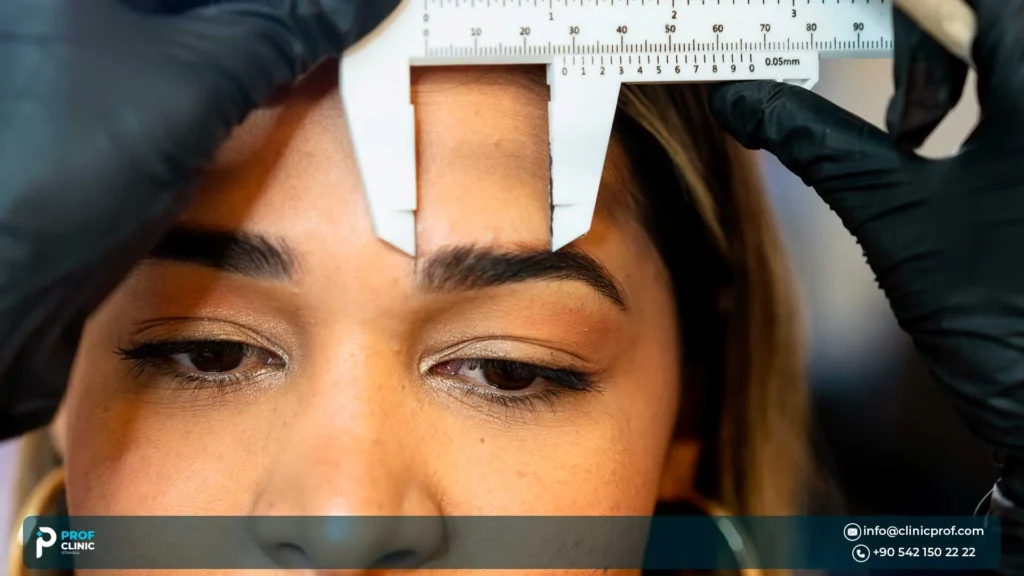
How Surgeons Plan Natural Looking Brows on Scar Tissue
When the skin is scarred, the plan matters as much as the procedure. Surgeons don’t just place hairs—they map a brow that will still look natural on scar tissue, where angles, depth, and blood supply can be less forgiving.
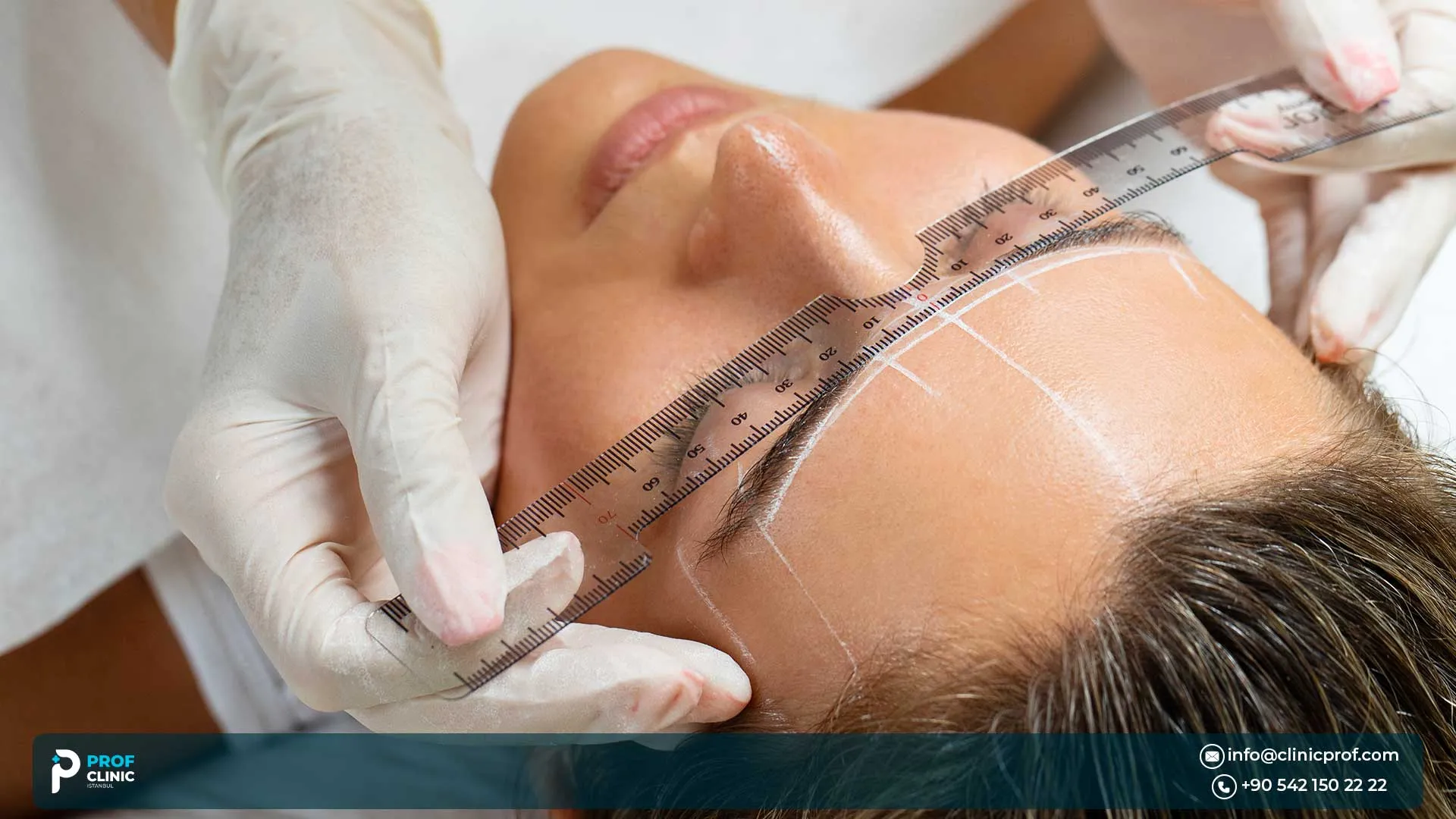
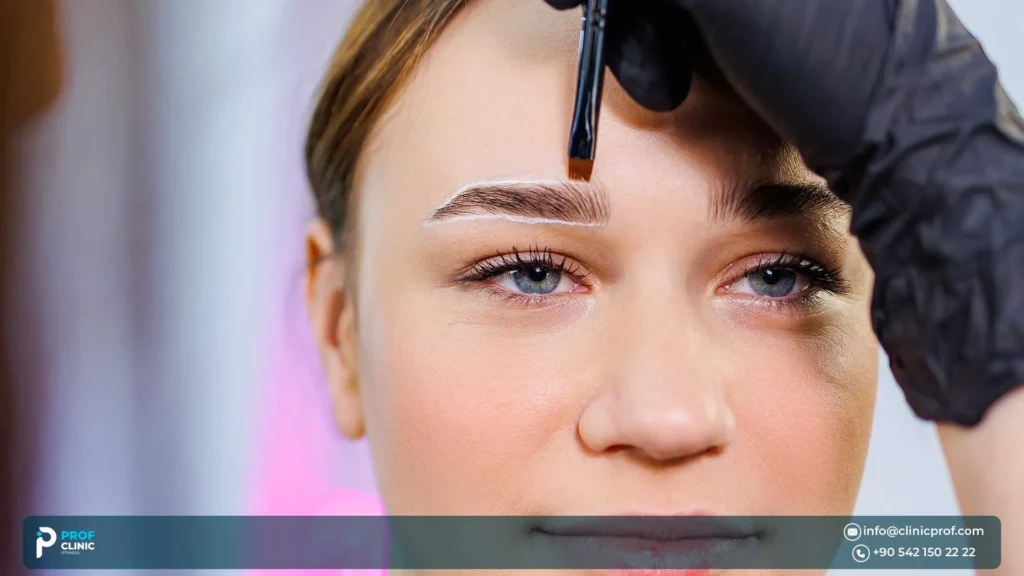
To get a natural result, surgeons focus on three things: design, direction, and graft choice. Eyebrows are technically demanding because hair direction changes across the brow (head, body, tail), and the implantation angle must stay ultra-flat so hairs don’t stick forward. This is even more important in scars, where thicker or less elastic tissue can make angle control harder. To avoid a pluggy look, surgeons typically use single-hair grafts and build density carefully rather than forcing it.
Donor hair also affects the look. In most cases, donor hair comes from the scalp, so it can behave like scalp hair after transplantation. That’s why many patients should expect occasional trimming as part of normal maintenance.
At ClinicProf in Turkey, eyebrow transplantation is approached as a precision, design-led procedure within hair restoration.
When you compare clinics for an eyebrow scar hair transplant, look for clear explanations of brow mapping, angle control, and aftercare. These details are what protect naturalness on scar tissue.
If you want a realistic plan for your specific scar area, send clear photos via WhatsApp for a candidacy review.
Also read: Eyebrow Hair Transplant Procedure: How it Works & Donor Hair Options
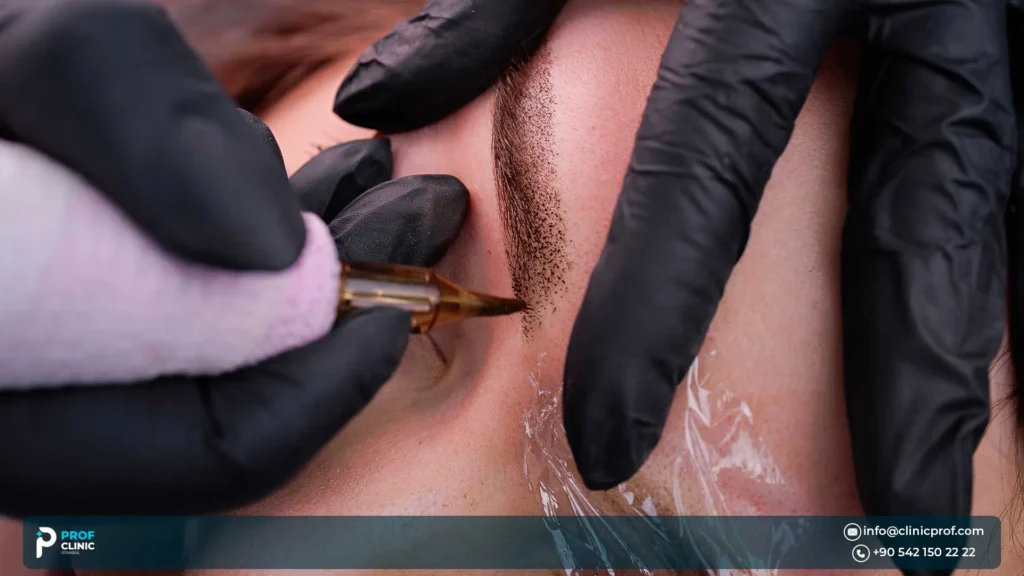
Healing and Hair Growth Timeline After an Eyebrow Transplant
Timelines vary from person to person—and scar tissue can make progress feel slower early on. But knowing the usual milestones helps you plan travel and time off, and it keeps normal changes (like shedding) from turning into unnecessary worry.
- Days 1–7 (right after the procedure): Mild swelling or redness can happen, and tiny crusts/scabs form around the implant sites. This is where aftercare matters most—avoid rubbing and follow your clinic instructions closely.
- Weeks 2–8: Shedding can occur. For many patients, this is part of the normal cycle and not automatically a sign of failure. In scar cases, the area may look “quiet” for longer than expected, which is common.
- Months 3–6: Early regrowth often begins. This is usually when you start seeing the first new hairs and can begin gentle grooming if advised.
- Months 9–18: The brow continues to mature and refine. Final appearance can take longer in complex cases, especially with scar tissue or alopecia-related history—patience is part of the process.
If it helps to stay motivated while keeping expectations realistic, you can review real transformations in ClinicProf’s Before & After gallery as you track your own progress.
Also read: Hair Transplant in Turkey: The Number One Location for Dense, Natural Hair
Risks in Scar and Alopecia Cases and How to Lower Them
A trustworthy plan includes the downsides, especially when scars or alopecia are involved. Most patients do well, but these cases can be less predictable, so it helps to know what can happen and what you can control.
Possible risks and limitations
Infection is uncommon, but possible with any procedure. Growth can be poor or uneven, and this is more likely in scar tissue where blood supply may be different. Hair can also look unnatural if implantation angles aren’t controlled, because eyebrow hairs must sit very flat. Some scar cases need staged density (more than one session). And in certain alopecia types, relapse risk can affect grafts.
How to lower the risk
Choose a team that can clearly explain brow-specific angle control and their strategy for scar tissue. Share your full medical history—especially autoimmune conditions, skin symptoms, and medications. Then protect your result by following aftercare closely and avoiding rubbing or trauma early on.
Get medical advice promptly if you notice worsening redness with heat, pus, or spreading swelling, fever, severe or escalating pain, or any sign of an allergic reaction.
Also read: Eyebrow Hair Transplant Side Effects: What Could Go Wrong?
Eyebrow Scar Hair Transplant Cost
People search eyebrow scar hair transplant cost because they want a clear number. The most honest way to talk about pricing, without misleading you, is to explain what actually changes the plan, especially in scar tissue.
The quote usually depends on how many grafts you need, which is driven by the size of the scar/empty area and your design goals. It also depends on scar complexity and blood supply, because more complex scars may require conservative placement or even staging.
In some cases, a staged approach is advised to build density gradually and safely. Technique and surgical time matter too—eyebrows require meticulous angle and direction work. For international patients traveling to Istanbul/Turkey, the quote may also reflect the evaluation and follow-up structure, plus the aftercare plan and any clinically recommended items/services (if needed).
Cheap-per-graft marketing can miss the point in scar work. The real question isn’t the lowest price—it’s whether the clinic is offering a scar-appropriate plan with realistic density expectations, designed for safety and natural direction.
For a personalized plan and to understand what your case actually needs, contact us to send photos and request an evaluation.
Also read: Eyebrow Hair Transplant Cost in Turkey (2026): Prices, & Packages
FAQs about Eyebrow Scar Hair Transplant
How to fix eyebrow hair loss?
It depends on the cause. Some non-scarring conditions (like alopecia areata) may respond to dermatologist-led treatment plans, while scars or scarring alopecia often require cosmetic restoration options such as camouflage or, in selected stable cases, transplantation.
Who is a poor candidate for hair transplant?
People with active inflammatory/scarring disease affecting the recipient area, uncontrolled medical issues, inadequate donor suitability, or unrealistic expectations may not be suitable. A proper medical evaluation is especially important when alopecia is involved.
Can I get a natural-looking eyebrow transplant?
It can look natural when the plan respects brow direction, uses appropriate graft selection (often single-hair grafts), and places hairs at very flat, correct angles. Outcomes still vary by scar quality and individual healing.
How long until I see results after an eyebrow transplant into a scar?
Early regrowth often starts months after the procedure, and scar cases can be slower. Many people see ongoing maturation for many months; your surgeon should set expectations based on scar maturity and skin condition.
Will transplanted eyebrow hair need trimming?
Often yes—because donor follicles commonly come from the scalp and may keep scalp-like growth characteristics. Routine trimming and occasional shaping can be part of normal maintenance.
Additional resources
- American Academy of Dermatology (AAD) — Alopecia areata: diagnosis and treatment overview. (American Academy of Dermatology)
- PubMed Central (PMC) — Hair transplant for eyebrow restoration (technique, angle/direction control; scar considerations). (PMC)