Can a FUT scar be repaired, or are you stuck with that pale line across the back of your head? FUT scar repair usually means making the scar far less noticeable rather than erasing it. The main routes are a longer haircut, hair grafts placed into the scar, scalp micropigmentation (SMP) and surgical revision, and the right one depends on how wide, flat and visible your scar is and how much donor hair you have left.
In this guide by Prof Clinic, you’ll learn why some FUT scars widen, what each repair option can and can’t do, how long to wait before treating a scar, and what to ask before you book anything. By the end, you’ll know which option to raise first in a consultation. This is general information, not a diagnosis: only a doctor who examines your scalp can say what suits your scar.
FUT Scar Repair: What Can Realistically Be Done?
Most FUT scars can be made less visible, and a few can be made almost invisible, but you should not expect a scar to vanish completely. The ISHRS (International Society of Hair Restoration Surgery) explains that FUT leaves a linear scar in the donor area, that its quality depends on age and surgeon skill, and that a young patient should still heal with a very thin scar when a qualified surgeon does the work. The same page lists three repair routes: re-excision and closure, transplanting hair into the scar with FUE or FUT grafts, and scalp micropigmentation or tattooing.
That list is the backbone of this article. The sections below take each route in turn, after two questions that decide almost everything: why your scar looks the way it does, and whether it is ready to be treated.
Why Some FUT Scars Widen
A widened FUT scar usually comes down to tension. The ISHRS FUT guidelines say that removing the strip under tension can leave a widened scar, and that the scar may stretch wider over time, a process called stretch-back. A review of strip harvesting in the Indian Journal of Plastic Surgery adds that an excessively wide strip creates excess tension and can lead to unsightly scars, which is why surgeons aim for a long, narrow strip and a tension-free, layered closure.
Your own healing matters too. Some people heal with a thinner line than others, and a tight scalp, which gives the surgeon less slack to close the wound, makes widening more likely. None of this is your fault, and none of it means the scar is unfixable. It simply tells your doctor which options are likely to work.
Also read: FUT Hair Transplant: Strip Method, Scar, Recovery and Cost
How Long to Wait Before Treating a FUT Scar
Wait until the scar has finished maturing. The same strip-harvest review notes that scars keep maturing for 6 months to 2 years, so a scar that looks red, tight or wide at month 4 may look different at month 14. It also advises against repeating a strip harvest before 9 months to a year.
The ISHRS applies a similar rule to micropigmentation, which should not be placed until at least a year after a hair transplant. A sensible plan is to photograph the scar every few months, in the same light and at the same hair length, and decide on a repair only once the changes have stopped.
FUT Scar Repair Options at a Glance
There are four main ways to hide or correct a linear FUT scar, and they can be combined. No single option is the best for every scar, so use the table to see where each one fits before reading the details.
| Option | What it does | Usually suits | Main limits |
|---|---|---|---|
| Longer hair or a different cut | Covers the line with the hair around it | Thin or moderately wide scars, if you are happy to keep hair longer | Does not change the scar; the ISHRS guidelines say hair length of at least 2–3 cm is typically needed |
| FUE into the scar | Places single hairs inside the scar so hair grows through it | Flat, mature scars in people with donor hair to spare | Growth in scar tissue is less predictable; it uses donor hair |
| Scalp micropigmentation (SMP) | Applies tiny pigment dots that mimic fine hair or stubble | People who want a very short cut and a quick, non-surgical option | Pigment can fade or shift in scars; it grows no hair |
| Scar revision surgery | Removes the old scar and closes the wound again for a thinner line | Wide, stretched scars where the scalp is loose enough | The new scar can stretch again; hair length still helps |
Many people end up with a combination, for example revision first and micropigmentation or grafts later. Which sequence makes sense depends on the scar, so a photo assessment is the cheapest first step.
Not sure which row describes your scar? Send photos of the back of your head to our team on WhatsApp and ask which options are worth discussing.
Option 1: Change Your Hair Length and Haircut
The simplest FUT scar treatment is to let the surrounding hair do the covering. The ISHRS describes FUT as a good fit for people who wear their hair longer than an inch, and its guidelines say patients typically need to keep at least 2–3 cm of hair to cover the scar adequately. The scar is one thin line, so even a modest length over it usually hides it.

Many surgeons also use a trichophytic closure, in which about a millimetre of tissue is trimmed from one wound edge so that hairs can grow through the scar and make it harder to detect. Whether your surgeon used it is worth knowing, because it is one of the details that shapes how visible the line is.
What it means in real life: if you are happy with a scissor cut or a longer taper, you may not need any procedure at all. If you want a skin fade or a very short clipper cut, no method promises a perfectly invisible scar, and you will want to compare the options below.
Option 2: FUE Hair Transplant Into the Scar
FUE into a scar means taking individual follicular units from the donor area and placing them in tiny incisions inside the scar, so that hair grows through the pale line. The ISHRS lists this among the standard repair routes, and the same graft-by-graft technique is described on our hair transplant in Turkey page. The difficulty is the recipient site. Scar tissue is stiffer and has a poorer blood supply than normal scalp, so grafts do not always grow as reliably.
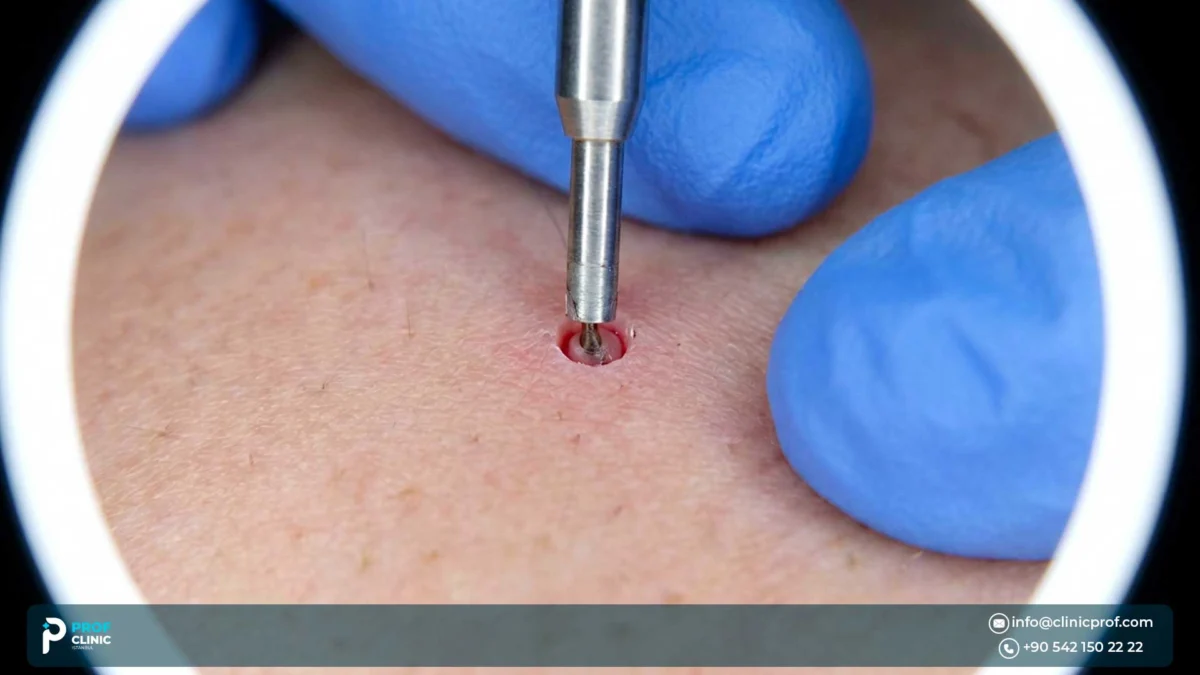
What the Evidence Says About Growth in Scar Tissue
Growth in scars is usually good but not complete. A 2019 study in BioMed Research International followed 15 patients with postsurgical scalp scars treated with FUE at about 35 follicular units per cm². Mean graft survival at 12 months was about 81% (range 70–90%), which is higher than earlier expectations but still lower than the average for normal tissue. A 2021 review of hair transplantation in scarring alopecia is more cautious, calling graft survival in scar tissue unpredictable and noting that grafts in the centre of a large scar sit far from a healthy blood supply.
Those studies looked at scars from other operations and conditions rather than FUT donor scars specifically, so treat the numbers as a guide, not a forecast. The same review suggests grafting large scars in stages, with a second session 9 to 12 months after the first to build up coverage.
What It Costs You in Donor Hair
Every graft placed in the scar is a graft you can no longer use elsewhere. The ISHRS guidelines note that covering the whole scar with follicular units requires using valuable donor hair. If you have already had a large FUT session, or you may need more transplants for future hair loss, that trade-off matters. For how much a donor area can safely give, see Hair Transplant Donor Area: Healing, Thinning and Limits.
The ISHRS guidelines also note that FUE leaves its own tiny punctate scars, so your doctor should check that the donor area has healthy density to spare before taking more.
Want to see how grafted areas look as they heal? Browse the Prof Clinic before and after gallery; it shows hair transplant cases generally and may not include scar repairs, so ask the team for scar-specific examples.
Option 3: Scalp Micropigmentation (SMP) for a FUT Scar
SMP hides a scar by applying tiny dots of pigment so the area reads as stubble or fine hair instead of a pale line. The ISHRS says SMP can visually diminish, and in some cases nearly erase, a scar’s appearance. It needs no donor hair and works with a very short cut, which is why it appeals to men who prefer to keep clippers on the back and sides.
The ISHRS is also candid about the limits. Scars are the most demanding place to work, and pigment in scars often spreads, fades or changes colour unpredictably. Well-placed SMP lasts about 5 to 10 years, some people choose yearly touch-ups, and sun exposure fades pigment faster. The pigment is usually grayscale rather than matched to your hair colour, and it does not grow hair.
The society says SMP should not be placed until at least a year after a hair transplant, and that people with active scalp inflammation are poor candidates until it settles. Because this is a separate skill from hair surgery, choose a practitioner with plenty of experience on scars, and ask to see healed scar results rather than shaved-head density photos. For the full picture, see Scalp Micropigmentation (SMP): What It Is and When It Suits.
Option 4: Scar Revision Surgery
Scar revision removes the old scar and closes the wound again, aiming for a thinner line. The ISHRS FUT guidelines describe scar resection with double-layered sutures, which can produce a thinner scar, and a recently described punching-out method that uses a 1 mm FUE punch to make multiple perforations in the scar before closing with a fine nylon suture. Undermining the scalp above the scar can make it more mobile and reduce tension.
The same guidelines are honest about the catch: because of stretch-back, the scar may widen again over time, so improvement can be small. Tension is the reason the first scar widened, and a tight scalp may still be tight. The guidelines add that a scalp made tighter by the first strip may rule out a second strip procedure altogether. In a repeat strip, one review recommends removing the old scar together with the new strip, after massaging the scalp daily for a month to improve laxity.
Also read: Failed Hair Transplant: Signs, Causes and How to Repair It
If the Scar Is Raised, Thick or Itchy
A raised or thick scar needs a different approach from a flat, wide one. Some scars heal as keloid or hypertrophic scars, which are overgrown scar tissue. The American Academy of Dermatology notes that steroid injections shrink between 50% and 80% of keloids, although many regrow within five years, and that cutting a keloid out on its own is followed by regrowth in nearly all cases. In practice this means raised scars are normally treated first, and often combined with another treatment, before anyone adds grafts or pigment.
Which Option Fits Your FUT Scar?
The best match depends on four things: how wide the scar is, how short you want your hair, how much donor hair is left and whether the scar is flat or raised. Here is how those usually line up:
- Thin scar, seen only with a very short cut: try a longer length first; choose SMP if you want to keep clippers.
- Wide but flat scar, with donor hair to spare: FUE into the scar or revision, sometimes in stages.
- Wide scar and limited donor hair: SMP, revision, or a combination, since grafts are scarce; see Depleted Donor Area After Hair Transplant: What Options Are Left?
- Raised, thick or itchy scar: treat the scar tissue first, with a dermatologist or surgeon.
- Scar plus ongoing hair loss on top: plan the scar and the hair loss together, because the donor hair has to serve both.
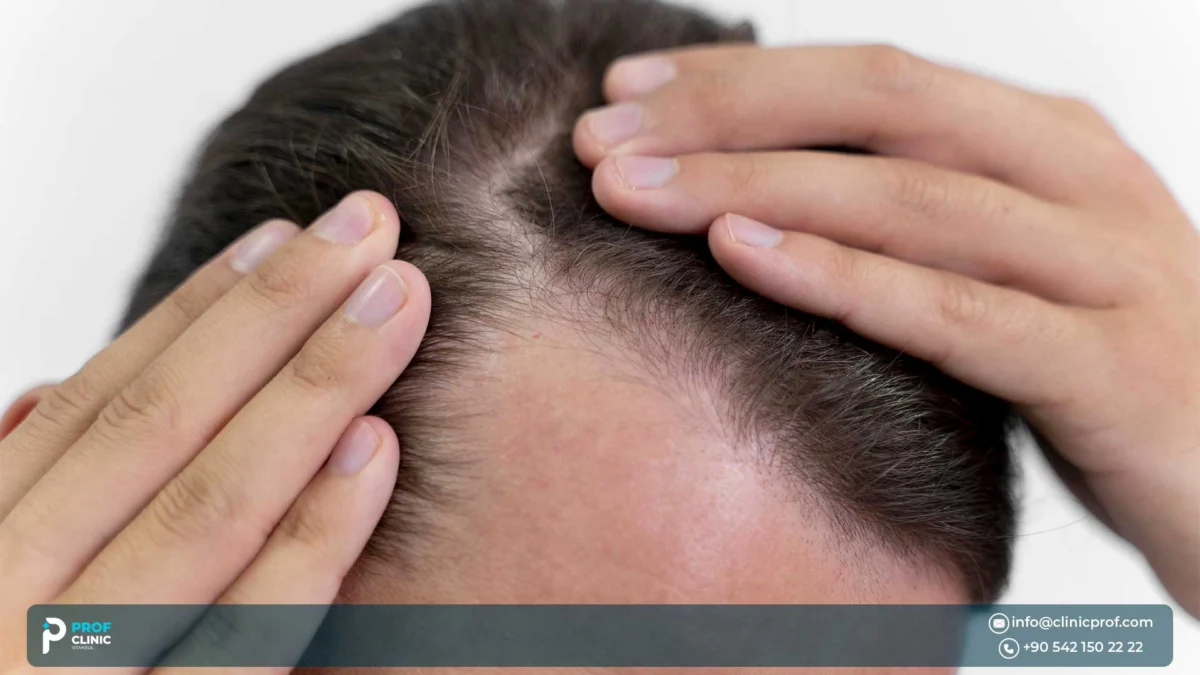
If you are still weighing a first transplant rather than a repair, the same donor-hair logic applies to male hair transplant in Turkey: the more your plan relies on one strip or one set of punches, the less room remains to fix a scar later.
Before You Book a Repair: What to Ask Your Surgeon
A good repair plan starts with clear answers, and these questions make a vague quote easier to compare with a specific one:
- Who exactly will perform the repair, and how many scar cases have they treated?
- Can I see healed results on scars like mine, with dates?
- Where will grafts come from, and how many will be used?
- What growth is realistic in scar tissue, and what happens if less grows?
- Will one session be enough, or is a staged plan likely?
- What will my donor area look like afterwards, and how much reserve will be left?
- Is the scar ready, or should I wait for it to mature?
Want the answers in writing? Contact the Prof Clinic team with your photos and ask for a written plan that names the method, the graft count and who performs the procedure.
Prof Clinic for FUT Scar Assessment and Hair Restoration in Istanbul
Based in Istanbul, Prof Clinic treats both hair and teeth, and its hair services cover scalp transplants for men and women, afro and curly hair, eyebrows, beard and moustache, using FUE, DHI and Sapphire FUE techniques. For a hair transplant in Istanbul, the clinic sends a written price offer after evaluating your photos, and its coordination team follows up on WhatsApp after the procedure.
The medical lead for hair restoration is Spc. Dr. Lütfi Öztürk, an internal-medicine specialist who handles the medical assessment and treatment planning and coordinates follow-up. A page cannot tell you whether your particular scar is a good candidate, so ask the team directly which repair options they would consider for you and who would carry them out. Please also check any clinic’s Ministry of Health licensing before you travel.
For a first look, send clear photos of the back of your head with hair at its current length, then with the hair parted over the scar, in natural light. Book a free online consultation to go through them.
FUT Scar Repair: Frequently Asked Questions
Can a FUT scar be removed completely?
Usually not. Most FUT scars can be made much less noticeable with hair length, hair grafts, scalp micropigmentation or revision surgery, but a scar is permanent tissue, and the ISHRS describes micropigmentation as nearly erasing a scar only “in some cases”. Your doctor can tell you what is realistic once they have seen and felt the scar.
Will hair grow in a FUT scar?
Hair grows in a scar only when follicles are transplanted into it, and the result is less predictable than in normal scalp. A 2019 study of 15 patients with postsurgical scalp scars found a mean graft survival of about 81% at 12 months, lower than in healthy skin. Stable, flat scars usually respond better than tight or thick ones.
How long should I wait before repairing a FUT scar?
Wait until the scar has matured, which usually takes between 6 months and 2 years. A review of strip harvesting advises against repeating a strip before 9 months to a year, and the ISHRS says micropigmentation should not be placed until at least a year after a hair transplant. Your surgeon sets the exact timing.
Is SMP or FUE better for a FUT scar?
Neither is better for everyone. SMP suits any short haircut, needs no donor hair and is quick, but the pigment fades over years and grows no hair. FUE adds real hair, but it uses donor grafts and grows less predictably in scar tissue. People who want a very short haircut often choose SMP; those with spare donor hair may prefer FUE.
How much does FUT scar repair cost in Turkey?
There is no standard price, because the cost depends on the method and the number of grafts or sessions. For orientation only, full scalp FUE packages in Istanbul are usually about €1,800–€3,500 (approximate 2026 range). A scar-only treatment is priced on its own method and graft count, so ask for a written quote after a photo assessment.
Final Thoughts
FUT scar repair is about choosing the right level of improvement: a haircut change costs nothing, SMP and grafts add camouflage, and revision can thin the line but may stretch again. What decides it is your scar’s width, texture and maturity, plus the donor hair you still have. Wait until the scar has settled, compare at least two options, and ask who will perform the work. When you are ready, talk to Prof Clinic about your scar and bring your photos.
Sources
- ISHRS — FUT Hair Transplant: Benefits, Procedure & Recovery
- ISHRS — Clinical Practice Guidelines for Follicular Unit Transplantation (FUT), Hair Transplant Forum International, Nov/Dec 2024
- ISHRS — Scalp Micropigmentation (SMP): All You Need to Know
- Indian Journal of Plastic Surgery — Hair Transplant with Strip Harvest: Indications, Contraindications, and Technique (Khanna, 2021)
- BioMed Research International — Treatment of Postsurgical Scalp Scar Deformity Using Follicular Unit Hair Transplantation (Yoo et al., 2019)
- Indian Journal of Plastic Surgery — Role of Hair Transplantation in Scarring Alopecia: To Do or Not to Do (Singh et al., 2021)
- American Academy of Dermatology — Keloids: Treatment