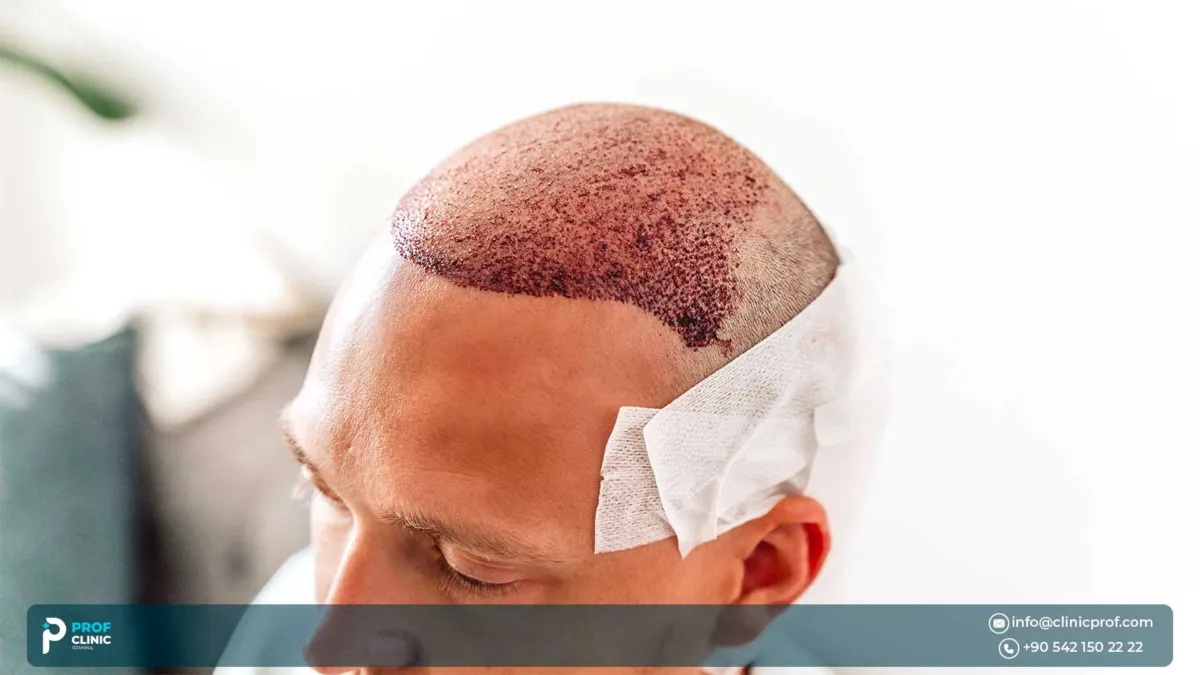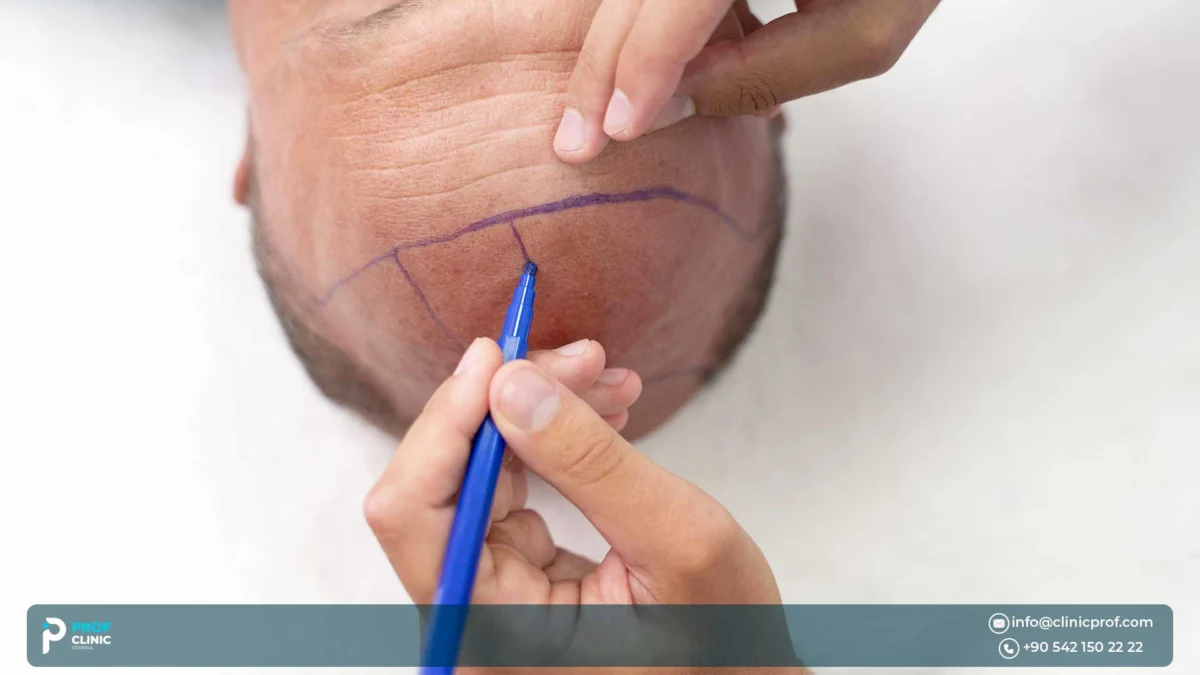
Can you get a good Afro hair transplant in Turkey, and what should you check before you book a flight to Istanbul? Yes, Afro-textured hair can be transplanted successfully, but it is a harder procedure than a standard hair transplant, because the follicles curve under the skin and are easier to damage during extraction. The result depends far less on the country than on how the team handles that curve, plans your donor area and follows you up after you fly home.
In this guide by Prof Clinic, you’ll learn why Black, Afro-American and curly-haired patients travel to Istanbul, what the real trade-offs are, who is a good candidate, how FUE, DHI and Sapphire FUE compare and what the trip involves. For more detail on cost, recovery or techniques, we point you to a dedicated guide. By the end, you’ll know which questions to ask any clinic before you commit.
Afro-American Hair Transplant in Turkey: Why Patients Travel to Istanbul
Most people considering an Afro-American hair transplant in Turkey are drawn by price and convenience, and so are Black British, African and European patients with Afro-textured hair. Treatment in Istanbul usually costs less than in the UK or the US, and many clinics sell packages that bundle the procedure with a hotel, transfers and aftercare, so one quote covers the whole trip.
Experience matters too. Because many international patients travel to Türkiye for hair restoration, teams there may see a wide range of hair types. That is an advantage only if the team you choose has real experience with tightly curled hair. A busy clinic that mostly treats straight hair is not automatically ready for coily follicles.
Why this matters to you: compare clinics on their Afro-specific experience and follow-up plan first, and on price second. The destination brings the savings; the team decides the result.
Is Turkey the Right Choice? Savings, Trade-Offs and Checks
Turkey can be a good choice, but the savings come with trade-offs. The NHS says surgery abroad can cost less than in the UK, but you need to weigh the potential savings against the potential risks. The table shows what attracts patients, what to weigh up and what to check before you book.
| What attracts patients | What to weigh up | What to check first |
|---|---|---|
| Lower prices than in the UK or US | Savings only help if the quote is complete and the work is done well; repairing a poor result can cost more than you saved | Ask for a written quote and compare offers line by line, not by the headline figure |
| All-in packages | The NHS advises avoiding deals where you only meet sales staff or pay for a surgeon you have not met | Ask who will assess you, extract and implant, and speak to the doctor before you pay |
| Many international patients | A busy clinic is not automatically experienced with Afro hair | Ask how many Afro or tightly curled cases the team has treated and ask to see similar results |
| Clear communication | The NHS says the surgeon must be able to explain the procedure and understand your concerns | Confirm which language your doctor and coordinator will use with you before you travel |
| Follow-up from a distance | Clinics abroad may not offer follow-up, or may not match standards at home, and travel insurance typically does not cover problems after surgery | Ask in writing how follow-up works, who answers your photos and what happens if you need a review at home |
Licensing is one more check worth making. Ask which doctor is named in your quote, and ask to see the clinic’s licence from the Turkish Ministry of Health. If the answers are vague, or only a sales adviser replies, treat that as a warning sign.
What Makes an Afro Hair Transplant Different?
The main difference lies under the skin. In people of African descent, the hair shaft and the follicle that produces it are both curved, so the root does not run in a straight line below the surface. A punch that follows the visible exit angle can easily cut across that curve and damage the graft. Doctors call this transection.
The ISHRS notes that the harvesting technique has to allow for this curvature, which is not a concern with straight hair. Studies point the same way, although they are small, retrospective and led by the developer of the tool tested. In a case series of 18 patients with tightly curled hair, published in Plastic and Reconstructive Surgery Global Open, conventional rotary punches failed or caused excessive transection in 8 patients, while a curved, non-rotary punch kept transection below 5%. A later study of 64 patients of African descent, in Dermatologic Surgery, reported mean transection rates of 3–6% with a skin-responsive device and found that skin thickness and firmness affected graft damage more than curliness itself. Treat these figures as a guide, not a promise: tools and technique have to be adapted to your hair and skin.
Why the Curl Can Work in Your Favour
Curly hair covers more scalp per hair than straight hair does. According to the ISHRS, fewer donor hairs are needed to create the impression of density, so a Black patient with substantial hair loss may be a suitable candidate when a patient with straight hair and similar loss would not be. The same curl can make the donor area look fuller than it really is, which is why donor density must be measured, not judged by eye.

Are You a Good Candidate for an Afro Hair Transplant?
You are usually a good candidate if your hair loss has a stable pattern and your donor area can supply enough grafts for the coverage you want. The AAD notes that men and women of all races can be good candidates, as long as they have enough healthy donor hair and the thinning area can still grow hair.
Before you plan travel, check these points:
- Stable hair loss: a pattern that has settled enough to design a long-term plan, not one that is changing fast.
- Enough donor hair: the back and sides of the scalp must supply the grafts without leaving visible thinning.
- A healthy scalp: no active inflammation or scarring disease that could reduce graft survival.
- Realistic goals: a hairline and density that suit your age and future hair loss.
- Time for aftercare: you can follow the washing, sleeping and activity rules in the first weeks.
Extra caution is needed if you have a personal or family history of keloids, very firm or thick scalp skin, or hair loss that started with tight hairstyles. None of these automatically rules you out, but each one changes the plan.
When Hair Loss Needs a Diagnosis First
Not every receding hairline in Afro hair is pattern baldness. The ISHRS lists central centrifugal cicatricial alopecia (CCCA), traction alopecia and, in men, dissecting cellulitis among the scarring conditions that must be assessed before surgery. In scarring alopecia that seems inactive, growth after a transplant can be less robust than in untouched scalp.
According to the AAD, CCCA destroys hair follicles and usually begins in the centre, or crown, of the scalp, and it often affects middle-aged Black women. Hair breakage there may be the first sign. If you notice it, see a dermatologist first, because treatment can prevent further loss. A transplant comes later, if at all.
Afro Hair Transplant for Women in Turkey
Women with Afro hair can have a transplant, but the cause of the loss matters even more, because traction alopecia from braids or extensions and CCCA at the crown need a diagnosis and a stable phase before surgery. Ask whether an unshaven or partly shaved approach suits your case. Our guide to Afro hair transplant for women covers female pattern loss in more detail.
Donor Planning: Where Afro Results Are Decided
For Afro hair, the success of the transplant is often settled at the planning stage, before any graft is taken. A transplant moves hair from one place to another; it doesn’t create new hair. Your donor area is a limited resource, and every decision about the hairline and density has to fit inside it.
The key planning principles are:
- Measure donor capacity: count what the donor area can safely give, not just the size of the bald area.
- Plan for coverage: use the curl to create the look of fullness rather than chasing a very high graft count.
- Avoid over-harvesting: taking too many grafts leaves visible thinning, which shows quickly with short fades and skin fades.
- Allow for future loss: a hairline that suits your age usually ages better than a very low one that later sits in front of new thinning.
- Talk about the hairline shape: the ISHRS notes that many African-American men prefer a hairline with less temple recession, which uses more grafts.
Our guide Hair Transplant Donor Area: Healing, Thinning and Limits explains how donor supply is assessed and what over-harvesting looks like.
Not sure your donor area can support your goals? Send clear photos of your donor area, crown and hairline on WhatsApp and ask for an honest first opinion before you plan travel.
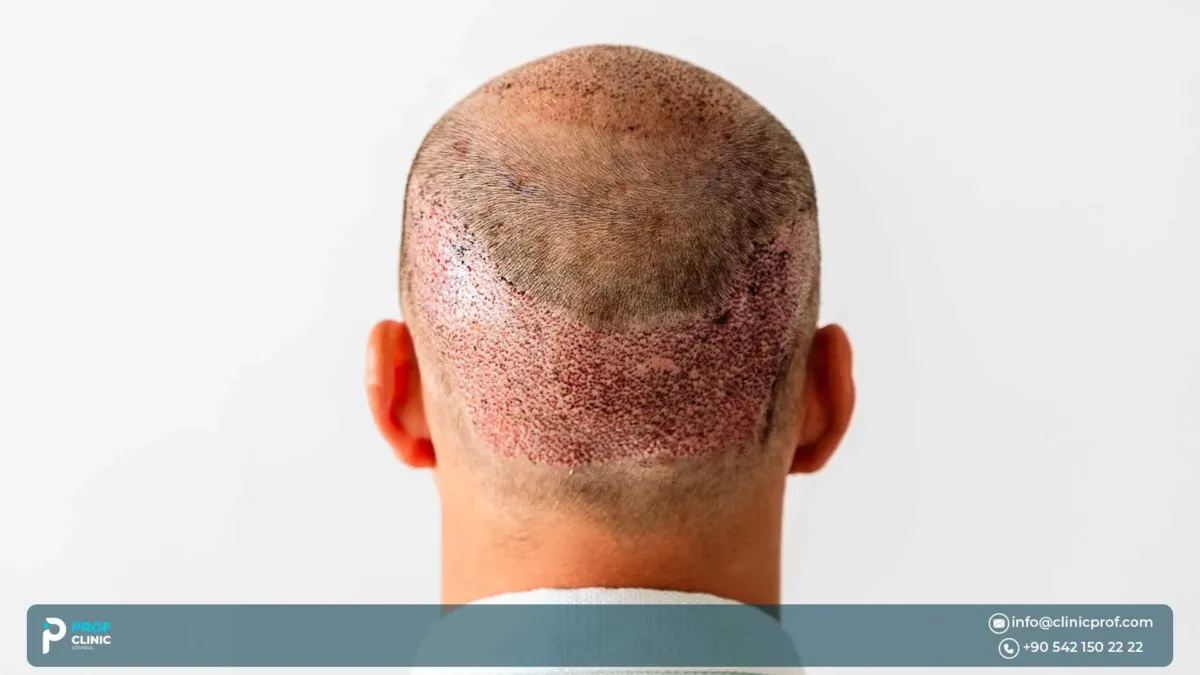
FUE, DHI or Sapphire FUE for Afro Hair?
No technique is best for every Afro patient. FUE, DHI and Sapphire FUE are names for different steps of the same overall process, and the skill of the team in adapting extraction angle, punch depth and implant direction to curved follicles matters more than the label.
Here’s how the three compare for Afro-textured hair:
| Technique | What it mainly changes | Why it can suit Afro hair | What to ask the clinic |
|---|---|---|---|
| FUE | Extraction: grafts are removed one by one with a small punch | Flexible for larger sessions; leaves small dot scars rather than a line | Which punch type is used for curved follicles, and how is transection checked? |
| DHI | Implantation: grafts are placed with an implanter pen | Close control of angle and direction, useful for a natural hairline | Who implants the grafts, and how long will the session take? |
| Sapphire FUE | Recipient sites: channels are opened with sapphire blades | Clean, consistent incisions that help set direction and density | Was sapphire chosen for my scalp, or is it the default option? |
The strip method (FUT) is still possible for some Afro patients. The ISHRS notes that FUE is becoming more popular among Black men because of short hairstyles, while strip surgery needs careful wound closure, since some patients react to dissolvable stitches.
In practice, give the team’s proven Afro extraction experience more weight than any technique name. If your donor area looks hard to extract, ask whether a small test extraction will be done before the full session. DHI can help with hairline detail and Sapphire FUE with channel design, but neither solves extraction difficulty on its own. For the full breakdown, read Afro Hair Transplant Techniques: FUE vs DHI for Coily and Curly Hair, or see the side-by-side comparison FUE vs DHI vs Sapphire FUE: Which Technique Fits You?.
Still unsure which method fits your curl pattern? Book a free online consultation and ask for a written recommendation that explains why.
Who Performs an Afro Hair Transplant in Turkey?
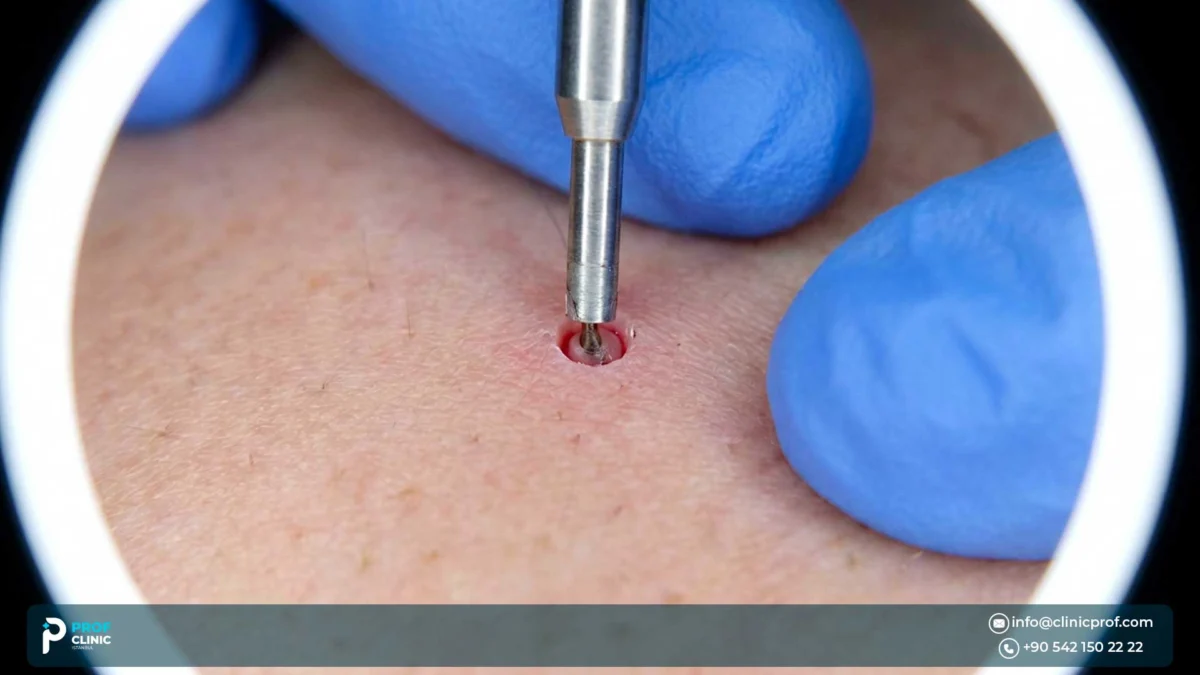
Many people search for an “Afro hair transplant surgeon in Turkey” because they want to know who actually holds the instruments. That is the right question, because the people who extract and implant your grafts affect the result as much as the technique does. If a clinic’s website says little about its doctors, ask directly before you go any further.
Before you book, ask the clinic in writing:
- Who will assess me and plan the hairline, and what are their qualifications?
- Who will extract the grafts, who will open the channels and who will implant them?
- How many Afro or tightly curled cases has this team treated, and can I see similar ones?
- Which punch type do you use for curved follicles, and how do you check graft damage?
- Who do I contact if I have a problem after I fly home?
The NHS adds that it’s worth asking how many procedures a surgeon has performed, how many had complications and what follow-up to expect if things go wrong. It’s also sensible to check that the clinic is licensed by the Turkish Ministry of Health.
Also read: How to Choose the Best Afro Hair Transplant Clinic in Turkey: 6 Checks
Your Afro Hair Transplant Trip to Istanbul, Step by Step
Most Afro hair transplant trips to Istanbul follow the same order: assessment, pre-op tests, surgery, an early check, then follow-up from home. Many patients stay about 2–4 days in total, though the right length depends on your plan and how many sessions you need.
- Before you travel: you send photos, the team reviews your donor area and you receive a written plan and quote.
- Arrival and assessment: the doctor examines your scalp, confirms the hairline design and checks for scarring conditions.
- Pre-op tests: blood tests and an ECG confirm you are fit for the procedure.
- Surgery day: under local anaesthetic, usually with sedation, so you stay awake. Afro cases often take longer, and large sessions may be split over two days.
- Early check: the team checks the grafts, explains the first wash and gives you your aftercare kit.
- Back home: you send progress photos at agreed points and contact the team with any concerns.
Before you book flights, plan these practical points:
- Entry rules: check passport and visa requirements for your nationality on official Turkish government sources, because they differ by country.
- Dates: keep your return flexible until the clinic confirms the schedule in writing. Our guide to how many days you need in Turkey for a hair transplant has a day-by-day plan.
- The flight home: ask your doctor when flying is fine and how to protect the grafts on the plane. Flying After a Hair Transplant: When It Is Safe and How to Travel covers the details.
- Your barber at home: ask your doctor when a trim or fade is safe, and keep braids, twists and wraps off the scalp until then.
- Insurance: the NHS notes that travel insurance typically does not cover problems arising from surgery, so check your policy before you go.
The NHS advises against treating surgery abroad as a holiday, because sightseeing, sun and swimming straight after an operation raise the risk of problems. It also suggests confirming before you book where your follow-up will happen and what you would do if a complication appears at home.
Recovery After You Fly Home: The Short Version
Recovery runs on two clocks. Your skin heals within about two weeks, while the transplanted follicles take months to produce visible new hair. The NHS says new hair usually starts to appear after about 4 months, and full results are seen after 10 to 18 months. The AAD adds that transplanted hair usually falls out between two and eight weeks after surgery, so shedding in that window is expected.
Because you will be recovering away from your clinic, these points matter most for an Afro-textured scalp:
- Protect the grafts for two weeks: the NHS says you need to be very careful with transplanted hair for about the first two weeks and suggests cutting down on exercise in the first month.
- Watch for bumps at 2–3 months: the ISHRS notes that ingrown hairs and folliculitis can appear when new hair starts to grow, and they are usually easy to treat. Send your clinic a photo rather than waiting.
- Expect some skin darkening: darker patches can develop at the donor and recipient sites, according to the ISHRS, so it is worth discussing this beforehand.
- Delay tight styles: ask your doctor when braids, extensions or tight wraps are safe again, since styles that pull put strain on new grafts.
- Be patient with the look: curly hair shrinks as it grows, so it can look shorter and less dense than it is in the early months.
Call your clinic promptly about pain that keeps getting worse, spreading redness, pus, fever, or a raised scar that keeps growing. If you have a history of keloids, the ISHRS says keloid or thick scars can be treated medically, so report them early rather than waiting. For the full week-by-week picture, read our Afro hair transplant recovery guide.
Planning your recovery around work and flights? Contact our team for a written timeline from surgery day to your first follow-up.

How Much Does an Afro Hair Transplant Cost in Turkey?
As a general guide, an Afro hair transplant in Istanbul costs about €2,500–€4,500, compared with about €1,800–€3,500 for a standard scalp transplant. This is an approximate 2026 range, not a final price; your price depends on your case after assessment and is confirmed in a written quote.
Afro cases usually cost more because extraction is slower and sessions run longer. The final figure mainly depends on:
- the number of grafts your donor area can safely supply;
- the technique and how long the session lasts;
- whether the work is split over two days;
- what the package includes, such as pre-op tests, medication, the aftercare kit, the hotel and transfers.
If you’re looking for an affordable black hair transplant in Turkey, compare quotes line by line, not by the headline figure. A cheaper offer that leaves out the tests, the follow-up or the doctor’s role in the surgery is not a better deal.
Also read: Afro Hair Transplant Cost in Turkey 2026: Prices & Packages
How to Judge Afro Hair Transplant Reviews From Turkey
Afro hair transplant reviews from Turkey are useful only when you can compare like with like. A great result on straight hair tells you little about how a team handles tightly curled follicles.
When you look at reviews or before-and-after photos, check that:
- the patient has a similar curl type, skin tone and stage of hair loss to yours;
- the “after” photo was taken at least 10–12 months after surgery, with matching lighting, angle and hair length;
- you can see the donor area afterwards, not only the hairline;
- the reviews describe the follow-up after the patient flew home, not just the hotel and transfers.
The NHS also suggests asking to see before-and-after photos of the surgeon’s own work, rather than relying on images shared across many websites. For a full guide to reading outcomes, see Afro Hair Transplant Success Rate: Evidence, Factors and Reviews.
Want to see how curly and Afro hair looks months after surgery? Browse our before-and-after gallery and look for cases close to your own.
Prof Clinic for Afro Hair Restoration in Istanbul: What You Can Check
At Prof Clinic in Istanbul, an Afro-American hair transplant in Turkey starts with a medical assessment, not a booking. That assessment, and the treatment plan for your curl pattern, come from Spc. Dr. Lütfi Öztürk, the internal-medicine specialist who leads hair restoration and also coordinates follow-up.
Here’s what you can verify before you travel:
- Afro and curly hair as a named service: alongside male, female, eyebrow and beard work, as part of the clinic’s wider hair transplant in Istanbul service.
- Techniques: FUE, DHI, Sapphire FUE and Micro FUE, with the choice explained for your hair and scalp.
- Pre-op tests: Afro hair or not, everyone first has a blood count, ECG, kidney and liver function tests, electrolytes, blood sugar, and hepatitis and HIV screening.
- Honest expectations: the density you can expect with curly hair is discussed for your case alone, with no figure promised beforehand.
- A written quote after photo review: the package it describes covers the procedure, your accommodation, airport and hotel transfers, and post-op care.
- Follow-up after you fly home: the coordination team keeps in contact and offers advice on WhatsApp as the grafts grow.
FAQs About Afro Hair Transplant in Turkey
Is Turkey good for an Afro hair transplant?
It can be, if you choose the team rather than the country. Istanbul offers lower prices and package logistics, but Afro hair needs adapted extraction tools, careful donor planning and reliable follow-up. Check who performs each step, ask for similar Afro cases and confirm how complications are handled after you return home.
How much does an Afro hair transplant cost in Turkey?
Expect about €2,500–€4,500 in Istanbul. That figure is an approximate 2026 range for Afro cases, not a final price. Afro cases usually cost more than standard transplants because extraction is slower and sessions run longer. Your exact price depends on graft count, technique and package, and comes in a written quote after photo assessment.
Can African American hair be transplanted?
Yes. Afro-textured hair can be transplanted with FUE, DHI or strip surgery, although the curved follicles make extraction harder. Studies of adapted punches report graft damage rates under 10%. Thanks to the curl, fewer grafts can create a full look, so the plan focuses on coverage and natural direction rather than very high graft numbers.
How long should I stay in Turkey for an Afro hair transplant?
Many patients stay about 2–4 days, covering the assessment, the procedure and an early check. Larger Afro sessions split over two days may need longer. Confirm the schedule in writing before booking flights, and avoid treating the trip as a holiday, since sun, swimming and sightseeing straight after surgery raise the risk of problems.
Is it safe to have an Afro hair transplant in Turkey?
It can be, when the clinic is licensed, a qualified doctor assesses you and the plan is built for your hair type. As the NHS notes, surgery abroad carries risks, and complications can happen in any country. Check the Ministry of Health licence, ask who performs each step and agree follow-up in writing before you travel.
Can women with Afro hair get a hair transplant in Turkey?
Yes, once the cause of hair loss is clear and stable. Traction alopecia and CCCA are common in Black women and need a dermatology diagnosis first, because active scarring can reduce graft survival. Women often want to keep their length, so ask whether an unshaven approach suits your case.
Final Thoughts
An Afro hair transplant in Turkey can give natural, lasting coverage when the team respects what makes Afro hair different: curved follicles, a donor area that looks fuller than it is, and skin that may scar or darken. Ask who performs each step, check that your hair loss has been diagnosed, and judge the result only after the full growth period.
The safest first step is an honest assessment of your donor area. Talk to Prof Clinic about your hair and ask for a written plan for your Afro hair transplant in Istanbul.
Sources
- ISHRS — Hair Restoration in African-Americans (Yates)
- American Academy of Dermatology (AAD) — Hair loss: Hair transplants
- American Academy of Dermatology (AAD) — Central centrifugal cicatricial alopecia: Signs and symptoms
- NHS — Hair transplant
- NHS — Cosmetic surgery abroad
- Plastic and Reconstructive Surgery Global Open — Comparative Study of a Novel Tool for Follicular Unit Extraction for Individuals with Afro-textured Hair (Umar, 2016)
- Dermatologic Surgery — Follicular Unit Excision in Patients of African Descent: A Skin-Responsive Technique (Umar et al., 2023)