Can PCOS hair loss, low iron or a thyroid problem really be the reason your hair is thinning? Yes, all three can, and they are among the most common medical explanations for hair loss in women. The short answer is that each one changes the hair cycle in its own way, and blood tests, not guesswork, show which one applies to you.
In this guide by Prof Clinic, you will see how PCOS, iron deficiency and thyroid disease affect hair, what each pattern tends to look like, which tests to ask your doctor for, and how long regrowth usually takes once the cause is treated. By the end, you will know what to check before you consider any hair loss treatment, including a transplant in Turkey.
How Hormones, Iron and Thyroid Levels Change the Hair Cycle
Hair grows in cycles, and anything that disturbs the body’s hormone or nutrient balance can push many follicles into their resting phase at once or make some follicles produce finer hair. In the words of the American Academy of Dermatology (AAD), effective treatment for hair loss begins with finding the cause.
In practice, medical causes tend to produce one of two patterns. Androgen-driven thinning, as in PCOS, is a gradual change in the hair you already have. Iron and thyroid problems more often cause diffuse shedding, a rise in the hair you see in the brush or the shower drain. DermNet lists nutritional deficiency, including iron deficiency, and endocrine disorders such as underactive and overactive thyroid among the recognised triggers of this shedding, known as telogen effluvium.
The table sets the three causes side by side. It is a guide to the questions worth asking, not a way to diagnose yourself.
| Possible cause | How the hair usually behaves | Other clues | What the doctor may check |
|---|---|---|---|
| PCOS (androgen excess) | Gradual thinning, often over the top of the scalp | Irregular periods, acne, extra hair on the face or body | History, hormone blood tests and sometimes an ovarian ultrasound |
| Iron deficiency | More shedding across the whole scalp | Tiredness, heavy periods, a recent pregnancy | Ferritin with a full blood count |
| Thyroid disease | Diffuse thinning, sometimes dry or brittle hair | Feeling cold or tired (underactive), or restless and losing weight (overactive) | Thyroid function tests |
The causes can overlap. A woman with heavy periods and PCOS, for example, can have low iron and raised androgens together, which is one reason a single test is rarely enough.
PCOS Hair Loss: Androgens, Thinning and Extra Hair
PCOS can thin the hair on your head while increasing hair elsewhere, because the same androgen imbalance affects follicles differently in different areas of the body. Some health services, such as the Mayo Clinic, now use the name polyendocrine metabolic ovarian syndrome (PMOS) for the condition long called PCOS, so you may see either name.
What PCOS Does to the Follicle
Androgens are hormones every woman produces in small amounts. When levels or sensitivity are higher than usual, scalp follicles can shrink over time and grow shorter, finer hairs, the same process behind female pattern hair loss. A 2025 systematic review in JAAD International pooled 18 studies and found that about 22.7% of women with PCOS had female pattern hair loss, although the certainty of that estimate was rated low. In other words, hair thinning is a real but far from universal feature of the condition.
Signs That Point Toward PCOS
Hair loss on its own is rarely enough to suggest PCOS. The Mayo Clinic describes a doctor looking for several signs together, including male-pattern hair growth, acne and insulin resistance, alongside irregular periods. If your thinning arrived with those changes, tell your doctor about all of them, not just the hair.
How PCOS Is Checked and Treated
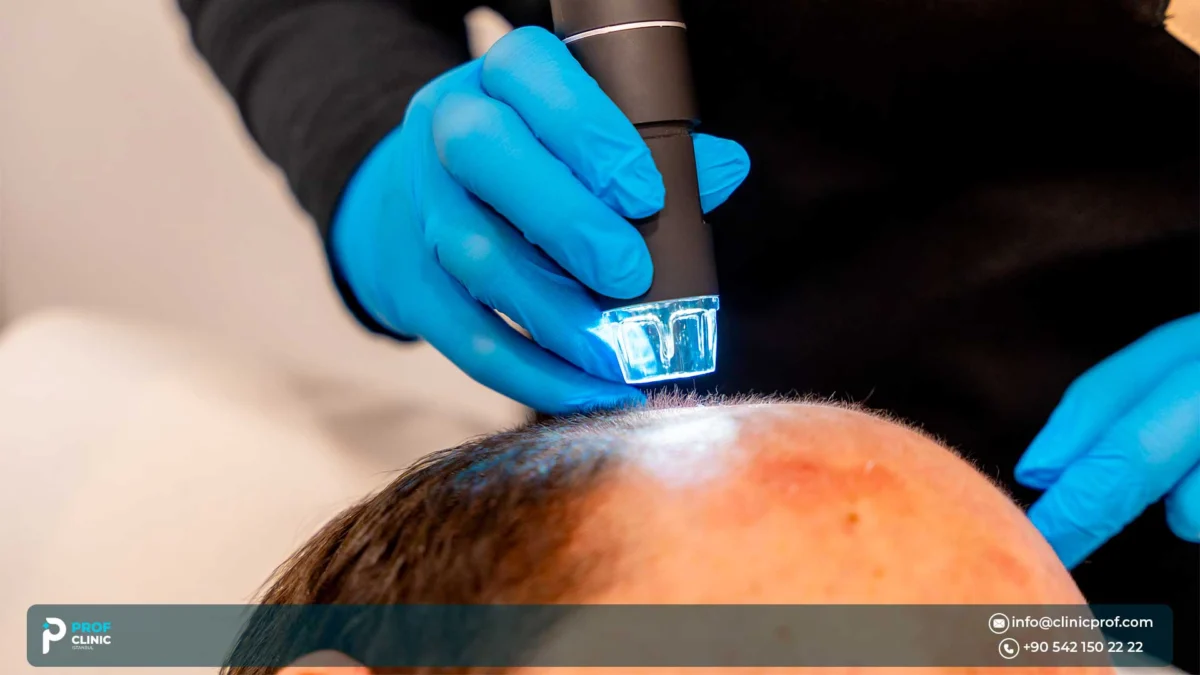
There is no single test for PCOS. The Mayo Clinic describes a medical history and examination, blood tests that can measure hormone levels and help rule out other causes, and sometimes an ultrasound of the ovaries. Treatment is led by your doctor and depends on your symptoms and whether you want to become pregnant.
For hair, the AAD says minoxidil is the most recommended treatment for female pattern hair loss and that spironolactone, a medicine that has been prescribed for decades for hair loss, may be used in some cases. Both take time: the AAD advises using either for about 6 to 12 months before judging the result, and says the hair gained is lost again after stopping. Minoxidil can cause a temporary increase in shedding in the first 2 to 8 weeks. The Mayo Clinic adds that spironolactone can cause birth defects, so effective contraception is needed and it is not recommended if you are pregnant or planning a pregnancy. Never start or stop it without your doctor.
Thinning hair along with irregular periods or extra facial hair? Send us a photo and a short history on WhatsApp and we will tell you whether a hair assessment makes sense before or after you see your doctor.
Also read: Female Hair Loss Causes: Patterns and Treatment Options
Iron Deficiency and Hair Loss: Why Ferritin Matters
Low iron stores are one of the most common and most treatable reasons for increased shedding in women, and ferritin, the protein that stores iron, is the number most often linked to hair. The NHS lists hair loss as a less common symptom of iron deficiency anaemia, and says heavy periods and pregnancy are very common causes of the anaemia itself.
Ferritin and Haemoglobin Are Not the Same Test
You can have iron stores that are too low for healthy hair growth while your haemoglobin, the figure used to diagnose anaemia, is still in the normal range. A 2022 meta-analysis in Skin Appendage Disorders pooled 36 studies with more than 10,000 participants and found that women with non-scarring hair loss had lower ferritin levels on average than women without it. Its authors concluded that women with hair loss may benefit from higher ferritin levels. The best target is still debated, so ask your doctor to explain your result rather than relying on the laboratory’s “normal” label alone.
Why You Should Not Start Iron on Your Own
Taking iron without a test is not a harmless shortcut. The AAD says you should take iron, biotin or zinc only when a blood test shows a deficiency, and the cause of the low iron, such as heavy bleeding, also needs to be found. Your doctor will choose the form, dose and duration, and recheck your levels.
Also read: Hair Vitamins and Supplements: What Actually Helps?
Pregnancy and birth are a common time for iron to fall and shedding to rise, but that pattern has its own timeline. We cover it in Postpartum Hair Loss: When It Starts, How Long It Lasts.
Thyroid Problems and Hair Loss: Underactive and Overactive
Both an underactive and an overactive thyroid can thin the hair, and the NHS includes hair changes in the symptoms of each. The thyroid hormones help set the pace of the hair cycle, so when levels are too low or too high, more follicles than usual move into the resting phase.
Underactive Thyroid (Hypothyroidism)
The NHS lists “dry skin, dry hair or hair loss” among the common symptoms of an underactive thyroid. The loss is usually diffuse rather than patchy, and it often comes with tiredness, feeling cold and weight gain. Because these symptoms build slowly, many women put them down to stress or ageing.
Overactive Thyroid (Hyperthyroidism)
For an overactive thyroid, the NHS lists “patchy hair loss or thinning” among the common signs, usually alongside a racing heart, restlessness, sweating and weight loss. Hair can feel finer and thinner overall.
Will the Hair Return Once the Thyroid Is Treated?
In most cases, yes. DermNet notes that regrowth usually follows once the trigger is removed and advises correcting any abnormality in thyroid function, iron, vitamin B12 and folic acid. Treatment is prescribed and monitored by your doctor, and the hair usually lags behind the blood results by months.
Which Blood Tests to Ask for When Your Hair Is Thinning
A sensible first round of tests usually covers iron stores, thyroid function and, if your history suggests it, hormones. Your doctor decides what is appropriate, but this list gives you a clear starting point for the appointment.
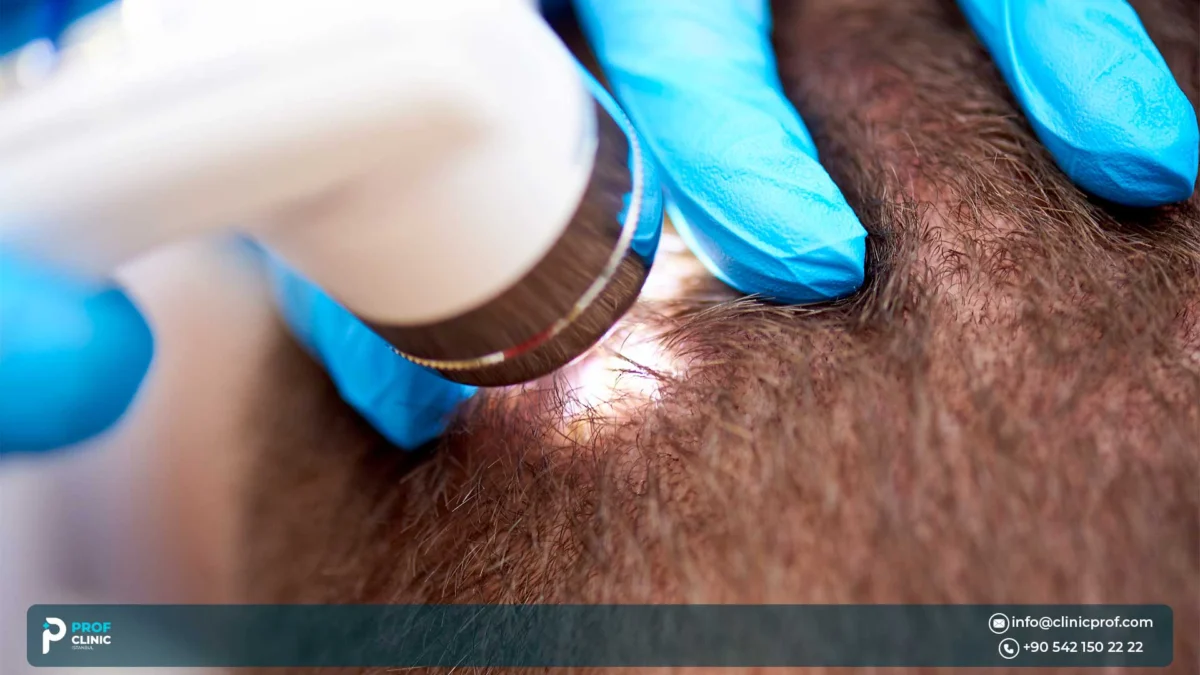
- Ferritin and a full blood count: shows your iron stores and whether you are anaemic.
- Thyroid function tests: check whether the thyroid is running too slowly or too fast.
- Hormone tests: considered when you have irregular periods, acne or extra facial hair, since blood tests can measure hormone levels and help rule out other causes.
- Vitamin B12 and folic acid: DermNet lists these with iron and thyroid among the levels to correct when hair shedding has a nutritional trigger.
Bring a list of your medicines, your period pattern, any recent illness, pregnancy or crash diet, and a few dated photos of your parting or hairline. The AAD notes that other causes of hair loss can look like female pattern hair loss, so a dermatologist’s examination is worth having alongside the blood work.
Not sure whether your hair loss is hormonal, nutritional or genetic? Contact the Prof Clinic team with your photos and test results, and we can explain what they may mean for treatment planning.
How Long Until the Hair Grows Back After Treatment?
Hair rarely responds as fast as the blood results do, because follicles need months to complete a new growth cycle. DermNet describes shedding from telogen effluvium tapering back to normal over 6 to 9 months in most cases, although recovery can be incomplete in some. The AAD adds that it can take months before you see results from any treatment.
| Situation | Typical time to judge progress | What to expect |
|---|---|---|
| Shedding after iron or thyroid correction | About 6–9 months | Shedding slows first, then shorter new hairs appear |
| Minoxidil for female pattern hair loss | About 6–12 months | A temporary rise in shedding in weeks 2–8, then gradual change |
| Spironolactone for hair loss | About 6–12 months | Slow improvement; hair gained is lost again after stopping |
Treat these timelines as a rough guide rather than fixed rules. Some hair loss also improves on its own, as the AAD notes, so a stable or slowly improving picture at 6 months is already a good sign. For minoxidil and other prescription options in more detail, see Finasteride and Minoxidil for Hair Loss and After a Transplant.
When a Hair Transplant Becomes Part of the Conversation
A hair transplant is only worth considering after the medical causes have been checked and treated, and once the pattern of loss has settled. Moving follicles does not correct low iron, a thyroid disorder or hormonal imbalance, and shedding that is still active can continue to thin the hair around the grafts.
It may become relevant when thinning continues after the underlying cause is under control, for example in confirmed female pattern hair loss that does not respond enough to medical treatment, and when you still have healthy donor hair. Transplanted follicles are usually taken from the back or sides of the scalp. The details, including graft numbers and what a no-shave approach involves, belong to the female hair transplant in Turkey page and to your assessment, not to a general article.
See a doctor promptly, without waiting for the usual timelines, if hair falls out suddenly or in patches, if your scalp is red, painful or scaly, or if you have other symptoms such as fatigue, palpitations or very irregular periods.
Medical Assessment of Women’s Hair Loss with Prof Clinic in Istanbul
At Prof Clinic, the first step for women is a medical review, not a surgical plan. Our hair transplant in Turkey service is led medically by Spc. Dr. Lütfi Öztürk, an internal medicine specialist whose role includes assessing hair loss and hair-growth disorders, reviewing medical history and medication, and planning treatment. His page explains that not every pattern of hair loss suits transplantation, so medical history, medication and how far the loss has progressed all shape the plan.
Here is what you can verify before you decide:
- Photo review: we send a written price offer after the team has evaluated your photos.
- Pre-operative tests: before surgery you have a blood count, ECG, electrolytes and blood sugar, plus kidney and liver function checks and hepatitis and HIV screening.
- Techniques: FUE, DHI, Sapphire FUE and Micro FUE, with a no-shave option offered especially for women.
- Honest expectations: how dense the result may look is talked through with each woman individually, and no specific density is promised up front.
As a general guide, a female hair transplant in Istanbul costs about €2,000–€3,800 in an approximate 2026 range. This is not a final price: your own figure is set after your case is assessed and then confirmed in a written quote. Packages usually include the procedure, pre-op tests, medication and aftercare kit, hotel and airport transfers, and the coordination team follows up over WhatsApp.
Want a medical opinion on your hair loss before you plan anything? Book a free online consultation and send your photos, history and any recent test results.
FAQs About PCOS, Iron, Thyroid and Hair Loss in Women
Does PCOS cause hair loss in women?
It can, but not in every woman. A 2025 meta-analysis found female pattern hair loss in about 22.7% of women with PCOS, with low certainty. PCOS tends to thin the hair on top of the scalp while increasing hair on the face or body. Your doctor can confirm whether androgens are involved.
Will my hair grow back after I correct low iron?
Often, but slowly. Shedding that comes from an iron shortfall usually settles once the cause is treated, and DermNet describes recovery over 6 to 9 months in most cases of telogen effluvium. If the hair loss has lasted a long time or you also have pattern hair loss, regrowth may be partial.
What ferritin level is needed for healthy hair growth?
There is no single agreed number. Research suggests women with hair loss may benefit from higher ferritin than the usual cut-off for anaemia, but the best target is still debated. Ask your doctor to interpret your result alongside your symptoms and haemoglobin rather than comparing it with an online figure.
Can thyroid medication stop hair loss?
Treating a thyroid problem usually helps, because regrowth tends to follow once the trigger is corrected. The hair lags behind the blood results by months, so give it time. Do not change your dose yourself; any adjustment should come from the doctor managing your thyroid.
Should I take iron or biotin supplements for hair loss on my own?
No. The AAD advises taking iron, biotin or zinc only when a blood test shows a deficiency. Without a test you may delay finding the real cause, and iron in particular needs a doctor’s dose and follow-up.
Which doctor should I see for hair loss in women?
Start with your GP or a dermatologist, who can examine the scalp and order basic blood tests. If results point to a hormone or thyroid condition, you may be referred to an endocrinologist or gynaecologist. The AAD recommends a dermatologist to rule out look-alike causes of hair loss.
Treat the Cause First, Then Judge the Hair
PCOS hair loss, iron deficiency and thyroid disease share one rule: find the cause, treat it, and give the hair at least 6 to 9 months to respond before deciding anything more. Start with ferritin, thyroid function and, where your history suggests it, hormone tests, and take the results to a doctor who looks at the whole picture.
If thinning continues once those causes are under control, the next step is an honest assessment of whether a hair transplant for women in Istanbul could help. Contact Prof Clinic to start with a review of your photos and history.
Sources
- Mayo Clinic — Polyendocrine metabolic ovarian syndrome (PMOS/PCOS): diagnosis and treatment
- JAAD International — Bi-directional association between female pattern hair loss and polycystic ovary syndrome: a systematic review and meta-analysis (2025)
- Skin Appendage Disorders — Iron Deficiency and Nonscarring Alopecia in Women: Systematic Review and Meta-Analysis (2022)
- NHS — Iron deficiency anaemia
- NHS — Underactive thyroid (hypothyroidism): symptoms
- NHS — Overactive thyroid (hyperthyroidism): symptoms
- American Academy of Dermatology — Hair loss: Diagnosis and treatment
- American Academy of Dermatology — Thinning hair and hair loss: Could it be female pattern hair loss?
- DermNet — Telogen effluvium