Postpartum hair loss is the heavy shedding many mothers notice a few months after giving birth, and it is almost always temporary. For most women it starts around month 3, peaks at about month 4, eases within roughly six months and has grown back to its usual fullness by the baby’s first birthday. The timing varies, and a few causes, such as a thyroid problem, low iron or an underlying pattern of hair loss, can make it last longer.
In this guide by Prof Clinic, you’ll see when hair loss after pregnancy starts and peaks, how long it lasts, what helps (including what to check before using anything while breastfeeding) and the signs that mean it is time to see a doctor. This is general education, not a diagnosis; your own doctor should assess persistent or unusual shedding.
What Is Postpartum Hair Loss, and Why Does It Happen?
Postpartum hair loss is temporary, excessive shedding that dermatologists call telogen effluvium, and it is triggered by the hormone shift after birth. Cleveland Clinic describes it as shedding that begins a few months after delivery, and the American Academy of Dermatology (AAD) calls it temporary shedding rather than true hair loss.
The mechanism is a delayed shed. Estrogen rises during pregnancy and holds shedding back, so hairs that would normally have fallen stay in the growth phase. After delivery estrogen drops, those hairs move into the resting phase together, and they fall out a few months later in one wave.
Most people have roughly 80,000 to 120,000 scalp hairs and lose up to about 100 a day. With postpartum shedding the daily count goes above that, which is why brushes, shower drains and pillows suddenly fill up. It does not affect the baby, and it cannot be prevented, but knowing it is coming takes much of the shock out of it.
Also read: Female Hair Loss Causes: Patterns and Treatment Options
When Does Postpartum Hair Loss Start and Peak?
Postpartum hair loss usually starts about 3 months after birth and peaks around month 4, although Cleveland Clinic gives a wider window of 1 to 6 months. Many mothers notice nothing in the first weeks, so the shedding can feel like it arrives out of nowhere just as life with a newborn is settling down.
That delay is part of the cycle: hairs that move into the resting phase after delivery take a couple of months to fall. The table shows the typical pattern.
| Period after birth | What you may notice | What is happening |
|---|---|---|
| Birth to about month 2 | Usually little change | Estrogen falls; hairs begin to move into the resting phase |
| Months 2–4 | More hair in the brush, the shower and on the pillow | Resting hairs start to fall in large numbers |
| About month 4 | Shedding is often at its heaviest | The peak of the shed, according to the AAD |
| Months 4–6 | Shedding slows and settles | The resting hairs have mostly gone |
| Months 6–12 | Short new hairs appear and fullness slowly returns | New growth cycles are under way |
| By about month 12 | Most women are back to their usual fullness | Recovery is typically complete by the first birthday |
Every body recovers on its own clock, so take these as averages. Cleveland Clinic also notes that in some women shedding can run on for as long as 18 months, and that is one of the situations where a check-up makes sense (see the section on when to see a doctor).
How Long Does Postpartum Hair Loss Last?
Postpartum shedding typically lasts up to about six months, and most women regain their usual hair fullness by the baby’s first birthday. Some recover sooner, and a few take longer, which is why the answer is a range rather than a date.
The Typical Pattern: Shedding First, Then Regrowth
Cleveland Clinic says the shedding phase generally lasts less than six months. Regrowth carries on after the shedding stops, so hair can still look thin for a while even though recovery has started. New hairs start short, so fullness returns gradually rather than overnight.
Will It Grow Back as Thick as Before?
For most women, yes. Cleveland Clinic says hair grows back to its original fullness for most people, although a few find it somewhat thinner than before pregnancy. If your hair is clearly less full after a full year, the AAD advises seeing a dermatologist, because another cause may be involved.
Can Anything Make It Stop Sooner?
Not reliably. The AAD says you do not have to do anything to remedy it, and Cleveland Clinic goes as far as calling patience the only treatment. What you can do is protect the hairs you have and make sure nothing else is adding to the loss, which is the focus of the next sections.
What Helps: Gentle Hair Care and Nutrition While You Wait
Nothing stops the shedding itself, but gentle styling and a balanced diet look after the hairs you have while new ones grow. The advice from the AAD and Cleveland Clinic is simple and consistent.
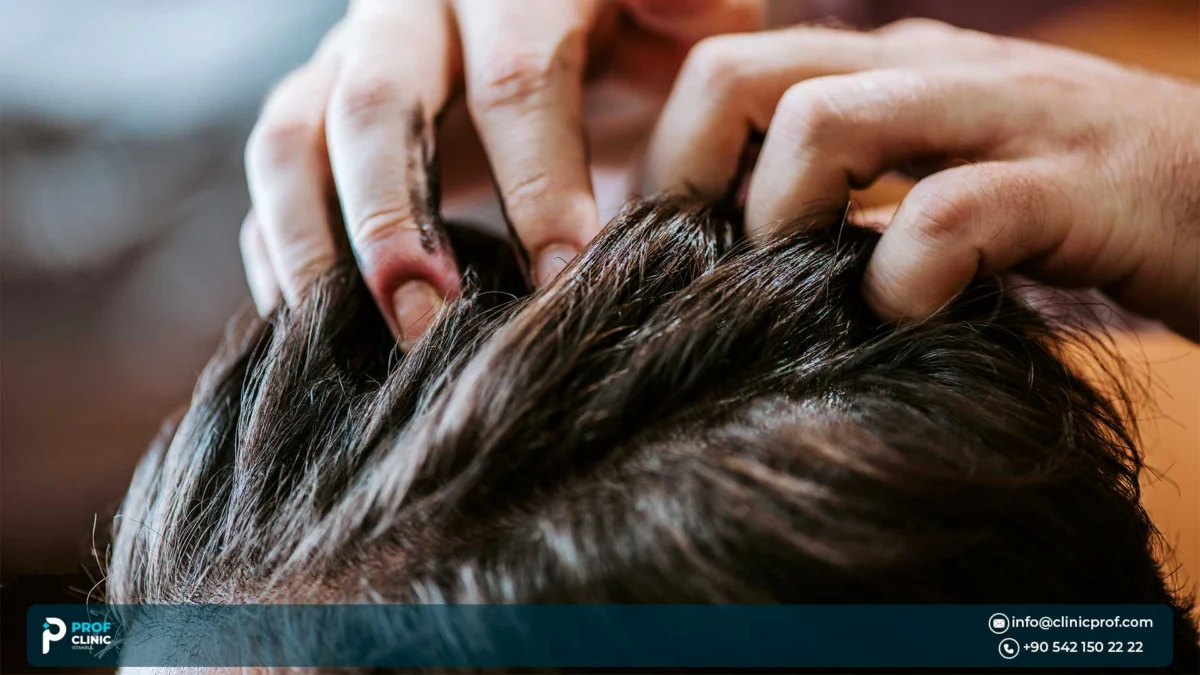
Gentle Hair Care That Makes Hair Look Fuller
- Volumising shampoo: products containing protein coat the hair and add body.
- Light conditioner on the ends: heavy “intensive” conditioners can weigh thin hair down, so keep conditioner away from the scalp.
- A shorter cut: short hair often looks fuller and is easier to manage while it is shedding.
- Low tension: avoid tight ponytails and braids that pull on the roots.
- Less heat and chemicals: use lower settings on dryers and irons and pause harsh treatments.
Finding the right products is partly trial and error; the AAD notes that no single ingredient is superior.
Food, Prenatal Vitamins and Iron
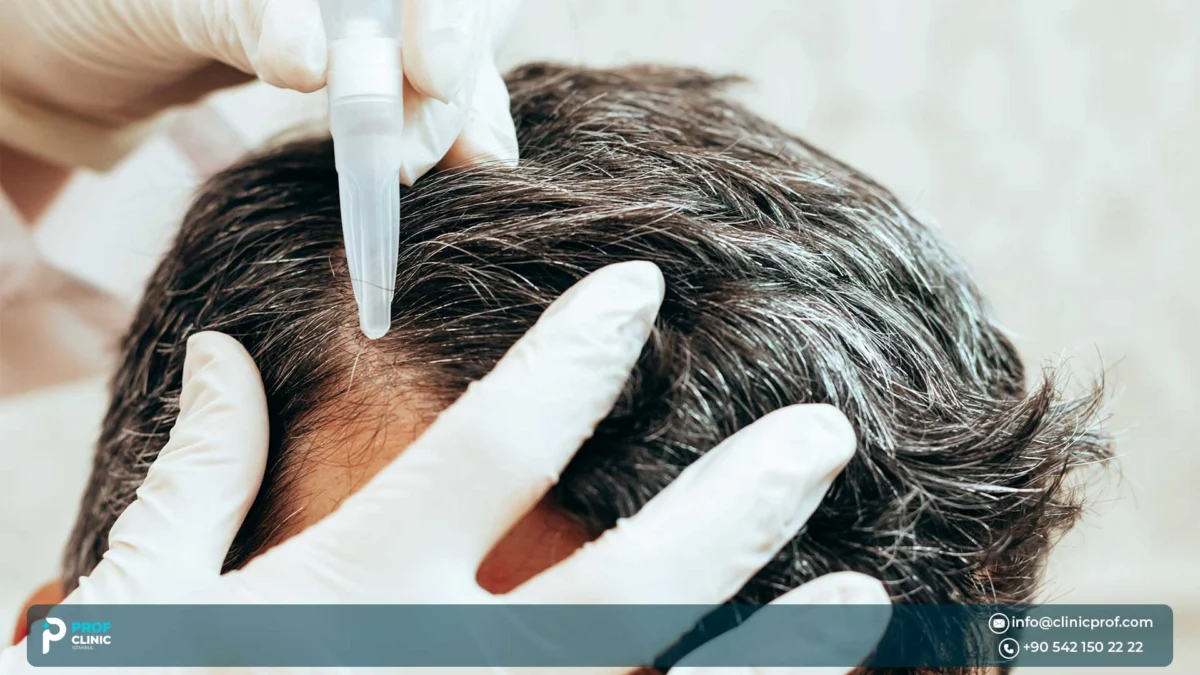
A varied diet that supplies the nutrients hair needs is the foundation, and Cleveland Clinic suggests continuing prenatal vitamins after birth. Low iron deserves a mention here: anaemia is a recognised cause of hair loss, so it is one of the things worth ruling out. A blood test, not guesswork, shows whether you need an iron supplement.
What About Biotin and Hair Supplements?
Biotin is the supplement most often sold for hair, but the evidence for it is thin. The US National Institutes of Health says claims that biotin supports hair, skin and nails rest, at best, on a few case reports and small studies, and that true deficiency is rare in people eating a normal diet. The recommended intake while breastfeeding is 35 micrograms a day, far below the doses in many hair products.
There is a practical catch: high-dose biotin can interfere with some lab tests, including thyroid hormone tests, and give falsely normal or abnormal results. If you take it, tell your doctor and the lab before any blood test. For a wider look at what vitamins can and cannot do, see our guide to hair vitamins and supplements.
Breastfeeding-Safe Care: What to Check Before Using Anything
If you are breastfeeding, check any hair product or medicine with your doctor or pharmacist first, because what is fine for you is not automatically fine for your baby. Postpartum shedding usually needs no medicine at all, so the safest option is often to simply wait and care for the hair gently.
Hair Products and Medicines: A Quick Guide
- Shampoos, conditioners and volumisers: ordinary hair-care products are what dermatologists suggest, and they are the low-risk starting point.
- Topical minoxidil: the US LactMed database considers it acceptable for the mother once breastfeeding is established, but babies can absorb it through skin contact, so the baby should not touch the treated scalp. A preterm infant developed excess facial hair in one report where the mother used 5% minoxidil. Discuss it with your doctor, and see our article on Finasteride and Minoxidil for Hair Loss and After a Transplant.
- Oral minoxidil: data are limited and LactMed advises caution, especially with a newborn.
- Herbal “hair growth” supplements: Cleveland Clinic advises talking to a doctor before taking them while breastfeeding, because evidence of benefit is limited and quality varies.
- Other prescription hair-loss medicines: ask the prescribing doctor to confirm they are compatible with breastfeeding before you start.
Never start, stop or change a prescribed medicine on your own because of hair loss; that decision belongs to your doctor.
A Safety Note: Loose Hair and Your Baby
Shed hair can, very rarely, wrap tightly around a baby’s finger or toe and cut off circulation, a problem called a hair tourniquet. The AAD says to unwind it gently, or cut it if no loose end is visible, and to call the baby’s doctor or go to the emergency room if you cannot remove it. Checking little fingers and toes during nappy changes is a sensible habit while you are shedding.
When Postpartum Hair Loss Is Not Just Postpartum: Signs to See a Doctor
See a doctor if heavy shedding continues beyond about six months, or if your hair has not regained its usual fullness after a year, because another cause may be involved. Cleveland Clinic specifically lists thyroid disease and iron deficiency as conditions to rule out when shedding shows no sign of ending.
The two lists below separate what is usually expected from what deserves a check.
- Usually expected: more hair in the brush and shower from about month 3, heaviest around month 4, easing by month 6, and short new hairs growing in afterwards.
- Worth a check-up: shedding that is still heavy after six months, no return to usual fullness by the first birthday, bare patches, a visibly widening part, or hair loss together with other symptoms such as unexplained weight loss, a racing heartbeat, heat sensitivity or anxiety.
Thyroid Problems After Birth
Postpartum thyroiditis affects about 5% to 10% of women in the year after a birth, and hair loss can be a symptom. Cleveland Clinic explains that the overactive phase usually starts one to six months after birth and the underactive phase four to eight months after, so the timing overlaps with normal postpartum shedding and the two are easy to confuse. A blood test confirms the diagnosis, and many mild cases need no treatment.
Iron Deficiency and Other Causes
Iron deficiency (anaemia) is the other common cause to rule out, and it is checked with a simple blood test. Hormonal conditions such as PCOS can also affect hair, and the tests worth asking about are covered in a separate guide.
Also read: PCOS, Iron Deficiency and Thyroid Problems: Hair Loss in Women
When the Pregnancy Has Uncovered Another Type of Hair Loss
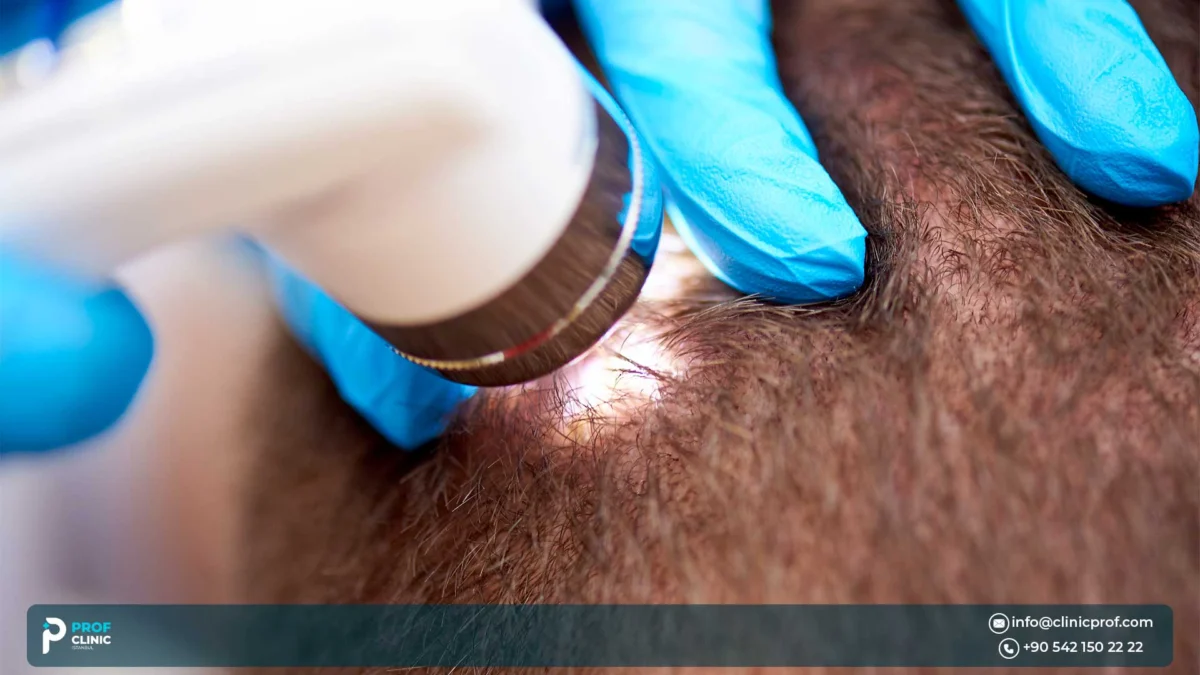
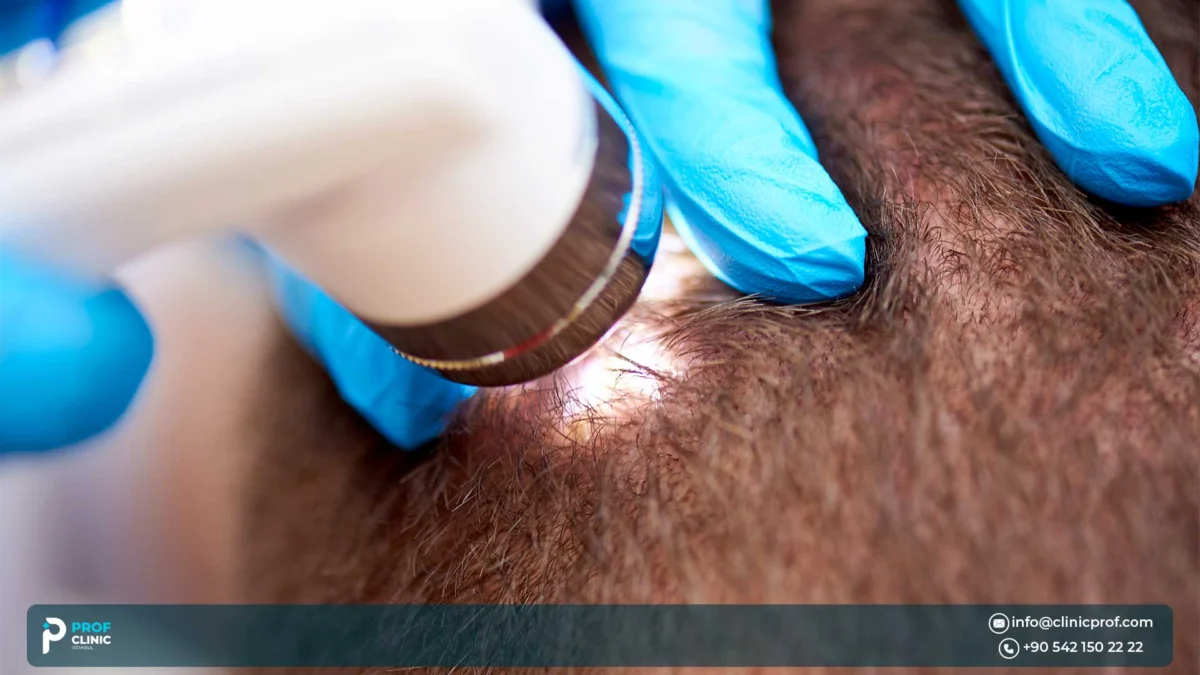
Sometimes postpartum shedding reveals a pattern of hair loss that was already developing. A 2024 study in the Journal of Clinical and Aesthetic Dermatology looked at 200 women with postpartum shedding in Cairo and found that most also had female pattern hair loss, traction alopecia or both. It is a single-centre study, so the proportions should not be applied to everyone, but it shows why shedding that does not settle deserves a proper look. Doctors usually start with an examination, a gentle hair pull test and trichoscopy, a magnified view of the scalp.
Shedding that has gone on longer than it should? Ask Prof Clinic’s team where to start to find out whether a medical check or a photo review makes sense first.
If Thinning Doesn’t Recover: Treatment Options and Hair Transplant
Postpartum shedding is never a reason for a hair transplant, because the hairs return on their own. A transplant is only discussed for permanent thinning that is still there after the shedding is over and other causes have been checked.
If your hair is still thinner a year after birth, the next step is a diagnosis. Temporary shedding on top of female pattern hair loss, traction, thyroid disease and low iron are different problems with different treatments, and the right treatment depends on which one it is. A transplant moves your own follicles from a permanent donor area to thinning areas, and it suits only some women. Because normal recovery can take up to a year, decisions about surgery are best made after that, once any permanent pattern is clear. Our guide to Hair Transplant for Women in Turkey: Candidates, Methods & Cost explains who is a candidate.
If you have reached that point, a female hair transplant in Turkey can be assessed from photos and a medical history. Not sure whether it is shedding or lasting thinning? Send clear photos of your parting and hairline on WhatsApp for a first impression.
Prof Clinic for Women’s Hair Concerns in Istanbul
Prof Clinic is a hair and dental clinic in Istanbul, and its hair services include scalp hair transplants for women. Temporary postpartum shedding is not treated with surgery, so for that your own doctor is the right first stop; the clinic becomes relevant only if thinning persists and a transplant is a realistic question.
- Medical assessment: the assessment and treatment plan are handled by Spc. Dr. Lütfi Öztürk, an internal-medicine specialist who also coordinates your follow-up. You can read more on his doctor profile page.
- Before any procedure: pre-operative tests include a blood count, ECG, kidney and liver function, electrolytes, blood sugar, and hepatitis and HIV screening.
- Written quote: the team sends a written price offer after evaluating your photos.
- No-shave option: offered especially for women, depending on your case.
- Realistic expectations: density is discussed individually, and no density is promised in advance.
- Follow-up: the coordination team follows up after the procedure and advises over WhatsApp.
As a general guide, a female hair transplant in Istanbul costs about €2,000–€3,800. This is an approximate 2026 range, not a final price; it depends on your case after assessment and is confirmed in the written quote, and packages usually include the procedure, pre-op blood tests, medication and aftercare kit, hotel and VIP transfers. Stays are typically 2–4 days. If you are weighing options, a hair transplant for women in Istanbul starts with a photo assessment, and the hair transplant in Istanbul overview shows the techniques the clinic names. Book a free online consultation to ask about your own case.
Postpartum Hair Loss FAQs
Is it normal to lose hair 4 months after giving birth?
Yes. Month 4 is when postpartum shedding is typically at its heaviest, according to the AAD. Losing more than the usual 100 or so hairs a day is expected at this point. It usually eases over the following weeks, and fullness returns gradually by about the first birthday.
Can postpartum hair loss last more than a year?
It can, but it is not the usual course. Cleveland Clinic says shedding can last up to 18 months in some women. If your hair has not regained its fullness after a year, or shedding is still heavy after six months, see a doctor to rule out thyroid disease, low iron or another type of hair loss.
Does breastfeeding cause postpartum hair loss?
The AAD and Cleveland Clinic attribute postpartum shedding to the fall in estrogen after delivery, and neither lists breastfeeding as the cause. Breastfeeding does change which hair products and medicines are safe to use, so check anything new with your doctor or pharmacist first.
Is minoxidil safe while breastfeeding?
LactMed considers topical minoxidil acceptable for the mother once breastfeeding is established, but babies can absorb it from treated skin and have developed excess hair growth, so keep the baby away from the treated area. Oral minoxidil needs more caution. Talk to your doctor first, as postpartum shedding often needs no medicine.
Do biotin and hair vitamins stop postpartum hair loss?
There is no good evidence that they do. The NIH says support for biotin as a hair treatment is limited to case reports and small studies. High-dose biotin can also distort thyroid and other blood tests, so tell your doctor if you take it. Continuing prenatal vitamins and eating a balanced diet is the sounder approach.
Will my hair grow back as thick as before?
For most women it does. Cleveland Clinic says hair grows back to its original fullness for most people, though a few find it a little thinner. If it still looks clearly thinner after a full year, a dermatologist can check for another cause and discuss options.
The Bottom Line on Postpartum Hair Loss
Postpartum hair loss follows a predictable arc: shedding from about month 3, a peak near month 4, easing by month 6 and fullness returning by about the first birthday. Be gentle with your hair, check everything you use while breastfeeding, and treat shedding that is heavy after six months or unfinished after a year as a reason for a medical check rather than a wait-and-see.
If thinning is still there after a year and you want to understand your options, contact Prof Clinic for a photo-based review with the Istanbul team.
Sources
- Cleveland Clinic — Postpartum Hair Loss
- Cleveland Clinic — How To Deal With Hair Loss After Pregnancy
- American Academy of Dermatology — Hair loss in new moms: Dermatologist tips
- Cleveland Clinic — Postpartum Thyroiditis
- Journal of Clinical and Aesthetic Dermatology — Postpartum Telogen Effluvium Unmasking Additional Latent Hair Loss Disorders (Galal et al., 2024)
- NIH LactMed — Minoxidil
- NIH Office of Dietary Supplements — Biotin: Fact Sheet for Health Professionals