What is an FUT hair transplant, and is the strip method still worth considering now that most clinics talk about FUE? FUT moves hair by removing a thin strip of scalp from the back of the head and dividing it into individual grafts under a microscope. It can move a large number of grafts in one session without shaving the head, but it leaves a fine linear scar, and the donor area usually takes longer to settle than after FUE.
In this guide by Prof Clinic, you’ll learn how FUT is done, its real benefits and risks, how it compares with FUE and DHI, what recovery looks like and what it typically costs in Turkey. By the end, you’ll know whether the strip method deserves a place on your list of consultation questions.
What Is an FUT Hair Transplant?
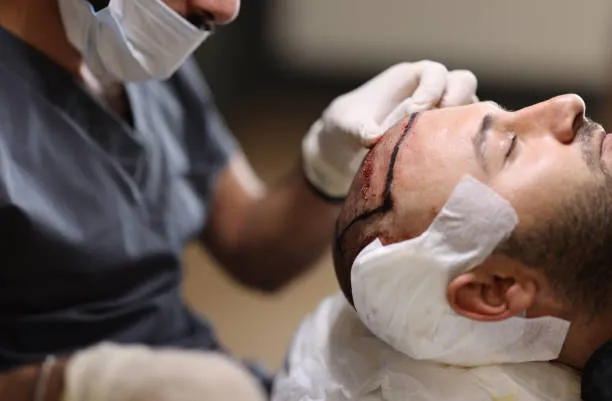
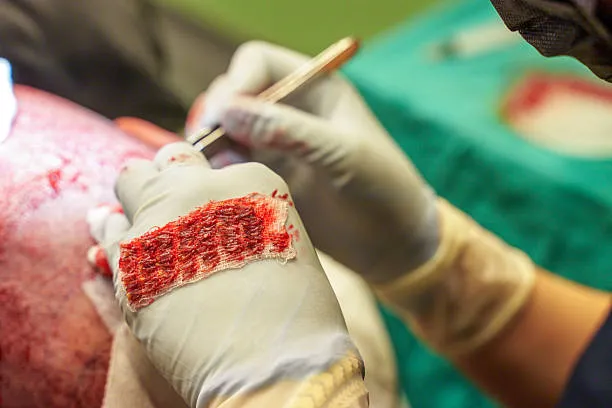
An FUT hair transplant is a surgical technique in which the surgeon removes a strip of hair-bearing skin from the back of the scalp, closes the wound, and transplants the hair from that strip into thinning or bald areas. According to the ISHRS (International Society of Hair Restoration Surgery), the strip is usually 0.5–1.5 cm wide and 5–30 cm long. The team then divides it into follicular units, the natural groups of 1 to 4 hairs that grow together, and each unit becomes a graft.
The hair is taken from the back and sides of the head because these follicles usually resist pattern hair loss. The ISHRS calls this the safe donor area and notes that grafts taken from it have a lower chance of being lost later. That is why transplanted hair tends to last, while the native hair around it can keep thinning.
Why It Is Called the Strip Method
FUT stands for follicular unit transplantation, but you will also see it called the strip method, strip harvesting or FUSS (follicular unit strip surgery). The ISHRS notes that the American Board of Hair Restoration Surgery now prefers the term “linear strip excision”, because FUT and FUE both transplant the same follicular units. The real difference is how the grafts are harvested: one strip for FUT, one tiny punch at a time for FUE.
How an FUT Hair Transplant Is Done, Step by Step
An FUT procedure is usually completed in a single day under local anaesthetic, and the NHS says most hair transplants do not need an overnight stay. The exact length depends on the number of grafts and the team, so treat any timing as a guide rather than a fixed schedule.
Here’s the usual sequence:
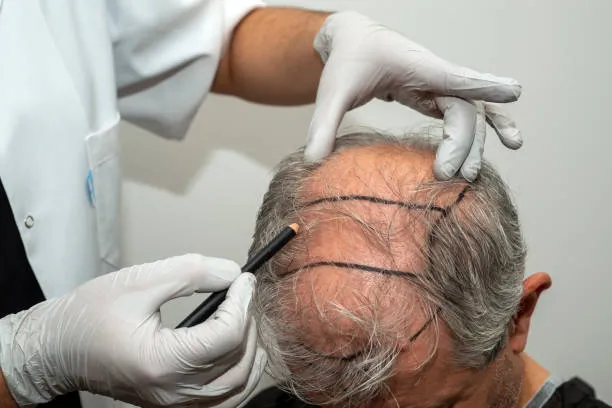
- Assessment and planning: the doctor examines the donor area, checks how loose the scalp is and how dense the hair is, and agrees the hairline and graft number with you.
- Anaesthesia: the scalp is numbed with local anaesthetic. The ISHRS notes that oral, intramuscular or intravenous sedation is often given at the same time to make the injections more comfortable.
- Strip removal and closure: the surgeon removes the strip from the back of the head and closes the wound with stitches or staples. Only the strip area is trimmed, so the rest of your hair can stay long.
- Graft dissection: while the wound is being closed, the team cuts the strip into thin slivers and then into 1-, 2-, 3- and 4-hair grafts under a microscope.
- Recipient sites and placement: tiny incisions are made in the thinning area at the angle of your natural hair, and the grafts are placed into them one by one.
Many surgeons also use a trichophytic closure. According to the ISHRS, about a millimetre of tissue is trimmed from one edge of the wound so that hair can grow through the scar, which makes it harder to see. Ask whether your surgeon uses it, because it is one of the details that shapes the final scar.
Also read: FUE Hair Transplant in Turkey: Procedure, Pros and Cons, and Cost
Benefits of an FUT Hair Transplant
The main benefit of FUT is that it can move a large number of grafts in one session while leaving the rest of the donor area untouched. That makes it a practical option for some patients rather than an outdated one.
Many Grafts in a Single Session
An ISHRS article comparing the two methods reports that strip sessions of 2,000–3,000 grafts are very common and that some surgeons regularly exceed 4,000. A 2025 review in Cureus adds that FUT is especially useful for extensive restoration because it allows a substantial number of grafts in one session. For advanced hair loss, this can mean fewer procedures to reach the coverage you want.
No Need to Shave the Head
With FUT, only the narrow band of hair over the strip is trimmed. The NHS notes that the head does not need to be shaved, so the hair above the incision falls over the stitches and hides them from the first day. For people who can’t take much time away from work, or who wear their hair long, this is often the deciding factor.
Efficient Use of the Donor Area
Because the strip comes from the middle of the safe donor area, FUT does not thin the back of the head in scattered patches. The ISHRS lists “no risk of overharvesting the donor area” among its advantages. Its comparison article adds that strip grafts keep more protective tissue around them, and that transection, meaning hairs cut and destroyed during harvesting, should stay at around 1–2% when a microscope is used for dissection.
Often a Lower Cost
FUT usually needs less of the surgeon’s time per graft than FUE, which tends to lower the price. The ISHRS describes it as cheaper than FUE in most cases. The cost section below explains what that means in Turkey.
Drawbacks and Risks of FUT
The biggest drawback of FUT is the linear scar it leaves across the back of the head. Most other downsides relate to the donor wound: more discomfort at first, a slower recovery and, less often, numbness or scar problems.
The Linear Scar
Every FUT procedure leaves a scar where the strip was removed. The NHS says it should not be visible unless you have very short hair, and the ISHRS comparison article reports that the vast majority of strip patients have minimal scars. The catch is that a scar that is easy to hide at a medium length may show with a very short clipper cut, and many men change their haircut over the years. A 2018 review of hair transplant complications in the Journal of Cutaneous and Aesthetic Surgery calls visible scarring the most common FUT donor problem, and notes that a wide scar, though uncommon, can follow faulty technique or poor aftercare.
More Discomfort and a Slower Donor Recovery
FUT is usually a little harder on the donor area than FUE. The 2025 Cureus review notes that FUE offers faster recovery and less post-operative discomfort than FUT, and the ISHRS says FUT can cause more pain in some cases, usually managed with ordinary painkillers. Expect tightness at the back of the head in the first days, especially when you bend your neck.
Numbness and Tingling
Some patients feel numbness or tingling around the scar after FUT, and it is usually temporary while the small nerves recover. The Journal of Cutaneous and Aesthetic Surgery review explains that careless deep incisions can damage the nerves at the back of the scalp, causing a patch of reduced feeling and, rarely, lasting discomfort. This is why the depth of the incision matters as much as its length.
Other Possible Complications
Like any operation, FUT carries a small risk of bleeding, infection and an allergic reaction to the anaesthetic, according to the NHS. The same surgical review lists folliculitis, raised (hypertrophic or keloid) scars and temporary shedding of hair around the incision, known as donor shock loss. This shedding usually recovers within 3–4 months.
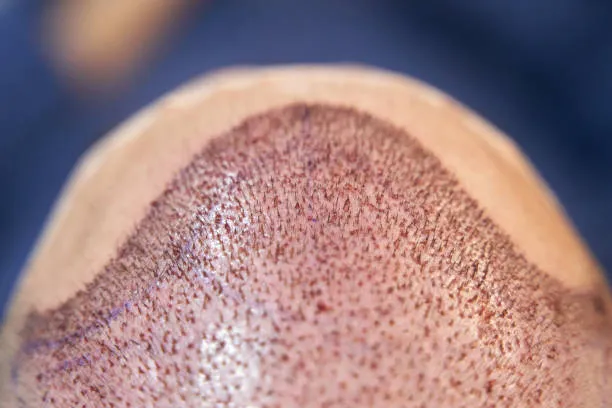
For more on healing, thinning and how many grafts a donor area can safely give, see Hair Transplant Donor Area: Healing, Thinning and Limits.
Worried about how a scar might look with your haircut? Send photos of the back of your head to our team on WhatsApp and ask which harvesting method suits your donor area.
FUT vs FUE: Which One Suits You?
Neither FUT nor FUE is better for everyone. Both transplant the same follicular units; the difference is how the grafts are removed, and that changes the scar, the shaving, the session size and the recovery. The ISHRS describes FUE as the dominant method today, but it still presents FUT as a valid choice for the right patient.
| What you compare | FUT (strip method) | FUE |
|---|---|---|
| How grafts are harvested | One strip of scalp, divided under a microscope | Individual follicular units removed with a 0.7–1.2 mm punch |
| Donor scar | One fine linear scar, hidden by longer hair | Many tiny dot scars spread over the donor area |
| Shaving | Only the strip area is trimmed | The donor area is usually shaved |
| Grafts per session | Often large; 2,000–3,000 is common | Often fewer per session, depending on the surgeon |
| Donor recovery | Stitches, tightness and a slower recovery | Usually faster, with less discomfort |
| Usually suits | Advanced hair loss, longer hair, a lower cost per graft | Short hairstyles, smaller sessions, hiding an old strip scar |
FUE is not scarless either. The ISHRS comparison article points out that FUE leaves many small round scars, which can show as pale dots when the hair is cut very short, especially on darker skin.
And What About DHI?
DHI is not a different way of harvesting; it is a different way of implanting. In DHI the grafts are usually removed one by one, as in FUE, and then placed with an implanter pen such as a Choi pen. So comparing FUT with DHI really means comparing a strip harvest with an FUE-style harvest, plus a different placement tool.
Also read: DHI Hair Transplant in Turkey: Choi Pen Method, Cost & Results
Still unsure which method fits your hair loss? Book a consultation and ask for a written recommendation that explains why one technique suits your case better than another.
Who Is a Good Candidate for FUT?
FUT tends to suit people who need many grafts, wear their hair longer and are comfortable with a linear scar at the back of the head. The ISHRS describes several groups who are often good candidates:
- Advanced hair loss: at Norwood 6 or 7 the donor area is narrow, and a strip from its centre can often give more grafts than FUE without thinning it.
- Longer hairstyles: men and women who never wear their hair very short can hide the scar easily and skip shaving.
- Older patients: FUT scars tend to heal better with each decade of life, so a 50-year-old usually gets a finer scar than a 30-year-old.
- Curly or very wavy hair: the ISHRS comparison notes that strip harvesting suits all hair types, while very curly hair can be harder to extract with FUE.
FUE is usually the better fit if you like a very short haircut, need a small session or want to camouflage an old strip scar. A doctor may also advise against surgery, or suggest waiting, when hair loss is still very active or expectations are unrealistic. A 2025 review in Anais Brasileiros de Dermatologia stresses that a transplant is not a cure for pattern hair loss: without ongoing treatment, the native hair around the grafts can keep thinning and the cosmetic result can fade.
What it means in real life: the right question is not “FUT or FUE?” but “how many grafts will I need over my lifetime, and how will I wear my hair?”
Recovery After an FUT Hair Transplant
Recovery after FUT runs on two tracks: the donor wound, which closes in about two weeks, and the grafts, which take months to grow. The timeline below reflects general aftercare guidance from medical sources such as the NHS; your surgeon’s instructions always come first.
- Days 1–5: the back of the head feels tight and sore, and small scabs form in the recipient area. Bandages can usually come off after 2–5 days, but don’t touch the grafts.
- Around day 6: you can usually wash your hair gently by hand.
- Days 10–14: non-dissolvable stitches or staples are usually removed. Many people need 1–2 weeks off work.
- First month: you may be told to cut down on exercise to reduce scarring. The Journal of Cutaneous and Aesthetic Surgery review also warns that ignoring neck-bending restrictions can increase tension on the wound and widen the scar.
- After a few weeks: the transplanted hairs often fall out. This shedding is expected and does not mean the grafts have failed.
- From about month 4: new hair usually starts to appear, and the NHS says the full result should be seen after 10–18 months.
The donor scar keeps maturing for weeks or even months after the stitches come out, so judge it only once the redness has faded.
Want to see how results develop over the months? Browse real cases in our before-and-after gallery.
FUT Hair Transplant Cost in Turkey
FUT is usually one of the less expensive ways to have a hair transplant, because harvesting a strip takes less surgeon time per graft than FUE. As a general guide, an FUT hair transplant in Istanbul costs about €1,500–€3,000, while FUE, DHI or Sapphire FUE packages usually cost about €1,800–€3,500. These are approximate ranges as of October 2026, not final prices, and your price depends on your case after assessment.
The main factors that change the price are:
- Number of grafts: set by the size of the area and your donor density, and agreed after the assessment.
- Technique: the ISHRS comparison notes that FUE usually costs more per graft than strip harvesting, sometimes more than double.
- The surgical team: who performs each step, and how experienced they are, affects both the cost and the outcome.
- What the package includes: in Turkey, packages often bundle the procedure, pre-op blood tests, medication and an aftercare kit, a hotel stay and transfers. Check what is and isn’t included before you compare quotes.
For comparison, the NHS says a hair transplant in the UK can cost anywhere between £1,000 and £30,000. Still, a lower price should never be the only reason to choose FUT. The scar is permanent, so the decision has to fit your hair loss and the way you wear your hair.
Comparing quotes? Ask for an itemised written quote that shows exactly what is included.
Choosing Your Technique with Prof Clinic in Istanbul
Prof Clinic’s hair transplant in Turkey service is built around FUE, DHI and Sapphire FUE, so planning starts with a donor assessment rather than a fixed technique. If you’ve read about FUT and wonder whether it would suit you better, that is a good question to bring to the consultation, and the team can explain which options are available for your case.
Here is what you can check before you travel:
- Medical assessment: the medical lead for hair restoration, Spc. Dr. Lütfi Öztürk, is an internal-medicine specialist who carries out the medical assessment and treatment planning and coordinates follow-up.
- Pre-op tests: blood count, ECG, kidney and liver function, electrolytes, blood sugar, and hepatitis and HIV screening before surgery.
- Honest expectations: expected density is discussed individually, and no specific density is promised in advance.
- A written quote: sent after the team reviews your photos. Packages include the procedure, accommodation, airport and hotel transfers, and post-op care.
- Follow-up after you fly home: the coordination team stays in touch and gives advice over WhatsApp.
If you’re a man weighing up options for a receding hairline or a thinning crown, the male hair transplant in Turkey page explains the clinic’s approach in more detail.
FAQs About FUT Hair Transplants
Is FUT better than FUE?
Neither is better for everyone. FUT can move many grafts in one session without shaving, which helps with advanced hair loss and longer hairstyles. FUE avoids a linear scar and usually heals faster, so it suits people who wear their hair short or need a smaller session. The right choice depends on your donor area, your pattern of hair loss and how you style your hair.
How long do FUT hair transplant results last?
The transplanted hair is usually long-lasting, because it comes from the back of the head, where follicles tend to resist pattern hair loss. The native hair around the grafts can still thin with age, so many patients need medical treatment to protect it. Expect new growth from about month 4 and the full result after 10–18 months.
How visible is an FUT scar?
Usually not very visible, as long as the hair above it is kept at a moderate length. Most strip patients end up with a fine line that the surrounding hair covers. It may show with very short clipper cuts, and a minority of people heal with a wider scar. If a scar does show, options include FUE grafts into the scar or scalp micropigmentation.
Is an FUT hair transplant painful?
The procedure is done under local anaesthetic, often with sedation, so most patients feel pressure rather than pain during surgery. Afterwards the donor area usually feels tight and sore for several days, in some cases more than after FUE. The painkillers your doctor prescribes are usually enough to keep it manageable.
How do I sleep after an FUT hair transplant?
Many surgeons advise sleeping on your back with your head raised on two pillows or a travel pillow for the first nights. This helps reduce swelling and keeps pressure off both the grafts and the stitches at the back of your head. Avoid rolling onto your front or bending your neck sharply until the stitches are out.
How many grafts can be moved with FUT?
It depends on your donor density and how loose your scalp is, but strip sessions are often large. An ISHRS comparison article reports that sessions of 2,000–3,000 grafts are very common and that some surgeons exceed 4,000. Your doctor sets the number after examining the donor area, because an over-ambitious strip can put too much tension on the wound.
Final Thoughts
An FUT hair transplant is a sound option when you need a large number of grafts, would rather not shave, and are happy to keep your hair long enough to cover a fine linear scar. If you like very short hair or need a small session, FUE is usually the better fit. Decide on the technique with a doctor who has examined your donor area, not on price alone.
The safest first step is an assessment. Contact Prof Clinic to talk through your donor area and ask for a written plan for your hair transplant in Istanbul.
Sources
- NHS — Hair transplant
- ISHRS — Guide to FUT Hair Transplant: Benefits, Procedure & Recovery
- ISHRS — Comparison Between Strip Harvesting and Follicular Unit Extraction: A Fair and Balanced View
- Journal of Cutaneous and Aesthetic Surgery — Complications in Hair Transplantation (Kerure & Patwardhan, 2018)
- Cureus — Comprehensive Review on Hair Loss and Restorative Techniques: Advances in Diagnostic, Artistry, and Surgical Innovation (Mendoza et al., 2025)
- Anais Brasileiros de Dermatologia — Male Androgenetic Alopecia (Cortez et al., 2025)