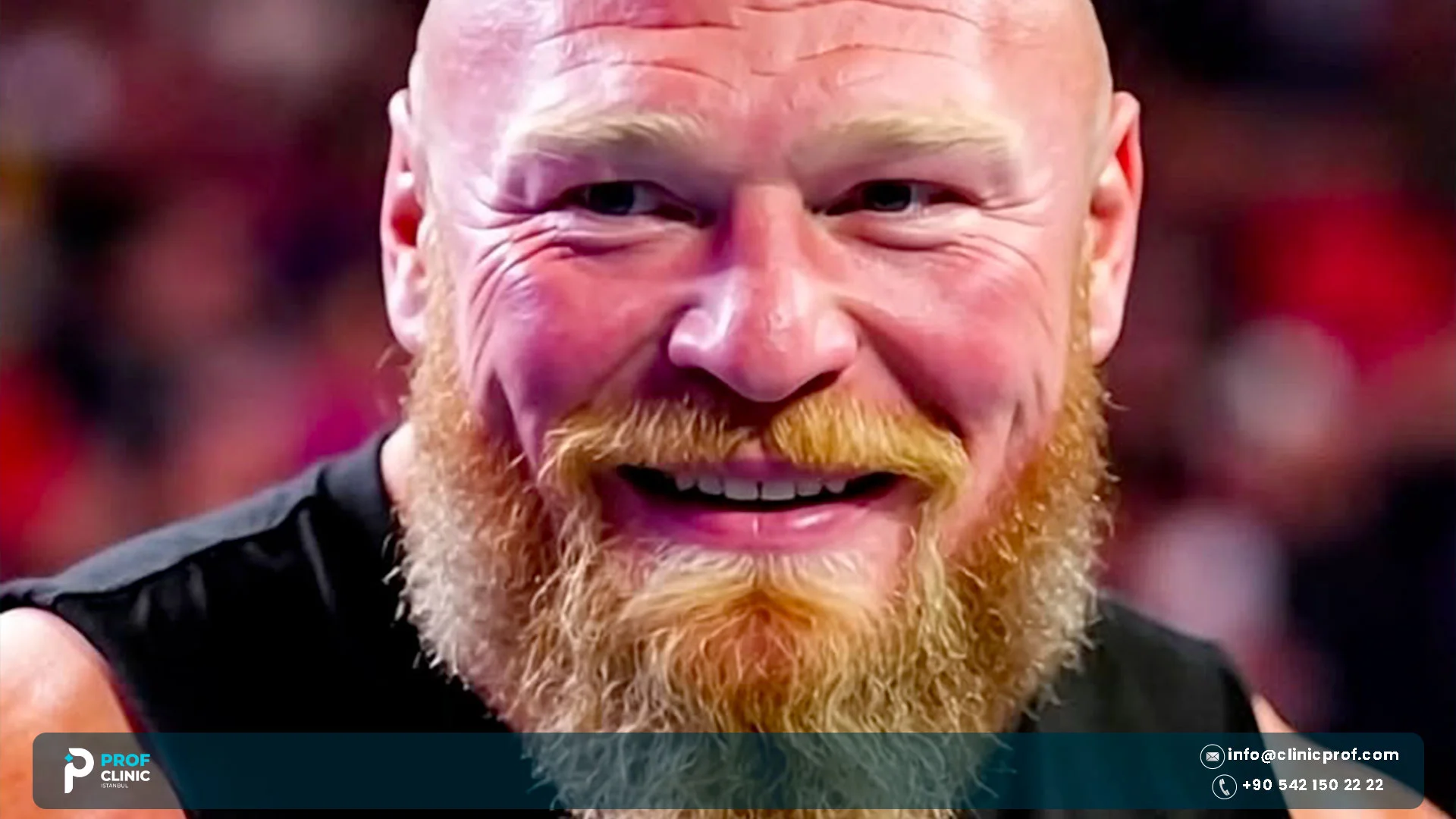
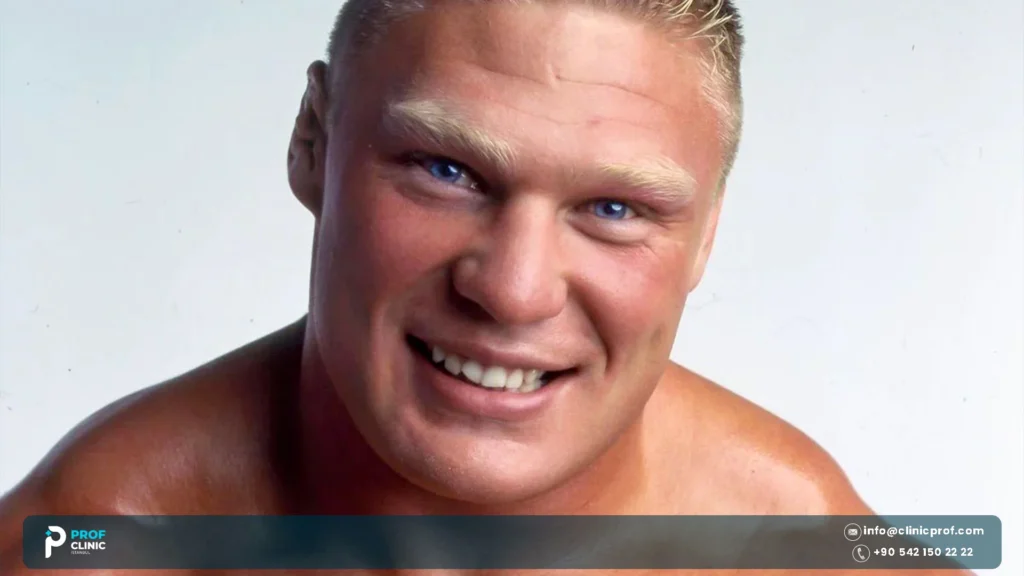
Brock Lesnar teeth are distinctive mainly because the lower front teeth appear crowded and irregular in many public appearances. There is no publicly confirmed dental diagnosis or cosmetic treatment history explaining that appearance, so it would be inaccurate to attribute his lower-tooth alignment to wrestling or MMA injuries.
What his career does provide is a useful starting point for a different question: what happens to teeth exposed to years of contact sport, and how should dentists approach crowding, chipped teeth, worn edges and damaged restorations when function matters as much as appearance?
Medical note
This article is educational and does not diagnose Brock Lesnar or any reader. Tooth crowding, wear and trauma require an examination of the teeth, gums and bite, with dental imaging when clinically necessary.
Brock Lesnar has no known connection to Prof Clinic. His public smile is discussed only as a familiar example for explaining lower-tooth crowding and dental protection in contact sports.
A Smile Shaped by Two Combat Careers
Few athletes have spent as much of their professional life in physically demanding environments as Lesnar.
His WWE profile records an NCAA Division I wrestling championship before his rise through professional wrestling, while his official UFC profile documents a heavyweight MMA career that included the UFC title.
Those careers expose the mouth to very different stresses. MMA can involve direct strikes to the jaw and teeth. Wrestling creates collision, falls and heavy clenching even when deliberate punches are absent.
That history makes the Brock Lesnar smile relevant to sports dentistry, but it does not prove that the visible irregularity of his teeth was caused by fighting.
Brock Lesnar’s Bottom Teeth: What People Notice
The most noticeable feature of Brock Lesnar bottom teeth in public photographs and television appearances is the lower front arch.
The incisors appear crowded and unevenly positioned, with some teeth sitting at different angles rather than forming a completely straight lower line. His overall smile has also remained relatively natural-looking rather than becoming the highly uniform cosmetic smile seen in many public figures.
There is nothing publicly reported to suggest that this appearance represents a disease or serious dental condition.
Crowding is common. It simply means there is not enough room for all of the teeth to align ideally within the available dental arch.
And because the lower incisors are small and packed into a relatively limited space, even modest changes in their position can become visually obvious.
How MMA and Wrestling Damage Teeth
Contact sports can injure teeth in several ways, and not every injury is immediately visible.
A direct impact may cause:
- Enamel or crown fractures
- Chipped incisal edges
- Root fractures
- Tooth displacement
- Complete tooth avulsion
- Damage to an existing crown or veneer
- Soft-tissue injuries to the lips and gums
Heavy clenching can create a different problem. Repeated loading may contribute to wear, stress on existing restorations and muscle discomfort, particularly in athletes who also grind their teeth outside competition.
The American Dental Association’s athletic mouthguard guidance identifies both combat sports and wrestling as activities with significant risk of dental or orofacial injury and recommends a properly fitted mouthguard to reduce the incidence and severity of those injuries.
For Lesnar specifically, however, there is no reliable public record linking a particular visible tooth to a particular fight or wrestling injury.
Read as well: Are Steve Harvey’s Teeth Veneers, Dentures or His Own?
Brock Lesnar’s Teeth Condition Over the Years
The phrase Brock Lesnar teeth condition can make his smile sound more medically unusual than the available evidence supports.
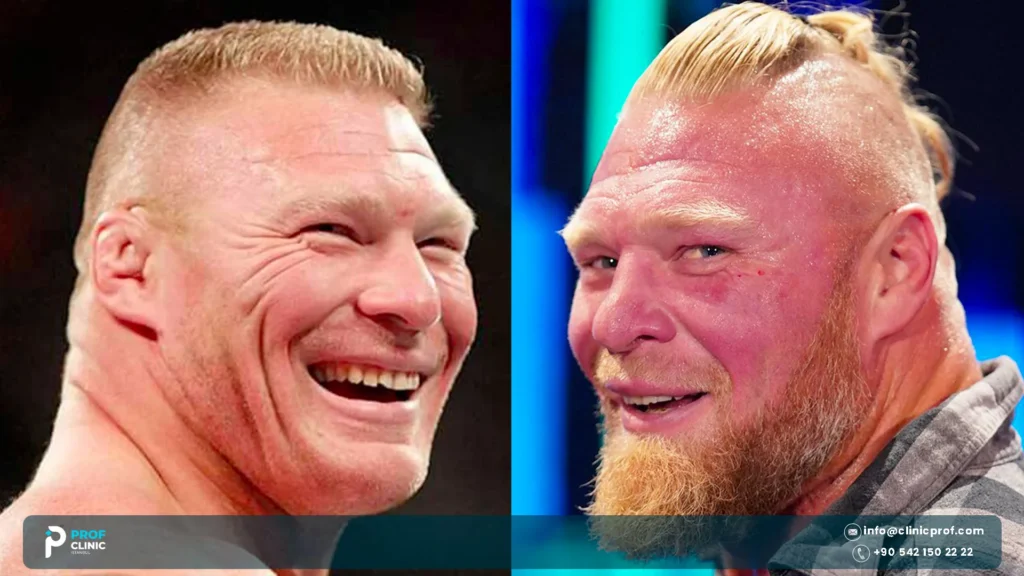
Across his NCAA wrestling years, early WWE appearances and UFC career, the most consistent visible feature is lower anterior irregularity. The exact appearance can vary with facial expression, camera angle, lighting and image quality.
There is no reliable public confirmation that Lesnar has undergone veneers, extensive crowns or orthodontic treatment.
That makes this a very different story from a documented celebrity dental reconstruction. Here, the responsible approach is to separate what is visible from what is merely possible.
Early Career vs Today
Early wrestling footage already shows a naturally individual smile rather than a perfectly aligned cosmetic one.
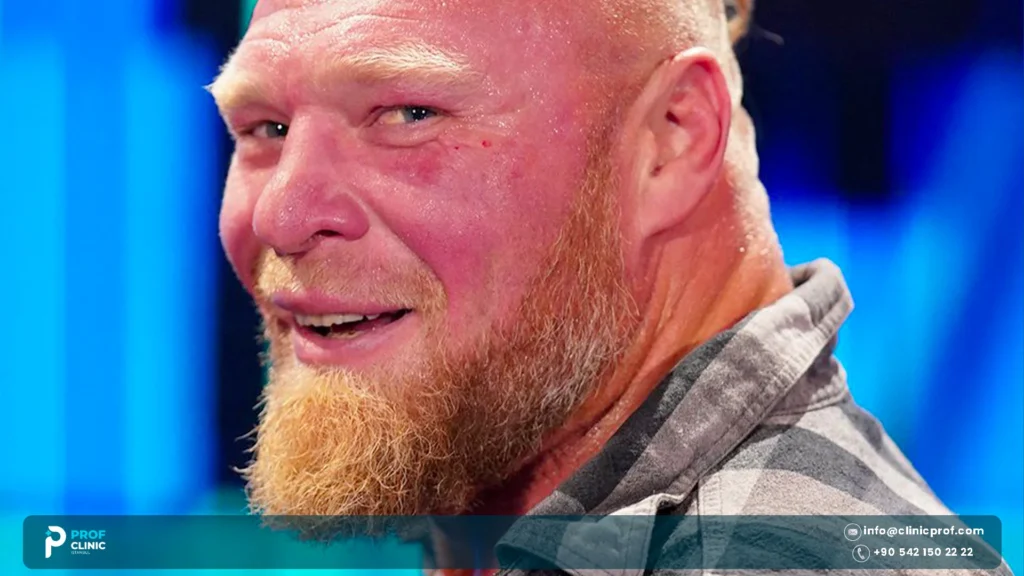
During his WWE and later UFC years, the lower front teeth continued to appear somewhat crowded. In more recent appearances, variations in shade or individual tooth edges may be visible, but public images do not establish when or whether specific restorative work was performed.
The overall impression is continuity rather than a dramatic before-and-after transformation.
That is important because combat careers can tempt viewers to attribute every irregular tooth to injury. In Lesnar’s case, the visible lower crowding is more consistent with an alignment issue than something that can responsibly be labelled as fight damage from photographs alone.
Signs of Repair and Wear
Public images may occasionally make individual teeth look smoother, brighter or more regular from one period to another.
Those differences are not enough to confirm dental treatment.
A chipped edge might be repaired with composite bonding. A structurally weakened tooth might need a crown. Whitening can change shade without changing structure. Different lighting can produce an apparent change without any dentistry at all.
Brock Lesnar has not publicly confirmed a specific restorative dental procedure, so any claim that one particular tooth is crowned, bonded or veneered would go beyond the available evidence.
The more useful lesson is how dentists decide what to do when a contact-sport patient actually presents with tooth damage.
Why Lower Front Teeth Crowd So Often
Lower incisor crowding has several possible contributors.
The available space in the mandibular arch may simply be smaller than the combined width of the teeth. Growth and natural age-related changes in arch dimensions can also alter alignment over time.
Crowding can also recur after orthodontic treatment. A systematic review of mandibular anterior crowding relapse found that relapse is influenced by multiple anatomical, periodontal, muscular and occlusal factors and remains difficult to predict precisely.
One common explanation deserves caution: wisdom teeth are often blamed for pushing the lower incisors forward.
A later 2023 systematic review found no clear evidence that lower third molars are a major cause of post-orthodontic lower-incisor crowding, and the authors did not support preventive wisdom-tooth extraction solely to preserve alignment.
Clenching can stress teeth and restorations, but it should not be presented as a simple cause of lower crowding.
Treating Crowded and Damaged Lower Teeth
Lower front teeth may need alignment, repair or both. If the teeth are healthy but out of position, orthodontics generally addresses the cause more directly because it moves the teeth.
If a tooth has already been chipped or structurally weakened, bonding or a crown may be needed to restore it. In selected mild cases, cosmetic reshaping can improve appearance after alignment.
The wrong approach is to place crowns over every crowded tooth simply to make the row appear straight.
A crown requires significantly more tooth coverage than orthodontic movement, so healthy lower incisors deserve especially careful treatment planning.
Why Lower Crowding Is Harder to Treat
Lower incisors present a particular orthodontic challenge because space is limited and relapse is common.
Creating alignment may require controlled expansion, interproximal reduction, extraction in selected cases or a combination of techniques. The right choice depends on tooth size, arch dimensions, gum support, bite and the severity of crowding.
Even after successful treatment, lower teeth can move again.
Long-term studies have found that mandibular anterior alignment continues to change over time, even in people who previously received orthodontic treatment. That makes retention part of the treatment, not an optional extra after the teeth look straight.
A patient considering clear aligners or braces should therefore ask not only how the crowding will be corrected, but also how the result will be held afterward.
Protecting Teeth in Contact Sport
The first line of defence is a properly fitted athletic mouthguard.
According to the American Dental Association, mouthguards reduce the risk and severity of sports-related oral injuries. The ADA also notes that an effective guard should fit securely, remain comfortable and provide a resilient protective surface over the dental arch.
Custom guards can be especially useful when a patient has unusual tooth positions, crowns, veneers or other restorations because the appliance can be shaped around the actual dentition.
A sports mouthguard and a night guard are not automatically the same appliance.
A sports guard is designed primarily to absorb impact. A night guard may be prescribed to manage grinding or heavy nocturnal bite forces. Someone who both competes in contact sport and grinds at night may need different protection for each situation.
Also Read: Shane MacGowan Teeth: Before and After the Restoration
14 Things to Know Before Treating Lower Teeth
- Measure the available space. Crowding should be quantified rather than judged only from photographs.
- Check whether the teeth are healthy. Healthy crowded teeth may be better moved than covered with restorations.
- Assess the bite. Lower-tooth alignment has to work with the upper arch, not just look straight from the front.
- Look at gum thickness. Moving lower incisors outside the available bone can increase periodontal concerns in susceptible patients.
- Determine whether enamel is already worn. Alignment and restorative repair may need to be planned together.
- Do not assume extraction is required. Mild and moderate crowding can often be managed without removing teeth.
- Do not assume extraction can always be avoided. Severe space deficiency may require a different orthodontic strategy.
- Ask whether clear aligners are suitable. Mild to moderate lower crowding may respond well, while more complex movement can require another approach.
- Plan retention before treatment starts. Lower incisors have a significant tendency to relapse after alignment.
- Do not blame wisdom teeth automatically. Current evidence does not support removing them solely to prevent lower anterior crowding.
- Check for grinding and clenching. Heavy bite forces may influence restoration choice and the need for nighttime protection.
- Tell the dentist about contact sports. Impact risk changes how repaired teeth and protective appliances should be planned.
- Replace a poorly fitting sports guard after major dental work. Crowns or orthodontic movement can alter the fit of an old mouthguard.
- Preserve healthy tooth structure where possible. Crowns are valuable when teeth need structural coverage, but they should not replace orthodontics simply for convenience.
Where Dental Crowns in Turkey Starts: Prof Clinic, Istanbul
Crowded teeth and damaged teeth are different problems, even when they appear in the same smile.
At Prof Clinic in Istanbul, we first determine whether a tooth needs to be moved, repaired, protected or replaced. A healthy crowded tooth may be better suited to orthodontic movement, while a fractured or heavily compromised tooth may require bonding or a full-coverage crown.
Our Smile Makeover guide includes clear aligners such as Invisalign, composite bonding and dental crowns among the available treatment routes, with the choice based on oral condition and treatment goals.
We do not connect any patient plan to Brock Lesnar’s smile. He has no known connection to Prof Clinic, and his unconfirmed dental history is not a treatment template.
Prof Clinic’s Crown and Alignment Services
At Prof Clinic, crown treatment can include zirconia or E-max restorations depending on the tooth and aesthetic requirements.
Our zirconia crown guide explains that zirconia crowns provide full coverage for damaged or heavily restored teeth and can be used where strength is an important part of the restorative plan.
When the main problem is tooth position rather than structural damage, orthodontic movement can preserve more natural tooth structure. Clear aligners may therefore be considered before crowns in suitable crowding cases.
Composite bonding may also be useful for minor chips or edge irregularities after alignment.
For patients who grind or clench, the final plan may include bite assessment and protective night-guard guidance where indicated rather than relying on a new crown to absorb excessive force.
Read as well: Was Jim Carrey’s Chipped Tooth Real or a Movie Trick?
How Prof Clinic Treats Sport-Related Damage
| Stage | What we assess | Why it matters |
| Examination | Tooth position, chips, cracks, restorations and gums | Separates alignment problems from structural damage |
| Dental imaging | Roots, bone and deeper injury where indicated | Identifies damage that cannot be seen clinically |
| Bite assessment | Contacts during biting and jaw movement | Helps identify excessive load on individual teeth |
| Alignment review | Severity of crowding and available space | Determines whether teeth should be moved first |
| Repair planning | Bonding, crown or another restoration | Matches treatment to remaining tooth structure |
| Material choice | Zirconia, E-max or composite where appropriate | Balances strength, appearance and conservation |
| Sports protection | Existing mouthguard fit and future impact risk | Helps protect both natural teeth and restorations |
| Grinding protection | Clenching or bruxism risk | Determines whether nighttime protection may help |
| Final fitting | Shape, bite, contacts and comfort | Reduces unwanted pressure on repaired teeth |
| Follow-up | Restoration, gums, bite and protective appliance | Helps identify wear or damage early |
For contact-sport patients, the treatment does not finish when the restoration is fitted. Protection becomes part of the restorative plan.
Repair and Alignment Results
Before-and-after results should be compared according to the problem that was actually treated.
A crowding case should demonstrate improved tooth position. A crown case should show restoration of a damaged tooth. A bonding case should show conservative repair rather than being judged against a full-mouth makeover.
Prof Clinic’s Before and After gallery contains consented dental cases across different restorative and cosmetic treatments.
When reviewing results, focus on natural proportions, gum health, bite function and preservation of healthy tooth structure, not simply whether the final teeth look perfectly straight.
The most visible feature of Brock Lesnar’s teeth is the crowding and irregularity of the lower front teeth. There is no publicly confirmed medical condition or specific cosmetic dental treatment behind that appearance, and his years in wrestling and MMA should not be used to diagnose the cause from photographs.
At Prof Clinic, we decide whether a tooth should be aligned, repaired or crowned according to its actual condition.
Send us clear photos of your teeth and any available dental X-rays to receive an initial assessment of your alignment and restoration options.
Common Questions About Brock Lesnar’s Smile
- What is wrong with Brock Lesnar’s bottom teeth?
There is no publicly reported medical problem with Brock Lesnar’s bottom teeth. Public appearances show visible lower-front crowding and irregular alignment, which are common dental findings. A photograph cannot establish the exact cause or determine whether treatment is needed.
- Has Brock Lesnar had dental work?
Brock Lesnar has not publicly confirmed a specific cosmetic or restorative dental treatment. Some teeth may appear different across different periods of his career, but photographs alone cannot establish whether he has had bonding, crowns, whitening or orthodontic work.
- Can crowded bottom teeth be fixed?
Yes. Lower crowding can often be treated with clear aligners or braces, depending on severity, available space, bite and gum support. More complex cases may require additional orthodontic techniques, while chipped or worn teeth can sometimes be restored after alignment.
- Do mouthguards actually prevent tooth loss?
A mouthguard cannot guarantee that a tooth will never be lost, but it can substantially reduce the risk and severity of dental trauma during contact sport. The American Dental Association recommends properly fitted mouthguards for wrestling, combat sports and other activities with significant dental-injury risk.