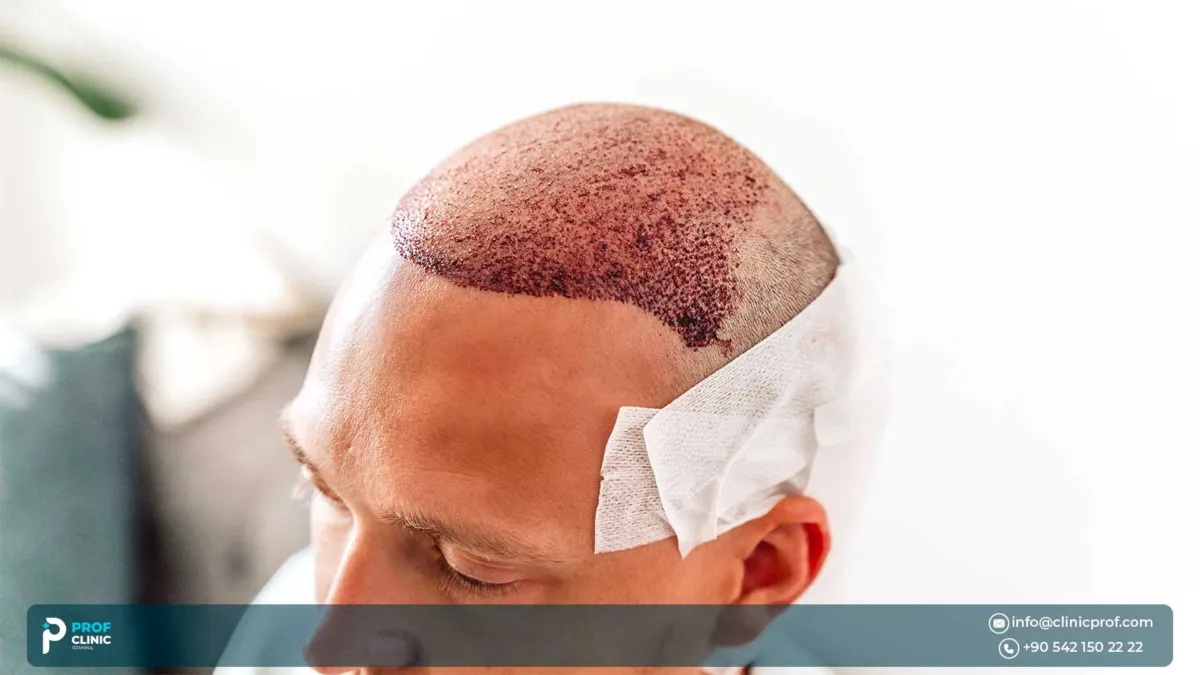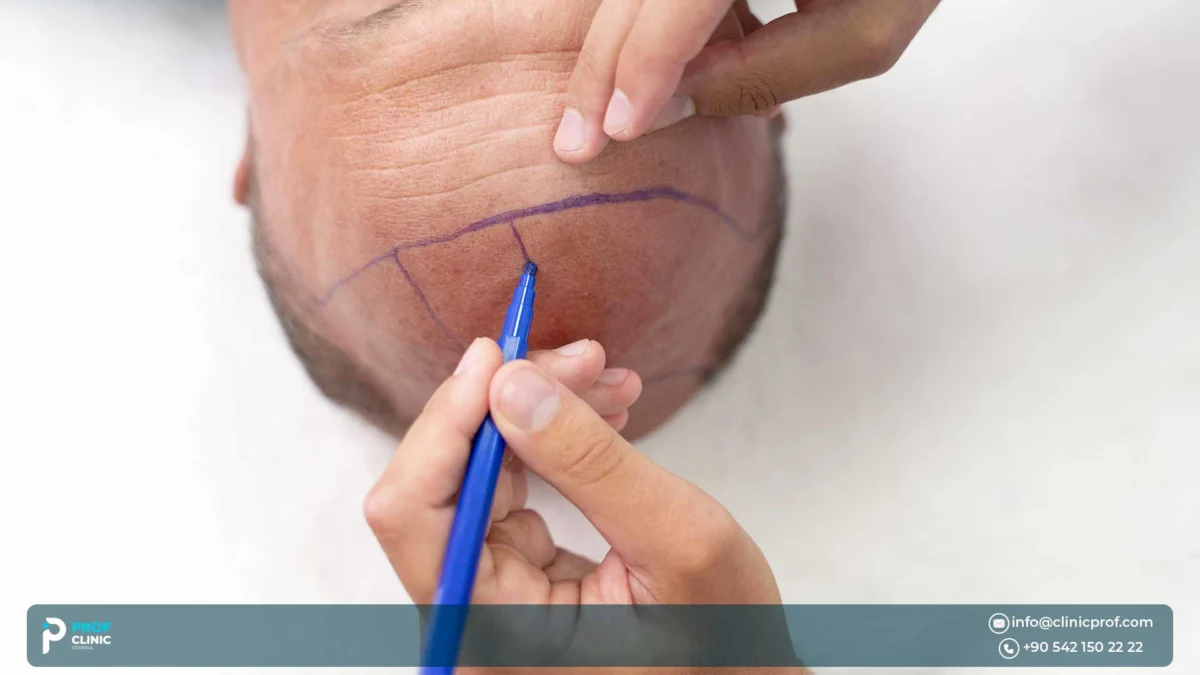
How long does afro hair transplant recovery take, and what should you expect at each stage? The visible healing is quick: swelling and scabs usually settle within about two weeks. The hair itself runs on a much slower schedule, with new growth usually appearing from around the fourth month and the full result taking 10–18 months, according to the NHS.
In this guide by Prof Clinic, you’ll find a week-by-week timeline, what’s normal in the first fortnight, the problems that are more common with tightly coiled hair, and when you can wash, work, braid or relax your hair again. By the end, you’ll know what to watch for and when to message your clinic.
Afro Hair Transplant Recovery Runs on Two Tracks
The most useful way to picture recovery is as two separate processes that start on the same day. The first is skin healing: the tiny wounds in the donor and recipient areas close, the swelling goes down and the crusts fall away, usually within 10–14 days. The second is the hair cycle: the transplanted follicles rest, shed their hairs and only then start producing new ones, which takes months.
Most of the worry after surgery comes from mixing up the two tracks. A scalp that looks healed at two weeks isn’t a finished result, and a scalp that looks thin at two months isn’t a failed one. The NHS describes the same sequence for every hair type: the transplanted hair often falls out after a few weeks, new hair usually starts to appear after about four months, and the full result should be seen after 10 to 18 months.
What’s different with Afro-textured hair: the follicle curves beneath the skin, not just the hair above it. The ISHRS notes that this curvature has to be accommodated when donor hair is harvested. Recovery follows the same overall timeline as for straight hair, but a few issues deserve closer attention: ingrown hairs as the new coils break through, raised scars in people prone to them, and colour changes in darker skin. Each is covered below.
Planning your procedure around work or travel? Ask the Prof Clinic team for a written recovery timeline before you book flights, so you know which days to keep free.
Afro Hair Transplant Timeline: Week by Week
The table shows what most patients notice at each stage and what to do about it. These are typical ranges from medical sources, not fixed rules; the number of grafts, the technique and your own healing can all shift them.
| Timeframe | What you’ll usually notice | What to do |
|---|---|---|
| Days 1–3 | A tight, achy scalp and forehead swelling that often peaks around days 2–3 | Sleep with your head raised, don’t touch the grafts, and take only the medicines your doctor prescribed |
| Days 3–10 | Small crusts around each graft and itching as the skin heals | Wash exactly as your clinic instructs, keep crusts soft and never scratch or pick |
| Days 10–14 | Most crusts have come away and the donor area is closing | Return to light routines; ask for a check if thick crusts remain after 2 weeks |
| Weeks 2–8 | Many transplanted hairs fall out, and some native hairs nearby may shed too | Expect it: the follicles stay in the skin |
| Months 3–4 | The first fine new hairs, sometimes with small bumps as coils break through | Keep washing gently and send photos of any red or painful bumps |
| Months 5–9 | Hairs thicken, the curl pattern returns and density builds | Restart gentle styling only once your doctor agrees |
| Months 10–18 | The final result | Judge density and the hairline now, not earlier |
The swelling and crusting ranges come from a recent review of FUE complications in Frontiers in Medicine; the shedding, regrowth and final-result milestones follow the NHS. If you’d like more month-by-month detail for hair transplants in general, our month-by-month hair transplant timeline walks through each stage up to month 18.
The First Two Weeks After an Afro Hair Transplant
The first 14 days are about protecting the grafts while the skin closes. The Frontiers in Medicine review describes most early problems, such as swelling, itching and short-lived pain, as mild and self-limiting. Knowing what each one looks like makes it much easier to stay calm.
Swelling and Tightness (Days 1–5)
Swelling of the forehead and around the eyes is common, reported in roughly 40–50% of FUE patients in that review. It usually starts on day 1 or 2, peaks around days 2–3 and settles by days 5–7. It doesn’t harm the grafts, but it can look alarming in the mirror. Keeping your head raised at night helps, as can cold compresses on the forehead (never on the grafts) if your clinic recommends them.
Crusts and the First Washes (Days 2–14)
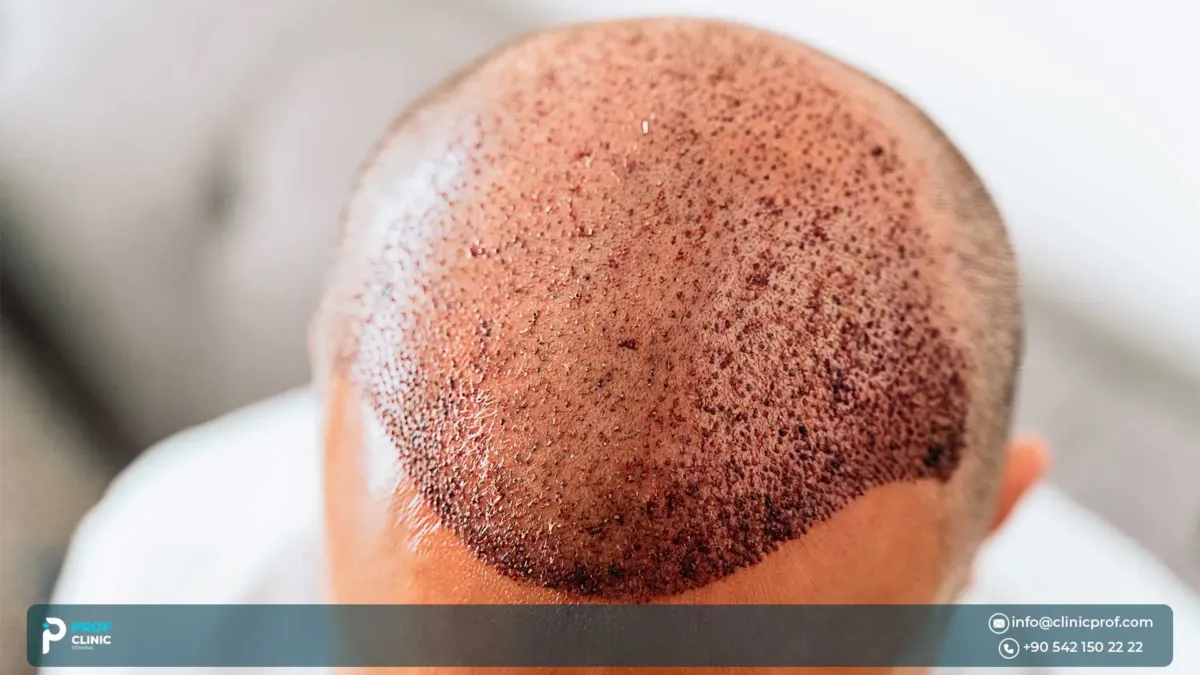
Small crusts form around each graft within the first 2–3 days and usually come away by days 7–10 with proper care. The same review links crusts that stay too long with a higher risk of inflammation around the follicles, often because of delayed washing or picking. Early, gentle cleansing helps the skin heal. Clinics differ on the exact schedule, so follow the one you’re given and let the crusts loosen rather than rubbing them off.
Itching, Redness and Numbness
Itching usually starts between days 3 and 7 as the skin regenerates and the crusts dry. Saline sprays and gentle washing help; scratching doesn’t. A pink tone around the grafts is normal at first, and patchy numbness in the donor or recipient area is usually temporary, fading over the following months.
Here’s how to tell normal healing from something that needs a look:
- Usually normal: swelling that improves after day 3, small dry crusts, mild itching, a tight or numb feeling, and shedding of transplanted hairs from week 2 onwards.
- Contact your clinic: pain that gets worse instead of better, spreading redness or heat, pus or a bad smell, thick crusts after 2 weeks, fever, or a firm lump that keeps growing in the donor area.
The NHS advises contacting the clinic that did your transplant as soon as possible if you have severe pain or any unexpected symptoms.
Worried that a crust, bump or patch on your afro-textured scalp isn’t normal? Rather than guessing, send our team a photo on WhatsApp.
Afro Hair Transplant Stages: Shedding, the Quiet Phase and New Growth
Once the skin has healed, the grafts go quiet. Most transplanted hairs fall out in the first weeks, the follicles rest beneath the skin, and new hair starts to grow from around the fourth month. This is the stage that tests patients most, because the scalp can look much as it did before surgery.
Shedding in Weeks 2–8
Two kinds of shedding can happen. The transplanted hairs themselves often fall out after a few weeks, as the NHS explains, while the follicle stays in place. Some patients also lose native hairs around the grafts, which is known as shock loss. The Frontiers in Medicine review places it 2–8 weeks after surgery, with regrowth usually starting at around three months. Shedding does not mean the grafts have failed. For more on why native hairs shed and when they return, see our guide to shock loss after a hair transplant.
What an Afro Hair Transplant Looks Like at 3 Months
At 3 months, most patients still see a thin or patchy scalp, sometimes with the first fine, soft hairs breaking through. That’s expected: the NHS puts the start of new growth at about four months, so the third month is often the low point. The first hairs are usually finer than your native hair and take on their full thickness and curl over the following months.
This is also when small red bumps can appear. In tightly curled hair, a new hair can curve back towards the skin as it emerges. The Frontiers review places this ingrown-hair reaction (pseudofolliculitis) at around week 10, and the ISHRS notes that ingrown hairs can appear 2–3 months after surgery in Black patients because of the curl, and can easily be treated with antibiotics. Don’t squeeze them; send a photo to your clinic instead.
Months 5–9: Thickening and Curl
From about the fifth month, the new hairs thicken and start to look like the rest of your hair. Once growth is under way, the American Society of Plastic Surgeons (ASPS) puts it at about half an inch (around 1.25 cm) a month, although tightly coiled hair shows less length than it has actually grown. The upside is coverage: according to the ISHRS, the curl of Afro hair usually gives an impression of good density, so the change can look striking once it starts.
Months 10–18: The Final Result
According to the NHS, you should be able to see the full result somewhere between 10 and 18 months after surgery. By then the hairs have matured, the texture matches your native hair and the hairline has settled. This is the time to judge density, discuss whether a touch-up makes sense and compare photos taken in the same light and from the same angle.

Curious what each stage looks like on real patients? Browse consented results in our before-and-after gallery, and check how many months after surgery each photo was taken.
Also read: Afro Hair Transplant Before and After: Real Results and Timeline
Recovery Issues More Common With Afro-Textured Hair
Most recovery problems are the same for every hair type, but a few are worth knowing about if your hair is tightly curled or your skin is darker. None of them is common, and each is easier to manage when it’s caught early.
- Folliculitis and ingrown hairs: small red or pus-filled bumps around the grafts. Infective folliculitis tends to appear in weeks 1–4, while ingrown-hair bumps tend to appear around week 10 as the new coils emerge. The Frontiers review lists thick, coarse or curved hair among the risk factors, alongside delayed washing. Treatment is usually gentle cleansing, warm compresses and, where needed, antibiotics prescribed by your doctor.
- Keloid or raised scars: firm scars that grow beyond the original wound. The ISHRS lists a history of keloid or hypertrophic scarring as something to check before surgery and notes that these scars can be treated medically. The Frontiers review describes keloid scarring after FUE as exceedingly uncommon. If you’ve ever had a keloid, tell your doctor before the procedure.
- Colour changes: the ISHRS notes that darkening of the skin can occur at the donor and recipient sites. FUE can also leave tiny pale dots in the donor area, which the Frontiers review says tend to be more noticeable in darker skin and with very short hairstyles. This matters if you like to wear a skin fade.
- Infection: uncommon, at under 1% in the same review. The signs are spreading redness, heat, pain and pus, usually in the first few weeks.
The practical takeaway: none of these is a reason to panic, but every one of them is a reason to send photos early rather than wait and see.
Also read: Afro Hair Transplant Success Rate: Evidence, Factors and Reviews
Aftercare Tips for Afro Hair Transplant Recovery
Good aftercare protects the grafts in the first two weeks and keeps the scalp calm while the new hair grows. The points below are general aftercare instructions from medical sources; the written instructions from the clinic that treats you always come first.
- Sleep with your head raised for the first few nights to limit forehead swelling, and avoid lying on the grafts.
- Leave the grafts alone. The NHS advises being very careful with the transplanted hair for the first 2 weeks and not touching the grafts.
- Keep crusts soft, not dry, with the saline spray or solution you were given, so they loosen instead of being pulled off.
- Cut back on exercise. The ASPS says you may be told to avoid vigorous exercise and contact sports for at least three weeks, and the NHS says you may be told to reduce exercise in the first month to reduce scarring.
- Don’t smoke while you heal. The Frontiers review lists smoking among the risk factors for tissue damage and poor graft growth.
- Avoid pressure and friction on the recipient area: no tight hats, helmets, durags or headwraps until your doctor says it’s safe, and then choose loose silk or satin, which the AAD calls gentler on hair.
- Use mild products. Harsh cleansers can make itching worse, so stick to the shampoo you were given until your clinic approves a gentle alternative.
Follow this list for the first two weeks and you’ll have done the part of recovery that is fully within your control.
When Can I Wash My Hair After an Afro Hair Transplant?
Gentle washing usually starts within the first few days, but schedules vary. The ASPS says you may be able to wash gently within two days, the NHS says you should be able to wash gently by hand by day 6, and the Frontiers review favours early, gentle cleansing within 24–72 hours. Follow your clinic’s schedule: pour lukewarm water from a cup, pat the lather in rather than rubbing, and keep a strong shower stream off the grafts.
Once you’ve fully healed, return to a routine that suits your hair. For Black hair, the AAD suggests washing once a week or every other week and using conditioner every time, which avoids the product buildup that dries the hair out.
When Can I Return to Work After an Afro Hair Transplant?
Many people with desk jobs go back after several days, in line with the ASPS, while the NHS says you may need 1 to 2 weeks off. What usually decides it is how visible the swelling and crusts are and how physical your work is. Short Afro styles leave less hair to cover the recipient area, so if appearance matters at work, plan for closer to two weeks. Jobs with heavy lifting, heat or dust usually need longer. For a week-by-week routine covering sleeping, exercise and work, see our guide to sleeping, exercise and work after a hair transplant.

Braids, Relaxers, Dye and Haircuts: When Can You Style Again?
Styling comes back in stages, and the rule is the same for all of them: nothing that pulls, burns or presses on the grafts until your doctor has confirmed that the scalp is fully healed. There’s no widely agreed waiting time for each style, so ask for clearance at your follow-up rather than counting days yourself.

- Braids, cornrows, weaves and locs: tension on new grafts is a real risk. The AAD warns that hairstyles that pull can cause traction alopecia, which can become permanent the longer it goes untreated. When you go back to protective styles, keep them loose, especially around the hairline; the AAD also advises wearing braids for no longer than 6–8 weeks at a time.
- Relaxers: relaxing is a chemical treatment, so it waits until the scalp has no crusts, redness or tenderness and your doctor agrees. When you restart, follow the AAD’s advice: have the relaxer applied by a professional stylist, and do touch-ups only every 2–3 months and only on new growth.
- Hair dye: treat it like a relaxer. Wait for clearance, and ask your doctor whether a patch test is advisable first.
- Haircuts and fades: the donor area can usually be trimmed sooner than the recipient area. Ask before using clippers over the grafts, and remember that a very short skin fade shows the donor area more clearly.
- Heat styling: once you’re cleared, use a heat-protecting product and the lowest temperature that gives the style you want, as the AAD recommends.
In short: loose, low-tension styling protects both the new grafts and your native hair for years to come.
Can Black People Get Hair Transplants, and Is Recovery Different?
Yes. Black men and women can have hair transplants, and the ISHRS describes FUE as increasingly popular among African-American men who wear their hair very short. The healing timeline is broadly the same as for other hair types. What differs is mostly the surgery: because the follicle curves under the skin, extraction is more technical, and the team has to plan around your curl pattern, donor density and any history of scarring.
That planning shapes your recovery too. The ISHRS notes that a thick curl can make the donor area look denser than it really is, so an honest donor assessment before surgery is what protects you from a thin, patchy donor area afterwards. Before you book, ask how your donor capacity was measured, which technique is planned for your hair and what follow-up you’ll get once you’re home. You’ll find more on candidacy in our afro hair transplant guide for men, and on the procedure itself on our afro hair transplant page.
Recovering in Istanbul and After You Fly Home
For most international patients, recovery splits into a few days in Istanbul and the rest at home. A typical stay is about 2–4 days, although it depends on your plan. The days in Istanbul cover the procedure, the first check and your washing instructions; the months that follow happen at home, which is why the follow-up plan matters as much as the surgery. Our guide to flying after a hair transplant covers the journey home in more detail.
A few practical steps make the trip easier:
- Book a flexible return flight in case swelling peaks on the day you planned to fly.
- Pack a loose, soft hat and a travel pillow, so nothing presses on the grafts during the journey.
- Save your clinic’s contacts and written instructions before you leave, including who to send photos to.
- Agree on photo check-ins at key points, such as week 2 and months 3, 6 and 12.
Ready to plan your dates? Book a free online consultation and ask for a written plan that covers your stay, your first wash and your follow-up after you return home.
How Prof Clinic Supports Your Afro Hair Transplant Recovery in Istanbul
At Prof Clinic, recovery planning starts before the procedure. Spc. Dr. Lütfi Öztürk, an internal-medicine specialist, leads the medical assessment and treatment planning for hair restoration and coordinates your follow-up while you heal. Here’s what that involves in practice:
- A written quote after photo assessment, so you know what’s included before you travel.
- Pre-op tests, including a blood count, ECG, kidney and liver function, electrolytes, blood sugar, and hepatitis and HIV screening.
- A technique chosen for your hair: our afro hair transplant in Turkey service uses FUE, DHI or Sapphire FUE depending on your hair texture and scalp.
- All-inclusive packages covering the procedure, accommodation, airport and hotel transfers and post-op care, as described on our hair transplant in Istanbul page.
- Follow-up after you go home: the coordination team keeps in touch and answers questions on WhatsApp (+90 542 150 2222).
Expected density is discussed individually, and no one can promise it in advance. As a general guide, an Afro hair transplant package in Istanbul costs about €2,500–€4,500 (an approximate 2026 average, not a final price). The real figure depends on your case and is confirmed in a written quote after assessment.
FAQs About Afro Hair Transplant Recovery
How long is African American hair transplant recovery time?
Most people are back to everyday life within one to two weeks, once the swelling has settled and the crusts have fallen off. The hair takes much longer: new growth usually starts at around four months, and the NHS says the full result shows at 10–18 months. The timeline is similar to other hair types; what changes is the extra care around ingrown hairs and scarring.
Is it normal for transplanted afro hair to fall out?
Yes. Most transplanted hairs fall out within the first few weeks, and some native hairs nearby may shed too, usually 2–8 weeks after surgery. The follicles stay in the skin and start producing new hair from around the third or fourth month. Shedding on calm skin is normal; shedding with painful, red or pus-filled bumps should be checked.
How long should I wait to relax my hair after a hair transplant?
There is no single published waiting time, so get your doctor’s clearance first. At a minimum, the scalp should have no crusts, redness or tenderness. When you restart, follow the AAD’s advice: have the relaxer applied by a professional and limit touch-ups to every 2–3 months, on new growth only. Ask your clinic for the interval it recommends.
What are the small bumps on my scalp a few months after an afro hair transplant?
Most often they are ingrown hairs: as the new coils break through, a hair can curve back into the skin and form a small red bump. The Frontiers review places this around week 10, and the ISHRS notes it can appear 2–3 months after surgery in Black patients. Don’t squeeze or pick the bumps. Send a photo to your clinic, especially if they are painful, spreading or contain pus.
When can I get a haircut or fade after an afro hair transplant?
Usually once the scalp has fully healed and your doctor has checked it. Scissor trims of the donor area tend to come first, while clippers over the transplanted area should wait for clearance. If you like a skin fade, remember that very short hair makes small donor scars and colour changes easier to see, so discuss it before surgery.
When will I see the final results of an afro hair transplant?
Plan to judge the final result at about 10–18 months, as the NHS advises. New hairs usually appear from around four months and thicken over the months that follow. Because coiled hair gives an impression of density, the change can look fast once it starts, but the hairline and texture keep maturing until the end of the first year or beyond.
The Bottom Line
Afro hair transplant recovery is short on the surface and long underneath: about two weeks of careful aftercare, then a year or more of patience while the coils regrow. Protect the grafts early, watch for ingrown hairs and raised scars, and hold off on tension and chemicals until your doctor clears you. This guide is general information and doesn’t replace the advice of the doctor treating you.
If you’re still at the planning stage, start with an assessment rather than a surgery date. Contact Prof Clinic and ask for a written recovery plan for your hair type.
Sources
- NHS — Hair transplant
- ISHRS — Hair Restoration in African-Americans
- American Society of Plastic Surgeons (ASPS) — Hair Transplant Recovery
- American Academy of Dermatology (AAD) — Hairstyles that pull can lead to hair loss
- American Academy of Dermatology (AAD) — Black hair: Tips for everyday care
- Frontiers in Medicine — Complications in follicular unit excision hair transplantation: current evidence and practical approaches (Romera de Blas et al., 2026)