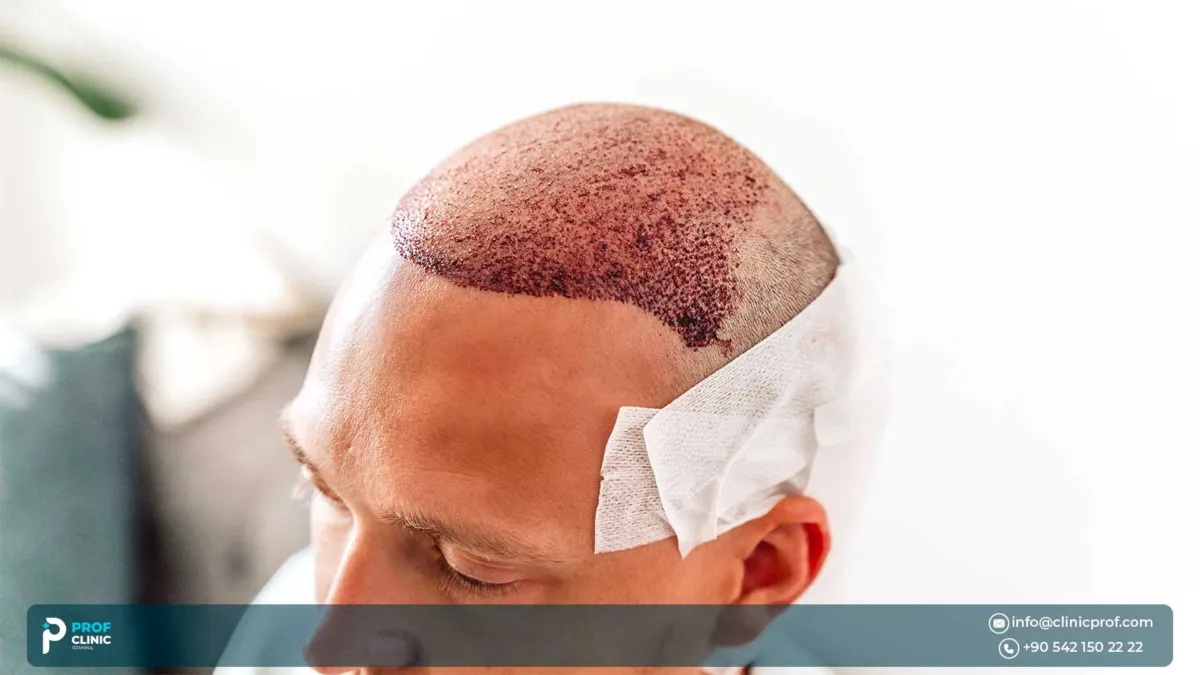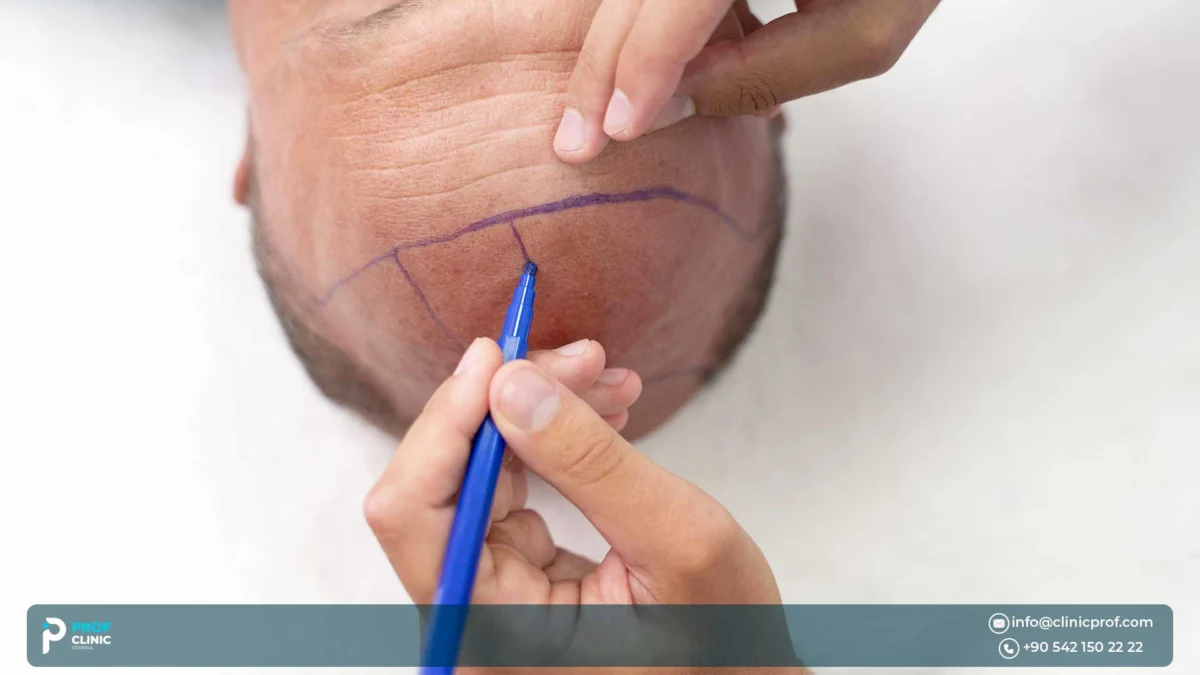
Can you get a 4C hair transplant if your hair is the tightest, most coiled type? In most cases, yes: when the hair loss is the pattern type and the donor area is healthy, 4C hair can be transplanted, and its coils often give generous coverage. The difficulty sits under the skin, where 4C roots curve sharply, so extraction is slower and needs a team that adapts its tools to your hair and your skin.
In this guide by Prof Clinic, you’ll learn what “4C” really means, which checks come before surgery, why coily follicles are harder to harvest, how many grafts and how much money to plan for in Turkey, and how to look after 4C hair while it heals. By the end, you’ll know what to ask before you book.
What Is 4C Hair?
4C is a hair-typing label for the most tightly coiled hair. It comes from the André Walker Hair Typing System, created by a stylist in the 1990s, in which the numbers 1–4 stand for straight, wavy, curly and coily hair, and the letters A–C describe how tight the curl is within each group. A systematic review in the Journal of Cosmetic Dermatology notes that the system was first made to market hair care products, and that it has been criticised for missing the full range of curly hair and for ignoring that one person can have several hair types on the same head.
That matters more for a hair transplant than it sounds. If you’ve typed your hair as 4C, the label tells a surgeon something useful about curl, but nothing about density, skin thickness or the cause of your hair loss. The same review points out that curl pattern and density can vary across the scalp, so the hair at your crown may not behave like the hair at the back of your head, which is where the grafts come from.
Features of 4C Hair That Matter for Surgery
A few traits of 4C and other Afro-textured hair shape how a transplant is planned:
- A curved root: according to a narrative review in the International Journal of Women’s Dermatology, Afro-textured hair grows as an elliptical, coiled fibre from a curved follicle rather than a straight one.
- Tangling and dryness: the same review explains that the coiled shape makes strands intertwine and knot easily, and spreads the scalp’s natural oil unevenly along the hair.
- Breakage under stress: the review links much of this fragility to mechanical handling, such as pulling and tight styling, rather than to the hair alone.
- Skin that can be thick and firm: a 2023 multicentre study in Dermatologic Surgery found that skin thickness and firmness affected graft damage more than the tightness of the curl did.
None of these traits rules out surgery. They change how the team harvests the grafts, and how you care for your hair afterwards.
Is 4C Hair Common?
There is no reliable figure for how many people have 4C hair worldwide. Hair-typing systems are consumer tools rather than population surveys, and the classification review stresses that hair from people of every background shows some degree of curl. Tight coils are most often seen in people of African descent, but Afro-textured hair isn’t limited to one region, and many people have a mix of 4A, 4B and 4C on one head.
Can You Get a Hair Transplant With 4C Hair?
Yes, 4C hair can usually be transplanted, as long as the cause of the hair loss suits surgery and there is enough donor hair. The ISHRS concludes that surgical hair restoration is as available and as successful for African-American patients as for white patients, while noting that some features of Black hair and skin need extra evaluation first. The principle is the same as for any hair transplant in Istanbul: follicles move from the back and sides of the scalp, where hair usually resists pattern loss, to the areas that have thinned.
The NHS describes hair transplants as suitable for permanent baldness of the inherited type, but not usually for other causes such as alopecia areata. So the first question isn’t your curl type; it’s what is causing the loss. Whether you are looking into an afro or a curly hair transplant in Turkey, these points usually decide it:
- The diagnosis: pattern hair loss is the classic indication, while scarring or traction-related loss needs assessment first.
- A calm scalp: itching, burning, tenderness or patchy loss should be explained before surgery is planned.
- Enough donor hair: the density at the back and sides limits how many grafts can be taken safely, now and in future sessions.
- Realistic goals: a transplant moves the hair you already have; it doesn’t create new follicles.

Thin 4C Hair: Pattern Loss or Something Else?
Thinning in 4C hair is not always pattern baldness, and two other causes need ruling out before anyone talks about grafts.
- Traction alopecia: the American Academy of Dermatology (AAD) explains that tight cornrows, locs, braids, buns, ponytails, extensions or weaves can pull hair out over time. Early signs include broken hairs around the forehead, a receding hairline and patches where the hair is pulled tight, and the loss can become permanent the longer it goes untreated.
- Central centrifugal cicatricial alopecia (CCCA): DermNet describes it as the most common form of scarring hair loss in Black women. It usually starts at the top of the scalp and spreads outwards, often with tenderness, itching or burning, and it is diagnosed with a clinical examination and a scalp biopsy.
Where scar tissue has replaced the follicles, DermNet notes that hair cannot regrow. A transplant can be considered once CCCA has been well controlled for at least a year, but graft survival is low, so expectations need to be set carefully.
Why this matters to you: if the cause of the loss is still active, new grafts can be lost the same way. Stopping the cause comes first, and surgery comes later, if at all.
Also read: Curly Hair Transplant: Can You Get a Hair Transplant With Curly Hair?
Not sure what is behind your thinning? Send clear photos of your hairline and crown on WhatsApp and ask what an assessment should check first.
Why Is a 4C Hair Transplant Harder?
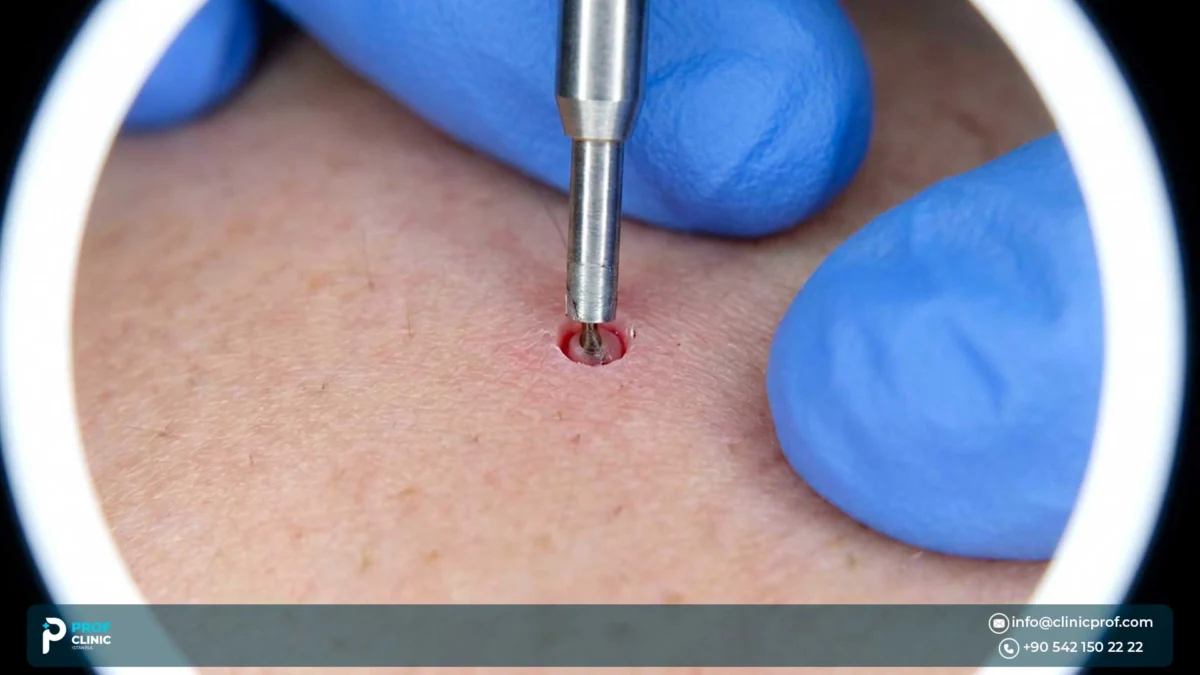
A 4C hair transplant is harder mainly because of extraction. In FUE, a small round punch cuts around each follicular unit, and a punch aimed as if the root were straight can slice through a root that curves into a C or a spiral beneath the skin. Surgeons call this transection. Every damaged graft is lost from a donor supply that is limited for life.
The Dermatologic Surgery study looked at 64 patients of African descent treated at 7 clinics in six countries. Its authors describe standard FUE as suboptimal for many such patients, because their hair and skin vary so widely. With a punch system that adjusts to skin thickness, the mean transection rate was 3–6%, highest in the most difficult donor grade, and thick, firm skin raised it more than tight curl did. They also note that damage can vary from one part of the scalp to another in the same person.
Here’s what experienced teams usually do differently with coily hair:
- Trim very short first: the ISHRS describes cutting donor hair almost flush with the skin, so the hair outside the scalp doesn’t hide the true direction of the root.
- Match the punch to the follicle: follicular units in Afro-textured hair are often wider, and the 2023 study used slightly larger punches for that reason. Larger punches leave larger wounds, so the size is a trade-off rather than a free choice.
- Slow down: extraction in tightly coiled hair is more delicate and usually more time-consuming, so the procedure day often runs longer.
- Place grafts with the curl: each graft is angled so that its coil falls in the same direction as your own hair.
The practical takeaway: ask the team how often they work with coily hair, how they keep transection low, and how they check graft quality during your session.
FUE, DHI or FUT: What Changes With 4C Coils?
Neither method is right for every 4C patient, and the label matters less than how the team handles curved roots. Both FUE and DHI usually start with FUE-style harvesting, so the extraction challenge above applies either way; the main difference lies in placement. With DHI, an implanter pen loads each graft and inserts it, which gives fine control over angle and direction at the hairline. With standard FUE, the team opens the recipient sites first and then places the grafts. For a side-by-side comparison of all the methods, see FUE vs DHI vs Sapphire FUE: Which Technique Fits You?.
Some surgeons also use the strip method (FUT) for very coiled hair, because grafts are cut from a strip of scalp under magnification, where the curve can be seen and followed. The trade-off is a linear scar. The NHS notes that this scar shouldn’t be visible unless you have very short hair, and the 2023 study observes that men with Afro-textured hair often have the least tolerance for linear scars because they prefer short haircuts. The ISHRS adds that many Black male patients prefer a hairline with less recession at the temples than the usual design for straight hair, so share photos of the look you want early on.

Also read: Afro Hair Transplant Techniques: FUE vs DHI for Coily and Curly Hair
Want to know which approach suits your hair? Book a free online consultation and ask for a written recommendation that explains the reasoning.
How Many Grafts Does a 4C Hair Transplant Need?
There is no standard graft count for 4C hair. The number depends on how large the thinning area is, how dense you want it to look and how much donor hair you can safely spare. What 4C hair changes is how far each graft goes: coils stand up from the scalp and overlap, so each graft hides more skin than a straight hair lying flat. The ISHRS describes this as the natural curl giving an impression of good density, so fewer donor hairs may be needed for a satisfying result.
| Factor | Straight hair | 4C coily hair |
|---|---|---|
| How the hair sits | Lies flat and follows the scalp | Coils up and overlaps neighbouring hairs |
| Coverage from each graft | Moderate, so density relies more on numbers | High, as each graft hides more scalp |
| Judging the donor area | Density is fairly easy to see | Curls can make the donor area look denser than it is |
| Main planning risk | Running short of grafts for a wide area | Overestimating supply, or damaging grafts during extraction |
The last row is the catch. The same ISHRS article warns that thick curls can disguise a thin donor area, so the graft count should come from a close-up density check, not from how full your hair looks in the mirror. For rough numbers by stage of hair loss, our guide How Many Grafts Do I Need? Graft Count by Norwood Stage explains how estimates are made.
Scarring, Keloids and Dark Marks on Darker Skin
Healing deserves as much planning as the grafts, because darker skin can scar and mark differently. The ISHRS lists a history of keloid or hypertrophic scarring among the points to check before surgery in Black patients, and notes that hyperpigmentation, a darkening of the skin, can appear at the donor and recipient sites. The 2023 study adds that larger punches mean larger wounds, a concern for people already prone to abnormal scarring.
Before surgery, tell the doctor if you have ever had:
- Raised, thick scars after a cut, piercing, acne or an operation.
- Bumps or keloid-like scars on the back of the neck, close to the donor area.
- Dark marks that lingered for months after a minor skin injury.
- A diagnosed scalp condition or previous hair surgery.
After surgery, the ISHRS notes that ingrown hairs and folliculitis can appear 2–3 months later, as the new hair starts to grow, and that they are easily treated with antibiotics. Flare-ups of keloid or hypertrophic scars can also be treated medically, so report raised or itchy scars early rather than waiting for them to settle.
Caring for 4C Hair After a Transplant
The first two weeks are about protecting the grafts; after that, the aim is to care for 4C hair without pulling, heat or rough handling. The NHS says you need to be very careful with transplanted hair for the first 2 weeks, and that your surgeon will tell you whether to limit exercise in the first month. A tight, achy and swollen scalp for a few days and temporary scabbing are normal.
General aftercare instructions from medical sources cover the washing routine, leaving scabs alone, keeping pressure off the grafts and pausing heavy exercise. We keep those basics short here: the full day-by-day version is in our afro hair transplant recovery guide, and daily life is covered in sleeping, exercise and work after a hair transplant.
For 4C hair, add these habits once your doctor says the scalp has healed:
- Detangle gently: coils knot easily, so work in small sections with your fingers or a wide-tooth comb, and never drag through the grafted area.
- Wash regularly and gently: the review on Afro-textured hair care reports that weekly, gentle cleansing with suitable products helps the scalp and reduces build-up, while washing only once or twice a month raises the risk of seborrhoeic dermatitis and, in some cases, traction alopecia.
- Go easy on heat: the same review links flat irons, hot combs and blow-drying to damaged Afro-textured strands and a looser curl pattern, so use as little heat as you can.
- Protect your hair at night: sleep with a silk scarf or on a silk pillowcase, as that review recommends for Afro-textured hair.
- Wait on relaxers and dye: chemical straighteners permanently change the hair’s bonds, so hold off until your doctor confirms the scalp has healed.

When Can You Braid or Cornrow 4C Hair Again?
Not until your doctor confirms the grafts are secure, and then gently. Braids, cornrows, locs and weaves pull on the scalp, and the AAD warns that hairstyles that pull can cause traction alopecia. When you return to protective styles, the AAD suggests loosening braids around the hairline, choosing thicker braids or locs and keeping them short, and wearing braids for no longer than 6–8 weeks. If a style feels painful, it is too tight.
Spreading redness, pus, fever, or pain that gets worse instead of easing is not normal healing. The NHS lists bleeding, infection and an allergic reaction to the anaesthetic among the small risks of a hair transplant, so contact your clinic promptly if you notice any of these.
4C Hair Transplant Results and Success Rate
A 4C hair transplant follows the same growth timeline as other transplants, but coily hair asks for a little more patience before it shows its volume. The NHS says new hair usually starts to appear after about 4 months, and full results should be seen after 10 to 18 months. Coils need some length before they spring up and overlap, so the look of density tends to build late. Treat these figures as common ranges rather than a fixed schedule. Shedding of the transplanted hairs in the first weeks is usually a normal stage rather than a failure; shock loss after a hair transplant explains what to expect and when the hair returns.
What about the success rate? You may see figures such as “95% graft survival” quoted for 4C hair, but there is no reliable published success rate for 4C transplants in particular. What studies do measure is graft damage during extraction: in the Dermatologic Surgery study, mean transection was 3–6% and stayed under 10% across all patients. The ISHRS’s overall view is that restoration works as well in African-American patients as in white patients, provided the extra checks are made. For a fuller look at what shapes success, see our guide to the afro hair transplant success rate.
Because the grafts are your own 4C follicles, they are expected to grow coily hair like the donor area. Judge texture and density only once the result has matured, using photos taken in the same light and from the same angles as your “before” set.

To see how coily and Afro-textured cases develop over the months, browse our before-and-after gallery.
Does a 4C Hair Transplant Cost More in Turkey?
Usually somewhat more than a standard scalp transplant. As a general guide, an afro hair transplant in Turkey, including 4C hair, costs about €2,500–€4,500 as a package in Istanbul, compared with about €1,800–€3,500 for a standard scalp transplant. This is an approximate 2026 range, not a final price; your quote depends on your case after assessment. The gap reflects the extra time that coiled follicles need for extraction and the more careful handling.
The final figure depends on:
- How many grafts your plan needs, and how much donor hair is available.
- How tight your coils are, and how thick and firm your scalp skin is.
- The technique chosen for your case.
- Whether the work is done in one session or two.
A package usually covers the procedure itself, pre-op blood tests, medication with an aftercare kit, your hotel, and VIP transfers between the airport and hotel. For a breakdown by graft count and package, see our guide to afro hair transplant prices in Turkey.
Comparing offers? Request a written quote that lists what is included and what isn’t.
Prof Clinic for 4C and Afro Hair Restoration in Istanbul
At Prof Clinic, a 4C case starts with your scalp and donor area, not with a graft package. The clinic offers hair transplant for Afro hair as a named service, and your coily hair is assessed by the medical lead for hair restoration, Spc. Dr. Lütfi Öztürk, an internal-medicine specialist who also plans the treatment and coordinates follow-up.
Points worth checking for a 4C case before you fly:
- Techniques: FUE, DHI, Sapphire FUE and Micro FUE, with the method chosen after your hair and scalp are assessed.
- Health checks first: whatever your curl type, surgery comes only after a blood count, ECG, kidney and liver function, electrolytes, blood sugar, and hepatitis and HIV screening.
- Realistic density: coils can look fuller than the graft count suggests, so the likely result is discussed for your case alone, with no density promised beforehand.
- A written quote: sent after the team reviews your photos, for an all-inclusive package covering the procedure, accommodation, transfers and post-op care.
- Back home: the coordination team remains in contact and sends you advice over WhatsApp.
FAQs About 4C Hair Transplants
Does a hair transplant work on 4C hair?
Yes, in most cases. If your hair loss is the pattern type and your donor area is healthy, 4C follicles can be moved and usually grow like the rest of your hair. The ISHRS considers hair restoration as successful in Black patients as in white patients. Traction or scarring alopecia needs a diagnosis first, because active hair loss can affect the new grafts too.
Is 4C hair harder to transplant?
Usually, yes. The roots curve under the skin, so a punch aimed as if they were straight can cut through them, and a 2023 study found that thick, firm scalp skin raises that risk even more than the curl does. Experienced teams trim the donor hair very short, read each exit angle and work more slowly to protect the grafts.
What technique is best for 4C hair?
No single technique suits every 4C patient. FUE and DHI both depend on careful harvesting of curved follicles, and DHI adds fine control of angle and direction at the hairline. FUT avoids cutting blindly around the curve but leaves a linear scar, which matters if you keep your hair short. The team’s experience with coily hair matters more than the label.
How many grafts do I need for a 4C hair transplant?
There is no fixed number: it depends on the size of the area, the look you want and how much donor hair you can safely spare. Coils overlap and hide more scalp, so 4C hair often needs fewer grafts than straight hair for a similar look. Curls can also disguise a thin donor area, so the count should follow a close-up density check.
What is the success rate for a 4C hair transplant?
There is no reliable published success rate for 4C hair specifically, so treat exact percentages with caution. Studies measure graft damage during extraction instead, and one 2023 study reported a mean transection rate of 3–6%. The outcome also depends on diagnosis, aftercare and time, since the NHS says full results take 10 to 18 months.
When can I blow-dry or straighten my hair after a hair transplant?
Only once your doctor confirms the scalp has healed, and then sparingly. A recent dermatology review links blow-drying, flat irons and hot combs to damaged Afro-textured strands and a looser curl pattern. Let your hair air-dry where you can, keep heat away from the grafted area at first, and pause relaxers until you are cleared.
Final Thoughts
A 4C hair transplant is usually possible and often gives strong coverage, because tight coils hide more scalp than straight hair. What decides the outcome is a correct diagnosis of your hair loss, a team that can harvest curved roots from thick skin without damaging them, an honest look at your scarring history, and aftercare that keeps tension and heat off the scalp while it heals.
Before you book anything, get your coils assessed. Contact Prof Clinic with photos of your hair and scalp, and ask what an Afro hair transplant in Istanbul could realistically achieve for you.
Sources
- ISHRS — Hair Restoration in African-Americans
- NHS — Hair transplant
- American Academy of Dermatology — Hairstyles that pull can lead to hair loss
- DermNet — Central centrifugal cicatricial alopecia
- Dermatologic Surgery — Follicular Unit Excision in Patients of African Descent: A Skin-Responsive Technique (Umar et al., 2023)
- Journal of Cosmetic Dermatology — Classification of High Curl Pattern Hair: A Systematic Review and Clinical Perspective (Callender et al., 2026)
- International Journal of Women’s Dermatology — Afro-textured hair care: a narrative review and recommendations for dermatologists (Humphrey et al., 2026)