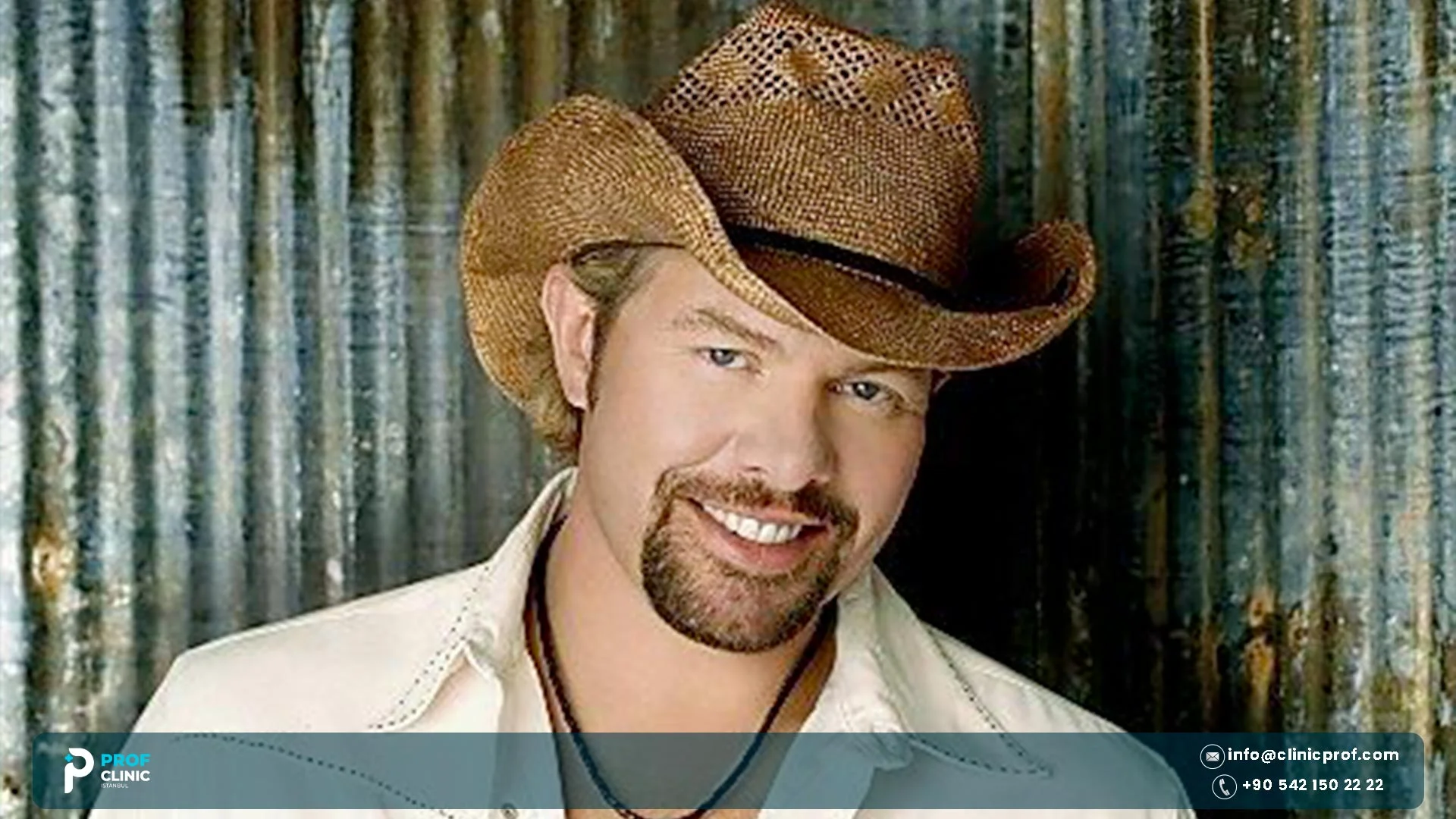
Toby Keith’s teeth changed in appearance across his three-decade career, but there is no reliable public record confirming that he had crowns, veneers or other specific dental work. His early photographs and later performances show a smile that naturally looked different across the years, making his career a useful starting point for understanding how teeth can change with age.
Toby Keith died on February 5, 2024, at age 62. This article looks back respectfully at his public appearances while separating what can actually be observed from what cannot be confirmed about his dental history.
Medical Note:
Tooth colour, enamel wear and gum position can change over time for many reasons. A photograph cannot determine whether someone has had dental treatment.
Toby Keith had no known connection to Prof Clinic. His smile is discussed here only as a public example of how a person’s teeth can appear different across decades.
A Country Career Documented on Camera
Toby Keith’s career gives us an unusually long visual record. His self-titled debut album was released in 1993, and he remained a major presence in country music for more than 30 years. The Country Music Hall of Fame’s retrospective on Toby Keith includes publicity photographs from 1992, 1993, the 1990s and later stages of his career, providing useful reference points for comparing his appearance over time.
His official biography also describes a career that continued through 2023, including his People’s Choice Country Awards appearance and December 2023 Las Vegas residency shortly before his death.
Toby Keith’s Smile in the Early Years
In early-career photographs, Toby Keith’s smile has the natural variation you would expect from a performer photographed in different settings. His teeth do not appear uniformly bright or perfectly identical, and the overall look is less polished than some of the highly produced images associated with later celebrity photography.
That is a visual observation, not a diagnosis.
The Country Music Hall of Fame’s archive is particularly useful here because it includes a 1992 publicity photo, photographs from 1993 and several images labelled simply as Toby Keith in the 1990s. These provide a genuine historical baseline rather than relying on a modern photograph to represent his early appearance.
Why Country Music Photography Favours the Smile
For a country artist, the smile appears repeatedly in album artwork, press photography, interviews, award shows and stage performances.
Toby Keith’s public image was especially well documented because he spent decades touring, recording and appearing on television. His official biography describes more than 40 Top 10 country hits and a career that remained active into the final years of his life.
That volume of photography makes small differences in appearance easier for audiences to notice. But it also makes direct comparisons difficult: a stage photograph, an album portrait and a close-up from a television appearance can differ substantially because of lighting, camera angle, exposure and image processing.
Read as well: Michael Strahan Teeth: Did He Ever Close His Gap?
How His Smile Changed Over Time
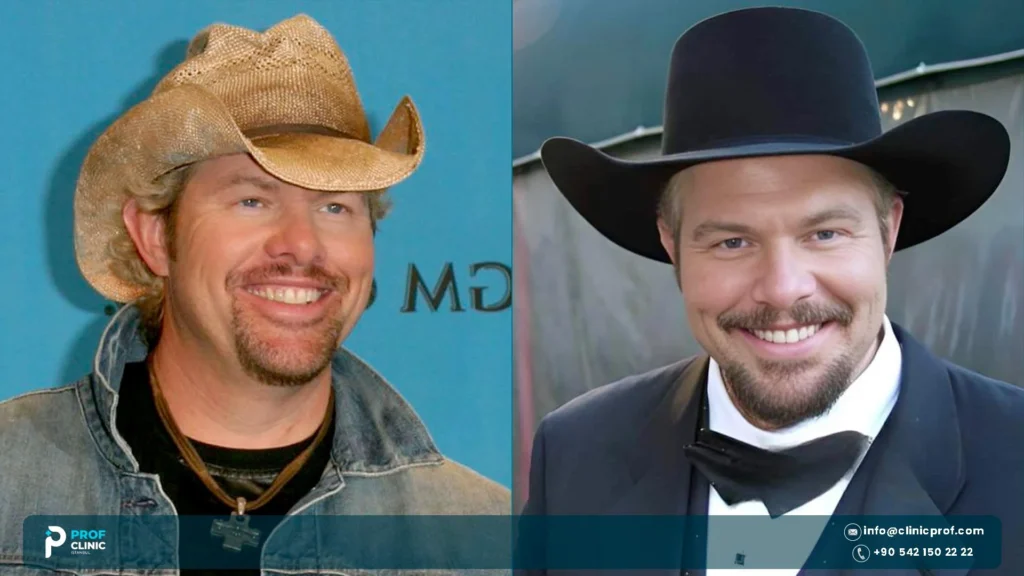
The most responsible way to discuss Toby Keith’s teeth is to describe what is visible without assigning a dental procedure to the change.
Comparing Early and Later Appearances
Across photographs from the 1990s and later years, his smile can appear somewhat different in terms of brightness, tooth visibility and overall uniformity.
Later high-resolution photographs sometimes show a brighter-looking smile, but that does not establish that the underlying teeth were restored. Changes in photography, professional styling, whitening, natural ageing or existing dental restorations can all affect how a smile appears.
There is therefore no sound basis for saying that a particular change in Toby Keith’s smile was caused by crowns or another procedure.
What Is and Isn’t in the Public Record
The public record documents Toby Keith’s music career extensively, but it does not provide a reliable confirmation of specific dental treatment.
There is no statement from Keith establishing that he had crowns, veneers, bonding or another cosmetic dental procedure. For that reason, it would be misleading to describe any of these treatments as something he definitely received.
The absence of a public record does not prove that he never had dental work. It simply means that the available evidence does not allow us to say what, if anything, was done.
That distinction is particularly important when discussing a person who has died. A photograph should not be used to reconstruct someone’s private medical or dental history.
How Age Affects Any Smile
Age can change the appearance of natural teeth even without cosmetic treatment.
The American Dental Association’s guidance on tooth whitening explains that ageing can make enamel thinner and more translucent, allowing the naturally yellower dentin underneath to show through. This can make teeth appear darker over time.
Gums can also change with age. The ADA notes that older adults have an increased risk of gum recession, which can expose root surfaces and change the visible proportions of a smile.
So when an older smile looks different from the same person’s smile decades earlier, the explanation does not have to be cosmetic dentistry.
Restoring Worn Teeth Later in Life
The more useful dental question behind a long-term celebrity comparison is what can actually be done when teeth become worn, damaged or heavily restored later in life.
Why Teeth Darken and Wear With Age
Teeth can become darker for both internal and external reasons.
According to the American Dental Association’s information on whitening, ageing-related changes in enamel can allow more of the darker dentin beneath it to show through. External stains can also accumulate from foods, drinks and other exposures.
Wear is another issue. Enamel is highly mineralised, but it cannot repair itself once it has been lost through wear or damage. The ADA explains that dentin underneath enamel can become exposed when enamel is worn away or when gums recede.
This is why a mature smile needs more than a simple question about colour. A dentist may need to assess remaining tooth structure, existing restorations, gum health, bite and the cause of the wear.
Also Read: Was Jim Carrey’s Chipped Tooth Real or a Movie Trick?
Crowns, Veneers or Whitening: What Suits Older Teeth
These treatments solve different problems.
Whitening may be enough when the main concern is staining of natural teeth and the teeth are otherwise healthy. The ADA notes that whitening can address extrinsic and some intrinsic discoloration, but tooth-coloured restorations such as crowns do not change colour during whitening.
Veneers are primarily cosmetic restorations placed on the visible front surface of a tooth. They may be considered for certain aesthetic concerns when the underlying tooth is suitable.
Crowns are different. A crown covers the tooth to restore its shape and strength and may be appropriate when a tooth is weakened, broken, heavily restored or significantly worn. The American Dental Association’s MouthHealthy guide to crowns explains that crowns can strengthen weakened teeth, restore broken teeth and improve the appearance of discoloured or misshapen teeth.
The choice should therefore follow the condition of the tooth rather than the patient’s age or the appearance of a celebrity.
14 Things to Know About Dental Work After Fifty
- Gum health matters: Recession or periodontal problems can change how much of a tooth is visible.
- Root exposure matters: Exposed roots do not have the same enamel protection as the crown of the tooth.
- Existing restorations matter: Older fillings, crowns and bridges can influence the treatment plan.
- Tooth structure comes first: A restoration should be based on how much healthy tooth remains.
- Wear needs investigation: Dentists should consider why teeth have worn before simply covering them.
- Bite matters: Excessive forces can affect both natural teeth and restorations.
- Whitening has limits: Whitening affects natural teeth, not existing crowns or similar restorations.
- Crowns are not simply cosmetic covers: They are often used to restore weakened or damaged teeth.
- Veneers are different from crowns: Veneers cover the front surface, while crowns cover the tooth more extensively.
- Sensitivity should be assessed: Worn enamel and exposed dentin can contribute to sensitivity.
- Bone and gum support matter: The supporting tissues need assessment before restorative treatment.
- Healing and maintenance still matter: Older patients may need a more detailed assessment of oral health before treatment.
- Existing dental work may need replacement: A new restoration sometimes needs to work with or replace an older one.
- Long-term maintenance is essential: Crowns and other restorations still require regular cleaning, examination and care.
Being over fifty does not automatically make restorative dentistry inappropriate. It simply makes comprehensive assessment more important.
Considering Dental Crowns in Turkey? Inside Prof Clinic, Istanbul
At Prof Clinic, we approach dental crowns as restorative treatment that should be matched to the condition of the individual tooth, not as a standard cosmetic upgrade.
Our dental services include crowns, veneers, whitening and other restorative options, with treatment planning based on the patient’s teeth, gums, bite and aesthetic goals. Prof Clinic’s dental treatment services outline these restorative and cosmetic options for international patients in Istanbul.
Prof Clinic’s Crown and Restoration Services
At Prof Clinic, our restorative options include zirconia and porcelain crowns, alongside veneers, bridges and professional whitening where clinically appropriate.
Our published treatment information also describes zirconia and E-max options for different restorative and aesthetic situations. Prof Clinic’s crown and restoration guide explains how crown selection can depend on factors such as tooth position, strength requirements and aesthetic goals.
We do not assume that a crown is the right answer simply because a tooth looks darker or more worn. Depending on the condition, whitening, a veneer, a more conservative restoration or another approach may be more appropriate.
Read as well: Are Steve Harvey’s Teeth Veneers, Dentures or His Own?
How Prof Clinic Treats Age-Related Wear
When a mature patient presents with worn or damaged teeth, our planning focuses on the cause and condition of the teeth before selecting restorations.
| Planning stage | What we assess | Why it matters |
| Assessment | Tooth structure, existing restorations and visible wear | Establishes the starting point |
| Gum health | Gum position and periodontal condition | Healthy support is important for restorative treatment |
| Bite check | Contact between upper and lower teeth | Helps assess functional forces |
| Treatment options | Crowns, veneers, whitening or other restorations | Avoids choosing a treatment before assessment |
| Timeline | Preparation, temporary stage and final restoration | Helps patients understand the treatment sequence |
Our approach is to restore function and appearance together rather than treating colour or shape in isolation.
Restoration Results in Mature Patients
At Prof Clinic, our published dental cases include consented before-and-after treatments across different restorative and cosmetic situations.
The appropriate comparison for a mature patient is not necessarily a celebrity smile. It is a case with a similar starting point: similar tooth wear, restoration needs, gum condition and aesthetic goals.
Results also vary from patient to patient. The number of teeth treated, material selected, amount of remaining tooth structure and condition of the gums can all influence the final plan.
The story of Toby Keith’s teeth is ultimately a visual record of a long career rather than a documented cosmetic dental transformation. His smile looked different at different stages of his life, but there is no reliable public confirmation that crowns, veneers or another specific dental procedure caused those changes.
At Prof Clinic, we assess the teeth, gums, bite and remaining tooth structure before recommending crowns or another restoration. If you are considering dental crowns in Istanbul, contact Prof Clinic for a personalised assessment and discuss the restorative option that best fits your teeth and goals.
People Also Ask: Toby Keith’s Teeth
- Did Toby Keith have dental work?
There is no reliable public confirmation identifying specific dental work Toby Keith received. While photographs from different periods show differences in the appearance of his smile, those differences cannot establish whether he had crowns, veneers, whitening or another treatment.
- How did Toby Keith’s smile change over the years?
His smile appears somewhat different across photographs from the 1990s and his later career, particularly in brightness and overall appearance. However, these are visual differences rather than evidence of a confirmed dental procedure. The Country Music Hall of Fame’s archive provides photographs from several stages of his career, including the 1990s.
- Why do teeth get darker with age?
One reason is that enamel can become thinner and more translucent with age, allowing the naturally yellower dentin underneath to show through. External staining from foods, drinks and other exposures can also contribute to tooth discoloration. The American Dental Association’s guidance on whitening explains both intrinsic and extrinsic causes of tooth discoloration.
- Is it too late for dental work at sixty?
No. Age alone does not make restorative dental treatment inappropriate. What changes is the need for careful assessment of gum health, existing restorations, remaining tooth structure, bite and other oral-health factors.
For someone in their sixties, the appropriate treatment could be whitening, a filling or other conservative restoration, a veneer, a crown, a bridge or another option depending on the clinical situation. A dentist should determine which approach is appropriate after examining the teeth and supporting tissues.