Can a hair transplant fix receding temples, and is it too early to try? In most cases a receding hairline hair transplant works well for adult men whose temple loss is genetic and whose donor hair is healthy. But the temples are the least forgiving part of the hairline, so the design matters more than the number of grafts, and in the early stages medicine and monitoring often come first.
In this guide by Prof Clinic, you’ll learn how Norwood II and III temple recession differ, how to tell a mature hairline from a receding one, how surgeons plan the angle, density and graft numbers for the temples, and how to protect the hair you still have. By the end, you’ll know what to ask before you agree to a plan.

What Is Temple Recession? Norwood II and III Explained
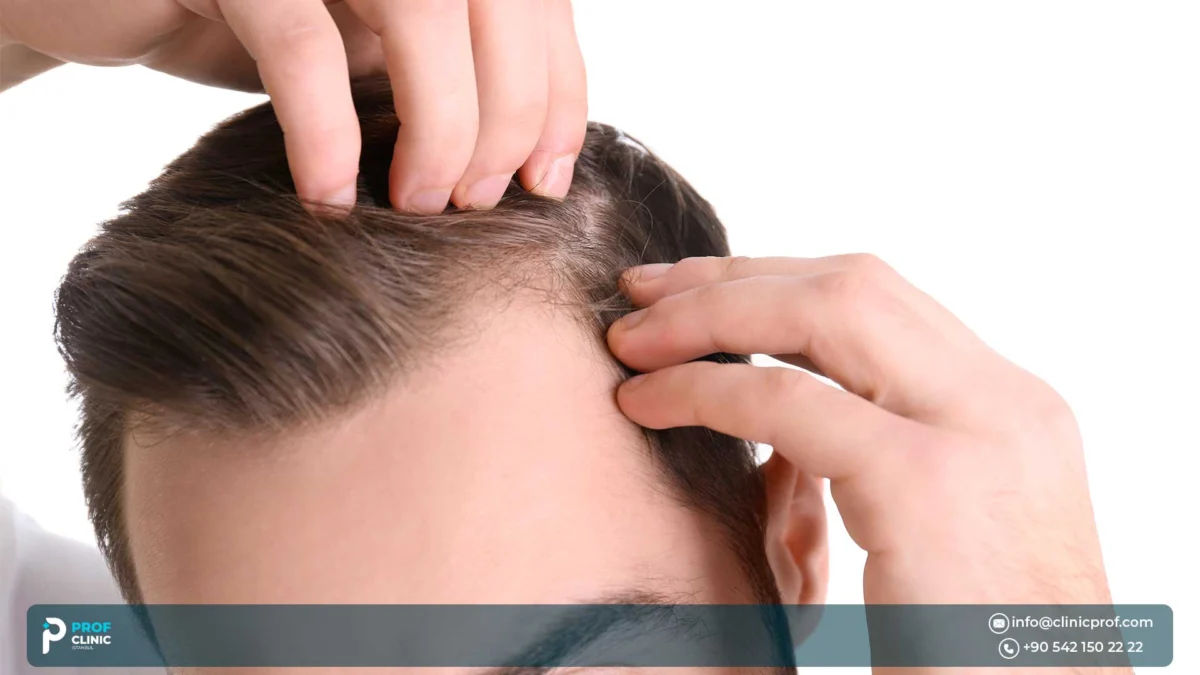
Temple recession is the thinning and backward shift of hair at the two front corners of the hairline, and it is usually the first visible sign of male pattern hair loss. A 2021 review in the Journal of Cosmetic Dermatology notes that in men the condition begins as thinning at both temples of the frontal scalp, which can later spread towards the crown.
Doctors grade the pattern on the Norwood scale. Stage II shows triangular, usually symmetrical areas of recession at the frontotemporal hairline. Stage III is deeper: the temples are bare or only thinly covered, and Norwood considered it the minimum extent of loss that counts as baldness, according to a review of classification systems in the Journal of Cutaneous and Aesthetic Surgery. The ISHRS adds that in young men the first sign is usually thinning at the temporal corners of the hairline, which can simply look like a high forehead.
Here is how the first stages differ at the temples:
| Stage | What you see at the temples | What the plan usually looks like |
|---|---|---|
| Norwood II | Shallow, triangular recession at both corners, usually symmetrical; the middle of the hairline is mostly intact | Assessment, medical treatment and monitoring first; a small temple-only session is considered only in a stable adult case |
| Norwood III | Deeper symmetrical recession; the corners are bare or thinly covered | Temples alone, or temples plus the front edge, designed around future loss |
| Norwood IV and beyond | Deeper recession plus thinning at the crown, separated by a band of hair | Temples can no longer be planned alone, because the donor supply is shared across areas |
These are planning patterns, not rules; your surgeon decides after examining your scalp.
Not sure which stage your temples are at? Send a photo of both temples on WhatsApp so the team can review it before you decide anything.
Also read: Norwood Scale: The 7 Stages of Male Hair Loss and Grafts Needed, which places temple recession on the full seven-stage chart.
Mature Hairline or Receding Hairline? Forehead Height and Age
No single measurement separates a normal mature hairline from early pattern loss, so the surgeon looks at the whole picture: the shape of the recession, your age, and your family history. Symmetrical triangles at both corners, finer and shorter hairs in those corners and relatives with similar loss all point towards pattern hair loss, and only an examination confirms it.
When a surgeon designs a hairline, forehead height is measured rather than guessed. The recipient-area review in the Journal of Cutaneous and Aesthetic Surgery places the front-most point of the hairline about 7–10 cm above the glabella, the point between the eyebrows, depending on the degree of baldness. The temple corners sit higher than that point, roughly in line with the outer corner of the eye.
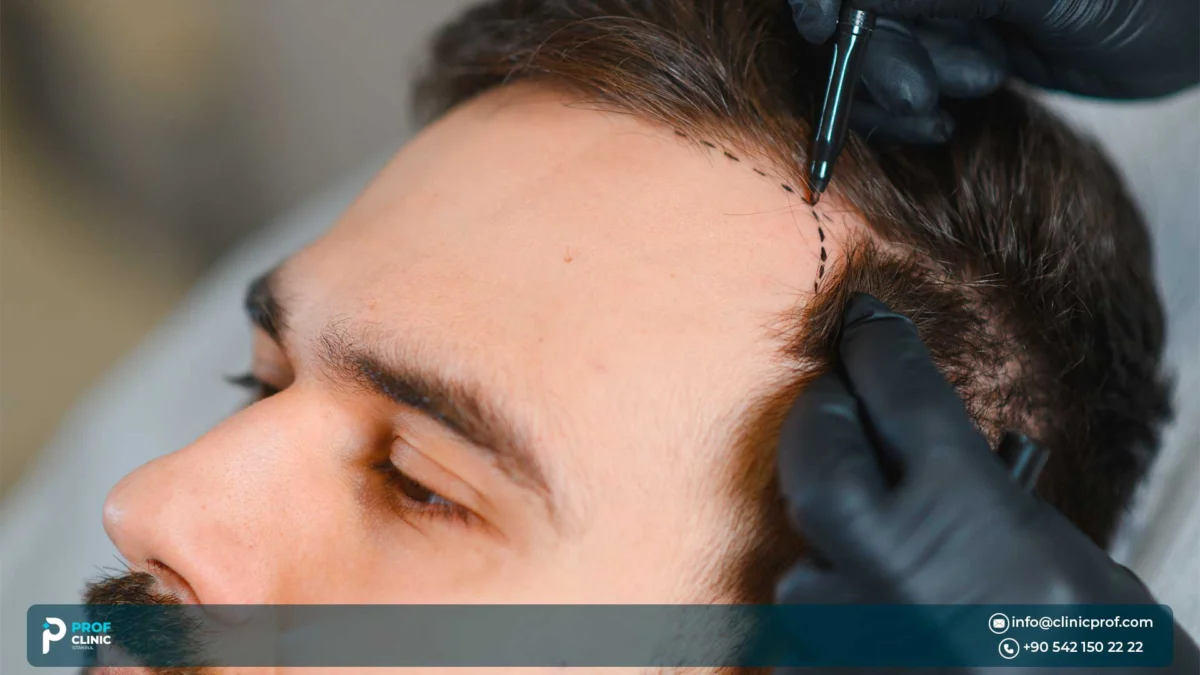
Age changes the answer too. A hairline set very low to look young can look wrong years later: the ISHRS notes that men who asked for a low hairline at the forehead and temples in their 20s or 30s may find it unsuitable for their age as they grow older, and it may need revision. The complications review in the Journal of Cutaneous and Aesthetic Surgery adds that a hairline placed below 6 cm from the glabella blunts the temporal angles and can look artificial if hair loss keeps progressing.
Also read: What Is a Hair Transplant? Pros, Cons, Hairline & Who It Suits
Receding Hairline Hair Transplant: Who Is a Good Candidate?
A good candidate is usually an adult man with confirmed pattern hair loss, enough healthy donor hair and realistic expectations about density. The American Academy of Dermatology (AAD) puts it simply: you need enough healthy hair to move and the ability to grow hair in the thinning area, and an examination, sometimes with blood tests or a scalp biopsy, finds out why the hair was lost.
The AAD also says that a full head of hair may be unrealistic, but a fuller head of hair can be the goal. For temples, that usually means framing the face with a natural, age-appropriate line rather than recreating a teenage hairline. If you are comparing clinics for a male hair transplant in Turkey, check that the assessment covers your donor area and the pattern of your loss, not just a graft count.
Rule Out Other Causes of Hairline Loss First
Not every receding hairline is genetic, and a transplant should be planned only after the cause is clear. Two other causes matter at the temples.
- Traction alopecia: the AAD says the hairline is one of the first places this shows, caused by tight braids, ponytails or head coverings pulled hard, and that once the skin turns shiny and bald the hair cannot grow back.
- Frontal fibrosing alopecia: this scarring condition often looks like a receding hairline along the front and sides, and the AAD says early diagnosis and treatment by a dermatologist can stop it progressing.
Tell the clinic about your hairstyles, headwear and any itching or redness around the hairline, because these change the plan.
How Young Is Too Young for a Temple Transplant?
Most leading hair-restoration specialists do not consider a transplant a good option for most men under 21, according to the ISHRS, because the pattern of loss has usually not fully shown itself yet. A hairline placed this early may look wrong later, further surgeries are often needed, and early mistakes may have to be corrected surgically.
The ISHRS describes minoxidil and finasteride as the usual interim treatment, and the AAD says men in their 20s may be asked to wait and start medicine first. In selected cases, a small transplant to improve the temporal frontal hairline may be considered. Our guide Best Age for a Hair Transplant: Is 20–25 Too Young? goes deeper on this question.
How Temples Are Designed: Shape, Angle and Density
Temples look natural when the design is soft, the grafts lie at a shallow angle and the density is deliberately lower than at the centre of the hairline. These three choices matter more than any technique name.
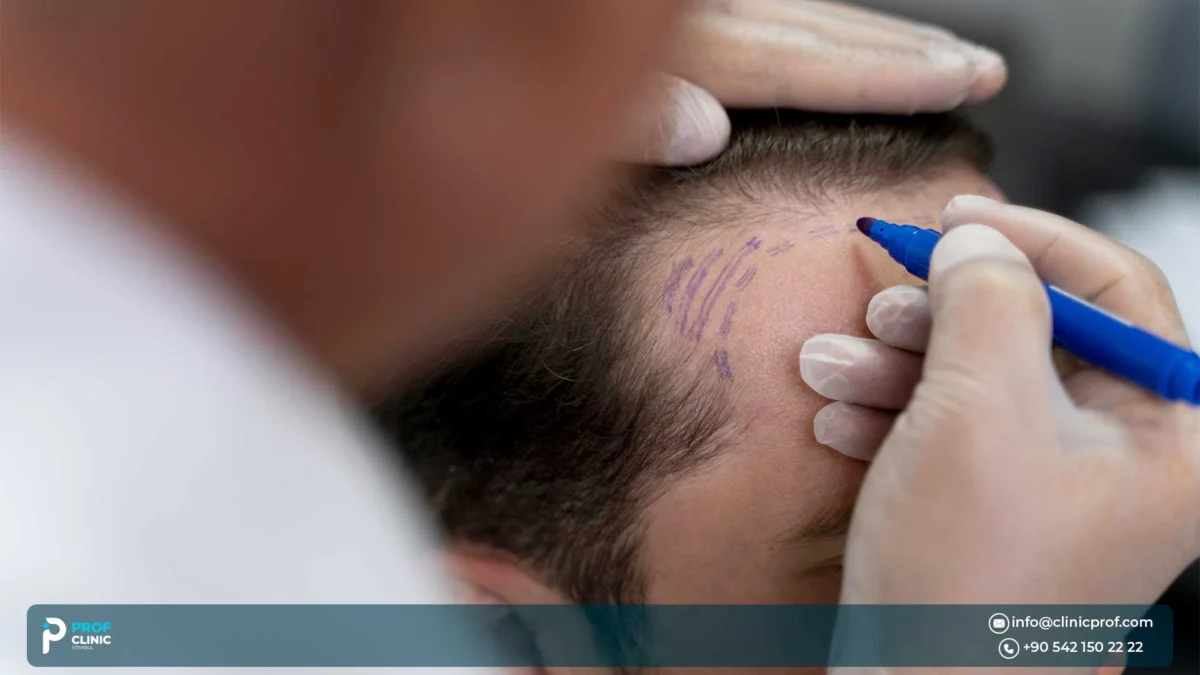
Shape and Position of the Temple Corners
Each temple has a small triangular point, the temporal triangle, that projects beyond the line of the sideburn, and a natural design reproduces it instead of drawing a straight line. At the very front, surgeons fill a soft transition zone about 0.5–1 cm deep with single-hair grafts and small irregularities, according to the recipient-area review.
The same review notes that hairline shape differs between people. In Caucasian men it tends to be M-shaped, which can be built as a sharp V to suit an elliptical face or a blunt U to suit a round one, while in patients of African descent the hairline is flatter and closer to a straight line. A copied template can therefore look wrong on your face.
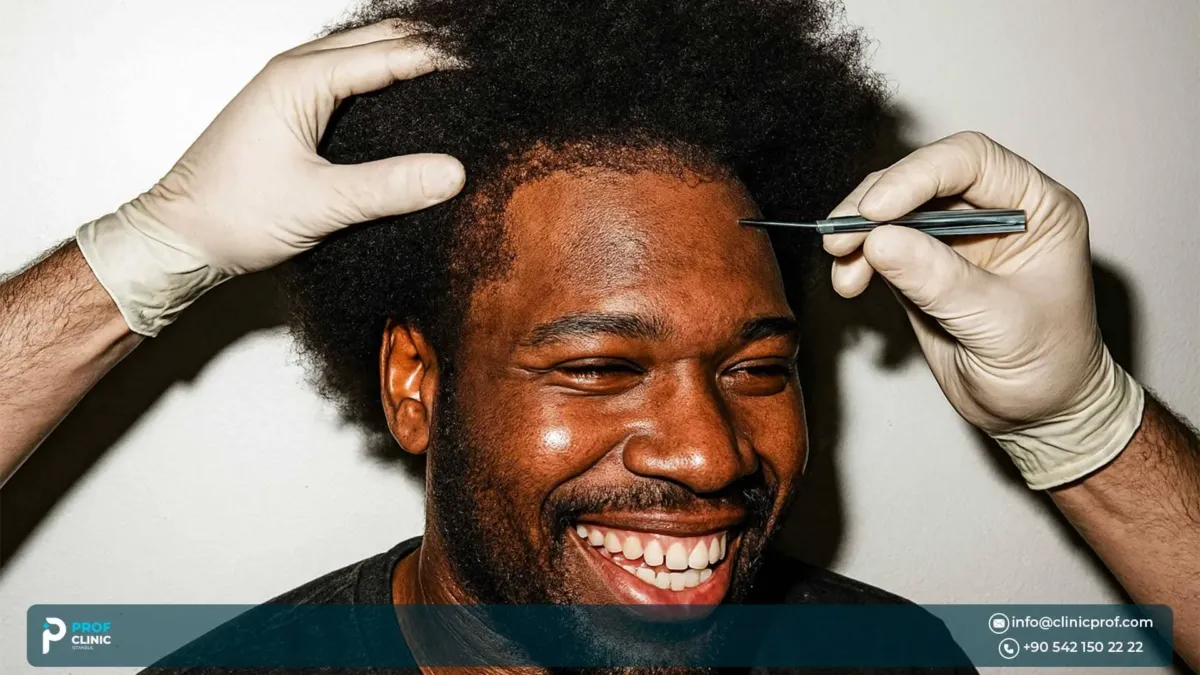
Angle and Direction: Why Temple Hair Must Lie Flat
The recipient-area review says grafts should be placed at 45 degrees or less, and at an even sharper angle in the temporal triangles, because a steeper angle makes the hair stand up or become hard to comb. The direction follows the natural angle of the surrounding hair, and grafts are placed in a random pattern rather than in neat rows and columns. Temple hair that stands upright on a finished result usually points to an angle problem.
Density: Fuller Is Not Always Better
Temples need less density than the centre of the hairline, which is why a measured plan beats a “maximum grafts” plan. The review gives about 20–30 grafts per cm² for the front transition zone, and 40–45 grafts per cm² for the central area behind it. It also warns that more than 60 grafts per cm² can hamper the blood supply and reduce graft survival, and that it uses up donor hair faster.
How Many Grafts Do Temples Need?
The number comes from measuring the area and multiplying it by the planned density, so it varies from one man to the next. The same review shows how surgeons do this: they multiply the area of each zone, in cm², by the grafts per cm² planned for that zone.
Temple triangles are small, so temple-only plans usually use far fewer grafts than a full hairline. The table below shows only the arithmetic, using invented triangle sizes and 25 grafts per cm², the density the review gives for the transition zone and the lateral areas.
| Example (invented) | Size of each temple triangle | Area per side | Grafts per side at 25 per cm² | Both sides |
|---|---|---|---|---|
| Shallow recession | 3 cm base × 2 cm high | 3 cm² | 75 | 150 |
| Moderate recession | 4 cm base × 3 cm high | 6 cm² | 150 | 300 |
| Deep recession | 5 cm base × 4 cm high | 10 cm² | 250 | 500 |
These sizes are not typical, quoted or promised numbers. Your surgeon measures your own temples and chooses the density. If the plan also rebuilds the front edge, the transition zone alone takes roughly 600–900 grafts, according to the same review. For counts across the whole scalp, see How Many Grafts Do I Need? Graft Count by Norwood Stage.
Protecting the Hair You Still Have
A transplant moves hair; it does not stop the hair behind and around it from thinning, so temple surgery works best alongside a plan to protect your native hair. The AAD says medicine helps because loss and thinning can continue even after a transplant, and that it can prevent or slow new loss.
The ISHRS stresses that pattern hair loss is progressive and unpredictable. It can outpace surgery, and at some point there might not be enough donor hair left. A surgeon who anticipates future loss can place transplanted hair in areas likely to thin, as a reserve against that loss.
Finasteride and Minoxidil Around Temple Surgery
Topical minoxidil, oral finasteride and low-level light therapy are the only treatments approved or cleared by the FDA for pattern hair loss, according to the Journal of Cosmetic Dermatology review, and they work only while they are continued. The same review notes that finasteride is more effective at the crown than at the frontal scalp, so do not expect it to rebuild receding temples on its own.
It also summarises a study of 79 men who had transplants: among those who took finasteride from four weeks before surgery to 48 weeks after, 94% showed visible increases in frontal scalp hair, compared with 67% on placebo. Starting, stopping or combining medicines is your doctor’s decision. Our guide Finasteride and Minoxidil for Hair Loss and After a Transplant covers benefits and side effects.
Overharvesting and the Donor Budget
Your donor hair is finite, and every graft spent on the temples is one that is no longer available later. The complications review in the Journal of Cutaneous and Aesthetic Surgery warns that overharvesting can permanently damage the donor area, leaving thinning and patchy loss, and that the safe donor area should be marked out first. It advises against extracting more than one in four follicular units.
Questions worth asking your surgeon before you agree:
- How many grafts does my plan use, and how many stay in reserve?
- What angle and density will you use at my temples?
- Will I see and approve the hairline drawing before surgery?
- What happens if I keep losing hair behind the transplanted area?
- Who draws the hairline, and who performs each step of the procedure?
Common Temple Transplant Mistakes and How to Avoid Them
Most unnatural temples come from design and execution errors, not from the idea of transplanting itself: the complications review calls an unnatural hairline a result of poor design and surgical execution. Watch for these six problems:
- Hairline too low: it needs more grafts, drains the donor area and looks unnatural with age, according to the recipient-area review.
- Rounded temple corners: a very low placement blunts the temporal angles, which the complications review says looks artificial in more advanced baldness.
- Upright grafts: angles above about 45 degrees make hair stand up instead of lying flat.
- Rows and columns: the review advises a random arrangement, because a regular grid looks artificial.
- Too dense: above about 60 grafts per cm², survival can fall and donor hair is used up faster.
- No plan for future loss: if the native hair keeps thinning behind the new hairline, a second procedure may be needed, and the donor supply may not stretch that far.
The ISHRS says many older or poorly placed transplants can be revised with today’s techniques, though revision often needs several sessions. The AAD adds that the outcome depends largely on the surgeon you choose, so look for a doctor who performs hair transplants regularly and ask to see the hairline drawing in writing or in photos.
Want to see how hairlines look once they have grown in? Browse consented cases in the Prof Clinic before-and-after gallery, and check how long after surgery each photo was taken.
Recovery and Results at the Temples
Transplanted temple hair follows the same slow timetable as the rest of the scalp. The AAD says the transplanted hairs fall out between two and eight weeks after surgery, that by the third month the area may look thinner than before, and that most patients see results between six and nine months, with some needing 12.
So judge your temples at about 12 months, with the same light and hair length each time, and keep using any medicine your doctor has prescribed to protect the surrounding hair.
How Much Does a Temple Hair Transplant Cost in Turkey?
There is no fixed price for temples alone, because the cost depends on the number of grafts, the technique and what the package includes. For orientation, Istanbul packages for a scalp hair transplant generally run at about €1,800–€3,500. This is an approximate 2026 range as of this update, not a final price; it depends on your case after assessment and is confirmed in a written quote.
A temples-only plan uses fewer grafts, so ask how the quote treats a small session and what it includes. Packages usually include the procedure, pre-op tests, medication, accommodation and airport and hotel transfers, and stays in Istanbul are typically 2–4 days.
Want a price for your own temples? Book a free online consultation and send photos of the front, both temples and the top of your head.
Temple and Hairline Planning at Prof Clinic in Istanbul
At Prof Clinic, the planning questions above are the ones we expect you to ask. Our hair transplant for men in Istanbul starts with a medical assessment, carried out by Spc. Dr. Lütfi Öztürk, the internal-medicine specialist who leads hair restoration and coordinates follow-up.
Before you book a temple restoration, these points are easy to confirm:
- Pre-op tests: even a small temple session is preceded by a blood count, an ECG, kidney and liver function, electrolytes, blood sugar, and screening for hepatitis and HIV.
- Techniques: the clinic works with FUE, DHI, Sapphire FUE and Micro FUE, and the choice for your temples depends on your hair and donor area.
- Honest expectations: how dense the temples can look is talked through case by case, and no particular density is promised beforehand.
- A written quote: sent after the team reviews your photos, with the package covering the procedure, accommodation, airport and hotel transfers, and post-op care.
- Follow-up after you fly home: once you are home, the coordination team keeps in contact and offers advice over WhatsApp while your temples heal.
The sections above also work as a checklist for any clinic: ask to see the drawn hairline, the planned graft count and the reserve left in your donor area before you commit.
FAQs About Receding Temples and Hair Transplants
Can a hair transplant fix receding temples?
Yes, in suitable cases. A transplant can restore hair at the temples when the loss is permanent, such as male pattern hair loss, and there is enough donor hair. The result depends on the design, angle and density, and on protecting the hair you still have.
How many grafts do I need for my temples?
It depends on the size of the area and the planned density. Surgeons multiply the area of each zone in cm² by the grafts per cm², and small temple triangles need far fewer grafts than a whole hairline. Your surgeon confirms the number after measuring your temples.
Is Norwood 2 too early for a hair transplant?
Often, yes. At Norwood II the pattern is usually not clear yet, so doctors tend to suggest assessment, medicine and monitoring first, especially under 21. A small temple procedure may be considered for a stable adult case after a full examination.
Will my temples keep receding after a transplant?
Your own hair can. A transplant moves hair that resists thinning, but pattern loss usually continues in the native hair around it. The AAD says medicine can slow this, so the plan should allow for loss behind the new hairline.
Do temple transplants look natural?
They can, when the hairline is not set too low, the corners are kept softly irregular, grafts lie at 45 degrees or less and density is moderate. Poor design causes most unnatural results, so ask to approve the drawing first.
Can finasteride or minoxidil replace surgery for receding temples?
Sometimes they slow early loss, but they work less well at the frontal scalp than at the crown, and only while you keep using them. They do not rebuild a deep recession, which is where a transplant is considered.
Choosing a Temple Plan You Will Still Like in 20 Years
A receding hairline hair transplant works best when the plan respects three limits: your donor supply, the way your hair loss is likely to progress, and the natural shape of your face. Ask for the hairline to be drawn and explained, make sure there is a reserve of donor hair, and start with an assessment rather than a graft number.
If you are considering a hair transplant in Turkey for your temples, contact Prof Clinic and ask for a written plan that shows the design, the graft estimate and the follow-up.
Sources
- ISHRS — Young Male Hair Loss
- ISHRS — Followup Hair Restoration Procedures
- American Academy of Dermatology — A hair transplant can give you permanent, natural-looking results
- American Academy of Dermatology — Hairstyles that pull can lead to hair loss
- American Academy of Dermatology — Frontal fibrosing alopecia
- Journal of Cutaneous and Aesthetic Surgery — Recipient Area (Marwah & Mysore, 2018)
- Journal of Cutaneous and Aesthetic Surgery — Complications in Hair Transplantation (Kerure & Patwardhan, 2018)
- Journal of Cutaneous and Aesthetic Surgery — Classifications of Patterned Hair Loss: A Review (Gupta & Mysore, 2016)
- Journal of Cosmetic Dermatology — Treatment options for androgenetic alopecia: Efficacy, side effects, compliance, financial considerations, and ethics (Nestor et al., 2021)