If you’ve been told you don’t have enough bone height for regular dental implants, especially in the upper back teeth near the sinus, you’re not alone. Short dental implants are one option your dentist may consider to restore chewing, while sometimes avoiding bigger bone-grafting procedures.
The keyword is sometimes: the safest choice depends on your anatomy, bite forces, gum health, and how the final tooth crown or bridge will be designed.
This article by Prof Clinic in Turkey explains short dental implants in simple terms—what they are, when dentists recommend them, and how they compare to standard implants and bone grafting/sinus lift options. You’ll learn who may be a good candidate, what affects strength and long-term success (like bite forces, crown height, and hygiene), what the recovery timeline can look like, and which questions to ask your dentist so you can choose the safest plan for your anatomy.
What are short dental implants?
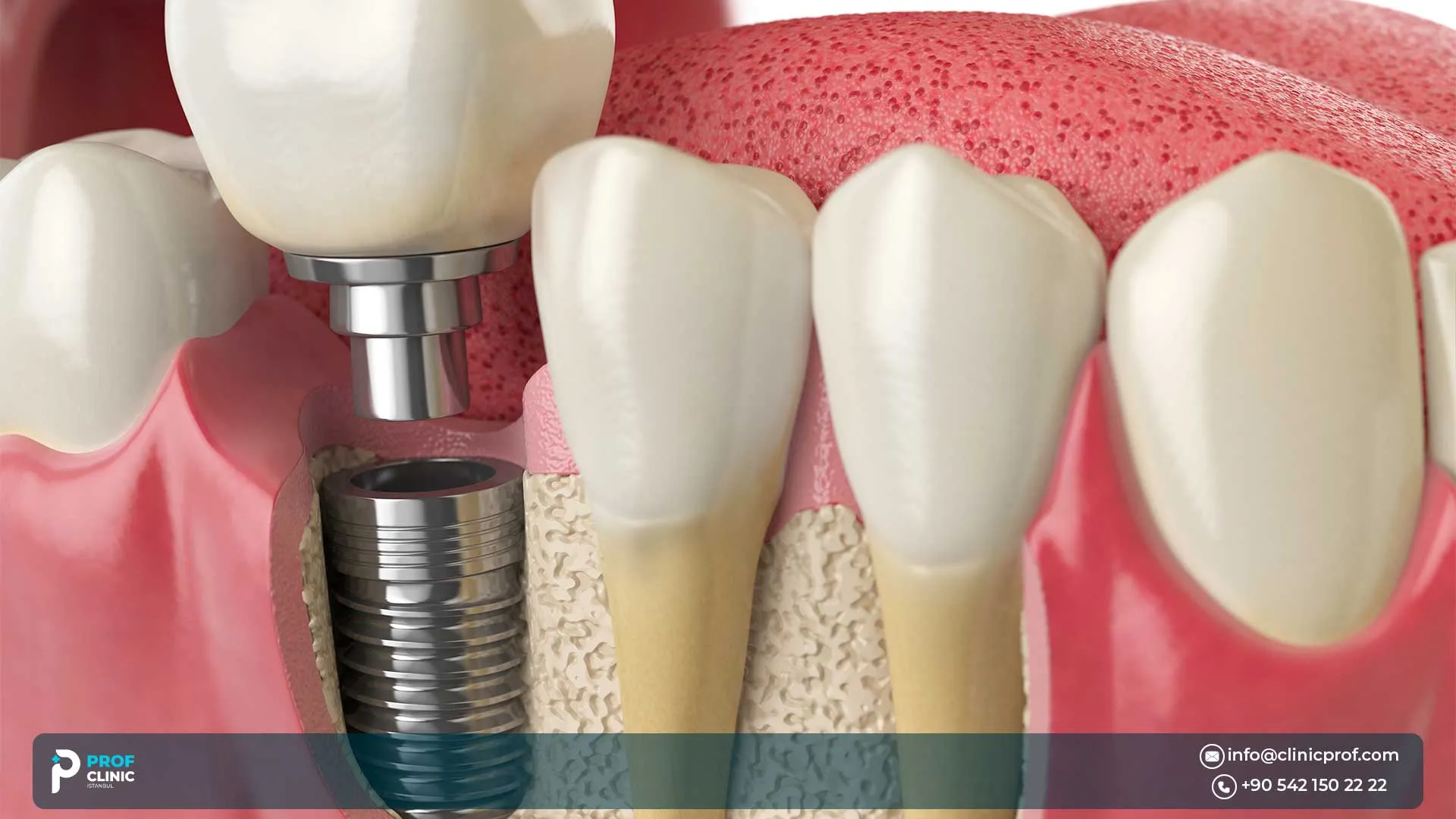
Short dental implants are implants designed with a reduced length to fit in areas where bone height is limited, often to avoid nearby anatomy such as the maxillary sinus in the upper jaw or the inferior alveolar nerve in the lower jaw. They’re most commonly discussed for atrophic posterior jaws.
They are not magic implants. Their predictability depends on case selection (bone quality/width, stability, bite forces, and prosthetic design).
How short is considered a short dental implant?
This is where many pages confuse patients: the definition varies across studies and consensus documents.
- Some studies label implants ≤8–8.5 mm as short.
- Many consensus discussions reserve true short or extra-short for ≤6 mm, especially in posterior jaws.
For our blog, we use these terms:
- Short dental implants: ≤8 mm (common clinical category)
- Extra-short implants: ≤6 mm (often the most debated category)
What materials are short dental implants made of?
Most dental implants, including short-length designs, are titanium or titanium-alloy based. Zirconia implants exist in selected cases, but material choice depends on your clinical situation and the clinic’s protocols and may affect connection design and restorative options.
Also read: Types of Dental Implants: Complete Guide 2026
What is the difference between short and narrow dental implants?
These terms solve different problems:
- Short = length (vertical bone height limitation).
- Narrow/mini = diameter (ridge width limitation).
As a patient, you can have enough height but not enough width (more narrow implant territory), or enough width but not enough height (more short implant territory), or both (needs a more nuanced plan).
Also read: Mini Dental Implants in Turkey: Small but Mighty
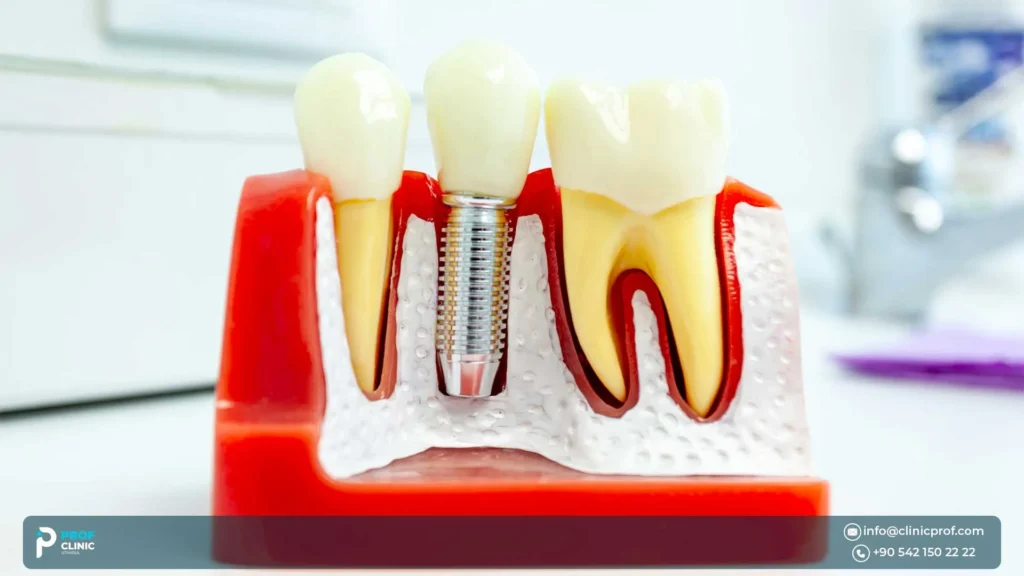
Strength, bite forces, and long-term performance
A common fear among patients is: “If it’s shorter, is it weaker?” In reality, implant performance is rarely about length alone; it’s about bone support, stability, load direction, prosthetic design, and maintenance. Large evidence syntheses often report no meaningful survival difference between short and standard implants in appropriately selected cases, while also noting that definitions and follow-up time vary.
Here is a list to follow for success measurement:
- Healthy gums and good oral hygiene
- Adequate bone width and acceptable bone quality for primary stability
- Appropriate implant diameter and connection/restorative plan
- Bite design that limits off-axis forces
- Regular follow-ups and early management of inflammation
Check our dental treatment service to learn more about us.
Are short dental implants as strong as standard implants?
Implants are typically made of high-strength materials; strength is more about how forces transfer into bone. In systematic overviews, short implants often show comparable survival to standard implants when cases are properly selected and restored with good biomechanical principles.
Where clinicians get cautious is when anatomy forces a design that increases leverage, like very tall crowns, cantilevers, or uncontrolled bite forces. That’s not a short implant problem as much as a design and risk-factor problem.
How do short implants perform under heavy bite forces?
Heavy bite forces, including bruxism/clenching, increase the importance of occlusion, crown shape, and whether teeth are splinted in certain designs.
Two practical points you can understand:
- Crown height matters. A taller crown can increase leverage, potentially raising the risk of technical issues (like screw loosening) if the bite isn’t well managed.
- Splinting is case-dependent. One randomized clinical trial found that splinting crowns on short implants did not meaningfully change marginal bone loss or peri-implant health over 3 years (within its limitations). In practice, your dentist decides based on bite, span, and risk tolerance.
If you grind your teeth, don’t assume you’re not a candidate. It means your plan should include risk controls: occlusal adjustment, protective night guard, and sometimes a different restorative design. Contact us to help you.
Do short dental implants last as long as regular implants?
Long-term longevity depends on the same fundamentals as standard implants: gum stability, inflammation control, bite management, and maintenance. Evidence continues to grow, and many studies report similar outcomes between short and standard implants in selected cases, while still emphasizing that follow-up windows and definitions differ.
Implant length is one variable; your health profile, hygiene, and restoration design often carry equal or greater weight in real-world longevity.
What are the success rates of short dental implants?
Because studies define short differently, the most honest answer will be ranges with context
- For ≤6 mm implants in posterior jaws, an ITI consensus synthesis reported survival ranges roughly 86.7%–100% over about 1–5 years, depending on studies and conditions.
- A 2024 systematic review of RCTs on ≤6 mm implants similarly summarizes that short implants can be a viable alternative in selected cases, with attention to complications and follow-up limitations.
- An umbrella review (2025) pooling many systematic reviews found no significant differences in survival/failure between short and standard implants overall, while noting variability and quality considerations across included reviews.
Why success rates of short dental implants differ
- Different definitions (≤8.5 mm vs ≤6 mm)
- Upper vs lower jaw (bone density differences)
- Single crown vs splinted bridge designs
- Patient risk factors (smoking, uncontrolled diabetes, bruxism, poor hygiene)

Who benefits most from short dental implants?
Short dental implants are most valuable when they help you reach a stable, functional restoration without escalating surgery, but only if there’s enough bone for safe placement and stable restoration design.
When are short dental implants recommended?
They’re commonly considered when:
- Vertical bone height is limited near critical anatomy (sinus/nerve), especially in the posterior maxilla (upper back teeth).
- The alternative would likely involve sinus lift or vertical bone augmentation, and the clinician believes a short implant plan can meet biomechanical and restorative requirements.
Who is a good candidate for short dental implants?
A dentist cannot confirm candidacy without imaging and an exam, but you’re often a stronger candidate when most of these are true:
- Gums are healthy or periodontal disease is treated and stable
- You can maintain excellent home care and attend maintenance visits
- Adequate bone width for a stable implant diameter
- Your bite plan can avoid excessive leverage
- No uncontrolled medical conditions that impair healing
- Smoking is reduced or stopped
Want a clear “yes/no/maybe” based on your anatomy? Request a CBCT-based implant suitability review and written options with Prof Clinic in Istanbul.
Are short implants suitable for patients with severe bone loss?
Sometimes, but not always. If bone height and/or quality are extremely limited, short implants may not provide predictable stability or restorative design space.
In those situations, you may discuss with your doctors alternatives such as pterygoid implants, zygomatic implants, basal or other advanced solutions, depending on anatomy, risk tolerance, and clinician expertise.
Also read: Pterygoid Implants: Advanced Implant Solution

Bone grafting vs. sinus lift
The heart of this decision is not short implants are better, or grafting is better. It’s: Which path best matches your anatomy and risk profile while meeting your functional goals? Evidence comparing short implants to sinus lift/grafting in posterior maxilla often finds similar survival with differences in surgical burden and complication profiles, depending on the study.
Can short implants replace the need for bone grafting?
Sometimes, yes, especially when the main limitation is vertical height and there is enough bone width and quality to achieve stability.
In posterior maxilla studies comparing short implants to sinus floor elevation with longer implants, outcomes are often reported as comparable, with potential reductions in surgical time/complexity for the short-implant approach.
But short implants do not replace grafting in every case. If your bone is too soft, too thin, the restorative space is unfavorable, or the planned tooth design would overload the implants, grafting (or another alternative) may still be the safer route.
Short implants vs bone grafting: Which is better?
Use this table as a conversation guide with your implant dentist not as a self-prescription.
| Decision point | Short implants (short / extra-short) | Bone grafting / sinus lift & standard implants |
| Typical candidate profile | Limited vertical bone height; wants fewer surgical stages when safe | Limited bone height that still needs vertical reconstruction for ideal implant position |
| Anatomy focus | Avoids sinus/nerve by using shorter length | Creates new bone height (or lifts sinus floor) to place longer implants |
| Treatment stages & timeline | Often fewer surgical steps; still requires healing/osseointegration before final teeth in many cases | Often more stages (augmentation, healing, & implant/crown steps), depending on protocol |
| Surgical invasiveness | May be less invasive (case-dependent) | Can be more invasive (sinus lift/augmentation adds surgical site and healing demands) |
| Complication profile | Risks shift toward biomechanics/restoration design if leverage is high | Added risks related to augmentation (e.g., sinus-related events), plus standard implant risks |
| Prosthetic constraints | Crown height, bite forces, and design are critical; sometimes splinting/design changes are considered | Allows more “ideal” implant length but still needs careful bite and maintenance |
| Typical trade-offs | Fewer augmentation steps when anatomy allows, but demands good design and risk control | More surgical burden, but can create a more favorable foundation in selected cases. |
Evidence from systematic reviews and RCTs in the posterior maxilla often supports short implants as an alternative to sinus augmentation in selected cases, with comparable survival, while emphasizing follow-up limits and study variability.
Which path tends to fit you?
- You may lean toward short implants if you strongly prefer fewer surgeries and your CBCT shows enough bone width/quality for stable placement.
- You may lean toward grafting/sinus lift if your desired tooth design would create too much leverage, your bone quality is poor, or the clinician needs a more ideal implant position for a long-span restoration.
Schedule your consultation for a personalized plan that compares short implants vs sinus lift/grafting side-by-side, based on your CBCT and bite goals.
Short dental implants in the upper jaw
The posterior upper jaw is the most common place patients hear about short implants because the sinus can limit vertical bone height, and the bone can be less dense than the lower jaw.
Are short implants safe for the upper jaw?
In appropriately selected cases, evidence comparing short implants to longer implants placed with sinus lift often reports similar survival, and sometimes differences in complications favoring the less-augmented approach, depending on technique and follow-up.
Common issues your dentist will actively plan to prevent
- Sinus-related risks if working close to the sinus floor
- Difficulty achieving primary stability in softer bone
- Technical/restorative complications if bite forces are not managed
Can short implants be used in the posterior (back) teeth area?
Yes. This is one of the most common use-cases, but the posterior region has higher bite forces, so your plan must manage load direction and leverage. This is where crown shape, contact points, and sometimes splinting decisions become especially important.
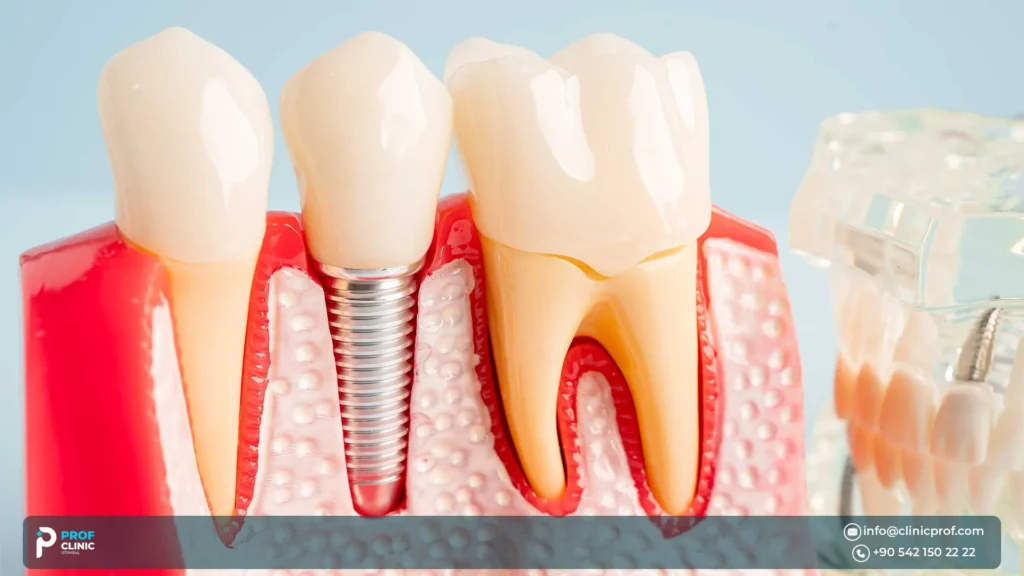
Minimal bone implants: timing and technique
Short implants are not necessarily special, but limited bone height raises the value of precision: correct angulation, controlled drilling depth, and a restoration plan that matches the available bone.
Do short implants require special surgical techniques?
Not “special,” but often more planning-driven:
- CBCT-based evaluation of bone height/width and nearby anatomy
- Restorative-first planning
- Guided surgery may be considered depending on anatomy and clinic workflow
If stability is borderline or the case is complex, clinicians may favor protocols that protect the implant during early healing.
Can short implants be placed immediately after tooth extraction?
Sometimes. If key conditions are met:
- Infection is controlled and the site is suitable
- The clinician can achieve sufficient primary stability
- The restorative plan supports predictable healing
Immediate placement is case-dependent, and in many situations the safest approach is delayed placement or a staged plan after tissue/bone stabilization.
Also read: One-Stage vs Two-Stage Dental Implants
Reduced length implants: bridges, dentures, and full-arch
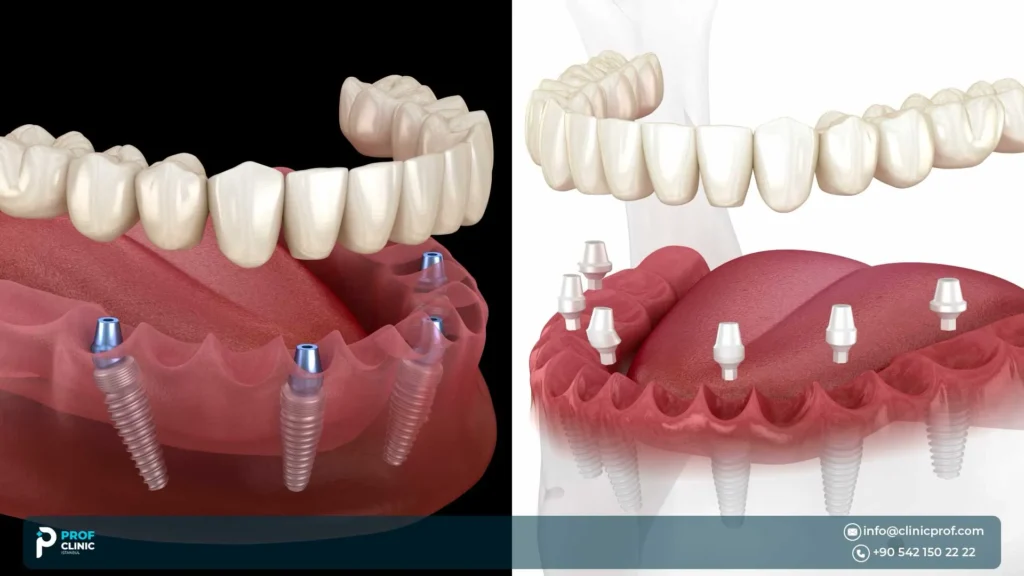
Implants are a foundation, but what you feel and use every day is the restoration: a single crown, a bridge, or a denture/overdenture. Short dental implants can support these restorations in selected cases, but the design must respect biomechanics and maintenance realities.
How many short implants are needed to support a bridge?
There isn’t one number that’s safe for everyone. The decision depends on:
- How many teeth you’re replacing (span)
- Bone quality and implant stability
- Bite forces and whether there will be any cantilevering
- Whether the restoration will be splinted and how loads distribute
A good clinician will show you how the plan reduces overload risk and how maintenance will work long-term.
Are short implants suitable for full-arch restorations?
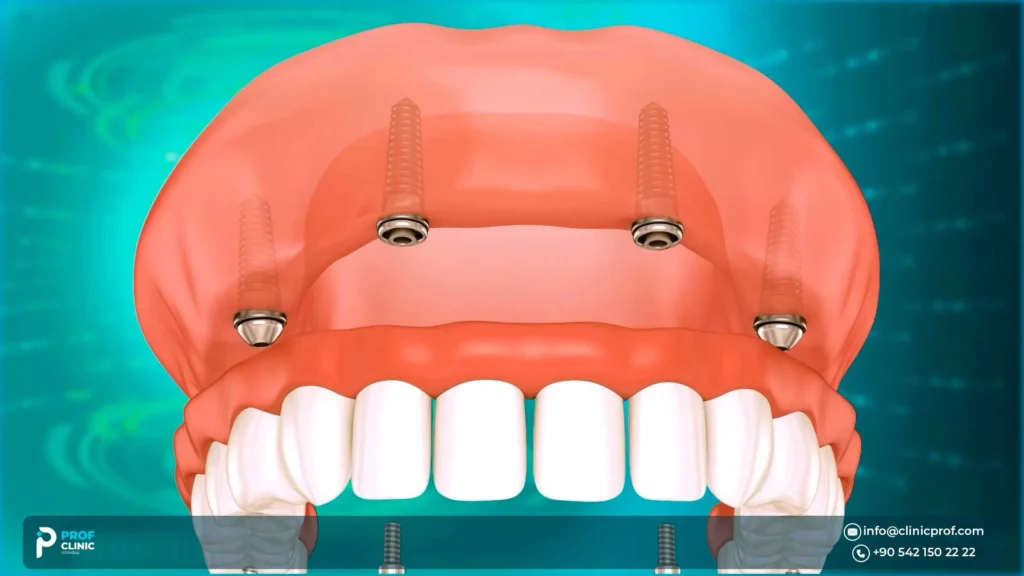
Full-arch plans (fixed “all teeth” solutions) often use specific concepts (e.g., All-on-4/All-on-6 and other full-arch strategies).
Short implants may play a role in selected anatomies, but they are not a universal shortcut for every full-arch case, especially when severe bone loss and complex biomechanics are involved.
Also read: All on 6 Dental Implants: Everything you want to know
Can short implants support implant-supported dentures?
They can, depending on the design: removable overdenture vs fixed bridge, available bone, and hygiene needs. Implant-supported dentures often require consistent cleaning and periodic maintenance of attachment components. Your dentist should explain the daily routine and follow-up schedule before you commit.
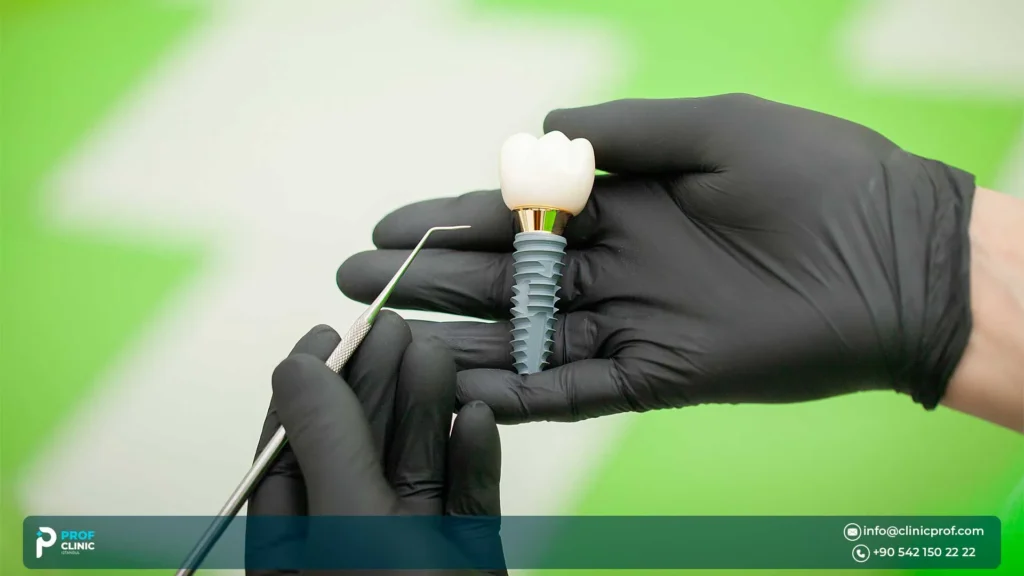
Short dental implants: pros, cons, and complications
Short implants are neither a miracle nor a compromise by default. They’re a tool that can reduce surgical burden in some situations, while introducing different planning constraints.
Explore our Before & After and Doctor profiles for trust and who evaluates you.
What are the advantages of short dental implants?
Potential advantages:
- May avoid or reduce the need for sinus lift/vertical grafting in selected patients
- Often fewer surgical sites and stages compared with augmentation-based approaches
- Comparable survival to longer implants in many controlled comparisons when cases are well selected
What are the disadvantages or limitations of short implants?
Key limitations to understand up front:
- Biomechanics can be less forgiving when crown height is high or bite forces are heavy; restorative design is crucial.
- Extra-short (≤6 mm) implants have less long-term data in some contexts, and outcomes can vary by study definitions and follow-up windows.
- Severe bone loss may still require alternative anchorage concepts (e.g., pterygoid/zygomatic/basal), not simply shorter implants.
Are short implants more prone to complications?
Complications are best understood in two categories:
- Biological complications: inflammation, peri-implant mucositis/peri-implantitis, bone loss—strongly linked to hygiene, gum history, and systemic risks.
- Technical complications: screw loosening, chipping/fracture of restorative materials, wear—more influenced by bite forces and design choices.
Across large evidence summaries, short implants do not automatically show worse outcomes; the difference often lies in patient selection and prosthetic control, not length alone.
Why Prof Clinic for Short Dental Implants in Turkey?
At Prof Clinic in Istanbul, we understand how frustrating it feels to hear there isn’t enough bone for implants. That’s why we evaluate Short Dental Implants with a restoration-first approach, starting from how your final tooth (crown/bridge/denture) should function, then planning the implant length and position accordingly.
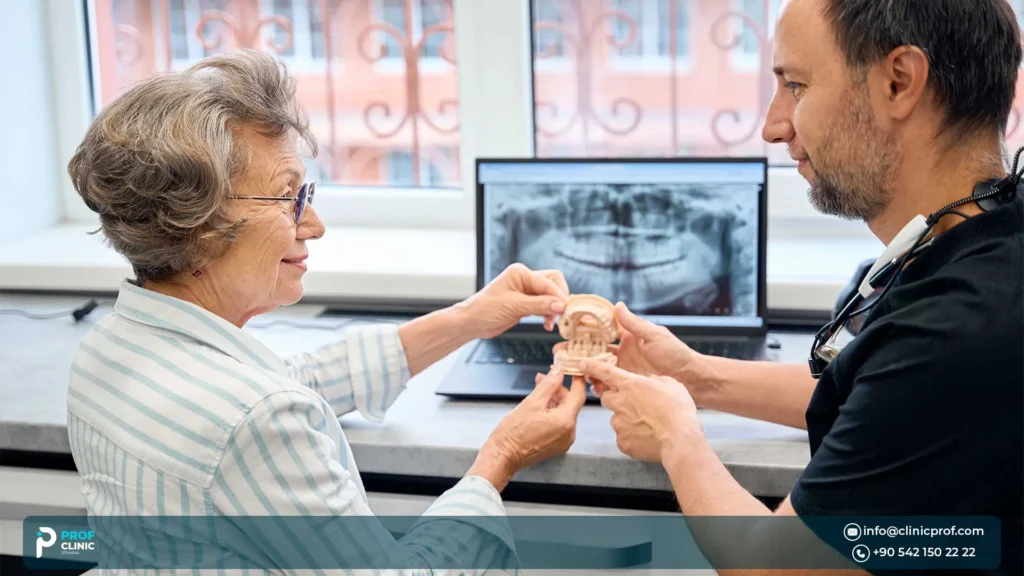
Our team reviews your CBCT/X-ray, assesses bone height and width near sensitive anatomy (like the sinus or nerve), and explains, clearly and honestly, whether short implants are a safe option for you or if alternatives (such as sinus lift or grafting) would offer a more predictable result.
Want a clear “yes/no/maybe” for your case? Send your CBCT or panoramic X-ray and request a free online consultation with our team to receive a written comparison of short implants vs other options—based on your anatomy and bite goals.
Short dental implants can be a well-supported alternative to sinus lift or extensive grafting in selected cases, especially in the posterior upper jaw when CBCT findings, bite forces, and restoration design align. The safest next step is not guessing short vs grafting, but getting a plan that shows your anatomy and explains the trade-offs clearly.
If you’d like a written comparison for your case, short dental implants vs sinus lift/bone grafting, request an online free consultation with Prof Clinic Istanbul and share your X-ray/CBCT for a suitability check.
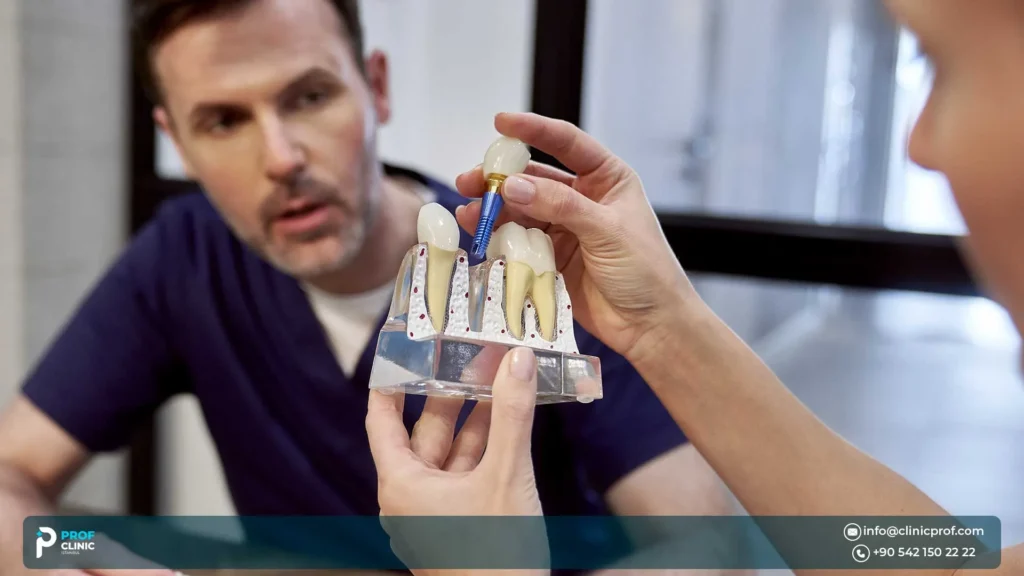
FAQs about short dental implants
Do short implants fail more often?
Not necessarily. Many reviews report similar survival between short and standard implants when cases are well selected and restored appropriately. Risk tends to rise with factors like poor bone quality, uncontrolled inflammation, heavy bite forces, and inconsistent maintenance, so the focus should be anatomy, design, and aftercare, not length alone.
What is the minimum bone height needed for short implants?
There isn’t one universal number that’s safe for everyone. Clinicians use CBCT measurements to maintain a safety margin from the sinus/nerve and to plan for primary stability. In posterior maxilla studies, short implants (including ≤6 mm) are evaluated specifically because residual bone height is limited, yet the exact threshold depends on your anatomy, width, bone quality, and restorative plan.
Are short dental implants more affordable?
They can be, because avoiding sinus lift/bone grafting may reduce surgical stages and appointments, but total cost still depends on factors like the number of implants, implant system, need for temporary teeth, prosthetic type, and risk controls. For patients considering short dental implants in Turkey, affordability often improves when the treatment plan safely avoids sinus lift or bone grafting.
Is the recovery time shorter with short implants?
Often the experience feels simpler when short implants avoid additional grafting/sinus procedures. However, implants still need appropriate healing time, and recovery varies by surgical technique, how many implants were placed, and your health factors.
Can smokers get short dental implants?
Sometimes yes, but smoking is consistently linked to a higher implant failure risk. A systematic review and meta-analysis reported substantially increased odds of implant failure in smokers compared to non-smokers. Many clinics recommend quitting (or at least stopping around surgery) and tightening maintenance to reduce risk.
What are common myths about short dental implants?
- Myth: Short means weak.
Reality: Outcomes often depend more on planning, bite control, and maintenance than length alone. - Myth: Short implants always avoid grafting.
Reality: Sometimes they do, but severe bone loss or unfavorable biomechanics may still require grafting or other solutions. - Myth: Short implants are guaranteed to work in thin bone.
Reality: No implant is guaranteed; candidacy is anatomy- and risk-factor dependent.
Want a straightforward answer for your case? Request an online evaluation and written plan
External sources
- Short implants (≤6 mm) versus longer implants with sinus floor elevation in atrophic posterior maxilla: a systematic review and meta-analysis
- Clinical performance of short implants vs. standard implants in edentulous patients. An umbrella review
- Short Dental Implants (≤8.5 mm) versus Standard Dental Implants (≥10 mm): A One-Year Post-Loading Prospective Observational Study
- Survival rates of short dental implants (≤6 mm) compared with implants longer than 6 mm in posterior jaw areas: A meta-analysis
- Randomized clinical trial evaluating the effect of splinting crowns on short implants in the mandible 3 years after loading
- Is there an effect of crown‐to‐implant ratio on implant treatment outcomes? A systematic review
- Survival Rates of Short Dental Implants (≤6 mm) Used as an Alternative to Longer (>6 mm) Implants for the Rehabilitation of Posterior Partial Edentulism: A Systematic Review of RCTs
- Smoking and Dental Implants: A Systematic Review and Meta-Analysis