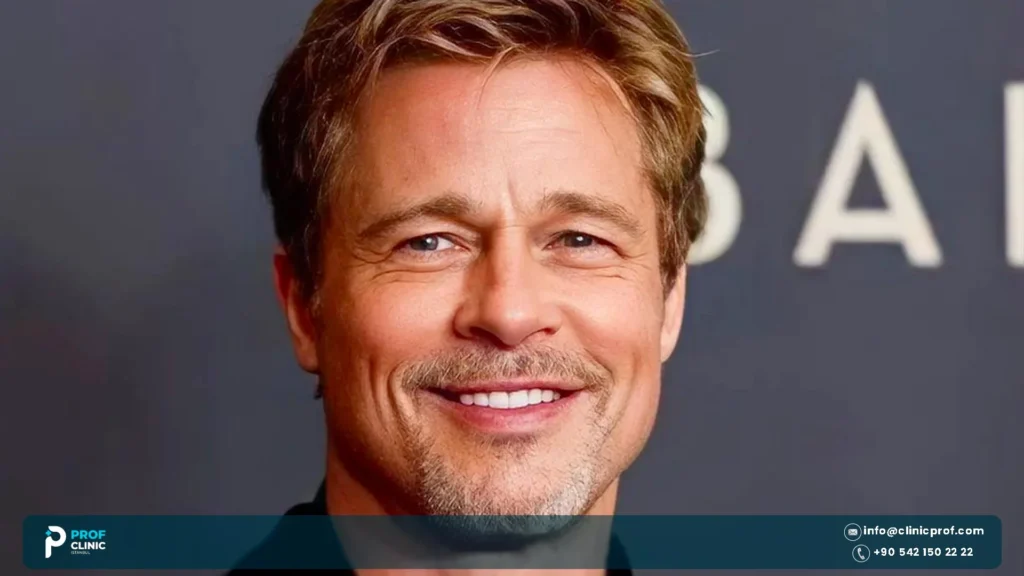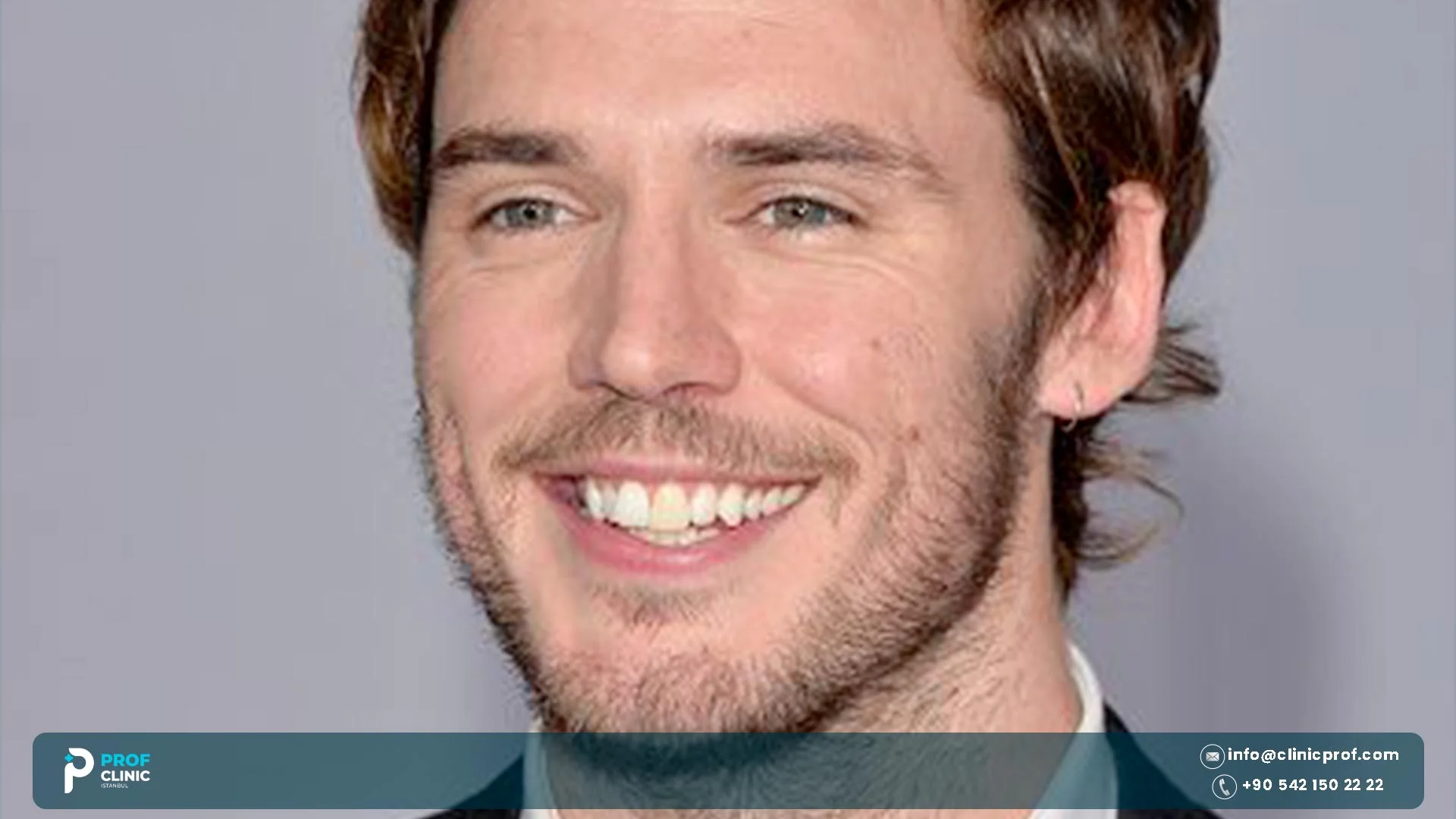
Sam Claflin’s teeth appear more uniform and polished in many recent photos than they did in some of his early roles, which has led to recurring speculation about veneers. However, Sam Claflin veneers have not been publicly confirmed by Claflin himself, so photographs alone cannot establish that he had dental treatment.
The useful question is therefore not simply whether Sam Claflin had veneers, but what can actually be observed across his career and what makes veneers look natural when they are used.
Medical Note:
A change in the appearance of teeth can result from whitening, orthodontics, bonding, veneers, lighting, photography or other factors. Only a dental examination can determine what treatment is appropriate.
Sam Claflin has no known connection to Prof Clinic. His smile is discussed here only as a public example of how a smile can appear to change over time.
A Smile Tracked Across Franchises
Sam Claflin’s screen career gives plenty of reference points for comparing his smile. He made his screen debut in The Pillars of the Earth in 2010, followed by Pirates of the Caribbean: On Stranger Tides in 2011, Snow White and the Huntsman in 2012 and The Hunger Games: Catching Fire in 2013.
He later appeared in films including Me Before You and eventually played Billy Dunne in Daisy Jones & the Six, which premiered in 2023.
That gives viewers a long visual record of the Sam Claflin smile — but it is important to treat that record as photography, not as a dental treatment history.
Sam Claflin’s Teeth in His Early Roles
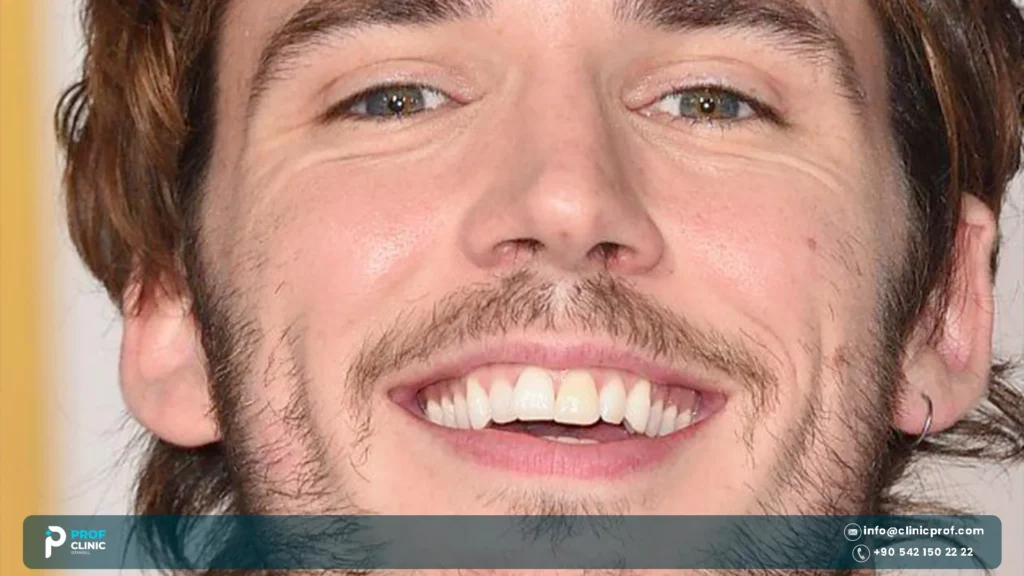
In some early-career photographs and screen appearances, Claflin’s smile appears less uniformly shaped and less consistently bright than in many later publicity images. Some teeth also appear to have more individual character rather than the highly coordinated appearance associated with cosmetic smile design.
Those observations are visual rather than clinical. They do not establish that his teeth were unhealthy, nor do they prove that any specific procedure was later performed.
His early roles also came before he became one of the most recognisable faces of major film franchises. His career moved from television and supporting film roles into major productions such as The Hunger Games, where high-resolution promotional photography made details of his appearance much more visible.
Why Franchise Casting Raises Grooming Standards
Major film franchises generate extensive publicity photography, interviews, premieres and close-up promotional material. That means an actor’s appearance is often scrutinised more closely than it would be in an ordinary television role.
This can make a smile appear more finished over time even when the exact reason is unclear. Professional whitening, changes in lighting, camera processing, makeup, orthodontic treatment, bonding or veneers can produce overlapping visual effects.
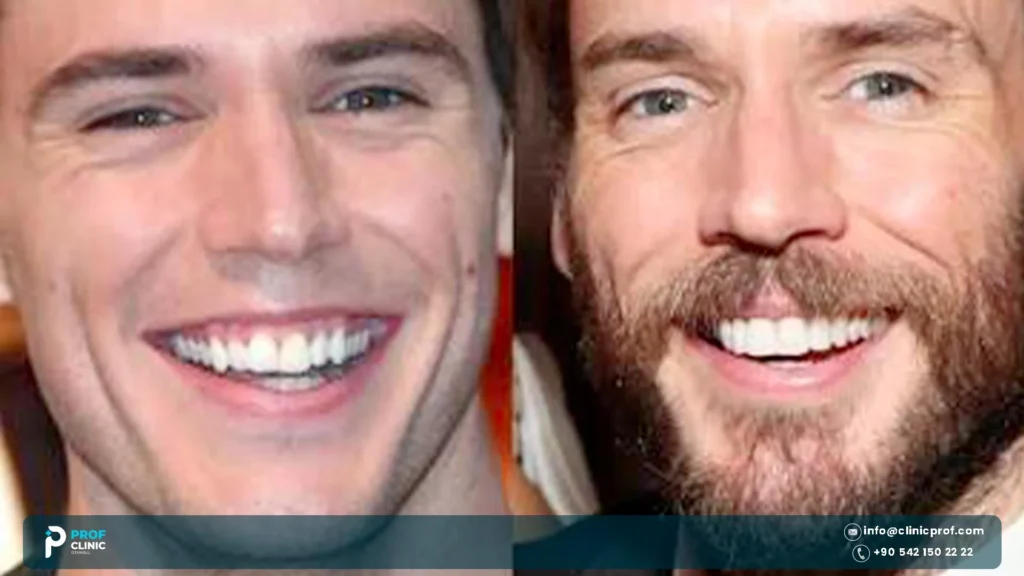
For that reason, a before-and-after comparison of Sam Claflin’s teeth can show that the appearance has changed without proving why.
Read as well: Michael Strahan Teeth: Did He Ever Close His Gap?
Reading the Difference Between Roles
Comparing roles is useful when it is treated as an observation rather than a diagnosis. A smile photographed on a film set can look different from one photographed at a red-carpet event because of lighting, exposure, camera angle, facial expression and image processing.
What Stands Out in Recent Photos
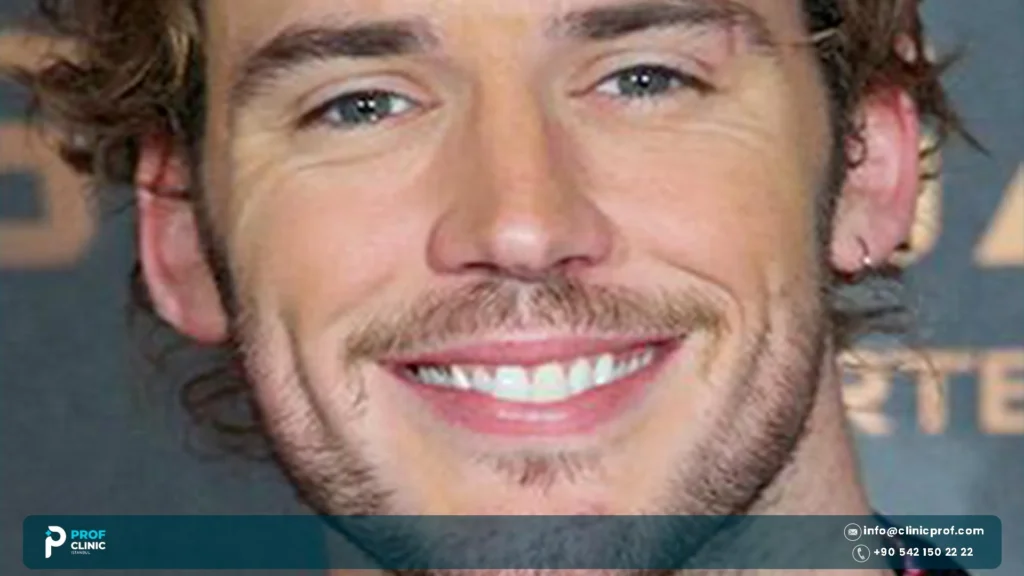
In more recent public photographs, Claflin’s smile often appears relatively even in tooth colour and alignment, with a more coordinated appearance across the visible front teeth.
The most noticeable differences are therefore about shade, uniformity and apparent tooth proportions, rather than a clearly documented dental event.
That distinction matters. A brighter smile does not automatically mean veneers, while straighter-looking teeth do not automatically mean orthodontics.
Does Sam Claflin Have Veneers?
There is no reliable public confirmation from Sam Claflin that he has veneers.
Online discussion has repeatedly suggested that his smile may involve cosmetic dentistry, but speculation based on photographs is not enough to identify a procedure. Even a dentist looking at photographs cannot reliably determine whether a particular person had veneers, bonding, whitening, orthodontics or another treatment without examining the teeth and having an appropriate clinical history.
Veneers are custom-made coverings placed over the visible surfaces of teeth and can alter their colour, shape and overall appearance. The American Dental Association notes that all-ceramic materials can be used for aesthetic veneers, while material selection should take into account factors such as clinical indication, strength, aesthetics and the individual case.
So the most accurate answer to the question: Does Sam Claflin have veneers?, remains: it has been speculated, but it has not been publicly confirmed by him.
How Period Roles Can Disguise Dental Work
Film and television can also make dental comparisons misleading.
Actors may use removable dental prosthetics or other character appliances to alter the appearance of their teeth for a particular role. This is a well-established part of film production, with specialists creating character teeth for period dramas and other screen transformations. In The Guardian’s report on Hollywood dental prosthetics, dental prosthetics are described as part of the specialist work used to create distinctive on-screen characters.
That does not mean Sam Claflin used dental prosthetics in any particular role. There is no basis here to claim that he did.
The broader point is that character teeth are not dental records. A difference between two movie appearances should not automatically be interpreted as evidence of permanent dental treatment.
Also read: Bad Bunny Teeth & Veneers: Before and After His Smile
Getting Veneers That Read as Natural
The speculation around celebrity smiles can actually teach a useful lesson: the best veneer work is not necessarily the most obvious.
Veneers are custom-made coverings placed over the front surfaces of teeth. Depending on the material and case, they can alter shape, colour and other visible characteristics, but traditional porcelain veneers generally require some enamel preparation and are not reversible.
Why Fewer Units Often Looks Better
More veneers do not automatically mean a better smile.
If only a few teeth need aesthetic correction, treating those teeth may be more appropriate than covering every visible tooth. The number should follow the smile zone, tooth condition, facial proportions and the change the patient actually wants.
For a broader cosmetic smile makeover, 6–10 upper teeth is a common planning range, but there is no universal number. Some patients may need only one or two restorations, while others may require a wider treatment plan.
The principle is simple: treat the teeth that genuinely need treatment rather than choosing a fixed number first.
15 Things That Make Veneers Look Real
- Natural shade: The colour should complement the face rather than simply being the brightest possible white.
- Translucency: Natural enamel allows light to pass through it in a way that completely opaque restorations may not.
- Tooth length: Length should work with the lips, smile line and facial proportions.
- Tooth width: Width-to-length ratios influence whether teeth look balanced or bulky.
- Midline: The dental midline should be considered in relation to the facial midline.
- Gum line: Uneven or unhealthy gums can undermine an otherwise attractive veneer design.
- Smile arc: The incisal edges should relate naturally to the curve of the lower lip when smiling.
- Surface texture: Subtle texture can prevent restorations from looking unnaturally smooth.
- Edge character: Natural teeth rarely have perfectly identical edges.
- Slight asymmetry: Controlled variation can make the smile feel more individual.
- Tooth-to-tooth variation: Small differences in shape can help avoid a manufactured appearance.
- Proportion to the face: Teeth should be designed as part of the whole face, not in isolation.
- Lip support: The final contours should work with the patient’s natural lip movement.
- Bite: Aesthetic changes still need to function comfortably within the patient’s bite.
- Photography check: The smile should look balanced not only in a posed photo but also during speech, movement and natural smiling.
The goal is not to make every tooth identical. It is to create enough consistency to look harmonious while preserving the small variations that make a natural smile look like a natural smile.
Read as well: Young Thug’s Teeth Before Fame and After: What Changed?
Building Slight Imperfection Into the Design
Perfect symmetry can sometimes make a smile look overly uniform. Natural teeth have differences in translucency, contour, edge shape and surface texture.
That does not mean veneers should be deliberately made irregular. It means the design should avoid unnecessary uniformity.
A skilled smile design considers where symmetry matters and where subtle variation can preserve character. The result should look coordinated without looking like the same tooth was duplicated across the entire smile.
This is also why a celebrity photograph should be treated as inspiration rather than a template. The proportions that work for one face may look too long, too wide or too bright on another.
Prof Clinic, Istanbul: Veneers for International Patients
At Prof Clinic, we approach veneers as an individual smile-design process rather than as a way to reproduce a celebrity’s teeth.
Our dental services include veneers, E-max and zirconia restorations, with 3D imaging and Digital Smile Design used for personalised planning.
Prof Clinic’s Veneer Services
At Prof Clinic, our veneer planning can include E-max restorations, Digital Smile Design, shade selection and smile previews when appropriate to the case.
The starting point is the patient’s own teeth, gums, bite, facial proportions and aesthetic goals. We do not determine the treatment by counting veneers first or by trying to reproduce a celebrity smile.
Our approach to smile planning may involve:
- Assessment of the existing teeth and gums
- Smile and facial analysis
- Digital imaging when clinically appropriate
- E-max or other suitable restorative materials
- Digital smile design
- Shade selection
- Trial or temporary preview when appropriate
- Final assessment of fit, contacts and bite
How Prof Clinic Designs for Natural Results
| Planning stage | What we assess | Why it matters |
| Facial analysis | Face shape, lips and smile proportions | Keeps the teeth visually connected to the face |
| Mock-up | Proposed tooth shape and proportions | Helps preview the direction before final restorations |
| Shade | Brightness and colour characteristics | Avoids choosing a shade in isolation |
| Texture | Surface character and light reflection | Helps restorations appear less artificial |
| Material | E-max, zirconia or another suitable option | Matches material choice to the clinical case |
| Review | Shape, bite, contacts and overall appearance | Checks function as well as aesthetics |
Our current information on Prof Clinic’s 3D Hollywood Smile and Digital Smile Design approach explains how digital planning can be used to evaluate tooth form, shade and proportions before the final smile is produced.
Natural Veneer Results
At Prof Clinic, we publish consented before-and-after dental cases to show how different treatment plans can produce different aesthetic outcomes.
A useful result is not simply one with very white teeth. When reviewing veneer cases, we look at tooth proportions, shade, translucency, gum contours, symmetry and how the smile relates to the face.
Our published cases are examples, not promises that another patient will receive the same result. Every smile starts from a different combination of tooth structure, gum health, bite, facial proportions and aesthetic goals.
That is also why we do not connect Sam Claflin’s smile to any treatment plan at Prof Clinic. Sam Claflin has no known connection to Prof Clinic, and his appearance cannot be used to predict what another patient would need.
The story behind Sam Claflin’s teeth is more about visual change than a confirmed dental transformation. His smile appears more uniform and polished in many later photographs than in some early roles, but there is no reliable public confirmation that he had veneers.
At Prof Clinic, we assess your teeth, gums, bite, facial proportions and aesthetic goals before recommending a veneer plan. If you’re considering veneers in Istanbul, contact Prof Clinic for a personalised smile assessment and find out which approach may suit your teeth and goals.
Frequently Asked Questions About Sam Claflin’s Teeth
- Does Sam Claflin have veneers?
There is no reliable public confirmation from Sam Claflin that he has veneers. The idea has been widely speculated about online based on differences between older and newer photographs, but photographs cannot establish the exact dental treatment.
- What did Sam Claflin’s teeth look like before?
In some of his early roles and public appearances, Claflin’s smile appears less uniformly bright and less coordinated in shape than in many later photographs. These are visual observations only and should not be treated as evidence of a specific dental condition or procedure.
- How many veneers do actors usually get?
There is no standard number specifically for actors. A cosmetic smile makeover commonly focuses on the teeth visible in the smile zone, with 6–10 upper veneers being a common range. Some people need fewer, while wider smiles or more extensive aesthetic goals may involve more teeth.
The number should be determined by how many teeth show, tooth condition, facial proportions, bite and the desired result rather than by a celebrity’s treatment.
- Do veneers look fake?
They can look artificial when the shade, size, symmetry, surface texture or proportions are poorly matched to the patient. Well-planned veneers can be designed to mimic natural variation in colour, translucency, shape and texture.
The objective should not be maximum whiteness or perfect symmetry. It should be a smile that looks balanced and believable on the individual patient.