If you’re weighing fixed vs removable implant dentures, you’re not alone. Most people are trying to balance four things at once: comfort, looks, cleaning effort, and long-term value. The confusing part is that both options are implant dentures, yet they feel very different day to day.
A simple way to think about it:
- Fixed means teeth that stay in.
- Removable refers to snap-on.
In this guide by Prof Clinic in Turkey, you’ll get a clear, side-by-side breakdown of fixed vs removable implant dentures, including how each option feels day to day, how cleaning and maintenance differ, how many implants are usually needed, what happens if an implant fails, and which choice may offer better long-term value. By the end, you’ll know what questions to ask during your consultation and which solution best matches your comfort, lifestyle, and oral health needs.
This article is for education and doesn’t replace an exam by a dentist, prosthodontist, or oral surgeon, especially if you have gum disease, diabetes, or smoke.
Fixed vs Removable Implant Dentures in Turkey
The core difference is who removes the teeth.
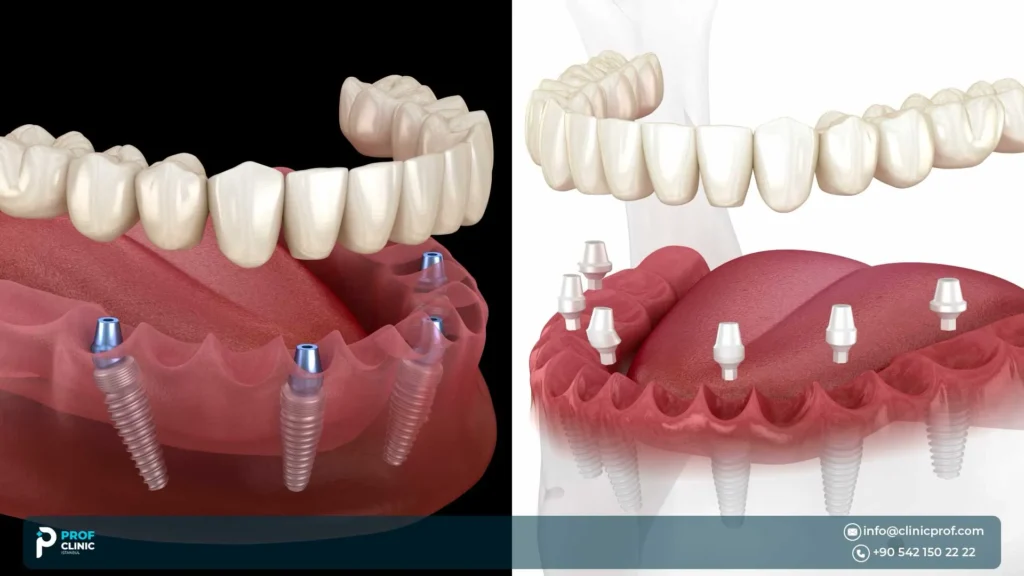
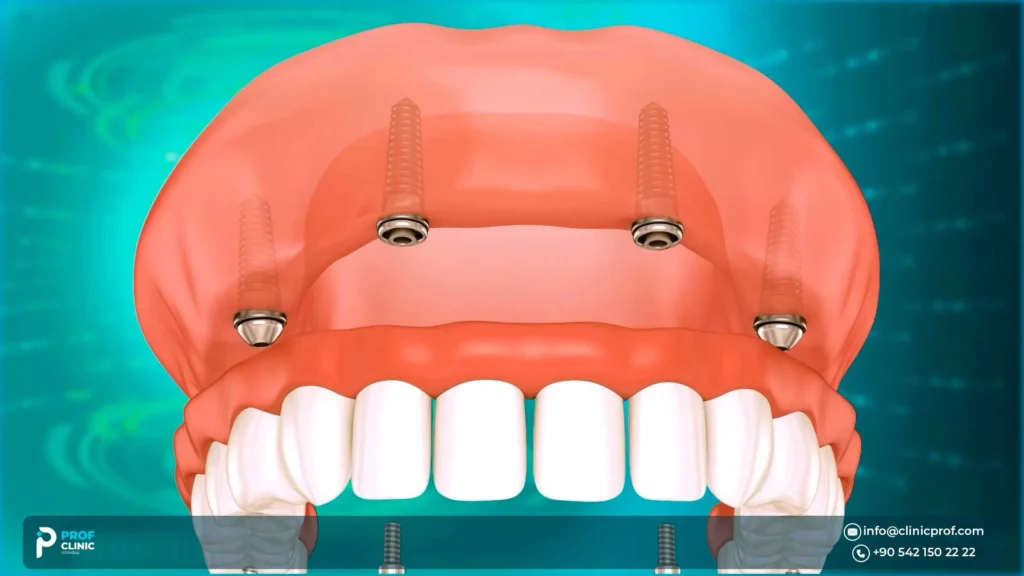
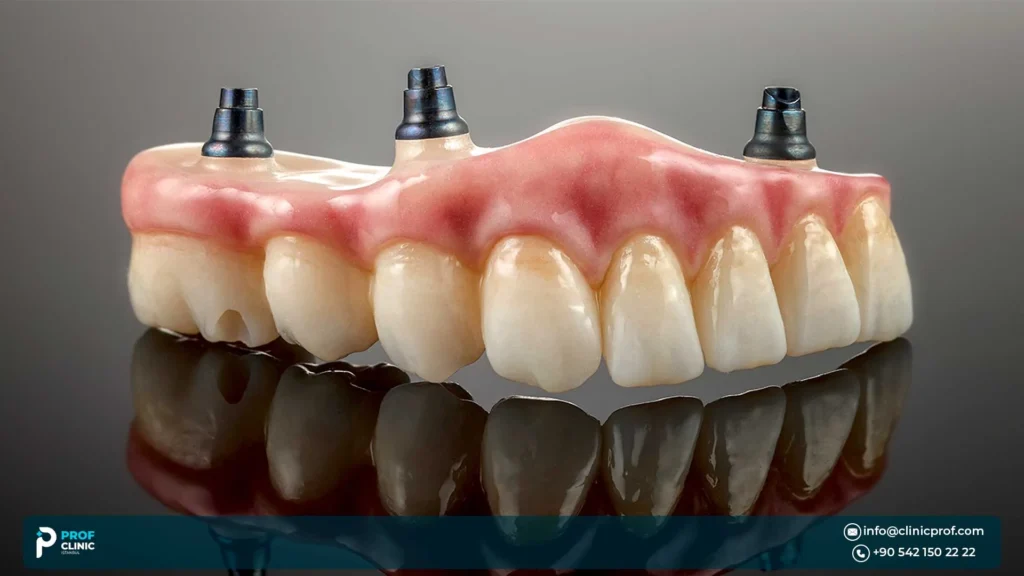
- Fixed implant dentures, often called hybrid dentures or full-arch fixed implant bridges, are screw-retained or cemented on implants. You don’t take them out at night.
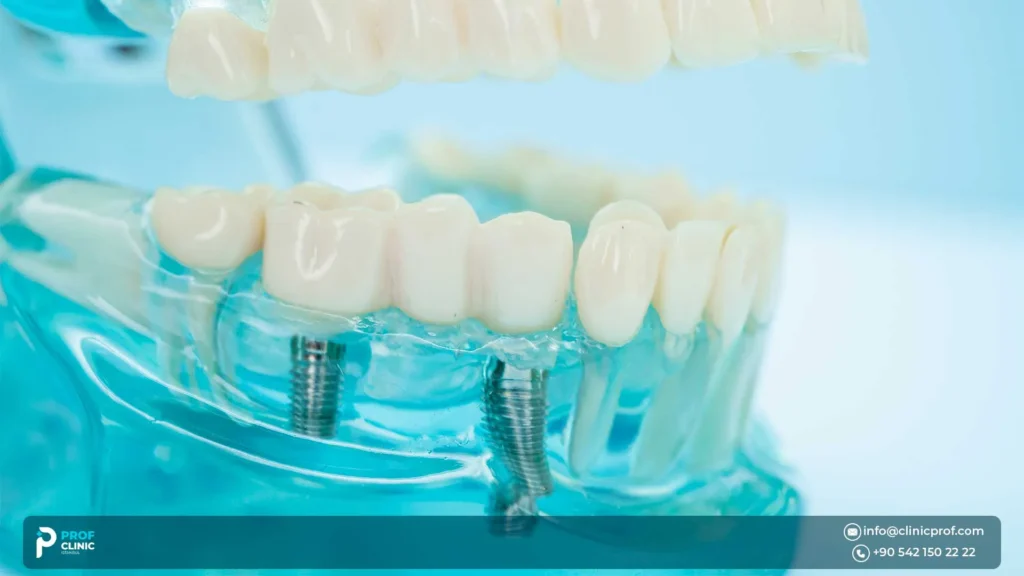
- Removable implant dentures, often called snap-on dentures or implant overdentures, clip onto implants or a bar and you remove them for cleaning.
Here’s a practical comparison that covers what you actually might feel and deal with:
| Feature | Fixed implant dentures | Removable implant dentures |
| Daily feel | Most natural-teeth feel; very stable | Secure vs traditional dentures, but may have slight movement depending on design |
| Chewing | Usually strongest bite and confidence | Strong improvement vs traditional; may be slightly less locked in than fixed |
| Cleaning | More technique: cleaning under the bridge daily | Often easier: remove and brush like a denture, plus clean around implants |
| Repairs | Dentist removes for major service | Many fixes are simpler; attachments may wear and need periodic replacement |
| Cost drivers | Often more implants and more complex lab work | Often fewer implants and simpler prosthesis |
| Best fit for | People who want permanent feel and can maintain meticulous hygiene | People who want stability, easier cleaning, and often lower upfront cost |
Fixed implant dentures
Fixed solutions are popular because they’re the closest thing to forgetting you ever had dentures. But the full-arch fixed implant bridges demand good planning and good home care.
Who they suit best for hybrid dentures
Fixed implant dentures tend to suit you if you:
- Want maximum stability for chewing and speaking
- Prefer not removing teeth daily
- Have enough bone or are willing to do grafting if needed
- Can commit to daily cleaning under the prosthesis and regular follow-ups
Advantages of hybrid dentures
- High stability and confidence: minimal to no movement while eating or speaking.
- Often the most tooth-like experience: many patients report they feel closer to natural teeth than removable designs, especially for bite force and confidence.
- No palate coverage for upper arches, which can help taste and comfort.
- Aesthetics can be excellent, especially with well-designed gum contours and tooth positioning.
Disadvantages of hybrid dentures
- More demanding hygiene: plaque trapped under the bridge can contribute to inflammation and peri-implant disease if cleaning is inconsistent. Peri-implantitis involves inflammation around implants with progressive bone loss.
- More complex repairs: chips, fractures, screw loosening, and wear can occur and typically require dental visits; full-arch fixed cases can experience mechanical complications (e.g., fractures, screw loosening).
- Higher initial treatment complexity: frequently more implants and/or advanced planning.
- Not always ideal if manual dexterity is limited (arthritis, tremor) unless the patient has strong support at home.
How many implants are usually needed for fixed dentures?
It depends on the design:
- All-on-4 style full-arch concepts often use 4 implants in an arch, sometimes more for added support based on anatomy and bite forces.
- Traditional fixed full-arch implant prostheses in the literature may use more implants; ranges can be higher in some protocols).
In real life, the right number is chosen after evaluating:
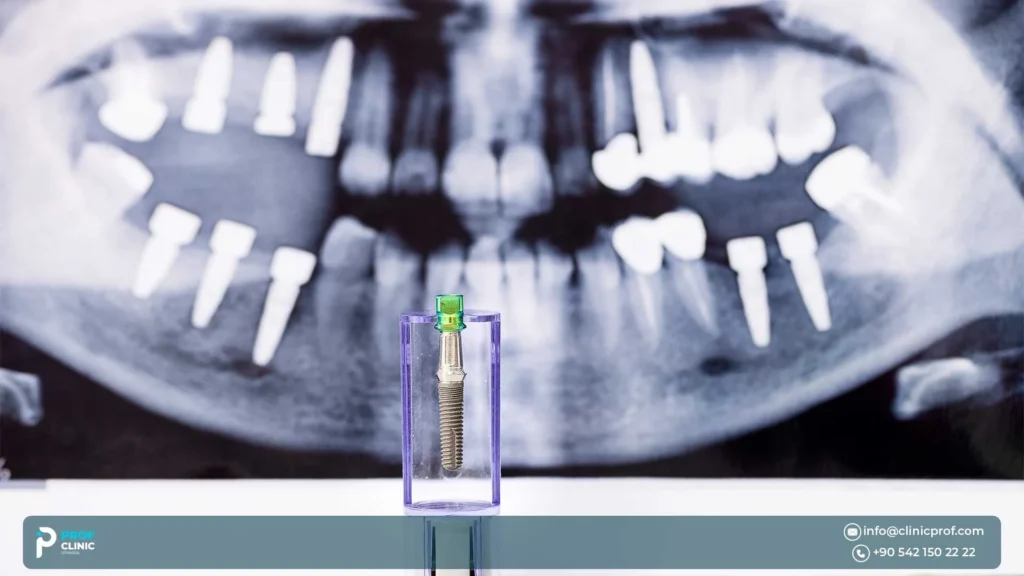
- Bone quality/quantity (CBCT scan)
- Bite force and grinding (bruxism)
- Arch shape and prosthesis material
- Whether you want immediate vs delayed loading
Cleaning & maintenance basics for fixed dentures
Cleaning is very doable, but it’s a skill.
- Brush twice daily; focus on the gumline.
- Clean under the bridge daily using tools like floss threaders/super floss, interdental brushes, and/or a water flosser.
- Keep professional maintenance visits. Your team may periodically remove the bridge to deep-clean and check screws
If you’re leaning toward Fixed implant dentures, book your free online consultation to show you exactly how you’ll clean under the bridge and whether you can realistically do it daily.
Also read: Implant-Supported Dentures vs Traditional Dentures: Which Is Better for Stability and Comfort?
Removable implant dentures
Removable implant dentures, refered to as a snap-on or overdentures, can be a game-changer for people who hate loose traditional dentures, without committing to a fully fixed bridge.
Types of attachment systems in snap on dentures
Common ways a removable denture attaches:
- Ball attachments
- Bar-retained overdentures (clips to a bar)
- Stud-style attachments (snap-in): compact and common
The attachment type affects:
- How easy repairs are
- How snappy the retention feels
- How often parts wear and need replacement
Advantages of overdentures
- Easy daily cleaning: remove the denture, brush it thoroughly, and clean around implants directly.
- Strong stability vs traditional dentures: many people can eat more confidently and use less (or no) adhesive.
- Often fewer implants required, which can reduce surgical burden.
- Good option for many older adults who want stability but also want simple hygiene routines.
Drawbacks of overdentures
- Attachments wear over time: Insertscan lose retention and need periodic replacement.
- May still have some movement: Usually far less than conventional dentures, especially if the design is tissue-supported.
- Bulk: Depending on the case, the denture can feel thicker than a fixed bridge.
- Ongoing relines: Gums and bone can change over time, affecting fit.
How many implants are required for removable overdentures?
A widely cited baseline for the lower jaw is that two implants can be a standard first-choice option for many edentulous patients
For the upper jaw, bone is often softer and forces distribute differently, so more implants are commonly recommended; some reviews note that four well-spaced implants are often suggested for maxillary overdentures.
Cleaning & maintenance basics for Removable implant dentures
- Remove and brush the denture daily.
- Clean around implants/abutments gently but thoroughly.
- Expect periodic maintenance for worn inserts/attachments and occasional relines as tissues change.
If you want the easiest hygiene routine, message us via WhatsApp to ask about a removable overdenture design that still gives you strong retention, then clarify the expected attachment maintenance schedule.
Also read: Full Arch Dental Implants: Restoring a Complete Smile
Which implant denture feels more like real teeth?
Most people care about three real-life outcomes:
Comfort
- Fixed often feels more like natural teeth because it doesn’t come in/out and tends to move less.
- Removable can be extremely comfortable too, especially if you value removing it to clean and relieve pressure areas.
Speech
Speech depends on tooth position, thickness, and palate coverage,not just fixed vs removable.
- A bulky upper denture, traditional or implant-supported, can affect certain sounds at first.
- Fixed bridges often reduce bulk in some designs, but they can still require an adaptation period.
A good try-in and careful prosthetic design are what protect speech most.
Natural appearance
Both can look very natural when:
- Teeth are set in the correct position for your face and lip support
- Gum contours are designed realistically
- The bite is balanced
More natural is usually about planning and craftsmanship, not only the category.
Also read: Short Dental Implants: When Standard Won’t Fit
What happens if an implant dentures fail?
How long do fixed vs removable implant dentures last?
There are two parts:
- The implants (in the bone)
- The prosthesis (the teeth/gums on top)
With good hygiene and follow-up, dental implants can last many years, but risk rises with peri-implant disease and smoking. Peri-implantitis is plaque-associated inflammation with progressive bone loss.
For the prosthesis:
- Removable overdentures often need periodic relines and attachment maintenance.
- Fixed full-arch prostheses can face mechanical issues like material wear/fracture or screw-related complications over time.
What happens if an implant fails in fixed dentures?
It depends on:
- How many implants are present
- Whether the prosthesis can be redesigned
- Bone condition and whether another implant can be placed
Sometimes the bridge can be remade on remaining implants; other times, you may need:
- Replacement implant(s)
- A temporary removable solution during healing
- A switch in plan (e.g., from fixed to removable)
Can fixed implant dentures be removed later if needed?
Yes. Fixed implant dentures are typically removable by the dentist for maintenance, repair, or redesign. In some cases, a plan can be changed from fixed to removable or vice versa, but it depends on implant positions, space, and bite.
Fixed vs Removable Implant Dentures in Turkey: Which Is More Cost-Effective?
Exact prices vary widely by country, materials, and complexity, so it’s more honest to compare total cost of ownership.
Why fixed dentures is often higher upfront
Fixed often involves:
- More implants and/or more complex components
- More demanding lab work (frameworks, materials, occlusion design)
- Potentially more surgical steps in complex cases
Why removable can cost less upfront but still has ongoing maintenance
Snap-on overdentures may use fewer implants, especially in the lower jaw; two implants is a widely supported baseline in consensus statements.
But you should plan for:
- Replacement of worn inserts/attachments over time
- Occasional relines as tissues change
A practical value rule
- If you prioritize maximum stability, strongest bite, and not removing teeth daily, overdentures may feel worth it, if you’ll maintain hygiene consistently.
- If you prioritize easy cleaning, simpler repairs, and often lower initial cost, removable can be the better long-run value.
When comparing quotes, ask for a written breakdown of long-term maintenance (attachments, relines, checkups, potential repairs). That’s where “cheap vs expensive” often flips over time.
When comparing treatment quotes, don’t look at the upfront fee alone, ask our team for a clear, written breakdown of long-term maintenance. This is often where the real value becomes obvious and where a cheaper option can cost more over time.
Can anyone get fixed implant dentures?
Not everyone. Common limiting factors:
- Uncontrolled medical conditions
- Severe bone loss without grafting options
- Poor oral hygiene or untreated gum disease
- High-risk habitswithout willingness to reduce ot quit
Can smokers get fixed implant dentures?
Some smokers do get implants, but smoking is consistently associated with a higher risk of implant failure in research. A systematic review/meta-analysis reported higher failure risk in smokers versus non-smokers.
If you smoke, start your free online consultation with our team for a risk-reduction plan
Which implant denture type is better for elderly patients?
Age alone isn’t the deciding factor; however, health, dexterity, and hygiene ability matter more.
- If daily under-bridge cleaning is unrealistic, removable can be safer and more maintainable.
- If an older patient is healthy, motivated, and wants maximum stability, fixed can be excellent.
Are implant-supported dentures better than traditional dentures?
For many people, yes, especially for lower dentures that tend to loosen. Consensus statements support mandibular two-implant overdentures as a strong standard option for edentulous patients, largely due to improved stability and satisfaction compared with conventional dentures.
Also read: Immediate Load Dental Implants: Pros, Cons & Candidacy
What Is the Recovery Time for Fixed vs Removable Implant Dentures in Istanbul?
For patients traveling to Istanbul for implant treatment, recovery timing depends not only on healing biology, but also on whether the case involves immediate loading, grafting, or a staged prosthetic plan.
Is the procedure painful for fixed implant dentures?
The dental implant surgery is similar whether you choose fixed or removable. The difference is mostly the prosthesis phase.
Most patients describe discomfort as manageable with prescribed pain control and aftercare instructions.
Recovery time for fixed vs removable implant dentures varies based on:
- Immediate vs delayed loading
- Need for extractions, grafting, or sinus lift
- General health and smoking status
A typical pathway looks like this, although your clinician should give you a personalized schedule.
| Phase | What happens | Typical range |
| Planning | Exam, scans, bite analysis | Days–weeks |
| Surgery | Implant placement (± extractions/grafting) | 1 day |
| Early healing | Swelling/tenderness decreases | ~1–2 weeks (variable) |
| Osseointegration | Implant bonds with bone | Often months (case-dependent) |
| Final prosthesis | Fixed bridge or snap-on denture finalized | After stability confirmed |
How to Choose Between Permanent vs Snap-On Dentures in Turkey?
Use this quick checklist to make the decision feel concrete.
- I want teeth that stay in and maximum chewing confidence, then lean fixed
- I want the simplest cleaning routine and easy access to implants, then lean removable
- I grind my teeth or I have strong bite forces, then ask about materials, implant number, and protective night guards
- I’m worried about future repairs, then removable is often easier/cheaper to service, but fixed can be maintained well with proper follow-up
- I smoke or have higher medical risk, then discuss risk reduction; consider designs that allow easier hygiene access
- I’m not sure, then request a side-by-side plan: one fixed, one removable, with long-term maintenance outlined
The fastest way to decide is to start a free consultation with our team and ask for two treatment plans (fixed and removable) based on your scans, then compare hygiene demands, implant count, and maintenance, not just the headline cost.
Also read: All on 6 Dental Implants: Everything you want to know
Why Prof Clinic in Istanbul for Fixed & Removable Implant Dentures in Turkey?
At Prof Clinic in Istanbul, we help you choose the implant denture option that truly fits your mouth—not just a “one-size-fits-all” recommendation. Whether you’re considering fixed hybrid dentures for a more “permanent” feel or removable snap-on overdentures for easier daily cleaning, our team focuses on careful planning, natural-looking aesthetics, and a long-term maintenance mindset.
You’ll receive a personalized comparison based on your clinical exam and imaging, with clear guidance on implant number, hygiene routines, and what to expect during recovery, so you can move forward confidently with the option that best supports your comfort, function, and lifestyle.
Message us on WhatsApp or request an online free consultation to get a tailored fixed vs removable implant denture plan, based on your scans and goals.
Choosing fixed vs removable implant dentures isn’t about which option is the best in general; it’s about which one fits your priorities and lifestyle. Fixed or hybrid dentures usually gives the most natural locked-in feel and strong chewing confidence, but it requires more meticulous under-bridge cleaning and can involve more complex maintenance.
Removable (often called permanent vs snap on dentures in everyday language) is easier to clean and service, often uses fewer implants—especially in the lower jaw where two-implant overdentures are widely supported in consensus statements, yet may need periodic attachment replacement and relines.
If you’re close to deciding, the most helpful next step is a personalized assessment with imaging, followed by a written comparison of both options, including long-term maintenance, so you can choose confidently.
FAQs about fixed vs removable implant dentures
How do maintenance and cleaning differ between the two?
Fixed requires cleaning under the bridge daily (threaders/interdental aids); removable is taken out and brushed, plus cleaning around implants.
Are fixed implant dentures more comfortable than removable?
Many find fixed more forget-it’s-there comfortable; others prefer removable because it’s easy to clean and remove if sore spots occur.
How long do fixed vs removable implant dentures last?
Implants can last many years with good care; the prosthesis may need repairs or replacement over time, and removable attachments commonly need periodic replacement.
Are fixed implant dentures worth the money?
They can be if you value maximum stability and will maintain daily hygiene and regular follow-ups.
Do removable implant dentures feel natural?
They can feel very natural compared with traditional dentures, especially once retention is optimized and the bite is balanced.
How many implants are needed for fixed dentures?
Often 4–6+ per arch depending on protocol (e.g., All-on-4 uses four implants in many cases; some approaches use more).
How many implants are required for removable overdentures?
A common baseline for the lower jaw is two implants (supported by consensus statements). Upper jaws often use more, commonly around four in many protocols.
Is the procedure painful for fixed implant dentures?
Surgery discomfort is usually manageable; pain control and aftercare matter more than whether the final teeth are fixed or removable.
What is the recovery time for fixed vs removable implant dentures?
Varies by case (grafting, immediate loading, health). Many plans involve weeks of early healing and months for full integration before the final prosthesis.
Which option looks more natural — fixed or removable?
Either can look extremely natural with good prosthetic design. The clinician’s planning and lab quality often matter more than the category.
Can fixed implant dentures be removed later if needed?
Yes. Dentists can remove them for maintenance/repairs; sometimes plans can be converted, depending on implant positions and space.
Do removable implant dentures slip while eating?
They are usually far more stable than traditional dentures, but retention can drop as attachments wear—then inserts may need replacement.
What happens if an implant fails in fixed dentures?
The plan may be adjusted: replace the implant, redesign the bridge, or temporarily switch to a removable solution—depending on how many implants remain and bone conditions.
How do fixed dentures affect speech compared to removable?
Both can affect speech at first; bulk, palate coverage, and tooth positioning are key. Most patients adapt with time and fine-tuning.
Which option requires less maintenance long term?
Removable often has predictable attachment maintenance; fixed can require professional servicing for mechanical complications and deep cleaning. Both require lifelong hygiene and follow-ups.
External sources
- Complications in implant-supported full-arch immediate prostheses: a Brazilian retrospective, observational, longitudinal study
- Peri-implant diseases and conditions: Consensus report of workgroup 4 of the 2017 World Workshop on the Classification of Periodontal and Peri-Implant Diseases and Conditions
- Full Arch All-on-4 Fixed Implant-Supported Prostheses with 8.5 Years of Follow-Up: A Case Report
- Healing Process for Dental Implants
- The McGill consensus statement on overdentures. Mandibular two-implant overdentures as first choice standard of care for edentulous patients
- Tissue-supported dental implant prosthesis (overdenture): the search for the ideal protocol. A literature review
- Floss/Interdental Cleaners