Can a hair transplant lower a high hairline and make a forehead look shorter? In most suitable candidates, yes. A hairline lowering hair transplant moves the front edge of your hair forward by planting grafts in the bare strip above the forehead, so no forehead skin is cut away. The change is usually modest, often around a centimetre or two, and it depends on your donor hair, your scalp and how much density you want.
In this guide by Prof Clinic, you will learn how to tell an inherited high hairline from a receding one, who makes a good candidate, how many grafts forehead reduction usually needs, how the procedure and the no-shave option work, and how a transplant compares with surgical hairline lowering. By the end, you will know what to expect month by month and what to ask before you book.
What a Hairline Lowering Hair Transplant Actually Does
It adds hair in front of your existing hairline instead of removing forehead skin. The surgeon takes follicles from the donor area at the back and sides of the scalp and plants them along the new, lower line, so the forehead looks shorter and the face looks better balanced. Because the follicles are your own, they usually keep the growth pattern of the area they came from.
Why do women ask for it? Researchers describe a high, wide forehead as a common inherited feature that can unbalance the proportions of the face and cause appearance-related anxiety. For many women it is a matter of proportion, not a medical problem. Prof Clinic’s page on female hair transplant in Turkey notes that for women with a naturally high or wide forehead, a forehead hair transplant is often performed to lower the hairline and create softer proportions.
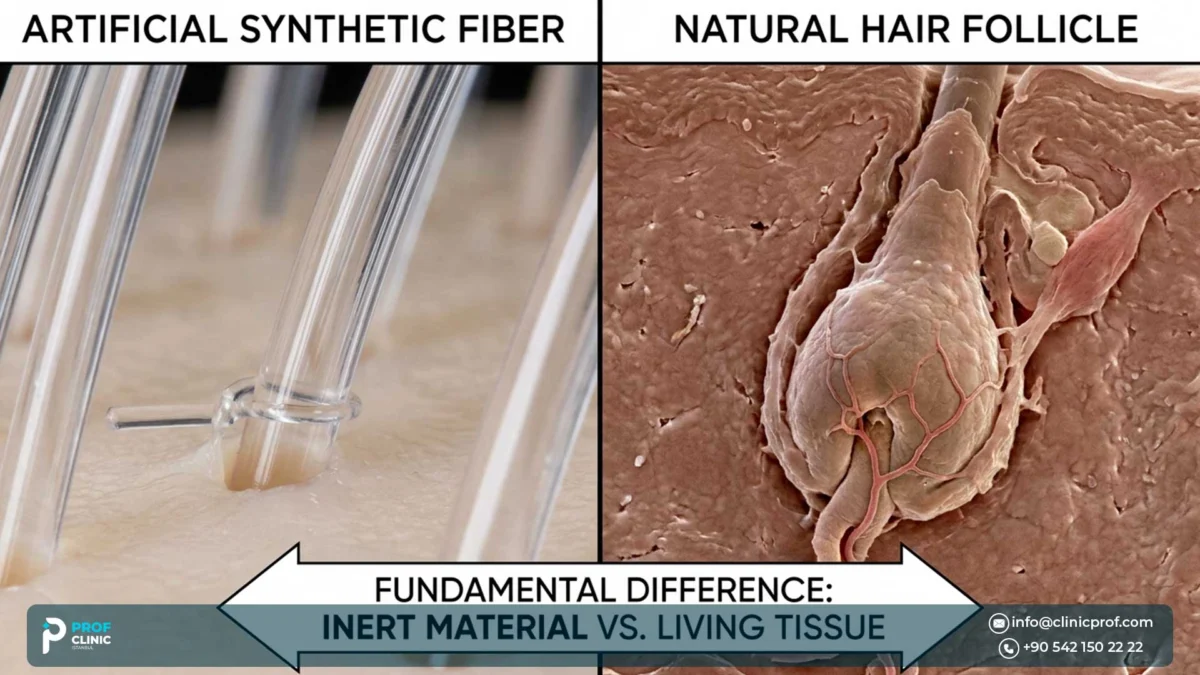
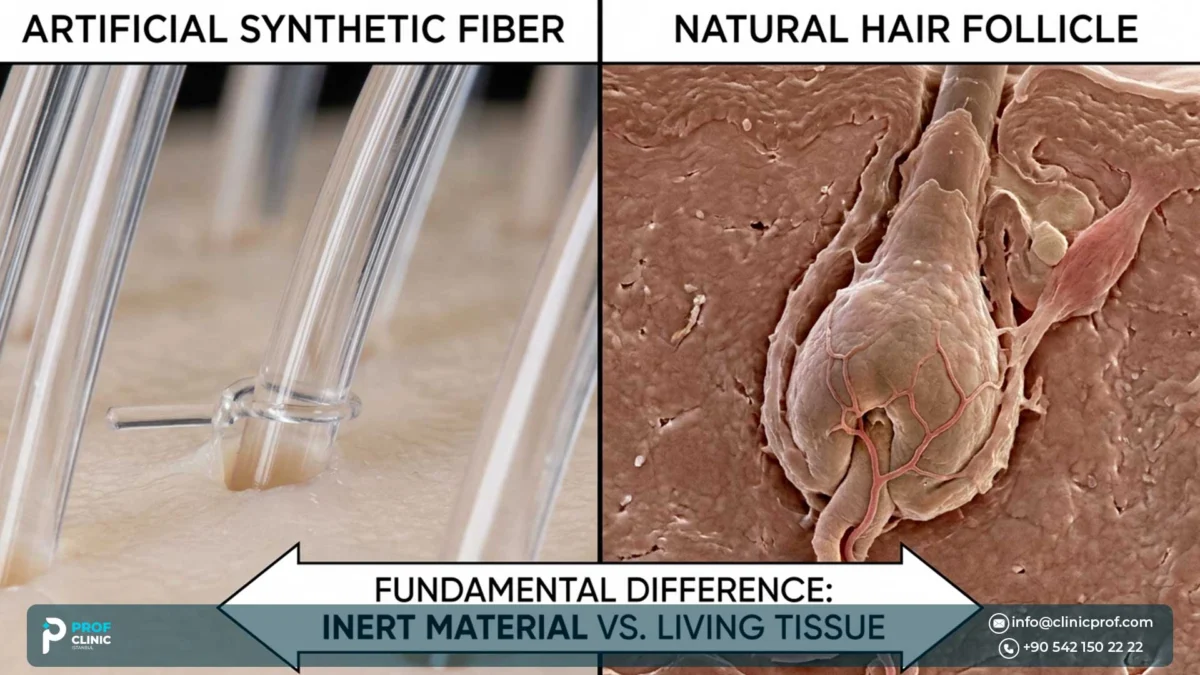
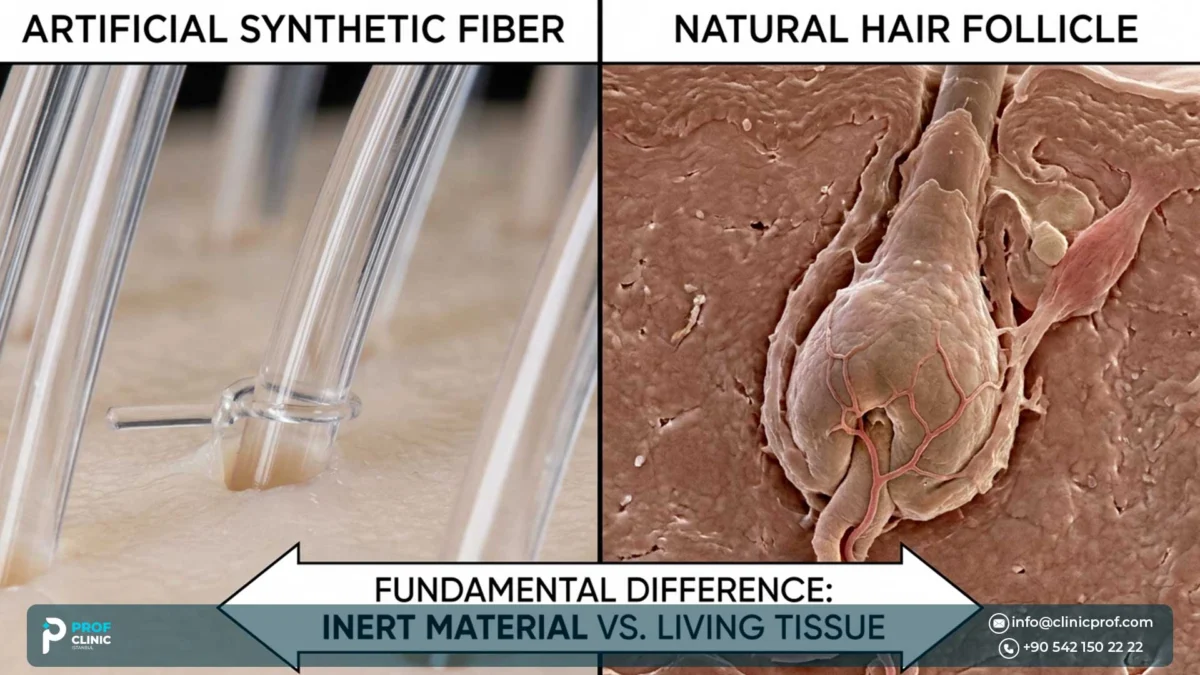
This is not an artificial “hair implant”. A transplant redistributes your own living follicles, so it cannot add hair beyond what your donor area can supply, and that supply is the main limit on how far the line can move.
Also read: Hair Transplant for Women in Turkey: Candidates, Methods & Cost
High Forehead or Hair Loss? Check the Cause First
Before you plan anything, work out why your hairline is high, because a stable inherited hairline and a receding one need very different plans.
A Naturally High Hairline
If your hairline has looked the same since your teens, it is probably inherited, and this is the simplest case to plan because nothing is changing. A useful test is to compare photos from your late teens or early twenties with recent ones in similar light. If the line has not moved, the surgeon can design the new hairline without worrying that the hair behind it is thinning.
A Hairline That Is Moving Back
A hairline that has crept backwards needs a diagnosis first. DermNet describes frontal fibrosing alopecia as a scarring hair loss along the frontal hairline, most often seen in postmenopausal women but also in younger women, where hair does not regrow unless treatment starts early. It says that hair grafting may be considered once the disease activity has settled, and that a dermatologist should assess any suspected case.
See a dermatologist before any surgery if you notice:
- Eyebrow thinning: DermNet says eyebrow loss often comes before changes on the scalp.
- Redness or scale: visible around the hairs along the hairline during the active phase.
- A band-like recession: an even strip of lost hair across the front rather than a gentle curve.
- Single “lonely” hairs: isolated hairs remaining in an otherwise bare strip.
Other causes, such as pattern hair loss or hormonal and medical triggers, are covered separately. Also read: Female Hair Loss Causes: Patterns and Treatment Options
Not sure whether your hairline is stable or moving? Send front, side and top photos to our team on WhatsApp and ask for a first opinion before you plan anything.
Who Is a Good Candidate for Forehead Reduction by Transplant?
The best candidates usually have a stable hairline, enough healthy donor hair and realistic goals about how far the line can move. Your doctor confirms this after assessment, but these are the main checks:
- A stable hairline: the International Society of Hair Restoration Surgery (ISHRS) says ideal candidates show predictable patterns of thinning, not widespread, rapidly progressive loss.
- Healthy donor hair: the ISHRS warns that women often have diffuse thinning even in traditional donor areas, so the viability of the donor follicles needs close assessment, and it lists overharvesting as a pitfall.
- A realistic target: a modest, natural-looking lowering is more achievable than a dramatic one.
- General health: pre-surgery blood tests and an ECG confirm you are fit for the procedure.
- Patience: the full result takes 10 to 18 months, according to the NHS.
When Another Route May Fit Better
A transplant may not be the right tool if the donor area is thin, if you want a large change in one step, or if an active scarring condition is still progressing. In those cases, surgical hairline lowering, treatment of the underlying cause first, or no procedure at all may suit better. Men with a naturally high hairline can be assessed on the same principles, though pattern baldness is usually ruled out first.
How Many Grafts Does Forehead Reduction Need?
There is no single number, because the count depends on how far the line moves, how wide the forehead is, the density you plan and how much donor hair you have. As a reference, a 2025 study in the Journal of Cosmetic Dermatology followed 60 women with high and wide foreheads. They received an average of about 3,200 follicular units at 50–60 units per cm², and the mean forehead height fell by about 1.3 cm.
The same study measured an average intertemporal width of about 14.7 cm. As rough arithmetic, a straight 1 cm band across that width is about 15 cm², or roughly 700–900 follicular units at those densities. Real hairlines are curved and include the temples, so treat this as an illustration, not a quote.
| What changes the count | How it usually affects the number of grafts |
|---|---|
| Distance you want to lower | Each extra centimetre adds a new band of skin to cover |
| Forehead width and temple design | A wider forehead or filled temples need more grafts |
| Planned density | Higher density in the front needs more grafts per cm² |
| Hair type | Prof Clinic’s service page notes fine hair covers less than thick or curly hair, and darker shades look denser than lighter ones |
| Donor supply | A limited or thinning donor area caps what can safely be taken |
A second, smaller session is not unusual when the centre of the hairline needs more density. The ISHRS notes that the central segment is hard to fill to high density in one surgery and may need a touch-up.
Want a graft estimate for your own forehead? Ask for a written quote after photo assessment so you can see what drives the number.
How the Procedure Works: Measuring, Designing and Planting
The hairline is planned on your face before any hair is moved, and the surgery follows a fixed order:
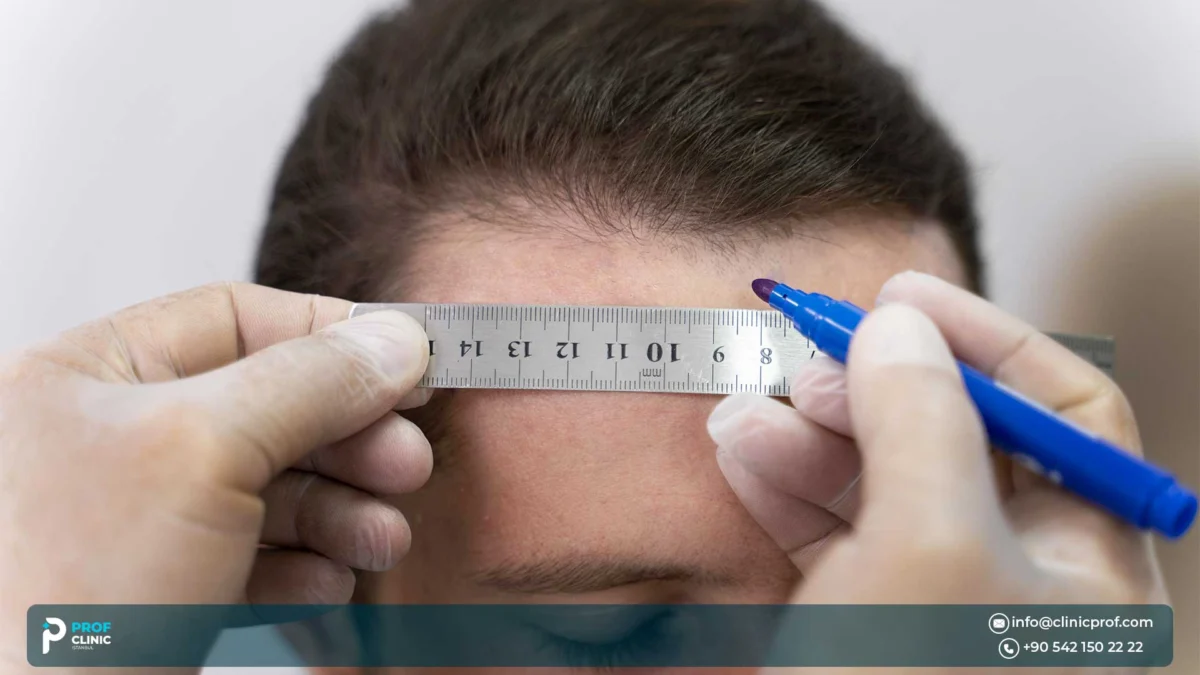
- Assessment: the doctor measures forehead height and width, checks that the hairline is stable and examines the donor area.
- Design: the new line is drawn with you and checked in the mirror and in photos from several angles.
- Anaesthesia: the NHS says a transplant is usually done under local anaesthetic with sedation, so you are awake but should not feel pain.
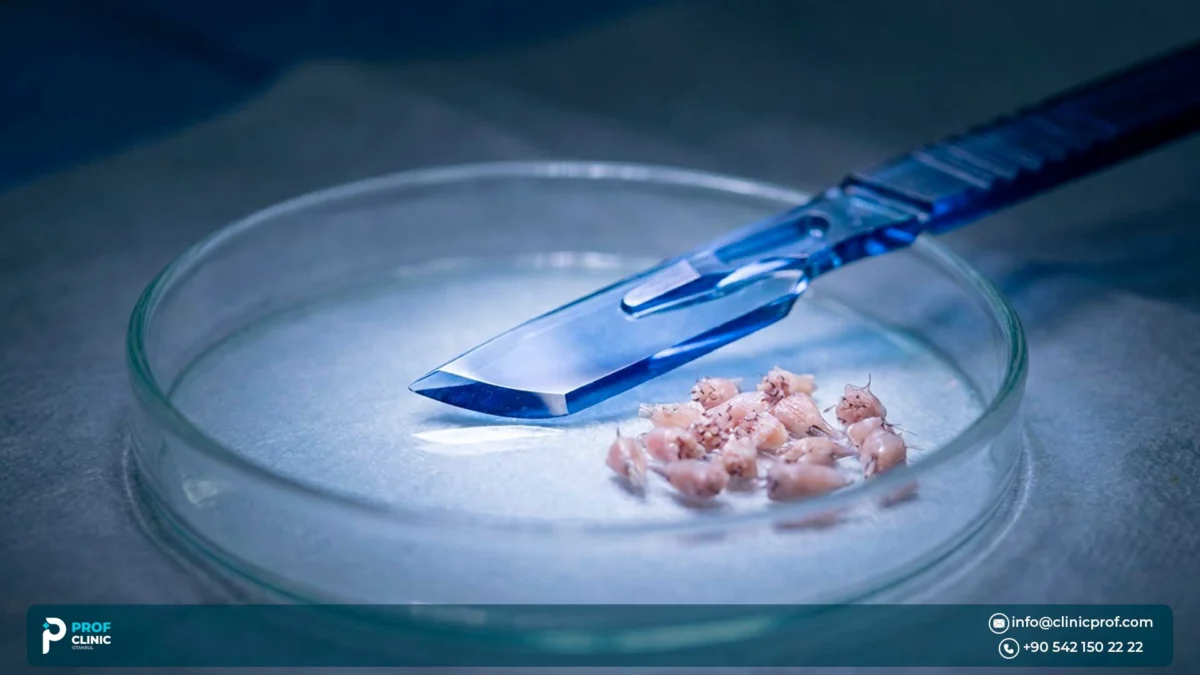
- Extraction: with FUE, individual follicles are removed one by one from the back and sides of the scalp.
- Planting: grafts are placed into tiny incisions along the new line, with the angle and direction matched to your natural hair.
Prof Clinic’s female hair transplant page says FUE sessions can last 7–8 hours and may extend over more than one day, so the number of grafts affects the schedule.
Designing a Softer, Rounded Hairline
A woman’s hairline is not a copy of a man’s. The ISHRS says female hairlines typically follow a softer, rounded contour, and that the partline will always look a little thinner because the direction of growth changes there. A good design keeps that gentle curve, avoids a sharp or perfectly straight edge, and leaves a slightly irregular front so the line does not look drawn on.
Shaving and the No-Shave Option
Women usually do not need to shave the whole scalp. According to Prof Clinic’s female hair transplant page, only a small section is trimmed and it is easily covered by the surrounding hair, and the clinic offers a no-shave option especially for women. The ISHRS adds that FUE is often performed with the donor area shaved, while FUT avoids donor shaving but leaves a linear scar. Our guide to the unshaven hair transplant explains who it suits.
Hairline Lowering Surgery vs Hair Transplant: Which Route Fits?
Surgical hairline lowering, also called forehead reduction or scalp advancement, removes a strip of forehead skin and pulls the hair-bearing scalp forward, while a transplant adds hair gradually in front of the existing line. A recent review in Facial Plastic Surgery Clinics describes surgery as an alternative to transplantation, with immediate results and good density, best suited to women with a stable hairline and a mobile scalp.
| Aspect | Hair transplant | Surgical hairline lowering |
|---|---|---|
| How it works | Grafts planted in front of the current line | Forehead skin removed and scalp advanced forward |
| Amount lowered | Average about 1.3 cm in one 2025 study | Mean about 1.6 cm in a meta-analysis |
| Speed of result | Gradual, over 10–18 months | Immediate |
| Scar | Tiny marks at donor and recipient sites; FUT leaves a linear donor scar | A scar along the hairline; reported in about 5.5% in a recent pooled analysis |
| Numbness | Only minor discomfort reported in the 2025 study | Temporary numbness reported in most patients |
| Usually suits | Enough donor hair; smaller or staged changes | Stable hairline and a mobile scalp |
Surgery is not risk-free. A recent meta-analysis of 14 studies and 3,213 patients reported a pooled complication rate of 5.9%, including scarring, seroma and folliculitis, and temporary numbness in almost all patients. About 1.2% later needed a hair transplant and 1.3% needed revision surgery. Most included studies were retrospective case series, so treat the very high satisfaction figures with caution. The 1.6 cm mean lowering in the table comes from a separate 2022 meta-analysis.
Surgical hairline lowering is a separate operation done by plastic or facial plastic surgeons, and it is not among the hair services listed on Prof Clinic’s site. If surgery appeals to you, ask for a surgeon’s opinion as well, and compare it with what a transplant can realistically achieve for your hairline.
Results Timeline: What to Expect After Hairline Lowering
New hair usually starts to appear after about 4 months, and the NHS says the full results should be seen after 10 to 18 months. The transplanted hairs often fall out first and then grow back, which is a normal stage and not a failure.
| When | What you will usually notice |
|---|---|
| First 1–2 weeks | Redness and small scabs; the NHS says you may need 1 to 2 weeks off work |
| After a few weeks | The transplanted hairs often fall out; the follicles stay in place |
| About month 4 | First new, fine hairs begin to appear along the new line |
| Months 10–18 | Full result; judge density and any need for a touch-up |
Take photos in the same light and angle every month, and wait until the hair has matured before deciding on a second session. For a month-by-month breakdown, read our guide to the hair transplant timeline. You can also browse consented cases in the Prof Clinic before-and-after gallery, checking the time since surgery on each one.
Risks, Limits and Common Mistakes
The risks are small but real. The NHS lists infection, bleeding and a reaction to the anaesthetic, and says a noticeable scar may form. For a forehead plan, these are the points that matter most:
- A hairline that sits too low or too straight: it is hard to undo once the grafts have grown, so it is safer to start conservatively. See how problems are corrected in Unnatural Hairline After Hair Transplant: How It’s Corrected.
- Not enough density in the centre: this may need a second session, as the ISHRS notes.
- Hair loss continuing behind the line: Prof Clinic’s page notes that untreated areas may still thin over the years, so long-term planning matters.
- An unidentified cause: operating on a hairline that is still receding can leave an isolated strip of hair.
How Much Does Hairline Lowering Cost in Istanbul?
As a general guide, a female hair transplant package in Istanbul costs about €2,000–€3,800. This is an approximate 2026 range, not a final price, and it depends on your case after assessment. The number of grafts and the technique move it most. Packages usually include the procedure, pre-op blood tests, medication and aftercare kit, hotel and VIP airport and hotel transfers, as stated on the service pages, and a stay of about 2–4 days is typical.
The final price comes in a written quote after the team reviews your photos, so compare quotes by what they include and how many grafts they plan, not by the total alone.
Planning Forehead Reduction with Prof Clinic in Istanbul
At Prof Clinic, a forehead hair transplant for women starts with a medical assessment. Spc. Dr. Lütfi Öztürk, an internal-medicine specialist, carries out the medical assessment and treatment planning for hair restoration and coordinates follow-up. Before booking flights for a forehead procedure, you can check the following:
- Techniques: Sapphire FUE, Micro FUE, FUE and DHI, plus a no-shave option that is offered especially for women.
- Pre-op tests: before any work on the hairline, you have a blood count, an ECG, kidney and liver function tests, electrolytes and blood sugar, plus hepatitis and HIV screening.
- Honest expectations: how dense the new forehead hair may look is discussed for your own case, and no specific density is promised in advance.
- A written quote: sent after your photos are reviewed, covering the procedure, accommodation, transfers and post-op care.
- Follow-up: the coordination team stays in touch after you go home and answers questions over WhatsApp.
To start, send clear photos from the front, both sides and the top, plus one with your hair pulled back. If you are exploring a hair transplant for women in Istanbul, book a free online consultation and ask what a realistic lowering looks like for your forehead.
FAQs About Hairline Lowering and Forehead Reduction with a Hair Transplant
How much can a hair transplant lower the hairline?
Usually a modest amount. In a 2025 study of 60 women with high and wide foreheads, the average reduction in forehead height was about 1.3 cm, with wide variation between patients. Your donor hair, scalp and goals set your own limit, and your doctor will confirm it after assessment.
Is a hair transplant or forehead reduction surgery better for a high forehead?
Neither is better for everyone. A transplant removes no forehead skin but works gradually and needs enough donor hair. Surgery gives an immediate, dense result but leaves a scar along the hairline and temporary numbness, and it needs a mobile scalp and a stable hairline. The right choice depends on your hairline, scalp and goal.
How many grafts do I need to lower my hairline?
There is no fixed number. A 2025 study averaged about 3,200 follicular units for women with high and wide foreheads, and rough arithmetic suggests several hundred units for each centimetre of lowering across the forehead. The exact count depends on distance, width, density and donor supply, and comes after a photo assessment.
Will I have to shave my head for a hairline lowering transplant?
Women usually don’t need to shave the whole scalp. Prof Clinic’s female hair transplant page says only a small section of the donor area is trimmed and it is easily covered by surrounding hair, and a no-shave option is offered especially for women. Confirm what applies to your plan during assessment.
When will I see the final result of a hairline lowering transplant?
New hair usually starts to appear after about 4 months, and the NHS says the full result should be seen after 10 to 18 months. The transplanted hairs often shed first, which is normal. Judge the new hairline with photos taken in the same light over the first year, not week by week.
The Bottom Line on Lowering a High Hairline
A hairline lowering hair transplant suits women with a stable hairline, healthy donor hair and a goal of modest, natural proportions, while surgery suits a different group and brings a scar and numbness. Find the cause of your high hairline first, then set a realistic target and judge the result at a year or later. When you are ready, contact Prof Clinic and ask for a written plan, or read about a hair transplant in Istanbul in general.
Sources
- NHS — Hair transplant
- ISHRS — A Guide to Hair Transplant for Women
- Journal of Cosmetic Dermatology — Enhancing Mid-Upper Facial Contours: Hairline Transplant Solutions for East Asian Women With High and Wide Foreheads (Wu et al., 2025)
- Facial Plastic Surgery & Aesthetic Medicine — Forehead Reduction: A Systematic Review and Meta-Analysis of Outcomes (Vila et al., 2022)
- Aesthetic Plastic Surgery — Forehead Length Reduction Surgery: Quantifying Complications and Outcomes Through Systematic Review and Meta-Analysis (Alabdulkarim et al.)
- Facial Plastic Surgery Clinics of North America — Hairline-Lowering Surgery (Arnaoutakis)
- DermNet — Frontal fibrosing alopecia