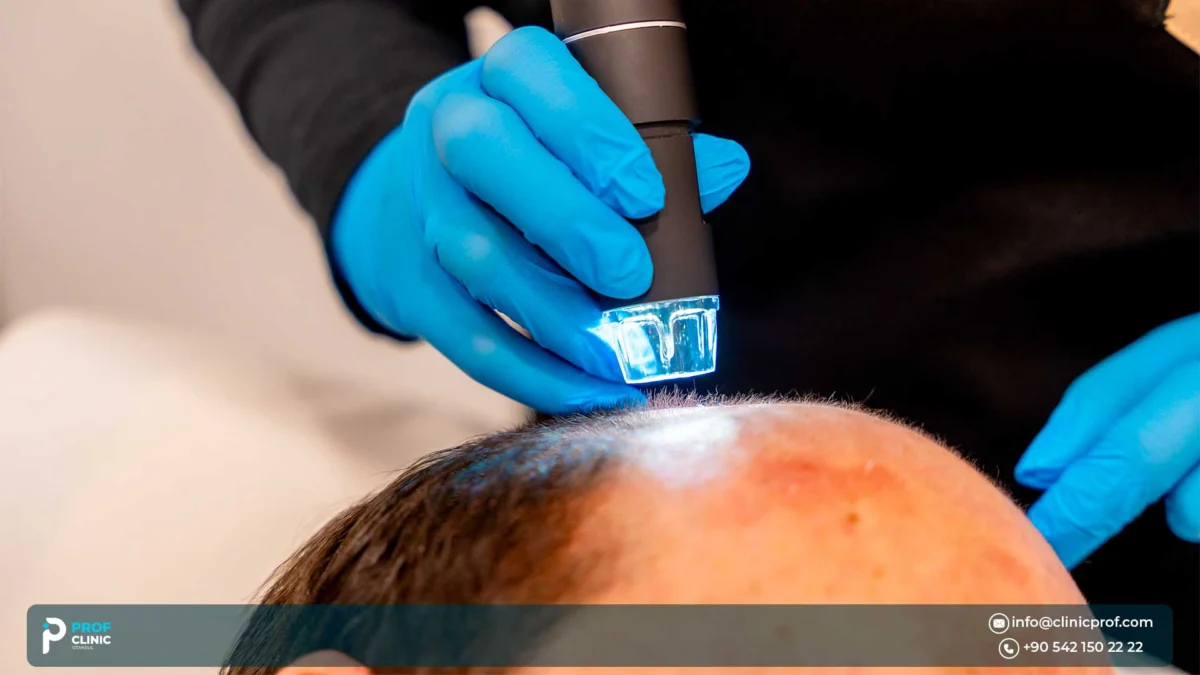
Does PRP for hair loss actually work, and what about mesotherapy? For some people with early thinning, yes, but modestly. Pooled trial results show PRP injections add some hair density on average, while the evidence for mesotherapy is smaller and less consistent. Neither treatment can grow hair from skin where the follicles have already gone, and both usually need repeat sessions to hold any gain.
In this guide by Prof Clinic, you’ll see what each treatment involves, what the research really shows, how many sessions are typical, who is most likely to benefit, the safety points worth checking, an approximate PRP price in Istanbul, and when a hair transplant becomes the more realistic option. It is general information, not a diagnosis: your own plan needs an examination by a qualified doctor.
Do PRP and Mesotherapy Work for Hair Loss? The Short Answer
They can help some people with early, diffuse pattern thinning, but they work best as supporting treatments rather than as a cure. Both act on follicles that are shrinking but still alive; neither replaces hair that is already gone. The table compares them side by side.
| Question | PRP (platelet-rich plasma) | Mesotherapy |
|---|---|---|
| What is injected | Plasma concentrated from your own blood | A mix chosen by the practitioner: vitamins, amino acids, minoxidil, dutasteride, growth factors or others |
| Strength of evidence | Several randomised trials and meta-analyses; positive on average, but low quality and very inconsistent | Smaller, shorter trials; no standard formula or regimen |
| Typical course | Often 3 to 5 sessions about a month apart, then spaced-out top-ups | Varies with the mixture and the practitioner |
| Usually suits | Early to moderate pattern thinning with living, shrinking follicles | The same patients, usually alongside proven medicines |
| Main limits | Modest gains, no standard preparation, repeat sessions needed | Thin evidence, products vary, rare injection-site infections |
The evidence for both is real but imperfect. An expert consensus from the Indian Association of Dermatologists, Venereologists and Leprologists (IADVL) concludes that PRP should not be used as a stand-alone therapy but as part of a multipronged approach. The American Academy of Dermatology (AAD) describes minoxidil and finasteride as the established medicines for pattern hair loss, and notes that finasteride is FDA-approved for male pattern hair loss.
Not sure whether your thinning is still treatable without surgery? Send clear photos to the Prof Clinic team on WhatsApp and ask for a first view of your pattern.
PRP for Hair Loss: How the Treatment Works
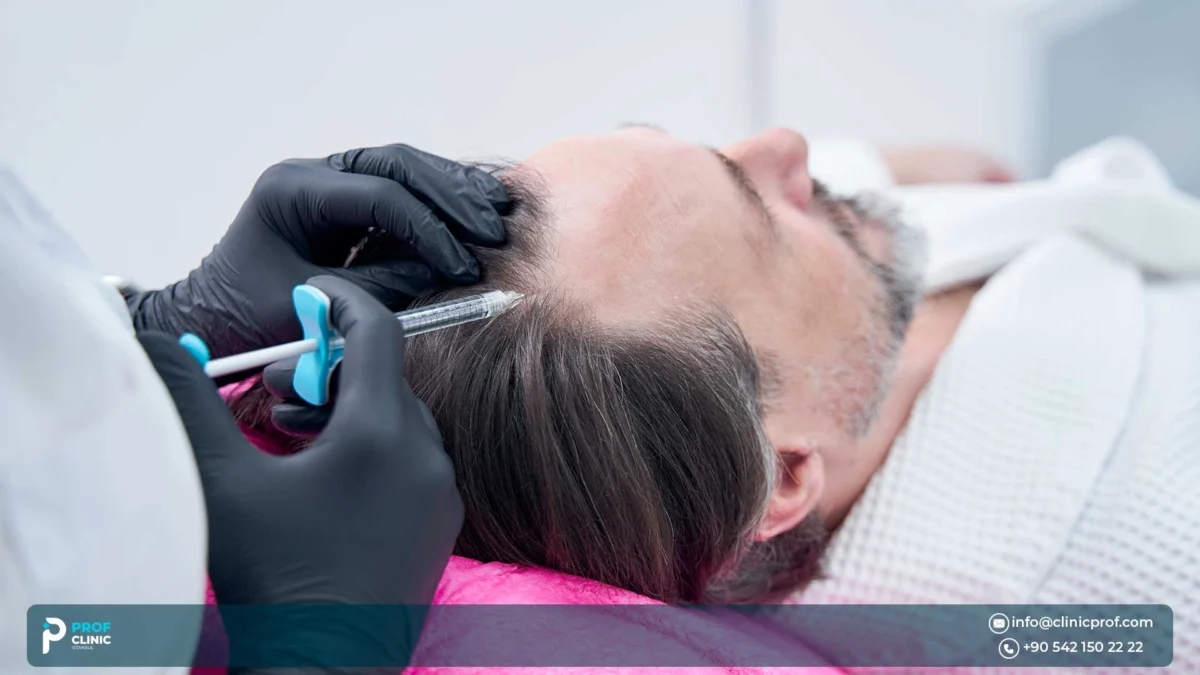
PRP is a concentrate made from your own blood, in which platelets are packed into a small volume of plasma and injected into the scalp. Cleveland Clinic describes the sequence: blood is drawn, spun in a centrifuge to separate its components, and the platelet-rich part is injected into the area being treated.
A scalp session is short. The AAD gives about 10 minutes per session, and some soreness afterwards is common. The platelets carry growth factors, and the working theory is that these may support weakened follicles; how well that works in practice is exactly what the trials test.
There is no single standard recipe. Cleveland Clinic points out that PRP has no standardised preparation process, so products differ in composition, and the IADVL group says that the reporting of preparation methods is inconsistent. Two clinics advertising “PRP” may therefore be offering different products, which is one reason results vary from study to study.
What it means in real life: when you compare quotes, ask how the PRP is prepared (single or double spin), roughly how much is used and how many sessions are planned, not just the price per session.
What the Research Shows About PRP
A 2024 systematic review and meta-analysis in Anais Brasileiros de Dermatologia pooled 13 randomised trials of PRP in androgenetic alopecia. It found an average gain of about 28 hairs per square centimetre (27.55, 95% confidence interval 14.04 to 41.06), with follow-up mostly between 3 and 6 months. The authors rated the evidence as low quality: the trials disagreed widely with one another, publication bias was suspected, and hair thickness did not change significantly.
The honest reading is that PRP probably helps a little, for some people, in a way that is hard to predict. A gain of that size is a measurable increase in density, not a restored hairline. Cleveland Clinic similarly describes the research as still early, with mixed results.
The IADVL consensus adds practical detail. It names Norwood-Hamilton grades II to V as the ideal group; that scale grades male pattern baldness from mild recession to extensive loss, as our Norwood scale guide to the seven stages of male hair loss shows. It also recommends a minimum of three to five sessions with a one-month gap.
How Many PRP Sessions Do You Need, and How Long Do Results Last?
Most protocols start with three to five sessions about a month apart, then move to spaced-out top-ups. Cleveland Clinic describes monthly sessions for the first three months and less frequent ones afterwards, for up to two years in some plans, and the AAD says repeat visits are typically monthly at first and then every 3 to 6 months.
Here is a realistic timeline:
- Months 0–3: the first sessions, usually monthly. Hair needs time to respond, and Cleveland Clinic says improvement takes about three months, so don’t expect a visible change yet.
- Months 3–6: the window in which most trials measure results. Compare photos taken in the same light, rather than judging by the mirror.
- After 6 months: top-up sessions every few months if you are responding and your doctor agrees. Cleveland Clinic’s general PRP guidance says effects may last six months to a year or longer, depending on the condition.
Pattern hair loss keeps progressing, so the benefit is generally kept only with ongoing sessions, which is why the schedules continue after the first course. If a full course has changed nothing by around six months, repeating it may not be worth the cost; ask for an honest review of your response first.
Mesotherapy for Hair Loss: What Is Injected and What the Research Shows
Mesotherapy means many tiny injections of a mixture into the upper layers of the scalp skin, and there is no single formula. A 2023 systematic review in the Journal of Dermatological Treatment covered 27 studies across six groups of agents: dutasteride, minoxidil, growth factors or autologous suspensions, botulinum toxin A, stem cells, and multivitamin solutions.
Several of those studies report statistically significant gains in hair growth. The authors also point to the lack of standardised regimens, note that adverse effects have been reported, and call for large controlled trials before the technique’s value can be established. Put plainly, mesotherapy is promising in places and unproven overall.
What Is Really in the Syringe?
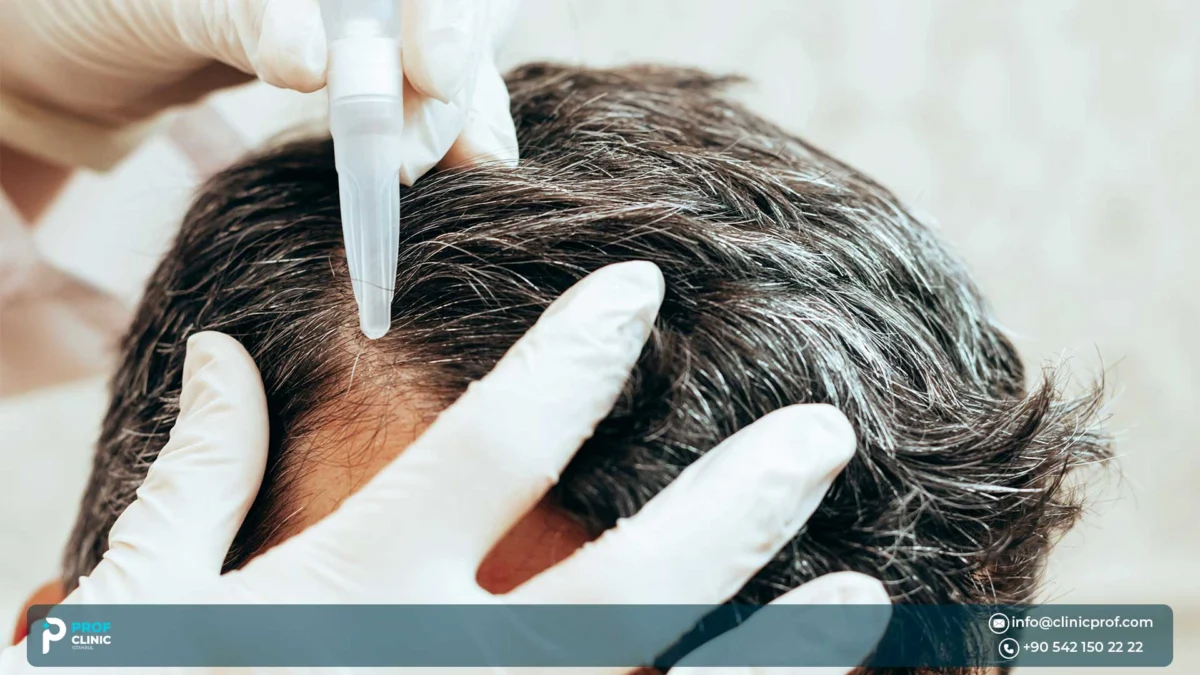
With mesotherapy, the product matters as much as the technique. Ask for the name and ingredient list of what will be injected, whether a prescription medicine is involved and who prescribes it, and whether needles and vials are single-use and sterile.
The risk is not just theoretical. A letter in Emerging Infectious Diseases describes an outbreak at a private aesthetic clinic in Buenos Aires, where 28 of 169 people (17%) who had mesotherapy developed skin infections, linked to contaminated injectable solutions or skin antiseptics. The lesions appeared 7 to 37 days after the injections. Additions such as stem cells or exosomes are a separate question, covered in Exosomes for Hair Loss and Stem Cell Therapy: Science or Marketing?
Dutasteride Mesotherapy: How Strong Is the Evidence?
Dutasteride is a prescription medicine, and injecting small amounts into the scalp is one of the most discussed mesotherapy options. A 2020 systematic review in Skin Appendage Disorders found three randomised trials of intralesional dutasteride and rated all three at high risk of bias. Its authors concluded that oral dutasteride looked like the more reliable route, described injections as a possible alternative for people unwilling to take tablets, and advised caution until more trials are published.
They also noted that no standard injection protocol exists. Scalp abscess, patchy hair loss and scarring hair loss appear in case reports, not in the trials, so their true frequency is unknown.
Where Does Microneedling Fit?
Microneedling, which uses tiny needles to puncture the skin, is a related but different approach. The AAD says a few studies suggest it can stimulate hair growth and advises checking with a dermatologist before using a device at home. The IADVL group recommends injecting PRP with a fine syringe rather than delivering it through microneedling.
Who Is Most Likely to Benefit From PRP or Mesotherapy?
People with recent, early to moderate pattern thinning, where follicles are shrinking but still alive, are the most likely to benefit. Cleveland Clinic says PRP works better when hair loss is recent and that older loss is likely to recover only a little, and the IADVL consensus names Norwood-Hamilton grades II to V as the ideal range.
You are more likely to see a useful effect if:
- your thinning is recent or still early, with fine, shrinking hairs rather than smooth skin;
- a doctor has confirmed pattern hair loss as the cause;
- you are also using proven medicines such as minoxidil or finasteride under medical advice;
- you can commit to a course of sessions and to judging the result at around six months.
You are less likely to benefit if:
- The area is smooth and long-standing: there are no follicles left to wake up.
- Another cause is driving the shedding: Cleveland Clinic notes that conditions such as thyroid disease or lupus keep causing hair loss, so the cause needs treating first, and the AAD advises seeing a board-certified dermatologist for an accurate diagnosis.
- It is patchy autoimmune loss: alopecia areata is treated differently, and the AAD lists corticosteroid injections into the affected areas among the options a dermatologist may use.
- Your blood or medicines raise a question: Cleveland Clinic says certain blood conditions may rule PRP out, and platelets work less effectively in people taking blood thinners.
Women with thinning should have the cause checked before any injection treatment; Female Hair Loss Causes: Patterns and Treatment Options explains what is usually investigated. Proven medicines are covered in the article below.
Also read: Finasteride and Minoxidil for Hair Loss and After a Transplant
Side Effects and Safety: What Is Normal and What Is Not
PRP has few risks because it comes from your own blood, but it is still an injection, and mesotherapy depends heavily on what is in the vial. Cleveland Clinic says PRP injections have very few risks, with a remote chance of contamination if blood is not kept sterile, and that the injection may hurt more than expected.
- Usually normal: tenderness, mild swelling, redness or a feeling of pressure at the injection sites for a day or two.
- Not normal, so contact the provider promptly: pain or redness that spreads or gets worse after the first days, pus, fever, or red nodules that appear days or weeks later (the Buenos Aires lesions appeared 7 to 37 days after injection).
Share your full health history first. Cleveland Clinic notes that providers may ask you to stop blood thinners or anti-inflammatory painkillers before PRP; never stop a prescribed medicine on your own, but ask the doctor who prescribed it. One more point if you might want a transplant later: the IADVL group discusses PDO threads as a way to stretch the interval between PRP sessions, but warns that repeating them every six months carries a risk of fibrosis (scar-like tissue) that could compromise later hair transplantation.
PRP and Mesotherapy Cost in Istanbul
A PRP session in Istanbul generally costs about €100–€250. This is an approximate 2026 range, not a final price, and it depends on your case and on the plan agreed after assessment. A first course of three to five monthly sessions therefore comes to roughly €300–€1,250 before any top-ups; that is simple multiplication of the range, not a quote.
Mesotherapy has no reliable average, because the price follows what is injected, and a vitamin mix and a prescription medicine are very different products. Ask for the ingredients and the price per session in writing.
For context, scalp hair transplant packages in Istanbul (FUE, DHI or Sapphire) usually range from about €1,800 to €3,500 on the same approximate basis. Packages usually include the procedure, pre-op blood tests, medication and an aftercare kit, hotel accommodation, and VIP airport and hotel transfers. An injection course is an ongoing cost and a transplant is a one-off one, but they do different jobs: injections support the hair you have, a transplant adds hair. If PRP is mentioned in any package you are offered, ask whether it is included or billed per session.
Want a figure for your own case? Ask for an itemised written quote once your photos have been reviewed, so you can compare offers like for like.
When a Hair Transplant Is the Better Next Step
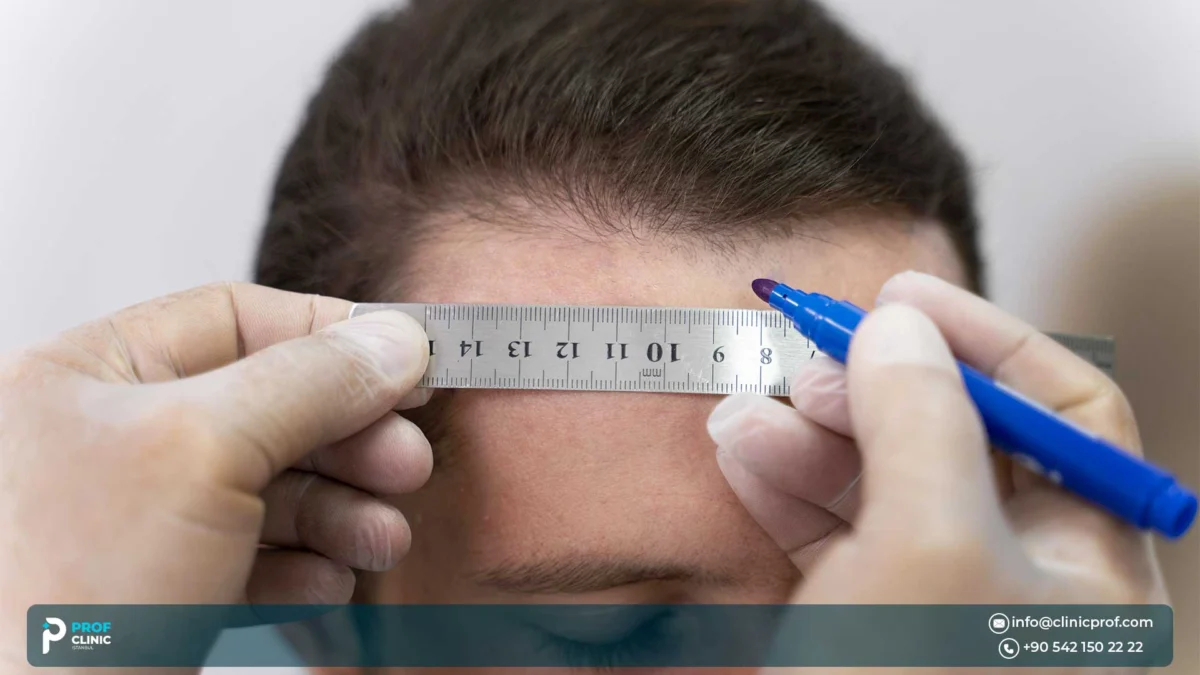
When an area is smooth and bald, injections cannot recreate follicles, so the realistic option is moving hair from the donor area with a hair transplant in Turkey. PRP and mesotherapy are best seen as supporting measures: they may help the hair you want to keep, and they are sometimes added around surgery.
A transplant usually deserves a serious look if:
- a full, properly supervised course has not changed your density by around six months;
- the loss is advanced or sits in a defined bald area;
- you are already on proven medicines and the thinning is still progressing.
If you are already planning surgery, the role of PRP afterwards is a separate question.
Also read: PRP After a Hair Transplant: Is It Necessary? Timing and Sessions
For men with pattern loss, the male hair transplant in Istanbul page explains the techniques and what a plan covers. Ready to compare options? Book a free online consultation and ask for a written recommendation that explains why a transplant, or not, fits your case.
Hair Loss Assessment at Prof Clinic in Istanbul
Prof Clinic’s hair services are built around transplantation: scalp hair for men and women, afro and curly hair, eyebrows, and beard and moustache, using FUE, DHI, Sapphire FUE and Micro FUE, with no-shave options especially for women. This article treats PRP and mesotherapy as general medical topics. It does not mean either one is part of every plan, so if one interests you, ask what is offered, who performs it and what it costs.
Here is what you can check before you decide:
- Medical lead: Spc. Dr. Lütfi Öztürk, an internal-medicine specialist, leads the medical assessment and treatment planning for hair restoration and coordinates follow-up.
- Written quote: the clinic sends a price offer after evaluating your photos, rather than a fixed price over the phone.
- Pre-op tests: before surgery, blood count, ECG, kidney and liver function, electrolytes, blood sugar, and hepatitis and HIV screening.
- After the procedure: the coordination team keeps checking in with you and answers your questions on WhatsApp.
- Licensing: check any clinic’s Ministry of Health licensing yourself before you travel.
No set density can be promised beforehand; what you can expect is discussed for your own case. Want to see real cases first? Browse consented examples in the before-and-after gallery.
PRP and Mesotherapy for Hair Loss: Frequently Asked Questions
Can PRP regrow hair on a completely bald scalp?
Usually not. PRP and mesotherapy act on follicles that are shrinking but still alive, so they suit early to moderate thinning. On long-standing smooth bald skin there is little left to stimulate, and a hair transplant is the more realistic option. A doctor can tell the two situations apart by examining your scalp.
Is mesotherapy better than PRP for hair loss?
Neither has been shown to be better. The reviews cited here study each treatment separately, use different protocols and ask for larger, standardised trials. PRP has more randomised trials behind it, while mesotherapy covers many different mixtures. Which is more suitable depends on your diagnosis and on what would be injected.
How many PRP sessions do you need for hair loss?
Most protocols start with at least three to five sessions about a month apart, then spaced-out top-ups. Cleveland Clinic describes monthly sessions for the first three months, and the AAD describes monthly visits at first and then every 3 to 6 months. Your doctor sets the exact schedule.
Does PRP for hair loss hurt?
Some discomfort is common. Cleveland Clinic notes that the injection can hurt more than people expect and that swelling and soreness usually last a day or two. A session takes about 10 minutes according to the AAD, and the procedure usually needs no downtime.
Can I use PRP with minoxidil or finasteride?
Often yes, and that is how PRP is usually positioned: as one part of a plan rather than a stand-alone treatment. Minoxidil and finasteride have the strongest track record for pattern hair loss, so ask your doctor how the combination would work for you, and never stop a prescribed medicine on your own.
How long do the results of PRP last?
Cleveland Clinic’s general PRP guidance says the effects may last six months to a year or longer, and the same page notes that results depend on the condition. Because pattern hair loss continues over time, benefits are generally kept up with periodic top-up sessions, and results should be judged at around six months.
Deciding Between PRP, Mesotherapy and a Transplant
PRP for hair loss is worth considering when your thinning is early, a doctor has confirmed the cause, and you are ready to judge the result after a course of sessions at around six months. Mesotherapy needs even closer scrutiny of what is injected and by whom. If the area is already smooth and bald, the question is no longer which injection to choose but whether a transplant fits.
Start with an assessment of your own pattern, then decide. If you are weighing surgery, contact Prof Clinic for a written plan, or read about a hair transplant in Istanbul first.
Sources
- Anais Brasileiros de Dermatologia — Is autologous platelet-rich plasma capable of increasing hair density in patients with androgenic alopecia? A systematic review and meta-analysis of randomized clinical trials (Kieling et al., 2024)
- Indian Dermatology Online Journal — Platelet-Rich Plasma in Androgenetic Alopecia (IADVL PRP taskforce consensus, Sharma et al., 2021)
- Journal of Dermatological Treatment — Systematic review of mesotherapy: a novel avenue for the treatment of hair loss (Gupta et al., 2023)
- Skin Appendage Disorders — Efficacy of Intralesional and Oral Dutasteride in the Treatment of Androgenetic Alopecia: A Systematic Review (Herz-Ruelas et al., 2020)
- Emerging Infectious Diseases (CDC) — Mesotherapy-associated Outbreak Caused by Mycobacterium immunogenum (2009)
- Cleveland Clinic — How Platelet-Rich Plasma Helps Hair Growth
- Cleveland Clinic — Platelet-Rich Plasma (PRP) Injection: What It Is & Uses
- American Academy of Dermatology — Hair loss: Diagnosis and treatment